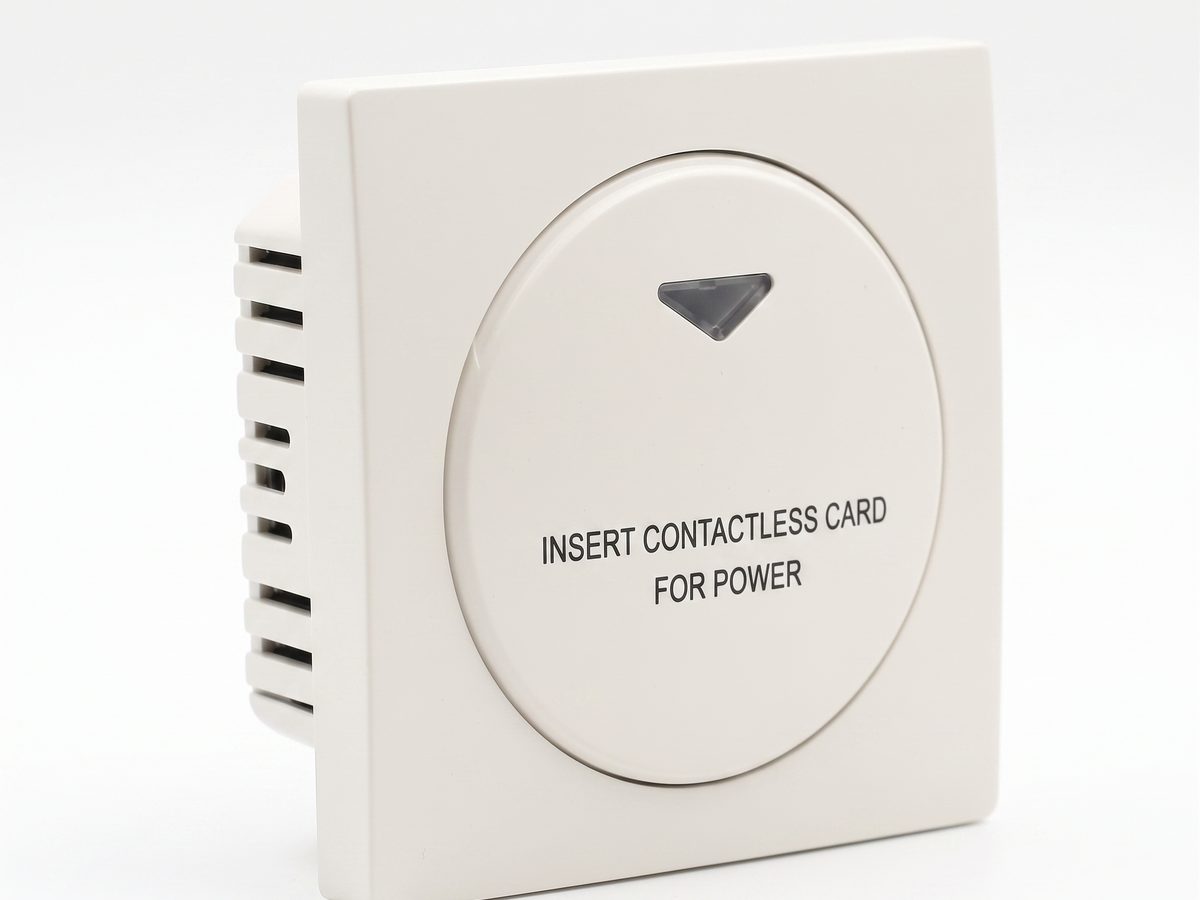
产品Key Card SwitchesGuest Room Power Control
酒店取电开关 — 客房电源智能控制方案
酒店取电开关实现客房电源智能控制。RFID/IC卡识别,插卡取电,拔卡延时断电。220V交流,10A-16A,RS485或干接点。CE RoHS认证。OEM/ODM源头供应商。
为什么推荐这一步
当前页面已经把它作为下一步推荐内容直接指向。
更适合使用 中文?我们会保留当前页面上下文,只在您确认后切换。
面向服务式公寓、学生宿舍、民宿及公寓酒店的客房取电开关,按项目配置受控回路,切断空置房间待机用电。
面向服务式公寓、学生宿舍、民宿及公寓酒店的客房取电开关,按项目配置受控回路,切断空置房间待机用电。
家庭式客房住宿项目取电开关,即沿用酒店客房用电控制,按服务式公寓、学生宿舍、民宿及公寓酒店需求加以规格化。这些物业兼具酒店式运营与居住属性。住客入住天数从数天至数月不等,用电规则须对每位使用者保持清晰明确。
模式简洁且确定。住客在入口处插入有效卡片:指定照明、插座与空调回路得电。住客离房取卡时,这些回路经短延时断开。因控制跟随卡片,房间对每位入住者表现一致。这避免了纯人体感应的不确定性,让物业运营方在房间入口拥有可视、可解释的开关。
KeyCardSwitch 以 OEM/ODM 厂商身份提供该方案,基于共享继电器平台,符合 CE/RoHS 认证。无论您运营单体民宿还是服务式公寓组合,底层切换逻辑保持一致,因此可按酒店新建与改造项目的同等标准进行选型、安装与维护。
此处的“家庭式”指兼具居住风格与小面积特征、仍按客房面向用电运营的住宿类型。这将实际受众界定为共享酒店客房控制模式的物业类型。
服务式公寓与商务公寓需要适配长住的用电规则:回路随卡走,不因住客全天进出而受惩罚。学生宿舍受益于数十间同类卧室的可复用标准,统一配置降低困扰、简化设施维护。民宿与小型公寓酒店获得低成本、易理解的开关,无需复杂酒店系统即可引入酒店式节能习惯。上述细分领域的翻新项目均可复用相同底盒布局与开关,只要存在合适供电与安装深度。
本方案不面向私人住宅的家用开关。它围绕酒店运营设定,由有人值守或业主自管的物业制定并记录持卡规范,而非单一家庭自行管理用电习惯。
服务式公寓可能保留基础插座常通电,仅切换照明与空调使能回路。学生单间与合住套间的规则可能不同。请在房间矩阵中记录这些选择,将开关、接触器、受控回路与面板一并列明。这可防止将公共区组件误装至负载需求不同的卧室。
卡技术至关重要。通用取电开关适用于任意卡片读取。RFID 或 MIFARE 节能开关适配绑定房间的持卡模式。无论选择哪种,均应在确认订单量前,用实际发放给住客与员工的卡片完成测试。
空调或热水器等大功率负载可能需要外置接触器。所选继电器或接触器额定值须覆盖真实负载,安装专业人员应核实额定值、接线端子、外壳条件与保护装置。
住宅可能包含数十间相似房间,但共用厨房、无障碍房、开间套房与公共区域可能各异。按房型建立一套配置。对民宿与小型公寓酒店,单一简易配置往往足矣,从而压缩备件库存与培训成本。
判断通用开关还是 RFID 节能开关更贴合您的持卡实践。用实际发放的卡片验证选择。随后将配置归档,确保数年后更换设备仍与原配置完全一致。
全量推广前,在典型房间安装并测试进房、取卡、再进房、照明、空调、维修通道通电、断电恢复等场景。确认员工可为维修隔离供电,且反复插拔卡片不暴露安装、接线或行为异常。按房型记录例外情况,交接时移交设施团队。
服务式公寓与运营式住宅改造常在入住状态下进行。按楼层或空房窗口分阶段实施,将干扰降至最低。下单前请提供现有开关照片、底盒尺寸、回路清单、房间数量、卡片详情、供电电压与目的地国家。工程团据此准备样品推荐与备件计划。
针对持续运营,建立文档化备件策略。更换件须与已安装配置完全一致,少量备齐正确面板与内置继电器,避免房间长时间停用。
请将房间数量、房型、目标负载、卡技术、底盒尺寸、照片、目的地与进度发送给我们进行项目评审。KeyCardSwitch 工程团队将返回切实可行的配置与样品方案。
我们专注可靠切换、清晰文档与简易安装,而非无依据的节能承诺。节能效益结构化且易于解释:无人房间因无卡插入,受控回路不再持续得电。
起步请联系 [email protected],提供房间数量、回路清单、卡类型与目标负载详情。我们将在标准报价周期内确认合适配置与可用样品。
A key card switch for home-style guest accommodation is the same guest-room power control used in hotels, specified for serviced apartments, student residences, homestays, and apartment hotels. These properties combine hotel-style operations with residential expectations. Guests and residents stay for days, weeks, or months, and the power rule must stay clear for everyone who uses the room.
The model is simple and deterministic. The resident inserts a valid card at the entry point: selected lighting, outlet, and air-conditioning circuits are enabled. When the resident removes the card on leaving, those circuits disconnect after a short delay. Because control follows the card, the room behaves the same way for every occupant. This avoids the guesswork of motion-only detection and gives property operators a visible, explainable switch at the room entry.
KeyCardSwitch provides this as an OEM/ODM manufacturer under CE/RoHS on a shared relay platform. Whether you run a single homestay or a portfolio of serviced apartments, the underlying switching approach is consistent, so it can be specified, installed, and maintained with the same discipline used in hotel new-build and retrofit projects.
The "home" in this context means residential-style and small-footprint accommodation that still runs on guest-facing room power. That narrows the practical audience to property types that share the hotel room-control pattern.
Serviced apartments and corporate residences need a power rule that suits long stays: circuits should follow the card without penalizing residents who return and leave throughout the day. Student accommodation benefits from a repeatable standard across dozens of similar bedrooms, where the same configuration reduces confusion and simplifies facilities maintenance. Homestays and small apartment hotels gain a low-cost, understandable switch that introduces a hotel-style energy routine without complex hotel systems. Refurbishment programs across any of these segments reuse the same wall-box layout and switch anywhere a suitable supply and depth exist.
The solution is not intended as a residential switch for private houses. It is specified around hospitality operations, where a staffed or owner-managed property sets and documents the card practice rather than a single household managing its own habit.
A serviced apartment may keep essential outlets energized while switching lighting and air-conditioning enable circuits. A student bedroom may use a different rule than a shared studio. Document these choices in a room matrix so the switch, contactor, controlled circuits, and faceplate are stated together. This prevents a common-room assembly from being installed in a bedroom with different load requirements.
Card technology matters. A universal key card switch works when any card is used. An RFID or MIFARE energy-saving switch suits a room-bound card practice. Whichever is chosen should be tested with the actual cards issued to residents and staff before quantities are confirmed.
High-power loads such as air-conditioning or water heaters may require an external contactor. The selected relay or contactor must be rated for the real load, and the installation professional should verify ratings, terminals, enclosure conditions, and protective devices.
A residence may contain dozens of similar rooms, but shared kitchens, accessible rooms, studios, and common areas can differ. Create one configuration per room type. For homestays and small apartment hotels, a single simple configuration is often enough, which keeps spare stock small and training minimal.
Determine whether a universal switch or an RFID energy-saving switch best fits your card practice. Test the choice with the cards you actually issue. Then record the configuration so a replacement unit is identical even years later.
Before a full rollout, install a representative room and test entry, card removal, re-entry, lighting, air-conditioning, service access, and recovery after a power interruption. Confirm that staff can isolate power for maintenance and that repeated card cycles do not reveal fit, wiring, or behavior issues. Record exceptions by room type and hand them to the facilities team at handover.
Serviced apartments and operated residences often remain occupied during upgrades. A phased plan by floor or vacancy window limits disruption. Provide photos of existing switches, wall-box dimensions, circuit schedules, room counts, card details, supply voltage, and the destination country before ordering. The engineering team can then prepare a sample recommendation and replacement stock plan.
For ongoing operations, keep a documented spares policy. Replacements should match the installed configuration exactly, and a small stock of the correct faceplate and internal relay avoids long room-down times.
Send room counts, room types, target loads, card technology, wall-box dimensions, photos, destination, and schedule for a project review. KeyCardSwitch Engineering Team will return a practical configuration and sample plan.
We focus on dependable switching, clear documentation, and straightforward installation rather than unsupported energy claims. The energy benefit is structural and simple to explain: an unoccupied room, left without a card in the switch, does not keep switched circuits powered.
To start, contact [email protected] with your room count, circuit schedule, card type, and target load details. We will confirm a suitable configuration and a working sample within a standard quotation cycle.
对比 3 种协议、查看酒店案例、下载安装指南
酒店取电开关实现客房电源智能控制。RFID/IC卡识别,插卡取电,拔卡延时断电。220V交流,10A-16A,RS485或干接点。CE RoHS认证。OEM/ODM源头供应商。
当前页面已经把它作为下一步推荐内容直接指向。
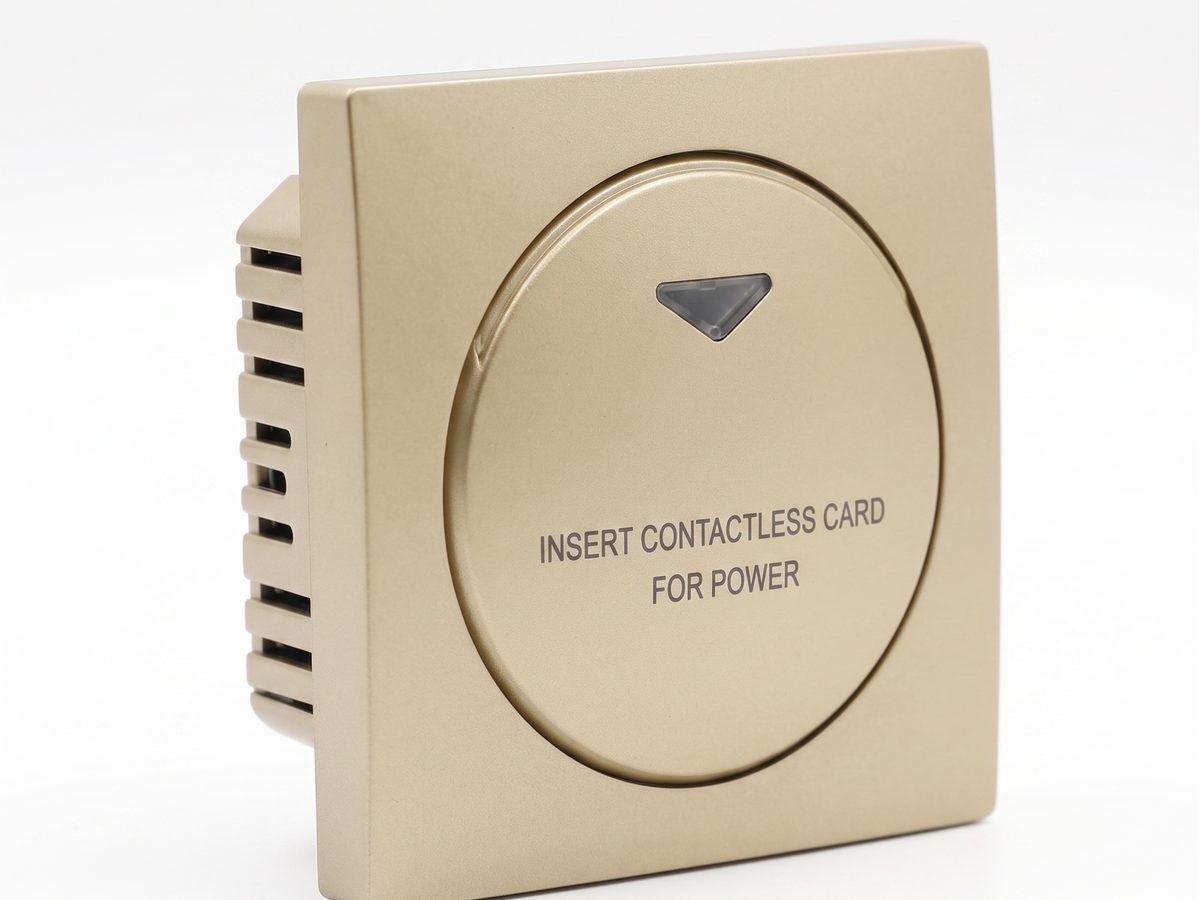
酒店取电开关插卡通电、拔卡延时断电,联动空调停止空房浪费。220V AC,10A-16A,RS485或干接点。CE RoHS。OEM/ODM供应商。
当前页面已经把它作为下一步推荐内容直接指向。
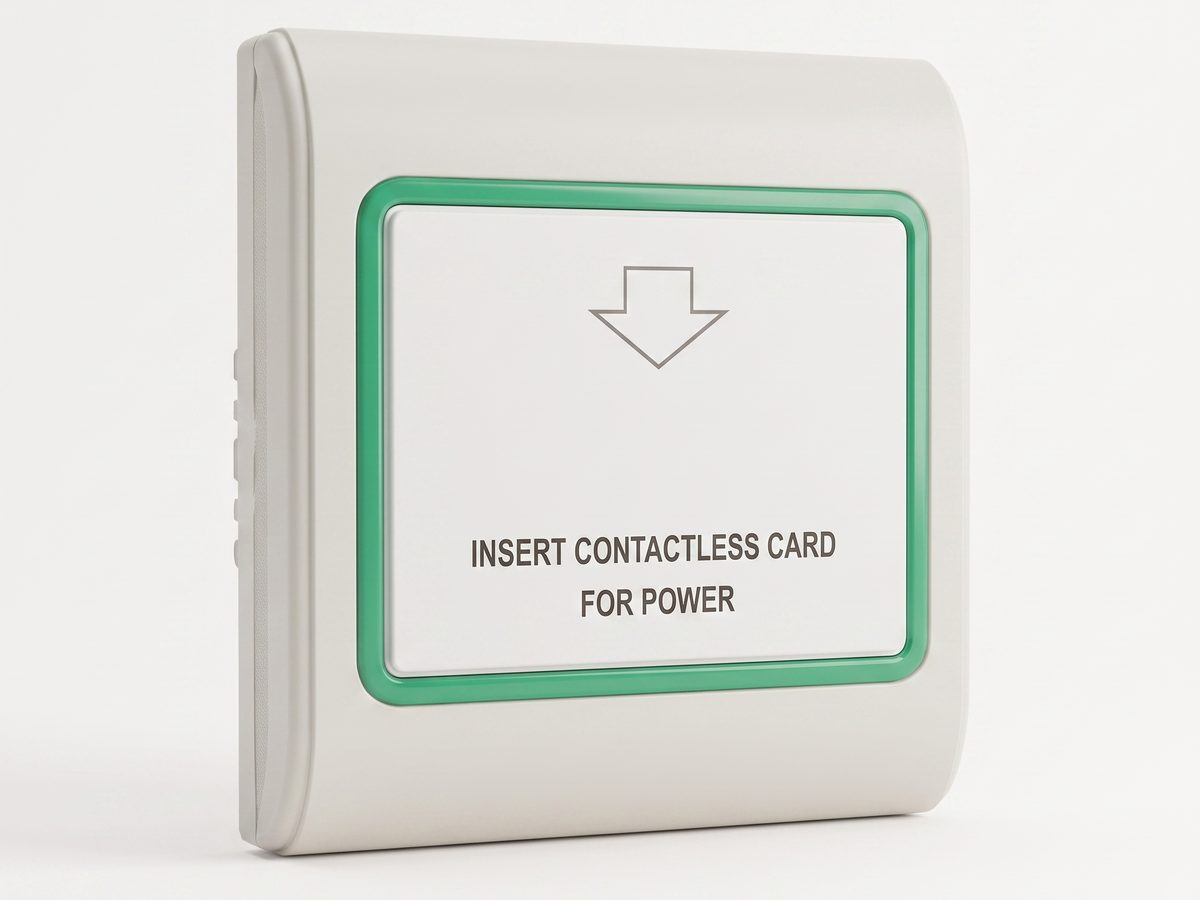
无线酒店取电开关专为改造项目设计。低频唤醒或 RS485 无线可选,电池供电免布线,客房用电控制无需新走线。CE RoHS 认证。OEM/ODM 源头供应商。
当前页面已经把它作为下一步推荐内容直接指向。
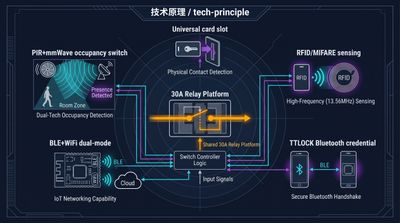
酒店取电开关涵盖通用、RFID、TTLOCK、BLE 与占用传感器五大型号。本指南详解取电开关、插卡取电开关等核心词对应的产品家族,对比各模型读卡规则、组网方式与适用场景,助您按现有门锁系统精准选型,无需换卡即可实现客房节能 25-40%。
它服务于同一产品语境:酒店取电开关 — 客房电源智能控制方案。
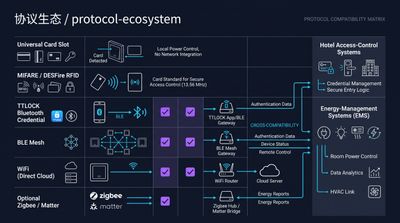
酒店取电开关选 RFID 还是 NFC?本质是卡技术家族与手机协议的区别:125kHz 与 13.56MHz RFID(MIFARE、Temic)是客房取电主流,支持扇区密钥绑定仅识自家房卡;NFC 只是手机模拟卡的贴近协议。文章对比读卡原理、防串用能力与选型建议,助工程商按现有门锁卡型精准决策。
它服务于同一产品语境:酒店取电开关 — 客房电源智能控制方案。
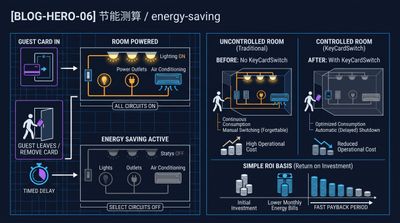
酒店取电开关插卡通电、取卡断电,客房节能 25-40%。对比通用型、RFID 型、TTLOCK 兼容型、BLE 智能型四大模式差异,涵盖 30A 继电器、15 秒延时、86 型底盒安装等关键参数,助您按现有刷卡系统精准选型,无需联网即可部署。
它服务于同一产品语境:酒店取电开关 — 客房电源智能控制方案。