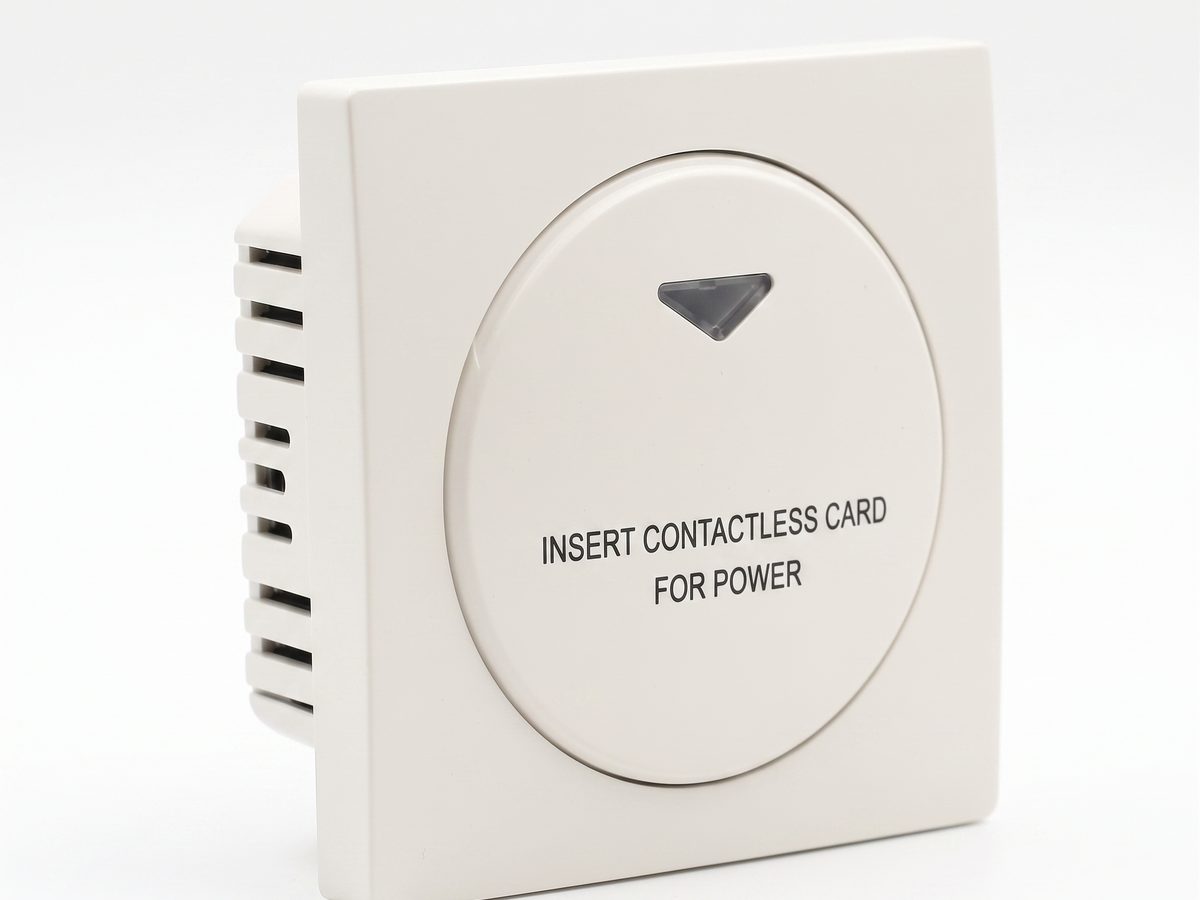
产品Key Card SwitchesGuest Room Power Control
酒店取电开关 — 客房电源智能控制方案
酒店取电开关实现客房电源智能控制。RFID/IC卡识别,插卡取电,拔卡延时断电。220V交流,10A-16A,RS485或干接点。CE RoHS认证。OEM/ODM源头供应商。
为什么推荐这一步
当前页面已经把它作为下一步推荐内容直接指向。
更适合使用 中文?我们会保留当前页面上下文,只在您确认后切换。
基于取电开关与占用传感器的酒店能源管理系统,通常不足一年即可收回成本,削减 25–40% 客房用电。掌握 ROI 核算、物料清单,云端日志更让节能数据可查可证。
基于取电开关与占用传感器的酒店能源管理系统,通常不足一年即可收回成本,削减 25–40% 客房用电。掌握 ROI 核算、物料清单,云端日志更让节能数据可查可证。
基于取电开关与占用传感器的酒店能源管理系统,通常不足一年即可收回成本,因为它以每间客房仅几美元的硬件成本,自动切断了最大且最浪费的负载 —— 空房运行的空调与照明。ROI 核心取决于一个数字:25–40% 的客房用电,酒店能源管理系统在刷卡离房或检测到无人瞬间自动捕获。按每间客房 1–2 kW 平均负载计算,哪怕每天每间仅避免 60 分钟空房运行,也能省下约 0.5–1 kWh;乘以数百间客房、累计一整年,中型酒店的用电降幅即达五位数。酒店能源管理系统将这种节能从 “指望客人自觉” 变为 “硬件强制默认”,因此回本时钟从安装那一刻开始走,而非从培训开始。
酒店能源管理系统的 ROI 是一道简单的减法。用单间日均节电量(负载 × 避免的空房小时 × 电价),乘以房间数与入住率,再除以安装成本(开关 + 继电器 + 可选 BLE 网关)。以 200 间客房、电价 $0.15/kWh、单间日均省 0.75 kWh、入住率 70% 为例,年省电费约 $7,700 —— 足以在一年内覆盖每间几美元的开关采购成本。加上自动退房带来的人工节省(无需人工拨动开关、无因遗留开空调产生的纠纷),回本周期进一步缩短。酒店能源管理系统在资本性支出中独树一帜:经常性节省大、可预测、即时生效,且无需改变客人行为即可落地。
酒店能源管理系统的物料清单,是按房型分配的一套开关家族,而非堆砌多套互不相干的系统。混合卡型酒店用通用取电开关;MIFARE/Temic 卡房用 RFID 节能开关;TTLOCK 体系房用兼容 TTLOCK 开关;需云端记录的联网房用 BLE 智能开关;免刷卡或会议空间用占用传感器开关。所有型号统一 30A 继电器、AC 180–250V、暗装 86×86×48mm 面板,因此 BOM 只是逐间 SKU 列表,而非集成工程。单一供货商提供的酒店能源管理系统,意味着单一售后渠道、单一继电器规格、全屋统一改造流程 —— 这才能压低安装成本(进而缩短回本周期)。
BLE 智能节能开关引入云端日志,将酒店能源管理系统的 ROI 从估算变为报表。每间客房的每一次用电事件实时上传仪表盘,工程团队能精准看到哪些空房仍在用电,保洁团队能知晓哪些退房遗留负载。这条审计链路,让 25–40% 的节电率在业主面前站得住脚,也为可持续发展报告提供实证 —— 无需在每回路布线安装分表计量。带 BLE 的酒店能源管理系统,是同一继电器回路的联网版:门口离线可靠,后台云端可视。先参考 酒店节能开关选购指南 按房型选型,再汇总成 酒店能源管理系统 物料清单。
A hotel energy management system built on key card switches and occupancy sensors typically pays back in under a year because it removes the largest and most wasted guest-room load — air conditioning and lighting running on empty rooms — at a hardware cost of only a few dollars per room. The ROI rests on one number: 25–40% of guest-room electricity, which a hotel energy management system captures automatically the moment a card leaves or a room goes empty. At an average room load of 1–2 kW, avoiding even 60 minutes of empty-room runtime per room per day saves roughly 0.5–1 kWh, and multiplied across hundreds of rooms across a year that is a five-figure electricity reduction for a mid-size property. A hotel energy management system turns that saving from a behavioral hope into a hardware-enforced default, which is why the payback clock starts at install, not at training.
The hotel energy management system ROI is a simple subtraction. Take the per-room daily saving (load × empty hours avoided × tariff), multiply by room count and occupancy, and divide by the installed cost (switches + relays + any BLE gateway). A 200-room property at $0.15/kWh, saving 0.75 kWh/room/day across 70% occupancy, saves about $7,700/year in electricity — enough to cover a few-dollar-per-room switch rollout inside a single year. Add the labor saving from auto-checkout (no manual switch flip, no dispute over left-on AC) and the payback tightens further. A hotel energy management system is unusual among capex because the recurring saving is large, predictable, and immediate, with no guest behavior change required to realize it.
The bill of materials for a hotel energy management system is one switch family assigned per room type, not a stack of disparate systems. Universal hotel key card switches for mixed-card estates; RFID energy savers for MIFARE/Temic rooms; TTLOCK compatible switches for TTLOCK estates; BLE smart switches for connected rooms that need cloud logging; and occupancy sensor switches for card-free or meeting spaces. Each is the same 30A relay, AC 180–250V, flush 86×86×48mm panel, so the BOM is a per-room SKU list, not an integration project. A hotel energy management system from one supplier means one support channel, one relay spec, and one retrofit procedure across every room — which keeps install cost (and therefore payback time) low.
The BLE smart energy switch adds a cloud log that turns the hotel energy management system ROI from an estimate into a report. Every power event per room streams to a dashboard, so energy teams see exactly which rooms drew power while empty and housekeeping sees which checkouts left load on. That audit trail is what makes the 25–40% saving defensible to ownership and useful for sustainability reporting — sub-metering without wiring a meter into every circuit. A hotel energy management system with BLE is the connected version of the same relay loop: offline-reliable at the door, cloud-visible at the desk. Start with the hotel energy saving switch buying guide to assign models room-by-room, then roll up into the hotel energy management system BOM.
对比 3 种协议、查看酒店案例、下载安装指南
酒店取电开关实现客房电源智能控制。RFID/IC卡识别,插卡取电,拔卡延时断电。220V交流,10A-16A,RS485或干接点。CE RoHS认证。OEM/ODM源头供应商。
当前页面已经把它作为下一步推荐内容直接指向。
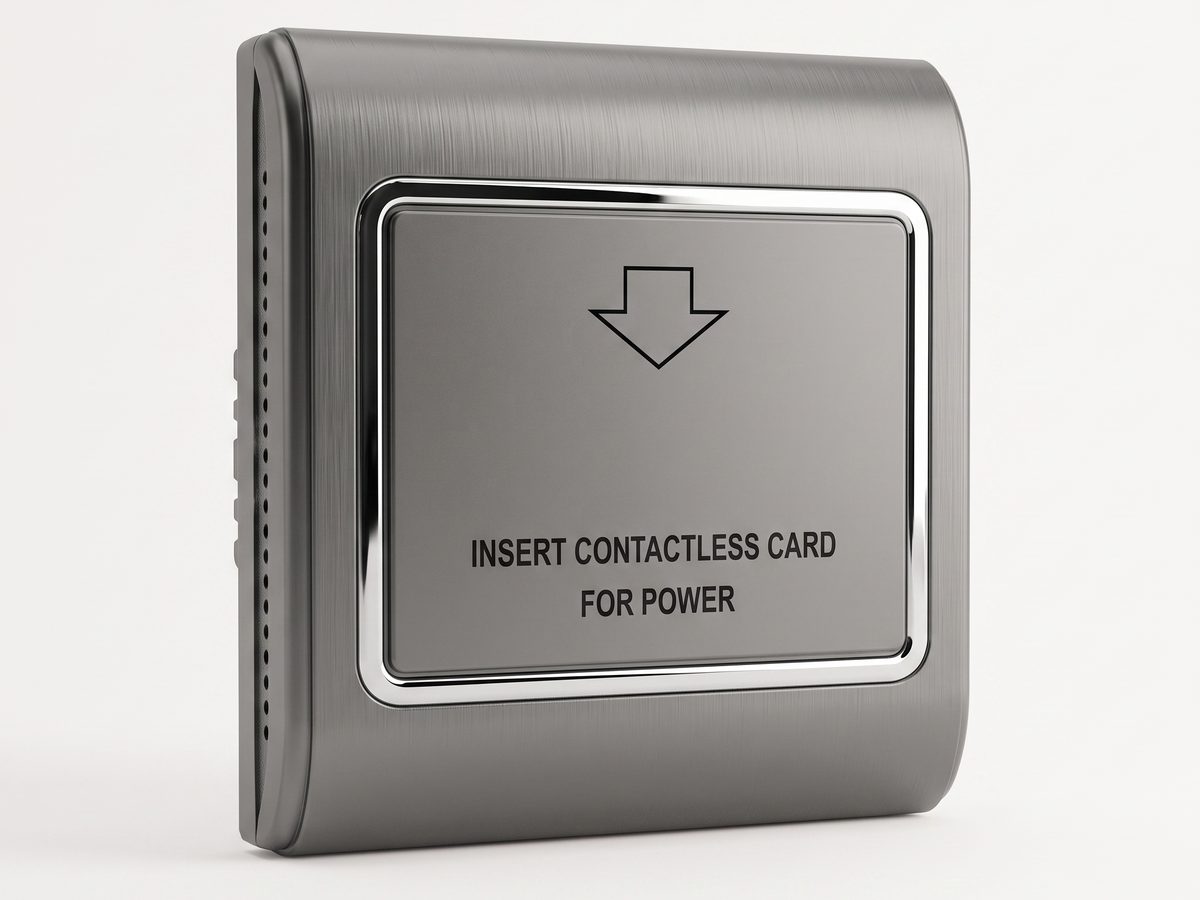
RFID 节能开关将电源绑定至特定房间 MIFARE 卡。13.56MHz MIFARE / 125kHz Temic,AC 180–250V,30A,15 秒延时断电。防跨房卡共享,客房节能 25–40%。
当前页面已经把它作为下一步推荐内容直接指向。
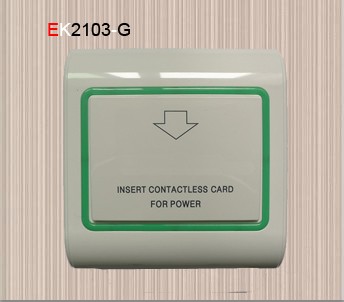
BLE 智能取电开关集成蓝牙 LE 与 WiFi,支持 App 房间取电控制。兼容客人手机或 MIFARE 卡,上云记录用电日志,削减 25–40% 客房能耗。智能节能开关与 WiFi 节能开关,助力智慧酒店。
当前页面已经把它作为下一步推荐内容直接指向。
基于取电开关、RFID 节能开关与占用传感器开关的酒店能源管理系统,削减 25–40% 客房用电。客房能源控制器选型指南,助力酒店存量改造。
当前页面已经把它作为下一步推荐内容直接指向。
涵盖通用卡、RFID/MIFARE、TTLOCK 兼容、BLE 智能及占用传感器开关的酒店节能开关选购指南。为您的客房挑选合适的取电开关、插卡取电开关与节能钥匙开关。
当前页面已经把它作为下一步推荐内容直接指向。
通过取电开关、交流接触器与明确操作规范,构建实用的客房供电管理系统。
它服务于同一产品语境:酒店取电开关 — 客房电源智能控制方案, RFID 节能开关 — 房间绑定 MIFARE 卡开关(B 型)。
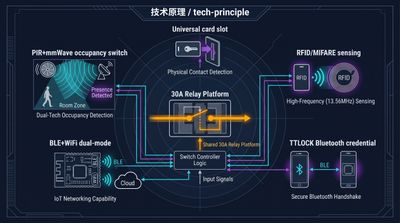
酒店取电开关涵盖通用、RFID、TTLOCK、BLE 与占用传感器五大型号。本指南详解取电开关、插卡取电开关等核心词对应的产品家族,对比各模型读卡规则、组网方式与适用场景,助您按现有门锁系统精准选型,无需换卡即可实现客房节能 25-40%。
它服务于同一产品语境:酒店取电开关 — 客房电源智能控制方案, RFID 节能开关 — 房间绑定 MIFARE 卡开关(B 型), BLE 智能取电开关 — 蓝牙 + WiFi 酒店取电控制, 酒店占用传感器开关 — PIR/雷达房间取电控制。
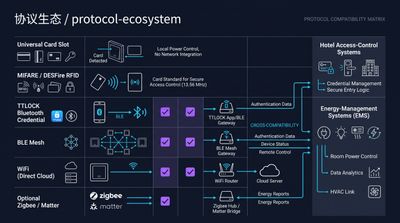
酒店取电开关选 RFID 还是 NFC?本质是卡技术家族与手机协议的区别:125kHz 与 13.56MHz RFID(MIFARE、Temic)是客房取电主流,支持扇区密钥绑定仅识自家房卡;NFC 只是手机模拟卡的贴近协议。文章对比读卡原理、防串用能力与选型建议,助工程商按现有门锁卡型精准决策。
它服务于同一产品语境:RFID 节能开关 — 房间绑定 MIFARE 卡开关(B 型), 酒店取电开关 — 客房电源智能控制方案。
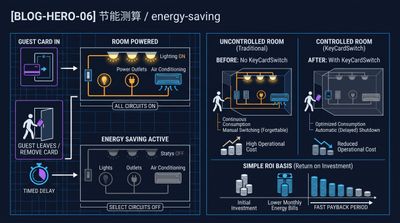
酒店取电开关插卡通电、取卡断电,客房节能 25-40%。对比通用型、RFID 型、TTLOCK 兼容型、BLE 智能型四大模式差异,涵盖 30A 继电器、15 秒延时、86 型底盒安装等关键参数,助您按现有刷卡系统精准选型,无需联网即可部署。
它服务于同一产品语境:酒店取电开关 — 客房电源智能控制方案, RFID 节能开关 — 房间绑定 MIFARE 卡开关(B 型), BLE 智能取电开关 — 蓝牙 + WiFi 酒店取电控制。