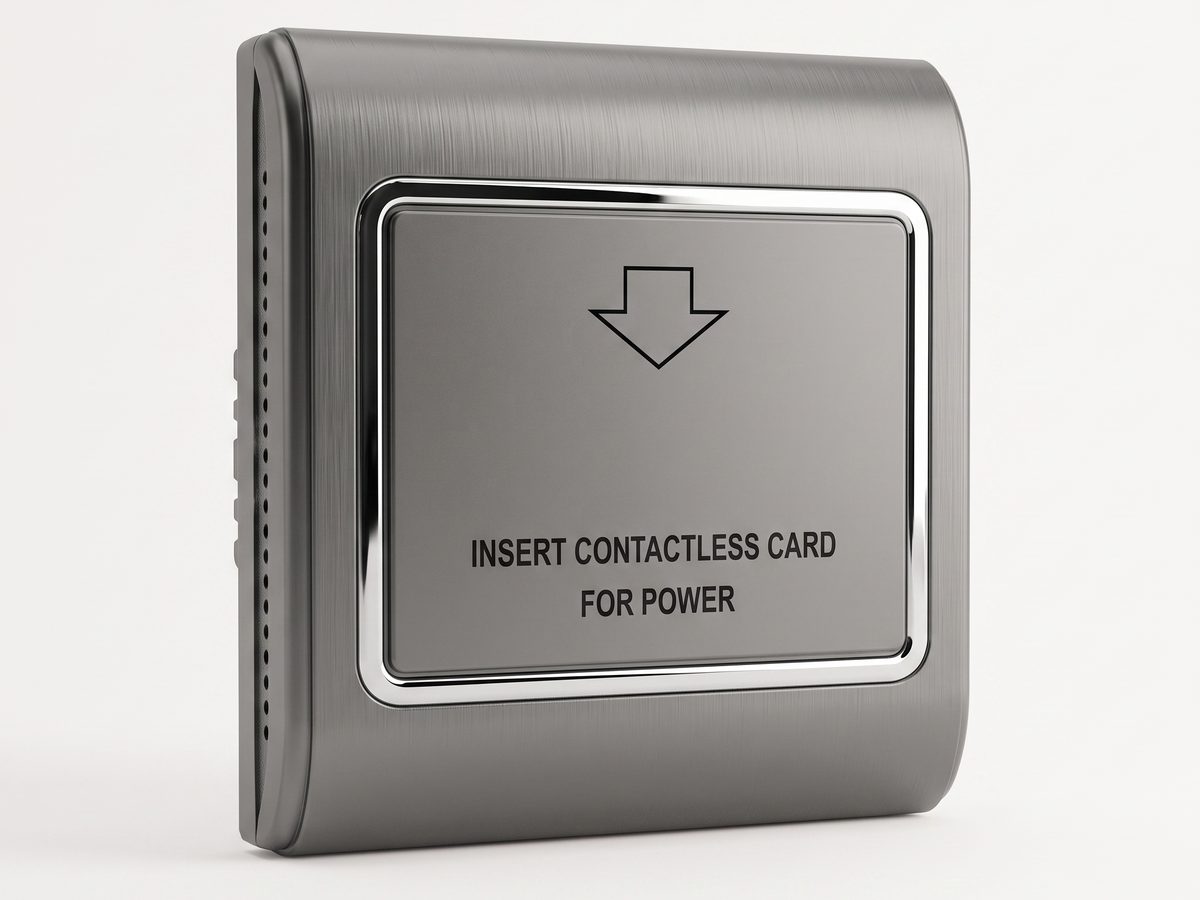
产品RFID / MIFARE Card SwitchesRFID Energy Saving Switch
RFID 节能开关 — 房间绑定 MIFARE 卡开关(B 型)
RFID 节能开关将电源绑定至特定房间 MIFARE 卡。13.56MHz MIFARE / 125kHz Temic,AC 180–250V,30A,15 秒延时断电。防跨房卡共享,客房节能 25–40%。
为什么推荐这一步
当前页面已经把它作为下一步推荐内容直接指向。
更适合使用 中文?我们会保留当前页面上下文,只在您确认后切换。
通过取电开关、交流接触器与明确操作规范,构建实用的客房供电管理系统。
通过取电开关、交流接触器与明确操作规范,构建实用的客房供电管理系统。
客房管理系统应从人们易懂的动作切入。客人插入授权卡,客房供电可用,拔卡时指定回路断电。墙内侧,取电开关提供检测信号,额定匹配的交流接触器切换指定负载。这种物理布局创造了可复制的客房常规,无需客人学习新界面。
具体行为取决于物业的运营简报。部分客房可能控制照明与空调使能回路,其他客房可能保留特定插座或必要服务供电。KeyCardSwitch 工程团队协助将这些选择转化为产品与安装方案。
实用的客房标准应涵盖卡类型、墙面位置、面板、供电电压、受控回路、接触器位置、延时断电与员工强制操作流程。同时需标识标准间、套房、无障碍间与服务式公寓的差异。该标准成为设计、采购、安装与维护的参考依据。
通用取电开关在物业已发放兼容卡时,能保持进门流程简洁。RFID 节能开关适用于偏好房间专用卡的场景。正确选择取决于物业的门禁习惯与期望的节能控制规则,而非通用的房间数量。
运营团队可定义客人与保洁的使用方式。电气工程师可确认回路分组与保护。采购团队可核对数量、包装与备品。安装团队可核验盒体尺寸与操作空间。在样板间评审阶段引入这些群体,可防止外观合格的开关日后引发服务问题。
使用代表性客房测试入住、离店、保洁、维护及断电恢复全流程。确认卡片可靠识别、预期回路得电、接触器承载负载时无异常噪音或发热。反复插拔卡片。测试员工卡与约定的服务流程。
验收记录应说明测试内容与批准人。若套房或楼层接线不同,需单独测试该配置。简明、实事求是的记录有助于推广团队复制成功经验并尽早识别例外情况。
样板间验收通过后,编制客房矩阵,列出各房型组的开关配置、接触器、受控回路、面板与数量。按物业维护策略订购备品。为安装人员提供清晰标签与简易交接清单。当酒店分期翻新或由多家承包商管理时,这些文档尤为宝贵。
系统可逐间升级,同时保持面向客人的动作一致。这种连续性降低培训需求,也让结果更易于员工解释。
提供房间数量、房型、卡技术、供电电压、受控负载、墙盒尺寸、安装国家与进度安排。KeyCardSwitch 工程团队将评审范围,并返回推荐配置、样板计划与物料清单。清晰定义的客房标准,是可靠客房管理的基石。
A guest room management system should begin with the actions people understand. The guest inserts an authorized card, room power becomes available, and selected circuits are disconnected when the card is removed. Behind the wall, the card switch provides the detection signal and a correctly rated contactor switches the designated loads. This physical arrangement creates a repeatable room routine without requiring guests to learn a new interface.
The exact behavior belongs to the property's operating brief. Some rooms may switch lights and air-conditioning enable circuits, while others may keep selected outlets or essential services supplied. KeyCardSwitch Engineering Team helps translate those choices into a product and installation plan.
A useful room standard describes the card type, wall location, faceplate, supply voltage, controlled circuits, contactor position, shutdown delay, and staff override procedure. It should also identify differences between standard rooms, suites, accessible rooms, and serviced apartments. The standard becomes a reference for design, procurement, installation, and maintenance.
A universal card switch keeps the entry workflow simple when the property already issues compatible cards. An RFID energy-saving switch can be selected when a room-bound card is preferred. The correct choice depends on the property's access practice and the desired energy-control rule, not on a generic room count.
Operations can define how guests and housekeeping should use the room. Electrical engineers can confirm circuit grouping and protection. Procurement can verify quantities, packaging, and spare units. Installation teams can check box dimensions and access. Bringing these groups into the sample-room review prevents a visually acceptable switch from creating service problems later.
Use a representative room to test arrival, departure, cleaning, maintenance, and recovery after a power interruption. Confirm that the card is recognized reliably, the expected circuits energize, and the contactor handles the load without unwanted noise or heat. Remove and reinsert the card repeatedly. Test staff cards and any agreed service procedure.
The acceptance record should state what was tested and who approved it. If a suite or alternate floor uses different wiring, test that configuration separately. A short, factual record helps the rollout team repeat what worked and identify exceptions early.
Once the sample is accepted, prepare a room matrix listing each room group, switch configuration, contactor, controlled circuits, faceplate, and quantity. Order spare units according to the property's maintenance approach. Give installers clear labels and a simple handover checklist. These documents are particularly valuable when a hotel is renovated in phases or managed by more than one contractor.
The system can be upgraded room by room while keeping the guest-facing action consistent. That continuity reduces training needs and makes the result easier for staff to explain.
Send the room count, room types, card technology, supply voltage, controlled loads, wall-box dimensions, installation country, and schedule. KeyCardSwitch Engineering Team will review the scope and return a recommended configuration, sample plan, and bill of materials. A well-defined room standard is the foundation of dependable guest-room management.
对比 3 种协议、查看酒店案例、下载安装指南
RFID 节能开关将电源绑定至特定房间 MIFARE 卡。13.56MHz MIFARE / 125kHz Temic,AC 180–250V,30A,15 秒延时断电。防跨房卡共享,客房节能 25–40%。
当前页面已经把它作为下一步推荐内容直接指向。
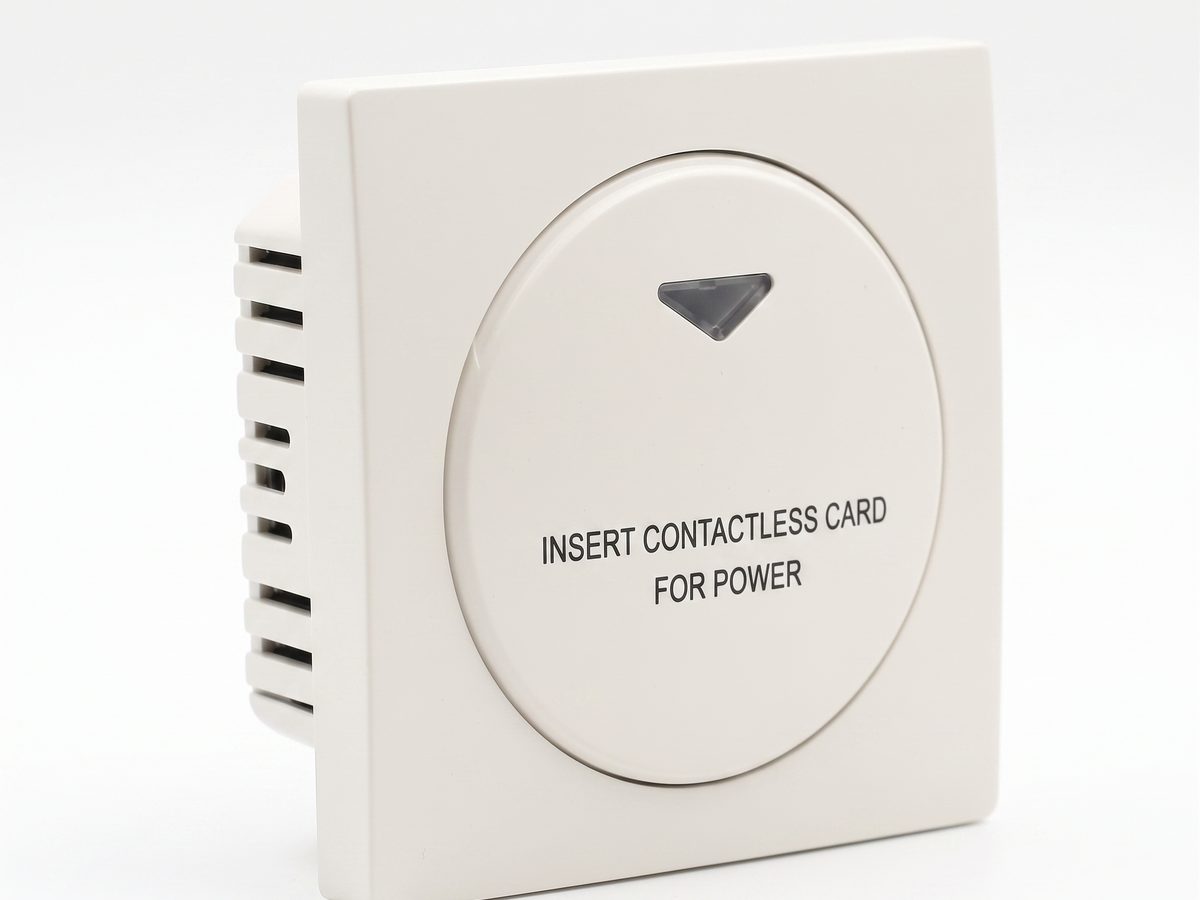
酒店取电开关实现客房电源智能控制。RFID/IC卡识别,插卡取电,拔卡延时断电。220V交流,10A-16A,RS485或干接点。CE RoHS认证。OEM/ODM源头供应商。
当前页面已经把它作为下一步推荐内容直接指向。
采用取电开关控制客房供电,防止灯光、空调与指定插座空转,实现酒店节能降耗。
它服务于同一产品语境:酒店取电开关 — 客房电源智能控制方案, RFID 节能开关 — 房间绑定 MIFARE 卡开关(B 型)。
为酒店客房照明、空调与插座提供实用的取电控制方案,凭授权房卡即可通断电源。
它服务于同一产品语境:酒店取电开关 — 客房电源智能控制方案, RFID 节能开关 — 房间绑定 MIFARE 卡开关(B 型)。
基于取电开关、RFID 节能开关与占用传感器开关的酒店能源管理系统,削减 25–40% 客房用电。客房能源控制器选型指南,助力酒店存量改造。
它服务于同一产品语境:酒店取电开关 — 客房电源智能控制方案, RFID 节能开关 — 房间绑定 MIFARE 卡开关(B 型)。
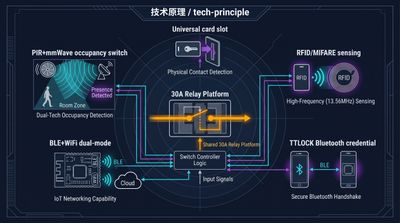
酒店取电开关涵盖通用、RFID、TTLOCK、BLE 与占用传感器五大型号。本指南详解取电开关、插卡取电开关等核心词对应的产品家族,对比各模型读卡规则、组网方式与适用场景,助您按现有门锁系统精准选型,无需换卡即可实现客房节能 25-40%。
它服务于同一产品语境:酒店取电开关 — 客房电源智能控制方案, RFID 节能开关 — 房间绑定 MIFARE 卡开关(B 型)。
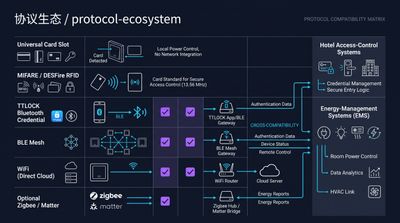
酒店取电开关选 RFID 还是 NFC?本质是卡技术家族与手机协议的区别:125kHz 与 13.56MHz RFID(MIFARE、Temic)是客房取电主流,支持扇区密钥绑定仅识自家房卡;NFC 只是手机模拟卡的贴近协议。文章对比读卡原理、防串用能力与选型建议,助工程商按现有门锁卡型精准决策。
它服务于同一产品语境:RFID 节能开关 — 房间绑定 MIFARE 卡开关(B 型), 酒店取电开关 — 客房电源智能控制方案。
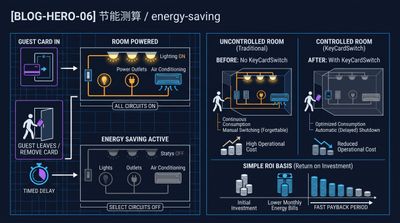
酒店取电开关插卡通电、取卡断电,客房节能 25-40%。对比通用型、RFID 型、TTLOCK 兼容型、BLE 智能型四大模式差异,涵盖 30A 继电器、15 秒延时、86 型底盒安装等关键参数,助您按现有刷卡系统精准选型,无需联网即可部署。
它服务于同一产品语境:酒店取电开关 — 客房电源智能控制方案, RFID 节能开关 — 房间绑定 MIFARE 卡开关(B 型)。