无线与有线酒店取电开关:改造项目如何选择
无线与有线酒店取电开关对比:布线复杂度、改造便利性、可靠性、供电方式、成本、延迟与覆盖。如何为您的项目选择合适的开关。
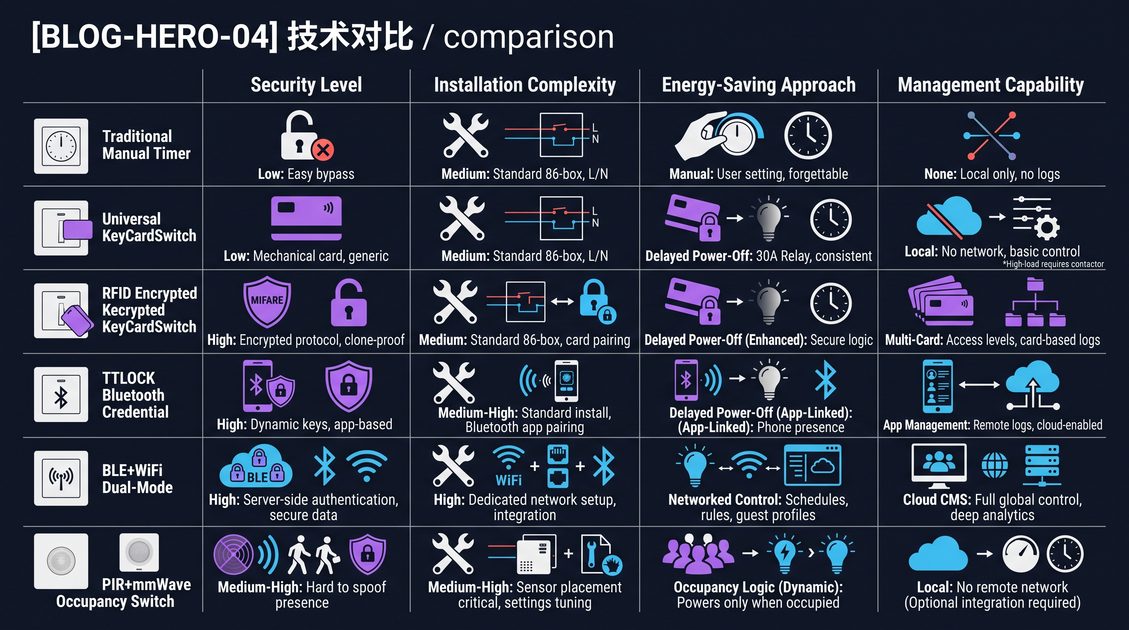
无线与有线酒店取电开关的对比核心,在于开关如何将其两大核心信号(插卡状态与通电指令)传回客房负载端。有线酒店取电开关通过铜质导体传输信号,从开关连接至接触器、继电器模块,或直接接入为客房照明、插座供电的交流电力线,这意味着每间客房都需单独敷设电缆,穿越吊顶、门楣上方或线槽内部。无线酒店取电开关则内置射频收发器,通常工作在 433 MHz、868 MHz、915 MHz 或 2.4 GHz 频段,按低频周期唤醒并发送状态变化至室内接收节点,从而省去回传至配电点的专用信号电缆。两种方案在安装布线复杂度、改造可行性、长期可靠性、供电方式、总安装成本、覆盖范围与延迟保障等维度存在差异。本指南将逐一对比这些维度,并说明如何选择合适的开关。
无线与有线酒店取电开关对安装布线的影响
无线与有线酒店取电开关决策的核心差异,在于各方案对客房安装布线的需求量。有线取电开关要求信号路径物理连接开关本体与客房电源控制点,因此安装人员必须从开关(通常安装在室内侧门边、与插卡槽同高)向配电点(控制照明、插座、空调)敷设至少一根电缆。在混凝土结构酒店中,走线常穿越吊顶空腔、沿门框侧墙壁腔下落,或在无法开槽的实体墙面沿明装线槽铺设。每间客房重复此过程,200 间客房的物业将使电缆长度、固定点、工时成倍增加。反之,无线取电开关完全不需要信号电缆:安装人员将开关固定墙面、接入本地供电,即可让无线电链路将状态回传至附近接收器或配电点的电池供电执行器。这将布线工作量压缩至有线方案的极小部分,也是运营中酒店、文保建筑、轻型结构改造项目常选无线路径的原因。对于墙面天花尚未封闭的新建项目,有线方案的额外电缆成本极低,其提供的稳定信号路径反成决定因素。因此,安装布线维度决定了各开关类型的最佳适用项目阶段:有线适配地上新建,无线适配开墙破坏大、成本高的存量改造。
有线安装与电缆走线复杂度
有线酒店取电开关安装以开关至电源控制设备的连续导体回路为基础。典型布线包含被切相线、开关电路用零线、驱动接触器或继电器线圈的控制输出。因开关安装位置高于门侧以匹配插卡槽高度,而配电点通常靠近房门或位于卫生间上方吊顶,电缆常需穿越至少两处墙面与天花交接点。每个交接点引入一个终端点、一处潜在故障点及额外工时。在运营酒店中,安装人员须保护成品面、规避现有强弱电线路、配合保洁排期,确保客房停售时间可控。在成品吊顶内穿拉电缆、每隔数米设拉线点的体力劳动,往往主导整个开关升级的成本。对于实体混凝土隔墙房间,明装线槽可能是唯一可行走线,但会增加物业方需接受的可见硬件。走线复杂度随开关至配电点距离、单配电箱服务楼层数急剧上升,因此有线方案要求电气承包商与精装团队精密配合。
无线安装与免布线挂载
无线取电开关移除了安装链条中最长、最昂贵的一环:回传至配电点的信号电缆。安装人员将开关安装于门侧墙面、接入本地供电(视型号为低压馈电或电池仓),配置无线电链路至接收器。接收器通常安装于配电点附近或吊顶内,通过闭合或断开继电器控制照明与插座回路。因无导体需穿越建筑实体,无线方案适配墙面天花不可开槽、文保消防法规限制开槽、或须在不腾房前提下升级的场景。开关按低频周期唤醒通讯,大部分时间休眠、仅状态变化时发射,使电池寿命达多年量级,并将射频流量压低至避免室间干扰。免去电缆敷设也将单间平均安装时长从小时级压缩至分钟级,这对欲在单次维护窗口内批量改造的物业方至关重要。权衡点在于:无线链路、接收器位置、室内供电必须精心规划,以保证全物业每间客房的无线路径可靠。
无线与有线酒店取电开关在改造翻新场景中的表现
改造工程(酒店已运营、客房日常使用)是无线与有线酒店取电开关选择产生最强现实后果的场景。改造中客房已精装、吊顶封闭、墙面装饰完成,物业无法承受长时间停售。在运营建筑安装有线取电开关,意味着破坏成品面敷设新线,往往导致每间客房停售一天以上。有线改造成本不仅含材料人工,还含停售期间的客房损失收益,此间接成本常超硬件价数倍。无线取电开关扭转经济账:安装人员单间耗时大幅缩短,客房往往当天即可恢复销售,建筑实体完好无损。因无线开关仅需本地供电与短时调试,小团队可在单次维护期内完成数十间改造。改造场景亦覆盖建筑实体本身排除布线的物业:内部受保护的文保酒店、木质或轻质隔墙结构、房东不批永久走线的租赁建筑。对这些场地,无线开关非仅更便宜,更是唯一可行方案。决策改造时,物业团队应逐间审计接收器覆盖、开关处供电可用性、可能阻挡射频路径的房间布局,因这些决定无线部署能否规模化成功。
运营酒店不停售改造
运营酒店要求每间客房持续产出收益,因此停售房间最少的改造法胜出。有线取电开关的电缆敷设几乎总要求搬动客人物品、吊顶上方作业,导致客房施工期间无法出租。即使极速有线安装也需数小时/间,且可能需过夜静置才能复售。无线取电开关可压缩进常规保洁时窗:技术员更换或新装开关、接入供电、绑定无线链路至接收器、验证照明插座响应。客房当天即可回库。此差异在物业层面复利放大:百间客房无线改造,两人小组单周可交付;有线同等工作量需数周,且全程扰乱预订可用性。物业还须权衡每处开槽墙面的修复装饰成本,每一道开槽、填补、刷漆都增加收尾工时与可见修补痕迹。无线改造保护成品面、守住客体验、维持收益流,正是运营酒店存量升级常选无线路径的原因。
文保、轻型与受限结构建筑
特定建筑类型使有线安装不切实际或根本不可能,这些是对比中最明确的无线适用场景。内部受保护的文保酒店常禁开槽或明装线槽,任何结构变更审批可耗月余。木框架、干挂隔墙、钢面板等轻型建筑不耐开槽走线,明装线槽破坏客人预期美感。房东不批跨结构永久走线的租赁建筑,直接排除有线选项。对上述所有场景,无线取电开关在不修改建筑实体前提下实现节能与门禁功能,成为标准推荐。安装人员将接收器装于吊顶或现有配电箱侧、从现有回路取电,让无线开关跨室上报插卡状态。因信号穿透干挂墙及多种轻质材料衰减低,无线路径恰在布线最难的结构中表现可靠。这些建筑的改造决策并非贴身对比:有线因结构原因出局,无线成为务实默认项。
无线与有线酒店取电开关的可靠性与信号稳定性
长期可靠性是两类开关各执优势的维度,塑造一切无法容忍客房停电物业的无线与有线酒店取电开关选型。有线取电开关提供最高信号稳定性,因状态经连续导体传输、无射频路径衰减,开关至负载响应即时,不受墙体、干扰、室内距离影响。其故障点为物理端子、继电器触点、电缆绝缘,均为确定性故障,电工易诊断。无线取电开关移除电缆,但引入须跨越墙体、金属家具、邻频道保持可靠的射频链路,因此其设计须以强链路裕度、低功耗唤醒协议、确认送达并失败重传的接收器架构来补偿。实践中,优设计无线开关凭借单间短距离、传输至确认收到的重传机制、接收器部署于视距良好位置,在电池或供电寿命期内实现极高可靠性。对比归结为风险性质差异:有线链路极少故障但故障排查费工时;无线链路原则上可能受房间布局变更或干扰设备影响,但故障处理无需布线工程,仅需更换或重置节点。维护团队应依建筑结构、房间尺寸、布线状况匹配开关类型,因在某物业可靠的开关,若射频路径或走线路径不佳,在另一物业可能成隐患。
有线信号路径与确定性行为
有线取电开关行为具确定性,因每次状态变化经固定电阻导体传输,继电器响应与插卡动作实质同步。安装人员可用万用表通断验证路径,任何故障按顺序检查端子即可定位,这是电工标准作业流程。此确定性在插卡即供电的场景极具价值,如走廊灯、卫生间排风扇须随插卡即时得电。有线方案亦免疫密集部署中偶发的射频干扰,不依赖电池状态、不依赖接收器在覆盖范围内,因接收器与开关同体或硬连线成对。权衡点在于:确定性完全依赖电缆与端子完整性,老旧建筑既有线路可能老化、端子腐蚀、或因前次改造受损。对新建或重布线物业,有线路径是可靠性最强担保,因此有线仍是新建与追求最低开关至负载延迟物业的默认选项。
无线低功耗链路与确认送达
无线取电开关通过为电池与供电寿命设计的射频协议实现可靠性。开关大部分时间处于低功耗休眠,按低频周期(通常每几百毫秒)唤醒监听指令,或在插拔卡瞬间发射状态变化。因单间距离短、链路裕度高、接收器确认送达,漏帧将重传至确认,消除漏报通电事件风险。安装于配电点的接收器解码报文驱动继电器,可从既有供电取电,自身电池不限制安装。协议保持低射频流量,降低邻室碰撞概率,工作频段按当地法规选定(433 MHz、868 MHz 通用于大部分地区,915 MHz 用于美洲部分),对标准内墙穿透力强。确认送达设计与单间短距离结合,使规格完善的无线开关可靠性达商业物业要求,未来若有新增金属隔断或家具调整,仅需重置节点而非重新布线即可应对。
无线与有线酒店取电开关的供电方式与能耗行为
各开关类型的供电方式是买方早期权衡的实约束。有线酒店取电开关从客房交流市电取电,或直接从受控回路、或从其衍生的低压供电取电,拥有近乎无限能源,无电池维护。开关自身功耗小、计入客房待机负载,但因属受控回路一部分,仅在客房使用或低待机态时取电。无线酒店取电开关有两种供电方式:本地低压供电(通常为小型交流适配器或从照明回路分接的稳压馈电),或完全无线安装所需的内置电池。电池供电无线开关配合低频唤醒调度设计为多年寿命,射频间歇休眠,但电池为有限资源,维护团队须追踪并定期更换。供电型无线开关免电池忧虑,但仍需开关处少量供电,通常简易可行,因房门入口处常有既有布线。能耗行为亦影响切换方式:两类通常驱动继电器或接触器控制客房负载,节能收益源于拔卡切断照明、插座、空调电源,与链路类型无关。任一方案均不应承诺固定节能百分比,因实际节能取决于客房入住模式与负载配置。
有线市电供电与低维护
有线取电开关从客房市电取电,因此全生命周期无电池更换,可服役至精装寿命终止。因开关硬接入受控回路,安装人员无需规划单独供电点,同一根切相线可经内部电源级提供逻辑供电。这消除整类维护任务:无电芯更换、无充电电路巡检。有线开关还有一小实用功能:其状态始终与市电同步,市电中断导致的开关复位由正常重启处理,而非电池耗尽。此简易性的代价是:有线开关必须由供电导体触达,这正是改造项目试图规避的电缆。对新建或重布线客房,市电供电零成本,有线选项的低维护成为客房全生命周期的真实运营优势。
无线电池与供电两种变体
无线取电开关给安装人员提供电池供电与本地低压供电两种选择,影响维护计划。电池变体对最难改造场地吸引力最大,因开关端完全无导体,低频唤醒调度将功耗压低至电芯多年寿命。维护团队须备正确电芯、排期定期更换,但因开关上报状态、接收器可标记弱电池,更换可计划化而非被动响应。供电型无线变体从既有客房照明分接小功率稳压供电,保留免布线改造优势的同时消除周期性电池服务。两种变体中,开关均通过接收器端继电器驱动客房负载,大电流切换留在配电点,无线开关仅处理低功耗控制信号。买方应确认供电型待机功耗、电池型宣称寿命,因这些实测值而非营销话术决定物业运营成本与服务周期。
无线与有线酒店取电开关的成本对比
总成本常为决策关键,合理的无线与有线酒店取电开关成本对比必须超越单价,审视全物业安装总成本。有线取电开关单价通常低于同级无线型号,因无射频模块与接收节点。但有线安装总成本含电缆、管槽线槽、端接人工、开槽面修复、改造期停售损失客房收益,这些项目通常远超硬件节省额。无线方案单间硬件成本较高(含开关与接收器),但几乎消除电缆、线槽、面层修复,大幅压缩单间工时,因此无线改造总安装成本常低于有线等效方案。新建项目计算反转:电缆在成品面前敷设,额外走线边际成本极低,有线开关较低硬件价格可使其总成本更优。对比亦含全生命周期运营成本:有线无电池,电池型无线需周期性电芯,供电型无线规避该项。买方应建表汇总硬件价、电缆配件、单间人工、面层修复、停售影响、全生命周期服务,套用物业房间数得出公允决策。
单间硬件、电缆与人工成本
单间成本是采购团队可直接对比的指标。有线取电开关硬件虽低,但电缆配件累积可观:每间数米导体、墙卡或线槽、端接材料,人工为主导项,因走线须规划、穿拉、端接、测试。改造中面层修复与停售增添间接成本。无线取电开关硬件含开关与接收器,单价较高,但人工仅为有线小部分,因无电缆穿拉,无面层修复与停售惩罚。百间规模下,总工时差异为最终发票主导杠杆,在许多市场直接决定哪个选项更便宜。实用经验法则:改造与多楼层批量推进中无线胜出成本对比;新建与走线极短的单间小规模翻新中有线胜出。
全生命周期与维护成本
首装之外,成本图景含维持开关服役至客房寿命终止的维护。有线取电开关无电池、无射频模块维护,全生命周期成本集中于端子与继电器触点的确定性故障,电工可快速诊断。电池型无线开关增电芯与更换人工周期性支出,摊销于多年电池寿命,物业须备件并追踪更换计划。供电型无线开关除电池成本但保留接收器节点作为须保持健康的服务点。维护团队应权衡有线选项的低常规成本与无线选项的免布线优势,并注意供电型无线变体以接近有线的全生命周期成本提供了大部分无线安装优势。规划十年运营周期的物业,全生命周期成本线与首装成本线同等重要,应同步建模。
无线与有线酒店取电开关的延迟、覆盖与控制范围
两类开关在开关至负载延迟、可提供覆盖、控制范围上存在差异,均关乎客房体验。有线酒店取电开关对插卡近乎即时响应,因信号经导体传输,照明与空调随插卡即时得电,拔卡即时断电。此低延迟符合客人预期,支持走廊灯即时亮起等快速行为。无线酒店取电开关引入唤醒间隔量级的微小传输延迟(通常零点几秒),因开关须唤醒、发射、收到确认后继电器才动作,优调设计将延迟控制在客人无感阈值内。有线系统覆盖在物业层面实质无限,因每间独立导体、无共享射频信道饱和问题。无线系统覆盖取决于接收器部署与射频规划,但因每间通常独立接收器,信道负载低、覆盖可靠。控制范围灵活性亦异:有线开关经固定输出控制负载,无线开关可将状态路由至控制客房负载的接收器,部分型号支持可配置多路输出,给工程团队在负载分布式布局时更大自由度。
开关至负载响应与客人体验
响应时间塑造门口客人体验。有线开关负载随插卡即时得电,符合客人进暗室找灯的预期行为。无线开关同一事件经短促唤醒发射周期后发生,优设计下为零点几秒,实际体验近乎一致。工程团队应核实无线型号宣称响应时间,不接受长轮询间隔设计,因超秒延迟会让客房显得迟钝。响应时间亦影响断电行为:拔卡须即时切断负载以实现节能、避免灯光长亮。两类开关均可配置拔卡短延迟,防空压机过快重启,但基础断电应即时。买方应将响应时间视为待核实规格而非假设,优先选择数据表标明唤醒间隔与继电器响应时间的无线型号。
覆盖、距离与信道规划
覆盖与距离规划两类不同。有线开关无射频距离规划,因每间独立导体自成体系,任意规模物业均可布线,无需担心信道饱和或楼层间干扰。无线开关需射频规划:接收器须在开关覆盖范围内、频段须符合当地法规与建筑材料、低频协议须保持信道清洁以便多间共频不碰撞。因通常每间独立接收器,实际覆盖为单间级,安装人员须确保接收器经门楣、吊顶空腔有清晰路径。低频唤醒设计使各室发射短促稀疏,让密集楼层可共频工作。工程团队应在代表性房间(含角房、金属隔断房)实测射频路径,再决定全物业推进,因覆盖验证是无线选项独有的主要规划任务。
无线与有线酒店取电开关:如何选择合适方案
综合各维度,无线与有线酒店取电开关的选择由项目阶段、建筑结构、运营约束决定,大型物业常以混合部署为最优解。新建、重布线、追求最低延迟与最高确定性可靠性的房间,选有线取电开关,因建筑开放期电缆成本低、有线路径是最强担保。运营酒店改造、文保或轻型建筑、不可停售房间、须保持建筑实体完好的项目,选无线取电开关,因免布线安装更快、更省、干扰更小。混合建筑类型的大型物业,可部署混合方案:重布线或新建楼翼用有线,运营楼翼与受限结构区用无线,让每间客房用上最经济可靠的方案。无论何种情况,均应核实决策依赖的规格:响应时间、电池寿命或供电要求、法规频段、接收器覆盖,并在全量推进前于样板间验证。下表汇总买方与工程团队的选型逻辑。
| 决策因素 | 有线取电开关 | 无线取电开关 |
|---|---|---|
| 安装布线 | 全程敷设至配电点 | 无信号电缆,仅本地供电 |
| 运营酒店改造 | 破坏大、需停售 | 快速、当天复售 |
| 新建项目 | 电缆边际成本低、推荐 | 可选、通常硬件更贵 |
| 信号可靠性 | 确定性、无射频路径 | 高、确认式低功耗链路 |
| 开关至负载延迟 | 近乎即时 | 短促唤醒发射延迟 |
| 供电方式 | 客房市电、无电池 | 电池或本地低压供电 |
| 总安装成本 | 硬件低、改造安装高 | 硬件高、改造安装低 |
| 维护 | 无电池服务 | 电池服务或供电变体 |
| 覆盖 | 单间导体无限制 | 单间接收器、需射频规划 |
| 最佳场景 | 新建、重布线、低延迟需求 | 改造、文保、受限结构 |
以规格书与样板间决策
严谨选型始于书面规格书,锁定响应时间、供电方式、法规频段、继电器额定、客房负载控制方式,再对候选无线与有线型号逐项比对。规格书排除仅比价格的风险,给买方落地比对基准。样板间在实况验证假设:安装人员用各候选开关各完成一间,实测开关至负载时间、按实际安装位核验接收器覆盖、确认保洁与客人体验。样板结果回馈成本与可靠性模型,物业据此决定全量推进。对大多数改造项目,样板将确认无线开关达标响应与可靠性的同时交付安装节省;对新建项目,样板将确认有线开关以最强确定性给出最低成本。先测后推,避免物业因纸面参数好看而批量采购实况不达标的开关类型。
无线与有线酒店取电开关:将开关匹配至项目
无线与有线酒店取电开关的决策,非关哪种技术绝对更优,而关哪种匹配具体项目。有线开关提供最强确定性、最低延迟、长寿命低维护,在电缆成本低的新建与重布线中大放异彩。无线开关提供免布线改造、保护建筑实体、保持运营房开放、触达布线不可能的场地,在存量升级、文保建筑、运营酒店中大放异彩。了解自身建筑类型组合的物业,甚至可双轨部署:新建楼翼用有线、改造楼翼用无线,取各自所长。无论选择哪条路径,买方均应在全量推进前于样板间核实响应时间、供电方式、电池寿命、法规频段、接收器覆盖,并以全物业安装总成本而非单价为真实价值衡量标准。有清晰决策表、书面规格书、经验证样板间,工程团队能选定今日可靠、全生命周期经济的取电开关。
本文部分内容由 AI 生成,并经优化以确保专业准确性与可读性。 A wireless vs wired hotel key card switch comparison centers on how the switch sends its two main signals, the card-inserted state and the power-on command, back to the in-room loads. A wired hotel key card switch carries these signals over copper conductors that run from the switch to a contactor, a relay module, or directly to the AC power line that feeds the room lighting and outlets, which means every guest room needs its own cable run pulled through the ceiling, above the door header, or inside a trunking channel. A wireless hotel key card switch instead embeds a radio transceiver, typically in the 433 MHz, 868 MHz, 915 MHz or 2.4 GHz band, that wakes on a low-frequency schedule and sends the state change to a receiver node elsewhere in the room, removing the need for a dedicated signal cable back to the power distribution point. The two approaches differ on installation wiring complexity, retrofit feasibility, long-term reliability, how they are powered, the total installed cost, and the coverage or latency they can guarantee. This guide compares these dimensions and explains how to choose the right switch.
What Wireless vs Wired Hotel Key Card Switch Means for Installation Wiring
The central difference in any wireless vs wired hotel key card switch decision is the amount of installation wiring each approach demands in a guest room. A wired key card switch requires a signal path that physically connects the switch body to the room power control point, so the installer must route at least one cable from the switch, usually mounted beside the door on the inside of the room, to the distribution point that switches the lighting, the sockets, and the air conditioner. In a concrete-built hotel the run often travels through the ceiling void, drops down inside the wall cavity beside the door frame, or passes along a surface-mounted trunking channel when the building fabric is solid and cannot be chased easily. Every room repeats this process, so a 200-room property multiplies the cable length, the fixing points, and the labour hours by two hundred. A wireless key card switch, by contrast, needs no signal cable at all: the installer mounts the switch on the wall, connects a local supply, and lets the radio link carry the state back to a nearby receiver or to a battery-powered actuator at the distribution point. This collapses the wiring work to a fraction of the wired figure, which is why retrofit projects in operating hotels, listed buildings, and lightweight structures so often prefer the wireless route. For a new build where the walls and ceilings are open before the finishes go in, the extra cable cost of the wired option is low, and the stable signal path it provides becomes the deciding factor. The installation wiring dimension therefore decides the project phase for which each switch type is best suited: wired for ground-up construction, wireless for occupancy upgrade work where opening walls is disruptive and expensive.
Wired Installation and Cable Routing Complexity
A wired hotel key card switch installation is built around a continuous conductor loop from the switch to the power control device. The typical wiring includes a phase conductor that is switched, a neutral conductor for the switch circuit itself, and the control output that drives a contactor or a relay coil. Because the switch is mounted high beside the door to match the card slot height, and the distribution point is usually near the room entrance or in a ceiling void above the bathroom, the cable often passes through at least two wall and ceiling junctions. Each junction introduces a termination point, a potential failure location, and additional installation time. In an operating hotel, the installer must protect the finished surfaces, plan the route to avoid existing electrical runs and data cables, and coordinate with the housekeeping schedule so that no room stays out of service longer than planned. The physical labour of fishing cable through a finished ceiling, with pull points every few metres, can dominate the cost of the entire switch upgrade. For rooms with solid concrete partition walls, surface trunking may be the only practical route, and that adds visible hardware that the owner must accept. The routing complexity rises sharply with the distance between the switch and the distribution point and with the number of floors served by a single switchboard, so a wired solution needs careful coordination between the electrical contractor and the interior fit-out team.
Wireless Installation and No-Cable Mounting
A wireless key card switch removes the longest and most expensive part of the installation chain, the signal cable back to the distribution point. The installer mounts the switch on the wall beside the door, connects the local supply, which can be a low-voltage feed or a battery compartment depending on the model, and configures the radio link to the receiver. The receiver, which is typically mounted near the power distribution point or inside the ceiling void, closes or opens a relay that controls the lighting and socket circuits. Because there is no conductor to route through the fabric of the building, the wireless option suits rooms where the walls and ceilings cannot be opened, where heritage or fire regulations restrict chasing, or where the occupancy upgrade must happen without decanting the guest. The switch communicates over a low-frequency wake-up schedule, sleeping most of the time and waking only to transmit a state change, which keeps battery life in the multi-year range and keeps radio traffic low enough to avoid interference between rooms. The elimination of cable runs also shortens the average installation time per room from hours to minutes, which matters to a property owner who wants to convert a large room block over a single maintenance window. The trade-off is that the radio link, the receiver position, and the in-room supply must be planned carefully so that the wireless path is reliable across every room in the property.
Wireless vs Wired Hotel Key Card Switch in Retrofit and Renovation Scenarios
Retrofit work, where the hotel already operates and the rooms are in daily use, is the scenario where the wireless vs wired hotel key card switch choice has the strongest practical consequences. In a retrofit, the guest rooms are finished, the ceilings are closed, the walls are decorated, and the property cannot afford long closures. Installing a wired key card switch in an occupied building means disturbing those finished surfaces to run new cable, and in many cases it means taking each room out of service for a day or more. The cost of a wired retrofit therefore includes not only the materials and labour but also the lost room revenue during the closure, and this indirect cost often exceeds the hardware price several times over. A wireless key card switch flips the economics: the installer completes each room in a fraction of the time, the guest room can often stay bookable the same day, and the building fabric stays intact. Because the wireless switch needs only a local supply and a short commissioning step, a small crew can convert dozens of rooms in a single maintenance period. The retrofit scenario also covers properties where the building fabric itself rules out wiring, such as heritage hotels with protected interiors, timber or lightweight partition structures, and rented buildings where the owner will not approve structural cable runs. For these sites the wireless switch is not merely cheaper, it is the only feasible option. When the decision is made for a retrofit, the property team should audit every room for the receiver coverage, the power availability at the switch location, and the room layout that could block the radio path, because these determine whether the wireless deployment succeeds at scale.
Retrofitting an Operating Hotel without Closing Rooms
An operating hotel expects continuous revenue from every room, so the retrofit method that closes the fewest rooms wins. With a wired key card switch, the cable run almost always requires moving the guest's belongings, working above the ceiling, and leaving the room unrentable while the work is done. Even a fast wired install takes several hours per room, and the room may need a night to settle before it is resold. A wireless key card switch fits within a normal housekeeping window: the technician replaces the existing switch or mounts a new one, connects the supply, binds the radio link to the receiver, and verifies that the lighting and sockets respond. The room can return to inventory on the same day. This difference compounds across a property: a 100-room retrofit done wirelessly can be delivered in a single week with two technicians, where the same work done with cable runs could take several weeks and disrupt booking availability throughout. The property must also weigh the building damage and redecoration cost of every chased wall, since each cut, filled and repainted surface adds finishing labour and a visible repair. Wireless retrofit preserves the finishes, protects the guest experience, and keeps the revenue stream intact, which is why occupancy upgrades in running hotels so often choose the wireless path.
Heritage, Lightweight and Restricted-Structure Buildings
Certain building types make wired installation impractical or impossible, and these are the clearest wireless use cases in the comparison. Heritage hotels with protected interiors frequently prohibit chasing walls or running visible trunking, and the approval process for any structural change can take months. Lightweight buildings using timber frames, drywall partitions or steel-clad panels do not hold a chased cable well, and running surface trunking damages the aesthetic that guests expect. Buildings under lease where the landlord will not permit permanent cable runs across the structure rule out the wired option outright. For all of these, a wireless key card switch delivers the energy-saving and access-control function without modifying the building fabric, so the switch becomes the standard recommendation. The installer mounts the receiver in the ceiling void or beside the existing distribution board, powers it from the existing circuit, and lets the wireless switch report the card state across the room. Because the signal passes through drywall and many lightweight materials with low loss, the wireless path is dependable in exactly the structures where cable runs are hardest. The retrofit decision in these buildings is therefore not a close comparison at all: the wired option is disqualified on structural grounds, and the wireless option becomes the practical default.
Reliability and Signal Stability of Wireless vs Wired Hotel Key Card Switch
Long-term reliability is the dimension where the two switch types trade strengths, and it shapes every wireless vs wired hotel key card switch selection for properties that cannot tolerate room outages. A wired key card switch offers the highest possible signal stability because the state is carried over a continuous conductor with no radio path to degrade, so the switch-to-load response is immediate and unaffected by walls, interference or distance within the room. Its failure points are the physical terminations, the relay or contactor contacts, and the cable insulation, all of which are deterministic and easy for an electrician to diagnose. A wireless key card switch removes those cables but introduces a radio link that must stay reliable across walls, metal furniture and adjacent channels, so its design must compensate with strong link margin, a low-power wake-up protocol, and a receiver architecture that confirms delivery and retries on failure. In practice a well-designed wireless switch achieves very high reliability over its battery or powered life because the distance inside a single guest room is short, the transmission is repeated until acknowledged, and the receiver is mounted in a position with a clear path. The comparison therefore comes down to the nature of the risk: a wired link fails rarely but its failures can be labour-intensive to trace, while a wireless link can in principle be affected by a changed room layout or an interfering device, but it fails without any cabling work because the installer simply replaces or repositions a node. The maintenance team should match the chosen switch type to the building structure, the room size, and the wiring condition, because a switch that is reliable in one property can be a liability in another if the radio path or the cable route is poor.
Wired Signal Path and Deterministic Behaviour
A wired key card switch behaves deterministically because every state change travels over a conductor with a fixed resistance, and the response at the relay is essentially simultaneous with the card insertion. The installer can verify the path with a continuity meter, and any fault is found by checking the terminations in order, which is a standard procedure for any electrician. This determinism is valuable in rooms where a delayed power-on would inconvenience the guest, such as a corridor light or a bathroom extractor that must energise the moment the card goes in. The wired approach is also immune to the radio interference that can occasionally affect a wireless node in a dense installation, and it does not depend on battery state or on the receiver being within range, because the receiver and the switch are the same device or a hard-wired pair. The trade-off is that the deterministic behaviour depends entirely on the integrity of the cable and its terminations, and in an old building the existing wiring may be tired, the terminations may corrode, or the route may have been damaged by a previous modification. For a new or rewired property the wired path is the strongest guarantee of reliability, which is why the wired option remains the default for new construction and for properties that demand the lowest possible switch-to-load latency.
Wireless Low-Power Link and Acknowledged Delivery
A wireless key card switch achieves reliability through a radio protocol designed for battery and powered life. The switch spends most of its time in a low-power sleep state and wakes on a low-frequency schedule, typically every few hundred milliseconds, to listen for a command or to transmit a state change when the card is inserted or removed. Because the distance inside a guest room is short, the link margin is high and the signal is acknowledged by the receiver, so a missed frame is retransmitted until it is confirmed, which removes the risk of a lost power-on event. The receiver, mounted at the distribution point, decodes the message and drives the relay, and it can be powered from the existing supply so that its own battery does not limit the installation. The protocol keeps radio traffic low, which reduces the chance of collision between neighbouring rooms, and the operating band is chosen for the local regulatory environment, with 433 MHz and 868 MHz common in much of the world and 915 MHz in parts of the Americas, so the path has strong penetration through standard interior walls. The acknowledged-delivery design and the short in-room distance together give a well-specified wireless switch a reliability profile that meets the demands of a commercial property, and any future change, such as a new metal partition or a different furniture layout, can be handled by repositioning a node rather than by rewiring.
Power Supply and Energy Behaviour of Wireless vs Wired Hotel Key Card Switch
The way each switch type is powered is a practical constraint that buyers weigh early in any wireless vs wired hotel key card switch evaluation. A wired hotel key card switch is powered from the room AC mains, either directly from the switched circuit or from a low-voltage supply derived from it, so it has an effectively unlimited energy source and needs no battery maintenance. The switch itself consumes a small amount of power that contributes to the room idle load, but because it is part of the controlled circuit it draws only when the room is in use or in a low standby state. A wireless hotel key card switch can be powered in two ways: from a local low-voltage supply, usually a small AC adapter or a regulated feed tapped from the room lighting circuit, or from internal batteries when a completely cordless installation is required. Battery-powered wireless switches are designed to run for years on a low-frequency wake-up schedule, with the radio sleeping between transmissions, but the battery is a finite resource that the maintenance team must track and eventually replace. Powered wireless switches remove the battery concern but still require a small supply at the switch location, which is usually simple to provide because a room entrance has existing wiring. The energy behaviour also affects the switching method: both types typically drive a relay or a contactor that controls the room loads, and the energy-saving benefit comes from cutting power to lighting, sockets and the air conditioner when the card is removed, regardless of the link type. Neither approach should be specified with a promise of a fixed energy percentage, because the real saving depends on the room occupancy pattern and the loads installed.
Wired Mains Supply and Low Maintenance
The wired key card switch draws its operating power from the room mains, so it never needs a battery replacement and it can be left in service for the life of the fit-out. Because the switch is hard-wired into the controlled circuit, the installer does not need to plan a separate supply point, and the same conductor that carries the switched phase can provide the logic supply through an internal power stage. This removes a whole class of maintenance tasks, since there is no cell to swap and no charging circuit to inspect. The wired switch also delivers a small but useful function in that its state is always synchronised with the mains, so a power cut that resets the switch is handled by a normal restart rather than by a depleted battery. The cost of this simplicity is that the wired switch must be reached by a supply conductor, which is exactly the cable that a retrofit project is trying to avoid. For a new build or a rewired room the mains supply is free, and the low maintenance of the wired option becomes a genuine operating advantage over the life of the room.
Wireless Battery and Powered Variants
A wireless key card switch offers the installer a choice between battery operation and a local low-voltage supply, and that choice affects the maintenance plan. The battery variant is the most attractive for the hardest retrofit sites because it needs no conductor at all at the switch, and the low-frequency wake-up schedule keeps consumption low enough for a multi-year cell life. The maintenance team must keep a stock of the correct cells and schedule periodic replacement, but because the switch reports its state and the receiver can flag a weak battery, the replacement can be planned rather than reactive. The powered wireless variant removes the battery concern by feeding the switch from a small regulated supply tapped from the existing room lighting, so the installation keeps the no-cable retrofit benefit while eliminating the periodic battery service. In both variants the switch drives the room loads through a relay at the receiver, so the high-current switching stays at the distribution point and the wireless switch itself handles only the low-power control signal. Buyers should confirm the standby consumption of the powered variant and the declared battery life of the battery variant, because these values, not the marketing claims, determine the operating cost and the service interval for the property.
Cost Comparison of Wireless vs Wired Hotel Key Card Switch
Total cost is often the deciding factor, and a proper wireless vs wired hotel key card switch cost comparison must look beyond the unit price to the installed cost across the whole property. The unit price of a wired key card switch is usually lower than that of a comparable wireless model, because the wired switch has no radio module and no receiver node. But the installed cost of the wired option includes the cable, the conduits or trunking, the termination labour, the redecoration of any chased surfaces, and in a retrofit the lost room revenue during closure, and these items typically exceed the hardware saving by a wide margin. The wireless option carries a higher hardware cost per room, for the switch and the receiver, but it almost eliminates the cable, the trunking, and the surface repairs, and it cuts the per-room labour time sharply, so the total installed cost for a wireless retrofit is often lower than the wired equivalent. For a new build, the calculation reverses because the cables are installed before the finishes and the marginal cost of an extra run is small, so the lower hardware price of the wired switch can make it the cheaper total. The comparison also includes the running cost over the life of the switch: the wired option has no battery, while a battery wireless switch needs periodic cells, though the powered wireless variant avoids that line item. A buyer should build a table with the hardware price, the cable and accessories, the labour per room, the surface repair, the closure impact, and the lifecycle service, and apply it to the number of rooms in the property to reach a fair decision.
Hardware, Cable and Labour Cost per Room
The cost per room is the figure a procurement team can compare directly. For a wired key card switch, the hardware is modest but the cable and accessories add up, with several metres of conductor, wall clips or trunking, and termination materials per room, and the labour is the dominant item because the run must be planned, pulled, terminated and tested. In a retrofit the surface repair and the closure add further indirect cost. For a wireless key card switch, the hardware includes the switch and its receiver, which raises the unit figure, but the labour is a small fraction of the wired value because there is no cable to pull, and there is no surface repair or closure penalty. Across a block of one hundred rooms, the difference in total labour hours is the main lever on the final invoice, and in many markets it decides which option is cheaper. A practical rule is that the wireless option wins the cost comparison in retrofit and multi-floor rollouts, while the wired option wins in new construction and in small, single-room renovations where the cable route is short.
Lifecycle and Maintenance Cost
Beyond the first installation, the cost picture includes the maintenance that keeps the switch working for the life of the room. A wired key card switch has no battery and no radio to service, so its lifecycle cost is concentrated in the deterministic faults of terminations and relay contacts, which an electrician can diagnose quickly. A battery wireless switch adds a recurring line item for the cells and the replacement labour, spread over the multi-year battery life, and the property must hold spares and track the replacement schedule. A powered wireless switch removes the battery cost but keeps the receiver node as a service point that must stay healthy. The maintenance team should weigh the low routine cost of the wired option against the no-cabling advantage of the wireless option, and should note that the powered wireless variant offers most of the wireless installation benefit with a lifecycle cost close to the wired figure. For a property planning a ten-year operating life, the lifecycle line can be as important as the first-installation line, so both should be modelled together.
Latency, Coverage and Control Scope of Wireless vs Wired Hotel Key Card Switch
The control behaviour of the two switch types differs in the switch-to-load latency, the coverage they can provide, and the scope of what they control, all of which matter to the room experience. A wired hotel key card switch responds to the card almost instantly because the signal travels over a conductor, so the lighting and the air conditioner energise the moment the card is inserted, and the room cuts power the moment the card is removed. This low latency is comfortable for guests and supports quick behaviour like a corridor light that must come on immediately. A wireless hotel key card switch introduces a small transmission delay on the order of the wake-up interval, typically a fraction of a second, because the switch must wake, transmit and receive an acknowledgment before the relay operates, and a well-tuned design keeps this delay small enough that the guest does not notice it. The coverage of a wired system is effectively unlimited within the property because every room has its own conductor and there is no shared radio channel to saturate. The coverage of a wireless system depends on the receiver placement and the radio plan, but because each room has its own receiver the channel load is low and the coverage is dependable. The control scope also differs in flexibility: a wired switch controls the loads through its fixed output, while a wireless switch can route its state to a receiver that controls the room loads and, on some models, a set of configurable outputs, which gives the engineering team more layout freedom when the room loads are distributed.
Switch-to-Load Response and Guest Experience
The response time shapes the guest experience at the door. With a wired switch the load energises at the moment of card insertion, which is the behaviour a guest expects when entering a dark room and looking for the light switch. With a wireless switch the same event happens after the short wake-and-transmit cycle, and on a good design this is a fraction of a second, so the practical experience is nearly identical. The engineering team should confirm the declared response time of the wireless model and should not accept a design with a long polling interval, because a delay of more than a second makes the room feel unresponsive. The switch-to-load response also affects the power-off behaviour, where the room loads must cut promptly on card removal to deliver the energy saving without leaving lights burning. Both switch types can be configured for a short delay on removal so that the air conditioner compressor does not restart too quickly, but the base power-cut should be immediate. Buyers should treat the response time as a specification to verify, not an assumption, and should prefer a wireless model that states its wake-up interval and its relay response time in the datasheet.
Coverage, Range and Channel Planning
The coverage and range planning differ between the two types. A wired switch has no radio range to plan, because each room is self-contained on its own conductor, so a property of any size can be wired without worrying about channel saturation or interference between floors. A wireless switch needs a radio plan: the receiver must be placed within range of the switch, the band must suit the local regulations and the building materials, and the low-frequency protocol must keep the channel clear so that many rooms can share the same frequency without colliding. Because each room typically has its own receiver, the practical coverage is per-room, and the installer must ensure the receiver has a clear path through the door header and the ceiling void. The low-frequency wake-up design keeps each room's transmission short and rare, which lets a dense floor work on a shared channel. The engineering team should test the radio path in representative rooms, including the corner rooms and the rooms with metal partitions, before committing the whole property, because the coverage validation is the main planning task unique to the wireless option.
Wireless vs Wired Hotel Key Card Switch: How to Choose the Right Option
Bringing the dimensions together, the choice between a wireless and a wired hotel key card switch is decided by the project phase, the building structure, and the operating constraints, and for large properties a hybrid deployment is often the best answer. Choose a wired key card switch for new construction, for rewiring projects, and for rooms where the lowest latency and the highest deterministic reliability matter, because the cable cost is low when the building is open and the wired path is the strongest guarantee. Choose a wireless key card switch for retrofit of an operating hotel, for heritage or lightweight buildings, for rooms that cannot be closed, and for any project where the fabric of the building must stay intact, because the no-cable installation is faster, cheaper and less disruptive. For a large property that mixes building types, deploy a hybrid solution: run wired switches in the wings that are being rewired or newly built, and wireless switches in the occupied wings and the restricted-structure areas, so that each room uses the most economical and reliable option available. In every case, verify the specifications that the decision depends on, the response time, the battery life or supply requirement, the regulatory band, and the receiver coverage, and validate the choice in a pilot room before scaling to the full block. A decision table is provided below to summarise the selection logic for the buyer and the engineering team.
| Decision factor | Wired key card switch | Wireless key card switch |
|---|---|---|
| Installation wiring | Full cable run to distribution point | No signal cable, local supply only |
| Retrofit of operating hotel | Disruptive, closes rooms | Fast, room returns same day |
| New construction | Low marginal cable cost, recommended | Optional, usually costlier hardware |
| Signal reliability | Deterministic, no radio path | High, acknowledged low-power link |
| Switch-to-load latency | Near instant | Short wake-and-transmit delay |
| Power supply | Room mains, no battery | Battery or local low-voltage supply |
| Total installed cost | Lower hardware, higher install in retrofit | Higher hardware, lower install in retrofit |
| Maintenance | No battery service | Battery service or powered variant |
| Coverage | Unlimited per-room conductors | Per-room receiver, radio plan needed |
| Best scenario | New build, rewiring, low-latency demand | Retrofit, heritage, restricted structure |
Making the Decision with a Specification and a Pilot Room
A disciplined selection starts with a written specification that fixes the response time, the power supply, the regulatory band, the relay rating, and the room-load control method, and then compares the shortlisted wireless and wired models against it. The specification removes the risk of choosing on price alone and gives the buyer a concrete basis for the pilot. The pilot room validates the assumptions in real conditions: the installer completes one room with each candidate switch, measures the switch-to-load time, checks the receiver coverage from the actual mounting positions, and confirms the housekeeping and guest experience. The results of the pilot feed back into the cost and reliability model before the property commits to the full rollout. For most retrofit projects the pilot will confirm that a wireless switch meets the response and reliability bar while delivering the installation saving, and for new construction the pilot will confirm that the wired switch offers the lowest cost with the strongest determinism. By testing before scaling, the buyer avoids committing a large property to a switch type that looked good on paper but does not hold up in the real rooms.
Wireless vs Wired Hotel Key Card Switch: Matching the Switch to the Project
The wireless vs wired hotel key card switch decision is not about which technology is objectively better, but about which matches the specific project. Wired switches deliver the strongest determinism, the lowest latency and a long, low-maintenance life, and they shine in new construction and rewiring where the cable cost is small. Wireless switches deliver a no-cable retrofit that preserves the building fabric, keeps operating rooms open, and reaches the sites where wiring is impossible, and they shine in occupancy upgrades, heritage buildings and occupied hotels. A property that understands its own mix of building types can even deploy both, using wired in the new wings and wireless in the retrofit wings, and capture the best of each. Whichever path is chosen, the buyer should verify the response time, the power supply, the battery life, the regulatory band and the receiver coverage in a pilot room before the full rollout, and should treat the installed cost across the whole property, not the unit price, as the true measure of value. With a clear decision table, a written specification and a validated pilot, the engineering team can select a key card switch that is reliable today and economical over the life of the room.
Part of this article content is generated by AI and optimized for professional accuracy and readability.
不确定哪款传感器适合您的项目?
与我们的毫米波应用工程师免费咨询。
为您的酒店项目挑选合适的存在传感器
对比 3 种协议、查看酒店案例、下载安装指南
相关产品
2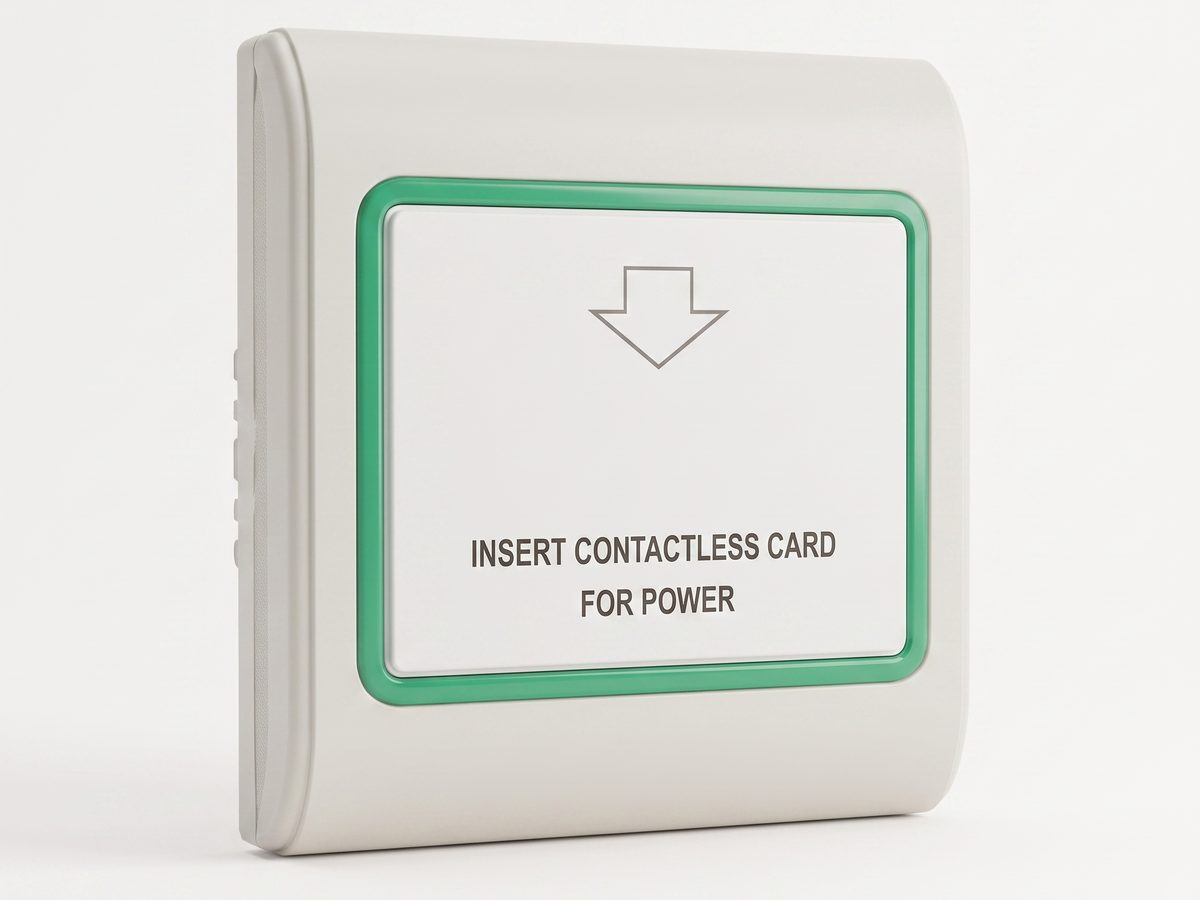
无线取电开关 — 电池或总线供电,酒店改造首选
无线酒店取电开关专为改造项目设计。低频唤醒或 RS485 无线可选,电池供电免布线,客房用电控制无需新走线。CE RoHS 认证。OEM/ODM 源头供应商。
当前页面已经把它作为下一步推荐内容直接指向。
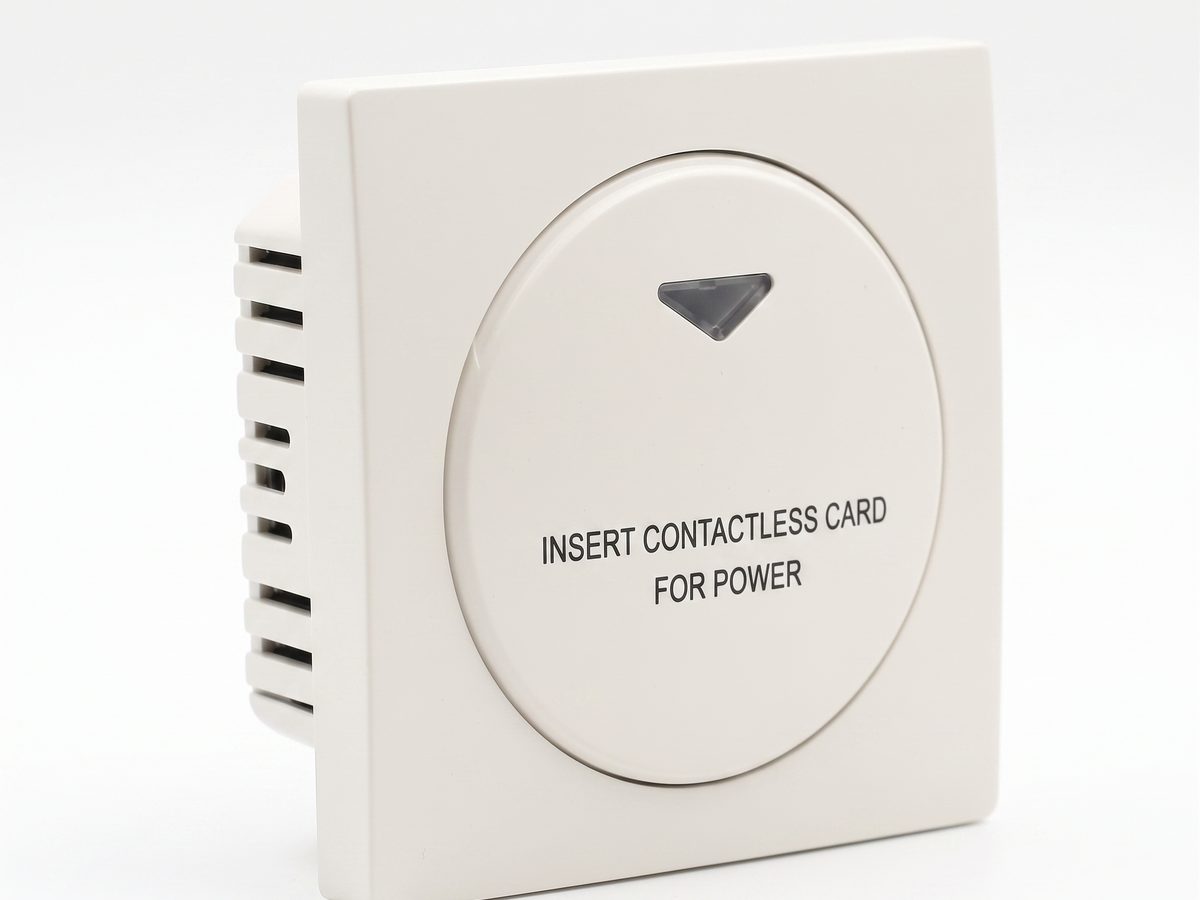
酒店取电开关 — 客房电源智能控制方案
酒店取电开关实现客房电源智能控制。RFID/IC卡识别,插卡取电,拔卡延时断电。220V交流,10A-16A,RS485或干接点。CE RoHS认证。OEM/ODM源头供应商。
当前页面已经把它作为下一步推荐内容直接指向。
相关解决方案
3相关文章
3
酒店取电开关五大控制模型详解:通用、RFID、TTLOCK、BLE 与占用传感器选型指南
酒店取电开关涵盖通用、RFID、TTLOCK、BLE 与占用传感器五大型号。本指南详解取电开关、插卡取电开关等核心词对应的产品家族,对比各模型读卡规则、组网方式与适用场景,助您按现有门锁系统精准选型,无需换卡即可实现客房节能 25-40%。
它服务于同一产品语境:酒店取电开关 — 客房电源智能控制方案。
RFID 与 NFC 酒店取电开关选型完全指南:125kHz 与 13.56MHz 卡技术核心差异
酒店取电开关选 RFID 还是 NFC?本质是卡技术家族与手机协议的区别:125kHz 与 13.56MHz RFID(MIFARE、Temic)是客房取电主流,支持扇区密钥绑定仅识自家房卡;NFC 只是手机模拟卡的贴近协议。文章对比读卡原理、防串用能力与选型建议,助工程商按现有门锁卡型精准决策。
它服务于同一产品语境:酒店取电开关 — 客房电源智能控制方案。
什么是酒店取电开关?核心工作原理、四大主流产品类型及客房节能 25-40% 的详细完整深度全解析
酒店取电开关插卡通电、取卡断电,客房节能 25-40%。对比通用型、RFID 型、TTLOCK 兼容型、BLE 智能型四大模式差异,涵盖 30A 继电器、15 秒延时、86 型底盒安装等关键参数,助您按现有刷卡系统精准选型,无需联网即可部署。
它服务于同一产品语境:酒店取电开关 — 客房电源智能控制方案。
与我们的工程师对接您的酒店项目
告知我们房间数量、吊顶类型、协议偏好,24 业务小时内返回打样方案和报价。
- 把泛化知识内容继续引向具体产品或应用场景讨论。
- 当客户要谈价格、图纸、MOQ 或项目节奏时,直接进入 RFQ。
- 同时保留直接联系入口,便于快速澄清问题和内部转交。