酒店取电开关与毫米波存在传感器:哪个更省电
对比酒店取电开关与毫米波存在传感器的控制逻辑、成本、安装、占用精度,并给出取电开关加雷达的组合回退设计方案。
酒店取电开关与毫米波存在传感器并非两款相似产品的竞争,而是客房电源控制两种截然不同理念的抉择。取电开关是确定性设备:有效卡插入卡槽即通电,卡片离开瞬间断路,完全不判断人是否真在房内。毫米波存在传感器是归纳性设备:用 24–60 GHz 雷达探测静止人体,包含呼吸等微动,仅在确认存在时保持供电。取电开关问“卡在不在”,存在传感器问“人在不在”,这一根本差异决定了成本、布线、改造工作量与客人行为的每一个下游决策。理解这组取舍至关重要,因为绝大多数酒店正在二者之间抉择:一边是验证二十年的成熟标准,另一边是能在合适布局下彻底消除“卡片交接”问题的新型感知技术。
酒店取电开关与毫米波存在传感器:两种控制理念
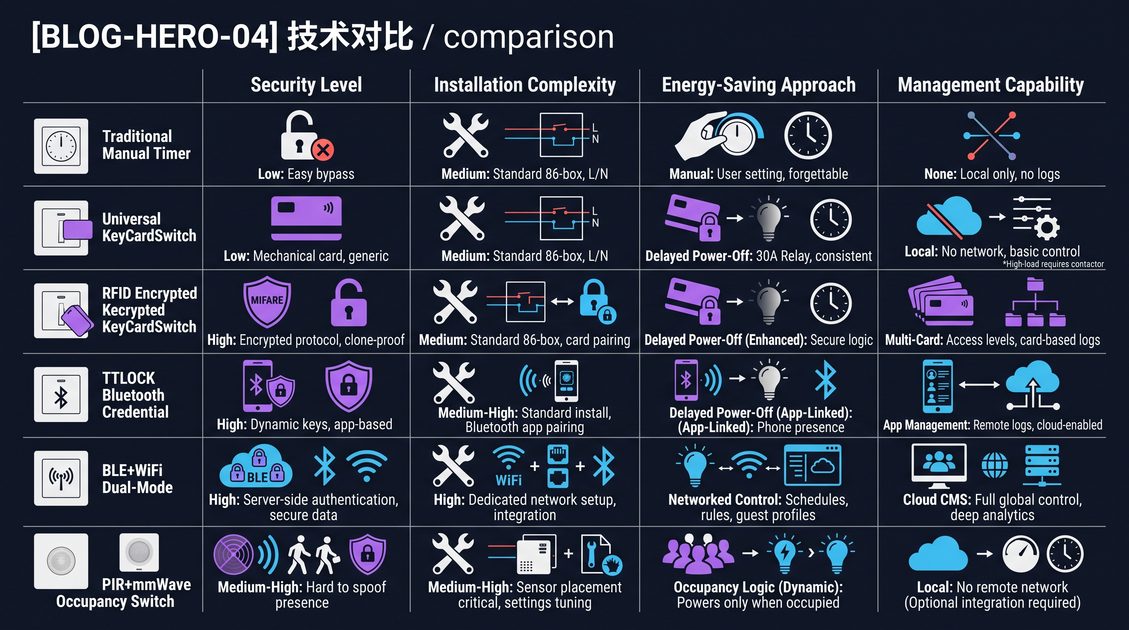
酒店取电开关与毫米波存在传感器在控制逻辑层面就已分道扬镳,尚未涉及任何硬件对比:取电开关是确定性、事件驱动;存在传感器是归纳性、状态驱动。确定性模型依赖客人明确的物理动作:插卡通电,拔卡后经短延时(通常 10–30 秒)断载。因为触发源是卡槽里的实体物体,房间状态完全可预测,任何故障均为机械且可见。归纳性模型则从雷达回波推断占用,因此无需客人动作即可通电,也能在卡片拔出后仍检测到人留在房内。这意味着两者不仅不是简单占据同一墙面位置的不同设备,它们对“谁控制房间”的假设截然不同。取电开关信任客人的手;存在传感器信任传感器的观测。对采购团队而言,真正的问题是:酒店要把电源绑定在客人必须携带并插入的令牌上,还是绑定在持续的物理占用事实上。
取电开关的确定性原则
取电开关运行在一条永不改变的规则上:插卡即通电,拔卡即断电。硬件由额定房间负载的继电器、识别发行卡的读卡器、验证卡片有效性的单片机、以及拔卡后短暂保持供电的延时电路组成,防止客人换卡或忘卡时瞬间陷入黑暗。因为逻辑是二元的,结果在每个房间、每位客人身上都可复现,且极易被客房与工程部审计:卡槽要么有卡,要么无卡。确定性也意味着无需标定、无灵敏度设置、无因客人静止导致的假阴性风险。确定性的代价是“交接问题”:客人离开未拔卡,或保洁期间卡留在槽内,都会导致房间持续通电。
毫米波存在传感器的归纳性原则
毫米波存在传感器用雷达观测取代卡片。它在 24 GHz 或 60 GHz 波段发射毫米波,分析反射频移,判断人是否存在、移动或静止。不同于仅对大幅动作响应的 PIR,毫米波能探测坐着、睡着、阅读且无大动作的人,因为它感知呼吸与微微体动产生的微动。传感器在确认存在期间持续供电,仅在可调的空置超时(通常 5–15 分钟)清除后释放电源。因为检测是归纳性的,设备无法区分客人与保洁员,也不知房间是否已付费;它只知道“有人在”。这让存在传感器在“占用真相”上强大,却在“谁属于此房”的商业事实上盲目。
差异如何改变客人行为
两种理念改变了对客人的要求。取电开关要求客人入住插卡、离店拔卡,酒店常靠标识与客人离店前自然取卡的本能来保障。毫米波存在传感器要求客人什么都不做,因为房间自动感知来去。行为后果是:取电开关易受“健忘客人留卡”影响;存在传感器易受“睡眠或静卧客人因超时过短被误判离开”影响。两者都不完美,只是失效方向相反,这种不对称性正是组合它们的基础。
酒店取电开关与毫米波存在传感器:各自如何决定客房供电
两者在实际控制交流负载的电气路径上也不同。取电开关通常是串联在火线上的 30A 继电器,内置于设备中,物理切断供电。毫米波存在传感器通常是小型雷达模块,常吸顶或壁装,探测占用后向独立继电器或节能开关发信号开合电路。这意味着存在传感器往往不是直接承载负载的设备;它是控制器上游的传感器,控制器可以是导轨继电器、智能开关或楼宇自动化模块。安装位置、布线、供电方式因此不同,这也是改造路径截然不同的原因。
| 属性 | 取电开关 | 毫米波存在传感器 |
|---|---|---|
| 控制逻辑 | 确定性(插卡=通) | 归纳性(有人=通) |
| 触发方式 | 客人插入有效卡 | 雷达探测到静止人体 |
| 负载切换 | 内置 30A 继电器串联火线 | 传感器 + 独立继电器/控制器 |
| 典型位置 | 进门墙面 | 吸顶或壁装,覆盖存在区域 |
| 客人动作 | 插卡与拔卡 | 无 |
| 空置释放 | 即时 + 10–30 秒延时 | 可调 5–15 分钟超时 |
| 失效模式 | 忘记拔卡留在槽内 | 静止客人被误判离开(超时过短时) |
取电开关的电气路径
取电开关中继电器是承载元件,额定电流覆盖全屋负载,典型 30A、AC 180–250V。开关嵌装于进门墙面盒内,与房间火线串联,继电器断开即全屋断电。安装是单点电气任务:将火零引入盒内,负载经继电器接出,设定延时即可。因开关自带承载,无需额外接触器或智能继电器,物料清单精简,改造布线简单。设备须耐受空调、热水器的浪涌电流,因此继电器额定值与 15 秒延时需配合指定。
毫米波存在传感器的电气路径
毫米波存在传感器通常不直接切换房间负载,因为雷达模块是低功耗控制器件,非大电流接触器。典型酒店布局中,传感器以 5V 或 12V 供电,输出干接点、继电器闭合或数字占用信号,驱动节能开关或承载交流负载的继电器。这形成“感知与切换分离”的两部件架构。优势是灵活:一只传感器可驱动多路输出或整层走廊区域,空置超时是软件参数而非固定电路。代价是组件更多、布线点更多、需调试配对每只传感器与其控制器、设定探测区与超时。
电气差异为何决定改造难度
电气差异直接转化为改造难度。用取电开关替换现有手动墙面开关,通常是一对一换装:拆旧装新,同一盒位,复用相同火线,故取电开关以单间安装极快著称。在无传感器基建处新增毫米波存在传感器,往往意味着新增设备、铺设低压供电、将其占用输出与控制器或节能开关集成,可能涉及更多工种与更多故障点。对存量酒店,取电开关在纯安装简易度上胜出;存在传感器在新建灵活性上胜出,因可在施工阶段预埋。
酒店取电开关与毫米波存在传感器:成本与安装对比
两者在成本与安装工作量上分野极大,对大多数酒店,总拥有成本是决策关键。取电开关是自包含设备,单价适中,单一墙盒,无网络,改造极快,故安装成本低且可预期。毫米波存在传感器雷达模块单价通常更高,还需控制器或继电器,安装调试更复杂,前期成本更高。差距不只在硬件,更在人工:取电开关是单工种电气换装;存在传感器常需强弱电两工种配合。按百间房乘算,单间差异放大至整楼,这也是成本建模常让首购倾向取电开关的原因。
| 成本因素 | 取电开关 | 毫米波存在传感器 |
|---|---|---|
| 单间硬件 | 较低(单一设备) | 较高(传感器 + 继电器/控制器) |
| 布线 | 复用现有墙盒 | 可能需铺设低压供电 |
| 单间人工 | 较低,单工种 | 较高,双工种 + 调试 |
| 网络硬件 | 无 | 控制器,可能含网关 |
| 调试工作 | 极少(仅设延时) | 区域探测 + 超时调优 |
| 改造速度 | 快 | 慢 |
| 单价敏感度 | 极高 | 较低 |
取电开关的硬件成本
取电开关硬件成本集中在单一 BOM:读卡器、单片机、30A 继电器、面板。无射频模块、无天线、无云依赖,单价随大单稳定,不随房间数以复杂方式放大。读卡器按卡系统选型,因通用型读任意 M1 卡,同一开关无论酒店发 RFID、Temic 或 TTLOCK 卡均适用。这让取电开关成为酒店可采购的最成本可预期节能设备之一,单间无隐性网络或软件费用。
毫米波存在传感器的硬件成本
毫米波存在传感器硬件成本分摊在雷达模块、其供电、及它驱动的承载继电器或节能开关上。24/60 GHz 雷达芯片连同天线、放大器、信号处理固件,比读卡器+继电器贵;传感器通常还需独立控制器将占用输出转为交流切换。联网房型设计中,每层可能还需网关或总线控制器。结果是:存在传感器方案采购组件更多、备件库存点更多、单间 BOM 略高,但毫米波芯片价格随量价持续下探,差距在收窄。
安装人工与调试工作量
安装人工是两者实操差异最大处。取电开关改造是电气换装:电工打开现有墙盒,装入取电开关,接回相同火零线,通常单间 15–30 分钟,无入网、无软件设置,仅设延时。毫米波存在传感器安装更繁:传感器需定位瞄准覆盖区、接低压供电、接线至继电器或节能开关、再调试,调整探测区避免窗帘、风扇、走廊走动误触发。把存在传感器调好单间耗时更长,且难在多异形房间标准化,推高人工与总安装成本。
总拥有成本视角
对比取电开关与毫米波存在传感器,诚实框架是设备全生命周期总拥有成本,而非仅看标价。取电开关前期低、运营近零、机械寿命长,但依赖客人正确行为才能省电。存在传感器前期高、有持续调试风险,却无需客人配合即能捕获节能。追求快速回本、资金紧的改造,取电开关通常是低风险采购。优先消除“卡片交接”、全楼自动化占用真相的酒店,存在传感器的溢价买到的是取电开关无法提供的能力。
酒店取电开关与毫米波存在传感器:探测与占用精度
两者也须以精度论,只是衡量对象不同。取电开关对“卡”精准:卡在槽即通电,100% 真实,但其占用信号绑定物体而非人。毫米波存在传感器对“身”精准:受控测试中静止人体真阳性率常超 99%,但其占用信号是概率推断,受探测距离、角度、遮挡、环境影响。取电开关对错误的事物拥有完美确定性;存在传感器对正确的事物拥有近乎完美的确定性,这正是两者在组合设计中如此互补的原因。
| 精度因素 | 取电开关 | 毫米波存在传感器 |
|---|---|---|
| 占用信号依据 | 卡片存在 | 人体存在 |
| 静止人探测 | 不适用(需卡) | 是,通过呼吸微动 |
| 假阴性(漏报占用) | 客人未插卡 | 静止客人被判离开 |
| 假阳性(空房判满) | 卡留槽内 | 窗帘/风扇/反射 |
| 探测范围 | 不适用 | 典型 6–8 米 |
| 环境因素 | 无 | 家具、玻璃、遮挡 |
| 需标定 | 无 | 区域 + 超时调优 |
取电开关探测什么及其盲区
取电开关仅以绝对可靠探测一件事:有效卡在槽内。它不探测人,故对无卡进房的客人、父母离房留下孩子、卡已拔出但保洁员在房内作业,全然无感。盲区是“留在槽内的卡”:客人离房忘拔、商务客留卡成习惯、保洁用卡撑门,都会在无人时持续供电。因开关无法观测人体,永无法纠正这些情况,酒店正是在击败系统的房间上损失了本指望节省的能耗。
毫米波存在传感器探测什么及其盲区
毫米波存在传感器高可靠探测人体,含静止人,因能在典型 6–8 米读取呼吸微动。其盲区是环境而非行为:密集家具、厚玻璃、金属屏蔽、或传感器未对准占用区,会衰减或反射雷达波导致漏报;强空调风、动窗帘偶尔被判为存在而持续供电。因检测是推断,传感器需合理超时余量,故多数空置设置 5–15 分钟而非几秒。传感器在取电开关盲区处强大,仅在取电开关确定性处略有不完美。
为何仅靠精度无法定夺
精度无法单独定夺取电开关与毫米波存在传感器,因两者在不同域内精准。想要商业事实确定性(房间已授权、卡在槽)的酒店,看重取电开关的确定性信号;想要物理事实确定性(真有身在房)的酒店,看重存在传感器的探测。两个指标都不是“被占用”的完整定义,这也是许多酒店组合它们的原因:取电开关建立授权、拔卡瞬间确定性断电;毫米波传感器防范“卡留槽内”与“无卡留人”。
酒店取电开关与毫米波存在传感器:维护与全生命周期
两者在损耗件、维护需求、服役寿命上不同。取电开关多为机械与无源:继电器有定义切换次数,读卡器无运动部件,无固件升级节奏,常年少关注运行,仅需偶尔清理卡槽。毫米波存在传感器是含雷达收发器、固件、灵敏度会随房间布局漂移或需重调的电子设备,可能需偶尔重调试与软件升级。取电开关是装好即忘;存在传感器是受管设备。工程团队精简的酒店,这种生命周期负担差异是实实在在的运营成本。
| 生命周期因素 | 取电开关 | 毫米波存在传感器 |
|---|---|---|
| 损耗件 | 继电器(切换次数) | 无机械损耗;固件 |
| 清洁 | 卡槽灰尘 | 传感器镜面/表面 |
| 固件升级 | 通常无 | 偶尔 |
| 重调试 | 极少 | 房间布局变更后 |
| 平均故障间隔 | 高(部件少) | 高,但为电子件 |
| 备件策略 | 备单一型号 | 备传感器 + 继电器型号 |
| 网络依赖 | 无 | 可能依赖控制器 |
取电开关的维护画像
取电开关维护主导于继电器,其有限切换次数后触点磨损成隐患;读卡器触点与卡槽在重用下会积灰或异物。实践中取电开关无源、无网络、无电池、无可损坏固件,主要维护是定期清卡槽、偶尔验证延时电路、备少量继电器备件。因确定性,故障通常可见且易诊断:要么常通、要么常断。这种低触达画像适合想要无软件、无调试预算的能耗控制酒店。
毫米波存在传感器的维护画像
毫米波存在传感器维护聚焦固件与环境而非损耗件。传感器无机械磨损,但固件可能因探测算法或协议变更而升级;房间换家具、新增大型金属物、传感器被误移位,探测区可能需重调试。因传感器靠推断上报占用,轻微误报或偶发漏报比单纯常通/常断的取电开关更难被员工察觉。传感器还是含供电与承载继电器的链路一环,故备件清单更长。
生命周期成本与备件策略
生命周期对比输出备件与总成本图景。取电开关资产仅需备单一开关本体与继电器型号,便宜且单电工分钟级换装。存在传感器资产需备传感器、其供电、切换继电器或控制器,且员工须会重调试替换件,技能要求更专业。五年跨度看,取电开关维护人工更低、备件管线更简;存在传感器提供持续能力,但带稍高的运营管理成本,酒店须权衡其节能收益。
何时选取电开关而非毫米波存在传感器
酒店取电开关与毫米波存在传感器在多种常见酒店情境下明确倾向取电开关。改造需快且省、酒店已发卡且不想改变客人行为、工程团队小且偏好装好即忘设备、房间异形或重家具导致雷达不可靠、预算不覆盖联网传感器与调试——对预算敏感的业主改造标准间存量,确定性取电开关通常以最低安装成本、最少运营要求给出可预期节能。
- 短窗口内大量房间快速低成本改造
- 已运行卡系统,想要一对一换装
- 精简或非技术维护团队,偏好无源设备
- 异形房或重家具会击败雷达
- 无意愿承担联网硬件与调试时间
- 优先要经验证、可审计、确定性的节能切断
客人行为已规范时
取电开关在客人已将卡视为房卡的场景最有效,即绝大多数标准酒店。因客人离店自然取卡带走,离店动作自然触发断电,无需标识宣导或再培训。卡即门卡的酒店,取电开关将节能触发与客人既有动作对齐,这是确定性模型最强论据。节能在客人每次离店自动实现,无传感器判断、无误检。
工程资源有限时
工程团队小或超负荷的酒店偏好取电开关,因其无网络、无调试、无固件升级、无灵敏度调优。取电开关故障为机械可见,备件单电工分钟级换装,无专用工具。无自有弱电专家的加盟或独立酒店,取电开关的低触达生命周期是相对存在传感器(任何房间变更可能需重调试)的决定性运营优势。
改造速度是约束时
装修窗口短时,取电开关凭速度胜出。因在同一盒位复用相同火线替换现有墙开关,熟练电工单日可完成多间,对入住楼层干扰极小。存在传感器需定位、低压供电、接继电器、调试,拉长单间周期,可能需多工种。季节性紧改造中,取电开关是按时完工的低风险路径。
何时毫米波存在传感器胜过取电开关
当酒店需要“占用真相”而非“卡片授权”时,天平倒向毫米波存在传感器。新建可预埋传感器、拒绝任何卡片交接摩擦的高端房、取电开关覆盖不到的套房卫生间/角落、客人常无卡留房、想要占用数据而非单纯开关的联网客房计划——存在传感器均胜出。它也在取电开关无法纠正的“健忘客人留卡漏电”处获胜。
- 新建项目,传感器随建筑预埋
- 高端或长住房,体验须零摩擦
- 超越简单开关的占用感知空调与灯光
- 客人无卡留房的房型
- 需要占用数据而非仅电源控制的物业
- 视线清晰有利雷达的布局
客户体验要求零卡片摩擦时
高端酒店、长住公寓、健康套房中,卡片交接可感知为摩擦,毫米波存在传感器通过无感入住供电彻底移除它。这些细分市场,要求客人管理房间电源的隐性成本超过节能收益,传感器的隐形本身即价值。传感器也能处理客人入住办公、睡眠,只要人在持续供电,无因卡片错位导致的中途断电风险。
占用数据驱动楼宇时
当酒店想超越简单开关,做占用感知空调、灯光场景、走廊自动化,毫米波存在传感器是基石,因其输出真实占用信号供控制器使用。取电开关仅输出“有卡”二值,不告知人在房间何处、是否活动。存在传感器的更丰富信号支持分区控制,如卫生间保持点亮而睡眠区调暗,单一墙面取电开关无法做到。数据驱动的能源管理计划中,存在传感器是更强平台。
房间无卡被占用时
部分占用模式击败取电开关:伴侣一持卡一留守、父母离房留孩子午睡、长住客白天从不拔卡。这些情况取电开关要么空房仍供电、要么有人却不供电。毫米波存在传感器对卡漠然、以身定电,精准在取电开关失效的模式下同时实现节能与舒适。多住或长住占比有意义的酒店,仅此能力即可为传感器正名。
组合方案:毫米波探测,取电开关兜底
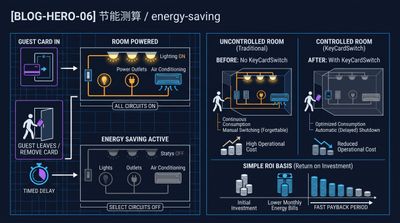
酒店取电开关与毫米波存在传感器非二选一,最强设计是两者并用。组合方案中,毫米波存在传感器为主占用探测器,取电开关作确定性回退与授权层。二者互补盲区:毫米波传感器防范“卡留槽内”,真空时释放电源;取电开关保证房间不超授权卡信号供电、拔卡瞬间确定性断电。这种冗余将两个不完美设备合为单一鲁棒系统。
| 组合模式行为 | 传感器 | 取电开关兜底 |
|---|---|---|
| 客人拔卡离房 | — | 即时断电(确定性) |
| 客人留卡离房 | 探测空房,释放电源 | 仅靠卡会持续供电 |
| 客人无卡留房 | 持续供电 | 仅靠卡会断电 |
| 保洁在房 | 探测到存在 | 卡管授权 |
| 空置超时后 | 释放电源 | 仅靠卡无法清除 |
| 授权检查 | 不适用 | 需有效卡 |
回退逻辑如何工作
典型组合接线中,取电开关承载负载、要求有效卡通电;毫米波存在传感器在上游,探测到人体亦可持续保持电路通电。逻辑是“或”保持:有卡或探测到人,房间即通电;仅当两条件均清除(无卡且无人体)才断电。这保留了取电开关客人带卡离房时的确定性断电,并增加了传感器清除“留卡空房”的能力。两条件干净重叠,各为对方失效模式兜底。
为何组合值得额外硬件
组合方案在“因留卡导致的能耗漏损足以抵消传感器成本”的酒店值得部署。每间“客人习惯留卡”的房间,单用取电开关节能为零,毫米波传感器精准堵住这漏洞,空房即断。反之,每位无卡入住的高端客人,受传感器存在探测保护。因取电开关仍提供即时确定性断电与授权核验,酒店保留卡系统的可审计节能,同时获得雷达的占用真相,这也是越来越多节能导向酒店指定成对采购而非单选的原因。
成对调试
成对调试需设定三个须一致的参数:取电开关拔卡延时、存在传感器空置超时、两者协同规则。空置超时须足长避免误断静止客人,典型 5–15 分钟,且略长于取电开关短延时,免得传感器与开关打架。传感器探测区须覆盖主占用区、不溢出走廊、不误触窗帘。设定正确后,两设备表现为单一系统,酒店获得确定性控制加感知兜底,这是任一技术单独所能最接近“客房供电完整答案”的方案。
酒店取电开关与毫米波存在传感器:规格清单
一旦理念定型,取电开关与毫米波存在传感器归结为规格练习,此清单保持决策客观。无论选取电开关、毫米波存在传感器、或组合设计,同一类别适用:电压与负载额定、安装与外壳、控制逻辑与超时、卡或探测协议、合规、备件。按自家房型逐项核对,将哲学辩论转为具体 BOM,并暴露混合部署不同房型才是最高效答案的场景。
| 规格字段 | 取电开关 | 毫米波存在传感器 |
|---|---|---|
| 电压 | AC 180–250V(可定制 110V) | 传感器 5–12V;继电器接 AC |
| 负载额定 | 30A 继电器 | 继电器/控制器按负载选型 |
| 触发 | 有效卡(M1/MIFARE/Temic/TTLOCK) | 24/60 GHz 雷达存在 |
| 超时 | 10–30 秒拔卡延时 | 5–15 分钟空置超时 |
| 探测范围 | 不适用 | 典型 6–8 米 |
| 安装 | 进门墙面 | 吸顶或壁装 |
| 网络 | 无 | 可选控制器/网关 |
| 调试 | 仅延时 | 区域 + 超时 |
| 合规 | 匹配项目电气标准 | 匹配项目电气标准 |
| 备件 | 开关 + 继电器 | 传感器 + 继电器 + 电源 |
电压、负载与安全
首要规格决策是电气:确认项目电压,大多 AC 180–250V,北美存量项目可定制 110V;按含空调浪涌的实际负载选继电器。取电开关继电器须耐浪涌,典型 30A,防压缩机启动粘触点。毫米波存在传感器为低压设备,需自备电源,并配承载其驱动交流负载的继电器或节能开关。两者硬件均须按项目电气与安全标准选型,外壳按安装位置选防护等级。
卡协议与探测区
次决策是触发接口。取电开关按现用卡系统指定读卡器:通用型读任意 M1 卡 UID 免换卡;RFID 型按 MIFARE 或 Temic 扇区密钥绑定房号;TTLOCK 兼容型读入住时间窗。毫米波存在传感器指定雷达波段、米制探测距离、安装方式、空置超时,并确认传感器能覆盖主占用区且不误触。触发规格是必须与全资产匹配的单一字段,最值得严审。
改造、合规与备件
最后确认改造路径、合规姿态、备件策略。改造确认现有墙盒能装选定设备、无需换卡,保持单工种快装。确认硬件满足项目目标地区与安装位置的电气环保标准,不夸大认证。为可能故障或丢失的部件备件:无论是单一取电开关+继电器型号,还是传感器+其电源+其切换继电器。落实这些字段的规格书即可报价招标。
酒店取电开关与毫米波存在传感器:常见坑与改造实战
哲学选择后,实操坑仍多,知晓它们能省能耗也省人工。最常见错误:把两者当可互换、设超时太短误断静止客人、传感器对准窗帘/风扇/走廊误触、订购读不了现用卡的取电开关、继电器额定低于浪涌。每个坑都映射到易误诊的房间级症状,清晰排查习惯保护投资。
- 订购读卡器与发行卡不匹配
- 空置超时设太短,误断睡眠客人
- 传感器对准窗帘、风扇、走廊
- 继电器额定低于空调浪涌
- 将卡授权与存在视为同一信号
- 房间换装后跳过重调试
- 忘记“卡留槽内”击败纯取电开关设计
读卡器不匹配的坑
取电开关最常见失败是订购的读卡器读不了客人手中的卡。通用型读任意 M1 卡 UID 从根规避;房绑 RFID 或 TTLOCK 型须与酒店卡格式精准匹配,否则开关拒所有卡、全楼常暗。对策是采购前按现用卡系统定读卡器,并用实发卡而非样卡测试样机。这一步防止看似完工实则进门即败的改造。
传感器的超时与瞄准坑
传感器最常见失败是空置超时太短、探测区瞄准不当。几分钟超时会断电睡眠或静卧客人,毁体验致前台禁用系统。传感器对准动窗帘、吊扇、或透窗射入走廊,会误触持续供电、抵消节能。纠偏习惯:以 5–15 分钟实用超时调试,调试时实地走房,验证静止人与动窗帘后再签收。
故障排查与混合部署
出问题时按失效特征区分设备类型:插卡不通电指向读卡器或继电器;空房通电或掉静止客人指向传感器超时或瞄准。许多酒店干脆按房型混合部署规避单设备脆弱性:标准间用取电开关,套房与长住房用组合“取电开关+传感器”设计。这种靶向部署将额外传感器成本集中在最能回本的房型,标准间保持简快,以不过度付费雷达为代价取两种理念之长。
本文部分内容由 AI 生成,经专业优化确保准确性与可读性。 A key card switch vs mmWave presence sensor for hotels is not a contest between two similar products but a decision between two opposite philosophies of guest-room power control. A key card switch is a deterministic device: it turns the room on when a valid card sits in the slot and cuts the circuit the moment the card leaves, with no judgment about whether a person is actually inside. An mmWave presence sensor is an inductive device: it uses 24–60 GHz radar to detect a stationary human, including micro-motion such as breathing, and keeps the room powered only while presence is confirmed. Where the card switch asks "is a card present," the presence sensor asks "is a body present," and that single difference drives every downstream decision about cost, wiring, retrofit effort, and guest behavior. Understanding the key card switch vs mmWave presence sensor trade-off matters because most hotels are deciding between a proven two-decade-old standard and a newer sensing technology that can, in the right layout, eliminate the card hand-off problem entirely.
Key Card Switch vs mmWave Presence Sensor for Hotels: Two Control Philosophies
A key card switch vs mmWave presence sensor for hotels differs at the control-logic level before any hardware is compared: the card switch is deterministic and event-driven, while the presence sensor is inductive and state-driven. The deterministic model relies on an explicit, physical act by the guest: inserting the card powers the room, and removing it drops the load after a short delay, usually 10 to 30 seconds. Because the trigger is a physical object in a slot, the room state is fully predictable and any failure is mechanical and visible. The inductive model instead infers occupancy from radar reflection, so it can power the room with no guest action and can also detect when a person remains inside after the card was removed. This means the two devices do not simply occupy the same wall position differently; they embody different assumptions about who controls the room. A card switch trusts the guest's hand; a presence sensor trusts the sensor's observation. For a procurement team the real question is whether the property wants power tied to a token the guest must carry and insert, or tied to the continuous physical fact of occupancy.
The Deterministic Principle of a Key Card Switch
A key card switch runs on a rule that never changes: card in equals power on, card out equals power off. The hardware is a relay rated for the room's load, a reader that accepts the issued card, a microcontroller that verifies the card is valid, and a delay circuit that holds power briefly after removal so a guest who swaps or forgets a card is not plunged into darkness instantly. Because the logic is binary, the outcome is repeatable across every room and every guest, and it is easy for housekeeping and engineering to audit: the slot either holds a card or it does not. The deterministic nature also means there is no calibration, no sensitivity setting, and no false-negative risk from a motionless guest. The cost of determinism is the hand-off problem, where a guest who leaves without removing the card, or a card left in the slot during housekeeping, keeps the room energized.
The Inductive Principle of an mmWave Presence Sensor
An mmWave presence sensor replaces the card with radar observation. It transmits millimeter-wave signals in the 24 GHz or 60 GHz band and analyzes the reflected frequency shift to classify whether a human is present, moving, or stationary. Unlike PIR, which only reacts to gross movement, mmWave can detect a person who is sitting, sleeping, or reading with no macro motion because it senses the micro-motion of breathing and slight body sway. The sensor holds the room powered continuously while presence is confirmed and releases power only after an adjustable vacancy timeout, typically 5 to 15 minutes, clears. Because detection is inductive, the device cannot tell whether the person is a guest or a housekeeper, and it cannot know whether the room was paid for; it only knows that a body is there. This makes the presence sensor powerful for occupancy-truth but blind to the commercial fact of who belongs in the room.
How the Difference Changes Guest Behavior
The two philosophies change what the guest is asked to do. With a card switch, the guest must insert the card at arrival and remember to remove it on departure, and properties often rely on signage and the natural instinct to retrieve a card from the slot before leaving. With an mmWave presence sensor, the guest is asked to do nothing, because the room senses arrival and departure by itself. The behavioral consequence is that a card switch is vulnerable to the forgetful guest who leaves the card in place, while a presence sensor is vulnerable to the reverse failure, where a sleeping or lying-still guest is briefly judged absent if the vacancy timeout is set too aggressively. Neither device is flawless; they simply fail in opposite directions, and that asymmetry is the basis for combining them.
Key Card Switch vs mmWave Presence Sensor for Hotels: How Each Decides Room Power
A key card switch vs mmWave presence sensor for hotels also differs in the electrical path that actually controls the AC load. A key card switch is normally a series-connected relay in the live wire that switches a 30A circuit, so it sits inline and physically interrupts power. An mmWave presence sensor is normally a small radar module, often ceiling-mounted or wall-mounted, that detects occupancy and then signals a separate relay or an energy-saving switch to open or close the circuit. This means the presence sensor is frequently not the load-carrying device at all; it is a sensor upstream of the controller, which can be a DIN-rail relay, a smart switch, or a building automation module. The placement, wiring, and power supply differ accordingly, and that difference is what makes the retrofit paths so unlike each other.
| Attribute | Key card switch | mmWave presence sensor |
|---|---|---|
| Control logic | Deterministic (card in = on) | Inductive (presence = on) |
| Trigger | Guest inserts a valid card | Radar detects a stationary human |
| Load switching | Built-in 30A relay in live wire | Sensor + separate relay/controller |
| Typical location | Wall at room entry | Ceiling or wall, presence coverage |
| Guest action required | Insert and remove card | None |
| Vacancy release | Immediate + 10–30s delay | Adjustable 5–15 min timeout |
| Failure mode | Forgets card left in slot | Judges still guest absent (if timeout too short) |
The Electrical Path of a Key Card Switch
In a key card switch, the relay is the load-carrying element, and it is rated for the full current of the room, typically 30A at AC 180–250V. The switch is mounted flush in the entry wall and wired in series with the room's live feed, so that when the relay opens, the entire room circuit is de-energized. The installation is a single-point electrical task: bring the live and neutral to the box, terminate the load through the relay, and set the delay. Because the switch carries the load, no additional contactor or smart relay is needed, which keeps the bill of materials small and the wiring simple for a retrofit. The device must be rated for the room's surge current from air conditioners and water heaters, which is why the relay rating and the 15-second delay are specified together.
The Electrical Path of an mmWave Presence Sensor
An mmWave presence sensor does not usually switch the room load directly because a radar module is a low-power control device, not a high-current contactor. In a typical hotel layout, the sensor is powered at 5V or 12V and outputs a dry contact, a relay closure, or a digital occupancy signal to an energy-saving switch or relay that carries the AC load. This creates a two-part architecture: sensing and switching are separated. The advantage is flexibility, because one sensor can drive multiple outputs or a whole corridor zone, and the vacancy timeout is a software parameter rather than a fixed circuit. The cost is more components, more wiring points, and a commissioning step to pair each sensor to its controller and set its detection zone and timeout.
Why the Electrical Difference Matters for Retrofits
The electrical difference translates directly into retrofit difficulty. Replacing an existing manual wall switch with a key card switch is usually a one-for-one swap: remove the switch, fit the card switch in the same box, and reconnect the same live wires, which is why card switches are famous for a fast per-room install. Adding an mmWave presence sensor where no sensor infrastructure exists often means adding a new device, running its low-voltage power, and integrating its occupancy output with a controller or energy-saving switch, which can involve more trades and more points of failure. For an existing property, the key card switch tends to win on pure installation simplicity, while the presence sensor tends to win on new-build flexibility, where the sensor can be embedded at construction stage.
Key Card Switch vs mmWave Presence Sensor for Hotels: Cost and Installation Compared
A key card switch vs mmWave presence sensor for hotels diverges sharply on cost and installation effort, and for most properties the total cost of ownership is the deciding factor. A key card switch is a self-contained device with a modest per-unit cost, a single wall box, no network, and a fast retrofit, so the installed cost is low and predictable. An mmWave presence sensor typically has a higher per-unit price for the radar module, plus the cost of a controller or relay and a more involved installation and commissioning, so the upfront cost is higher. The gap is not only in hardware but in labor, because the card switch is a one-trade electrical swap while the presence sensor often requires coordination between electrical and low-voltage trades. For a property with hundreds of rooms, this per-room difference is multiplied across the whole building, which is why cost modeling so often tips the decision toward the card switch on first purchase.
| Cost factor | Key card switch | mmWave presence sensor |
|---|---|---|
| Hardware per room | Lower (single device) | Higher (sensor + relay/controller) |
| Wiring | Existing wall box reuse | May need low-voltage power run |
| Labor per room | Lower, one trade | Higher, two trades + commissioning |
| Network hardware | None | Controller, possibly gateway |
| Commissioning | Minimal (delay set) | Zone detection + timeout tuning |
| Retrofit speed | Fast | Slower |
| Unit cost sensitivity | Very sensitive | Less sensitive |
The Hardware Cost of a Key Card Switch
The hardware cost of a key card switch is dominated by a single bill of materials: the card reader, the microcontroller, the 30A relay, and the flush panel. Because there is no radio module, no antenna, and no cloud dependency, the unit cost stays low and stable across large orders, and it does not scale with the number of rooms in any complicated way. The reader itself is chosen by the card system, and because a universal model reads any M1 card, the same switch works regardless of whether the property issues RFID, Temic, or TTLOCK cards. This makes the key card switch one of the most cost-predictable energy-saving devices a hotel can procure, with no hidden network or software line items per room.
The Hardware Cost of an mmWave Presence Sensor
The hardware cost of an mmWave presence sensor is spread across the radar module, its power supply, and the load-carrying relay or energy-saving switch it drives. A 24 GHz or 60 GHz radar chipset with its antenna, amplifier, and signal-processing firmware is more expensive than a card reader and relay, and the sensor usually needs a separate controller to translate its occupancy output into AC switching. In a connected-rooms design there may also be a gateway or bus controller per floor. The result is that the presence sensor solution has more components to procure, more points to stock as spares, and a slightly higher per-room bill of materials, though the price of mmWave chips has fallen steadily and the gap is narrowing with volume.
Installation Labor and Commissioning Effort
Installation labor is where the two solutions differ most in practice. A key card switch retrofit is an electrical swap: the electrician opens the existing wall box, mounts the card switch, and terminates the same live and neutral wires, typically in 15 to 30 minutes per room with no network join and no software setup beyond setting the delay. An mmWave presence sensor installation is more involved: the sensor must be positioned and aimed for the coverage it needs, powered with low voltage, wired to a relay or energy-saving switch, and then commissioned, with the detection zone adjusted so the radar does not false-trigger on a curtain, a fan, or movement in the corridor. Commissioning a presence sensor well can take longer per room and is harder to standardize across varied room shapes, which raises labor and drives up the total installed cost.
Total Cost of Ownership Perspective
When comparing a key card switch vs mmWave presence sensor for hotels, the honest framing is total cost of ownership over the device's working life rather than sticker price alone. The card switch has a lower upfront cost, near-zero operating cost, and a long mechanical life, but it depends on correct guest behavior to deliver savings. The presence sensor has a higher upfront cost and ongoing commissioning risk, but it can capture savings without any guest cooperation. For a quick-return retrofit where capital is tight, the card switch is usually the lower-risk purchase. For a property where the priority is eliminating the card hand-off and automating occupancy truth across the building, the presence sensor's higher cost is buying a capability the card switch cannot provide.
Key Card Switch vs mmWave Presence Sensor for Hotels: Detection and Occupancy Accuracy
A key card switch vs mmWave presence sensor for hotels must also be judged on accuracy, though the two measure different things. A key card switch is accurate to the card: if the card is in the slot, the room is powered, and this is true 100% of the time, which makes its occupancy signal exact but tied to an object rather than a person. An mmWave presence sensor is accurate to the body: it can detect a stationary human with a true-positive rate that commonly exceeds 99% in controlled testing, but its occupancy signal is a probabilistic inference subject to detection range, angle, occlusion, and environment. The card switch has perfect certainty about the wrong thing, and the presence sensor has near-perfect certainty about the right thing, which is exactly why the two are so complementary in a combined design.
| Accuracy factor | Key card switch | mmWave presence sensor |
|---|---|---|
| Occupancy signal based on | Card presence | Body presence |
| Stationary-person detection | N/A (needs card) | Yes, via breathing micro-motion |
| False negative (occupant missed) | Card left out | Still guest judged absent |
| False positive (empty judged full) | Card left in slot | Curtain/fan/reflection |
| Detection range | N/A | 6–8 m typical |
| Environmental factors | None | Furniture, glass, occlusion |
| Calibration needed | None | Zone + timeout tuning |
What a Key Card Switch Detects and Its Blind Spot
A key card switch detects one thing with total reliability: the presence of a valid card in the slot. It does not and cannot detect a person, so it has no awareness of a guest who enters a room without a card, a child who stays inside while the parents leave, or a housekeeper working in a room whose card was already removed. The blind spot is the card that stays in the slot: a guest who leaves the card behind, a business traveler who leaves it as a habit, or a housekeeper who props the door with a card, all keep the room powered even when nobody is inside. Because the switch cannot observe the body, it can never correct for these cases, and the property loses the energy it hoped to save on exactly the rooms that defeat the system.
What an mmWave Presence Sensor Detects and Its Blind Spot
An mmWave presence sensor detects a human body with high reliability, including a stationary person, because it reads the micro-motion of breathing at typical ranges of 6 to 8 meters. Its blind spot is environmental rather than behavioral: dense furniture, thick glass, metal screening, or a sensor aimed away from the occupied zone can attenuate or reflect the radar signal and cause a missed detection, and a strong air-conditioning draft or a moving curtain can occasionally be classified as presence and hold the room on. Because detection is inferential, the sensor needs a reasonable timeout margin, which is why most vacancy settings are 5 to 15 minutes rather than a few seconds. The sensor is powerful where the card switch is blind, and it is only modestly imperfect where the card switch is deterministic.
Why Accuracy Alone Does Not Settle the Choice
Accuracy alone does not settle the key card switch vs mmWave presence sensor decision because the two devices are accurate in different domains. A property that wants certainty about the commercial fact, that the room was authorized and the card is present, values the card switch's deterministic signal. A property that wants certainty about the physical fact, that a body is actually in the room, values the presence sensor's detection. Neither metric is a complete definition of "occupied," which is why many hotels combine them: the card switch establishes authorization and gives an instant, deterministic off when the card is removed, while the mmWave sensor guards against the card left in the slot and the guest who stays without a card.
Key Card Switch vs mmWave Presence Sensor for Hotels: Maintenance and Lifecycle
A key card switch vs mmWave presence sensor for hotels differs in what wears out, what needs maintenance, and how long each lasts in service. A key card switch is mostly mechanical and passive: its relay has a defined number of switching operations, its reader has no moving parts, and it has no firmware update cadence, so it tends to run for years with little attention beyond an occasional cleaning of the card slot. An mmWave presence sensor is an electronic device with a radar transceiver, firmware, and a sensitivity that can drift or need re-tuning as the room layout changes, so it may require occasional re-commissioning and software updates. The card switch is a fit-and-forget device; the presence sensor is a managed device. For properties with limited engineering staff, that difference in lifecycle burden is a real operational cost.
| Lifecycle factor | Key card switch | mmWave presence sensor |
|---|---|---|
| Wearing parts | Relay (switch cycles) | None mechanical; firmware |
| Cleaning | Card slot dust | Sensor lens/surface |
| Firmware updates | None typical | Occasional |
| Re-commissioning | Rare | After room layout changes |
| Mean time to failure | High (few parts) | High, but electronic |
| Spare strategy | Keep one model | Keep sensor + relay models |
| Network dependency | None | May depend on controller |
Maintenance Profile of a Key Card Switch
The maintenance profile of a key card switch is dominated by the relay, which has a finite number of switching operations before contact wear becomes a concern, and by the card reader, whose contacts and slot can collect dust or debris in heavy use. In practice a card switch is passive, has no network link, no battery, and no firmware that can corrupt, so the main maintenance tasks are periodic cleaning of the slot, occasional verification that the delay circuit works, and keeping a small stock of spares for the relay. Because the device is deterministic, a failure is usually visible and easy to diagnose: the room either stays on or stays off. This low-touch profile suits properties that want energy control without a software or commissioning budget.
Maintenance Profile of an mmWave Presence Sensor
The maintenance profile of an mmWave presence sensor is centered on firmware and environment rather than on wearing parts. The sensor has no mechanical wear, but its firmware may receive updates for detection algorithms or protocol changes, and its detection zone can need re-commissioning when a room is refurnished, when a TV or large metal object is added, or when the sensor is accidentally repositioned. Because the sensor reports occupancy by inference, a subtle misbehavior such as a slight false-positive or an occasional missed detection can be harder for staff to spot than a card switch that simply fails open or closed. The sensor is also only one link in a chain that includes its power supply and its load-carrying relay, so the spares list is longer.
Lifecycle Cost and Spare-Parts Strategy
The lifecycle comparison feeds a spare-parts and total-cost picture. A card switch estate can be maintained with a single spare model for the switch body and relay, stocked cheaply and swapped in minutes by one electrician. A presence sensor estate needs spares for the sensor, its power supply, and the switching relay or controller, and the staff must be able to re-commission a replacement, which is a more specialized skill. Over a five-year horizon, the card switch tends to have lower maintenance labor and a simpler spares pipeline, while the presence sensor offers ongoing capability but carries a slightly higher operational-management cost, a trade-off a hotel must weigh against the energy it saves.
When to Choose a Key Card Switch Over an mmWave Presence Sensor for Hotels
A key card switch vs mmWave presence sensor for hotels resolves clearly in favor of the card switch in several common property situations. A key card switch is the better choice when the retrofit must be fast and cheap, when the property already issues cards and wants no guest behavior change, when the engineering team is small and prefers a fit-and-forget device, when the rooms have awkward shapes or heavy furnishings that make radar detection unreliable, or when the budget does not extend to networked sensors and commissioning. For a budget-conscious owner retrofitting an existing stock of standard rooms, the deterministic card switch usually delivers predictable savings at the lowest installed cost and the fewest operational demands.
- Fast, low-cost retrofit of many rooms in a short window
- Property already runs a card system and wants a one-for-one swap
- Small or non-technical maintenance team that prefers passive devices
- Awkward room geometry or heavy furniture that would defeat radar
- No appetite for networked hardware or commissioning time
- Priority is a proven, auditable, deterministic energy cut
When Guest Behavior Is Already Disciplined
A key card switch works best where guests already treat the card as a room key, which is most standard hotels. Because the guest removes the card to take the key away, the act of leaving naturally triggers power-off, and no signage campaign or retraining is needed. In properties where the card is the door key, the card switch aligns the energy-saving trigger with an action the guest already performs, which is the single strongest argument for the deterministic model. The savings are realized automatically whenever the guest leaves, with no sensor judgment and no false detection.
When Engineering Resources Are Limited
Properties with a small or overstretched engineering team tend to prefer the card switch because it needs no network, no commissioning, no firmware updates, and no sensitivity tuning. A card switch failure is mechanical and visible, and a spare is swapped in minutes without specialized tools. For a franchise or independent hotel without an in-house low-voltage specialist, the card switch's low-touch lifecycle is a decisive operational advantage over a sensor that may need re-commissioning after any room change.
When Retrofit Speed Is the Constraint
When the renovation window is short, the card switch wins on speed. Because it replaces an existing wall switch in the same box using the same live wires, a competent electrician can complete many rooms per day with minimal disruption to occupied floors. The presence sensor, by contrast, adds placement, low-voltage power, wiring to a relay, and commissioning, which lengthens the per-room cycle and can require more than one trade. For a tight seasonal renovation, the card switch is the lower-risk path to finishing on schedule.
When an mmWave Presence Sensor Beats a Key Card Switch for Hotels
A key card switch vs mmWave presence sensor for hotels swings the other way when the property needs occupancy truth rather than card authorization. An mmWave presence sensor is the better choice in new builds where the sensor can be embedded at construction, in premium rooms where the guest experience rules out any card hand-off, in suites with bathrooms or corners a card would not cover, in rooms where guests commonly stay inside without a card, and in connected-rooms programs that want presence data for HVAC and lighting automation. The presence sensor also wins wherever the goal is to eliminate the forgetful-guest leak that a card switch cannot correct.
- New construction where sensors are embedded at build time
- Premium or long-stay rooms that must feel effortless
- Occupancy-aware HVAC and lighting beyond simple on-off
- Rooms where guests stay inside without inserting a card
- Properties that want presence data, not just power control
- Layouts with clean sight lines favorable to radar
When the Guest Experience Demands No Card
For premium properties, long-stay residences, and wellness suites, the card hand-off can feel like friction, and an mmWave presence sensor removes it entirely by powering the room on arrival without any guest action. In these segments, the subtle cost of asking the guest to manage the room's power outweighs the energy savings, and the presence sensor's invisibility is itself the value. The sensor also handles the guest who settles into the room, works at a desk, or sleeps, keeping power on continuously as long as a body is present, with no risk of a mid-stay power cut from a misplaced card.
When Occupancy Data Drives the Building
When the property wants to go beyond simple on-off control to occupancy-aware HVAC, lighting scenes, and corridor automation, the mmWave presence sensor is the foundation because it outputs a real occupancy signal that a controller can use. A card switch outputs only a card-present binary that tells nothing about where in the room a person is or whether they are active. The presence sensor's richer signal enables per-zone control, such as keeping the bathroom lit while the sleeping area is dimmed, which is impossible with a single wall card switch. For an energy-management program that is data-driven, the presence sensor is the more capable platform.
When Rooms Are Occupied Without a Card
Some occupancy patterns defeat the card switch: a couple where one person holds the card and the other stays behind, a parent who leaves the card while a child naps, or a long-stay guest who never removes the card during the day. In all these cases the card switch either powers the room despite being empty or fails to power it while occupied. The mmWave presence sensor is indifferent to cards and keys the power to the body, so it captures savings and maintains comfort in exactly the patterns where the card switch is wrong. For properties with a meaningful share of multi-occupant or long-stay rooms, this capability alone can justify the sensor.
The Combined Solution: mmWave Detects, Key Card Switch Falls Back
A key card switch vs mmWave presence sensor for hotels is not a binary choice, because the strongest design uses both. In the combined solution, the mmWave presence sensor is the primary occupant detector and the key card switch acts as the deterministic fallback and the authorization layer. The two work together so each covers the other's blind spot: the mmWave sensor guards against the card left in the slot by releasing power when the room is genuinely empty, and the key card switch guarantees that a room cannot be powered beyond its authorized card signal and provides an instant, deterministic off the moment the card is removed. This redundancy converts a pair of imperfect devices into a single robust system.
| Combined-mode behavior | Sensor | Card switch fallback |
|---|---|---|
| Guest removes card and leaves | — | Instant power-off (deterministic) |
| Guest leaves card in slot | Detects empty room, releases power | Card alone would keep it on |
| Guest stays without card | Holds power on | Card alone would cut it |
| Housekeeping inside | Detects presence | Card governs authorization |
| Empty room after vacancy | Releases power | Card alone can't clear |
| Authorization check | n/a | Valid card required |
How the Fallback Logic Works
In a typical combined wiring arrangement, the key card switch carries the load and requires a valid card to energize the circuit, while the mmWave presence sensor sits upstream and can also hold the circuit on for as long as it detects a body. The logic is an OR on hold: the room stays powered if the card is present or if the sensor detects occupancy, and it cuts power only when both conditions clear, that is, when there is no card and no detected body. This preserves the card switch's deterministic off when the guest leaves with the card, and it adds the sensor's ability to release a room where a card was left behind. The two conditions overlap cleanly and each provides a safety net for the other's failure mode.
Why the Combination Is Worth the Extra Hardware
The combined design is worth its extra hardware in properties where the energy leakage from forgotten cards is large enough to offset the sensor cost. Every room where a guest habitually leaves the card in the slot is a room where the card switch alone saves nothing, and the mmWave sensor closes exactly that leak by clearing the room when it is empty. Conversely, every premium guest who settles in without a card is protected by the sensor's presence detection. Because the card switch still provides the instant, deterministic off and the authorization check, the property keeps the auditable savings of a card system while gaining the occupancy truth of radar, which is why an increasing number of energy-conscious hotels specify the pair rather than one device.
Commissioning the Pair Together
Commissioning the combined system requires setting three parameters that must agree: the card switch's removal delay, the presence sensor's vacancy timeout, and the coordination rule between them. The vacancy timeout must be long enough to avoid cutting power to a still guest, typically 5 to 15 minutes, and slightly longer than the card switch's short delay so the sensor does not fight the switch. The sensor's detection zone must cover the main occupied area without spilling into the corridor or false-triggering on a curtain. When these are set correctly, the two devices behave as one system, and the property gets deterministic control with a sensing safety net, the closest either technology comes to a complete answer to the room-power question.
Key Card Switch vs mmWave Presence Sensor for Hotels: Specification Checklist
A key card switch vs mmWave presence sensor for hotels narrows to a specification exercise once the philosophy is chosen, and this checklist keeps the decision objective. Whether you select a key card switch, an mmWave presence sensor, or a combined design, the same categories apply: voltage and load rating, mounting and enclosure, control logic and timeout, card or detection protocol, compliance, and spares. Working through these fields against your room stock turns a philosophical debate into a concrete bill of materials, and it exposes where a hybrid deployment across room types is the most efficient answer.
| Specification field | Key card switch | mmWave presence sensor |
|---|---|---|
| Voltage | AC 180–250V (110V on request) | Sensor 5–12V; relay for AC |
| Load rating | 30A relay | Relay/controller sized to load |
| Trigger | Valid card (M1 / MIFARE / Temic / TTLOCK) | 24/60 GHz radar presence |
| Timeout | 10–30s removal delay | 5–15 min vacancy |
| Detection range | n/a | 6–8 m typical |
| Mounting | Wall at entry | Ceiling or wall |
| Network | None | Optional controller / gateway |
| Commissioning | Delay only | Zone + timeout |
| Compliance | Match project electrical standard | Match project electrical standard |
| Spares | Switch + relay | Sensor + relay + PSU |
Voltage, Load, and Safety
The first specification decision is electrical: confirm the property voltage, which is AC 180–250V for most projects and 110V on request in North American estates, and size the relay to the room's actual load including air-conditioner surge. A key card switch should carry a relay rated for that surge current, typically 30A, so it does not weld contacts on compressor start. An mmWave presence sensor, being a low-voltage device, needs its own power supply and a relay or energy-saving switch rated for the AC load it drives. In both cases the hardware should be selected for the project's electrical and safety standards, and the enclosure chosen for the mounting location.
Card Protocol and Detection Zone
The next decision is the trigger interface. For a key card switch, specify the reader against the card system already in use: a universal model reads any M1 card UID with no re-carding, while an RFID model validates a MIFARE or Temic sector key for room binding, and a TTLOCK-compatible model reads the check-in time window. For an mmWave presence sensor, specify the radar band, the detection range in meters, the mount type, and the vacancy timeout, and confirm the sensor can cover the main occupied area without false-triggering. The trigger specification is the single field that must match the rest of the estate, so it deserves the most scrutiny.
Retrofit, Compliance, and Spares
Finally, confirm the retrofit path, the compliance posture, and the spares strategy. For a retrofit, confirm the existing wall box can accept the chosen device and that no re-carding is required, which keeps the installation one-trade and fast. Confirm the hardware meets the project's electrical and environmental standards for the intended region and mounting location, without overstating any certification. And keep a spares plan for the parts that can fail or be lost, whether that is a single card switch and relay model or a sensor, its power supply, and its switching relay. A specification that resolves these fields is complete enough to cost and tender.
Key Card Switch vs mmWave Presence Sensor for Hotels: Common Pitfalls and Retrofits
A key card switch vs mmWave presence sensor for hotels is full of practical pitfalls that trip up projects after the philosophical choice is made, and knowing them saves both energy and labor. The most common mistakes are treating the two as interchangeable when they are not, choosing a sensor timeout that cuts power to a still guest, aiming a sensor so it false-triggers on a curtain or corridor, ordering a card switch that does not read the card already in use, and under-specifying the relay for surge current. Each pitfall maps to a room-level symptom that is easy to misdiagnose, so a clear troubleshooting habit protects the investment.
- Ordering a card reader that does not match the issued card
- Setting a vacancy timeout too short for a sleeping guest
- Aiming the sensor at a curtain, fan, or corridor
- Under-rating the relay for air-conditioner surge
- Treating card authorization and presence as the same signal
- Skipping commissioning after a room is refurnished
- Forgetting that a card left in the slot defeats a card-only design
The Mismatched Card Reader Pitfall
The most common card switch failure is ordering a reader that cannot read the card already in the guest's hands. A universal model reads any M1 card UID and avoids this entirely, while a room-bound RFID or TTLOCK model must match the property's exact card format or the switch rejects every card and every room stays dark. The fix is to specify the reader against the existing card system before purchase and to test a sample against the actual issued card, not a demo card. This single step prevents a retrofit that looks complete but fails at the door.
The Timeout and Aiming Pitfalls of a Sensor
The most common sensor failures are a vacancy timeout set too short and a detection zone aimed poorly. A timeout of a few minutes can cut power to a guest lying still or asleep, which ruins the guest experience and gets the system disabled by the front desk. A sensor aimed at a moving curtain, a ceiling fan, or through a window into the corridor can false-trigger and hold rooms on, defeating the savings. The corrective habit is to commission the sensor with a realistic timeout of 5 to 15 minutes and to walk the room during commissioning, checking both a still person and a moving curtain before signing off.
Troubleshooting and Hybrid Deployment
When a problem appears, distinguish the device type by its failure signature: a room that will not power on with a card in place points to a reader or relay issue, while a room that powers on when empty or drops a still guest points to a sensor timeout or aiming issue. Many hotels avoid single-device fragility entirely by deploying a hybrid across room types, using card switches in standard rooms and the combined card-plus-sensor design in suites and long-stay rooms where the behavior patterns justify it. That targeted approach concentrates the extra sensor cost where it earns the most, keeps standard rooms simple and fast, and delivers the best of both philosophies without paying for radar in every room.
Part of this article content is generated by AI and optimized for professional accuracy and readability.
不确定哪款传感器适合您的项目?
与我们的毫米波应用工程师免费咨询。
为您的酒店项目挑选合适的存在传感器
对比 3 种协议、查看酒店案例、下载安装指南
相关产品
2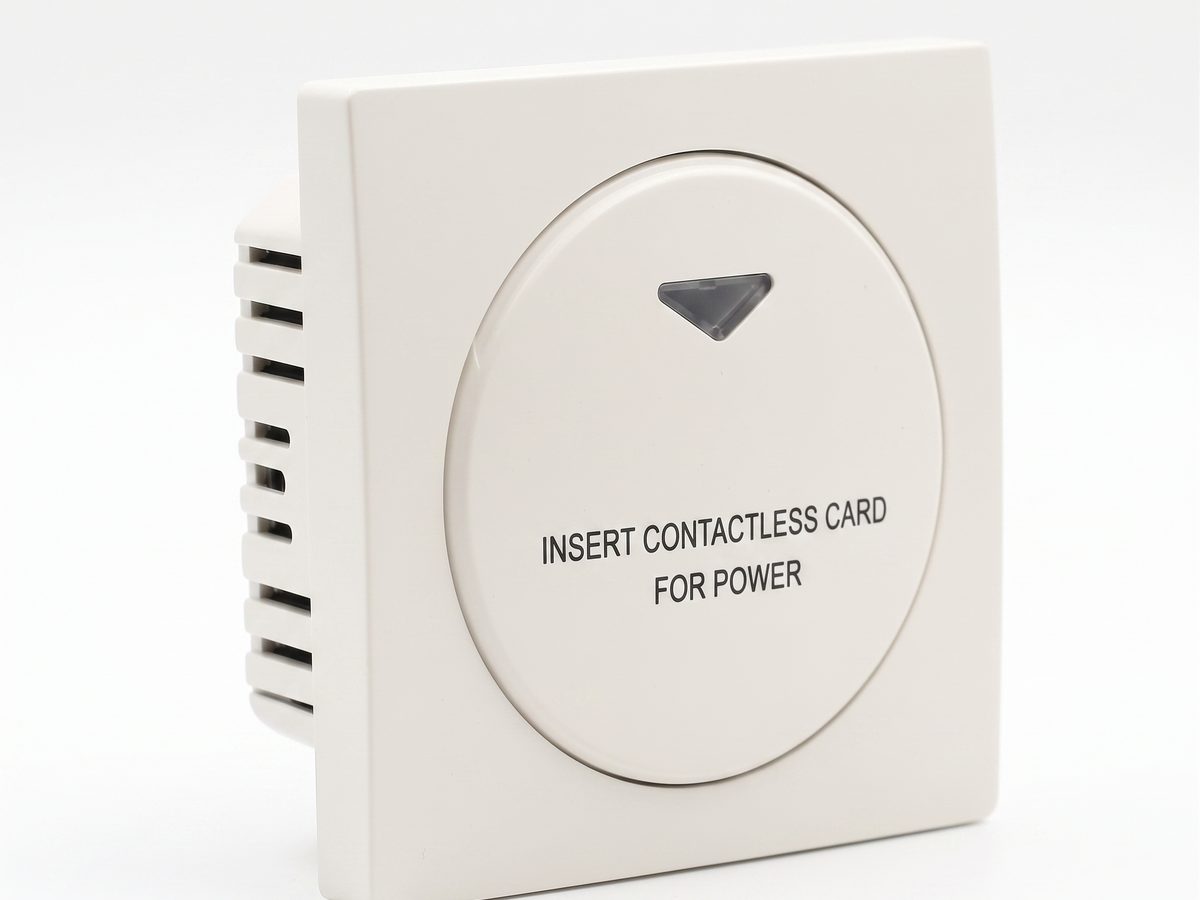
酒店取电开关 — 客房电源智能控制方案
酒店取电开关实现客房电源智能控制。RFID/IC卡识别,插卡取电,拔卡延时断电。220V交流,10A-16A,RS485或干接点。CE RoHS认证。OEM/ODM源头供应商。
当前页面已经把它作为下一步推荐内容直接指向。
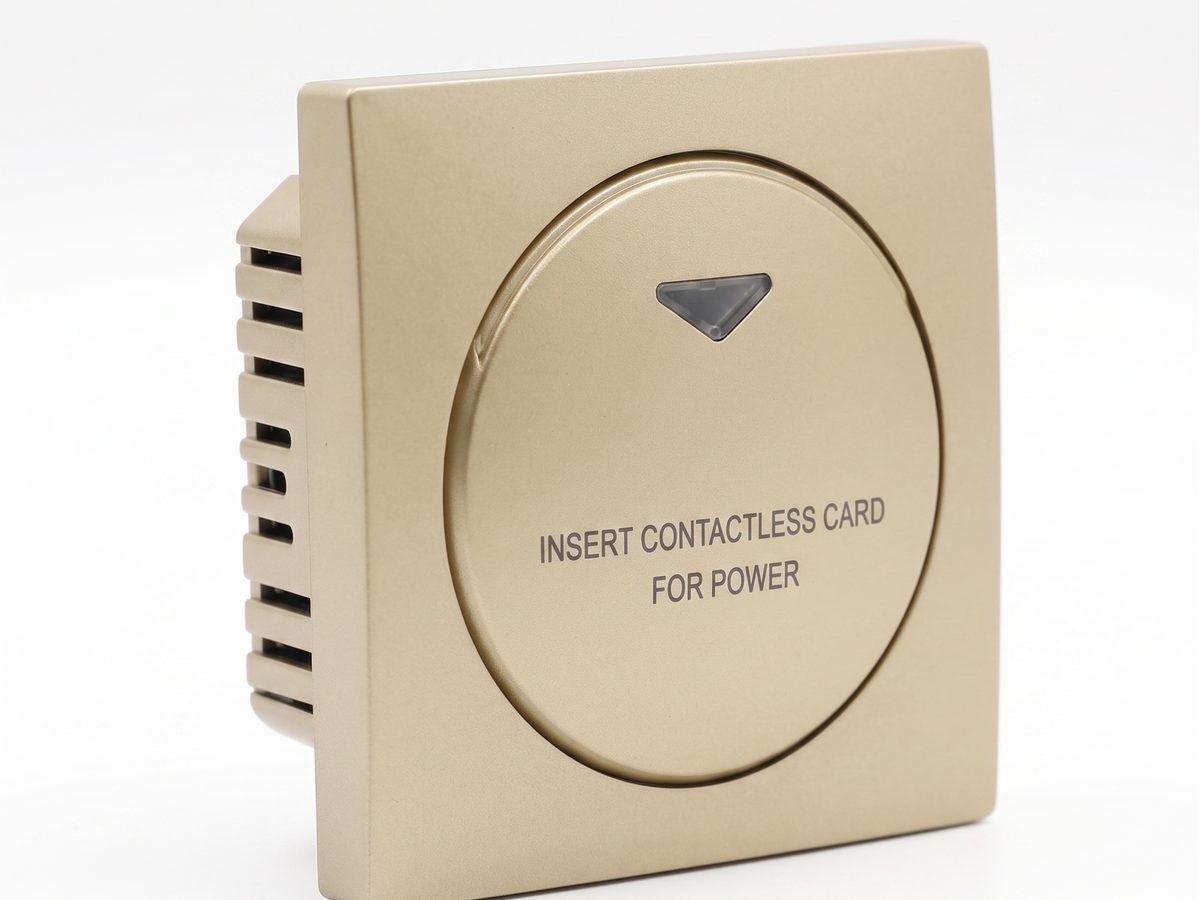
酒店取电开关 — 插卡即用客房电源控制
酒店取电开关插卡通电、拔卡延时断电,联动空调停止空房浪费。220V AC,10A-16A,RS485或干接点。CE RoHS。OEM/ODM供应商。
当前页面已经把它作为下一步推荐内容直接指向。
相关解决方案
3相关文章
3
酒店取电开关五大控制模型详解:通用、RFID、TTLOCK、BLE 与占用传感器选型指南
酒店取电开关涵盖通用、RFID、TTLOCK、BLE 与占用传感器五大型号。本指南详解取电开关、插卡取电开关等核心词对应的产品家族,对比各模型读卡规则、组网方式与适用场景,助您按现有门锁系统精准选型,无需换卡即可实现客房节能 25-40%。
它服务于同一产品语境:酒店取电开关 — 客房电源智能控制方案。
RFID 与 NFC 酒店取电开关选型完全指南:125kHz 与 13.56MHz 卡技术核心差异
酒店取电开关选 RFID 还是 NFC?本质是卡技术家族与手机协议的区别:125kHz 与 13.56MHz RFID(MIFARE、Temic)是客房取电主流,支持扇区密钥绑定仅识自家房卡;NFC 只是手机模拟卡的贴近协议。文章对比读卡原理、防串用能力与选型建议,助工程商按现有门锁卡型精准决策。
它服务于同一产品语境:酒店取电开关 — 客房电源智能控制方案。
什么是酒店取电开关?核心工作原理、四大主流产品类型及客房节能 25-40% 的详细完整深度全解析
酒店取电开关插卡通电、取卡断电,客房节能 25-40%。对比通用型、RFID 型、TTLOCK 兼容型、BLE 智能型四大模式差异,涵盖 30A 继电器、15 秒延时、86 型底盒安装等关键参数,助您按现有刷卡系统精准选型,无需联网即可部署。
它服务于同一产品语境:酒店取电开关 — 客房电源智能控制方案。
与我们的工程师对接您的酒店项目
告知我们房间数量、吊顶类型、协议偏好,24 业务小时内返回打样方案和报价。
- 把泛化知识内容继续引向具体产品或应用场景讨论。
- 当客户要谈价格、图纸、MOQ 或项目节奏时,直接进入 RFQ。
- 同时保留直接联系入口,便于快速澄清问题和内部转交。