Skip to content
Solution

Hotel Energy Saving with Guest-Room Power Switching

A hotel energy-saving solution that uses card-controlled room power to prevent lights, air conditioning, and selected outlets from running unnecessarily.

Featured Hotels Resorts Serviced apartments
Last Updated: 9/5/2026
Answer Snapshot

Qualification facts buyers can extract quickly

A hotel energy-saving solution that uses card-controlled room power to prevent lights, air conditioning, and selected outlets from running unnecessarily.

Last Updated
9/5/2026
Who it is for
Hospitality energy managers, Hotel renovation and electrical contractors
Use cases
Air-conditioning enable control when rooms are unoccupied, Lighting and selected outlet shutdown, Energy-saving upgrades during room refurbishment
Certifications
CE, RoHS
Served markets
Worldwide
Export context
Guest-room energy-saving switches and contactor assemblies for hotel projects
Next step
Share a room circuit schedule and sample floor plan for a practical switching recommendation.

Energy saving starts with a controllable room

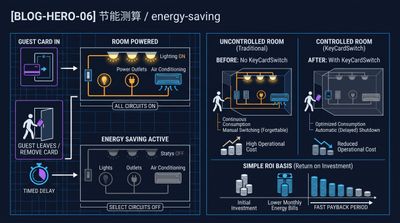
A hotel cannot manage room energy use if the room remains energized after the guest leaves. Card-controlled power switching creates a simple operating boundary: a guest activates the room on entry and the selected circuits can be disconnected after departure. It is a hardware intervention that can be planned by the electrical contractor and explained to guests without a technical training program.

The potential result varies by climate, occupancy, room equipment, guest behavior, and the circuits included. KeyCardSwitch Engineering Team does not promise a fixed percentage reduction. Instead, we help buyers define which loads can be switched safely and how the installation should be verified.

Choose the right energy-saving method

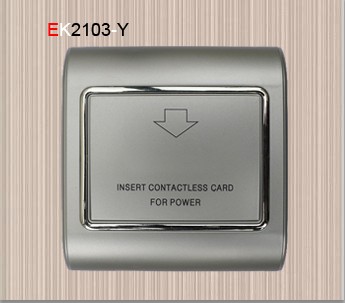
A universal key card switch is suitable when the property wants the least disruptive card workflow. An RFID energy-saving switch is useful when the operator wants the energy card to be associated with a specific room or card technology. Both options can provide the control signal for a contactor that handles the designated room load.

The switch does not need to control every circuit. Many projects keep essential services energized while switching lighting, air-conditioning enable, and selected convenience outlets. This decision belongs in the electrical schedule and should account for equipment restart behavior, guest comfort, and maintenance access.

Why contactor selection matters

Air-conditioning and other inductive equipment can have starting currents that exceed their normal operating current. The switching component must be rated for the actual circuit, voltage, and duty cycle. The installer should confirm terminal spacing, enclosure conditions, heat dissipation, and applicable site requirements. A correctly matched contactor is part of the energy-saving solution, not an optional accessory.

Retrofit without unnecessary disruption

For an occupied hotel, a phased retrofit is usually easier to control than a property-wide shutdown. Begin with a sample of room layouts and equipment types. Record the existing wall-box dimensions, card behavior, circuit labels, and air-conditioning controls. Install the switch and contactor in a small pilot group, then ask operations and maintenance teams to verify entry, exit, cleaning, and fault-recovery procedures.

The pilot should compare the room's previous operating behavior with the new switching logic over a representative period. Metering, submetering, or the property's existing energy records may be used by the operator to evaluate the outcome. This evidence-led approach avoids claiming savings before the project conditions are known.

Procurement checklist

A useful inquiry includes room count, room types, country of installation, supply voltage, card type, target circuits, maximum current, air-conditioning arrangement, existing wall-box dimensions, and desired delivery schedule. Photos of the switch box and a simplified circuit diagram can prevent avoidable specification errors.

KeyCardSwitch Engineering Team can return a configuration table, sample recommendation, and bill of materials for review. We can also align the faceplate and packaging with the buyer's project requirements. The goal is a safe, repeatable hotel energy-saving installation that supports guest comfort while reducing avoidable room power use. Contact the engineering team to start the load review.
Related Content

Find the right presence sensor for your hotel project

Compare the 3 protocols, check hotel-specific case studies, and download the installation guide

Related products

3
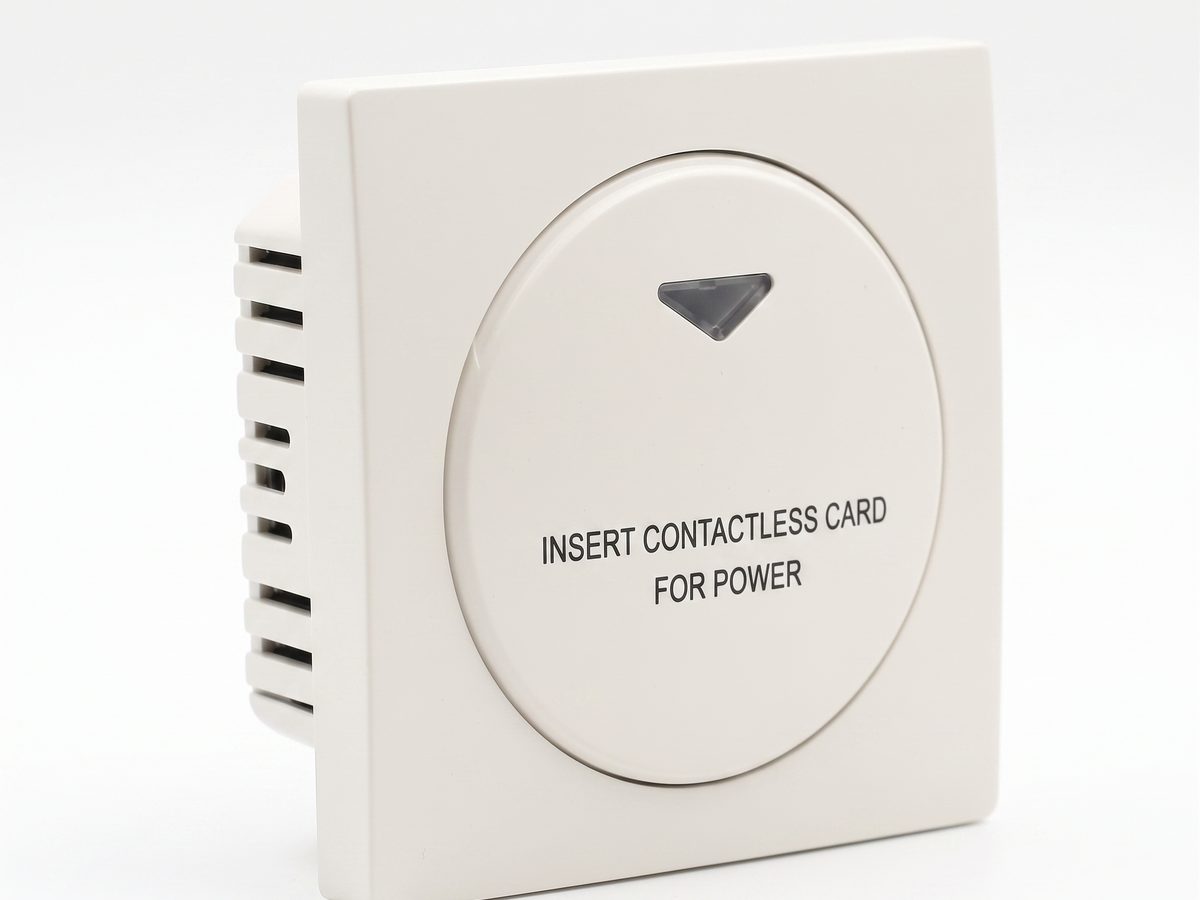
Hotel key card switch, flush white 86-box guest room power control
ProductKey Card SwitchesGuest Room Power Control

Hotel Key Card Switch — Guest Room Power Control

Hotel key card switch for guest room power control. RFID/IC card detection, insert-and-power, card removal time-delay power-off. 220V AC, 10A-16A, RS485 or dry contact. CE RoHS. OEM/ODM supplier.

Why this is next

This page already points to it as the next recommended reference.

RFID energy saving switch (room-bound MIFARE card switch) on a wall
ProductRFID / MIFARE Card SwitchesRFID Energy Saving Switch

RFID Energy Saving Switch — Room-Bound MIFARE Card Switch (Type B)

RFID energy saving switch that binds power to a specific room MIFARE card. 13.56MHz MIFARE / 125kHz Temic, AC 180–250V, 30A, 15s delay-off. An RFID hotel switch that stops card-sharing between rooms and cuts 25–40% room energy.

Why this is next

This page already points to it as the next recommended reference.

TTLOCK compatible energy switch (room-bound, time-limited) on a wall
ProductTTLOCK Compatible SwitchesTTLOCK Compatible Energy Switch

TTLOCK Compatible Energy Switch — Room-Bound + Time-Limited (Type C)

TTLOCK compatible energy switch with room ID and time limit. Works with TTLOCK / TTHotel MIFARE cards via sector-key auth, AC 180–250V, 30A. An encrypted keycard switch and TTLOCK ES2 energy switch for ecosystem-locked hotel retrofits.

Why this is next

This page already points to it as the next recommended reference.

Related solutions

3
SolutionHotels

Guest Room Management System Based on Card-Controlled Power

A practical guest-room management system for controlling room power through key card switches, contactors, and clearly documented operating rules.

Why this is next

It supports the same product context: Hotel Key Card Switch — Guest Room Power Control, RFID Energy Saving Switch — Room-Bound MIFARE Card Switch (Type B).

SolutionHotels

Hotel Room Power Control with Key Card Switches

A practical hotel room power control solution for switching guest-room lighting, air conditioning, and outlets from an authorized room card.

Why this is next

It supports the same product context: Hotel Key Card Switch — Guest Room Power Control, RFID Energy Saving Switch — Room-Bound MIFARE Card Switch (Type B).

Hotel Energy Management System — Room Power Control That Pays Back
SolutionHotels and resorts

Hotel Energy Management System — Room Power Control That Pays Back

A hotel energy management system built on key card switches, RFID energy savers, and occupancy sensors that cuts 25–40% of guest-room electricity. Guest room energy controller guidance for hotels retrofitting room power.

Why this is next

It supports the same product context: Hotel Key Card Switch — Guest Room Power Control, RFID Energy Saving Switch — Room-Bound MIFARE Card Switch (Type B), TTLOCK Compatible Energy Switch — Room-Bound + Time-Limited (Type C).

Related blog posts

3
Hotel Key Card Switch: Types, Models, and How to Specify
ArticleGuidesKeyCardSwitch Engineering Team

Hotel Key Card Switch: Types, Models, and How to Specify

A hotel key card switch spans universal, RFID, TTLOCK, BLE, and occupancy models. This guide to the key card / keycard switch family covers the head terms —…

Why this is next

It supports the same product context: Hotel Key Card Switch — Guest Room Power Control, RFID Energy Saving Switch — Room-Bound MIFARE Card Switch (Type B), TTLOCK Compatible Energy Switch — Room-Bound + Time-Limited (Type C).

RFID vs NFC for Hotel Key Card Switches: Which Card Tech to Choose
ArticleGuidesKeyCardSwitch Engineering Team

RFID vs NFC for Hotel Key Card Switches: Which Card Tech to Choose

RFID vs NFC for hotel key card switches comes down to range and lock-in: 125kHz / 13.56MHz RFID (MIFARE, Temic) is the hotel standard for room-bound power…

Why this is next

It supports the same product context: RFID Energy Saving Switch — Room-Bound MIFARE Card Switch (Type B), Hotel Key Card Switch — Guest Room Power Control, TTLOCK Compatible Energy Switch — Room-Bound + Time-Limited (Type C).

What Is a Hotel Key Card Switch and How It Saves Room Energy
ArticleGuidesKeyCardSwitch Engineering Team

What Is a Hotel Key Card Switch and How It Saves Room Energy

A hotel key card switch is a wall device that powers a guest room when a card is inserted and cuts it when removed, typically saving 25–40% of room…

Why this is next

It supports the same product context: Hotel Key Card Switch — Guest Room Power Control, RFID Energy Saving Switch — Room-Bound MIFARE Card Switch (Type B), TTLOCK Compatible Energy Switch — Room-Bound + Time-Limited (Type C).

Next Step

Translate solution fit into a live RFQ path

Solution pages work best when the visitor can continue into the product set, supporting documents, and the correct contact route without starting over.

  • Pair the workflow story with concrete products and delivery proof.
  • Keep supporting resources close to the process explanation.
  • Route the reader into RFQ while the implementation logic is still clear.
Ready for RFQ

Share your product requirements and get a practical next step

Send your drawings, target quantity, and timeline. Our sales engineering team will respond within 24 business hours with a practical next step, a quote, or a sample plan.

Send a quick inquiry

Tell us what you need — room size, target volume, timeline. We respond within 24 business hours.

A clear brief helps the team reply within one business day with the right catalog, sample route, or quotation next step.