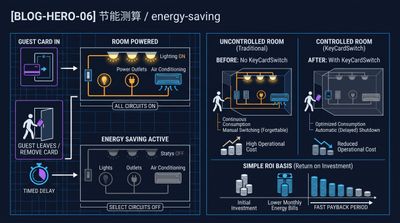
A hotel energy management system built on key card switches and occupancy sensors typically pays back in under a year because it removes the largest and most wasted guest-room load — air conditioning and lighting running on empty rooms — at a hardware cost of only a few dollars per room. The ROI rests on one number: 25–40% of guest-room electricity, which a hotel energy management system captures automatically the moment a card leaves or a room goes empty. At an average room load of 1–2 kW, avoiding even 60 minutes of empty-room runtime per room per day saves roughly 0.5–1 kWh, and multiplied across hundreds of rooms across a year that is a five-figure electricity reduction for a mid-size property. A hotel energy management system turns that saving from a behavioral hope into a hardware-enforced default, which is why the payback clock starts at install, not at training.
The ROI Math for a Room-Power System
The hotel energy management system ROI is a simple subtraction. Take the per-room daily saving (load × empty hours avoided × tariff), multiply by room count and occupancy, and divide by the installed cost (switches + relays + any BLE gateway). A 200-room property at $0.15/kWh, saving 0.75 kWh/room/day across 70% occupancy, saves about $7,700/year in electricity — enough to cover a few-dollar-per-room switch rollout inside a single year. Add the labor saving from auto-checkout (no manual switch flip, no dispute over left-on AC) and the payback tightens further. A hotel energy management system is unusual among capex because the recurring saving is large, predictable, and immediate, with no guest behavior change required to realize it.
BOM: One Switch Family, Mixed by Room
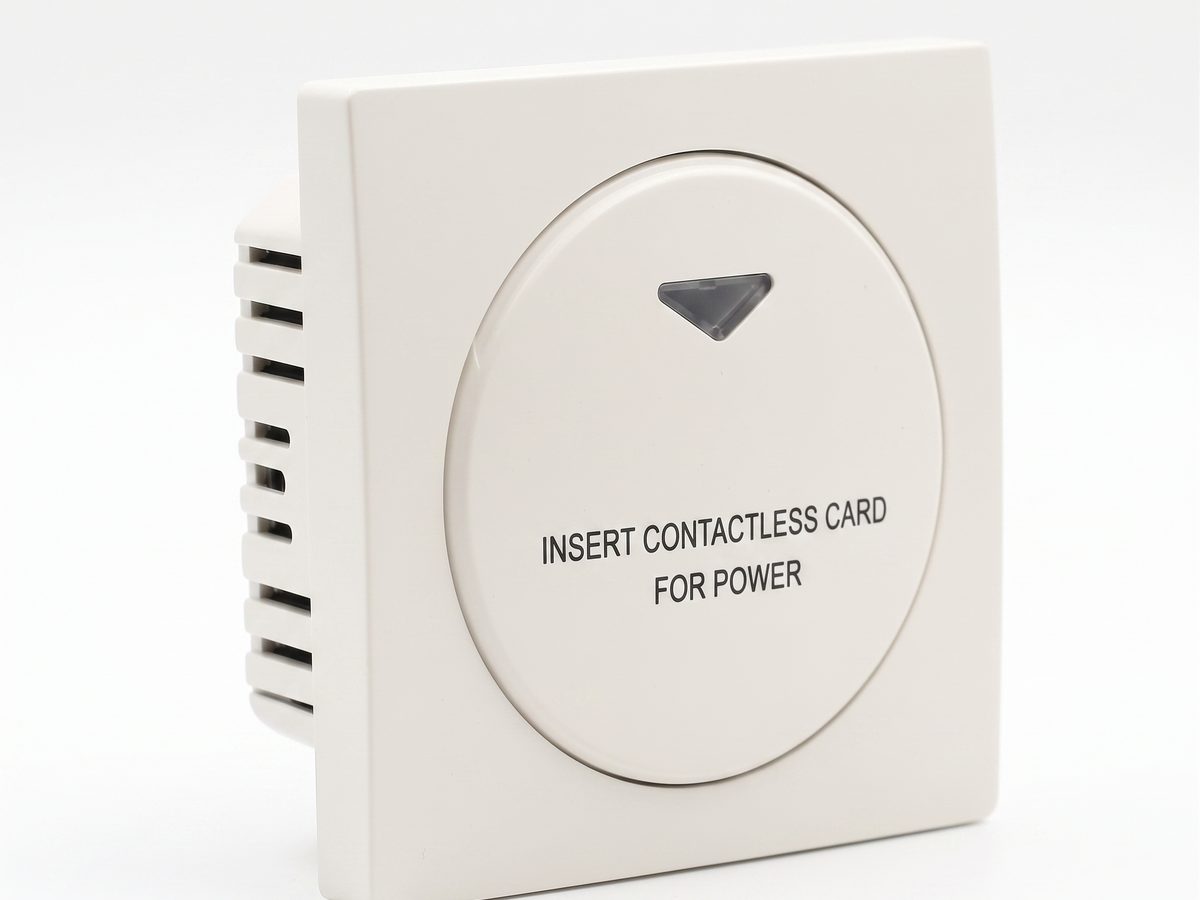
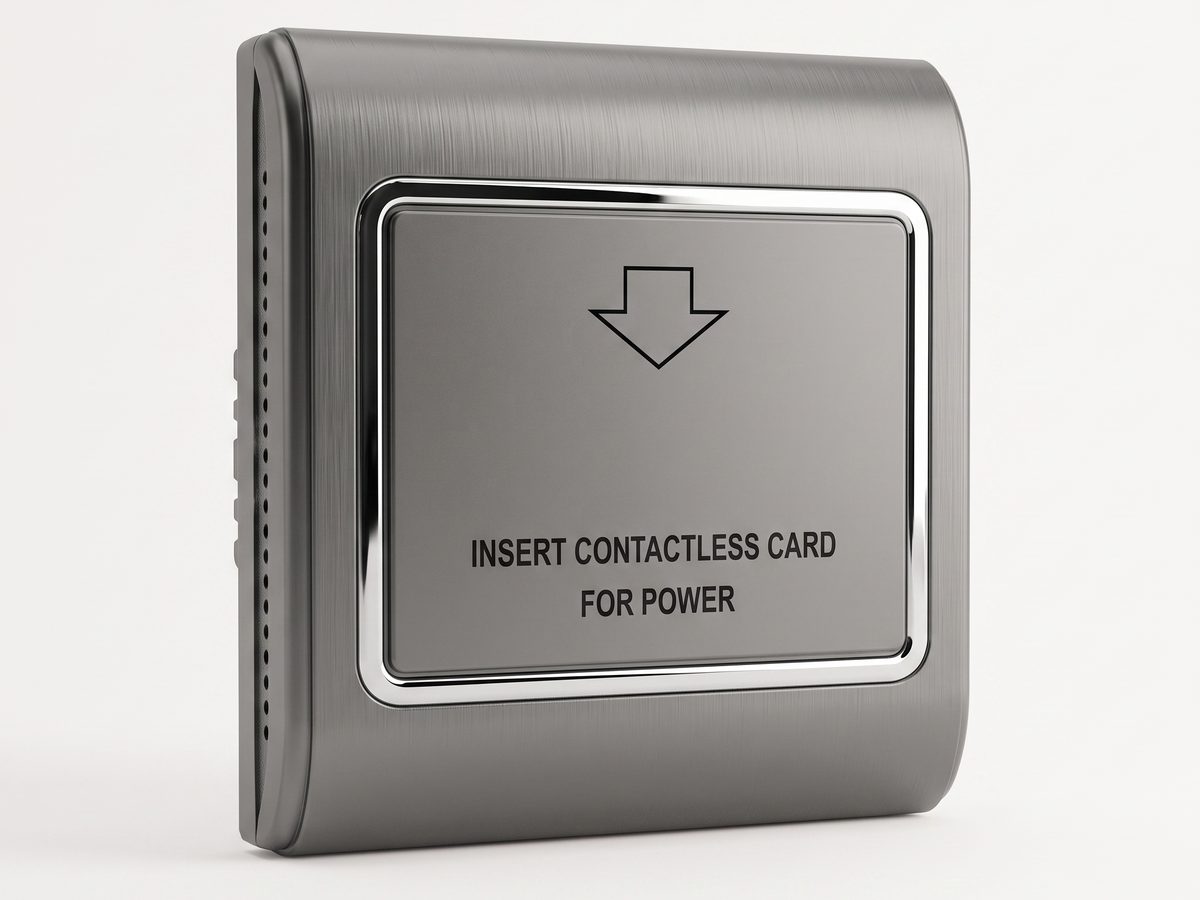
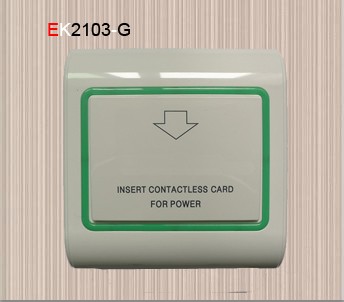
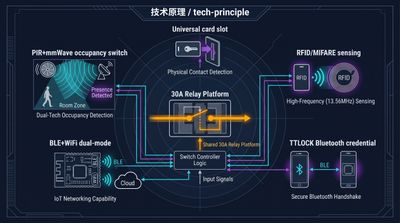
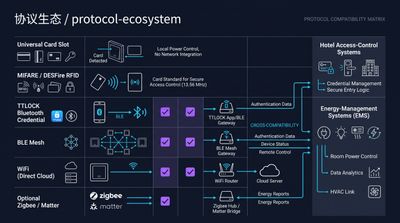
The bill of materials for a hotel energy management system is one switch family assigned per room type, not a stack of disparate systems. Universal hotel key card switches for mixed-card estates; RFID energy savers for MIFARE/Temic rooms; TTLOCK compatible switches for TTLOCK estates; BLE smart switches for connected rooms that need cloud logging; and occupancy sensor switches for card-free or meeting spaces. Each is the same 30A relay, AC 180–250V, flush 86×86×48mm panel, so the BOM is a per-room SKU list, not an integration project. A hotel energy management system from one supplier means one support channel, one relay spec, and one retrofit procedure across every room — which keeps install cost (and therefore payback time) low.
Proving the Saving with Cloud Logging
The BLE smart energy switch adds a cloud log that turns the hotel energy management system ROI from an estimate into a report. Every power event per room streams to a dashboard, so energy teams see exactly which rooms drew power while empty and housekeeping sees which checkouts left load on. That audit trail is what makes the 25–40% saving defensible to ownership and useful for sustainability reporting — sub-metering without wiring a meter into every circuit. A hotel energy management system with BLE is the connected version of the same relay loop: offline-reliable at the door, cloud-visible at the desk. Start with the hotel energy saving switch buying guide to assign models room-by-room, then roll up into the hotel energy management system BOM.