Сравнение Key Card Switch и Legrand: практическое руководство для отелей
Сравнение Key Card Switch и Legrand для закупок отелей: распознавание карт, нагрузки, реле, монтаж, риски ретрофита, поставки, кастомизация и поддержка.
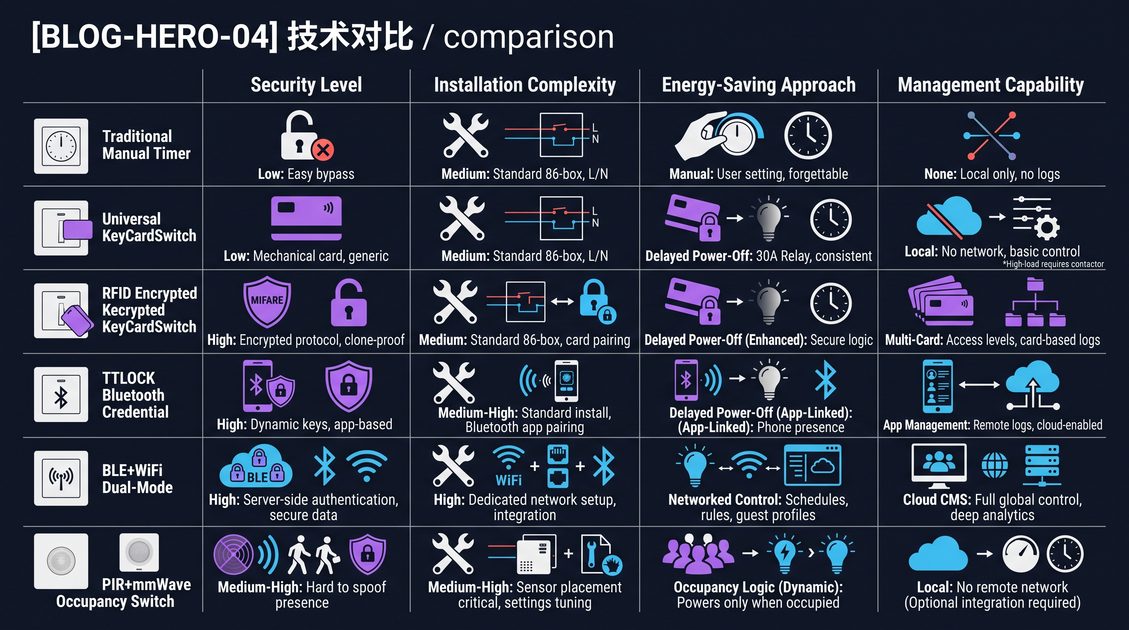
Решение об управлении питанием в отеле редко решается выбором самого узнаваемого бренда электрооборудования. Проектные команды должны подбирать карточный выключатель, метод прокладки проводов, электрическую нагрузку, подрозетник, местные правила и модель сервиса под конкретное здание. Это сравнение объясняет, где специализированный отельный ключевой карточный выключатель и продукты Legrand для отелей или управления освещением могут пересекаться, где они отличаются и как составить честное техническое задание для закупки, не предполагая недокументированных спецификаций. Оно написано для владельцев, подрядчиков, дистрибьюторов, проектировщиков освещения и системных интеграторов, которым нужен практический процесс принятия решения, а не брендовый слоган.
Key Card Switch против Legrand: что на самом деле означает сравнение
Key Card Switch против Legrand — это сравнение двух подходов к закупке, а не утверждение о том, что каждый продукт, продаваемый под любым из этих имен, имеет идентичные функции. Отельный ключевой карточный выключатель — это настенное устройство управления энергией номера, которое обнаруживает гостевую карту или одобренную карту, а затем открывает или закрывает реле, управляющее выбранными цепями. Legrand — это сторонний б랜드 электрооборудования с продуктами по коммутационным устройствам, выключателям, управлению освещением и отельным приложениям; его точные функции зависят от локального семейства продуктов, рынка, метода установки и текущей документации. Поэтому закупщики должны сравнивать проверенные даташиты, а не логотипы. Самые полезные факты — это метод ввода или распознавания, управляемая нагрузка, архитектура реле, совместимость с подрозетником, сертификаты, канал сервиса и доступность для проекта. Универсальный карточный выключатель может обнаруживать вставку без аутентификации карты, в то время как RFID-версия может считывать указанную технологию карты. Ни одно из этих предположений не должно переноситься на неуказанный продукт Legrand.
Определите решение перед сравнением брендов
Первый вопрос — не «Какой бренд лучше?». Это «Какое поведение номера должна обеспечивать установка?». Типичный отельный номер требует четкой последовательности: гость заходит, вставляет карту, выбранные цепи освещения и розеток получают питание, и цепи отключаются после извлечения карты и истечения настроенной задержки. Некоторые проекты хотят управлять только освещением и обычными розетками. Другие разделяют цепи холодильника, систем безопасности, вентиляции, доступа или обслуживания. Карточный выключатель никогда не должен использоваться для прерывания цепи, которую электрический проект требует держать постоянно под напряжением.
Продукты Legrand могут быть выбраны, потому что проект уже использует более широкое семейство электроаксессуаров, указанную дизайнерскую отделку или региональный канал дистрибуции. Специализированный ключевой карточный выключатель может быть выбран, потому что его основная задача — однозначное управление энергией номера. Это законные приоритеты, но они создают разные критерии оценки. Сначала составьте ведомость нагрузок номера, а затем протестируйте обе альтернативы против нее.
Что известно и неизвестно о Legrand
Эта статья не присваивает сравнению модель Legrand, напряжение, номинальный ток, цену, сертификат или функцию. Семейства продуктов Legrand отличаются по странам и приложениям, и отельный или световой продукт должен быть проверен по официальной региональной документации и точному коммерческому предложению. Ответственный закупщик должен запросить актуальный технический лист, инструкции по монтажу, декларацию или документы одобрения и условия поддержки дистрибьютора для предлагаемого изделия. Если предложение говорит «совместимо с Legrand» без модели и даташита, это еще не сравнимая спецификация.
Та же дисциплина применима к специализированному ключевому карточному выключателе. Поставщик должен указать, является ли блок универсальным, RFID, IC, MIFARE, Temic, 125 кГц, совместимым с TTLOCK, BLE, Wi-Fi, PIR или на базе ммWave. Эти описания не взаимозаменяемы. Они описывают разные способы решения о том, должен ли номер быть под напряжением. Честный обзор Key Card Switch против Legrand фиксирует неизвестное вместо заполнения его предположениями.
Key Card Switch против Legrand: функции и логика управления номером
Функция Key Card Switch против Legrand лучше всего оценивать по последовательности управления номером, задействованным цепям и требуемой степени проверки карты. Специализированный отельный ключевой карточный выключатель обычно использует физическое присутствие карты как простой прокси-индикатор занятости: присутствие карты замыкает реле, а извлечение карты запускает задержку перед размыканием реле. Универсальная модель может принимать любую карту подходящих размеров, тогда как RFID-модель может быть спроектирована вокруг заявленной частоты или семейства карт. Решение Legrand может обеспечивать обычный настенный контроль, отельный энергетический выключатель или более широкий компонент управления освещением в зависимости от выбранного продукта и рынка. Без точной модели никакое конкретное поведение не должно приписываться ему. Сравнение должно документировать, управляет ли каждая опция цепью всего номера, выбранными выходами, сценариями или только локальной точкой освещения, и требуются ли дополнительные модули.
Последовательность номера важнее этикетки
Напишите последовательность простым языком до обсуждения оборудования. Например: «Когда авторизованная гостевая карта вставлена, освещение номера и удобные розетки становятся доступны. Когда карта извлечена, контроллер ждет 15, 30 или 60 секунд, затем размыкает управляемое реле». Это выявляет скрытые требования. Проекту может понадобиться более длинная задержка, чтобы гость мог извлечь карту, уходя ненадолго. Горничным может понадобиться поведение служебной карты. Инженерам может понадобиться ручное переключение для обслуживания. Устройство, которое просто выглядит как карточный выключатель, может не реализовывать все эти поведения.
Последовательность управления также выявляет исключения. Мини-бар, роутер, цепь аварийного освещения, датчик дыма, блок питания замка двери или система вентиляции могут требовать постоянного питания. Карточный выключатель должен поэтому питать определенную подцепь энергии номера, а не слепо отключать весь щит. Монтажник должен отметить коммутируемые и некоммутируемые цепи на чертежах и этикетках.
Универсальное распознавание и аутентифицированное распознавание
Универсальное распознавание операционно просто. Любая карта с подходящими физическими размерами может активировать выключатель, поэтому гостю не нужен определенный закодированный идентификатор. Это может снизить сложность на ресепшене и сделать заменяющие карты простыми в использовании. Его ограничение в том, что не-номерная карта также может активировать выключатель, если конструкция не использует другое ограничение. Это часто уместно, когда проект ценит детерминированный физический контроль выше безопасности учетных данных.
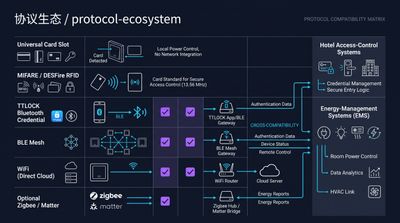
Аутентифицированное распознавание использует технологию карты или идентификатор. Примеры в отельных проектах могут включать RFID 13,56 МГц, варианты MIFARE, карты Temic или технологии 125 кГц, но закупщик должен подтвердить, что именно поддерживает предлагаемый ридер. Одна частота карты не доказывает совместимость; кодировка, архитектура ридера, формат карты и тестирование поставщика — все это имеет значение. Просите валидацию образцов карт перед серийным выпуском.
Где может подойти Legrand
Продукт Legrand может подойти, когда проекту нужна эстетика обычного выключателя, скоординированная система накладных панелей или заданная архитектура электроуправления. Он также может подойти, когда у подрядчика уже есть локальный маршрут поставки и обученные монтажники. Это преимущества закупки и монтажа, а не доказательство того, что изделие выполняет ту же последовательность распознавания карты, что и отельный ключевой карточный выключатель. Если распознавание карты критично, предложение должно показать ридер, рабочий процесс карты, выход реле, поведение задержки и схему подключения.
Специализированный ключевой карточный выключатель может подойти лучше там, где функция энергии номера является основным требованием, а закупщик хочет стандартный отельный рабочий процесс в одном настенном устройстве. Его может быть легче котировать по многим номерам, потому что поставщик может определить один метод распознавания и одну релейную платформу. Компромисс в том, что отделки, размеры подрозетников или региональная дистрибуция могут требовать большей координации, чем знакомый ассортимент электроаксессуаров.
Key Card Switch против Legrand: распознавание карт и совместимость учетных данных
Распознавание карт Key Card Switch против Legrand должно тестироваться как проблема интерфейса, а не выводиться из имени семейства продуктов. Универсальный выключатель обнаруживает наличие картообразного объекта; ридер для конкретной карты обнаруживает определенную технологию и может отклонять несвязанные карты. RFID-ридеры зависят от частоты, конструкции антенны, типа карты, кодировки и физического размещения. Отель, выпускающий карты MIFARE, не должен одобрять ридер 125 кГц только потому, что оба продукта описаны как «RFID». Для сторонней опции Legrand проектная команда должна подтвердить, включает ли предлагаемый продукт требуемый ридер и какие технологии карт он принимает. Для специализированного ключевого карточного выключателя поставщик должен указать поддерживаемые карты и протестировать образцы, предоставленные отелем.
Постройте матрицу совместимости карт
Полезное представление включает матрицу со столбцами для типа карты, частоты, физического формата, результата распознавания, задержки активации, задержки извлечения и исключений. Протестируйте гостевую карту, служебную карту, мастер-карту, просроченную карту, пустую карту и карту из несвязанной системы, если безопасность важна. Запишите, включает ли каждая карту питание, оставляет питание включенным или не имеет эффекта. Это надежнее, чем общее утверждение вроде «работает с отельными картами».
Для универсального выключателя протестируйте толщину карты и ощущение вставки. Слот, который слишком туг, может повредить карты или расстроить гостей; слишком свободный — создать нестабильное обнаружение. Для RFID протестируйте карту на предполагаемой глубине вставки и с финальной накладной панелью. Металлические подрозетники, близкая проводка и декоративные материалы могут влиять на производительность ридера. Образец должен быть установлен в репрезентативном подрозетнике, а не держаться в шоуруме поставщика.
Распознавание не равно контролю доступа
Отельный энергетический выключатель не автоматически является ридером дверного замка. Он управляет питанием номера на основе условия карты; он сам по себе не решает, может ли гость войти в номер. Избегайте описания его как модуля дверного замка или контроллера контроля доступа. Там, где отель использует отдельную систему замков, энергетический выключатель может иметь скоординированный гостевой рабочий процесс, но два устройства остаются разными, если не поставляется документированная интеграция. Это различие предотвращает неверную проводку, нереалистичные предположения о безопасности и запутанные инструкции по обслуживанию.
Та же граница важна при сравнении специализированного выключателя с общим электро-брендом. Настенное аксессуар может быть отличным для управления освещением и все равно не обеспечивать распознавание карты. И наоборот, карточный выключатель может быть уместен для энергоконтроля, не являясь полной системой автоматизации номера. Закупочные документы должны перечислять функцию глаголами: обнаруживать, валидировать, питать, задерживать, обесточивать и переключать вручную.
Одобрение образца и контроль изменений
Одобрите точный карточный ридер перед выпуском заказа на покупку. Сохраните эталонную образцовую карту, лицевую панель ридера, схему подключения и запись прошивки или конфигурации, где применимо. Если отель сменит свои замковые карты после первого блока номеров, перепроверьте выключатель перед выпуском следующей партии. Смена технологии карты может сделать ридер недействительным, даже когда настенные размеры остаются неизменными.
Для предложения Legrand попросите авторизованный канал идентифицировать точный региональный артикул и предоставить актуальную документацию. Для специализированного ключевого карточного выключателя попросите производителя идентифицировать производственную конфигурацию. В обоих случаях запись одобрения должна указывать, что тестировалось, а что исключалось. Это доказательство защищает владельца от позднего обнаружения того, что карта физически принимается, но технически не распознается.
Key Card Switch против Legrand: номинальное напряжение, нагрузка и защита цепей
Электрическая производительность Key Card Switch против Legrand — это упражнение на верификацию проекта. Релевантные цифры — это напряжение питания, частота, номинал контактов реле, тип нагрузки, пусковой ток, сечение провода, защитное устройство, окружающие условия и то, является ли нагрузка резистивной, индуктивной, емкостной или смешанной. Специализированная отельная платформа KeyCardSwitch описывается с реле 30А, но проект все равно должен проверить точную модель, локальное напряжение, метод установки и требования к занижению. Продукт Legrand должен быть проверен против его точного регионального даташита; никакой универсальный рейтинг не должен предполагаться. Номинал реле не то же самое, что рекомендация пропускать через устройство каждую нагрузку номера. Кондиционеры, обогреватели, двигатели и другие нагрузки с высоким пусковым током могут требовать внешний контактор и соответствующий расчет защиты.
Читайте табличку и схему подключения вместе
Табличка может показывать максимальный номинал контактов, но схема подключения показывает, как этот номинал достигается. Определите, коммутирует ли устройство фазу, ноль, управляющий вход или катушку контактора. Подтвердите количество полюсов и проходят ли все необходимые проводники через корпус. Проверьте, может ли монтажник изолировать цепь, и обеспечивает ли корпус необходимое пространство для зажимов.
Платформа реле 30А может быть полезна для распределения по номеру, но безопасная подключенная нагрузка зависит от категории нагрузки и местного кодекса. Драйверы освещения имеют пусковой ток. Нагрузки на розетках непредсказуемы. Компрессоры и двигатели индуктивны. Водонагреватель может быть непрерывной или высокомощной нагрузкой. Проектный инженер должен рассчитать потребление и выбрать защитное устройство, а не рассматривать ярлык реле как ярлык проекта.
Когда использовать внешний контактор
Используйте внешний контактор, когда управляемая нагрузка превышает расчет выключателя, имеет высокий пусковой ток или должна быть разделена по причинам сервиса и тепловыделения. Ключевой карточный выключатель тогда управляет катушкой контактора, а контактор коммутирует большую нагрузку. Подтвердите напряжение катушки, требования к гашению, расположение корпуса, шум и доступное пространство. Контактор должен быть доступен для инспекции и четко маркирован.
Эта архитектура также помогает, когда проект имеет несколько цепей с разными требованиями к защите. Выключатель может обеспечивать низковольтный управляющий сигнал, в то время как распределительное оборудование обрабатывает групповые нагрузки. Это не дефект, что карточный выключатель не несет напрямую каждую нагрузку номера; это часто правильная системная граница. Финальная схема должна идентифицировать выключатель, контактор, автоматические выключатели, защиту от утечки тока где требуется, и некоммутируемые цепи.
Таблица сравнения для электротехнического обзора
| Электрическое измерение | Специализированный отельный ключевой карточный выключатель | Опция Legrand | Проверка закупщика |
|---|---|---|---|
| Основная роль | Управление энергией номера на основе карты | Зависит от точного семейства продукта | Подтвердить требуемую последовательность номера |
| Релейная платформа | Платформа KeyCardSwitch описана как 30А; проверить даташит модели | Не предполагать; проверить точный изделие | Проверить категорию контактов и занижение |
| Напряжение питания | Подтвердить вариант проекта и локальное питание | Подтвердить региональный даташит | Соответствие напряжению и частоте |
| Высокомощные нагрузки | Использовать внешний контактор при необходимости | Использовать архитектуру, требуемую точным продуктом | Рассчитать пусковой ток и потребление |
| Распознавание карт | Универсальное или указанная технология карты по модели | Только если точный продукт это документирует | Протестировать отельные карты |
| Защита | Внешние автоматы и кодо-соответствующая проводка обязательны | Внешняя защита обязательна | Инженер подписывает цепь |
| Некоммутируемые цепи | Должны быть разделены намеренно | Должны быть разделены намеренно | Отметить на чертежах и этикетках |
Не сравнивайте максимальное число с рекомендацией проекта
Максимальный номинал контактов — это граница, а не обещание, что устройство должно работать непрерывно при этом значении в каждом корпусе или среде. Температура, вентиляция, сечение проводников, момент зажима, частота коммутации, тип нагрузки и метод установки имеют значение. Закупочная команда должна запросить условия за номиналом и попросить электротехнического консультанта одобрить выбранную конфигурацию.
Если котировка Legrand дает номинал, сохраните исходный документ и его дату ревизии. Если никакой рейтинг не публично доступен для предлагаемого изделия, пометьте его как «подтверждается», а не «такое же, как» у другого продукта. Прозрачные неизвестные безопаснее ложной точности.
Key Card Switch против Legrand: реле, контактор и архитектура обслуживания
Архитектура реле Key Card Switch против Legrand должна оцениваться по поведению при отказе и сервису, а также по токовой способности. Реле — это электрически управляемый выключатель; в отельном номере оно может питать цепь, когда условие распознавания выполнено, и размыкать ее после извлечения. Контактор — это отдельное коммутирующее устройство, обычно используемое для более крупных или требовательных нагрузок. Специализированная платформа ключевого карточного выключателя использует реле для управления путем энергии номера, с рекомендацией внешнего контактора для высокомощных нагрузок. Решение Legrand может использовать внутреннее реле, выделенный контактор, модульное устройство управления или другую архитектуру в зависимости от точного изделия. Закупщики должны требовать однолинейную схему, ведомость зажимов, процедуру замены и метод тестирования перед одобрением.
Определите нормальные и аварийные состояния
Проектная команда должна указать, что происходит после перебоя питания, извлечения карты, отказа контактов реле, отказа ридера и обрыва управляющего провода. Отельный номер не должен становиться небезопасным, потому что карточный выключатель рассматривается как единственный слой защиты. Критические сервисы остаются на отдельно спроектированных цепях. Если контакты реле привариваются, все равно важны автоматический выключатель и процедура изоляции для обслуживания. Если ридер перестает распознавать карты, персоналу нужен ручной сервисный процесс.
Спросите, возвращается ли выключатель в заэнергизированное или обесточенное состояние после восстановления питания. Ответ может повлиять на комфорт гостей, потребление нагрузки и обслуживание. Не выводите поведение из имени бренда. Протестируйте на одобренном образце и запишите результат в документации пусконаладочных работ.
Износ контактов и планирование замены
Реле имеют конечный ресурс работы, зависящий от категории нагрузки и частоты коммутации. Номер с частыми вставками карты может циклиться чаще, чем офис. Индуктивные и высокопусковые нагрузки напрягают контакты. Контактор может перенести это напряжение от настенного контроллера, но вводит другой компонент и катушку. Спецификация должна включать запасные реле или полные выключатели, контакторы где используются, накладные панели, зажимные аксессуары и четкий процесс замены.
Закупщик, сравнивающий специализированный ключевой карточный выключатель с Legrand, должен спросить, может ли предпочтительный поставщик обеспечить заменяющие блоки, сохраняющие установленный вырез и накладную панель. Технически подходящая замена, требующая новых настенных работ, может быть дорогой в занятом отеле. Непрерывность сервиса — это критерий проекта, а не послевкусие.
Чек-лист пусконаладочных работ
Проводите пусконаладку каждого номера с использованием повторяемого чек-листа. Подтвердите изоляцию входящего питания, идентификацию проводников, момент зажима, распознавание карты, активацию, задержку, деактивацию, ручное переключение и разделение некоммутируемых цепей. Протестируйте фактическую подключенную нагрузку в нормальных условиях эксплуатации. Для установок с контактором слушайте аномальный треск и проверяйте гашение катушки и температуру корпуса.
Запишите номер комнаты, серийный номер или партию устройства, тип карты, результат электротеста и монтажника. Небольшой дефект, обнаруженный в номере 101, может быть исправлен по всей партии перед сдачей. Этот процесс одинаково необходим и для именованного глобального бренда, и для OEM-продукта; репутация не заменяет доказательства пусконаладки.
Key Card Switch против Legrand: монтаж, подрозетники и отделки
Монтажная пригодность Key Card Switch против Legrand зависит от подрозетника, глубины модуля, ввода кабеля, размеров панели, метода монтажа и координации отделок. Специализированный отельный ключевой карточный выключатель обычно устанавливается как настенное устройство у входа в номер, где гость может его увидеть и достать. Монтажник должен проверить локальный стандарт подрозетника, доступную глубину, радиус изгиба проводников и разделение от других цепей. Продукт Legrand может выигрывать от установленной экосистемы аксессуаров или локального стандарта панели, но точный артикул все равно требует размерного чертежа. Ретрофит не одобряется потому, что лицевой вид выглядит совместимым. Измерьте существующий вырез, проверьте подрозетник, подтвердите раскладку зажимов и спланируйте время отключения. Финальный выбор должен минимизировать небезопасное переполнение и избегать импровизации за декоративной панелью.
Приоритеты нового строительства
Новое строительство дает больше свободы. Электроинженер может зарезервировать правильный подрозетник, проложить коммутируемые и некоммутируемые цепи, разместить контакторы и скоординировать позицию входного контроля с интерьерным дизайном. Включите размеры устройства в прототип номера до закрытия сухим штукатурным, камнем или столярными работами. Подтвердите отделку панели, маркировку, ориентацию слота для карты и высоту доступности с архитектором и оператором.
Для специализированного ключевого карточного выключателя новое строительство может стандартизировать один тип ридера по категориям номеров. Для опции Legrand скоординированное электро-семейство может упростить графики отделок. В любом случае спецификация должна называть функцию, размеры, архитектуру нагрузки и образец одобрения, а не полагаться на широкое брендовое допущение.
Ограничения ретрофита
Ретрофит работы контролируются существующей проводкой. В номере может быть только одна коммутируемая цепь, неглубокий подрозетник, переполненные проводники или настенная отделка, дорогая для нарушения. Новый карточный выключатель может потребовать нулевой проводник, более глубокий подрозетник или отдельную цепь для контактора. Обследуйте репрезентативные номера перед покупкой полного количества. Запишите разные типы номеров, а не только первый номер, который кажется легким.
План ретрофита должен включать временное питание, доступ к номерам, защиту отделок, контроль пыли, график гостевых номеров и повторную пусконаладку. Если устройство не может безопасно поместиться в текущий подрозетник, может понадобиться накладной корпус или альтернативное местоположение. Самый дешевый блок может стать самым дорогим выбором, когда включаются трудозатраты и простой номеров.
Вопросы подрозетника и панели
Попросите постав A hotel power-control decision is rarely solved by choosing the most recognizable electrical brand. Project teams must match the card switch, wiring method, electrical load, wall box, local rules, and service model to the building. This comparison explains where a dedicated hotel key card switch and Legrand hotel or lighting-control products may overlap, where they are different, and how to create a fair procurement brief without assuming undocumented specifications. It is written for owners, contractors, distributors, lighting designers, and system integrators who need a practical decision process rather than a brand slogan.
Key card switch vs legrand: what the comparison actually means
Key card switch vs legrand is a comparison between two procurement approaches, not a claim that every product sold under either name has identical functions. A hotel key card switch is a wall-mounted room energy-control device that detects a guest card or approved card, then opens or closes a relay controlling selected circuits. Legrand is a third-party electrical brand with products across wiring devices, switches, lighting control, and hotel-related applications; its exact functions depend on the local product family, market, installation method, and current documentation. Therefore, buyers should compare verified datasheets, not logos. The most useful facts are the input or recognition method, controlled load, relay architecture, box compatibility, approvals, service channel, and project availability. A universal card switch may detect insertion without authenticating a card, while an RFID version may read a specified card technology. Neither assumption should be transferred to an unspecified Legrand product.
Define the decision before comparing brands
The first question is not “Which brand is better?” It is “What room behavior must the installation deliver?” A typical hotel room requires a clear sequence: the guest enters, inserts a card, the selected lighting and socket circuits become energized, and the circuits turn off after the card is removed and a configured delay expires. Some projects want only lighting and general sockets controlled. Others separate refrigerator, life-safety, ventilation, access, or maintenance circuits. A card switch should never be used to interrupt a circuit that the electrical design requires to remain continuously powered.
Legrand products may be selected because the project already uses a broader electrical accessory family, a specified designer finish, or a regional distribution channel. A dedicated key card switch may be selected because its primary job is unambiguous room-energy control. These are legitimate priorities, but they produce different evaluation criteria. Make a room load schedule first, then test both alternatives against it.
What is and is not known about Legrand
This article does not assign a Legrand model number, voltage, current rating, price, certification, or feature to the comparison. Legrand product families differ by country and application, and a hotel or lighting-control product must be verified from the official regional documentation and the exact quotation. A responsible buyer should request the current technical sheet, installation instructions, declaration or approval documents, and distributor support terms for the proposed item. If a proposal says “Legrand compatible” without a model and datasheet, it is not yet a comparable specification.
The same discipline applies to a dedicated key card switch. A supplier should state whether the unit is universal, RFID, IC, MIFARE, Temic, 125 kHz, TTLOCK-compatible, BLE, Wi-Fi, PIR, or mmWave based. Those descriptions are not interchangeable. They describe different ways of deciding whether a room should be energized. A fair key card switch vs legrand review records unknowns instead of filling them with assumptions.
Key card switch vs legrand: function and room-control logic
Key card switch vs legrand function is best evaluated by the room-control sequence, the circuits involved, and the degree of card validation required. A dedicated hotel key card switch normally uses the physical presence of a card as a simple occupancy proxy: card present closes a relay, and card removal starts a delay before the relay opens. A universal model may accept any appropriately sized card, whereas an RFID model can be designed around a stated frequency or card family. A Legrand solution may provide a conventional wall control, a hotel room energy switch, or a broader lighting-control component depending on the selected product and market. Without an exact model, no specific behavior should be attributed to it. The comparison should document whether each option controls a room-wide circuit, selected outputs, scenes, or only a local lighting point, and whether additional modules are required.
The room sequence matters more than the label
Write the sequence in plain language before discussing hardware. For example: “When an authorized guest card is inserted, the room lighting and convenience sockets become available. When the card is removed, the controller waits 15, 30, or 60 seconds, then opens the controlled relay.” This exposes hidden requirements. A project may need a longer delay so a guest can remove a card while leaving briefly. Housekeeping may need a service card behavior. Engineering may need a manual override for maintenance. A device that merely looks like a card switch may not implement all of these behaviors.
The control sequence also identifies exceptions. A minibar, router, emergency lighting circuit, smoke alarm, door lock power supply, or ventilation system may need continuous power. A card switch should therefore feed a defined room-energy subcircuit, not blindly disconnect the entire distribution board. The installer should mark switched and unswitched circuits on drawings and labels.
Universal recognition and authenticated recognition
Universal recognition is operationally simple. Any card with suitable physical dimensions can actuate the switch, so the guest does not need a particular encoded credential. This can reduce front-desk complexity and make replacement cards easy to use. Its limitation is that a non-room card may also actuate the switch unless the design uses another restriction. It is often appropriate when the project values deterministic physical control over credential security.
Authenticated recognition uses a card technology or identifier. Examples in hotel projects can include 13.56 MHz RFID, MIFARE variants, Temic cards, or 125 kHz technologies, but a buyer must confirm exactly what the proposed reader supports. Card frequency alone does not prove compatibility; encoding, reader architecture, card format, and supplier testing all matter. Ask for sample-card validation before volume release.
Where Legrand may fit
A Legrand product may fit when the project needs a conventional switch aesthetic, a coordinated wall-plate system, or a specified electrical-control architecture. It may also fit when the contractor already has a local supply route and trained installers. Those are procurement and installation advantages, not proof that the item performs the same card-recognition sequence as a hotel key card switch. If card recognition is essential, the proposal must show the reader, card workflow, relay output, delay behavior, and wiring diagram.
A dedicated key card switch may fit better where the room-energy function is the primary requirement and the buyer wants a standard hotel workflow in one wall device. It may be easier to quote across many rooms because the supplier can define one recognition method and one relay platform. The trade-off is that finishes, box dimensions, or regional distribution may require more coordination than a familiar electrical accessory range.
Key card switch vs legrand: card recognition and credential compatibility
Key card switch vs legrand card recognition must be tested as an interface problem, not inferred from a product family name. A universal switch detects the presence of a card-shaped object; a card-specific reader detects a defined technology and may reject unrelated cards. RFID readers depend on frequency, antenna design, card type, encoding, and physical placement. A hotel that issues MIFARE cards should not approve a 125 kHz reader merely because both products are described as “RFID.” For a third-party Legrand option, the project team must confirm whether the proposed product actually includes the required reader and which card technologies it accepts. For a dedicated key card switch, the supplier must state the supported cards and test samples supplied by the hotel.
Build a card compatibility matrix
A useful submittal includes a matrix with columns for card type, frequency, physical format, recognition result, activation delay, removal delay, and exceptions. Test the guest card, staff card, master card, expired card, blank card, and a card from an unrelated system if security matters. Record whether each card turns power on, leaves power on, or has no effect. This is more reliable than a generic statement such as “works with hotel cards.”
For a universal switch, test card thickness and insertion feel. A slot that is too tight can damage cards or frustrate guests; one that is too loose can create inconsistent detection. For RFID, test the card at the intended insertion depth and with the final wall plate. Metal back boxes, nearby cabling, and decorative materials can affect reader performance. The sample should be installed in a representative box, not held in a supplier showroom.
Recognition does not equal access control
A hotel energy switch is not automatically a door-lock reader. It controls room power based on a card condition; it does not by itself decide whether the guest may enter the room. Avoid describing it as a door-lock module or an access-control controller. Where the hotel uses a separate lock system, the energy switch can have a coordinated guest workflow, but the two devices remain distinct unless a documented integration is supplied. This distinction prevents incorrect wiring, unrealistic security assumptions, and confusing maintenance instructions.
The same boundary matters when comparing a dedicated switch with a general electrical brand. A wall accessory may be excellent for lighting control and still not provide card recognition. Conversely, a card switch can be appropriate for energy control without being a complete room-automation system. Procurement documents should list the function in verbs: detect, validate, energize, delay, de-energize, and override.
Sample approval and change control
Approve the exact card reader before issuing a purchase order. Keep a retained sample card, reader faceplate, wiring diagram, and firmware or configuration record where applicable. If the hotel changes its lock cards after the first room block, re-test the switch before releasing the next batch. A card technology change can invalidate the reader even when the wall dimensions remain unchanged.
For a Legrand proposal, ask the authorized channel to identify the exact regional item and provide current documentation. For a dedicated key card switch, ask the manufacturer to identify the production configuration. In both cases, the approval record should state what was tested and what was excluded. That evidence protects the owner from a late discovery that a card is physically accepted but not technically recognized.
Key card switch vs legrand: rated voltage, load, and circuit protection
Key card switch vs legrand electrical performance is a design verification exercise. The relevant figures are supply voltage, frequency, relay contact rating, load type, inrush current, wire size, protective device, ambient conditions, and whether the load is resistive, inductive, capacitive, or mixed. A dedicated KeyCardSwitch hotel platform is described for a 30A relay, but the project must still verify the exact model, local voltage, installation method, and derating requirements. A Legrand product must be checked against its exact regional datasheet; no universal rating should be assumed. A relay rating is not the same as a recommendation to place every room load directly through the device. Air conditioners, heaters, motors, and other high-inrush loads can require an external contactor and an appropriately sized protective design.
Read the nameplate and wiring diagram together
The nameplate may show a maximum contact rating, but the wiring diagram shows how that rating is achieved. Determine whether the device switches line, neutral, a control input, or a contactor coil. Confirm the number of poles and whether all required conductors pass through the enclosure. Verify that the installer can isolate the circuit and that the enclosure provides the required termination space.
A 30A relay platform can be useful for room distribution, yet the safe connected load depends on load category and local code. Lighting drivers have inrush. Socket loads are unpredictable. Compressors and motors are inductive. A water heater can be a continuous or high-power load. The design engineer should calculate demand and select the protective device rather than treating the relay label as a design shortcut.
When to use an external contactor
Use an external contactor when the controlled load exceeds the switch design, has high starting current, or must be separated for service and thermal reasons. The key card switch then controls the contactor coil, while the contactor switches the larger load. Confirm coil voltage, suppression requirements, enclosure location, noise, and available space. The contactor should be accessible for inspection and clearly labeled.
This architecture also helps when a project has several circuits with different protection requirements. The switch can provide a low-power control signal while distribution equipment handles the branch loads. It is not a defect that a card switch does not directly carry every room load; it is often the correct system boundary. The final schematic should identify the switch, contactor, breakers, residual-current protection where required, and unswitched circuits.
Comparison table for electrical review
| Electrical dimension | Dedicated hotel key card switch | Legrand option | Buyer verification |
|---|---|---|---|
| Primary role | Room card-based energy control | Depends on exact product family | Confirm required room sequence |
| Relay platform | KeyCardSwitch platform is described as 30A; verify model datasheet | Do not assume; verify exact item | Check contact category and derating |
| Supply voltage | Confirm project variant and local supply | Confirm regional datasheet | Match voltage and frequency |
| High-power loads | Use external contactor when required | Use architecture required by exact product | Calculate inrush and demand |
| Card recognition | Universal or specified card technology by model | Only if exact product documents it | Test hotel cards |
| Protection | External breakers and code-compliant wiring required | External protection required | Engineer signs off circuit |
| Unswitched circuits | Must be separated deliberately | Must be separated deliberately | Mark drawings and labels |
Do not compare a maximum number with a design recommendation
A maximum contact rating is a boundary, not a promise that the device should operate continuously at that value in every enclosure or environment. Temperature, ventilation, conductor size, terminal torque, switching frequency, load type, and installation method matter. A procurement team should request the conditions behind the rating and ask the electrical consultant to approve the selected configuration.
If a Legrand quotation gives a rating, retain the source document and its revision date. If no rating is publicly available for the proposed item, mark it as “to be confirmed,” not “same as” another product. Transparent unknowns are safer than false precision.
Key card switch vs legrand: relay, contactor, and maintenance architecture
Key card switch vs legrand relay architecture should be judged by failure behavior and serviceability as well as current capacity. A relay is an electrically operated switch; in a hotel room it can energize a circuit when the recognition condition is met and open it after removal. A contactor is a separate switching device commonly used for larger or more demanding loads. The dedicated key card switch platform uses a relay to control the room-energy path, with an external contactor recommended for high-power loads. A Legrand solution may use an internal relay, a dedicated contactor, a modular control device, or another architecture depending on the exact item. Buyers should require a single-line diagram, terminal schedule, replacement procedure, and test method before approval.
Define the normal and abnormal states
The design team should state what happens after a power interruption, card removal, relay contact failure, reader failure, and control-wire break. A hotel room should not become unsafe because a card switch is treated as the only layer of protection. Critical services remain on separately designed circuits. If a relay welds closed, the breaker and maintenance isolation procedure still matter. If a reader stops recognizing cards, staff need a manual service process.
Ask whether the switch returns to an energized or de-energized state after power restoration. The answer may affect guest comfort, load demand, and maintenance. Do not infer behavior from a brand name. Test it on the approved sample and record the result in commissioning documentation.
Contact wear and replacement planning
Relays have a finite operating life influenced by load category and switching frequency. A room with frequent card insertions can cycle more often than an office. Inductive and high-inrush loads stress contacts. A contactor can move that stress away from the wall controller, but it introduces another component and coil. The bill of materials should include spare relays or complete switches, contactors where used, faceplates, terminal accessories, and a clear replacement process.
A buyer comparing a dedicated key card switch with Legrand should ask whether the preferred supplier can provide replacement units that preserve the installed cutout and faceplate. A technically suitable replacement that requires new wall work may be expensive in an occupied hotel. Service continuity is a design criterion, not an afterthought.
Commissioning checklist
Commission each room using a repeatable checklist. Confirm incoming supply isolation, conductor identification, terminal torque, card recognition, activation, delay, deactivation, manual override, and separation of unswitched circuits. Test the actual connected load under normal operating conditions. For contactor installations, listen for abnormal chatter and verify coil suppression and enclosure temperature.
Record room number, device serial or batch, card type, electrical test result, and installer. A small defect discovered in room 101 can be corrected across a batch before handover. This process is equally necessary for a named global brand and an OEM product; reputation does not replace commissioning evidence.
Key card switch vs legrand: installation, wall boxes, and finishes
Key card switch vs legrand installation fit depends on the wall box, module depth, cable entry, plate dimensions, mounting method, and finish coordination. A dedicated hotel key card switch is typically installed as a wall device near the room entrance, where the guest can see and reach it. The installer must verify the local box standard, available depth, conductor bend radius, and separation from other circuits. A Legrand product may benefit from an established accessory ecosystem or local plate standard, but the exact item still needs a dimensional drawing. A retrofit is not approved because the front face looks compatible. Measure the existing cutout, check the back box, confirm the terminal layout, and plan shutdown time. The final choice should minimize unsafe crowding and avoid improvisation behind a decorative plate.
New construction priorities
New construction offers the most freedom. The electrical engineer can reserve the correct box, route switched and unswitched circuits, locate contactors, and coordinate the entrance control position with interior design. Include the device dimensions in the room prototype before drywall, stone, or millwork closes. Confirm the plate finish, marking, card slot orientation, and accessibility height with the architect and operator.
For a dedicated key card switch, new construction can standardize one reader type across room categories. For a Legrand option, a coordinated electrical family may simplify finish schedules. Either way, the specification should name the function, dimensions, load architecture, and approval sample rather than relying on a broad brand allowance.
Retrofit constraints
Retrofit work is controlled by existing wiring. A room may have only one switched circuit, a shallow box, crowded conductors, or a wall finish that is expensive to disturb. A new card switch may need a neutral conductor, deeper box, or separate circuit for the contactor. Survey representative rooms before purchasing the full quantity. Record different room types, not only the first room that appears easy.
A retrofit plan should include temporary power, room access, protection of finishes, dust control, guest-room scheduling, and re-commissioning. If the device cannot fit safely in the current box, a surface enclosure or alternate location may be needed. The cheapest unit can become the most expensive choice when labor and room downtime are included.
Wall-box and plate questions
Ask the supplier for a dimensioned drawing with faceplate, mounting holes, body depth, terminal clearance, and minimum box depth. Ask the contractor to verify the regional box standard and wall material. Check whether the plate hides the existing opening or requires an adapter. Confirm whether spare plates are available in the same finish and whether a damaged plate can be replaced without replacing electronics.
Legrand’s broader accessory availability may be valuable in some regions, but it should be demonstrated for the exact finish and hotel design. A dedicated key card switch can be customized for faceplate appearance, but customization may create a special part with longer replenishment time. Decide whether design uniformity or replacement availability has priority.
Installation table
| Installation dimension | Dedicated hotel key card switch | Legrand option | Decision question |
|---|---|---|---|
| Entrance location | Designed for visible room energy control | Depends on exact product | Is reach and sightline acceptable? |
| Box depth | Verify product drawing and local box | Verify exact regional item | Does the body fit without conductor stress? |
| Plate coordination | Standard or customized by supplier | May align with local accessory family | Can replacements match? |
| New build | Easier to reserve circuits and boxes | May simplify a specified electrical range | Which standard is in the drawings? |
| Retrofit | Survey boxes, wiring, and finishes | Survey same constraints | What is room downtime? |
| Contactor location | External when high loads require it | Depends on architecture | Is an accessible enclosure available? |
Key card switch vs legrand: new build or hotel retrofit
Key card switch vs legrand selection changes materially between a new hotel and an operating-property retrofit. In a new build, the team can coordinate the energy switch with the room distribution board, entrance joinery, lighting scenes, and wall finish before installation. In a retrofit, the existing box, cable routes, circuit separation, occupied-room schedule, and cosmetic repair budget dominate. A dedicated hotel key card switch can be attractive when the project needs a clear card-in/card-out energy sequence and can standardize a repeatable room package. A Legrand option can be attractive when the property is already standardized on a compatible electrical accessory and the exact product meets the required card or control workflow. Neither choice removes the need for a survey, load review, sample room, and commissioning plan.
New-build specification method
Write a performance specification with an approved equal process. State the card recognition method, delay options, controlled circuits, relay or contactor arrangement, voltage, environmental conditions, wall-box dimensions, finish, required documentation, and service expectations. Then list the proposed product as one compliant option. This helps prevent a late substitution that has the right appearance but the wrong electrical behavior.
Use a room mock-up to check the guest experience. Insert the actual card, operate lighting and sockets, remove the card, observe the delay, and confirm that continuous circuits remain powered. Test with the final lamps, drivers, HVAC interface, and socket loads where practical. A mock-up catches both engineering and interior-design defects.
Retrofit survey method
Survey at least one room from every wiring and finish type. Photograph the box with power isolated, measure depth, map conductors, identify circuits, and note whether a neutral is present. Record the existing plate dimensions and the distance to the nearest distribution point. Ask the operator when rooms can be released and whether noisy work is restricted.
Calculate installed labor separately from device cost. Include travel between rooms, protection, patching, testing, room release, spare stock, and night work if required. A familiar local brand may reduce labor risk, while a dedicated supplier may reduce functional ambiguity. The best decision is the one that produces a reliable installed room at acceptable disruption, not the one with the lowest unit price.
Pilot and rollout gates
Use a pilot of representative rooms. Gate one checks physical fit. Gate two checks card compatibility and room sequence. Gate three checks electrical behavior under the intended load architecture. Gate four checks guest complaints, housekeeping workflow, and maintenance replacement. Only then release the full batch.
Keep pilot units identifiable. Do not mix revisions without recording them. If the supplier changes the reader, relay, faceplate, or terminal layout, require a change notice and re-approval. This is particularly important where a hotel rollout lasts many months and production batches are delivered in stages.
Handover documents
At handover, provide as-built drawings, room schedules, device instructions, card-compatibility notes, contactor details, protective-device information, spare quantities, and commissioning records. Train maintenance staff to distinguish a power-control fault from a door-lock fault. Document the delay setting and the manual override procedure.
A strong handover reduces dependence on one installer or salesperson. It also makes the comparison decision auditable. If the hotel later evaluates a different Legrand product or a replacement key card switch, the team can compare it against the installed function rather than memory.
Key card switch vs legrand: procurement, MOQ, and commercial terms
Key card switch vs legrand procurement is not only a unit-price question. It includes minimum order quantity, sample availability, tooling, customization, lead time, distributor margin, freight, taxes, installation, spares, training, warranty handling, and the cost of a late change. KeyCardSwitch states a standard MOQ of 500 pieces, with OEM and ODM terms open for discussion; sample timing is typically 7–10 days and batch timing 20–30 days, subject to confirmation for the project. Legrand purchasing may use regional distributors, project quotations, or established contractor accounts, but prices, availability, and terms must be obtained for the exact market and product. No price or rating should be invented for either side. Put every commercial assumption in writing before comparing total cost.
MOQ and project phasing
An MOQ of 500 pieces can suit a hotel chain rollout but may be inconvenient for a ten-room pilot. Ask whether samples are counted separately, whether mixed finishes or card technologies share the MOQ, and whether the supplier can hold stock for phased delivery. If rooms are renovated in waves, align production batches with the approved revision and finish.
A distributor route may allow smaller immediate quantities for a branded electrical product, but stock can vary by country and the same item may not be replenishable later. A direct manufacturer route may offer customization and batch control, but the buyer must plan spares and international logistics. Compare the availability model over the full project, not only the first shipment.
Customization questions
Customization can include faceplate color, logo marking, delay configuration, card technology, terminal labeling, packaging, cable accessories, or a private-label name. Each option can affect tooling, approval samples, MOQ, lead time, and future replacement. Ask which changes are production changes and which are field settings. A logo on a plate may be easy; a new reader or enclosure may require engineering validation.
Never approve customization from a rendering alone. Approve a physical sample and confirm that the customized item retains the required wiring, recognition behavior, and documentation. If the hotel has multiple room types, decide whether one common device is preferable to several customized variants. Variant proliferation increases spares and training burden.
Commercial comparison table
| Procurement factor | Dedicated hotel key card switch | Legrand option | What to request |
|---|---|---|---|
| MOQ | Standard KeyCardSwitch MOQ is 500 pcs; confirm project terms | Depends on channel and regional stock | Written quotation and availability |
| Samples | Typical sample timing 7–10 days; confirm | Request through local channel | Sample approval date |
| Batch lead time | Typical 20–30 days; confirm | Depends on stock and supply route | Production and delivery schedule |
| OEM/ODM | Available for discussion | Brand-specific channel rules | Scope, tooling, and ownership |
| Price | Quote required; do not assume | Quote required; do not assume | Total landed cost |
| Spares | Plan direct batch spares | Confirm distributor replenishment | Five-year service plan |
| Support | Manufacturer and project contact | Regional channel and manufacturer terms | Escalation and warranty process |
Warranty and after-sales questions
Request the warranty period, claim evidence, return process, replacement lead time, troubleshooting documents, and responsibility for shipping. Ask whether the supplier supports remote diagnosis or requires a returned unit. Do not treat “technical support available” as a measurable service level. Specify response time, spare availability, and who pays for replacement freight.
For a branded distributor product, ask who owns the claim: hotel, contractor, distributor, or manufacturer. For a direct OEM purchase, ask whether the supplier can support the installer in the hotel’s time zone and language. Keep contact details in the project handover package so maintenance is not dependent on one individual’s inbox.
Total cost of ownership
Build a five-year model with device, plate, contactor, wiring, breakers, labor, freight, taxes, spares, room downtime, replacement, and disposal. Include the cost of maintaining two card technologies if the hotel changes its lock system. Include the cost of a second wall-box variant in retrofit rooms. A lower unit price can be outweighed by difficult installation or uncertain replenishment.
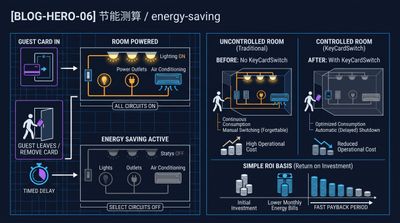
Do not promise a specific energy-saving percentage without a measured baseline. The value proposition is operational: the room can remove power from defined circuits when unoccupied, reducing unnecessary run time. Actual savings depend on guest behavior, load schedules, climate, controls, and what circuits are connected. Measurement should be done at the property.
Key card switch vs legrand: support, documentation, and risk
Key card switch vs legrand support should be evaluated through evidence, ownership, and response paths. A hotel installation needs a current datasheet, wiring diagram, dimension drawing, card-compatibility statement, installation guide, certification or declaration documents applicable to the product, troubleshooting process, spare policy, and change-control procedure. KeyCardSwitch’s stated company support model uses the keycardswitch.com sales channel, with a response target of within 24 business hours; project terms still need to be agreed in writing. Legrand support varies by country, product family, distributor, and contract, so the buyer should identify the authorized regional route for the exact item. In both cases, do not approve a product based solely on a sales page. Documentation quality is a practical indicator of project readiness, although it is not a substitute for electrical approval.
Documentation pack
A complete submittal should include product identity, revision, operating principle, electrical limits, terminal map, box dimensions, environmental limits, installation steps, card types, delay settings, maintenance instructions, and applicable compliance documents. If a document says “hotel switch” but omits card behavior or contact details, ask for clarification.
Keep the approved document revision with the purchase order. If the manufacturer changes the internal relay, reader, housing, or firmware, the supplier should notify the project team. A product that looks unchanged can behave differently after a component substitution. Change control is especially important for long hotel projects.
Responsibility matrix
Assign responsibilities before delivery. The architect owns finish and location. The electrical engineer owns circuit design and protection. The integrator or contractor owns wiring and commissioning. The supplier owns product conformity, instructions, and agreed technical support. The hotel operator owns workflow approval and maintenance acceptance. A brand comparison becomes less useful when no one owns the decision gates.
Use a responsibility matrix for card approval, sample room, load sign-off, installation training, spare stock, warranty claims, and final handover. This prevents a common failure mode in which the supplier assumes the electrician has validated the load while the electrician assumes the supplier has validated the card technology.
Compliance without overclaiming
Compliance claims must match the exact product and market. KeyCardSwitch materials identify CE and RoHS for its product line; buyers should request the applicable documents for the quoted configuration. Do not add FCC, UL, UKCA, or another mark unless the exact product documents support it. Legrand products also require exact regional documentation; a global brand name does not automatically prove a local approval.
Local electrical codes, fire rules, residual-current requirements, accessibility provisions, and hotel standards remain the project engineer’s responsibility. A blog comparison cannot replace inspection or certification review. The right procurement question is “Which documents apply to this configuration and installation?”
Service continuity
Plan for the day a guest reports that room power is unavailable. Staff need a safe temporary procedure, a spare unit, a way to distinguish card failure from breaker trip, and escalation contact details. Maintenance should know whether a contactor is installed and where it is located. Keep one fully tested spare for each distinct variant and finish where the risk justifies it.
The more custom the item, the more important the spare plan. A bespoke plate with a unique reader may have a longer replenishment path than a standard accessory. Conversely, a standard accessory may not reproduce the hotel’s card workflow. Balance customization against continuity before the purchase order.
Key card switch vs legrand: decision matrix for hotel buyers
Key card switch vs legrand should be decided with a weighted matrix that reflects the property’s actual constraints. Give the highest weights to safe electrical design, required card recognition, physical fit, documented approvals, and service continuity. Give lower but still meaningful weights to finish, purchase channel, customization, lead time, and price. A dedicated hotel key card switch tends to score well when the project’s central requirement is a clear card-in/card-out room-energy sequence, a defined recognition technology, and a repeatable hotel package. A Legrand option may score well when regional availability, coordinated electrical accessories, local contractor familiarity, or a specified design standard is decisive. The result should remain conditional on exact model documentation. A matrix is a way to expose trade-offs, not a prewritten verdict.
Suggested weighted matrix
| Criterion | Weight | Dedicated key card switch | Legrand option | Evidence required |
|---|---|---|---|---|
| Card workflow | 20% | Evaluate model behavior | Verify exact product | Sample test and manual |
| Electrical design | 20% | Verify 30A platform and contactor need | Verify exact rating and architecture | Datasheet and engineer sign-off |
| Wall-box fit | 15% | Dimension drawing required | Dimension drawing required | Mock-up installation |
| Retrofit labor | 10% | Survey existing rooms | Survey existing rooms | Room-type survey |
| Regional supply | 10% | Confirm direct logistics | Confirm distributor stock | Written availability |
| Documentation | 10% | Confirm submittal pack | Confirm regional pack | Revision-controlled documents |
| Customization | 5% | OEM/ODM discussion | Channel limitations may apply | Sample and terms |
| Service continuity | 10% | Spares and response terms | Distributor and manufacturer terms | Warranty and spare plan |
Interpret the matrix carefully
Do not award points for an unverified feature. Mark an item “pending” until the supplier provides evidence. If the hotel needs MIFARE recognition, a universal switch is not automatically a full match. If the hotel has a high-power HVAC load, a 30A relay is not automatically sufficient without an engineer’s contactor decision. If the retrofit box is shallow, a beautiful plate does not solve the depth problem.
Run the matrix with at least two stakeholders independently, then discuss differences. The operator may prioritize service replacement while the designer prioritizes finish. The electrical engineer may reject a low-cost option because the circuit architecture is unclear. A shared matrix turns those perspectives into a documented decision.
A practical recommendation pattern
Recommend the dedicated key card switch when the hotel needs a purpose-built room-energy device, can accept its physical format, and the proposed card technology and electrical design are documented. Recommend the Legrand route when the exact product demonstrably meets the card or control requirement and the project gains a material advantage from regional supply, accessory coordination, or contractor familiarity. Recommend neither until the sample, load design, box fit, and documentation are complete.
This is intentionally not a universal winner statement. A product can be strong in one building and unsuitable in another. The winning choice is the one that can be installed safely, operated predictably, replenished reliably, and supported throughout the property’s service life.
Key card switch vs legrand: questions to ask before ordering
Key card switch vs legrand purchasing is ready only when the unanswered questions are visible. Before ordering, confirm the hotel’s card technology, room circuit schedule, local voltage and frequency, relay or contactor architecture, wall-box dimensions, finish, sample approval, documentation, quantity, delivery phases, spares, and after-sales route. For a dedicated key card switch, confirm whether the order is universal, RFID, IC, MIFARE, Temic, 125 kHz, TTLOCK-compatible, BLE, Wi-Fi, PIR, or mmWave; these are different product configurations. For a Legrand proposal, identify the exact regional product and its current documentation rather than comparing a broad brand category. Every claim that affects safety, cost, or schedule should have an owner and a source.
Technical questions
- What exact card or presence condition activates the room circuit?
- Which cards must be accepted, and which must be rejected?
- What are the activation, removal, and delay behaviors?
- Which circuits are switched, and which stay continuously powered?
- What are the supply, relay, load-category, and environmental limits?
- Is an external contactor required for air conditioning, heating, motors, or other high-inrush loads?
- What breaker, residual-current protection, conductor, and enclosure assumptions apply?
- Does the sample fit the actual wall box and final plate?
- What happens after power restoration or reader failure?
- Which documents apply to the exact production configuration?
Commercial questions
- What is the sample and batch lead time?
- Is the standard MOQ 500 pieces, and can the project phase delivery?
- Are mixed finishes or card variants permitted within one order?
- What tooling or setup cost applies to OEM/ODM customization?
- Who owns the customized design and replacement tooling?
- What is the warranty claim process and expected replacement path?
- What spare quantity is recommended for each variant?
- Can the supplier support the installer and operator after handover?
- How are production changes notified and re-approved?
- What is included in the landed project cost?
Operational questions
- Can housekeeping use a defined service procedure without defeating safety controls?
- Can maintenance isolate the device without damaging the wall finish?
- Is there a manual override, and who is authorized to use it?
- Are instructions understandable in the hotel’s working languages?
- Can the property retain sample cards and commissioning records?
- What happens if the hotel changes its lock-card technology later?
- Can a replacement match the installed cutout and finish?
- How will room faults be logged and escalated?
- What training is included for contractors and engineering staff?
- How will savings or operating impact be measured without an unverified promise?
Key card switch vs legrand: final recommendation for procurement teams
Key card switch vs legrand has no responsible one-line winner because the two labels can represent different scopes, models, and supply routes. For a hotel whose primary need is predictable card-based room-energy control, a dedicated key card switch is often the more direct starting point: choose the recognition method, verify the room circuits, use the stated 30A relay platform within its design limits, and add a contactor for high-power loads when required. For a project that prioritizes a coordinated electrical accessory family or a local Legrand supply channel, a Legrand option can be considered if the exact product documents the required card or control behavior, electrical ratings, wall-box fit, and support terms. In both cases, a sample room, engineer sign-off, regional documentation, and a spare plan are mandatory. Select evidence over familiarity, and total installed reliability over the lowest quoted unit price.
Recommended approval path
Start with a written room requirement. Define the card workflow, switched circuits, continuous circuits, local electrical conditions, finish, and rollout schedule. Request complete submittals from the dedicated supplier and the Legrand channel where both are being considered. Reject any proposal that omits the exact model, card behavior, electrical limits, dimensions, or applicable documents.
Next, install a representative mock-up. Test cards, removal delay, circuit response, load behavior, contactor operation, plate appearance, and maintenance access. Resolve every deviation before the full purchase order. For retrofit work, include the most difficult wall box and room type in the pilot rather than selecting only a new or easy room.
When the dedicated route is the better fit
Choose the dedicated route when the project values a purpose-built hotel workflow, direct control of card recognition, a repeatable room package, and OEM/ODM discussion. It is particularly appropriate when the supplier can provide the exact card variant, sample testing, 30A relay documentation, external-contactor guidance, and a practical spare plan. The buyer must still verify regional electrical requirements and installation fit. A dedicated product is not automatically better merely because it is specialized.
When a Legrand route is the better fit
Choose the Legrand route when the exact local product meets the functional requirement and the project gains tangible advantages from existing electrical standards, distribution, installer experience, finish coordination, or service infrastructure. Ask for the current regional documentation and confirm card recognition rather than treating a general hotel or lighting-control description as equivalent to a card switch. If the card workflow is not documented, the option should remain unapproved for that requirement.
The procurement principle
The best hotel power-control purchase is the one that can be explained in a drawing, demonstrated in a room, installed without unsafe compromise, and supported after handover. Compare product scope, not brand reputation; compare evidence, not marketing language; and compare total ownership cost, not only unit price. Keep the decision conditional on the exact configuration and local engineering review.
Part of this article content is generated by AI and optimized for professional accuracy and readability.
Не уверены, какой датчик подойдёт?
Проконсультируйтесь бесплатно с нашими инженерами по применению mmWave.
Найдите подходящий датчик присутствия для вашего отеля
Сравните 3 протокола, изучите гостиничные кейсы и скачайте руководство по установке
Связанные продукты
2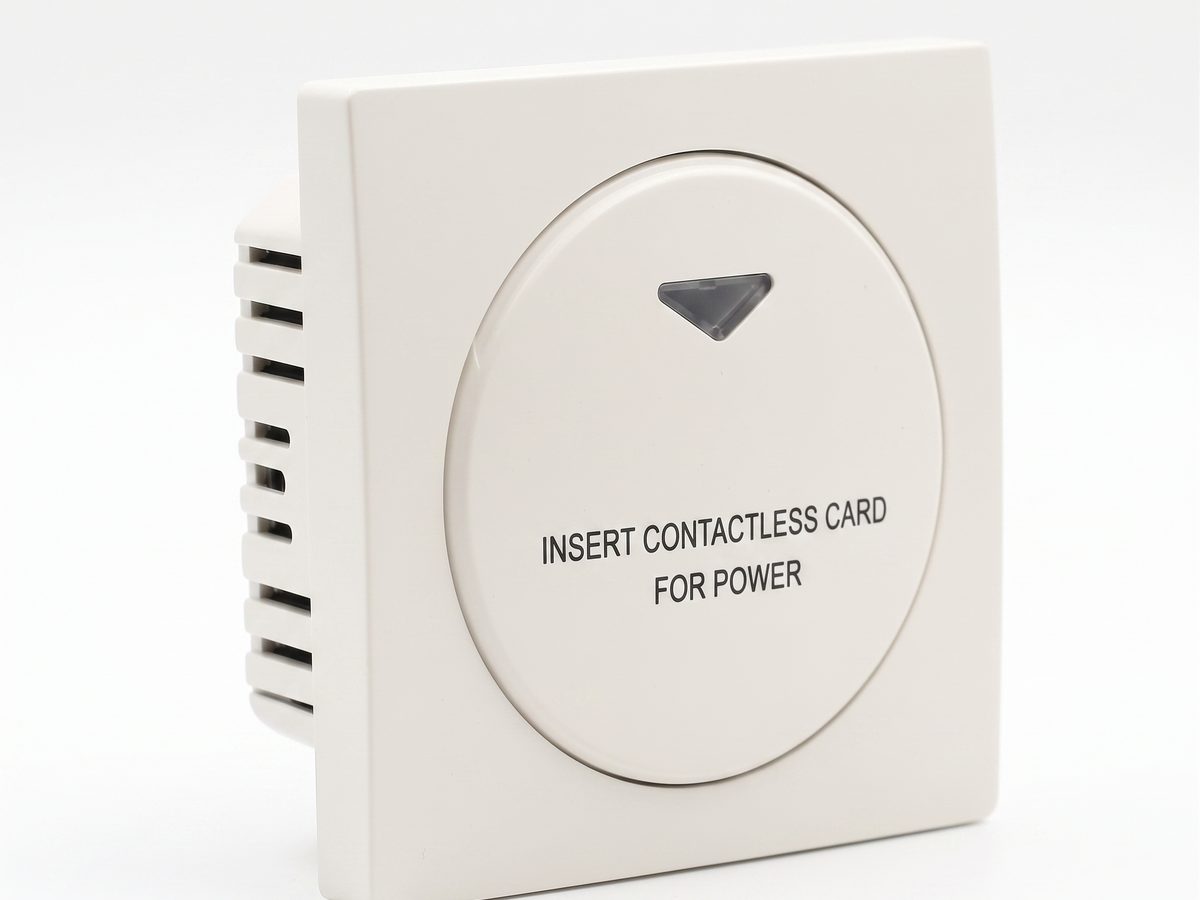
Карточный ключ-выключатель для отелей — Управление питанием гостевых номеров
Карточный ключ-выключатель для управления питанием в гостевых номерах. Детекция RFID/IC-карт, включение при вставке, отключение с задержкой при извлечении. 220В переменного тока, 10А-16А, RS485 или сухой контакт. CE RoHS. Поставщик OEM/ODM.
Эта страница уже указывает на него как на следующую рекомендованную ссылку.
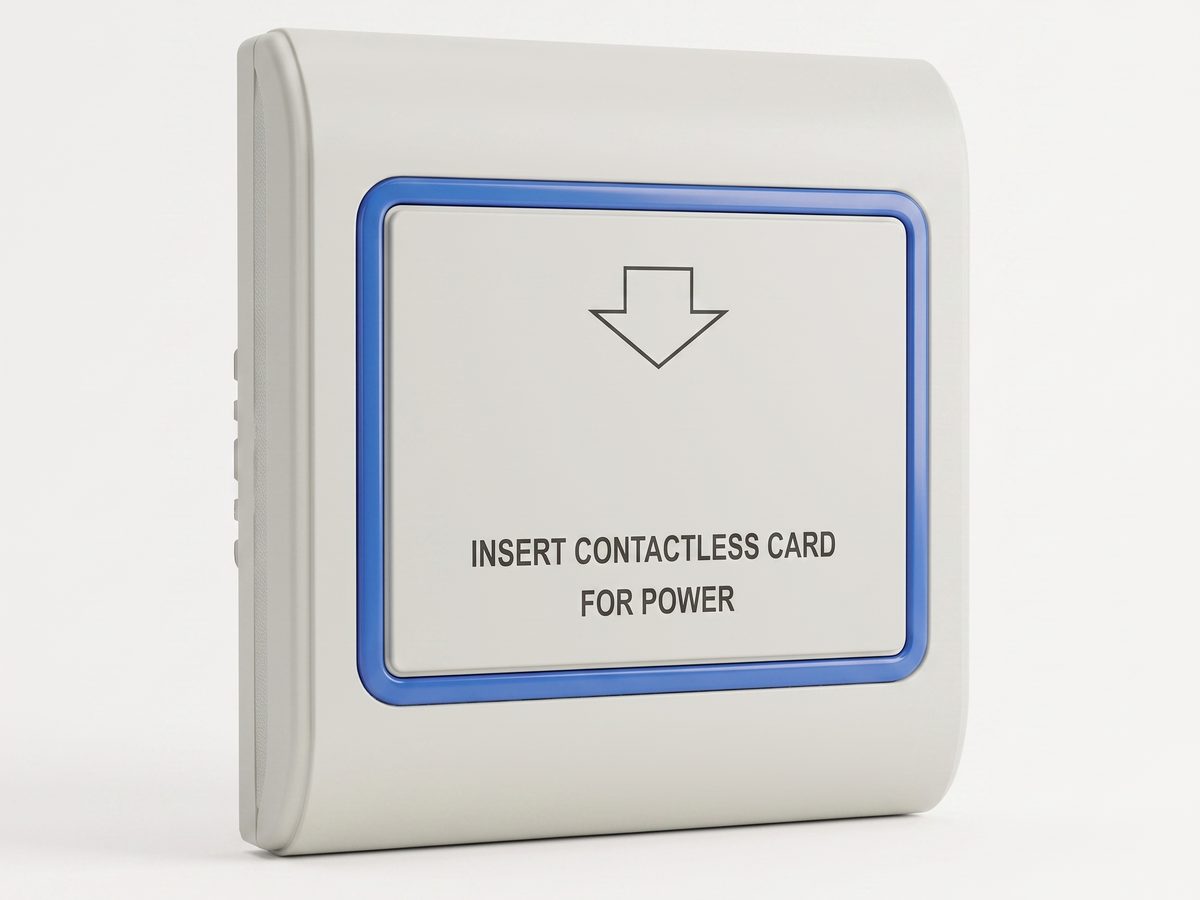
RFID-ключ-карта: бесконтактное управление питанием номера 13,56 МГц
RFID-ключ-карта с бесконтактным считыванием 13,56 МГц. Гость просто прикладывает карту к зоне считывателя для включения питания номера, слот для вставки не нужен. Работает совместно с замками дверей отелей. CE RoHS. Поставщик OEM/ODM.
Эта страница уже указывает на него как на следующую рекомендованную ссылку.
Связанные решения
3Система управления гостевыми номерами на базе карточного питания
Практическая система управления номерами для контроля питания через карточные выключатели, контакторы и документированные правила эксплуатации.
Он поддерживает тот же контекст продукта: Карточный ключ-выключатель для отелей — Управление питанием гостевых номеров.
Энергосбережение в отеле: коммутация питания в номерах
Решение для энергосбережения в отеле с карточным управлением питанием номера для отключения света, кондиционеров и выбранных розеток.
Он поддерживает тот же контекст продукта: Карточный ключ-выключатель для отелей — Управление питанием гостевых номеров.
Управление питанием в номере отеля с помощью карточных выключателей
Практическое решение для управления питанием в номере отеля: включение освещения, кондиционеров и розеток по авторизованной карте гостя.
Он поддерживает тот же контекст продукта: Карточный ключ-выключатель для отелей — Управление питанием гостевых номеров.
Связанные статьи блога
3
Ключевой карточный выключатель отеля: типы, модели, выбор
Обзор отельных ключевых карточных выключателей: универсальные, RFID, TTLOCK, BLE и датчики присутствия. Руководство по выбору модели под вашу систему карт.
Он поддерживает тот же контекст продукта: Карточный ключ-выключатель для отелей — Управление питанием гостевых номеров.
RFID vs NFC для отельных выключателей: выбор технологии карт
Выбор между RFID и NFC для отельных выключателей определяется диапазоном и привязкой: RFID 125 кГц / 13,56 МГц (MIFARE, Temic) — стандарт для питания номера; NFC — протокол телефона. Сравните диапазон, привязку и совместимость.
Он поддерживает тот же контекст продукта: Карточный ключ-выключатель для отелей — Управление питанием гостевых номеров.
Что такое отельный карточный выключатель и как он экономит энергию
Отельный карточный выключатель — настенное устройство, включающее питание номера при вставке карты и отключающее её при извлечении, экономящее 25–40% электроэнергии.
Он поддерживает тот же контекст продукта: Карточный ключ-выключатель для отелей — Управление питанием гостевых номеров.
Опишите ваш гостиничный проект нашим инженерам
Сообщите количество номеров, тип потолка и предпочтительный протокол. Мы вернём план образцов и расчёт за 24 рабочих часа.
- Перейдите от общих рекомендаций к обсуждению продукта или применения.
- Используйте RFQ, когда цена, чертежи, MOQ или сроки запуска требуют структуры.
- Держите прямой контакт видимым для быстрых уточнений и передачи.