Guia de Compra de Chave de Cartão para Hotel: Como Especificar a Unidade Certa para Quartos de Hóspedes
Guia de compra de chave de cartão para hotel para instaladores e equipes de compras cobrindo protocolo de cartão, tensão, classificação de carga, lógica de relé, temporização de desligamento atrasado, tamanho do painel e compatibilidade.
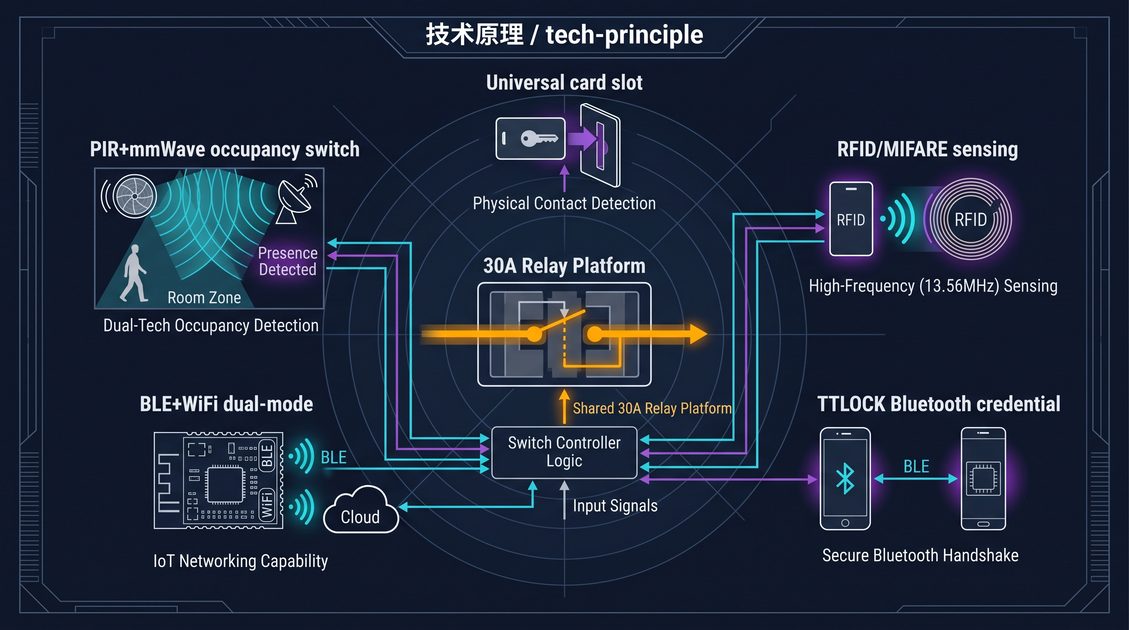
Um guia de compra de chave de cartão para hotel é um método estruturado para selecionar uma chave de energia controlada por cartão que energiza o circuito do quarto de hóspede apenas enquanto um cartão válido está inserido, cobrindo a tecnologia do leitor, a tensão de alimentação, a classificação de carga, a lógica do relé e o formato de montagem. Um guia de compra de chave de cartão para hotel ajuda o comprador a confirmar o protocolo do cartão primeiro, porque o leitor deve corresponder aos cartões já emitidos na recepção — um leitor de cartão de faixa magnética de 125 kHz não pode ler um cartão RFID de 13,56 MHz e vice-versa. Um guia de compra de chave de cartão para hotel então percorre a tensão CA (110V ou 180–250V), a carga de pico do quarto que o relé deve suportar, a temporização de desligamento atrasado após a remoção do cartão e se o relé é embutido no painel ou montado externamente. Um guia de compra de chave de cartão para hotel destina-se a equipe de compras, engenheiros de manutenção e integradores de sistemas que desejam uma lista de verificação repetível que funcione em todas as propriedades de um portfólio.
Guia de Compra de Chave de Cartão para Hotel: O Que o Dispositivo Faz no Circuito do Quarto
Um guia de compra de chave de cartão para hotel começa com o papel que o dispositivo desempenha no circuito de energia do quarto de hóspede. A chave é um controlador de relé operado por cartão montado no ponto de entrada, tipicamente ao lado da porta ou na parede perto da entrada, que lê a presença de um cartão-chave válido e fecha um relé para alimentar as luzes, o termostato do ar-condicionado e as tomadas. Quando o hóspede remove o cartão ao sair, o relé abre após um atraso predefinido, cortando a energia do quarto desocupado. O objetivo de qualquer guia de compra de chave de cartão para hotel é traduzir essa função simples em especificações concretas que o comprador possa comparar entre fornecedores. Entender a arquitetura básica ajuda o comprador a reconhecer que a própria chave carrega quase nenhuma carga, porque um relé embutido ou externo carrega a corrente do quarto, e que o painel é, portanto, um dispositivo de controle de baixa corrente. Essa separação é o conceito mais importante em um guia de compra de chave de cartão para hotel, porque determina se uma propriedade precisa de uma chave com relé embutido, um relé externo de 30A ou um contator montado em trilho DIN para cargas muito grandes.
A sequência de trabalho central é consistente em quase todas as unidades. Um cartão é inserido no slot ou aproximado da face do leitor. O leitor verifica o cartão contra seu próprio formato aceito, não contra nenhum banco de dados remoto, porque a chave funciona inteiramente na presença física do cartão e reconhecimento de formato. Quando um cartão válido é detectado, o relé energiza em cerca de um segundo e o circuito do quarto fica ativo. Quando o cartão é removido, um temporizador interno inicia, e após um atraso definido de fábrica — comumente 15 segundos mas ajustável em muitos modelos — o relé desenergiza e o circuito abre. Um guia de compra de chave de cartão para hotel deve deixar claro que não há memória de quem é o hóspede e nenhum rastreamento de atividade; a unidade apenas responde à pergunta "há um cartão válido inserido?". Esse comportamento físico e offline é por que esses dispositivos são amplamente adaptados em quartos existentes: eles substituem a chave manual ou ficam na frente dela e adicionam a exigência do cartão sem adicionar rede.
O dispositivo típico cabe em uma caixa elétrica padrão single-gang. O formato mais comum é um painel embutido medindo cerca de 86mm por 86mm com profundidade de 48mm, dos quais cerca de 29mm ficam embutidos na parede. Há também uma variante de montagem em superfície que fixa na face da parede quando uma caixa embutida não está disponível. A face frontal carrega o slot do cartão ou a zona de leitura RFID, às vezes uma pequena lâmpada indicadora mostrando o estado do relé, e ocasionalmente uma substituição manual. Um guia de compra de chave de cartão para hotel deve tratar o formato de montagem como uma decisão de primeira ordem, porque adaptar uma caixa embutida em gesso acabado é muito mais disruptivo do que substituir uma placa embutida existente. Compradores devem confirmar o tamanho da caixa e a pegada do painel antes de encomendar, e devem verificar se as caixas single-gang existentes da propriedade são unidades padrão de 86mm ou um padrão regional diferente, já que a geometria do painel não é universal entre mercados.
O manuseio de carga é o segundo pilar da decisão de compra. O relé deve suportar a carga combinada do quarto, que para um quarto de hotel típico inclui o circuito de iluminação, as tomadas e a alimentação do ar-condicionado. A folha de dados da chave normalmente indica a classificação máxima de corrente dos contatos do relé, e o comprador deve comparar essa classificação contra a soma dos circuitos do quarto. Uma classificação comum é 30A para alimentação de quarto inteiro, com unidades menores em 16A ou 20A usadas quando a chave controla apenas parte do quarto. Um guia de compra de chave de cartão para hotel deve alertar o comprador para nunca assumir que o corpo da chave carrega a carga, porque a eletrônica do próprio painel é classificada para apenas alguns amperes; o relé faz o trabalho pesado. Para quartos cujo ar-condicionado é um circuito dedicado grande, o comprador pode precisar de uma unidade com contato de relé separado ou um contator externo, que é uma especificação que vale a pena notar no pedido.
O terceiro pilar é o comportamento de desligamento atrasado. Quando o cartão é removido, a chave não corta a energia instantaneamente; ela espera um intervalo definido de fábrica para que o hóspede não fique no escuro enquanto guarda o cartão, e para que eletrônicos de controle como um controlador de ar-condicionado possam desligar limpo. Valores de atraso variam de alguns segundos a um minuto, com 15 segundos sendo um padrão muito comum. Alguns modelos permitem que o instalador selecione o atraso com um jumper ou um pequeno interruptor a bordo, enquanto outros são fixos. Um guia de compra de chave de cartão para hotel deve pedir ao comprador para escolher o atraso que corresponda aos hábitos de limpeza e ao perfil de desligamento do ar-condicionado, porque um atraso muito curto pode deixar o quarto escuro no meio do movimento e um atraso muito longo desperdiça energia depois que o hóspede realmente saiu.
Guia de Compra de Chave de Cartão para Hotel: Protocolo de Cartão e Compatibilidade do Leitor
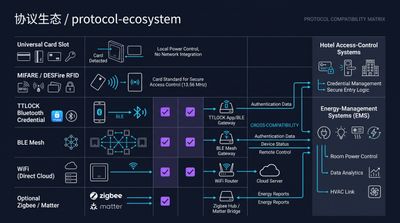
Um guia de compra de chave de cartão para hotel aborda em seguida o protocolo do cartão, que é a fonte mais comum de erros de pedido. O leitor dentro da chave deve reconhecer a mesma tecnologia de cartão que a propriedade já emite, e as duas famílias dominantes são faixa magnética de 125 kHz (frequentemente chamada de swipe ou faixa magnética) e RFID de 13,56 MHz (identificação por radiofrequência). Um cartão de faixa magnética tem uma faixa marrom ou preta no verso que armazena dados em três trilhas paralelas, e a chave lê o cartão deslizando ou inserindo-o em um slot que move a cabeça do leitor pela faixa. Um cartão RFID é um cartão plástico com antena e chip embutidos, lido sem contato físico aproximando o cartão da zona de leitura. Os dois não são intercambiáveis: um leitor de 125 kHz ignora um cartão de 13,56 MHz, e um leitor RFID não pode ler uma faixa magnética. O comprador deve, portanto, perguntar à recepção qual tecnologia está em uso antes de encomendar qualquer unidade.
Dentro do RFID, há uma distinção adicional em como o cartão é usado. Alguns sistemas RFID funcionam com um chip de baixa frequência de 125 kHz que contém apenas um número de identificação, e a chave apenas precisa detectar um cartão da frequência correta. Outros sistemas usam 13,56 MHz e podem embutir dados de aplicação em setores de memória adicionais. Para os propósitos de um guia de compra de chave de cartão para hotel, a pergunta prática é mais simples: a propriedade precisa que a chave aceite qualquer cartão de uma dada frequência, ou precisa que a chave verifique um bloco de dados específico no cartão? A maioria das chaves de cartão é baseada em presença e aceita qualquer cartão da frequência correspondente, porque a codificação da recepção já determina quem é hóspede. Um guia de compra de chave de cartão para hotel deve recomendar esclarecer se a chave deve ser um leitor genérico que detecta qualquer cartão de 13,56 MHz ou um leitor configurado para uma codificação particular, e deve notar que leitores baseados em presença são a opção mais simples e amplamente disponível.
O formato do slot do cartão também importa para cartões magnéticos. Uma chave de faixa magnética pode ser um leitor swipe, onde o hóspede desliza o cartão por um slot vertical ou horizontal, ou um leitor de slot, onde o cartão é inserido totalmente e removido manualmente. Leitores swipe são rápidos mas exigem direção e velocidade corretas de deslize, enquanto leitores de slot são mais tolerantes porque o cartão fica no slot enquanto o hóspede está dentro do quarto. Um guia de compra de chave de cartão para hotel deve perguntar se a propriedade prefere que o hóspede deixe o cartão no slot, o que é comum para sistemas magnéticos, ou leve o cartão consigo, o que é comum para RFID. Essa escolha afeta a ergonomia do painel e a experiência do hóspede, e é uma decisão genuína de compra em vez de um detalhe menor, porque muda todo o layout da face e a mecânica do leitor.
A durabilidade do leitor é um fator de compra relacionado. O leitor de cartão é a parte mais exposta ao desgaste, porque vê cada entrada de cada hóspede. Um leitor swipe magnético contém uma cabeça de leitura móvel e um slot que coleta poeira e detritos do cartão, enquanto um leitor RFID não tem partes móveis e é selado atrás da face, razão pela qual chaves RFID tendem a ser mais confiáveis a longo prazo. Um guia de compra de chave de cartão para hotel deve pesar o custo de um leitor magnético contra a manutenção de limpar o slot e ocasionalmente substituir a cabeça de leitura, versus o custo inicial mais alto de um leitor RFID que raramente precisa de serviço. Para propriedades planejando uma longa vida útil, RFID é frequentemente a escolha de menor custo total apesar do preço inicial mais alto.
A aceitação de formato de cartão também interage com cartões de substituição. Se uma propriedade emite cartões magnéticos hoje mas planeja migrar para RFID depois, a escolha da chave afeta essa migração. Um guia de compra de chave de cartão para hotel deve aconselhar comprar unidades que correspondam à tecnologia de cartão atual enquanto confirma que o corpo da chave e a pegada do painel são neutros em tecnologia, para que uma troca posterior de uma face de leitor magnético para uma face de leitor RFID não exija mudar a caixa do relé ou refazer a fiação. Alguns fabricantes vendem uma base comum com cabeças de leitor intercambiáveis exatamente por essa razão. Verificar se a cabeça do leitor é substituível em campo é uma forma de baixo custo de proteger a compra para o futuro.
Guia de Compra de Chave de Cartão para Hotel: Tensão de Alimentação e Classificação de Carga
Um guia de compra de chave de cartão para hotel agora se volta para a alimentação elétrica, começando com a tensão CA. As duas alimentações regionais comuns são 110V, usada na América do Norte e partes da Ásia e América Latina, e 220V a 240V, usada na Europa, grande parte da Ásia, Oriente Médio e África. A maioria das chaves de cartão é especificada para uma faixa, tipicamente 180–250V CA para a família de 220V ou cerca de 110V CA para a família de baixa tensão, embora muitas unidades modernas aceitem ambas as faixas com uma fonte de alimentação universal interna. Um guia de compra de chave de cartão para hotel deve insistir que o comprador confirme a tensão nominal de alimentação da propriedade e a faixa medida, porque uma chave classificada para 220V instalada em uma alimentação de 110V não operará corretamente, e uma unidade classificada para 110V em uma alimentação de 220V pode ser danificada. A tensão está impressa no rótulo ou folha de dados, e o comprador deve correspondê-la ao sistema de distribuição antes de encomendar.
A classificação de carga é a próxima especificação elétrica. O relé deve suportar a carga de pico simultânea de tudo que a chave controla, e o comprador deve calcular essa carga em vez de adivinhá-la. Para um quarto cuja iluminação, tomadas e ar-condicionado são todos comutados, a demanda combinada pode ser substancial. Uma classificação comum de relé é 30A na tensão nominal, que cobre confortavelmente um quarto de hóspede padrão, enquanto unidades menores são classificadas em 16A ou 20A para quartos onde a chave controla apenas iluminação ou um subcircuito limitado. Um guia de compra de chave de cartão para hotel deve apresentar o cálculo de carga como uma tarefa aritmética simples: liste cada circuito controlado, anote sua classificação de disjuntor ou carga estimada, some-os e aplique uma margem de segurança para que o relé não opere em seu máximo absoluto. Escolher um relé com folga acima da carga calculada é um seguro barato contra disparos incômodos e desgaste prematuro dos contatos.
A distinção entre a classificação de corrente da própria chave e a classificação de contato do relé vale a pena repetir em qualquer guia de compra de chave de cartão para hotel. A eletrônica do painel, o leitor e a bobina do relé consomem apenas alguns watts, tipicamente na faixa de 1W a 3W em standby. Os contatos do relé, seja dentro da chave ou em uma unidade externa, carregam a carga do quarto. Compradores às vezes leem mal uma folha de dados e acreditam que a própria chave é classificada para 30A, quando na verdade apenas os contatos do relé são. A leitura correta é que a chave controla um relé, e a classificação de contato do relé define a carga máxima. Se a carga do quarto exceder a classificação do relé interno, o comprador deve selecionar um modelo que acione um relé ou contator externo, e a saída de acionamento da bobina da chave deve ser compatível com esse dispositivo externo.
Corrente de partida é um fator sutil mas importante na classificação de carga. Iluminação incandescente e certos motores consomem um pico momentâneo várias vezes sua corrente de estado estável quando ligados, e o relé deve sobreviver a esses picos toda vez que o quarto é energizado. Cargas resistivas como aquecimento não consomem pico significativo, mas motores, transformadores e muitos drivers de LED consomem. Um guia de compra de chave de cartão para hotel deve aconselhar verificar a classificação de contato do relé tanto para a corrente de estado estável quanto para a capacidade de comutação de pico, e preferir um relé com classificação de contato generosa quando o quarto contém motores ou grandes bancos de drivers de LED. Subespecificar para pico é uma causa líder de pitting de contatos de relé e falha prematura.
O calibre da fiação conectada aos contatos do relé também deve corresponder à carga. Os condutores de alimentação do quarto devem ser dimensionados para a corrente do relé na tensão de alimentação, e o comprador deve confirmar o tamanho do cabo existente da propriedade contra a classificação do relé. Um guia de compra de chave de cartão para hotel deve lembrar o comprador que um relé classificado para 30A é apenas tão bom quanto o condutor que o alimenta, e que fiação subdimensionada derrota a capacidade do relé e cria risco de incêndio. Se a fiação existente do quarto é mais fina que a classificação do novo relé, o comprador deve escolher um relé correspondente ao tamanho do condutor existente ou atualizar o cabo, e deve notar isso no pedido para evitar uma instalação que passe na inspeção apenas por uma margem estreita.
Guia de Compra de Chave de Cartão para Hotel: Tipo de Relé e Lógica de Comutação
Um guia de compra de chave de cartão para hotel deve cobrir a configuração do relé, porque determina toda a instalação. As duas opções amplas são relé embutido, onde os contatos de comutação estão dentro do painel embutido e a alimentação do quarto é levada à caixa, e relé externo, onde a chave carrega apenas um par de controle para um relé ou contator montado separadamente. Um relé embutido é o mais simples de instalar, porque o instalador conecta a alimentação do quarto nos terminais de carga do painel e tudo fica em uma caixa, mas é limitado pelo espaço físico e capacidade de corrente do painel embutido. Um relé externo ou contator em trilho DIN pode comutar cargas muito maiores e é mais fácil de servir, porque o relé pode ser substituído sem tocar no painel, ao custo de uma segunda caixa e mais fiação. Um guia de compra de chave de cartão para hotel deve mapear a carga e preferência de serviço da propriedade para uma dessas duas arquiteturas no início da seleção.
Lógica de relé descreve se o relé é normalmente aberto ou normalmente fechado e como a chave o aciona. Em um arranjo normalmente aberto, os contatos estão abertos quando o relé está desenergizado, então nenhuma energia flui até que o cartão feche o circuito, que é o comportamento fail-safe desejado para economia de energia. Alguns designs adicionam uma prioridade fail-safe de forma que uma falha de energia sempre deixa o quarto desenergizado no circuito comutado, que é mais seguro e é o padrão recomendado. Um guia de compra de chave de cartão para hotel deve confirmar que a lógica da unidade é normalmente aberta com fail-safe desligado, e deve tratar qualquer variante normalmente fechada como caso especial apenas, porque um relé normalmente fechado deixaria o quarto energizado quando o cartão está ausente, derrotando todo o propósito.
O número de canais de relé importa para quartos com circuitos divididos. Uma chave de canal único controla uma alimentação combinada, enquanto uma chave de dois canais pode controlar iluminação e ar-condicionado separadamente, de forma que, por exemplo, remover o cartão corta o AC imediatamente mas mantém uma tomada de baixa potência viva para carregamento de dispositivos. Um guia de compra de chave de cartão para hotel deve perguntar se a propriedade quer um circuito de quarto unificado ou controle separado de iluminação e energia, porque uma unidade de dois canais custa mais mas dá controle de energia mais fino e pode manter tomadas essenciais energizadas. Se os quartos da propriedade têm ar-condicionado em um circuito dedicado que deve permanecer energizado independentemente, o comprador precisa de uma unidade com pelo menos dois canais de relé independentes ou um arranjo de bypass.
A saída de acionamento da bobina do relé é relevante ao escolher um relé externo. Se a chave aciona um relé externo, a saída é um sinal de controle de baixa tensão, e o relé externo deve ser compatível com esse sinal, tipicamente aceitando uma bobina de 110V ou 220V ou uma bobina DC de baixa tensão dependendo do modelo. Um guia de compra de chave de cartão para hotel deve ter o comprador confirmar que a tensão da bobina e a classificação de contato do relé externo correspondem à saída de acionamento da chave e à carga do quarto, e deve tratar a chave e o relé externo como um par combinado em vez de itens encomendados separadamente. Encomendá-los juntos como um kit reduz o risco de incompatibilidade descoberta na instalação.
Comportamento de comutação sob substituição manual é outra consideração de lógica. Muitas chaves incluem um modo bypass ou manual-on para que a limpeza possa energizar o quarto sem cartão, para limpeza ou manutenção. A substituição é geralmente um interruptor na face ou um jumper interno, e tipicamente ignora a exigência do cartão até ser resetada. Um guia de compra de chave de cartão para hotel deve confirmar que a substituição existe e que ela retorna à operação controlada por cartão quando o cartão é removido ou a substituição é resetada, para que o comportamento de economia de energia não fique desabilitado permanentemente. A substituição é um recurso pequeno mas no qual a equipe de manutenção confia diariamente, então sua presença e comportamento de reset pertencem à especificação.
Guia de Compra de Chave de Cartão para Hotel: Desligamento Atrasado e Comportamento de Temporização
Um guia de compra de chave de cartão para hotel deve dedicar atenção ao temporizador de desligamento atrasado, porque afeta diretamente tanto o conforto do hóspede quanto a economia de energia. Quando o cartão é removido, a chave mantém o relé fechado por um intervalo definido de fábrica antes de abrir o circuito. O atraso serve a vários propósitos: dá ao hóspede alguns segundos de luz enquanto reúne pertences ou volta para recuperar algo, permite que eletrônicos de controle como um termostato de ar-condicionado completem um desligamento limpo, e impede que o relé chatter se um cartão é brevemente removido e reinserido. Um guia de compra de chave de cartão para hotel deve explicar que o atraso é um compromisso deliberado entre remoção instantânea de energia e conforto momentâneo, e que o valor certo depende dos quartos e hábitos de limpeza da propriedade.
Valores comuns de atraso variam de cerca de 5 segundos a 60 segundos, com 15 segundos sendo um padrão de fábrica frequente. Atrasos mais curtos cortam energia mais cedo e economizam ligeiramente mais energia, mas podem deixar um hóspede no escuro se ele sai e imediatamente percebe que deixou algo. Atrasos mais longos dão mais conforto mas mantêm o quarto vazio energizado por mais tempo. Um guia de compra de chave de cartão para hotel deve apresentar isso como uma decisão ajustável e perguntar se o modelo permite ajustar o atraso, seja por jumper, um pequeno interruptor rotativo ou um dip switch no painel, em vez de ser fixo na fábrica. Um atraso ajustável permite que a propriedade ajuste cada tipo de quarto aos seus próprios hábitos e faz um item de estoque cobrir a propriedade inteira.
O atraso também interage com a sequência de desligamento do ar-condicionado. Se o controlador de ar-condicionado do quarto precisa de tempo para escrever seu estado final ou ciclar o compressor gradualmente, um atraso extremamente curto pode interromper essa sequência. Por outro lado, se o ar-condicionado roda em um circuito sempre ligado separado não controlado pela chave de cartão, o atraso é irrelevante para ele. Um guia de compra de chave de cartão para hotel deve ter o comprador mapear quais circuitos a chave de cartão realmente controla e então escolher o atraso de acordo, para que o temporizador seja longo o suficiente para os eletrônicos controlados desligarem limpo e curto o suficiente para evitar energia desperdiçada. Correspondendo o atraso ao perfil real de desligamento previne tanto desconforto quanto tempo de execução desperdiçado.
Comportamento de reentrada é outro detalhe de temporização. Quando o hóspede reinsere o cartão durante a janela de atraso, a chave deve reconhecer o cartão e manter o relé fechado, resetando o temporizador em vez de duplo-disparar o relé. Um guia de compra de chave de cartão para hotel deve confirmar que a unidade lida com uma reinserção de cartão durante o atraso graciosamente, porque uma chave que alterna em uma segunda inserção é confusa e pode deixar o quarto inesperadamente energizado ou escuro. Uma unidade bem projetada trata a presença do cartão como a única entrada controladora, então o relé permanece fechado enquanto um cartão válido está no leitor, independentemente de quantas vezes o hóspede entra e sai.
Comportamento do indicador durante o atraso é uma característica final de temporização que vale especificar. A maioria das chaves mostra uma pequena lâmpada indicando se o relé está energizado, e algumas mostram um estado diferente durante o período de desligamento atrasado, para que hóspedes e equipe possam ver de relance se o quarto está vivo ou desligando. Um guia de compra de chave de cartão para hotel deve confirmar os significados dos indicadores e sua visibilidade, porque uma lâmpada clara reduz confusão do hóspede sobre se o cartão está funcionando e ajuda a limpeza a identificar quais quartos estão energizados. O indicador é um componente menor, mas sua clareza tem efeito desproporcional na confiabilidade percebida.
Guia de Compra de Chave de Cartão para Hotel: Montagem, Tamanho do Painel e Compatibilidade da Caixa
Um guia de compra de chave de cartão para hotel deve cobrir montagem física antes de encomendar, porque determina quão disruptiva a instalação será. O formato dominante é um painel embutido que cabe em uma caixa elétrica padrão single-gang, com a pegada métrica comum em aproximadamente 86mm por 86mm e profundidade próxima a 48mm, dos quais cerca de 29mm ficam dentro da parede. Esse tamanho é às vezes referido por seu padrão regional, e o comprador deve confirmar que as caixas existentes da propriedade correspondem à pegada do corpo traseiro da chave. Um guia de compra de chave de cartão para hotel deve tratar compatibilidade da caixa como etapa de verificação pré-pedido, porque um painel que não cabe na caixa existente significa ou uma nova caixa, um adaptador de montagem em superfície, ou um recesso maior, todos os quais adicionam mão de obra e custo a um retrofit.
Onde nenhuma caixa embutida existe, uma variante de montagem em superfície é a resposta prática. Uma chave de cartão de montagem em superfície fixa na face da parede com parafusos ou adesivo, abrigando o leitor e relé em uma caixa autossuficiente, e é ideal para concreto, alvenaria ou drywall onde cortar uma caixa é indesejável. Um guia de compra de chave de cartão para hotel deve notar que unidades de montagem em superfície são ligeiramente mais proeminentes na parede mas evitam a poeira, detritos e trabalho de remendo de cortar um recesso, o que frequentemente as torna a escolha mais rápida para um
A hotel key card switch buying guide is a structured method for selecting a card-controlled power switch that energizes the guest-room circuit only while a valid card is inserted, covering the reader technology, the supply voltage, the load rating, the relay logic, and the mounting format. A hotel key card switch buying guide helps the buyer confirm the card protocol first, because the reader must match the cards already issued at the front desk — a 125 kHz magnetic strip card reader cannot read a 13.56 MHz RFID card and vice versa. A hotel key card switch buying guide then walks through the AC voltage (110V or 180–250V), the peak room load the relay must carry, the delay-off timing after card removal, and whether the relay is built into the panel or mounted externally. A hotel key card switch buying guide is intended for purchasing staff, maintenance engineers, and system integrators who want one repeatable checklist that works across every property in a portfolio.
Hotel Key Card Switch Buying Guide: What the Device Does in the Room Circuit
A hotel key card switch buying guide begins with the role the device plays in the guest-room power circuit. The switch is a card-operated relay controller mounted at the entry point, typically beside the door or on the wall near the entrance, that reads the presence of a valid key card and closes a relay to feed power to the lights, the air-conditioning thermostat, and the socket outlets. When the guest removes the card on leaving, the relay opens after a preset delay, cutting the unoccupied room's power. The purpose of any hotel key card switch buying guide is to translate that simple function into concrete specifications the buyer can compare across suppliers. Understanding the basic architecture helps the buyer recognize that the switch itself carries almost no load, because a built-in or external relay carries the room current, and that the panel is therefore a low-current control device. This separation is the single most important concept in a hotel key card switch buying guide, because it determines whether a property needs a switch with a built-in relay, an external 30A relay, or a DIN-rail-mounted contactor for very large loads.
The core working sequence is consistent across nearly all units. A card is inserted into the slot or held against the reader face. The reader verifies the card against its own accepted format, not against any remote database, because the switch works entirely on physical card presence and format recognition. When a valid card is detected, the relay energizes within about one second and the room circuit is live. When the card is removed, an internal timer starts, and after a factory-set delay — commonly 15 seconds but adjustable on many models — the relay de-energizes and the circuit opens. A hotel key card switch buying guide should make clear that there is no memory of who the guest is and no tracking of activity; the unit only answers the question "is a valid card inserted." That physical, offline behavior is why these devices are so widely retrofitted into existing rooms: they replace the manual switch or sit in front of it and add the card requirement without adding networking.
The typical device fits a standard single-gang electrical box. The most common format is a flush panel measuring about 86mm by 86mm with a depth of 48mm, of which about 29mm is embedded in the wall. There is also a surface-mount variant that fixes to the wall face when a recessed box is not available. The front face carries the card slot or the RFID read zone, sometimes a small indicator lamp showing relay state, and occasionally a manual override. A hotel key card switch buying guide should treat the mounting format as a first-order decision, because retrofitting a recessed box in finished plaster is far more disruptive than replacing an existing flush plate. Buyers should confirm the box size and the panel footprint before ordering, and should check whether the property's existing single-gang boxes are standard 86mm units or a different regional standard, since panel geometry is not universal across markets.
Load handling is the second pillar of the buying decision. The relay must carry the combined load of the room, which for a typical hotel room includes the lighting circuit, the socket outlets, and the air-conditioning supply. The switch's datasheet normally states the maximum current rating of the relay contacts, and the buyer should compare that rating against the sum of the room's circuits. A common rating is 30A for a whole-room feed, with smaller units at 16A or 20A used when the switch controls only part of the room. A hotel key card switch buying guide should warn the buyer never to assume the switch body carries the load, because the panel's own electronics are rated for only a few amps; the relay does the heavy work. For rooms whose air-conditioning is a large dedicated circuit, the buyer may need a unit with a separate relay contact or an external contactor, which is a specification worth noting on the order.
The third pillar is the delay-off behavior. When the card is removed, the switch does not cut power instantly; it waits a factory-set interval so the guest is not plunged into darkness while putting the card away, and so that control electronics such as an air-conditioning controller can shut down cleanly. Delay values range from a few seconds to a minute, with 15 seconds being a very common default. Some models allow the installer to select the delay with a jumper or a small onboard switch, while others are fixed. A hotel key card switch buying guide should ask the buyer to choose the delay that matches housekeeping habits and the air-conditioning shutdown profile, because too short a delay can leave the room dark mid-motion and too long a delay wastes power after the guest has truly left.
Hotel Key Card Switch Buying Guide: Card Protocol and Reader Compatibility
A hotel key card switch buying guide next addresses the card protocol, which is the single most common source of ordering mistakes. The reader inside the switch must recognize the same card technology the property already issues, and the two dominant families are 125 kHz magnetic strip (often called swipe or magnetic track) and 13.56 MHz RFID (radio-frequency identification). A magnetic-strip card has a brown or black stripe on the back that stores data in three parallel tracks, and the switch reads the card by swiping or inserting it into a slot that moves the reader head across the stripe. An RFID card is a plastic card with an embedded antenna and chip, read without physical contact by holding the card near the read zone. The two are not interchangeable: a 125 kHz reader ignores a 13.56 MHz card, and an RFID reader cannot read a magnetic stripe. The buyer must therefore ask the front desk which technology is in use before ordering any unit.
Within RFID, there is a further distinction in how the card is used. Some RFID systems work with a low-frequency 125 kHz chip that contains only an identification number, and the switch merely needs to detect a card of the right frequency. Other systems use 13.56 MHz and may embed application data in additional memory sectors. For the purposes of a hotel key card switch buying guide, the practical question is simpler: does the property need the switch to accept any card of a given frequency, or does it need the switch to check a specific data block on the card? Most key card switches are presence-based and accept any card of the matching frequency, because the front desk encoding already determines who is a guest. A hotel key card switch buying guide should recommend clarifying whether the switch must be a generic reader that detects any 13.56 MHz card or a reader configured for a particular encoding, and should note that presence-based readers are the simplest and most widely available option.
The card slot format also matters for magnetic cards. A magnetic-strip switch can be a swipe reader, where the guest slides the card through a vertical or horizontal slot, or a slot reader, where the card is inserted fully and removed manually. Swipe readers are quick but require correct swipe direction and speed, while slot readers are more forgiving because the card sits in the slot while the guest is inside the room. A hotel key card switch buying guide should ask whether the property prefers the guest to leave the card in the slot, which is common for magnetic systems, or to take the card with them, which is common for RFID. This choice affects the ergonomics of the panel and the guest experience, and it is a genuine buying decision rather than a minor detail, because it changes the entire face layout and the reader mechanics.
Reader durability is a related buying factor. The card reader is the part most exposed to wear, because it sees every entry by every guest. A magnetic swipe reader contains a moving read head and a slot that collects dust and card debris, while an RFID reader has no moving parts and is sealed behind the face, which is why RFID switches tend to be more reliable over the long term. A hotel key card switch buying guide should weigh the cost of a magnetic reader against the maintenance of cleaning the slot and occasionally replacing the read head, versus the higher initial cost of an RFID reader that rarely needs servicing. For properties planning a long service life, RFID is often the lower total-cost choice despite the higher upfront price.
Card format acceptance also interacts with replacement cards. If a property issues magnetic cards today but plans to migrate to RFID later, the switch choice affects that migration. A hotel key card switch buying guide should advise buying units that match the current card technology while confirming that the switch body and panel footprint are technology-neutral, so that a later swap from a magnetic reader face to an RFID reader face does not require changing the relay box or rewiring. Some manufacturers sell a common base with interchangeable reader heads for exactly this reason. Checking whether the reader head is replaceable in the field is a low-cost way to future-proof the purchase.
Hotel Key Card Switch Buying Guide: Supply Voltage and Load Rating
A hotel key card switch buying guide now turns to the electrical supply, starting with the AC voltage. The two common regional supplies are 110V, used in North America and parts of Asia and Latin America, and 220V to 240V, used across Europe, much of Asia, the Middle East, and Africa. Most key card switches are specified for one range, typically 180–250V AC for the 220V family or around 110V AC for the low-voltage family, though many modern units accept both ranges with an internal universal power supply. A hotel key card switch buying guide should insist that the buyer confirm the property's nominal supply voltage and the measured range, because a switch rated for 220V installed on a 110V feed will not operate correctly, and a 110V-rated unit on a 220V feed may be damaged. The voltage is printed on the label or datasheet, and the buyer should match it to the distribution system before ordering.
The load rating is the next electrical specification. The relay must carry the peak simultaneous load of everything the switch controls, and the buyer should calculate that load rather than guess it. For a room whose lighting, sockets, and air-conditioning are all switched, the combined demand can be substantial. A common relay rating is 30A at the rated voltage, which comfortably covers a standard guest room, while smaller units are rated at 16A or 20A for rooms where the switch controls only lighting or a limited sub-circuit. A hotel key card switch buying guide should present the load calculation as a simple arithmetic task: list each controlled circuit, note its breaker rating or estimated load, sum them, and apply a safety margin so the relay is not run at its absolute maximum. Choosing a relay with headroom above the calculated load is inexpensive insurance against nuisance tripping and premature contact wear.
The distinction between the switch's own current rating and the relay's contact rating is worth repeating in any hotel key card switch buying guide. The panel electronics, the reader, and the relay coil draw only a few watts, typically in the range of 1W to 3W in standby. The relay contacts, whether inside the switch or in an external unit, carry the room load. Buyers sometimes misread a datasheet and believe the switch itself is rated for 30A, when in fact only the relay contacts are. The correct reading is that the switch controls a relay, and the relay's contact rating defines the maximum load. If the room load exceeds the internal relay rating, the buyer must select a model that drives an external relay or contactor, and the switch's coil drive output must be compatible with that external device.
Inrush current is a subtle but important factor in the load rating. Incandescent lighting and certain motors draw a momentary surge several times their steady-state current when switched on, and the relay must survive these surges every time the room is energized. Resistive loads such as heating draw no significant inrush, but motors, transformers, and many LED drivers do. A hotel key card switch buying guide should advise checking the relay's contact rating for both the steady-state current and the switching-inrush capability, and preferring a relay with a generous contact rating when the room contains motors or large LED driver banks. Under-specifying for inrush is a leading cause of relay contact pitting and premature failure.
The wiring gauge connected to the relay contacts must also match the load. The room feed conductors must be sized for the relay current at the supply voltage, and the buyer should confirm the property's existing cable size against the relay rating. A hotel key card switch buying guide should remind the buyer that a relay rated for 30A is only as good as the conductor feeding it, and that undersized wiring defeats the relay's capability and creates a fire risk. If the existing room wiring is thinner than the new relay's rating, the buyer should either choose a relay matched to the existing conductor size or upgrade the cable, and should note this in the order to avoid an installation that passes inspection only by a narrow margin.
Hotel Key Card Switch Buying Guide: Relay Type and Switching Logic
A hotel key card switch buying guide must cover the relay configuration, because it determines the whole installation. The two broad options are a built-in relay, where the switching contacts are inside the flush panel and the room feed is brought to the box, and an external relay, where the switch carries only a control pair to a separately mounted relay or contactor. A built-in relay is the simplest to install, because the installer lands the room feed on the panel's load terminals and everything is in one box, but it is limited by the physical space and current capacity of the flush panel. An external relay or DIN-rail contactor can switch much larger loads and is easier to service, because the relay can be replaced without touching the panel, at the cost of a second enclosure and more wiring. A hotel key card switch buying guide should map the property's load and service preference to one of these two architectures early in the selection.
Relay logic describes whether the relay is normally open or normally closed and how the switch drives it. In a normally-open arrangement, the contacts are open when the relay is de-energized, so no power flows until the card closes the circuit, which is the desired fail-safe behavior for energy saving. Some designs add a fail-safe priority such that a power failure always leaves the room de-energized on the switched circuit, which is safer and is the recommended default. A hotel key card switch buying guide should confirm that the unit's logic is normally-open with fail-safe off, and should treat any normally-closed variant as a special case only, because a normally-closed relay would leave the room powered when the card is absent, defeating the entire purpose.
The number of relay channels matters for rooms with split circuits. A single-channel switch controls one combined feed, while a two-channel switch can control lighting and air-conditioning separately, so that, for example, removing the card cuts the AC immediately but keeps a low-power socket live for device charging. A hotel key card switch buying guide should ask whether the property wants one unified room circuit or separate control of lighting and power, because a two-channel unit costs more but gives finer energy control and can keep essential sockets energized. If the property's rooms have air-conditioning on a dedicated circuit that must stay powered independently, the buyer needs a unit with at least two independent relay channels or a bypass arrangement.
The relay coil drive output is relevant when choosing an external relay. If the switch drives an external relay, the output is a low-voltage control signal, and the external relay must be compatible with that signal, typically accepting a 110V or 220V coil or a low-voltage DC coil depending on the model. A hotel key card switch buying guide should have the buyer confirm the external relay's coil voltage and contact rating match the switch's drive output and the room load, and should treat the switch and external relay as a matched pair rather than separately ordered items. Ordering them together as a kit reduces the risk of a mismatch discovered at installation.
Switching behavior under a manual override is another logic consideration. Many switches include a bypass or manual-on mode so that housekeeping can energize the room without a card, for cleaning or maintenance. The override is usually a switch on the face or an internal jumper, and it typically bypasses the card requirement until reset. A hotel key card switch buying guide should confirm that the override exists and that it returns to card-controlled operation when the card is removed or the override is reset, so the energy-saving behavior is not left disabled permanently. The override is a small feature but one that maintenance staff rely on daily, so its presence and reset behavior belong in the specification.
Hotel Key Card Switch Buying Guide: Delay-Off and Timing Behavior
A hotel key card switch buying guide should dedicate attention to the delay-off timer, because it directly affects both guest comfort and energy savings. When the card is removed, the switch holds the relay closed for a factory-set interval before opening the circuit. The delay serves several purposes: it gives the guest a few seconds of light while they gather belongings or step back in to retrieve something, it allows control electronics such as an air-conditioning thermostat to complete a clean shutdown, and it prevents the relay from chattering if a card is briefly removed and reinserted. A hotel key card switch buying guide should explain that the delay is a deliberate compromise between instant power removal and momentary comfort, and that the right value depends on the property's rooms and housekeeping habits.
Common delay values range from about 5 seconds to 60 seconds, with 15 seconds being a frequent factory default. Shorter delays cut power sooner and save slightly more energy, but can leave a guest in the dark if they step out and immediately realize they left something. Longer delays give more comfort but keep the empty room powered for longer. A hotel key card switch buying guide should present this as a tunable decision and ask whether the model allows the delay to be adjusted, either by a jumper, a small rotary switch, or a dip switch on the panel, rather than being fixed at the factory. An adjustable delay lets the property tune each room type to its own habits and makes one stock item cover the whole property.
The delay also interacts with the air-conditioning shutdown sequence. If the room's air-conditioning controller needs time to write its final state or to cycle the compressor down gradually, an extremely short delay can interrupt that sequence. Conversely, if the air-conditioning runs on a separate always-on circuit not controlled by the card switch, the delay is irrelevant to it. A hotel key card switch buying guide should have the buyer map which circuits the card switch actually controls and then choose the delay accordingly, so that the timer is long enough for the controlled electronics to shut down cleanly and short enough to avoid wasted power. Matching the delay to the real shutdown profile prevents both discomfort and wasted run time.
Repeat-entry behavior is another timing detail. When the guest reinserts the card during the delay window, the switch should recognize the card and hold the relay closed, resetting the timer rather than double-tripping the relay. A hotel key card switch buying guide should confirm that the unit handles a card reinsertion during the delay gracefully, because a switch that toggles on a second insertion is confusing and can leave the room unexpectedly powered or dark. A well-designed unit treats the card's presence as the single controlling input, so the relay stays closed as long as a valid card is in the reader, regardless of how many times the guest enters and leaves.
Indicator behavior during the delay is a final timing feature worth specifying. Most switches show a small lamp that indicates whether the relay is energized, and some show a different state during the delay-off period, so the guest and staff can tell at a glance whether the room is live or powering down. A hotel key card switch buying guide should confirm the indicator meanings and their visibility, because a clear lamp reduces guest confusion about whether the card is working and helps housekeeping identify which rooms are powered. The indicator is a minor component, but its clarity has an outsized effect on perceived reliability.
Hotel Key Card Switch Buying Guide: Mounting, Panel Size, and Box Compatibility
A hotel key card switch buying guide must cover physical mounting before ordering, because it determines how disruptive the install will be. The dominant format is a flush panel that fits a standard single-gang electrical box, with the common metric footprint at roughly 86mm by 86mm and a depth near 48mm, of which about 29mm sits inside the wall. This size is sometimes referred to by its regional standard, and the buyer should confirm that the property's existing boxes match the switch's back-body footprint. A hotel key card switch buying guide should treat box compatibility as a pre-order verification step, because a panel that does not fit the existing box means either a new box, a surface-mount adapter, or a larger recess, all of which add labor and cost to a retrofit.
Where no recessed box exists, a surface-mount variant is the practical answer. A surface-mount key card switch fixes to the wall face with screws or adhesive, housing the reader and relay in a self-contained enclosure, and is ideal for concrete, masonry, or drywall where cutting a box is undesirable. A hotel key card switch buying guide should note that surface-mount units are slightly more prominent on the wall but avoid the dust, debris, and patching work of cutting a recess, which often makes them the faster choice for a large retrofit. The buyer should confirm which variant each supplier offers, because not every model is available in both flush and surface-mount forms.
The panel material and finish affect durability and appearance. Key card switches face constant handling at the entrance, so the front plate should resist scratches, yellowing, and cleaning agents. Common materials are flame-retardant thermoplastics and sometimes a metal or metal-framed face for higher-traffic lobbies and premium room types. A hotel key card switch buying guide should ask about the face material, the color options, and whether the plate is replaceable independently of the electronics, because a scratched face on an otherwise working switch should not force a full replacement. A replaceable face also lets the property standardize one electronics module across different room finishes.
The depth of the back body is a less obvious but critical dimension. Flush panels need enough cavity depth behind the wall surface to house the reader electronics, the relay, and the wiring connections. Standard single-gang boxes vary in depth, and a very shallow box may not accept a deep back body. A hotel key card switch buying guide should have the buyer measure the existing box depth and compare it to the switch's required mounting depth before ordering, and should flag that the common 48mm body needs a box deep enough to leave clearance. Where the box is too shallow, the installer may need a box extender or a surface-mount solution.
Accessory and knockout positions also matter for clean wiring. The back body should offer knockouts or entry points on multiple faces so the installer can route the incoming feed and the control pair without sharp bends or crowding. A hotel key card switch buying guide should note that generous, well-placed wiring entries make the install faster and reduce strain on the terminals, and that a cramped back body with a single small entry point complicates an otherwise simple job. Reviewing the mounting depth, the wiring entries, and the terminal layout together gives the buyer confidence that the unit installs cleanly in the property's real boxes.
Hotel Key Card Switch Buying Guide: Standby Power and Operating Environment
A hotel key card switch buying guide should consider the standby consumption, because these devices sit powered 24 hours a day across hundreds of rooms. The panel's reader and relay coil draw a small standby current even when no card is inserted, because the switch must remain ready to detect a card. Typical standby draw is modest, in the range of a couple of watts, though the exact figure varies by design and by whether a lamp stays lit. A hotel key card switch buying guide should have the buyer compare standby figures across models, because across a large property the difference between a 1W and a 3W standby per room adds up across hundreds of rooms over a year. Lower standby is a legitimate differentiator when all other specifications are equal.
The operating environment includes temperature, humidity, and pollution. The switch mounts at room height near the entrance, exposed to the room's ambient conditions and occasional cleaning, but not to outdoor weather in most cases. Still, the rated operating temperature and humidity should comfortably cover the property's climate, and the face should tolerate the cleaning products used. A hotel key card switch buying guide should confirm the unit's rated temperature range and that it operates without degradation in the property's climate, and should note that units sold for indoor room use are not rated for outdoor corridors or unsealed areas where moisture could intrude.
Moisture and dust ingress is worth a specific check. A card slot in a magnetic reader is a natural collection point for dust, lint, and card debris, so the slot design and the seal around the reader affect long-term reliability. RFID readers, being sealed, are more resistant. A hotel key card switch buying guide should ask about the ingress protection of the face and the card slot, and should prefer a unit whose slot is easy to clean and whose electronics are sealed from the front so that spills near the door do not reach the circuit board. Simple design choices here avoid a disproportionate share of field failures.
Mechanical durability includes the card slot and any exposed switches. The card slot and any manual override button or rotary control see daily use, so their construction should be robust enough to survive years of insertion and removal. A hotel key card switch buying guide should check that the slot guides the card smoothly, that the override control is solid, and that the whole face is secured firmly to the back body, because a loose or wobbly face reads as cheap and fails faster under constant handling. The buyer should weigh the panel's build quality just as heavily as its electrical rating, since the electrical spec is irrelevant if the physical device wears out quickly.
Vibration and mounting stability are minor but relevant. The panel is fixed to the wall, so it sees little vibration in normal service, but a firmly secured back body and a stable relay mount reduce internal stress and extend relay life. A hotel key card switch buying guide should confirm the unit is assembled with adequate strain relief on the incoming wires and that the relay is held in place, because loose internal components are a common early-failure symptom in low-cost units. Reviewing the mechanical assembly along with the electrical spec produces a more reliable purchase decision.
Hotel Key Card Switch Buying Guide: Durability, Materials, and Expected Service Life
A hotel key card switch buying guide should evaluate the materials and the expected service life, because these devices operate continuously and are replaced rarely. The relay contacts are the component most subject to wear, since they make and break the room load on every card insertion and removal. Contact life is often stated as a number of switching operations, and the buyer should compare this figure across models. A hotel key card switch buying guide should note that a relay rated for tens of thousands of operations will outlast the property's renovation cycle at typical occupancy, and that a generously rated relay plus adequate load headroom gives the longest trouble-free service.
The relay contact material influences durability under the room's load profile. Silver-alloy contacts are common and suit most resistive and lightly inductive loads, while larger or motor-heavy loads may benefit from a contact alloy rated for higher switching currents. A hotel key card switch buying guide should not overcomplicate this, but should advise the buyer to match the relay to the actual load type, preferring a relay with a clear rating for the connected load rather than the cheapest generic part. Where the room load is inductive, such as a fan coil unit or a transformer, the contact rating for that load class matters more than the pure current figure.
The plastic housing should be flame-retardant and mechanically rigid. The back body and face are typically molded thermoplastics chosen for their flame-retardant properties and their resistance to impact and cleaning chemicals. A hotel key card switch buying guide should confirm the housing material and that the face resists the yellowing and cracking that cheap plastics develop under heat and light. A rigid housing that holds its color and shape over years of use protects the internal electronics and keeps the panel looking clean in the room.
Terminal quality affects both safety and maintenance. The wiring terminals must accept the appropriate conductor size and grip it firmly without loosening under thermal cycling, because a loose terminal generates heat and can fail intermittently. A hotel key card switch buying guide should check the terminal type and the acceptable conductor range, and should prefer captive, well-marked terminals that are easy to land with a standard screwdriver. Clear terminal marking — line, load, and control — reduces installer error and speeds service, so a clear wiring diagram on the label or in the manual is a real buying criterion.
Spare-part availability is the final durability consideration. The most likely field service is replacing a reader face, an override control, or a relay, and the buyer should confirm that these parts are available for the specific model rather than requiring a whole-switch replacement. A hotel key card switch buying guide should ask the supplier which components are field-replaceable and keep a small spares stock of the most common parts for each property. Confirming spare availability before ordering prevents a single failed reader face from taking a room out of service for an extended period.
Hotel Key Card Switch Buying Guide: Compatibility With an Existing Card System
A hotel key card switch buying guide should treat compatibility with the property's existing card issuance as a make-or-break requirement. The front desk already issues cards in a specific technology, and the switch must accept exactly those cards. The first compatibility question is the frequency and medium: magnetic 125 kHz, RFID 125 kHz, or RFID 13.56 MHz. A hotel key card switch buying guide should have the buyer identify the card type from the front desk or from a sample card, because ordering a switch that reads the wrong medium renders it useless in the room even though it powers up fine.
The second compatibility question is whether the switch must validate the card's encoded data or only its presence. In most properties the front desk encodes the card, and the switch needs only to recognize a card of the right type and hold it present. This presence-based model is simple and works with any correctly encoded card of the matching frequency. In a minority of cases a property wants the switch to check a specific data block, for example to ensure only active cards are accepted, and then the switch must be configured to read that block. A hotel key card switch buying guide should clarify this requirement up front, because a presence-based reader cannot be upgraded to a data-checking reader without replacing its electronics.
The third question is the relationship between the card switch and the door lock. In some hotels the same card opens the door and is then inserted into the card switch, while in others the two systems use different cards. The card switch does not need to share any data with the door lock; it works independently by detecting the card's presence. A hotel key card switch buying guide should reassure the buyer that the switch and the door lock are independent, so a property can retrofit the card switch without touching the lock system, as long as the switch's reader matches the card's medium. There is no handshake or shared encoding required for the basic function.
The fourth question is whether the reader head is interchangeable for future card changes. If a property currently uses magnetic cards but may move to RFID, buying a switch with a replaceable reader head lets the property change the reader face later without replacing the relay box and wiring. A hotel key card switch buying guide should ask whether the model supports reader-head interchangeability, because it is a low-cost hedge against a future card-technology migration. Confirming this now avoids a full re-installation when the front desk upgrades its cards.
The fifth question is replacement and duplicate card behavior. The switch treats any card of the accepted medium as valid for presence, so a duplicate card or a second issued card works exactly like the original. There is no per-card authorization and no blacklist, which keeps the switch simple and compatible with any card the front desk issues. A hotel key card switch buying guide should note that this simplicity is a feature for compatibility, and that properties requiring per-card access control should look to the door lock system rather than the energy switch, because the card switch is deliberately a presence device.
Hotel Key Card Switch Buying Guide: Ordering, Spares, and Bulk Planning
A hotel key card switch buying guide closes with the practicalities of ordering at scale, because most properties retrofit hundreds of rooms. The first ordering decision is the unit count and the mix of flush and surface-mount variants, plus spares for the reader heads, relays, and faces that will need replacement over the service life. A hotel key card switch buying guide should recommend ordering a small stock of spare units above the installed count, typically enough to cover failures during the retrofit and the first months of operation, so the project is not blocked by a single failed unit.
The second decision is confirming the electrical and mechanical spec on the order in writing. The order should state the card medium, the supply voltage, the relay rating, the delay-off value, the mounting format, and the panel footprint, because these are the fields most likely to be mis-specified. A hotel key card switch buying guide should have the buyer attach a completed specification sheet to the order and ask the supplier to confirm the model matches before shipment, catching a wrong card medium or wrong voltage before it reaches the property.
The third decision is testing a sample before committing to the full quantity. Ordering a small number of units for a pilot install in a few rooms lets the property verify the card medium, the fit in the existing boxes, the relay behavior under the real room load, and the delay timing before scaling to the whole portfolio. A hotel key card switch buying guide should treat the pilot as a mandatory step rather than an optional courtesy, because it exposes mismatches that no datasheet reveals and de-risks the entire retrofit.
The fourth decision is documentation and training. The buyer should obtain a clear wiring diagram, an installation sheet, and a specification sheet for each model, and should confirm the units ship with the necessary mounting hardware. A hotel key card switch buying guide should advise asking the supplier for installer documentation in a format the local electrician can follow, because well-documented units install faster and with fewer errors. Good documentation also reduces the support burden during the rollout.
The fifth decision is packaging and delivery for a large project. Units for a big retrofit are shipped in quantity, and the buyer should confirm the packaging protects the panels and that the delivery is split sensibly across buildings or phases. A hotel key card switch buying guide should note that consistent batch and model markings make inventory tracking easier across a multi-building property, and that standardizing one model across the property simplifies spares and service. A single standardized spec is easier to maintain than a mix of slightly different units bought over time.
Hotel Key Card Switch Buying Guide: A Final Specification Checklist
A hotel key card switch buying guide ends with a consolidated checklist the buyer can carry into any purchase. The checklist begins with the card medium, confirmed against the cards issued at the front desk. It then confirms the supply voltage and the calculated room load, and verifies the relay rating covers the load with headroom for inrush. It confirms the relay logic is normally-open and fail-safe, and whether one or two relay channels are needed for the room's circuits. It sets the delay-off value and confirms whether the delay is adjustable. It specifies the mounting format, the panel footprint, and the back-body depth against the existing boxes. It checks the standby power, the materials, the contact life, the spare parts, and the reader-head interchangeability. And it confirms a pilot install before the full order.
Running the checklist in order prevents the classic ordering mistakes: a switch that reads the wrong card, a relay too small for the room load, a panel that does not fit the existing box, or a delay that does not match housekeeping. A hotel key card switch buying guide is most valuable when it is treated as a live document, updated as the property's card technology, load profile, and room designs change, so the next purchase starts from a correct baseline rather than from the last guess. Keeping one checklist per property and reviewing it before every order is the simplest way to make card switch procurement repeatable and reliable across an entire portfolio.
Part of this article content is generated by AI and optimized for professional accuracy and readability.
Não sabe qual sensor se adapta ao seu projeto?
Fale com nossos engenheiros de aplicação mmWave para uma consulta gratuita.
Encontre o sensor de presença certo para o seu projeto hoteleiro
Compare os 3 protocolos, veja casos hoteleiros e baixe o guia de instalação
Produtos relacionados
3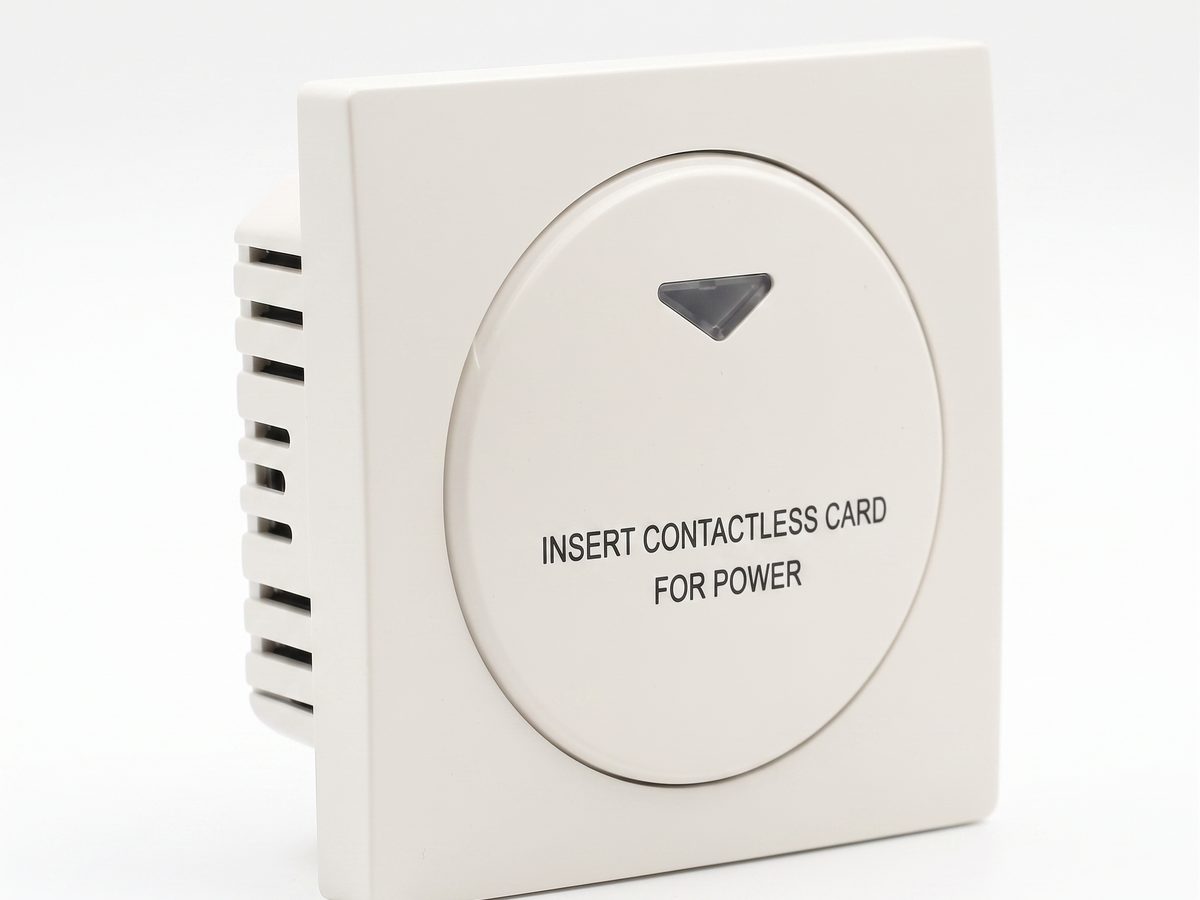
Interruptor de Cartão de Hotel — Controle de Energia do Quarto
Interruptor de cartão de hotel para controle de energia do quarto. Detecção RFID/IC, insira e ligue, desligamento temporizado ao remover. 220V CA, 10A-16A, RS485 ou contato seco. CE RoHS. Fornecedor OEM/ODM.
Esta página já o indica como a próxima referência recomendada.
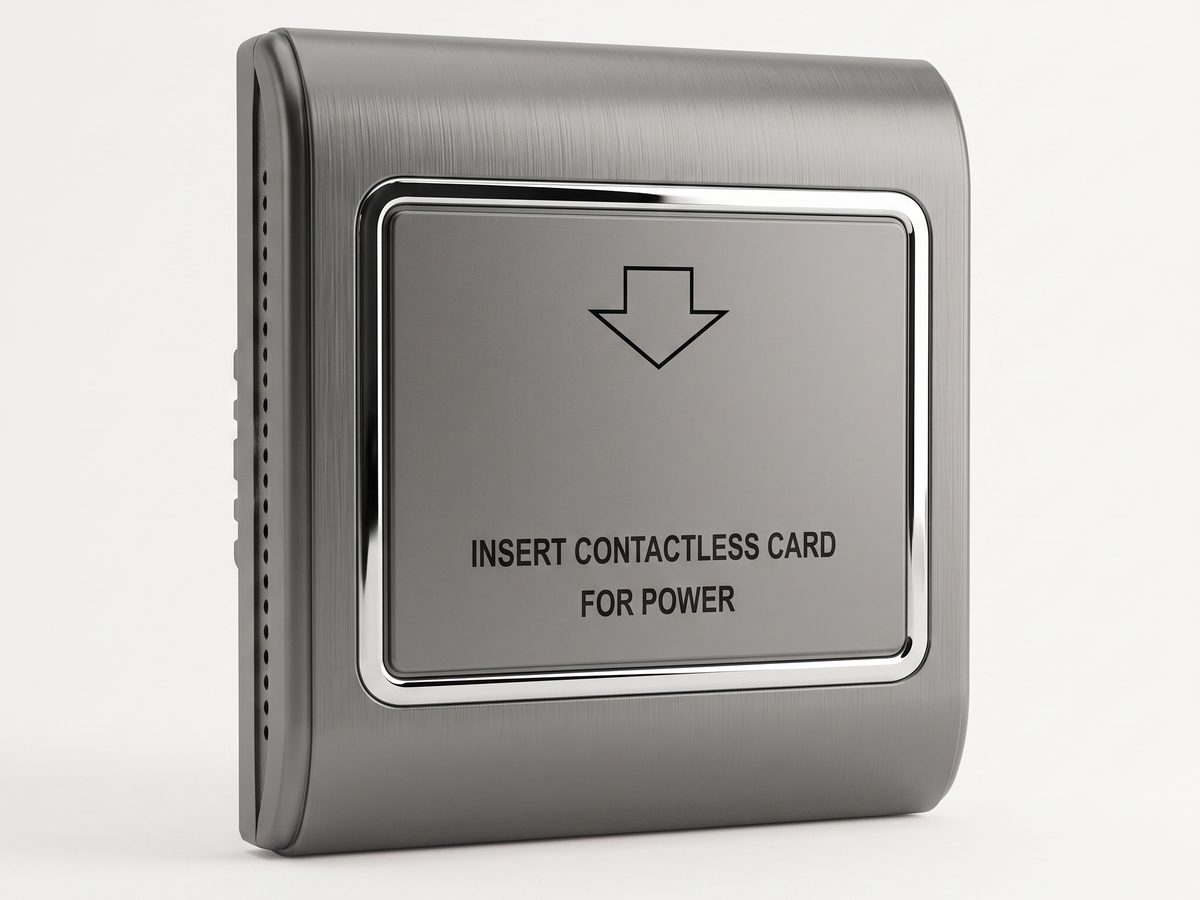
Interruptor RFID de Economia de Energia — Interruptor de Cartão MIFARE Vinculado ao Quarto (Tipo B)
Interruptor RFID de economia de energia que vincula a energia a um cartão MIFARE específico do quarto. MIFARE 13,56MHz / Temic 125kHz, CA 180–250V, 30A, desligamento atrasado 15s. Um interruptor RFID de hotel que impede o compartilhamento de cartões entre quartos e reduz 25–40% da energia do quarto.
Esta página já o indica como a próxima referência recomendada.
Interruptor de Energia Compatível TTLOCK — Vinculado ao Quarto + Tempo Limitado (Tipo C)
Interruptor de energia compatível TTLOCK com ID do quarto e limite de tempo. Funciona com cartões MIFARE TTLOCK/TTHotel via autenticação de chave de setor, CA 180–250V, 30A. Um interruptor de cartão criptografado e interruptor de energia TTLOCK ES2 para retrofits de hotéis com ecossistema fechado.
Esta página já o indica como a próxima referência recomendada.
Soluções relacionadas
3 Guia de Compra de Interruptores de Economia de Energia para Hotéis 2026
Guia de compra de interruptores de economia de energia para hotéis abrangendo cartão universal, RFID/MIFARE, compatível com TTLOCK, BLE inteligente e interruptores de sensor de ocupação. Escolha o interruptor de energia por cartão-chave, interruptor de energia por inserção de cartão e interruptor de economia de energia por chave ideal para seus quartos.
Esta página já o indica como a próxima referência recomendada.
Sistema de Gestão de Energia Hoteleira — Controle de Energia do Quarto com Retorno
Um sistema de gestão de energia hoteleira baseado em interruptores de cartão-chave, economizadores RFID e sensores de ocupação que reduz 25–40% da eletricidade dos quartos. Guia de controlador de energia para hotéis que modernizam a energia dos quartos.
Esta página já o indica como a próxima referência recomendada.
Sistema de Gestão de Quartos Baseado em Controle de Energia por Cartão
Um sistema prático de gestão de quartos de hóspedes para controle de energia através de interruptores de cartão, contatores e regras operacionais claramente documentadas.
Suporta o mesmo contexto de produto: Interruptor de Cartão de Hotel — Controle de Energia do Quarto, Interruptor RFID de Economia de Energia — Interruptor de Cartão MIFARE Vinculado ao Quarto (Tipo B).
Artigos do blog relacionados
3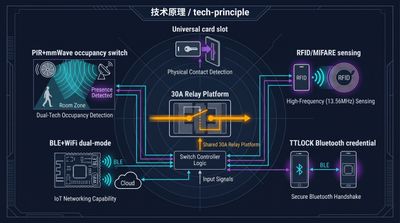
Interruptor de Cartão de Hotel: Tipos, Modelos e Como Especificar
O interruptor de cartão de hotel abrange modelos universal, RFID, TTLOCK, BLE e de ocupação. Guia completo sobre a família key card/keycard cobrindo termos principais.
Suporta o mesmo contexto de produto: Interruptor de Cartão de Hotel — Controle de Energia do Quarto, Interruptor RFID de Economia de Energia — Interruptor de Cartão MIFARE Vinculado ao Quarto (Tipo B), Interruptor de Energia Compatível TTLOCK — Vinculado ao Quarto + Tempo Limitado (Tipo C).
RFID vs NFC em Interruptores de Cartão-Chave: Qual Escolher
RFID vs NFC em interruptores de cartão-chave: RFID 125kHz/13,56MHz (MIFARE, Temic) é o padrão para energia no quarto; NFC é o protocolo do telemóvel. Compare alcance, fidelização e compatibilidade.
Suporta o mesmo contexto de produto: Interruptor RFID de Economia de Energia — Interruptor de Cartão MIFARE Vinculado ao Quarto (Tipo B), Interruptor de Cartão de Hotel — Controle de Energia do Quarto, Interruptor de Energia Compatível TTLOCK — Vinculado ao Quarto + Tempo Limitado (Tipo C).
O Que É um Interruptor de Cartão-Chave de Hotel e Como Poupa
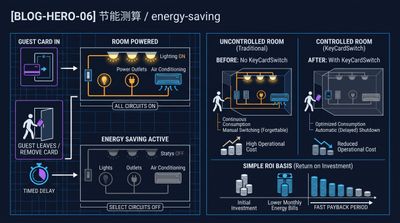
Um interruptor de cartão-chave de hotel alimenta o quarto quando o cartão é inserido e corta a energia quando removido, economizando tipicamente 25–40% da eletricidade do quarto.
Suporta o mesmo contexto de produto: Interruptor de Cartão de Hotel — Controle de Energia do Quarto, Interruptor RFID de Economia de Energia — Interruptor de Cartão MIFARE Vinculado ao Quarto (Tipo B), Interruptor de Energia Compatível TTLOCK — Vinculado ao Quarto + Tempo Limitado (Tipo C).
Especifique o seu projeto hoteleiro com os nossos engenheiros
Envie a contagem de quartos, tipo de teto e preferência de protocolo. Retornaremos um plano de amostras e orçamento em 24 horas úteis.
- Passe da orientação geral para uma discussão de produto ou aplicação.
- Use RFQ quando preço, desenhos, MOQ ou calendário de lançamento precisam de estrutura.
- Mantenha um caminho de contacto direto visível para esclarecimentos rápidos e passagem de testemunho.