Skip to content
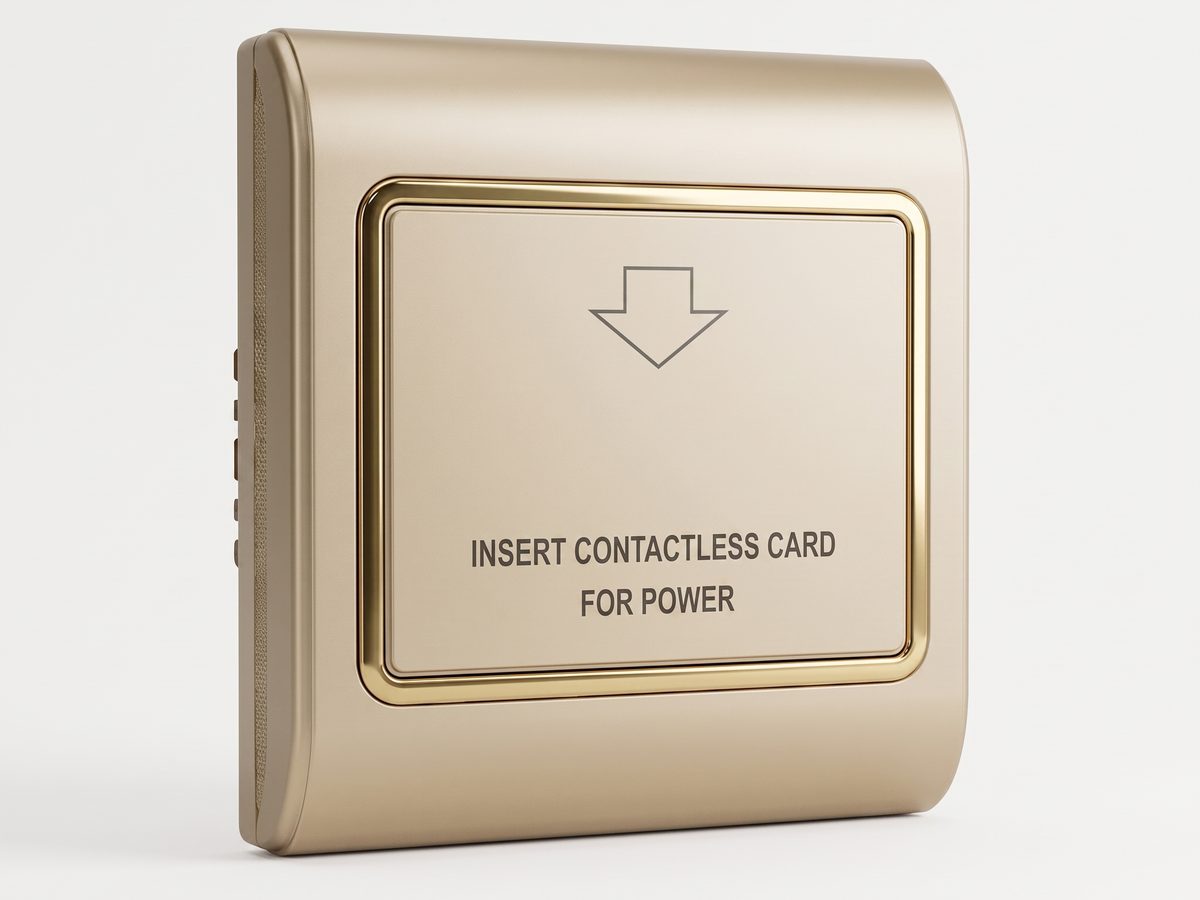
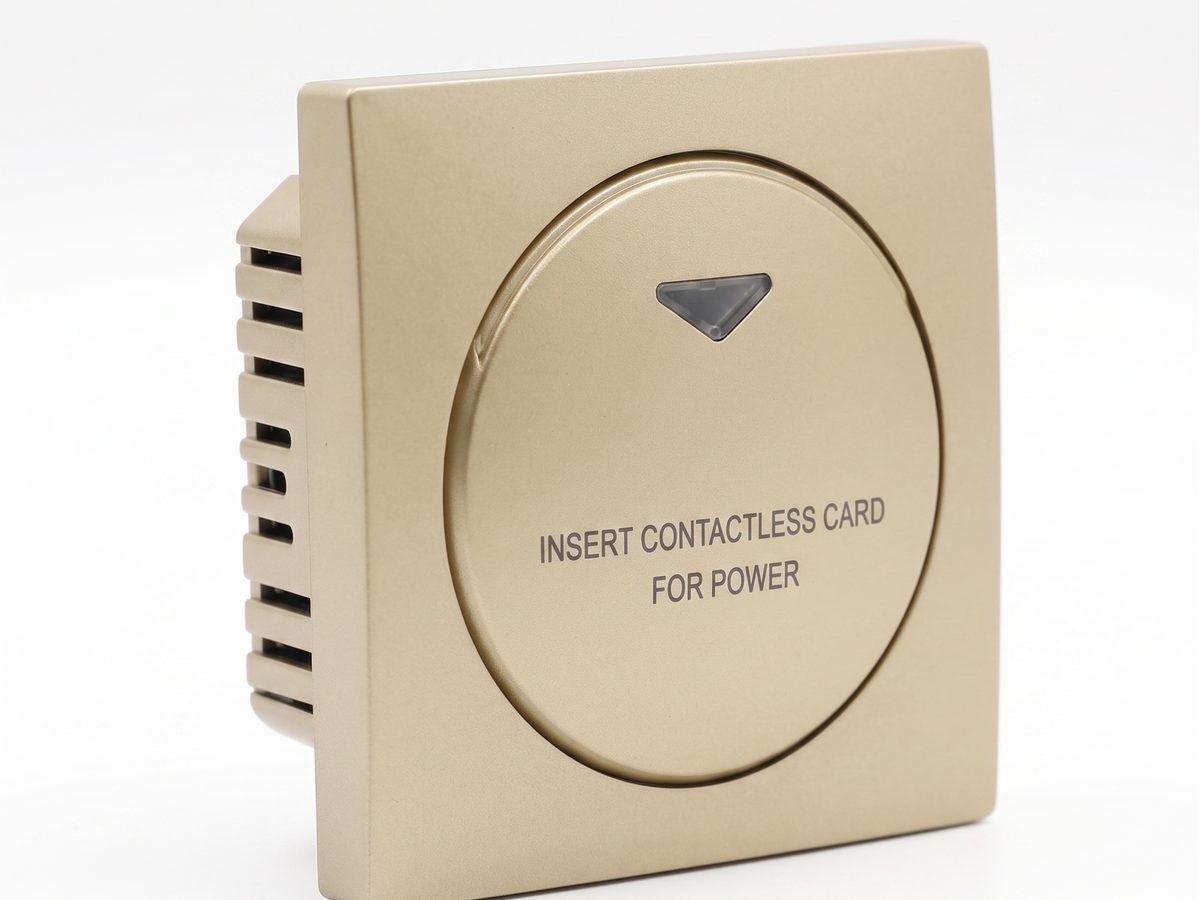
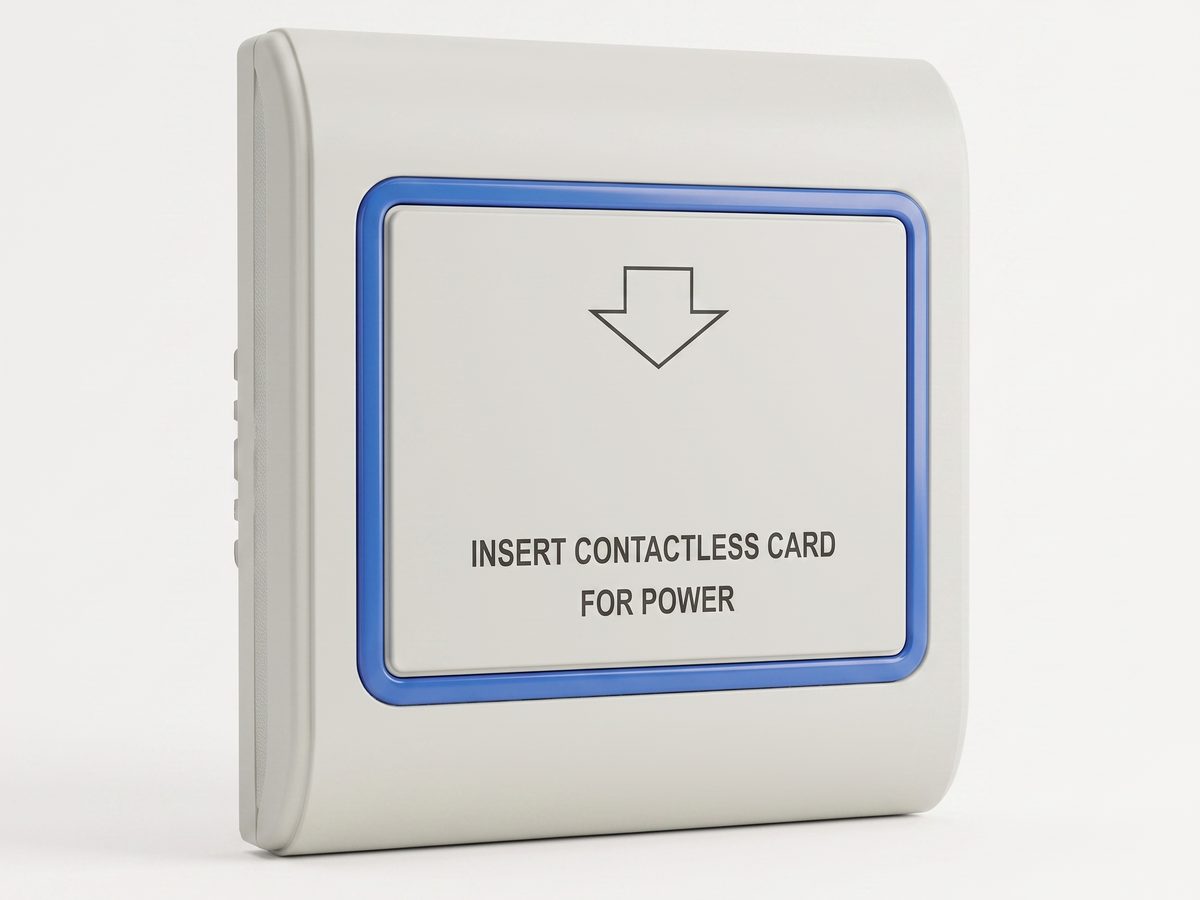
Wireless key card switch, battery-powered retrofit guest room power control on a wall plate
CERoHS
Answer Snapshot

Qualification facts buyers can extract quickly

Wireless hotel key card switch for retrofit projects. Low-frequency wake-up or RS485 wireless option, battery-powered option to avoid rewiring, room power control without new cable runs. CE RoHS. OEM/ODM supplier.

Last Updated
9/5/2026
Who it is for
Hotel owners retrofitting guest room power control without disruptive rewiring, Contractors and MEP integrators deploying wireless energy switches in operating hotels, Hotel renovation and energy-efficiency program teams
Use cases
Retrofit of operating hotels where pulling new control cable is impractical, Guest rooms without a convenient power feed at the switch position, Energy retrofit projects that reuse existing relays and contactors, Adding room power control to heritage or occupied buildings with minimal disruption
MOQ
50 pcs for standard models; negotiable for OEM/ODM
Lead time
Samples 3-4 days / Mass production 3-4 days
Certifications
CE, RoHS
Served markets
Worldwide (CE/RoHS certified)
Export context
Designed for hospitality OEM ODM projects requiring CE certified guest room power control with global voltage support
Next step
Request a sample wireless key card switch with its wall receiver to validate wireless range in a representative hotel room.

Product overview

Why choose a wireless key card switch for hotel retrofit

A wireless key card switch is a guest room power control device that brings card-based energy saving to hotels where running new control wiring is impractical. In operating properties, pulling cable through finished walls, occupied rooms, and fire-rated structures is disruptive and expensive. A wireless hotel key card switch solves this by carrying the card-in/card-out command to an existing relay or contactor over a low-frequency wake-up or RS485 wireless link instead of a new wire. For hotel owners, renovators, and contractors, a wireless key card switch delivers the same deterministic power control as a wired unit while turning a major retrofit into a quick, low-disruption upgrade.

How a wireless key card switch works

A wireless key card switch works in two stages. At the switch, the guest inserts an IC or RFID key card, and within 0.5 seconds the switch transmits a power-on command wirelessly to a receiver wired to the room's relay or contactor, powering lighting, sockets, and HVAC. When the guest removes the card, the switch sends a power-off command after a selectable 15s, 30s, or 60s delay, letting the air conditioner shut down gracefully. Because the wireless link is local and low-power, the switch does not depend on a building network — it works standalone from the moment it is installed.

Low-frequency wake-up and RS485 wireless options

A wireless key card switch is available with two link types to suit the project. The low-frequency wake-up option is a simple, robust choice for line-of-sight switch-to-receiver links in a single room, drawing minimal power so the switch can run on a battery for up to two years. The RS485 wireless option is suited to properties that already use RS485 control loops, allowing several switches or rooms to be coordinated on one bus while avoiding new cable pulls. Both options keep installation costs down by connecting to an existing room relay or contactor rather than replacing the entire power path.

Battery and line-powered configurations

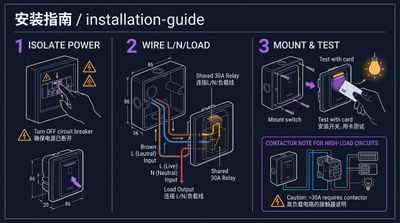
A wireless key card switch can be powered either way. Where a switch position has access to a mains feed, the line-powered version operates on AC 100-240V, 50/60Hz and drives a 10A/16A relay for loads up to 3500W. Where no convenient feed exists, the battery-powered option fits the same 86-box, draws under 0.3W in standby, and reports the room power status wirelessly, with typical battery life of up to two years before a quick field replacement. This flexibility means a wireless key card switch can go into nearly any room without rewiring the wall.

Energy saving without disruption

The purpose of a wireless key card switch is energy saving, and the mechanism is identical to a wired switch. The room is powered only while a guest card is present, so empty-room HVAC and lighting are switched off automatically. There are no occupancy timers to misfire and no motion thresholds to calibrate — the room follows the guest's card. For a hotel portfolio, adding wireless key card switches across a wing of operating rooms captures the same 20-40% room-level electricity reductions seen with wired installations, without a multi-week construction program.

Compatibility and reuse of existing hardware

A wireless key card switch is designed to reuse what is already in the room. It drives the existing relay or contactor rather than replacing the full power path, and it accepts standard IC and RFID guest key cards without reissuing media. It works alongside any hotel door lock brand, including Onity, VingCard, Assa Abloy, and SALTO, with no integration work. For modernizing properties, the RS485 wireless option keeps a path to centralized guest room power control while the wireless transport avoids new wiring.

OEM and ODM capability

As an OEM/ODM supplier, we tailor the wireless key card switch to project needs: wireless range, battery or line power, low-frequency or RS485 wireless protocol, face plate finish, and packaging. Minimum order quantity is 50 pcs with samples available in 3-4 days and mass production in 5-7 days. We ship worldwide on FOB Shenzhen, CIF, DDP, or EXW terms and support T/T, L/C, and Trade Assurance payment, with every unit carrying CE and RoHS compliance.

How to get a quotation

Tell us your room count, retrofit constraints (wall construction, distance between switch and relay), available power at the switch, and whether you prefer low-frequency or RS485 wireless. We will return a per-room cost, wireless coverage guidance, integration diagram, and sample plan within 24 business hours.
Key selling points

No new cable runs for hotel retrofit projects

A wireless key card switch removes the need to pull new control wiring through finished walls. The low-frequency wake-up or RS485 wireless option carries the room power command to an existing receiver, cutting install cost and disruption in operating hotels.

Battery-powered option preserves the wired switch position

Where a nearby power feed is impractical, a battery-powered wireless key card switch fits a standard 86-box and reports card-in/card-out wirelessly, with typical battery life of up to two years before replacement.

Works with existing relays and contactors

The wireless signal drives an existing relay or contactor in the room, so retrofit can reuse the current switching hardware instead of replacing the full power path.

Card on, card off energy control without a network

Just like a wired switch, the wireless version powers the room on card insertion and cuts power after a delay on removal, delivering deterministic energy saving without depending on a building network.

Fits standard 86-box for fast swap-in

The flush 86-box face mounts in the existing switch opening, letting retrofit teams upgrade a room in minutes and keep the guest-facing appearance consistent.

Technical specifications

Power Source AC wired or optional battery supply
Rated Voltage AC 100-240V, 50 60Hz
Rated Current 10A 16A resistive, 8A inductive
Card Detection IC RFID insertion
Wireless Option Low-frequency wake-up RS485 wireless
Power-off Delay 15s 30s 60s
Output Dry contact + wireless receiver
Max Load 2200W @ 10A, 3500W @ 16A
Standby Power 0.3W
Mounting Standard 86-box wall mount
Battery Life Up to 2 years typical
Card Type Guest room key cards, IC RFID tags
Operating Temperature 20°C to +55°C
IP Rating IP20
Dimensions 86mm x 86mm x 36mm
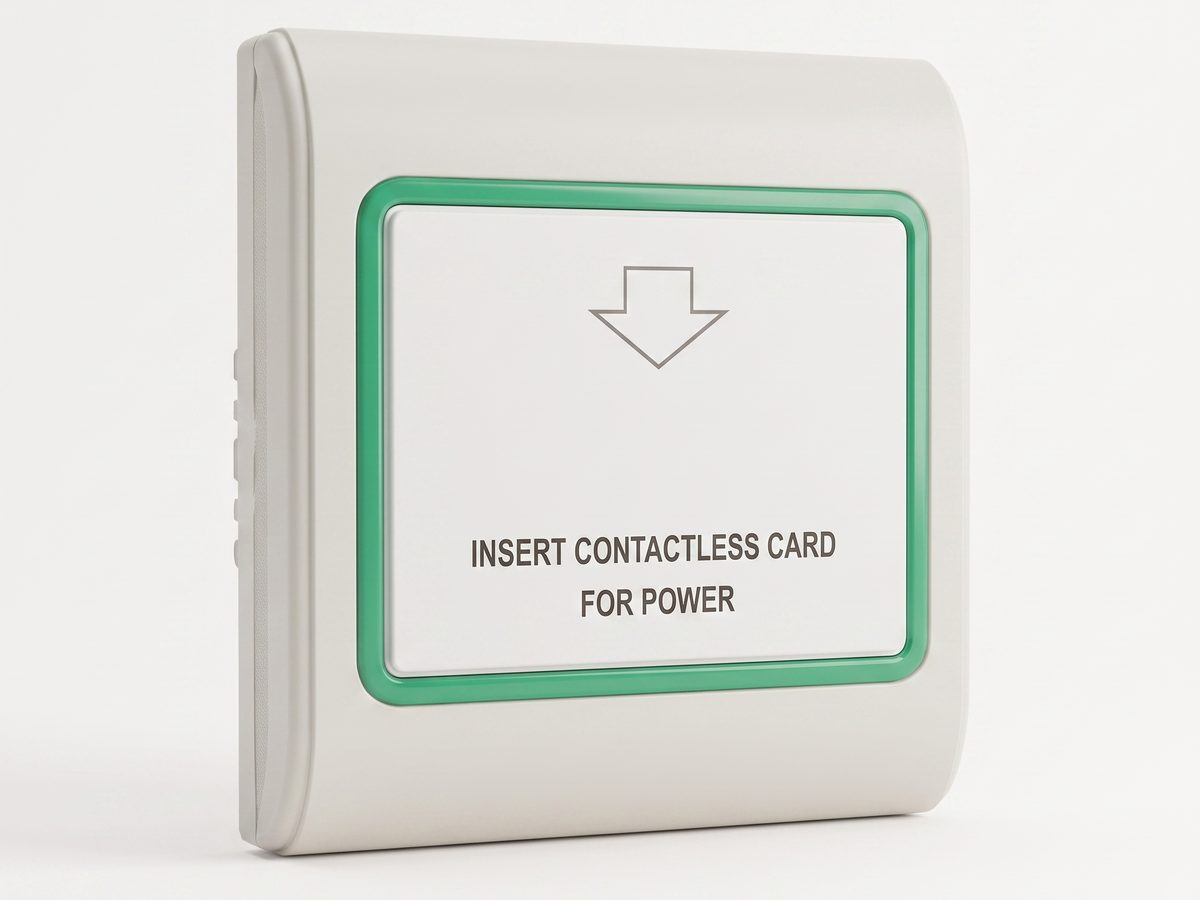
Housing Fire-retardant PC, white or custom color

Request pricing, samples, or customization details

Leave the application, quantity, and target market information so the sales team can respond with a practical next step.

Selected product: Wireless Key Card Switch — Battery or Bus Power for Retrofitting Hotels
Step 1
Quick brief

Start with contact details, quantity, and the shortest useful summary of your requirement.

Step 2
Add specs and trade details

Use the optional second step when you already know destination, target terms, certifications, or packaging needs.

Contact details
Project summary
No file selected

Upload reference photos, datasheets, or requirement sheets.

Step 2
Add specs and trade details

Use the optional second step when you already know destination, target terms, certifications, or packaging needs.

Add technical details
Commercial terms
Technical requirements

The second step is optional. Submit after step one if you need to start the conversation quickly.

Structured RFQs help the team review feasibility, pricing, sample routes, and export requirements faster.

We respect your privacy. Response within 24 business hours.

Ready for RFQ

Share your product requirements and get a practical next step

Send your drawings, target quantity, and timeline. Our sales engineering team will respond within 24 business hours with a practical next step, a quote, or a sample plan.

Send a quick inquiry

Tell us what you need — room size, target volume, timeline. We respond within 24 business hours.

A clear brief helps the team reply within one business day with the right catalog, sample route, or quotation next step.