Key Card Switch vs Motion Sensor untuk Kamar Hotel: Cara Memilih
Perbandingan praktis key card switch vs motion sensor untuk kamar hotel, mencakup cara masing-masing mengendalikan daya, logika hemat energi, respons, skenario pemicu palsu, biaya, dan kapan menggabungkan keduanya.
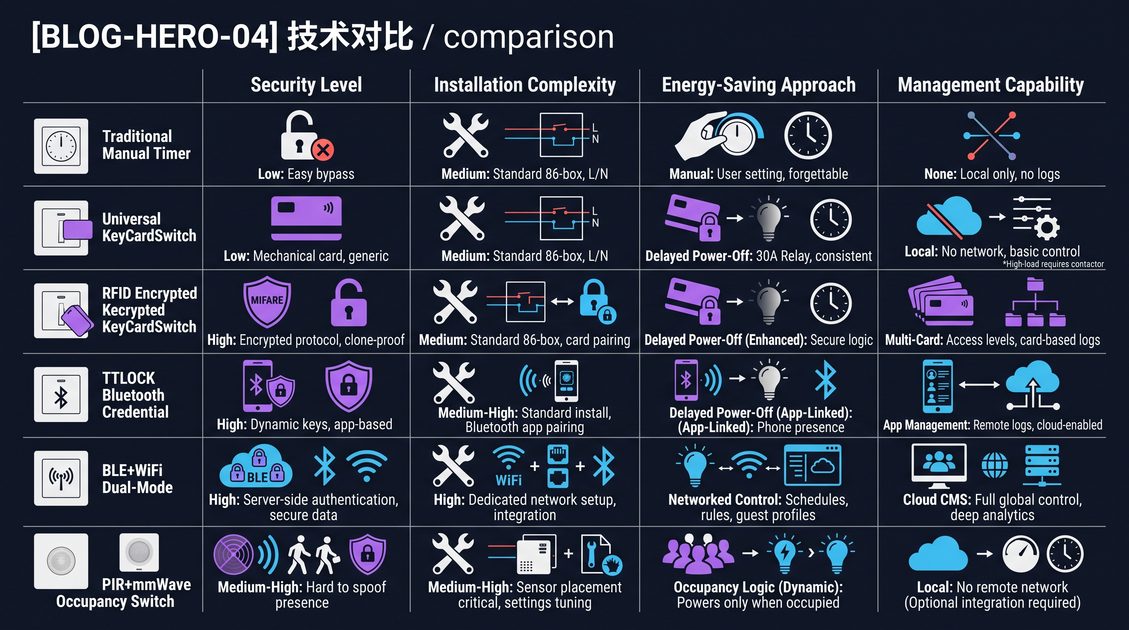
Key card switch vs motion sensor untuk kamar hotel adalah keputusan yang dihadapi setiap pemilik hotel, konsultan teknik, dan integrator otomasi kamar tamu saat merancang kontrol daya berbasis okupansi. Key card switch adalah mekanisme penyisipan kartu di pintu yang memutus daya kamar hotel saat tamu mengeluarkan kartu saat meninggalkan, sementara motion sensor (paling umum berupa detektor gerak pasif inframerah atau PIR) menjaga daya tetap menyala selama mendeteksi pergerakan di area tersebut dan memutuskannya setelah penundaan tertentu ketika tidak ada gerakan yang terdeteksi. Perbedaan intinya terletak pada sinyal okupansi: key card switch mengandalkan tindakan eksplisit membawa kartu kamar pergi, sedangkan motion sensor menyimpulkan kehadiran dari panas tubuh dan gerakan tanpa mengharuskan tamu melakukan apa pun. Hal ini memengaruhi waktu respons, penghematan energi, skenario pemicu palsu, biaya pemasangan, dan pengalaman tamu, sehingga pilihan yang tepat bergantung pada anggaran hotel, kondisi instalasi kabel, dan tingkat toleransi Anda terhadap pemadaman daya yang tidak disengaja.
Memahami perbedaan key card switch vs motion sensor di kamar hotel
Perbandingan key card switch vs motion sensor untuk kamar hotel dimulai dari apa yang sebenarnya dilakukan masing-masing perangkat terhadap sirkuit listrik kamar tamu. Key card switch, kadang disebut saklar daya kartu kunci atau saklar hemat energi kamar tamu, adalah relai mekanis atau elektronik yang dipasang di samping pintu masuk kamar. Tamu memasukkan kartu kunci, kartu energi, kartu RFID, atau kartu okupansi plastik sederhana ke dalam slot, dan saklar mengaktifkan sirkuit daya utama untuk colokan, lampu, kamar mandi, dan unit terminal pendingin udara. Saat tamu pergi dan menarik kartu keluar, saklar langsung memutus sirkuit setelah penundaan singkat yang telah diprogram, biasanya dua hingga lima belas detik, sehingga HVAC dan pencahayaan mati secara otomatis. Key card switch dengan demikian memperlakukan kehadiran kartu sebagai sinyal eksplisit dan disengaja bahwa seseorang berniat menghuni kamar, itulah sebabnya perangkat ini menjadi standar tradisional di hotel jaringan dan hotel ekonomi di seluruh Asia, Eropa, dan Timur Tengah. Karena sinyalnya bersifat biner dan diinisiasi tamu, saklar kartu sederhana, murah, dan perilakunya dapat diprediksi.
Sebaliknya, motion sensor adalah perangkat pasif yang mengawasi pergerakan di dalam kamar. Jenis paling umum yang murah adalah detektor gerak PIR, yang menggunakan sensor piroelektrik dan lensa Fresnel untuk mendeteksi perubahan mendadak pada radiasi inframerah saat benda hangat, seperti tamu, bergerak melintasi bidang pandangnya. Beberapa instalasi yang lebih baru menggunakan sensor okupansi microwave, dual-tech, atau milimeter gelombang, namun pada kisaran harga terjangkau tempat key card switch dan detektor PIR bersaing, detektor gerak PIR atau sensor okupansi berbasis PIR adalah alternatif yang realistis. Motion sensor menjaga kamar tetap bertegangan selama terus mendeteksi gerakan, dan memutus daya setelah penundaan yang dapat disesuaikan, biasanya dua hingga tiga puluh menit, begitu kamar menjadi diam. Kompromi mendasarnya adalah saklar kartu memiliki kejelasan mengenai okupansi tetapi menuntut tamu memasukkan kartu, sedangkan motion sensor tidak terlihat oleh tamu tetapi dapat salah membaca tamu yang diam sempurna namun berada di dalam kamar sebagai kamar kosong.
Dari sudut pandang pengambilan keputusan, pertanyaan key card switch vs motion sensor untuk kamar hotel jarang sekali tentang teknologi mana yang secara objektif lebih unggul. Pertanyaannya adalah sinyal okupansi mana yang paling cocok dengan perilaku tamu, tata letak kelistrikan, dan sumber daya pemeliharaan hotel Anda. Saklar kartu cocok untuk model di mana hotel menerbitkan kartu atau kunci kamar yang berfungsi sebagai token daya. Motion sensor cocok untuk model di mana hotel menginginkan nol keterlibatan tamu dan bersedia menerima penundaan time-out serta pemicu palsu sesekali. Untuk membuat pilihan yang tepat, Anda perlu meninjau lima dimensi: prinsip kerja, logika hemat energi, waktu respons, skenario pemicu palsu dan pemicu terlewat, serta total biaya selama umur kamar. Sisa panduan ini membahas masing-masing dimensi tersebut sehingga Anda dapat memetakan keputusan key card switch vs motion sensor ke properti spesifik Anda alih-alih mengandalkan rekomendasi generik.
Cara kerja key card switch vs motion sensor di level perangkat
Perbedaan key card switch vs motion sensor untuk kamar hotel paling jelas ketika Anda membandingkan komponen fisik dan antarmuka kelistrikan yang digunakan masing-masing perangkat. Key card switch tipikal adalah panel ringkas yang menggabungkan pembaca kartu, relai, mikroprosesor atau sirkuit logika sederhana, dan blok terminal kabel. Biasanya dihubungkan secara seri dengan sirkuit pencahayaan dan colokan kamar, dan dapat membawa jalur sinyal HVAC independen atau menggunakan aliran daya utama. Saat kartu dimasukkan, pembaca memvalidasi kartu—artinya mendeteksi keberadaan kartu atau membaca data RFID/magnetiknya—dan menutup relai sehingga daya mengalir ke beban yang dikendalikan. Saat kartu dikeluarkan, relai terbuka setelah penundaan yang dapat dikonfigurasi. Sebagian besar model mengonsumsi daya di bawah satu watt dalam keadaan siaga, yang dapat diabaikan karena saklar kartu hanya mengendalikan beban yang disaklarkannya dan tidak sendiri menjalankan loop sensor yang menarik arus secara terus-menerus. Saklar kartu adalah perangkat kelas kontaktor yang dirancang untuk mensaklar sirkuit AC 220V hingga 240V pada rating seperti 10A hingga 30A, itulah sebabnya juga disebut relai hemat energi colokan.
PIR motion sensor untuk kamar tamu bekerja dengan cara yang sama sekali berbeda. Perangkat ini berisi chip detektor piroelektrik yang terbagi menjadi dua segmen sensor, lensa Fresnel yang memfokuskan inframerah dari sudut lebar ke chip, sedikit rangkaian pengondisian sinyal, serta relai atau triak yang mensaklar beban yang dikendalikan. Detektor bereaksi terhadap perubahan energi inframerah di kedua segmennya; benda hangat yang bergerak menciptakan sinyal diferensial yang diperkuat rangkaian dan diubah menjadi pemicu. Karena PIR bersifat pasif, perangkat ini mengonsumsi daya sangat kecil, biasanya beberapa puluh miliwatt, dan dapat ditenagai baterai atau dikabel langsung. Perangkat ini menawarkan area deteksi luas, umumnya kerucut 90 hingga 120 derajat dengan jangkauan 5 hingga 12 meter pada porosnya, tetapi buta terhadap objek yang benar-benar diam dan terhadap gerakan yang tidak menggeser diferensial inframerah, seperti tamu yang bernapas di bawah selimut di sofa. Beberapa sensor okupansi menambahkan desain elemen ganda atau teknologi ganda dan fotodetektor kecil untuk sensor cahaya siang, tetapi prinsip dasar PIR tetap sama.
| Dimensi | Key card switch | PIR motion sensor (detektor okupansi) |
|---|---|---|
| Sinyal okupansi | Eksplisit: tamu memasukkan kartu | Implisit: mendeteksi panas tubuh yang bergerak |
| Tindakan tamu diperlukan | Ya, masukkan kartu saat masuk, bawa saat keluar | Tidak ada |
| Metode deteksi | Pembaca kartu + relai | Inframerah piroelektrik + lensa Fresnel |
| Jangkauan tipikal | Seluruh sirkuit terkendali saat kartu masuk | Kerucut 90-120 derajat, jangkauan poros 5-12 meter |
| Daya untuk mendeteksi | Tidak diperlukan, kartu adalah sinyalnya | Selalu aktif, siaga dalam miliwatt |
| Beban yang dikendalikan | Lampu, colokan, HVAC via relai | Beban yang sama via relai atau triak internal |
| Mode kegagalan | Daya mati jika tamu kehilangan kartu | Daya mati jika tamu diam terlalu lama |
Saat Anda membandingkan key card switch vs motion sensor di level ini, poin teknik pentingnya adalah kedua perangkat pada dasarnya hanyalah relai yang mensaklar jenis beban yang sama, tetapi keduanya memperoleh sinyal "kamar terisi" dari sumber yang sama sekali berbeda. Key card switch mendapatkan sinyal deterministik dari kartu, sehingga tidak pernah salah menganggap kamar kosong sebagai kamar terisi selama kartu tetap terpasang. Motion sensor mendapatkan sinyal probabilistik dari lingkungan, sehingga harus memutuskan antara memutus daya atau membiarkannya menyala berdasarkan time-out, dan di keputusan itulah penghematan energi, kenyamanan tamu, dan keandalan semuanya bermuara. Motion sensor juga memiliki keunggulan dapat dipasang di plafon atau di atas pintu masuk untuk mencakup seluruh ruang, sedangkan saklar kartu harus berada di pintu tempat kartu dimasukkan, yang membatasi di mana relai pengendali dapat berada secara fisik.
Penghematan energi dalam perbandingan key card switch vs motion sensor untuk kamar hotel
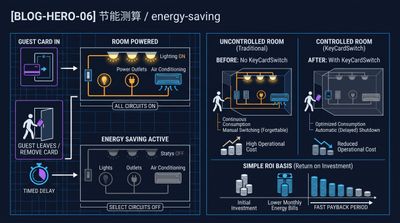
Perbandingan energi key card switch vs motion sensor untuk kamar hotel adalah tempat sebagian besar pembeli menaruh perhatian, karena kamar tamu merupakan porsi besar dari tagihan listrik hotel dan HVAC adalah beban dominan. Logika key card switch adalah menjamin bahwa daya dicabut dari colokan, lampu, dan terutama pendingin udara pada saat tamu mengambil kartu dan menutup pintu. Di hotel yang menggunakan sistem kartu-sebagai-token, pendekatan ini menghasilkan pemutusan tegas: tidak ada rentang sisa waktu saat kamar tetap mendingin atau memanas dengan HVAC berjalan pada setpoint dalam keadaan kosong. Kelemahan utama hemat energi key card switch adalah tamu dapat meninggalkan kartu di slot selama berjam-jam keluar, misalnya meninggalkan kamar untuk sarapan atau rapat tanpa membawa kartu, atau bahkan lupa menarik kartu sama sekali. Dalam kasus tersebut, kamar berjalan dengan daya penuh dalam keadaan kosong, dan saklar kartu tidak dapat menolong karena sinyal eksplisitnya menyatakan terisi.
Motion sensor mendekati tujuan yang sama dengan time-out okupansi. Sensor menjaga HVAC dan lampu pada daya normal selama mendeteksi gerakan, lalu setelah penundaan yang dapat dikonfigurasi, biasanya dua hingga lima belas menit tanpa gerakan, perangkat ini menurunkan beban, biasanya mengembalikan HVAC ke mode setback atau memutuskannya dan mematikan lampu. Pendekatan ini menangkap tamu yang meninggalkan kartu, tetapi memperkenalkan inefisiensi berbeda: penundaan time-out berarti setiap kali tamu meninggalkan kamar, kamar tetap bertegangan selama periode penundaan penuh, baik dua menit maupun lima belas menit; dan dalam kasus sebaliknya—misalnya kamar mandi tempat tamu mandi tanpa gerakan yang terlihat—ketika sensor melewatkan orang tersebut, kamar dapat dipadamkan padahal terisi. Masalah yang lebih besar bagi hotel yang hanya mengandalkan motion sensor adalah tamu yang diam: tamu yang menonton televisi, bekerja di meja, atau tidur sementara detektor PIR tidak melihat gerakan dapat memicu pemadaman daya yang kemudian harus dijelaskan hotel.
| Logika energi | Key card switch | PIR motion sensor |
|---|---|---|
| Kondisi pemutusan | Kartu dikeluarkan tamu | Tanpa gerakan selama penundaan terprogram |
| Kecepatan pemutusan | Hampir seketika, hitungan detik | Lambat, penundaan 2-15 menit |
| Kamar kosong dengan kartu tertinggal | Kamar tetap bertegangan penuh | Sensor memutus setelah penundaan |
| Tamu diam dalam waktu lama | Kamar tetap bertegangan | Risiko pemutusan salah |
| Tamu bergerak di balik penghalang | Kamar tetap bertegangan | Detektor mungkin terpicu atau tidak |
| Konsumsi siaga | Di bawah 1 watt | Miliwatt |
Jawaban jujur dalam diskusi energi key card switch vs motion sensor untuk kamar hotel adalah tidak ada perangkat yang secara universal lebih efisien, dan berisiko mengutip persentase tetap atau penghematan terjamin untuk salah satunya. Penghematan bergantung pada pola okupansi kamar, perilaku pengendali HVAC dalam mode setback, topologi kabel, dan kebiasaan tamu. Alih-alih menjanjikan persentase, pendekatan praktisnya adalah memilih perangkat yang perilaku terburuknya pada kamar kosong dapat Anda terima. Jika tamu Anda secara konsisten membawa kartu kamar atau kartu dalam kamar, key card switch memberikan pemutusan yang lebih bersih dan cepat dengan kehilangan siaga mendekati nol dan tanpa time-out sensor. Jika tamu Anda sering pergi tanpa kartu, motion sensor menutup celah itu tetapi menambah penundaan dan risiko pemutusan salah. Oleh karena itu banyak operator menggabungkan keduanya, menggunakan saklar kartu sebagai master dan motion sensor sebagai konfirmasi, atau sebaliknya, yang akan kita bahas nanti dalam panduan ini.
Keandalan deteksi dan skenario salah dalam perbandingan key card switch vs motion sensor
Keandalan adalah dimensi tempat keputusan key card switch vs motion sensor untuk kamar hotel paling sering keliru, karena kedua perangkat gagal ke arah yang berlawanan. Key card switch gagal pada sisi membiarkan daya menyala: perangkat ini tidak pernah memutus daya selama kartu valid berada di slot, sehingga kamar terisi tidak pernah mengalami pemadaman tidak sengaja, tetapi kamar kosong dapat berjalan dengan daya penuh jika kartu ditinggalkan terpasang. Kegagalannya adalah jenis kelalaian, bukan tindakan salah. Tamu hampir tidak pernah dirugikan oleh saklar kartu; hanya tagihan energi yang dirugikan. Gangguan utama bagi tamu dari saklar kartu ada saat masuk: tamu yang melewati batas timer menginap tetap, mengembalikan kartu yang tidak valid atau aus, membawa kartu hotel yang tidak lagi cocok dengan pembaca, atau datang dengan kartu milik teman yang ditolak pembaca, dapat mendapati kamar tanpa daya hingga resepsionis menerbitkan kartu yang berfungsi, dan itu adalah insiden layanan tamu yang harus dikelola hotel.
Motion sensor gagal ke arah berlawanan, yaitu pada sisi pemutusan daya yang keliru. Deteksi gerak PIR terkenal rentan terhadap tiga skenario salah dan terlewat. Pertama, kasus diam-namun-terisi: tamu yang membaca, tidur, atau bekerja tanpa gerakan besar tidak menunjukkan sinyal diferensial, sehingga sensor kehabisan waktu dan memutus daya kamar yang terisi, yang merupakan keluhan kenyamanan serius. Kedua, kasus terhalang: sekat, pintu kamar mandi, atau perabot dapat membayangi sebagian ruangan, sehingga tamu yang mandi atau berada di balik sekat tetap tidak terlihat oleh detektor. Ketiga, kasus derau ambien jarang terjadi pada PIR karena berbasis panas, tetapi beberapa pemicu palsu dapat berasal dari hembusan pemanas, gorden yang bergerak dekat jendela, atau hewan peliharaan serta peralatan seperti kipas, yang membuat sensor menjaga kamar tetap bertegangan lebih lama daripada yang dimaksudkan tamu. Mode kegagalan inilah yang membuat detektor gerak PIR yang berdiri sendiri jarang dipercaya untuk kontrol daya seluruh kamar di hotel kelas lebih tinggi, kecuali dipasang dan disetel dengan cermat.
| Skenario salah atau terlewat | Key card switch | PIR motion sensor |
|---|---|---|
| Tamu terisi tetapi diam | Tidak ada pemadaman, aman | Cenderung memutus daya setelah penundaan |
| Kosong tetapi kartu tertinggal di slot | Kamar tetap bertegangan, energi terbuang | Sensor tidak melihat gerakan dan memutus |
| Tamu mandi atau di balik pintu | Tidak ada pemadaman, aman | Terlewat, kamar gelap |
| Masuk dengan kartu tidak valid atau aus | Kamar tanpa daya hingga kartu baru | Tidak ada masalah pintu, selalu menyala saat ada gerakan |
| Derau gorden, pemanas, atau hewan peliharaan | Tidak ada efek | Kemungkinan tetap menyala secara keliru |
| Tamu pergi tanpa kartu | Energi terbuang | Pemutusan normal setelah penundaan |
Bagi pemilik properti, gambaran keandalan key card switch vs motion sensor untuk kamar hotel bermuara pada apa yang tidak dapat Anda toleransi. Jika Anda tidak dapat toleransi pernah menggelapkan kamar tamu yang terisi, saklar kartu adalah master yang lebih aman karena satu-satunya kegagalannya adalah pemborosan. Jika Anda tidak dapat toleransi kamar kosong memboroskan energi HVAC saat kartu tertinggal di slot, motion sensor adalah satu-satunya pilihan jika berdiri sendiri, dan Anda harus merencanakan penanganan pemutusan salah pada tamu diam dengan memilih time-out, penempatan sensor, dan mungkin elemen teknologi ganda yang tepat. Bagian akhir artikel ini menunjukkan pengkabelan hybrid praktis yang memungkinkan Anda memperoleh pemutusan deterministik saklar kartu dan penangkapan kamar kosong dari motion sensor secara bersamaan, itulah cara sebagian besar insinyur HVAC dan otomasi hotel berpengalaman menyelesaikan dilema keandalan alih-alih memilih satu perangkat untuk segalanya.
Skenario yang berlaku: kapan memilih key card switch vs motion sensor
Kesesuaian key card switch vs motion sensor untuk kamar hotel sangat bergantung pada segmen hotel, tipe kamar, dan profil tamu, karena kedua perangkat cocok untuk tingkat keyakinan kontrol dan toleransi terhadap gangguan tamu yang berbeda. Key card switch adalah pilihan alami untuk hotel ekonomi dan jaringan, hotel bisnis kota, serta properti di mana tamu diharapkan membawa kartu kamar atau kartu kunci dalam kamar, dan di mana perilaku nyala-mati yang jelas lebih dihargai daripada kecerdasan sensor. Perangkat ini juga merupakan pilihan tepat bagi pemilik yang memperhatikan anggaran dan menginginkan biaya awal rendah, instalasi tiga kabel atau empat kabel sederhana di pintu masuk, dan tidak perlu memasang serta menyetel sensor di setiap kamar. Karena saklar kartu memberikan pemutusan hampir seketika dan jaminan tegas bahwa kamar kosong, di balik pintu tertutup dengan kartu ditarik, tidak memboroskan daya, perangkat ini tetap menjadi default di ribuan kamar di seluruh Asia dan Teluk di mana tenaga kerja terbatas dan perputaran tamu tinggi.
Motion sensor lebih cocok untuk properti berlayanan tinggi, hotel penginapan panjang, apartemen servis, serta kamar wellness atau resor di mana tamu seharusnya tidak perlu menyentuh kartu untuk mendapatkan daya, dan di mana kenyamanan lebih penting daripada pemutusan seketika yang ketat. Perangkat ini juga tepat ketika hotel telah berinvestasi dalam pengkabelan plafon, ketika kamar tamu memiliki suite atau kamar mandi di balik sekat yang sulit dicakup oleh saklar pintu, atau ketika properti ingin menambahkan kesadaran okupansi melampaui daya nyala-mati sederhana, seperti memberi tahu petugas housekeeping bahwa sebuah kamar tampak terisi. Untuk okupansi sangat panjang di apartemen servis, keunggulan tersembunyi motion sensor adalah perangkat ini membiarkan kamar bertegangan selama penghuni bergerak dan hanya memutus setelah ketidakhadiran sejati, sehingga pekerja di meja atau penginapan semalamam tidak terganggu, asalkan sensor ditentukan dengan time-out yang cukup panjang untuk menutupi pekerjaan yang tenang.
| Faktor kesesuaian | Key card switch | PIR motion sensor |
|---|---|---|
| Segmen hotel terbaik | Ekonomi, jaringan, bisnis kota | Penginapan panjang, resor, apartemen servis |
| Ekspektasi tamu | Masukkan kartu untuk mendapatkan daya | Tanpa menyentuh apa pun, kamar langsung berfungsi |
| Biaya instalasi dan kabel | Rendah, di pintu, sedikit kabel | Sedikit lebih tinggi, penempatan plafon atau dinding dan penyetelan |
| Tamu yang bekerja lama dan diam | Tidak ada pemutusan salah | Memerlukan time-out panjang untuk menghindari pemutusan salah |
| Penangkapan kamar kosong saat kartu tertinggal | Lemah | Kuat |
| Keahlian housekeeping yang dibutuhkan | Minimal | Lebih banyak perhatian penempatan dan penyetelan |
Saat Anda memilih antara key card switch vs motion sensor untuk hotel tertentu, kerjakan daftar periksa singkat: siapa tamunya, apakah mereka akan secara konsisten membawa kartu kamar, apakah kamar memiliki sekat atau kamar mandi terpisah yang harus dicakup oleh satu sensor, apakah Anda dapat toleransi pemadaman daya keliru pada tamu yang terisi, dan siapa yang membayar tagihan energi untuk kamar yang tetap bertegangan dengan kartu di slot. Jika tamunya adalah wisatawan rekreasi yang tidak membawa kartu dan kamar adalah suite dengan beberapa zona, motion sensor yang menang. Jika tamunya adalah pelancong bisnis singkat dengan kartu kamar dan pemilik menginginkan pemutusan murah dan hampir seketika, key card switch yang menang. Di banyak properti jawabannya bukan salah satu atau yang lain, dan kombinasinya dijelaskan di bagian berikutnya, tetapi pemetaan skenario di sini memberi Anda titik awal yang dapat dipertanggungjawabkan alih-alih tebakan buta.
Biaya, instalasi, dan pemeliharaan dalam keputusan key card switch vs motion sensor
Anggaran menggerakkan sebagian besar percakapan key card switch vs motion sensor untuk kamar hotel, jadi mari kita pisahkan biaya awal, upaya instalasi, biaya operasional, dan pemeliharaan antara kedua perangkat. Pada biaya awal, key card switch dasar biasanya merupakan item dengan harga lebih rendah, sering berupa panel plastik ringkas dengan slot kartu, kartu energi, relai, dan LCD atau LED kecil, yang ditujukan untuk pembenahan hotel dalam volume besar. Karena merupakan produk sederhana dan matang yang dijual dalam jumlah besar untuk proyek hotel Asia dan Timur Tengah, harga satuannya kompetitif dan dapat diprediksi. Instalasinya lugas: saklar berada di samping pintu masuk, dan listrikan menghubungkan aliran utama, kabel beban untuk colokan dan lampu, serta biasanya kabel kontrol HVAC, sehingga tenaga kerja terbatas pada satu titik pemasangan per kamar. Jebakan utamanya adalah desain pintu tunggal yang menuntut topologi tiga kabel atau empat kabel yang bersih dan arus terukur yang sesuai dengan beban colokan dan HVAC Anda, sehingga perangkat dengan rating terlalu rendah atau terpasang salah dapat overheat atau trip.
PIR motion sensor biasanya setara atau sedikit lebih tinggi dalam biaya awal pada kisaran anggaran, tetapi biaya tersembunyinya ada pada perencanaan dan penyetelan. Sensor harus ditempatkan di tempat kerucut 90 hingga 120 derajatnya mencakup zona aktivitas utama, sering di plafon dekat pusat kamar atau di dinding di atas pintu, dan pemasang harus memilih pengaturan time-out dan sensitivitas yang sesuai untuk kamar tersebut. Karena kamar hotel memiliki tempat tidur, kamar mandi, dan perabot yang dapat membayangi zona, satu detektor sering kali tidak dapat mencakup sebuah suite, sehingga diperlukan beberapa detektor atau unit teknologi ganda, yang menaikkan biaya perangkat keras dan kabel. Biaya operasional rendah untuk keduanya, karena saklar kartu menarik daya di bawah satu watt saat siaga dan PIR dalam miliwatt, tetapi pemeliharaannya berbeda: saklar kartu adalah komponen aus yang slot dan kontaknya mengalami penggunaan mekanis dan mungkin perlu diganti setelah tahun-tahun siklus masuk-keluarkan kartu yang intensif, sedangkan sensor tidak memiliki mekanisme kartu yang bergerak tetapi mungkin perlu penyetelan ulang sensitivitas atau lensa yang dibersihkan jika muncul trip palsu atau trip terlewat.
| Area biaya | Key card switch | PIR motion sensor |
|---|---|---|
| Biaya awal unit | Lebih rendah dalam volume | Setara atau sedikit lebih tinggi |
| Tenaga kerja kabel per kamar | Satu titik di pintu | Satu atau lebih titik, plafon atau dinding |
| Jumlah unit per suite | Satu per pintu kamar | Mungkin beberapa untuk mencakup zona |
| Biaya operasional siaga | Di bawah 1 watt | Miliwatt |
| Keausan jangka panjang | Slot dan kontak aus | Tanpa mekanisme, tetapi perlu perawatan lensa dan penyetelan |
| Kegagalan tipikal | Keausan kontak atau pembaca kartu | Pemicu palsu atau terlewat yang perlu disetel ulang |
Gambaran biaya jangka panjang dalam perbandingan key card switch vs motion sensor untuk kamar hotel jarang menentukan hanya pada perangkat keras, karena kedua perangkat murah dibandingkan pengkabelan dan HVAC yang mereka saklar. Yang lebih penting adalah total biaya operasional, yang mencakup tenaga kerja untuk menangani keluhan tamu tentang kamar gelap, energi yang hilang karena kartu tertinggal di slot, dan waktu penyetelan agar sensor berperilaku baik di suite yang sulit. Properti yang memilih perangkat murah tetapi tidak mampu membiayai penyetelan atau waktu layanan tamu bisa jadi menghabiskan biaya lebih besar pada akhirnya. Rekomendasi praktisnya adalah menghitung biaya saklar kartu dan motion sensor bukan sebagai komponen melainkan sebagai sistem, termasuk titik instalasi, perencanaan penempatan sensor, dan perkiraan jumlah panggilan dukungan per bulan, lalu memilih opsi yang profil kegagalannya dapat Anda serap dengan staf yang tersedia.
Menggabungkan key card switch vs motion sensor untuk kontrol kamar hotel hybrid
Jawaban paling matang untuk pertanyaan key card switch vs motion sensor untuk kamar hotel bukanlah memilih salah satu melainkan menggabungkannya, karena kedua perangkat gagal ke arah yang berlawanan dan konfigurasi hybrid menggunakan masing-masing untuk menutupi kelemahan yang lain. Hybrid paling umum dan andal adalah konfigurasi saklar-kartu-sebagai-utama, di mana key card switch adalah kontaktor master yang mensaklar daya utama, dan satu atau lebih sensor okupansi PIR bertindak sebagai penjaga. Dalam skema ini, saklar kartu menjamin pemutusan seketika dan deterministik saat tamu menarik kartu, sehingga kamar kosong di balik pintu tertutup tidak pernah dibiarkan menyala, dan sensor gerak menangani kasus di mana tamu keluar meninggalkan kartu di slot atau di mana tamu hadir tetapi diam, memberikan hotel pemutusan tegas sekaligus penangkapan kamar kosong tanpa memercayai salah satu perangkat saja.
Ada dua pola pengkabelan praktis untuk hybrid. Pertama, saklar kartu dan motion sensor dihubungkan secara seri, artinya daya hanya tersedia ketika kartu dimasukkan dan sensor mengonfirmasi aktivitas; ini ketat tetapi dapat menggelapkan tamu yang diam, sehingga kurang umum. Kedua, saklar kartu menjadi master dan sensor mengambil alih, artinya saat kartu ditarik sensor menjaga kamar tetap bertegangan selama periode tenggang selama masih mendeteksi gerakan, lalu memutus; dan saat kartu tetap terpasang tetapi kamar kosong, sensor tetap dapat mengembalikan HVAC ke setback atau memberi tahu housekeeping, meskipun saklar kartu master tidak dapat dihalangi jika Anda menginginkan pemutusan ketat. Pola mana yang cocok bergantung pada apakah Anda ingin kartu atau sensor memegang hak veto akhir, yang merupakan keputusan kebijakan yang harus dibuat tim operasional Anda sebelum mengkabelkan satu deretan kamar.
| Pola hybrid | Cara kerja | Terbaik untuk |
|---|---|---|
| Kartu master, sensor penjaga | Kartu memutus cepat; sensor menangkap kasus kartu tertinggal | Kamar ekonomi di mana pemutusan ketat dihargai |
| Sensor master, kartu membantu | Sensor mengendalikan; kartu mengaktifkan atau menimpa | Penginapan panjang dan kenyamanan tamu yang tenang |
| Seri kartu dan sensor | Daya hanya jika kartu dan gerakan sama-sama mengizinkan | Pembenahan yang sangat sensitif energi |
| Kartu master, sensor setback | Kartu memutus beban; sensor hanya mengatur HVAC ke setback | Properti yang menginginkan setback HVAC bukan pemutusan penuh |
Prinsip kunci untuk hybrid dalam desain key card switch vs motion sensor untuk kamar hotel adalah menentukan perangkat mana yang memegang keputusan kritis keselamatan, yaitu mana yang diizinkan menggelapkan kamar yang terisi dan mana yang hanya memboroskan energi ketika keliru. Karena motion sensor adalah satu-satunya dari keduanya yang dapat memutus daya pada tamu diam yang terisi, Anda umumnya ingin keputusan sensor bersifat penasihat dan tidak fatal, dengan memasangkannya dengan master saklar kartu atau memprogramnya hanya untuk mengatur HVAC ke setback kenyamanan alih-alih mematikan colokan dan lampu sepenuhnya. Dengan begitu, pemutusan salah sensor pada tamu diam menjadi setback ringan dan bukan kamar gelap, dan kasus pemborosan saklar kartu tertutup karena sensor tetap melaporkan ketiadaan orang. Hybrid inilah yang paling direkomendasikan oleh kontraktor otomasi hotel, dan sering kali merupakan konfigurasi yang memberikan keseimbangan terbaik antara kenyamanan, kinerja energi, dan kepuasan tamu.
Kerangka pemilihan untuk keputusan key card switch vs motion sensor
Langkah terakhir untuk keputusan menyeluruh tentang key card switch vs motion sensor untuk kamar hotel adalah mengubah perbandingan menjadi kerangka penilaian yang sesuai dengan prioritas properti Anda. Karena tidak ada satu perangkat yang unggul di setiap sumbu, metode yang benar adalah memberi bobot relatif pada faktor-faktor yang penting bagi operasi Anda, lalu menguji kedua perangkat terhadap bobot tersebut sebelum berkomitmen pada satu batch kamar. Faktor yang diboboti adalah: determinisme sinyal okupansi, energi yang tertangkap saat kamar benar-benar kosong, kenyamanan dan toleransi tamu terhadap gangguan, biaya awal dan tenaga kerja kabel, pemeliharaan jangka panjang, dan seberapa besar Anda memercayai tamu untuk membawa kartu. Properti yang memberi bobot tinggi pada determinisme dan biaya awal rendah, dan yang memercayai kebiasaan kartunya, akan menilai key card switch lebih tinggi. Properti yang memberi bobot tinggi pada kebebasan tamu dan kenyamanan kamar yang tenang, dan yang mampu menyerap penyetelan sensor, akan menilai PIR motion sensor lebih tinggi.
| Prioritas | Jika ini paling penting | Condong ke |
|---|---|---|
| Pemutusan seketika dan andal saat keluar | Kebiasaan kartu andal | Master key card switch |
| Tanpa friksi kartu tamu sama sekali | Tamu rekreasi atau resor | PIR motion sensor |
| Tidak pernah menggelapkan tamu yang diam | Kelas kenyamanan lebih tinggi | Perlu time-out panjang atau veto hybrid |
| Menangkap energi pada kasus kartu tertinggal | Housekeeping terbatas | Batas sensor atau hybrid |
| Biaya awal dan kabel terendah | Pembenahan hemat anggaran | Key card switch |
| Tanpa pemborosan time-out sensor | Operasi berorientasi energi | Key card switch dengan pemutusan ketat |
Cara tepat menggunakan kerangka ini adalah menjalankan uji coba kecil sebelum peluncuran penuh. Kabelkan beberapa kamar berdekatan, satu set hanya dengan key card switch, satu set hanya dengan PIR motion sensor, dan, jika anggaran memungkinkan, satu set dengan penjaga hybrid, lalu ukur keluhan tamu, penggunaan energi, dan panggilan pemeliharaan selama sebulan. Karena perilaku okupansi kamar nyata, pengkabelan, dan kebiasaan tamu berbeda dari satu properti ke properti lain, uji coba terukur mengesampingkan rekomendasi teoretis apa pun. Inilah poin penutup praktis dari panduan key card switch vs motion sensor untuk kamar hotel: kedua perangkat terbukti dan murah, tidak ada yang dominan secara universal, dan jawaban profesional di sebagian besar proyek hotel adalah key card switch yang disetel untuk kamar standar yang sensitif biaya atau hybrid kartu-sensor untuk kamar kelas lebih tinggi di mana kenyamanan dan kontrol energi sama-sama penting.
Kesimpulan: pilihan key card switch vs motion sensor untuk hotel Anda
Kapan pun Anda duduk untuk menyelesaikan pertanyaan key card switch vs motion sensor untuk kamar hotel, kesimpulannya seharusnya adalah bahwa Anda memilih sinyal okupansi dan kompromi kegagalan, bukan sekadar sebuah perangkat keras. Key card switch bertumpu pada sinyal kartu eksplisit yang memberi pemutusan daya cepat dan deterministik tetapi menyisakan energi terbuang saat kartu tertinggal di slot. PIR motion sensor bertumpu pada sinyal kehadiran yang disimpulkan yang menangkap kamar kosong tanpa keterlibatan tamu apa pun tetapi dapat menggelapkan tamu yang diam atau terhalang dan menambah penundaan time-out. Tidak ada perangkat yang salah, dan keduanya cukup murah dan matang untuk diterapkan di ratusan kamar, itulah sebabnya keputusan seharusnya digerakkan oleh profil tamu dan toleransi Anda terhadap masing-masing arah kegagalan, bukan oleh preferensi merek atau satu penawaran harga.
Rekomendasi praktis kami untuk sebagian besar proyek hotel adalah menjadikan saklar kartu sebagai master untuk kamar standar dan menambahkan sensor okupansi PIR sebagai penjaga di kamar kelas lebih tinggi di mana kenyamanan lebih berat. Konfigurasi hybrid itu menangkap pemutusan seketika yang Anda inginkan saat keluar bersih, menutup kasus pemborosan kartu tertinggal, dan memberi tamu yang diam setback alih-alih kamar yang gelap. Sempurnakan semuanya dengan uji coba singkat di beberapa kamar, dan skalakan hanya konfigurasi yang bertahan dalam uji coba dari segi keluhan tamu, energi, dan pemeliharaan. Jika Anda sedang mengevaluasi perangkat keras saklar untuk pembenahan berikutnya, hotel key card switch, energy-saving key card switch, dan wireless key card switch kami dirancang untuk langsung dipasang ke pengkabelan standar dalam kamar, dan tim teknik kami dapat membantu Anda merancang hybrid kartu-sensor spesifik yang sesuai dengan denah lantai Anda.
Tinjauan commissioning akhir harus mencatat pengaturan penundaan, time-out sensor, sirkuit yang dikendalikan, dan respons layanan tamu saat kartu ditarik. Catatan ini memberi tim pemeliharaan referensi yang jelas ketika perabot kamar berubah atau pengendali pendingin udara baru dipasang. Catatan ini juga memungkinkan operator membandingkan keputusan key card switch vs motion sensor untuk kamar hotel terhadap keluhan nyata dan waktu operasi terukur alih-alih hanya mengandalkan brosur pemasok. Penyesuaian kecil yang terdokumentasi pada time-out dan pengelompokan sirkuit sering kali memperbaiki hasil tanpa mengganti perangkat keras yang telah terpasang.
Sebagian konten artikel ini dihasilkan oleh AI dan dioptimalkan untuk akurasi profesional dan keterbacaan. A key card switch vs motion sensor for hotel rooms is a decision every hotel owner, engineering consultant, and guest room automation integrator faces when designing occupancy-based power control. The key card switch is an insertion-door mechanism that cuts the hotel room power when the guest removes the card on leaving, while a motion sensor (most commonly a passive infrared or PIR motion detector) keeps the power on while it detects movement in the area and cuts it after a set delay when no motion is detected. The core difference is the occupancy signal: the key card switch relies on an explicit action of carrying the in-room card away, whereas the motion sensor infers presence from body heat and movement without requiring the guest to do anything. This affects response time, energy saving, false-trigger scenarios, install cost, and guest experience, so the right choice depends on your hotel's budget, wiring condition, and tolerance for accidental power cuts.
Understanding the key card switch vs motion sensor difference in hotel rooms
The key card switch vs motion sensor for hotel rooms comparison begins with what each device actually does to the guest room electrical circuit. A key card switch, sometimes called a card key power switch or a guest room energy-saving socket switch, is a mechanical or electronic relay mounted beside the room entrance. The guest inserts a key card, energy card, RFID card, or a simple plastic occupancy card into the slot, and the switch energizes the master power circuit for sockets, lights, the bathroom, and the air-conditioning terminal. When the guest leaves and pulls the card out, the switch immediately breaks the circuit after a short programmed delay, usually two to fifteen seconds, so the HVAC and lighting turn off automatically. The key card switch therefore treats the presence of the card as an explicit, deliberate signal that a person intends to occupy the room, which is why it is the traditional standard in chain and budget hotels across Asia, Europe, and the Middle East. Because the signal is binary and guest-initiated, the card switch is simple, inexpensive, and predictable in behavior.
A motion sensor, by contrast, is a passive device that watches the room for movement. The most common low-cost type is the PIR motion detector, which uses a pyroelectric sensor and a Fresnel lens to detect sudden changes in infrared radiation when a warm body, such as a guest, moves across its field of view. Some newer installations use microwave, dual-tech, or millimeter-wave occupancy sensors, but at the budget price point where a key card switch and a PIR detector compete, the PIR motion detector or a PIR-based occupancy sensor is the realistic alternative. The motion sensor keeps the room powered as long as it keeps seeing movement, and it cuts power after an adjustable time-out, usually two to thirty minutes, once the room goes still. The fundamental trade-off is that the card switch has clarity about occupancy but demands that the guest insert a card, while the motion sensor is invisible to the guest but can misread a perfectly still, occupied guest as an empty room.
From a decision standpoint, the key card switch vs motion sensor for hotel rooms question is rarely about which technology is objectively superior. It is about which occupancy signal best matches your hotel's guest behavior, electrical layout, and maintenance resources. The card switch fits a model where the hotel issues a card or a room key that acts as a power token. The motion sensor fits a model where the hotel wants zero guest involvement and is willing to accept a time-out delay and occasional false triggers. To make an informed choice you need to look at five dimensions: working principle, energy-saving logic, response time, false-trigger and missed-trigger scenarios, and total cost over the life of the room. The rest of this guide walks through each of these so that you can map the key card switch vs motion sensor decision to your specific property rather than relying on a generic recommendation.
How a key card switch vs motion sensor each works at the device level
The key card switch vs motion sensor for hotel rooms difference is clearest when you compare the physical components and the electrical interface each device uses. A typical key card switch is a compact panel that combines a card reader, a relay, a microprocessor or simple logic circuit, and a wiring terminal block. It is usually wired in series with the room's lighting and socket circuits, and it may carry an independent HVAC signal line or use the main power feed. When the card is inserted, the reader validates the card-that is, it detects the presence of a card or reads its RFID/magnetic data-and closes the relay so that power flows to the controlled loads. When the card is removed, the relay opens after a configurable delay. Most models consume under one watt in standby, which is negligible because the card switch only controls the loads it switches and does not itself run a sensing loop that draws current continuously. The card switch is a contactor-grade device designed to switch 220V to 240V AC circuits at ratings such as 10A to 30A, which is why it is also called an energy-saving relay socket.
A PIR motion sensor for a guest room works in a completely different way. It contains a pyroelectric detector chip divided into two sensing segments, a Fresnel lens that focuses infrared from a wide angle onto the chip, a small amount of signal-conditioning circuitry, and a relay or triac that switches the controlled load. The detector reacts to changes in infrared energy across its two segments; a moving warm body creates a differential signal that the circuit amplifies and turns into a trigger. Because PIR is passive, it consumes very little power, typically a few tens of milliwatts, and it can be battery-powered or hard-wired. It offers a wide detection area, commonly a 90 to 120 degree cone with a range of 5 to 12 meters on the axis, but it is blind to objects that are completely still and to movements that do not shift the infrared differential, such as a guest breathing under a cover on a sofa. Some occupancy sensors add dual-element or dual-technology designs and a small photodetector for daylight sensing, but the basic PIR principle stays the same.
| Dimension | Key card switch | PIR motion sensor (occupancy detector) |
|---|---|---|
| Occupancy signal | Explicit: guest inserts a card | Implicit: detects moving body heat |
| Guest action required | Yes, insert card on entry, take on exit | None |
| Detection method | Card reader + relay | Pyroelectric infrared + Fresnel lens |
| Typical range | Whole controlled circuit when card in | 90-120 degree cone, 5-12 meter axis range |
| Power to detect | None needed, card is the signal | Always on, standby in milliwatts |
| Controlled loads | Lights, sockets, HVAC via relay | Same loads via internal relay or triac |
| Failure mode | Power off if guest loses card | Power off if guest sits still too long |
When you compare the key card switch vs motion sensor at this level, the important engineering point is that both devices are simply relays that switch the same kind of load, but they get their "room occupied" signal from entirely different sources. The key card switch gets a deterministic signal from a card, so it never mistakes a still room for an occupied one as long as the card stays in. The motion sensor gets a probabilistic signal from the environment, so it must decide between cutting power and leaving it on based on a time-out, and that decision is where energy savings, guest comfort, and reliability all live. The motion sensor also has the advantage that it can be mounted on the ceiling or above the entrance to cover the whole space, whereas the card switch must sit at the door where the card is inserted, which constrains where the controlling relay can physically live.
Energy saving in the key card switch vs motion sensor for hotel rooms comparison
The key card switch vs motion sensor for hotel rooms energy comparison is where most purchasers place their attention, because guest rooms are a large share of a hotel's electricity bill and the HVAC is the dominant load. The logic of the key card switch is to guarantee that power is removed from sockets, lights, and especially the air-conditioning the moment the guest takes the card and closes the door. In hotels that use a card-as-token system, this approach produces a hard cut: there is no residual stretch during which a room heats or cools with the HVAC running at setpoint while empty. The main energy-saving weakness of the key card switch is that the guest may leave the card in the slot while spending hours out, for example leaving the room for breakfast or a meeting and taking no card, or forgetting to pull the card out at all. In those cases the room runs fully powered for an empty room, and the card switch cannot help because the explicit signal says occupied.
The motion sensor approaches the same goal with an occupancy time-out. The sensor keeps the HVAC and lights at normal power while it detects movement, then after a configurable delay of typically two to fifteen minutes with no motion it drops the loads, usually returning the HVAC to a setback mode or cutting it and switching the lights off. This captures the guest who leaves the card behind, but it introduces a different inefficiency: the time-out delay means every time the guest leaves the room, the room is powered for the full delay period whether it is two minutes or fifteen, and settled-for example a bathroom where a guest is showering without visible motion-when the sensor misses the person, the room can be powered down as an occupied one. An even larger problem for the motion-sensor-only hotel is the still guest: a guest watching television, working at a desk, or sleeping while a PIR detector sees no movement can trigger a power cut that the hotel then has to explain.
| Energy logic | Key card switch | PIR motion sensor |
|---|---|---|
| Cut condition | Card removed by guest | No motion for programmed delay |
| Cut speed | Near instant, seconds | Slow, delay of 2-15 minutes |
| Empty room with card left in | Room stays fully powered | Sensor cuts after delay |
| Guest still for a long while | Room stays powered | Risk of false cut |
| Guest moving behind obstacle | Room stays powered | Detector may or may not trigger |
| Standby draw | Under 1 watt | Milliwatts |
The honest answer in the key card switch vs motion sensor for hotel rooms energy discussion is that neither device is universally more efficient, and it is risky to quote a fixed percentage or a guaranteed saving for either one. Savings depend on room occupancy patterns, the HVAC controller's behavior in setback, the wiring topology, and guest habits. Rather than promising a percentage, the practical approach is to pick the device whose worst-case empty-room behavior you can live with. If your guests reliably carry a room card or an in-room card, the key card switch gives a cleaner, faster cut with near-zero standby loss and no sensing time-out. If your guests frequently leave without their card, the motion sensor closes that gap but adds a delay and a false-cut risk. Many operators therefore combine the two, using the card switch as the master and the motion sensor as a confirmation, or the reverse, which we cover later in this guide.
Detection reliability and false scenarios in the key card switch vs motion sensor comparison
Reliability is the dimension where key card switch vs motion sensor for hotel rooms decisions most often go wrong, because the two devices fail in opposite directions. The key card switch fails on the side of leaving power on: it never cuts power while a valid card is in the slot, so an occupied room is never accidentally darkened, but an empty room can run full power if the card was left inserted. Its failure is one of omission, not of false action. The guest is almost never harmed by the card switch, only the energy bill is. The main guest-facing annoyance with a card switch is on entry: a guest who overstays a fixed stay timer, returns an invalid or worn card, or carries a hotel card that no longer matches the reader, or arrives with a friend's card that the reader rejects, can find the room unpowered until the front desk issues a working card, which is a guest-service incident the hotel has to manage.
The motion sensor fails in the opposite direction, on the side of cutting power incorrectly. PIR motion detection is notoriously vulnerable to three false and missed scenarios. First, the still-and-occupied case: a guest reading, sleeping, or working without gross movement shows no differential signal, so the sensor times out and cuts the power to an occupied room, which is a serious comfort complaint. Second, the obstructed case: a partition, a bathroom door, or furniture can shadow part of the room, so a guest in a shower or behind a screen stays invisible to the detector. Third, the ambient-noise case is rare for PIR because it is heat-based, but some false triggers can come from a heater blast, a curtain moving near a window, or a pet or an appliance such as a fan, which makes the sensor keep a room powered longer than the guest intends. These failure modes are why a naked PIR motion detector is rarely trusted on its own for full room power control in higher-grade hotels, unless it is carefully placed and tuned.
| False or missed scenario | Key card switch | PIR motion sensor |
|---|---|---|
| Occupied but still guest | No power cut, safe | LIKELY cuts power after delay |
| Empty but card left in slot | Room stays powered, wasted energy | Sensor sees no motion and cuts |
| Guest in shower or behind door | No power cut, safe | Missed, room darkened |
| Entry with invalid or worn card | Room unpowered until new card | No door issue, always powers on motion |
| Curtain, heater, or pet noise | No effect | Possible false keep-on |
| Guest leaves without a card | Wasted energy | Normal cut after delay |
For the property owner, the key card switch vs motion sensor for hotel rooms reliability picture comes down to what you cannot tolerate. If you cannot tolerate ever darkening an occupied guest room, the card switch is the safer master because its only failure is waste. If you cannot tolerate an empty room wasting HVAC energy when a card is left in the slot, the motion sensor is your only option on its own, and you must plan for its still-guest false cuts by choosing the right time-out, sensor placement, and possibly a dual-technology element. The final section of this article shows a practical hybrid wiring that lets you get the deterministic cut of the card switch and the empty-room catch of the motion sensor at the same time, which is how most experienced hotel HVAC and automation engineers resolve the reliability dilemma rather than picking one device to do everything.
Applicable scenarios: when to choose key card switch vs motion sensor
The key card switch vs motion sensor for hotel rooms suitability depends heavily on the hotel segment, the room type, and the guest profile, because the two devices suit different levels of control confidence and tolerances for guest annoyance. The key card switch is the natural fit for economy and chain hotels, city business hotels, and properties where guests are expected to carry a room card or an in-room key card, and where a clear on-off behavior is valued over sensor intelligence. It is also the right choice for budget-conscious owners who want a low first cost, a simple three-wire or four-wire installation at the entrance, and no need to place and tune sensors across each room. Because the card switch gives a near-instant cut and a hard guarantee that an empty room, behind a closed door with the card removed, is not wasting power, it remains the default in thousands of rooms across Asia and the Gulf where staffing is thin and guest turnover is high.
The motion sensor is better suited to higher-service properties, extended-stay hotels, serviced apartments, and wellness or resort rooms where the guest should never have to touch a card to get power, and where comfort outweighs a strict instant cut. It is also the right fit when the hotel has already invested in ceiling wiring, when guest rooms have suites or bathrooms behind partitions that are hard to cover with a door switch, or when the property wants to add occupancy awareness beyond simple on-off power, such as alerting housekeeping that a room appears occupied. For very long occupancy in serviced apartments, the hidden advantage of the motion sensor is that it leaves the room powered while the resident moves and cuts only after true absence, so a desk worker or an overnight stay is not interrupted, provided the sensor is specified with a long enough time-out to cover quiet work.
| Suitability factor | Key card switch | PIR motion sensor |
|---|---|---|
| Best hotel segment | Economy, chain, city business | Extended-stay, resort, serviced apartment |
| Guest expectation | Insert a card to get power | Touch nothing, room just works |
| Install cost and wiring | Low, at door, few wires | Slightly higher, ceiling or wall placement and tuning |
| Guest who works long, still | No false cut | Needs long time-out to avoid false cut |
| Empty-room catch when card left | Weak | Strong |
| Housekeeping skill needed | Minimal | More placement and tuning care |
When you are choosing between key card switch vs motion sensor for a specific hotel, work through a short checklist: who is the guest, will they reliably carry a room card, does the room have partitions or a separate bathroom that a single sensor has to cover, can you tolerate a false power cut on an occupied guest, and who pays the energy bill for rooms left powered with the card in the slot. If the guest is a leisure traveler who carries no card and the room is a suite with several zones, the motion sensor wins. If the guest is a short-stay business traveler with a room card and the owner wants a low-cost, near-instant cut, the key card switch wins. In many properties the answer is not one or the other, and the combination is described in the next section, but the scenario mapping here gives you a defensible starting point rather than a blind guess.
Cost, installation, and maintenance in the key card switch vs motion sensor decision
Budget drives most of the key card switch vs motion sensor for hotel rooms conversation, so let us separate first cost, installation effort, running cost, and maintenance across the two devices. On first cost, a basic key card switch is typically the lower-priced item, often a compact plastic panel with a card slot, an energy card, a relay, and a small LCD or LED, aimed at volume hotel fit-out. Because it is a simple and mature product sold in large quantities for Asian and Middle-Eastern hotel projects, its unit price is competitive and predictable. Installation is straightforward: the switch sits beside the entry door, and an electrician connects the mains feed, the load wires for sockets and lights, and usually an HVAC control wire, so the labor is limited to one mounting point per room. The main trap is a single-door design that demands clean three-wire or four-wire topology and a rated current that matches your socket and HVAC loads, so an underrated or incorrectly wired device can overheat or trip.
A PIR motion sensor is usually comparable or slightly higher in first cost at the budget tier, but the hidden cost is in planning and tuning. The sensor must be placed where its 90 to 120 degree cone covers the main activity zone, often on the ceiling near the center of the room or on the wall above the door, and the installer must choose a time-out and sensitivity setting suitable for the room. Because a hotel room has beds, a bathroom, and furniture that can shadow zones, a single detector frequently cannot cover a suite, so multiple detectors or a dual-technology unit are required, which raises both hardware and wiring cost. Running cost is low for both, since the card switch draws under a watt in standby and the PIR draws milliwatts, but maintenance differs: the card switch is a wear item whose slot and switch contacts see mechanical use and may need replacement after heavy years of insert-and-pull cycles, whereas the sensor has no moving card mechanism but can need sensitivity re-tuning or a cleaned lens if false trips or missed trips appear.
| Cost area | Key card switch | PIR motion sensor |
|---|---|---|
| Unit first cost | Lower at volume | Comparable or slightly higher |
| Wiring labor per room | One point at door | One or more points, ceiling or wall |
| Number of units per suite | One per room door | Possibly several to cover zones |
| Standby running cost | Under 1 watt | Milliwatts |
| Long-term wear | Slot and contacts wear | No mechanism, but lens and tuning care |
| Typical failure | Contact or card-reader wear | False or missed triggers needing retune |
The long-term cost picture in the key card switch vs motion sensor for hotel rooms comparison is rarely decisive on hardware alone, because both devices are inexpensive relative to the wiring and the HVAC they switch. What matters more is the total cost of operation, which includes the labor to service guest complaints about a darkened room, the energy lost to a card left in the slot, and the tuning time to make a sensor behave in an awkward suite. A property that picks a cheap device but cannot afford the tuning or the guest-service time may spend more in the end. The practical recommendation is to cost the card switch and the motion sensor not as components but as systems, including installation points, sensor placement planning, and the likely number of support calls per month, and to pick the option whose failure profile you have the staff to absorb.
Combining the key card switch vs motion sensor for hybrid hotel room control
The most mature answer to the key card switch vs motion sensor for hotel rooms question is not to choose one but to combine them, because the two devices fail in opposite directions and a hybrid uses each to cover the other's weakness. The most common and reliable hybrid is the card-switch-primary configuration, where the key card switch is the master contactor that switches the main power, and one or more PIR occupancy sensors act as a guard. In this scheme, the card switch guarantees an instant, deterministic cut when the guest removes the card, so an empty room behind a closed door is never left running, and the motion sensors handle the case where the guest walks out and leaves the card in the slot or where the guest is present but still, giving the hotel both the hard cut and the empty-room catch without trusting either device alone.
There are two practical wiring patterns for the hybrid. In the first, the card switch and the motion sensor are wired in series, meaning power is available only when the card is inserted and the sensor confirms activity; this is strict but can darken a still guest, so it is less common. In the second, the card switch is the master and the sensor takes over, meaning that when the card is removed the sensor keeps the room powered for a grace period as long as it still detects movement, then cuts; and when the card stays in but the room is empty, the sensor can still return the HVAC to setback or notify housekeeping, though the master card switch cannot be pre-empted if you want a strict cut. Which pattern fits depends on whether you want the card or the sensor to hold the final veto, which is a policy decision your operations team should make before you wire a row of rooms.
| Hybrid pattern | How it works | Best for |
|---|---|---|
| Card master, sensor guard | Card cuts fast; sensor catches card-left-in cases | Economy rooms where strict cut is prized |
| Sensor master, card assist | Sensor controls; card enables or overrides | Extended-stay and quiet-guest comfort |
| Series card and sensor | Power only if both card and motion agree | Ultra-energy-sensitive fit-outs |
| Card master, sensor setback | Card cuts loads; sensor only sets HVAC to setback | Properties that want HVAC setback not full cut |
The key principle for a hybrid in the key card switch vs motion sensor for hotel rooms design is to decide which device holds the safety-critical decision, that is, which one is allowed to darken an occupied room and which one merely wastes energy when it errs. Because the motion sensor is the only one of the two that can cut power to an occupied still guest, you normally want the sensor's decision to be advisory rather than fatal, by pairing it with a card switch master or by programming it only to set the HVAC to a comfort setback rather than to switch the sockets and lights off completely. That way the sensor's still-guest false cut becomes a mild setback rather than a dark room, and the card switch's waste case is closed because the sensor still reports the absence. This hybrid is what most hotel automation contractors recommend, and it is often the configuration that delivers the best balance of comfort, energy performance, and guest satisfaction.
A selection framework for the key card switch vs motion sensor decision
The final step for any thorough decision about the key card switch vs motion sensor for hotel rooms is to turn the comparison into a scoring framework that matches your property's priorities. Because no single device wins on every axis, the correct method is to assign relative weights to the factors that matter to your operation, then test the two devices against those weights before committing a batch of rooms. The factors to weight are: determinism of the occupancy signal, energy captured when the room is actually empty, guest comfort and tolerance of annoyance, first cost and wiring labor, long-term maintenance, and how much you trust your guests to carry a card. A property that gives high weight to determinism and low first cost, and that trusts its card habit, will score the key card switch higher. A property that gives high weight to guest freedom and quiet-room comfort, and that can absorb sensor tuning, will score the PIR motion sensor higher.
| Priority | If this matters most | Lean toward |
|---|---|---|
| Instant, reliable cut on exit | Card habit reliable | Key card switch master |
| No guest card friction at all | Leisure or resort guests | PIR motion sensor |
| Never darken a still guest | Higher comfort grade | Need long time-out or hybrid veto |
| Capture energy on card-left cases | Housekeeping thin | Sensor cap or hybrid |
| Lowest first cost and wiring | Budget fit-out | Key card switch |
| Zero sensing time-out waste | Energy-first operation | Key card switch with strict cut |
The right way to use this framework is to run a small pilot before a full rollout. Wire a few adjacent rooms, one set with a key card switch only, one set with a PIR motion sensor only, and, if your budget allows, one set with the hybrid guard, and measure guest complaints, energy use, and maintenance calls over a month. Because actual room occupancy behavior, wiring, and guest habits vary from property to property, a measured pilot overrides any theoretical recommendation. This is the practical closing point of the key card switch vs motion sensor for hotel rooms guide: both devices are proven and inexpensive, neither is universally dominant, and the professional answer on most hotel projects is either a tuned key card switch for cost-sensitive standard rooms or a card-sensor hybrid for higher-grade rooms where comfort and energy control both matter.
Conclusion: the key card switch vs motion sensor choice for your hotel
Whenever you sit down to settle the key card switch vs motion sensor for hotel rooms question, the takeaway should be that you are choosing an occupancy signal and a failure trade-off, not simply a piece of hardware. The key card switch trades on an explicit card signal that gives you a fast, deterministic power cut but leaves energy on the table when a card is left in the slot. The PIR motion sensor trades on an inferred presence signal that catches an empty room without any guest involvement but can darken a still or obstructed guest and adds a time-out delay. Neither device is wrong, and both are cheap and mature enough to deploy across hundreds of rooms, which is exactly why the decision should be driven by your guest profile and your tolerance for each failure direction rather than by brand preference or a single price quote.
Our practical recommendation for most hotel projects is to let the card switch be the master for standard rooms and to add PIR occupancy sensing as a guard in higher-grade rooms where comfort weighs heavier. That hybrid configuration captures the instant cut you want on a clean exit, closes the card-left-in waste case, and gives the still guest a setback instead of a darkened room. Refine everything with a short pilot across a handful of rooms, and scale only the configuration that survives the pilot on guest complaints, energy, and maintenance. If you are evaluating switch hardware for your next fit-out, our hotel key card switch, energy-saving key card switch, and wireless key card switch are designed to drop into standard in-room wiring, and our engineering team can help you design the specific card-sensor hybrid that fits your floor plan.
A final commissioning review should record the delay setting, the sensor timeout, the circuits under control, and the guest-service response when a card is removed. This record gives the maintenance team a clear reference when room furniture changes or a new air-conditioning controller is installed. It also lets the operator compare the key card switch vs motion sensor for hotel rooms decision against real complaints and measured runtime instead of relying only on a supplier brochure. Small, documented adjustments to timeout and circuit grouping often improve the result without replacing installed hardware.
Part of this article content is generated by AI and optimized for professional accuracy and readability.
Belum yakin sensor mana yang cocok untuk proyek Anda?
Bicaralah dengan insinyur aplikasi mmWave kami untuk konsultasi gratis.
Temukan sensor kehadiran yang tepat untuk proyek hotel Anda
Bandingkan 3 protokol, periksa studi kasus khusus hotel, dan unduh panduan instalasi
Produk terkait
3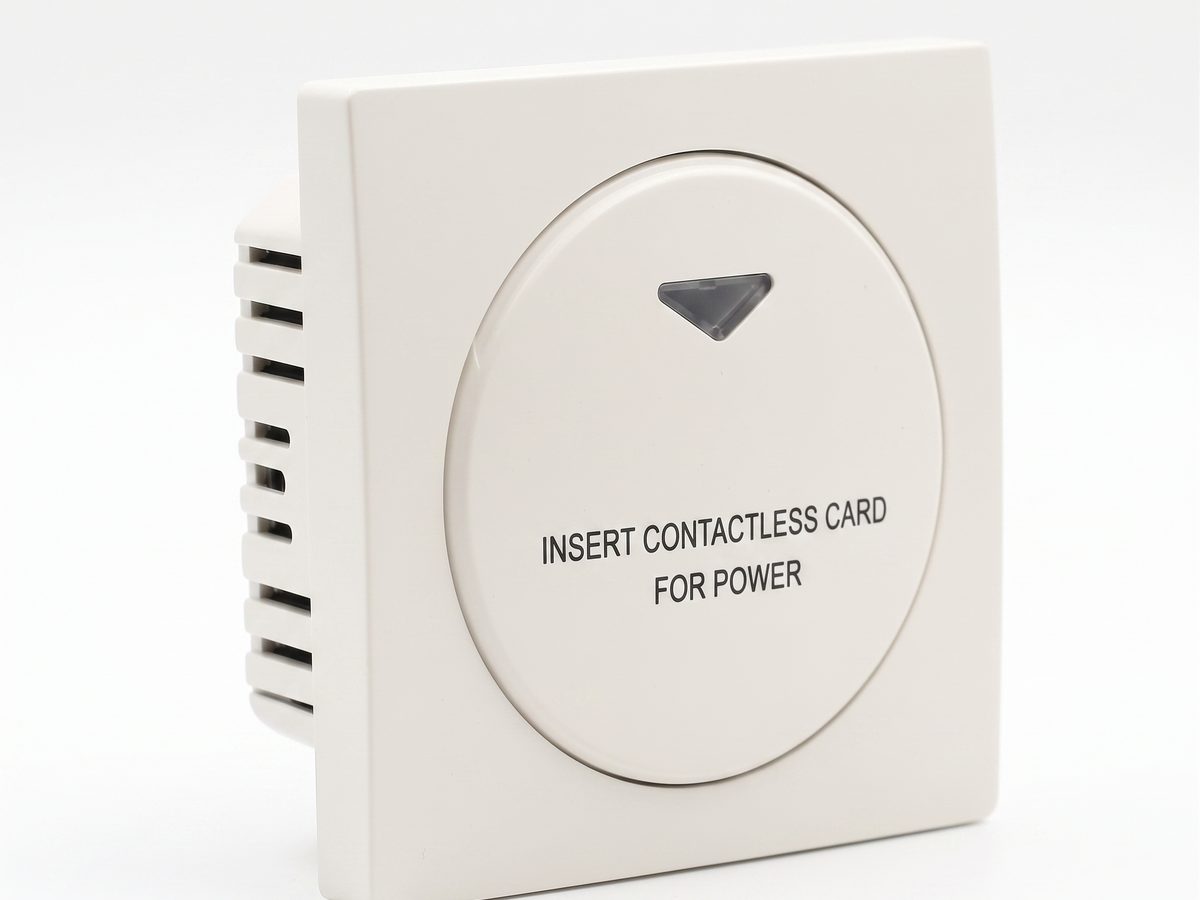
Hotel Key Card Switch — Kontrol Daya Kamar Tamu
Hotel key card switch untuk kontrol daya kamar tamu. Deteksi kartu RFID/IC, masukkan kartu untuk menyalakan daya, penundaan pemadaman saat kartu dilepas. 220V AC, 10A-16A, RS485 atau dry contact. CE RoHS. Pemasok OEM/ODM.
Halaman ini sudah menunjuk ke halaman tersebut sebagai referensi yang direkomendasikan berikutnya.
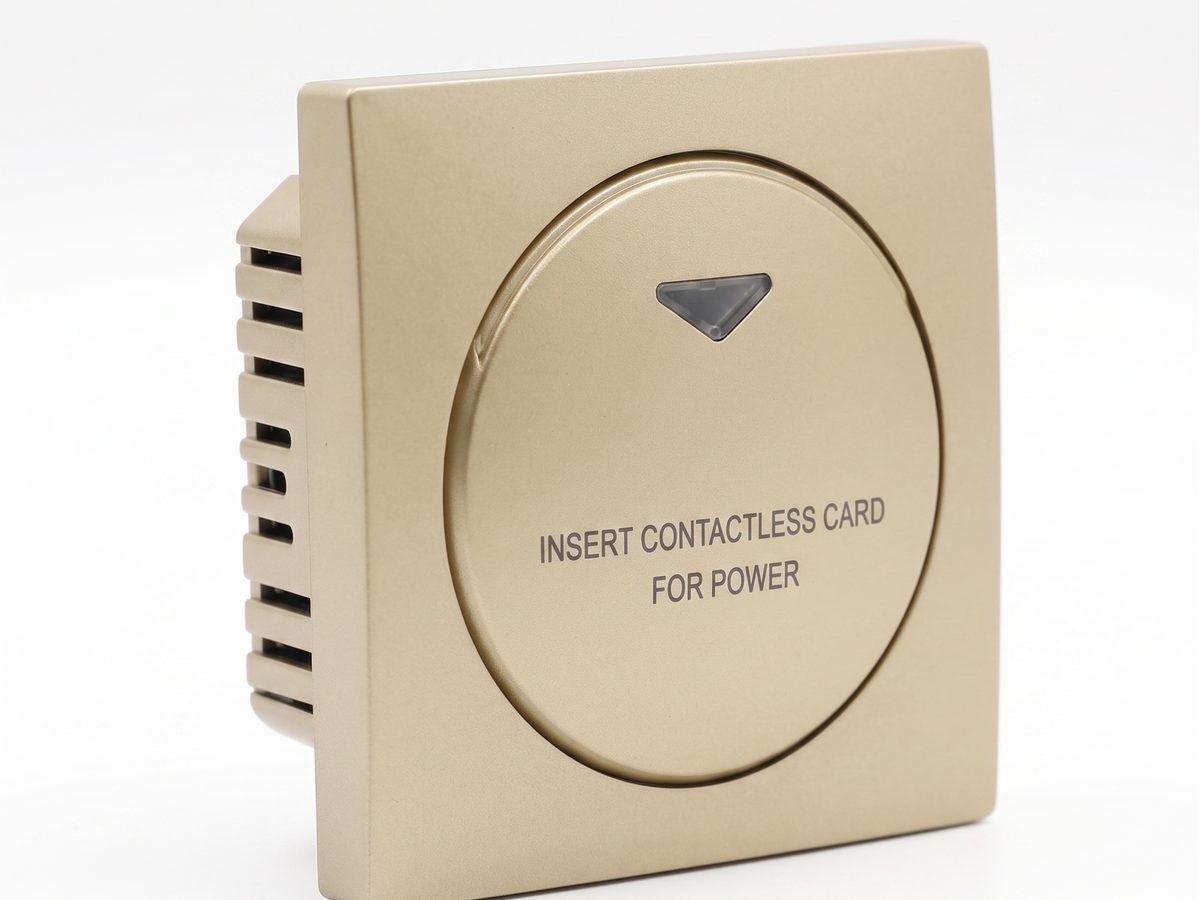
Saklar Hemat Energi Hotel — Kontrol Daya Kamar Masukkan Kartu
Saklar hemat energi hotel: daya nyala saat kartu dimasukkan, mati setelah jeda, integrasi HVAC menghentikan pemborosan kamar kosong. 220V AC, 10A-16A, RS485. CE RoHS.
Halaman ini sudah menunjuk ke halaman tersebut sebagai referensi yang direkomendasikan berikutnya.
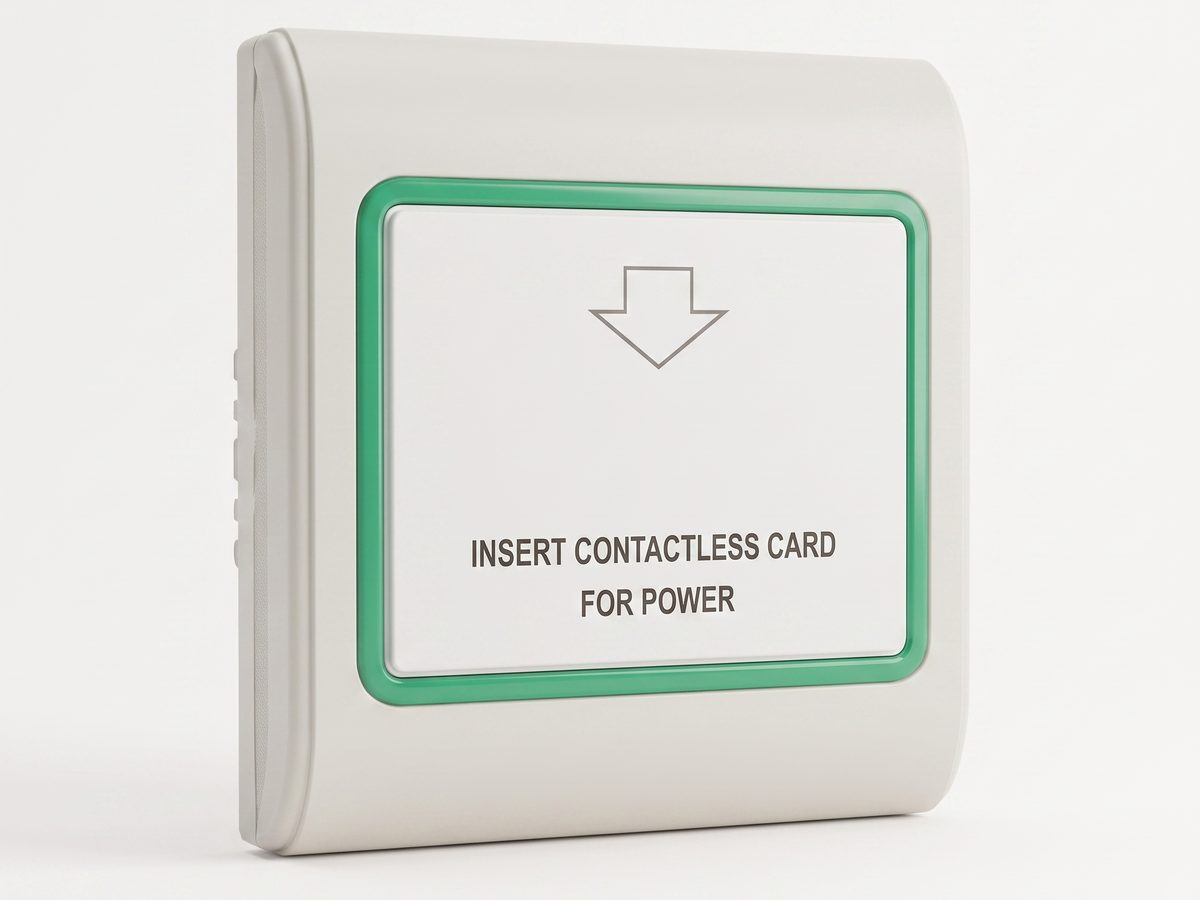
Saklar Kartu Kunci Nirkabel — Baterai atau Bus untuk Retrofit Hotel
Saklar kartu kunci hotel nirkabel untuk proyek retrofit. Opsi wake-up frekuensi rendah atau RS485 nirkabel, opsi tenaga baterai untuk menghindari penarikan kabel ulang, kontrol daya kamar tanpa jalur kabel baru. CE RoHS. Pemasok OEM/ODM.
Halaman ini sudah menunjuk ke halaman tersebut sebagai referensi yang direkomendasikan berikutnya.
Solusi terkait
3Sistem Manajemen Kamar Hotel Berbasis Kartu Listrik
Sistem manajemen kamar hotel praktis untuk mengatur daya listrik kamar melalui saklar kartu kunci, kontaktor, dan aturan operasional yang terdokumentasi.
Halaman tersebut mendukung konteks produk yang sama: Hotel Key Card Switch — Kontrol Daya Kamar Tamu.
Penghematan Energi Hotel dengan Saklar Daya Kamar Tamu
Solusi penghematan energi hotel yang menggunakan daya kamar terkendali kartu untuk mencegah lampu, AC, dan stopkontak terpilih menyala tanpa perlu.
Halaman tersebut mendukung konteks produk yang sama: Hotel Key Card Switch — Kontrol Daya Kamar Tamu.
Kontrol Daya Kamar Hotel dengan Saklar Kartu
Solusi kontrol daya kamar hotel yang praktis untuk mengalihkan pencahayaan, pendingin udara, dan stopkontak kamar tamu dengan kartu kamar resmi.
Halaman tersebut mendukung konteks produk yang sama: Hotel Key Card Switch — Kontrol Daya Kamar Tamu.
Artikel blog terkait
3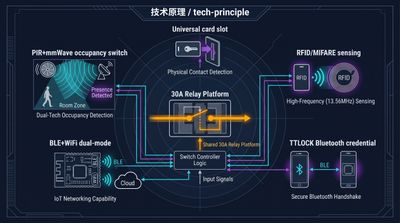
Hotel Key Card Switch: Jenis, Model, dan Cara Memilih
Panduan hotel key card switch mencakup model universal, RFID, TTLOCK, BLE, dan occupancy, serta cara memilih model yang sesuai dengan sistem kartu hotel Anda.
Halaman tersebut mendukung konteks produk yang sama: Hotel Key Card Switch — Kontrol Daya Kamar Tamu.
RFID vs NFC untuk Saklar Kartu Kunci Hotel: Pilih Mana?
RFID vs NFC pada saklar kartu kunci hotel berujung pada jangkauan dan penguncian: RFID 125kHz / 13.56MHz (MIFARE, Temic) adalah standar daya kamar hotel…
Halaman tersebut mendukung konteks produk yang sama: Hotel Key Card Switch — Kontrol Daya Kamar Tamu.
Apa Itu Hotel Key Card Switch dan Cara Hemat Energi Kamar
Hotel key card switch adalah perangkat dinding yang menyalakan listrik kamar saat kartu dimasukkan dan memutusnya saat kartu ditarik, hemat 25–40%…
Halaman tersebut mendukung konteks produk yang sama: Hotel Key Card Switch — Kontrol Daya Kamar Tamu.
Rinci proyek hotel Anda bersama insinyur kami
Kirimkan jumlah kamar, jenis plafon, dan preferensi protokol Anda. Kami akan mengirimkan rencana sampel dan penawaran dalam 24 jam kerja.
- Beralih dari panduan umum ke diskusi produk atau aplikasi.
- Gunakan RFQ saat harga, gambar teknis, MOQ, atau jadwal peluncuran membutuhkan struktur.
- Jaga jalur kontak langsung tetap terlihat untuk klarifikasi cepat dan serah terima.