Jenis Kartu Kunci Hotel: M1, MIFARE, dan Temic Dijelaskan
Jenis kartu kunci hotel — M1 (UID), MIFARE (13.56MHz), dan Temic (125kHz) — menentukan cara saklar kartu kunci mengikat daya ke kamar. Pelajari…
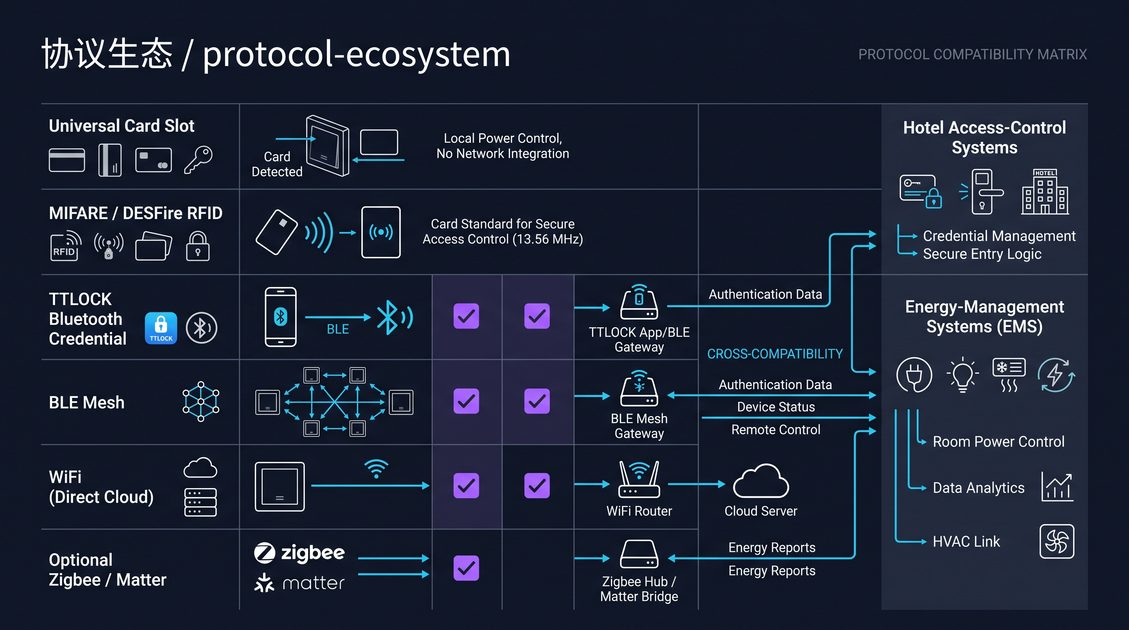
Jenis kartu kunci hotel terbagi menjadi tiga keluarga yang menentukan bagaimana saklar kartu kunci hotel dapat mengikat daya ke sebuah kamar: M1 (hanya UID, dibaca saklar universal mana pun), MIFARE (13.56MHz dengan autentikasi kunci sektor untuk pengikatan kamar), dan Temic (125kHz, standar pengikatan kamar yang lebih sederhana). Jenis kartu adalah input terpenting dalam pemilihan saklar karena menentukan apakah saklar daya kartu kunci sekadar mengaktifkan listrik atau benar-benar menegakkan penghematan energi per kamar. Kartu M1 hanya membawa nomor seri publik, sehingga saklar kartu kunci hotel universal menerima kartu M1 apa pun dan tidak bisa membedakan kamar; kartu MIFARE atau Temic membawa identitas kamar yang bisa divalidasi saklar, sehingga hanya kartu milik kamar itu sendiri yang berfungsi. Memilih di antara jenis kartu kunci hotel berarti memilih antara kenyamanan (M1, tanpa penggantian kartu) dan penegakan aturan (MIFARE/Temic, satu kartu per kamar).
Jenis Kartu Kunci Hotel: Kartu M1 Hanya UID dan Universal
Kartu kunci hotel tipe M1 (kelas Mifare 1K/S50 pada 13.56MHz, atau klon Temic/EM 125kHz) hanya mengekspos UID-nya pada fase anti-collision, tanpa kunci rahasia yang diperiksa. Saklar kartu kunci hotel yang membaca hanya UID menerima kartu itu tanpa syarat, sehingga model universal menjadi retrofit paling mudah: kartu tamu, kartu staf, bahkan kartu transportasi pun bisa mengaktifkan kamar. Konsekuensinya adalah tidak ada pengikatan kamar — tamu yang memegang dua kartu kamar bisa meninggalkan satu di saklar agar kamar itu tetap menyala, diam-diam menggagalkan penghematan energi. Untuk asrama, properti hemat, dan lingkungan dengan kartu campuran yang penggantian kartunya tidak praktis, M1 adalah pilihan pragmatis; bagi hotel yang harus menegakkan penghematan, M1 adalah titik awal untuk ditinggalkan. Saklar daya kartu kunci pada M1 adalah pintu masuk dengan gesekan paling rendah, bukan kendali paling ketat.
MIFARE dan Temic: Kartu Terikat Kamar
MIFARE (13.56MHz) dan Temic (125kHz) adalah jenis kartu kunci hotel yang terikat kamar. Kartu MIFARE menyimpan kunci sektor yang divalidasi penghemat energi RFID sebelum menutup relay, sehingga hanya kartu milik kamar itu sendiri — yang ditulis dengan kunci tersebut — yang berfungsi; kartu kloningan atau kartu kamar lain akan gagal. Temic menawarkan pengikatan kamar yang sama pada 125kHz dengan identifikasi yang lebih sederhana (sering kali tanpa enkripsi), pada biaya komponen yang lebih rendah. Keduanya menghentikan pembagian kartu antar kamar, perilaku yang mengikis penghematan 25–40% yang menjadi alasan saklar kartu kunci hotel dibeli. Saklar daya kartu kunci yang membaca MIFARE atau Temic mengubah kartu menjadi token khusus kamar: daya mengikuti tamu yang benar, bukan siapa pun yang memegang kartu. Sesuaikan penghemat energi RFID dengan kartu yang sudah diterbitkan kunci pintu Anda untuk menghindari proyek penggantian kartu.
Menyesuaikan Jenis Kartu Kunci dengan Saklar Anda
Tentukan saklar berdasarkan jenis kartu kunci hotel yang sudah dipakai properti Anda. Hanya M1 atau campuran → saklar kartu kunci hotel universal (retrofit tercepat, pengikatan terlemah). Sistem pintu MIFARE → saklar daya MIFARE untuk pengikatan kamar berbasis kunci sektor. Temic atau warisan 125kHz → saklar hemat energi Temic. Kunci TTLOCK → saklar kompatibel TTLOCK yang membaca kunci sektor TTLOCK. Jenis kartu yang Anda terbitkan adalah kendalanya; saklar daya kartu kunci harus membacanya, bukan memaksa penggantian. Lihat panduan pembelian saklar hemat energi hotel untuk tabel lengkap per model dan pendalaman MIFARE vs Temic vs 125kHz.
Hotel key card types fall into three families that decide how a hotel key card switch can bind power to a room: M1 (UID-only, read by any universal switch), MIFARE (13.56MHz with sector-key auth for room-binding), and Temic (125kHz, the simpler room-bound standard). The card type is the single most important input to switch selection because it determines whether a key card power switch merely enables power or actually enforces per-room energy savings. An M1 card carries only a public serial, so a universal hotel key card switch accepts any M1 card and cannot tell rooms apart; a MIFARE or Temic card carries room identity the switch can validate, so only the room's own card works. Choosing among hotel key card types is therefore choosing between convenience (M1, no re-card) and enforcement (MIFARE/Temic, one card per room).
Hotel Key Card Types: M1 Cards UID-Only and Universal
A hotel key card of the M1 type (the Mifare 1K/S50 class at 13.56MHz, or a 125kHz Temic/EM clone) exposes only its UID during the anti-collision phase, with no secret key checked. A hotel key card switch reading UID-only accepts that card unconditionally, which makes the universal model the easiest retrofit: any guest card, staff card, or even a transit card activates the room. The cost is zero room-binding — a guest holding two room cards can leave one in a switch to keep that room powered, quietly defeating the energy saving. For dorms, budget properties, and mixed-card estates where re-carding is impractical, M1 is the pragmatic choice; for hotels that must enforce savings, it is the starting point to graduate beyond. A key card power switch on M1 is the lowest-friction entry, not the tightest control.
MIFARE and Temic: Room-Bound Cards
MIFARE (13.56MHz) and Temic (125kHz) are the room-bound hotel key card types. A MIFARE card stores a sector key the RFID energy saver validates before closing the relay, so only the room's own card — written with that key — works; a cloned or wrong-room card fails. Temic offers the same room-binding at 125kHz with simpler (often unencrypted) identification, at lower component cost. Both stop cross-room sharing, which is the behavior that erodes the 25–40% savings a hotel key card switch is bought to deliver. A key card power switch reading MIFARE or Temic turns the card into a room-specific token: power follows the correct guest, not whoever holds a card. Match the RFID energy saver to the card your door locks already issue to avoid a re-card project.
Matching Key Card Types to Your Switch
Specify the switch by the hotel key card types your property already runs. M1-only or mixed → universal hotel key card switch (fastest retrofit, weakest binding). MIFARE door system → MIFARE power switch for sector-key room-binding. Temic or legacy 125kHz → Temic energy switch. TTLOCK locks → TTLOCK compatible switch that reads the TTLOCK sector key. The card type you issue is the constraint; a key card power switch should read it, never force a swap. See the hotel energy saving switch buying guide for the full model-by-model table and the MIFARE vs Temic vs 125kHz deep dive.
blog.inArticleCta.title
blog.inArticleCta.description
contentGraph.title
contentGraph.description
contentGraph.sections.products
3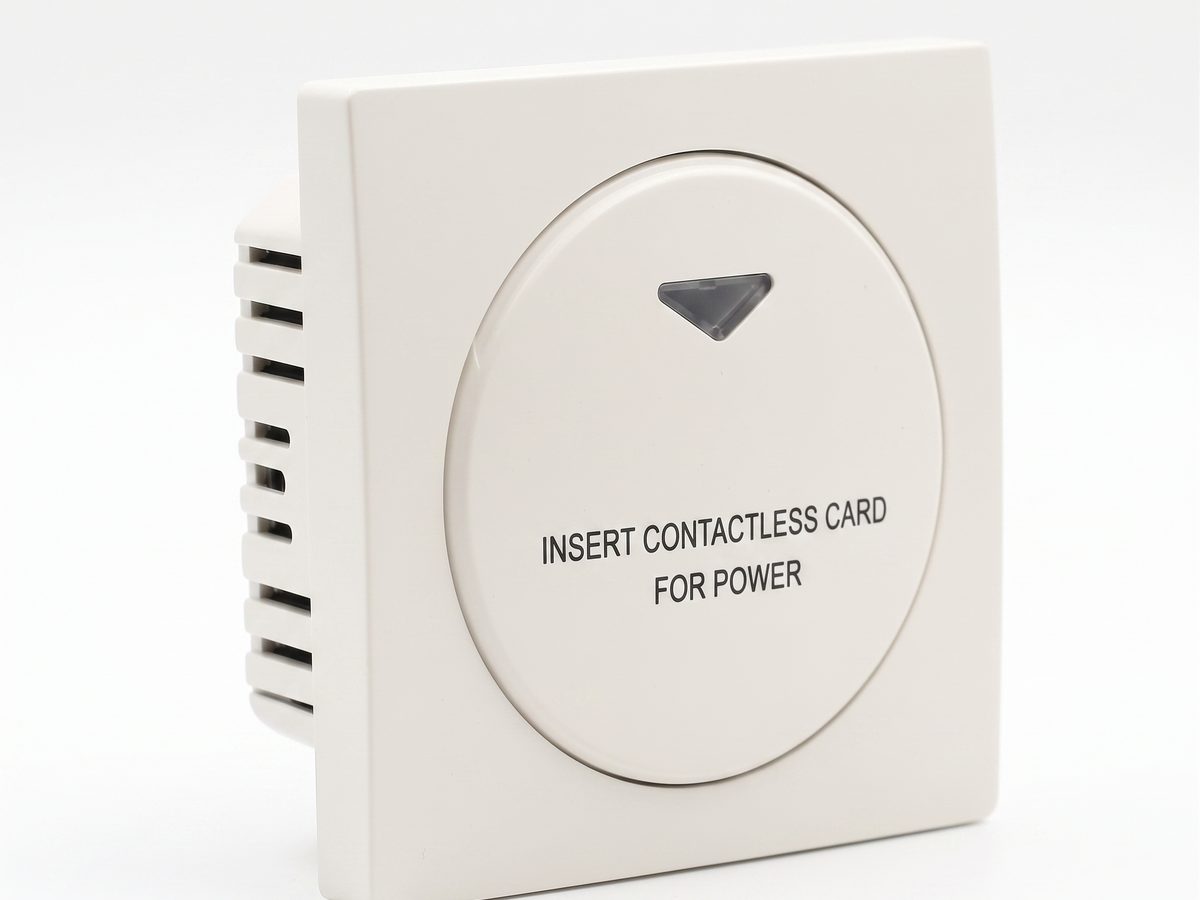
Hotel Key Card Switch — Kontrol Daya Kamar Tamu
Hotel key card switch untuk kontrol daya kamar tamu. Deteksi kartu RFID/IC, masukkan kartu untuk menyalakan daya, penundaan pemadaman saat kartu dilepas. 220V AC, 10A-16A, RS485 atau dry contact. CE RoHS. Pemasok OEM/ODM.
contentGraph.reasons.explicit
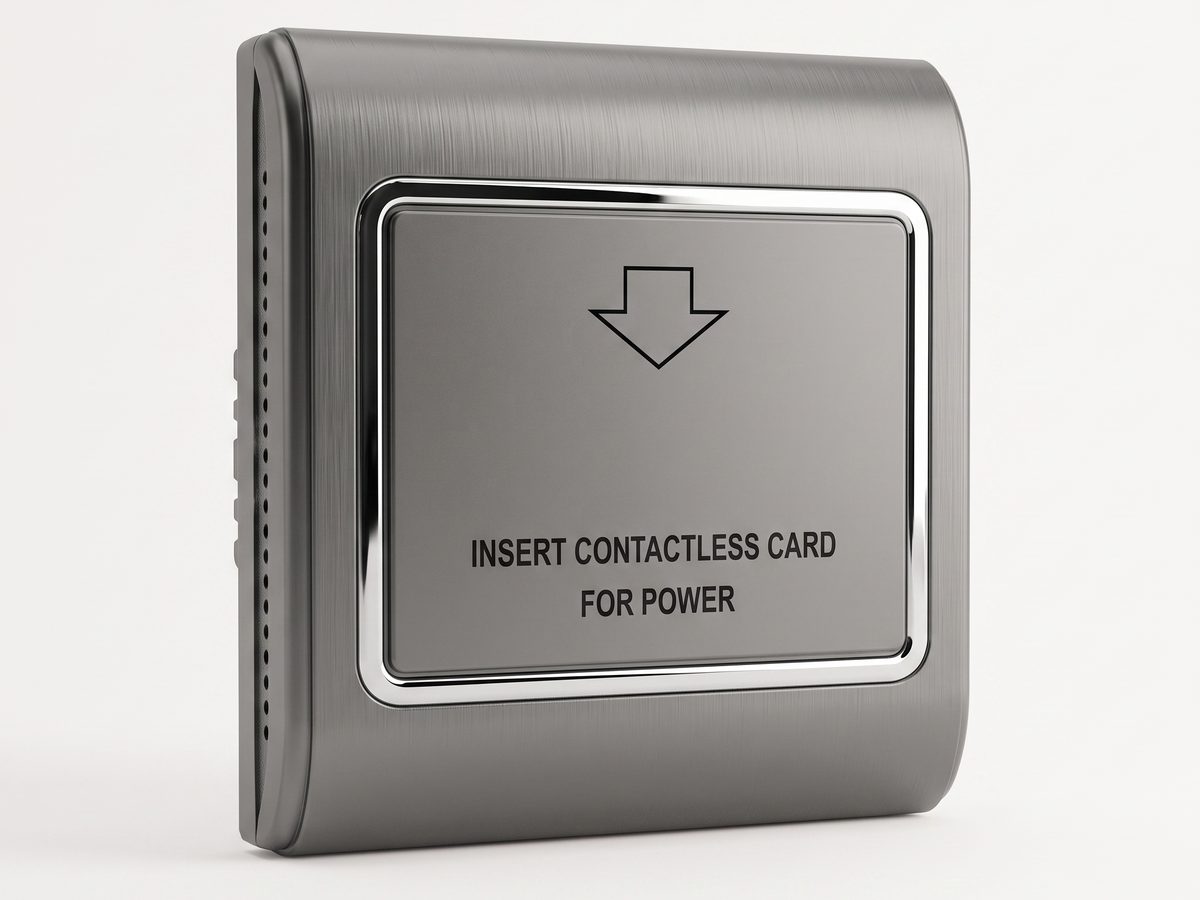
Sakelar Hemat Energi RFID — Kartu MIFARE Ruangan (Tipe B)
Sakelar hemat energi RFID yang mengikat daya ke kartu MIFARE ruangan tertentu. 13.56MHz MIFARE / 125kHz Temic, AC 180–250V, 30A, tunda mati 15 detik.
contentGraph.reasons.explicit
Saklar Energi TTLOCK — Terikat Kamar + Batas Waktu (Tipe C)
Saklar energi kompatibel TTLOCK dengan ID kamar dan batas waktu. Membaca kartu MIFARE TTLOCK / TTHotel via autentikasi sector-key, AC 180–250V, 30A.
contentGraph.reasons.explicit
contentGraph.sections.solutions
3 Panduan Pembelian Saklar Hemat Energi Hotel 2026
Panduan membeli saklar hemat energi hotel: kartu universal, RFID/MIFARE, kompatibel TTLOCK, pintar BLE, dan sensor okupansi. Pilih yang tepat untuk kamar Anda.
contentGraph.reasons.explicit
Sistem Manajemen Kamar Hotel Berbasis Kartu Listrik
Sistem manajemen kamar hotel praktis untuk mengatur daya listrik kamar melalui saklar kartu kunci, kontaktor, dan aturan operasional yang terdokumentasi.
contentGraph.reasons.productContext
Penghematan Energi Hotel dengan Saklar Daya Kamar Tamu
Solusi penghematan energi hotel yang menggunakan daya kamar terkendali kartu untuk mencegah lampu, AC, dan stopkontak terpilih menyala tanpa perlu.
contentGraph.reasons.productContext
contentGraph.sections.blog
3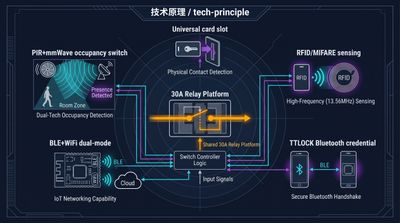
Hotel Key Card Switch: Jenis, Model, dan Cara Memilih
Panduan hotel key card switch mencakup model universal, RFID, TTLOCK, BLE, dan occupancy, serta cara memilih model yang sesuai dengan sistem kartu hotel Anda.
contentGraph.reasons.productContext
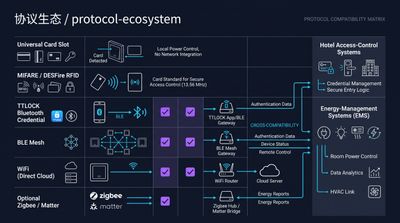
RFID vs NFC untuk Saklar Kartu Kunci Hotel: Pilih Mana?
RFID vs NFC pada saklar kartu kunci hotel berujung pada jangkauan dan penguncian: RFID 125kHz / 13.56MHz (MIFARE, Temic) adalah standar daya kamar hotel…
contentGraph.reasons.productContext
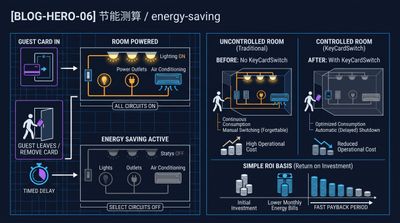
Apa Itu Hotel Key Card Switch dan Cara Hemat Energi Kamar
Hotel key card switch adalah perangkat dinding yang menyalakan listrik kamar saat kartu dimasukkan dan memutusnya saat kartu ditarik, hemat 25–40%…
contentGraph.reasons.productContext
nextStep.blog.title
nextStep.blog.description
- nextStep.blog.points.one
- nextStep.blog.points.two
- nextStep.blog.points.three