FAQ Sakelar Kartu Kunci Hotel: Jawaban Lengkap
FAQ sakelar kartu kunci hotel yang menjawab apa itu, kartu apa yang cocok, cara memasangnya, apa yang dinyalakan, aturan keamanan, dan cara mengatasi masalah.
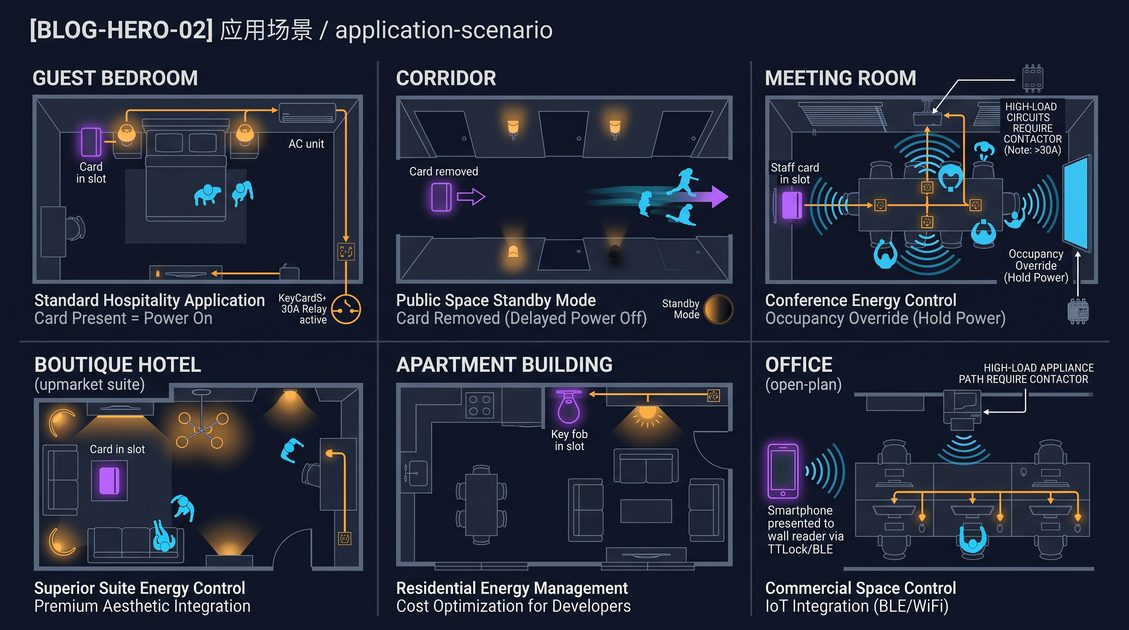
FAQ sakelar kartu kunci hotel adalah referensi berbahasa sederhana yang menghimpun pertanyaan yang paling sering diajukan oleh pemilik hotel, teknisi perawatan, dan pemasang pemula mengenai sakelar kartu kunci hotel, perangkat dinding yang menyalakan kamar tamu hanya selama kartu berada di slotnya. Perangkat ini menutup relay 30A untuk mengalirkan daya ke lampu, pendingin ruangan, dan kotak kontak begitu kartu yang valid dimasukkan, lalu membuka relay tersebut umumnya 15 detik setelah kartu dicabut, sehingga kamar yang tidak terisi berhenti menarik daya siaga. FAQ sakelar kartu kunci hotel menjawab bagaimana pembaca memvalidasi kartu, jenis kartu apa yang berfungsi, bagaimana unit dipasang ke kotak single-gang, beban apa yang dapat ditangani relay, apa aturan keamanannya, dan cara memecahkan masalah unit yang tidak mau memutus. Karena jawabannya bersifat umum dan berada di tingkat perangkat, FAQ yang sama dapat melayani properti dengan sistem kartu berbeda tanpa mengasumsikan merek tertentu, dan dapat dijadikan lembar pelatihan bagi staf.
FAQ Sakelar Kartu Kunci Hotel: Apa Itu
Dalam FAQ sakelar kartu kunci hotel ini, pertanyaan pertama hanyalah apa perangkat itu dan mengapa hotel memasangnya. Sakelar kartu kunci hotel adalah panel dinding pasang tenggelam, biasanya 86x86x48mm, ditempatkan di samping pintu kamar tamu, dengan celah sempit tempat tamu memasukkan kartu kamar saat masuk. Di dalam panel terdapat pembaca kartu, mikrokontroler kecil, dan relay elektromekanis besar dengan rating sekitar 30A pada AC. Ketika pembaca menerima kartu, relay menutup dan daya mengalir ke kamar; ketika kartu keluar dari slot, rangkaian pewaktu menahan relay selama penundaan yang telah ditetapkan, lazimnya 15 detik, lalu membukanya dan memutus daya ke rangkaian yang dikendalikan. Rangkaian yang dikendalikan umumnya mencakup penerangan, unit pendingin ruangan, dan kotak kontak dinding sekaligus, sehingga kamar yang kosong berhenti menarik daya untuk beban terbesar. Karena tidak ada yang memerlukan koneksi jaringan atau pengelolaan jarak jauh, seluruh fungsi terjadi secara lokal di panel, dan perangkat tetap bekerja bahkan saat pasokan listrik utama hilang karena kartu menempati slot secara fisik. Inilah alasan perangkat ini menjadi langkah pertama yang umum dalam rutinitas energi kamar manual, bukan proyek modal besar.
FAQ Sakelar Kartu Kunci Hotel: Cara Kerja
Prinsip kerja di balik pertanyaan FAQ sakelar kartu kunci hotel adalah siklus masuk-dan-putus yang mengubah kartu fisik menjadi izin menarik daya. Tamu memasukkan kartu dengan sisi depan menghadap ke dalam slot; pembaca mendeteksi kartu dan membaca identifiernya, baik UID mentah dari chip memori maupun nilai sektor terlindungi, lalu meneruskannya ke mikrokontroler. Jika pemeriksaan lolos, pengendali memberi energi pada kumparan relay 30A, menutup kontak arus tinggi yang berada antara titik distribusi kamar dan beban kamar. Kamar kini memiliki daya aktif dan semua peralatan yang terhubung dapat berjalan. Saat check-out, tamu cukup mengambil kartu dari slot dan pendeteksi kehadiran pada pembaca menjadi idle. Pengendali kemudian menjalankan pewaktu penundaan, menjaga daya tetap hidup selama 15 detik itu agar tamu tidak tertinggal dalam gelap saat mengumpulkan bagasi, dan pada akhir jendela waktu tersebut relay kehilangan energi dan rangkaian terputus. Seluruh urutan bersifat lokal, deterministik, dan dapat diulang, serta menghasilkan pola kamar gelap dan sunyi yang konsisten setiap kali kartu dicabut.
FAQ Sakelar Kartu Kunci Hotel: Kartu Apa yang Berfungsi
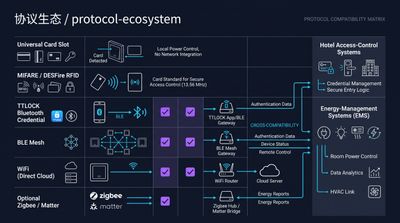
FAQ sakelar kartu kunci hotel harus membahas kompatibilitas karena teknologi kartu adalah sumber kebingungan utama bagi pembeli. Pembaca di dalam panel dibangun di sekitar standar kartu tertentu, dan standar itulah yang menentukan kartu mana yang akan diterima sakelar. Model universal hanya melakukan pembacaan UID dan menerima kartu M1 tanpa enkripsi apa pun, itulah sebabnya banyak properti bisa memulai dengan kartu yang sudah mereka miliki. Model RFID dan TTLOCK membaca kartu MIFARE atau Temic dan membandingkan kunci sektor atau identitas kamar, sehingga hanya kartu yang ditetapkan untuk kamar tersebut yang akan menutup relay. Perbedaan logika pembacaan ini mengubah perilaku secara bermakna: unit universal akan menyalakan kamar dengan kartu M1 apa pun, sementara sistem terenkripsi menolak kartu dari kamar lain. Frekuensi kartu juga penting, dengan 125kHz nirkontak dan 13.56MHz MIFARE sebagai dua keluarga yang umum, dan pembaca harus cocok dengan keluarga kartu yang sudah beredar. Untuk hotel yang belum memiliki sistem kartu sama sekali, model universal adalah jalur tercepat, sedangkan properti yang meningkatkan kartu MIFARE yang sudah ada harus mencocokkan pembaca dengan kartu tersebut.
| Logika pembaca | Kartu tipikal | Ikatan kamar | Apa yang menyalakan kamar |
|---|---|---|---|
| Hanya UID (universal) | M1 tanpa enkripsi apa pun | Tidak ada | Kartu M1 apa pun yang kompatibel dengan pembaca |
| Kunci sektor (RFID) | MIFARE / Temic | Khusus kamar | Hanya kartu yang ditetapkan untuk kamar tersebut |
| Kunci sektor + waktu | TTLOCK MIFARE | Kamar + jendela waktu | Kartu kamar tersebut selama masa menginapnya |
| Frekuensi 125kHz | 125kHz nirkontak | Bergantung pada logika | Kartu 125kHz yang cocok |
| Frekuensi 13.56MHz | MIFARE | Bergantung pada logika | Kartu MIFARE yang cocok |
FAQ Sakelar Kartu Kunci Hotel: Pemasangan dan Pengkabelan
Pemasangan dan pengkabelan selalu muncul dalam FAQ sakelar kartu kunci hotel karena sebagian besar retrofit memanfaatkan lubang dinding yang sudah ada. Unit dirancang untuk kotak persimpangan single-gang standar dengan dimensi dalam sekitar 74x74mm dan kedalaman sekitar 48mm, dengan sekitar 29mm bodi panel tertanam ke dalam dinding. Pengkabelan sederhana: satu suplai fasa mendarat di terminal umum relay, garis keluar tersakelar berjalan dari kontak normally-open ke rangkaian kamar, dan pembaca serta pengendali mengambil suplai operasi kecil dari suplai yang sama. Karena relay 30A membawa seluruh beban kamar, pemasang harus memastikan circuit breaker kamar memiliki rating di bawah relay, dan untuk properti yang menginginkan kontaktor arus tinggi tersendiri, relay eksternal dapat ditambahkan dan digerakkan oleh keluaran kendali panel. Tegangan penting: unit standar menerima AC 180-250V, dan tersedia varian 110V untuk pasar yang membutuhkannya. Pengkabelan tercakup dengan memadai bahkan saat kamar terpasang dua atau tiga kabel, dan manual mencakup langkah pelabelan agar rangkaian yang dikendalikan setiap panel dapat dilacak ke titik distribusi.
FAQ Sakelar Kartu Kunci Hotel: Keamanan dan Beban
Keamanan adalah bagian dari FAQ sakelar kartu kunci hotel yang paling sering ditanyakan paling akhir padahal seharusnya paling awal, karena perangkat yang mensakelar seluruh beban kamar membutuhkan rating yang lega. Relay dispesifikasikan pada 30A AC agar beberapa peralatan dan lampu dapat berbagi satu rangkaian terkendali tanpa membebani kontaknya. Pemasang harus menjumlahkan arus rating seluruh beban terkendali dan menjaga total di bawah rating relay serta di bawah rating sirkuit cabang. Karena pendingin ruangan dan kulkas menarik lonjakan saat start, jumlah beban kontinu harus dijaga dengan margin di bawah batas relay, bukan tepat di batasnya. Panel terbuat dari ABS tahan api dan tenggelam penuh ke dalam kotak sehingga tidak ada logam bertegangan yang terekspos di balik pelat muka. Sekring atau circuit breaker dengan rating sesuai di distribusi kamar melindungi pengkabelan, dan unit direkayasa sedemikian rupa sehingga pencabutan kartu selalu mengembalikan rangkaian ke keadaan mati. Jika beban kamar suatu saat melebihi relay, kontaktor eksternal adalah jawaban yang benar, bukan relay internal yang lebih besar.
| Beban terkendali | Tarikan steady tipikal | Catatan untuk penentuan ukuran |
|---|---|---|
| Penerangan kamar LED | 0.05-0.2A | Porsi kecil dari kapasitas relay |
| Unit AC split | 3-9A | Beban tunggal terbesar, waspadai lonjakan start |
| Kotak kontak dinding (TV, ketel listrik) | 0.1-3A | Jumlahkan per kotak kontak |
| Kulkas / mini-bar | 0.5-1.5A | Lonjakan start motor yang sering |
| Pemanas air listrik | 8-13A | Validasi terhadap rating cabang terlebih dahulu |
FAQ Sakelar Kartu Kunci Hotel: Pengalaman Tamu
FAQ sakelar kartu kunci hotel juga membahas sisi tamu, karena perilaku perangkat dalam penggunaan sehari-hari menentukan beban kerja staf dan kepuasan tamu. Tamu memasukkan kartu saat masuk, dan dalam waktu sekitar satu detik lampu kamar menyala; tanpa tombol, kode, atau aplikasi. Saat meninggalkan kamar, tamu mengambil kartu dan penundaan 15 detik menjaga kamar tetap terang dan bertegangan cukup lama untuk melangkah keluar dan mengunci pintu, lalu semuanya mati. Tamu yang mencabut kartu dan segera kembali akan melihat kamar menyala kembali; setiap penyisipan memulai siklus penuh dari awal. Jika tamu membiarkan kartu di slot sepanjang hari untuk petugas kebersihan atau demi kenyamanan, kamar tetap bertegangan, perilaku yang layak dijelaskan dalam instruksi kedatangan. Sebagian tamu mengira kartu juga diperlukan untuk kunci pintu, tetapi sakelar dan kunci adalah perangkat terpisah, dan sakelar hanya peduli pada ada atau tidaknya kartu di slotnya sendiri. Perangkat ini tidak pernah mengubah cara tamu menggunakan kunci kamar; ia hanya menambah satu langkah penyisipan kecil di pintu.
FAQ Sakelar Kartu Kunci Hotel: Pemecahan Masalah
Pemecahan masalah adalah tempat FAQ sakelar kartu kunci hotel membuktikan nilainya, karena sebagian besar kerusakan sederhana begitu urutannya dipahami. Jika kamar tidak memiliki daya setelah kartu dimasukkan, pemeriksaan pertama adalah relay dan breaker cabang, bukan panel. Pastikan rangkaian terkendali menyala, lalu masukkan kartu yang terbukti baik dan dengarkan klik relay; unit yang senyap menunjukkan gangguan pada pembaca atau suplai. Jika kamar tidak mau mati saat kartu dicabut, pewaktu penundaan mungkin masih menghitung, dan prosedur yang benar adalah menunggu 15 detik sebelum menilai unit. Jika unit menolak kartu yang berfungsi di tempat lain, kartu itu kemungkinan tidak ditetapkan untuk kamar tersebut atau berasal dari keluarga kartu berbeda. Jika relay menutup tetapi separuh kamar tetap gelap, kerusakan ada di hilir pada kotak kontak atau lampu, bukan pada sakelar. Panel yang terasa hangat di bawah beban biasanya berarti total tarikan terlalu dekat dengan batas relay. Sebagian besar diagnosis bermuara pada memastikan suplai, memastikan kartu, memastikan klik, dan memastikan bagian hilir.
FAQ Sakelar Kartu Kunci Hotel: Memilih Model
Pemilihan model adalah keputusan penutup dalam setiap FAQ sakelar kartu kunci hotel dan harus didorong oleh kartu serta kebiasaan yang sudah ada di gedung. Properti tanpa sistem kartu, atau dengan tumpukan kartu M1 tanpa enkripsi yang bercampur, sebaiknya memilih model universal yang membaca kartu M1 apa pun tanpa perlu pemrograman ulang. Properti yang sudah menerbitkan kartu MIFARE atau Temic per kamar sebaiknya memilih unit penghemat energi RFID agar tidak ada kartu yang dapat menyalakan dua kamar sekaligus. Properti yang telah memasang kunci kamar elektronik keluarga TTLOCK sebaiknya memilih unit kompatibel TTLOCK yang membaca kartu yang sama dan menambahkan batas waktu berbasis masa menginap. Program kamar terhubung yang menginginkan data penggunaan sebaiknya memilih model pintar BLE yang membuka lewat ponsel dan merekam aktivitas. Karena setiap model berbagi relay 30A yang sama, penundaan 15 detik, dan panel 86x86x48mm yang sama, keputusan sakelar tidak pernah mengubah instalasi listrik; ia hanya mengubah seberapa ketat daya diikat pada kartu. Tegangan lokal dan jumlah panel per lantai adalah faktor terakhir yang perlu dicantumkan dalam penawaran.
FAQ Sakelar Kartu Kunci Hotel: Daftar Periksa Pemasangan
FAQ sakelar kartu kunci hotel diakhiri dengan daftar periksa pemasangan praktis agar jawabannya diterjemahkan menjadi langkah di lapangan. Sebelum memutus suplai apa pun, pastikan tegangan lokal dan pilih varian yang benar, lalu matikan kamar di titik distribusi dan verifikasi dengan alat uji. Pasang suplai fasa di terminal umum relay dan hubungkan garis keluar tersakelar dari kontak normally-open ke rangkaian kamar, dengan pasangan kendali yang tertata rapi. Pasang panel ke kotak single-gang, dudukkan rata, kencangkan, dan beri label pada rangkaian terkendali agar perawatan dapat melacaknya. Masukkan kartu yang terbukti baik dan pastikan relay berklik dalam waktu sekitar satu detik dan kamar menyala. Cabut kartu dan ukur penundaan, pastikan rangkaian terputus setelah jendela 15 detik. Ulangi uji dengan kartu asli kamar, dan terakhir jalankan uji beban dengan lampu dummy sebelum menyerahkan kamar kepada tamu. Catatan singkat di log kamar berisi model panel dan tanggal menuntaskan pekerjaan dan memberi teknisi berikutnya titik awal yang bersih.
FAQ Sakelar Kartu Kunci Hotel: Penundaan dan Pewaktuan
Pewaktuan adalah poin halus dalam FAQ sakelar kartu kunci hotel karena tamu dan staf sama-sama memperhatikan detik-detik setelah kartu keluar dari slot. Penundaan pabrik biasanya 15 detik, dan itu ada agar tamu yang mencabut kartu dan menggapai pegangan pintu tidak tiba-tiba berdiri dalam kegelapan. Selama jendela itu relay tetap tertutup dan kamar tetap bertegangan, lalu pengendali membuka rangkaian. Penundaan adalah pewaktu tetap, bukan sensor, sehingga tidak berusaha mendeteksi apakah ada orang di dalam; ia hanya menghitung sejak kartu dicabut. Properti yang menginginkan jendela lebih panjang atau lebih pendek dapat memesan unit dengan preset berbeda, karena pewaktuan diatur saat produksi, bukan disesuaikan di lapangan pada sebagian besar model. Staf sebaiknya menjelaskan kepada tamu bahwa lampu mungkin tetap menyala beberapa detik setelah kartu diambil dan itu normal. Jika tamu melihat kamar langsung gelap saat kartu dicabut, unit mungkin memiliki pengaturan tanpa penundaan atau mengalami kerusakan, dan spesifikasi penundaan harus diperiksa terhadap lembar pesanan. Pewaktu adalah potongan perilaku kecil yang membentuk keseluruhan persepsi tamu terhadap perangkat ini.
FAQ Sakelar Kartu Kunci Hotel: Konsumsi Daya Panel
FAQ sakelar kartu kunci hotel kadang ditanya berapa daya yang digunakan panel itu sendiri, dan jawaban jujurnya adalah panel merupakan beban yang dapat diabaikan karena pembaca dan pengendali berjalan pada suplai internal kecil. Mikrokontroler dan pembaca kartu hanya menarik miliampere saat idle, dan kumparan relay hanya diberi energi selama kartu berada di dalam. Dalam keadaan istirahat, tanpa kartu di slot, unit hanya menarik cukup untuk menjaga pengendali hidup dan merasakan penyisipan kartu, sebagian kecil dari satu watt. Dalam keadaan aktif, dengan kartu dimasukkan dan relay tertutup, kumparan menambah tarikan kecilnya sendiri, masih jauh di bawah wattase satu lampu LED saja. Ini penting dalam diskusi energi karena perangkat tidak menukar satu beban besar dengan beban besar lain; konsumsi panel sendiri secara efektif tak terlihat dibanding beban kamar yang ia kendalikan. Perkiraan apa pun atas nilai mematikan kamar harus menghitung tarikan panel sebagai mendekati nol dan mengatribusikan penghematan pada penerangan, pendingin ruangan, dan kotak kontak yang berhenti berjalan. Kesimpulan teknisnya adalah FAQ sakelar kartu kunci hotel harus meyakinkan pembaca bahwa obatnya tidak lebih mahal dari keluhannya.
FAQ Sakelar Kartu Kunci Hotel: Panel Tegangan Utama vs Tegangan Rendah
Satu pembedaan yang berulang dalam FAQ sakelar kartu kunci hotel adalah antara panel tegangan utama yang mensakelar kamar secara langsung dan panel tegangan rendah yang menggerakkan relay atau kontaktor eksternal. Unit tegangan utama memuat relay 30A itu sendiri dan mensakelar seluruh rangkaian kamar dari dalam panel 86x86x48mm, pilihan umum untuk sebagian besar kamar retrofit. Versi tegangan rendah atau kendali justru membawa pasangan kendali ke kontaktor terpisah yang dipasang di papan distribusi, berguna saat beban kamar sangat besar, jarak pengkabelan panjang, atau properti sudah menggunakan kontaktor untuk alasan lain. Kedua pendekatan terasa identik bagi tamu; hanya selubung elemen pensakelar yang berbeda. Keputusan di antara keduanya bergantung pada tata letak listrik kamar dan kapasitas titik distribusi yang ada. Untuk mayoritas kamar tamu, unit tegangan utama lebih sederhana, lebih murah dipasang, dan sepenuhnya memadai. FAQ sakelar kartu kunci hotel harus membantu pemasang mengenali kapan jalur tegangan rendah diperlukan, bukan sekadar mengasumsikan kotak selalu memuat relay arus tinggi.
FAQ Sakelar Kartu Kunci Hotel: Penyisipan Beberapa Kartu
Penyisipan beberapa kartu adalah topik praktis FAQ sakelar kartu kunci hotel karena tamu sering membawa lebih dari satu kartu, atau satu keluarga berbagi kamar. Unit universal membaca kartu M1 tanpa enkripsi apa pun, sehingga tamu yang memasukkan kartu kedua dari kamar yang sama juga akan menyalakan kamar, dan bahkan kartu dari kamar lain dalam instalasi universal bisa berfungsi karena pemeriksaannya hanyalah bahwa ada kartu. Unit RFID yang terikat pada kamar tertentu akan menerima kartu yang ditetapkan untuk kamar itu dan menolak kartu dari kamar lain, perilaku yang dipilih properti ketika ingin mencegah satu kartu menyalakan beberapa kamar. Beberapa kartu sah untuk kamar yang sama adalah hal normal dan semuanya akan berfungsi, karena ikatannya pada kamar, bukan pada satu kartu fisik tunggal. Pertanyaan apakah satu kartu boleh menyalakan lebih dari satu kamar adalah tepat keputusan antara pembaca universal dan terenkripsi. FAQ sakelar kartu kunci hotel harus menyatakan dengan jelas bahwa universal berarti permisif dan terenkripsi berarti per kamar, lalu membiarkan properti memilih tingkat keketatan yang diinginkan.
FAQ Sakelar Kartu Kunci Hotel: Bagaimana Perangkat Membantu Hemat Energi
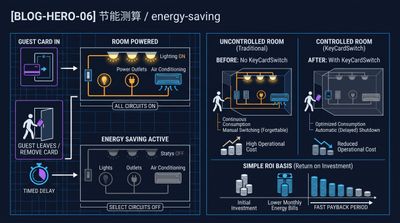
Pertanyaan energi berada di jantung FAQ sakelar kartu kunci hotel karena perangkat ini hadir untuk memotong daya terbuang pada kamar kosong. Mekanismenya sederhana: kamar tanpa kartu tidak memiliki jalur bagi rangkaian terkendali, sehingga penerangan, pendingin ruangan, dan kotak kontak tidak dapat berjalan. Pendingin ruangan adalah beban dominan di sebagian besar iklim, dan AC yang dibiarkan menyala di kamar kosong menarik daya terus-menerus sampai seseorang mematikannya atau sakelar memutuskannya. Sakelar menghilangkan kebutuhan tamu atau petugas kebersihan mengingat untuk mematikan semuanya saat check-out, karena begitu kartu keluar dari slot, rangkaian terputus setelah penundaan singkat. Hasilnya, kamar kosong menjadi gelap dan sunyi secara bawaan, bukan karena disiplin. Penting membingkai ini dengan benar: sakelar tidak membuat peralatan apa pun lebih efisien, ia hanya memastikan peralatan tidak berjalan saat tidak ada orang di kamar. Penghematan karenanya sebanding dengan seberapa sering kamar akan dibiarkan bertegangan saat kosong, dan didorong oleh selang waktu antara check-out dan pembersihan berikutnya atau kedatangan tamu berikutnya.
FAQ Sakelar Kartu Kunci Hotel: Pintas Kebersihan dan Staf
Kebersihan adalah kekhawatiran nyata dalam FAQ sakelar kartu kunci hotel karena petugas kebersihan membutuhkan daya untuk bekerja di kamar yang mungkin sudah dipesan untuk tamu berikutnya. Saat petugas masuk ke kamar kosong untuk membersihkan, kamar gelap karena tidak ada kartu di slot, dan petugas membutuhkan lampu serta mungkin daya untuk peralatan. Jawaban umum adalah kebersihan membawa kartu layanan yang valid untuk slot, dan memasukkan kartu itu menyalakan kamar selama pembersihan berlangsung, lalu kartu dicabut dan kamar mati kembali. Properti yang ingin memisahkan daya kebersihan dari daya tamu dapat mengawirkan kotak kontak agar tidak berada di rangkaian terkendali, meninggalkan penerangan dan AC pada sakelar sementara sambungan kebersihan tetap hidup. Pilihan antara kedua tata letak ini bergantung pada apakah properti lebih menyukai pemutusan bersih tunggal atau pasokan kebersihan yang persisten. FAQ sakelar kartu kunci hotel harus mengakui alur kerja kebersihan secara eksplisit, karena perangkat yang mengabaikan petugas kebersihan akan dipintas di lapangan, dan perangkat yang cocok dengan alur kerja menjadi bagian dari rutinitas harian tanpa perlawanan.
FAQ Sakelar Kartu Kunci Hotel: Retrofit Kamar yang Sudah Ada
Retrofit adalah penerapan paling umum dalam FAQ sakelar kartu kunci hotel karena sedikit properti yang dibangun dengan sakelar ini sejak hari pertama. Retrofit dimulai dengan memeriksa lubang dinding yang ada, karena sebagian besar kamar sudah memiliki sakelar lampu atau kotak sambungan berformat 86x86 di dekat pintu. Jika lubang cocok dengan kotak single-gang, panel langsung dipasang tanpa pekerjaan tambahan pada struktur kamar. Jika kamar tidak memiliki kotak yang cocok di dekat pintu, kotak permukaan pendek atau kotak tenggelam ditambahkan, satu-satunya bagian pekerjaan yang menyentuh struktur kamar. Rangkaian terkendali diidentifikasi di papan distribusi agar pemasang tahu cabang mana yang akan disakelar relay, dan panel dikawirkan dengan suplai fasa serta garis keluar tersakelar. Karena setiap model menggunakan relay 30A dan panel yang sama, retrofit tidak bergantung pada sistem kartu; kotak yang sama menerima unit universal, RFID, TTLOCK, atau BLE. FAQ sakelar kartu kunci hotel harus menutup poin ini dengan mencatat bahwa pekerjaan listriknya identik dengan penggantian sakelar dan berada dalam lingkup teknisi listrik berkualifikasi di lokasi.
FAQ Sakelar Kartu Kunci Hotel: Pemesanan dan Kuantitas
Pertanyaan pemesanan menutup FAQ sakelar kartu kunci hotel dengan angka-angka yang dibutuhkan pembeli sebelum mengirim permintaan. Kuantitas ditentukan oleh jumlah kamar tamu yang memerlukan panel, ditambah margin cadangan untuk pengujian, pelabelan, dan perbaikan masa depan, dengan persentase kecil disimpan sebagai cadangan menjadi kebiasaan perencanaan yang umum. Pesanan harus menyatakan tegangan lokal, finishing panel seperti putih atau silver, logika kartu yang diperlukan, dan pengaturan penundaan jika pewaktuan non-standar diinginkan. Unit sampel biasanya dipesan lebih dulu agar pembeli dapat mengujinya terhadap kartu asli kamar dan beban nyata sebelum mewajibkan seluruh properti. Baris pesanan harus mengonfirmasi rating relay agar teknisi listrik dapat mencocokkan circuit breaker cabang. Karena panel dikirim untuk platform relay 30A bersama, properti dapat membakukan satu model dan menyimpan satu kartu cadangan di setiap lantai. FAQ sakelar kartu kunci hotel yang mencakup pemesanan mengubah panduan teknis menjadi lembar pengadaan lengkap, sehingga pembeli pergi dengan jawaban atas bagaimana dan apa yang harus dibeli.
FAQ Sakelar Kartu Kunci Hotel: Kotak Kontak dan Beban Prioritas
Kotak kontak adalah detail yang sering mengejutkan pembaca FAQ sakelar kartu kunci hotel karena tidak semua perangkat di kamar sebaiknya berada di rangkaian tersakelar. Relay mengendalikan cabang apa pun yang dialirkan pemasang melaluinya, dan properti memutuskan sambungan mana yang berbagi cabang itu. Lampu dan pendingin ruangan adalah dua beban yang paling banyak diinginkan tersakelar, karena keduanya terbesar dan paling sering dibiarkan menyala. Kotak kontak dinding untuk televisi, pengisi daya ponsel, atau ketel listrik biasanya juga tersakelar sehingga mati bersama kamar. Ada satu kelas sambungan yang sengaja dikeluarkan dari rangkaian terkendali oleh banyak properti: sambungan yang melayani kulkas mini-bar atau peralatan kecil yang harus tetap bertegangan demi keamanan atau stok. Kulkas yang diputus saat check-out akan membiarkan stok yang mudah busuk mencair, sehingga sambungannya dikawir di depan sakelar. Pemikiran yang sama berlaku untuk basis telepon atau detektor asap, yang harus tetap bertegangan apa pun kondisi kartu. FAQ sakelar kartu kunci hotel karenanya harus membingkai pertanyaan sebagai apa yang disakelar dan apa yang dilindungi, bukan berasumsi seluruh kamar menjadi gelap.
FAQ Sakelar Kartu Kunci Hotel: Beban Musiman dan Iklim
Beban musiman masuk ke FAQ sakelar kartu kunci hotel karena nilai pensakelarannya berubah mengikuti cuaca. Di iklim panas, pendingin ruangan adalah beban dominan kamar tamu, dan AC yang dibiarkan menyala di kamar kosong antara check-out dan pembersihan adalah pemborosan murni selama berjam-jam, sehingga sakelar mencegah jenis pemborosan terpanjang dan termahal. Pada musim sedang, beban pemanas atau pendingin lebih kecil, dan beban penerangan serta sambungan menjadi porsi lebih besar dari apa yang dihilangkan sakelar, yang menurunkan dampak harian perangkat tetapi tidak mengubah prinsipnya. Di iklim dingin, kamar tanpa kartu cukup mematikan pemanas, dan pemanas yang dibiarkan menyala di kamar kosong adalah masalah nyata baik untuk pemborosan maupun keamanan. FAQ sakelar kartu kunci hotel yang mengakui iklim membantu pembeli menetapkan ekspektasi: perangkat selalu melakukan pekerjaan yang sama, tetapi besarnya efek mengikuti seberapa banyak daya yang akan ditarik kamar saat kosong. Inilah alasan panel yang sama dispesifikasikan di wilayah yang sangat berbeda; perangkat kerasnya universal, dan hanya besaran hasilnya yang bergerak mengikuti musim.
FAQ Sakelar Kartu Kunci Hotel: Kesehatan dan Umur Panel
Kesehatan panel adalah sudut pandang perawatan dalam FAQ sakelar kartu kunci hotel yang jarang terlihat pemilik sebelum unit pertama gagal. Relay elektromekanis adalah satu-satunya bagian bergerak, dan umur kontaknya diukur dalam siklus buka-tutup, bukan tahun waktu terpasang di dinding. Setiap pasangan check-out dan check-in adalah satu atau dua operasi, dan kamar sibuk menghasilkan jumlah siklus yang moderat per hari, yang menjaga relay tetap jauh dalam umur ratingnya selama bertahun-tahun. Slot kartu dan muka pembaca mengalami keausan fisik sesekali dari kartu yang didorong masuk dan ditarik keluar ribuan kali, dan slot harus dijaga bebas kotoran. Panel itu sendiri tidak memerlukan perawatan rutin selain pembersihan yang sama dengan sakelar lampu. Ketika relay mencapai akhir umur kontaknya, gejalanya biasanya kamar yang secara berkala kehilangan daya atau gagal menyala, dan solusinya adalah penggantian panel, bukan perbaikan kontak. FAQ sakelar kartu kunci hotel yang mencakup umur panjang meyakinkan pembeli bahwa perangkat ini adalah komponen berumur panjang dengan satu titik keausan yang dapat diprediksi, bukan perangkat elektronik yang rapuh.
FAQ Sakelar Kartu Kunci Hotel: Daya Hantu dan Kamar Sebagian
Daya hantu dan kamar sebagian adalah pola kegagalan yang harus dibantu dibaca dengan cepat oleh FAQ sakelar kartu kunci hotel kepada teknisi. Gejala daya hantu adalah kamar yang tetap terang atau bertegangan saat tidak ada kartu, biasanya menelusuri ke relay yang kontaknya menyatu terkatup, atau ke rangkaian yang salah dikawir di depan sakelar. Gejala kamar sebagian adalah ketika lampu menyala tetapi sambungan tetap mati, atau sebaliknya, dan hampir selalu menunjuk ke pengkabelan yang membelah kamar ke lebih dari satu cabang, dengan hanya satu yang melewati relay. Kedua pola didiagnosis di papan distribusi, bukan di panel, karena relay hanya dapat memutus apa yang mengalir melaluinya. Ujiannya adalah mencabut kartu, memastikan relay membuka, lalu menyusuri kamar memeriksa setiap sambungan dan lampu untuk memetakan cabang mana yang terkendali dan mana yang tidak. Begitu peta cabang jelas, solusinya adalah mengawirkan ulang cabang ke rangkaian tersakelar atau mengganti relay yang aus. FAQ sakelar kartu kunci hotel yang mengajarkan pembacaan ini lebih berguna daripada daftar suku cadang.
FAQ Sakelar Kartu Kunci Hotel: Merencanakan Peluncuran Seluruh Properti
Peluncuran seluruh properti adalah skala di mana FAQ sakelar kartu kunci hotel menjadi rencana manajemen, bukan pekerjaan satu kamar. Langkah pertama adalah survei yang menyusuri setiap kamar tamu, mencatat lubang dinding di dekat setiap pintu, mengidentifikasi cabang terkendali di setiap papan distribusi, dan mencatat tegangan lokal serta keluarga kartu yang digunakan. Dari survei itu, manajer proyek menurunkan model yang akan dibakukan, kuantitas yang dipesan beserta cadangan, dan diagram pengkabelan yang konsisten antarlantai. Pemasangan kemudian dijadwalkan kamar demi kamar sehingga hanya kamar yang sudah dikosongkan yang disentuh, dan setiap kamar selesai diuji dengan kartu kamar asli sebelum dikembalikan ke inventaris. Staf dilatih tentang kartu layanan kebersihan dan perilaku penundaan agar peluncuran tidak menciptakan meja dukungan penuh pertanyaan. Log kamar singkat mencatat model panel, tanggal pemasangan, dan teknisinya, yang membuat pemecahan masalah berikutnya sepele. Karena perangkat keras identik antarmodel, peluncuran dapat dimulai di satu sayap dan diperluas tanpa rekayasa ulang, dan itulah tepatnya alasan rencana seluruh properti dalam FAQ sakelar kartu kunci hotel lebih merupakan latihan logistik daripada teknis.
FAQ Sakelar Kartu Kunci Hotel: Pengadaan dan Dokumen Pendukung
Dokumen pengadaan adalah lapisan praktis terakhir dari FAQ sakelar kartu kunci hotel, karena pembeli pada akhirnya perlu mengubah jawaban teknis menjadi permintaan penawaran. Dokumen pendukung harus menyatakan kuantitas per kamar, tegangan operasi, logika kartu yang diperlukan, finishing panel, dan rating relay, serta melampirkan diagram pengkabelan kamar agar pemasok menawarkan model yang benar. Pembeli sebaiknya meminta unit sampel sebagai bagian dari pesanan pertama agar panel dapat diuji terhadap kartu asli kamar dan beban representatif sebelum seluruh kuantitas diwajibkan. Permintaan juga harus mengonfirmasi waktu tunggu yang cocok dengan jadwal renovasi, karena memesan setelah pekerjaan listrik dijadwalkan menciptakan tekanan yang dapat dihindari. Untuk properti yang membakukan satu model, penawaran dapat ditulis sebagai satu baris untuk panel ditambah rasio cadangan, yang membuat perhitungan tetap sederhana di seluruh armada. FAQ sakelar kartu kunci hotel yang ditutup dengan pengadaan memungkinkan pembaca bergerak dari memahami perangkat ke benar-benar membelinya, dan itulah tujuan referensi praktis.
Sebagian konten artikel ini dihasilkan oleh AI dan dioptimalkan untuk akurasi profesional serta keterbacaan.
A hotel key card switch FAQ is a plain-language reference that collects the questions hotel owners, maintenance engineers, and first-time installers ask most often about a hotel key card switch, the wall device that powers a guest room only while a card sits in its slot. The device closes a 30A relay to feed lights, air conditioning, and sockets the moment a valid card is inserted, then opens that relay typically 15 seconds after the card is removed, so an unoccupied room stops drawing standby power. A hotel key card switch FAQ answers how the reader validates a card, which card types work, how the unit wires into a single-gang box, what loads the relay can carry, what the safety rules are, and how to troubleshoot a unit that will not release. Because the answers stay general and device-level, the same FAQ serves properties running different card systems without assuming any particular brand, and it works as a training sheet for staff.
Hotel Key Card Switch FAQ: What It Is
In this hotel key card switch FAQ the first question is simply what the device is and why a hotel installs one. A hotel key card switch is a flush-mounted wall panel, usually 86x86x48mm, placed beside the guest-room door, with a narrow slot into which the guest inserts the room card on entry. Inside the panel sit a card reader, a small microcontroller, and a large electromechanical relay rated around 30A on AC. When the reader accepts the card, the relay closes and power reaches the room; when the card leaves the slot, a timing circuit holds the relay for a preset delay, conventionally 15 seconds, then opens it and cuts power to the controlled circuit. The controlled circuit normally covers the lighting, the air-conditioning unit, and the wall sockets together, so a room that is empty stops drawing power for the biggest loads. Because nothing network-connected or remotely managed is required, the whole function happens locally in the panel, and it works even during a loss of mains supply because a card physically occupies the slot. This is why the device is a common first step in a manual room energy routine rather than a capital project.
Hotel Key Card Switch FAQ: How It Works
The working principle behind a hotel key card switch FAQ question is an insert-and-cut cycle that converts a physical card into a permission to draw power. The guest inserts the card face forward into the slot; the reader detects the card and reads its identifier, either a raw UID read from the memory chip or a guarded sector value, and passes that to the microcontroller. If the check passes, the controller energizes the coil of the 30A relay, closing the high-current contacts that sit between the room distribution point and the room load. The room now has live power and every connected appliance can run. At checkout the guest simply takes the card from the slot and the presence detector in the reader goes idle. The controller then runs its delay timer, keeping power alive for those 15 seconds so a guest is not plunged into darkness while collecting luggage, and at the end of the window it de-energizes the relay and the circuit opens. The whole sequence is local, deterministic, and repeatable, and it produces a repeatable pattern of dark-and-quiet rooms whenever the card is out.
Hotel Key Card Switch FAQ: Which Cards Work
A hotel key card switch FAQ must address compatibility because card technology is the main source of confusion for buyers. The reader inside the panel is built around a specific card standard, and that standard decides which cards the switch will accept. Universal models perform a UID-only read and accept any unencrypted M1 card, which is why many properties can start with cards they already own. RFID and TTLOCK models read MIFARE or Temic cards and compare a sector key or room identifier, so only the card assigned to that room will close the relay. This difference in reading logic changes behavior in one meaningful way: a universal unit will power the room with any M1 card, while an encrypted system rejects a card from another room. Card frequency matters too, with 125kHz contactless and 13.56MHz MIFARE being the two common families, and the reader must match the family of the cards already in circulation. For a hotel that has no card system at all, the universal model is the fastest path, while a property upgrading existing MIFARE cards should match the reader to those cards.
| Reader logic | Typical card | Room binding | What powers the room |
|---|---|---|---|
| UID-only (universal) | Any unencrypted M1 | None | Any reader-compatible M1 card |
| Sector key (RFID) | MIFARE / Temic | Room-specific | Only the room's assigned card |
| Sector key + time | TTLOCK MIFARE | Room + time window | The room's card within its stay |
| Frequency 125kHz | 125kHz contactless | Depends on logic | A matching 125kHz card |
| Frequency 13.56MHz | MIFARE | Depends on logic | A matching MIFARE card |
Hotel Key Card Switch FAQ: Wiring and Fit
Wiring and fit appear constantly in a hotel key card switch FAQ because most retrofits reuse an existing wall opening. The unit is designed for a standard single-gang junction box with inner dimensions around 74x74mm and a depth of about 48mm, with roughly 29mm of the panel body set into the wall. Wiring is simple: one live feed lands on the relay's common terminal, the switched outgoing line runs from the normally-open contact to the room circuit, and the reader and controller draw the small operating supply from the same feed. Because the 30A relay carries the full room load, an installer should confirm the room circuit breaker is rated below the relay, and for properties that want a dedicated high-current contactor, an external relay can be added and driven by the panel's control output. Voltage matters: standard units accept AC 180-250V, and a 110V variant exists for markets that need it. Wiring is adequately covered even when the room is wired with two or three wires, and the manual includes a labeling step so each panel's controlled circuit is traceable to a distribution point.
Hotel Key Card Switch FAQ: Safety and Load
Safety is the part of a hotel key card switch FAQ that most buyers ask about last but should ask about first, because a device that switches the whole room load needs a generous rating. The relay is specified at 30A on AC so that multiple appliances and fixtures can share one controlled circuit without overloading the contacts. An installer must add the rated currents of all controlled loads and keep the total below the relay rating and below the branch circuit rating. Because air conditioners and refrigerators draw a surge on start-up, the sum of continuous loads should be kept some margin below the relay limit rather than at it. The panel is made of flame-retardant ABS and inserts fully into the box so no live metal is exposed behind the faceplate. A fuse or a suitably rated circuit breaker in the room distribution protects the wiring, and the unit is engineered so that removing the card always defaults the circuit to the off state. If the room load will ever exceed the relay, an external contactor is the correct answer rather than a larger internal relay.
| Controlled load | Typical steady draw | Notes for sizing |
|---|---|---|
| LED room lighting | 0.05-0.2A | Small share of the relay budget |
| Split AC unit | 3-9A | Largest single load, watch start-up surge |
| Wall sockets (TV, kettle) | 0.1-3A | Sum text per socket |
| Refrigerator / mini-bar | 0.5-1.5A | Frequent motor start surge |
| Electric water heater | 8-13A | Validate against branch rating first |
Hotel Key Card Switch FAQ: Guest Experience
A hotel key card switch FAQ also covers the guest side, because how the device behaves in daily use determines staff patching and guest satisfaction. The guest inserts the card on entry, and within about a second the room lights come on; no button, code, or app is needed. On leaving, the guest takes the card and the 15-second delay keeps the room lit and powered long enough to step out and lock the door, then everything switches off. A guest who removes the card and quickly returns will see the room restart; each insert restarts the full cycle. If a guest leaves the card in the slot during the day for the cleaner or for convenience, the room simply stays powered, which is a behavior worth stating in arrival instructions. Some guests assume the card is needed for the door lock as well, but the switch and the lock are separate devices, and the switch only cares about a card present or absent in its own slot. The device never changes how the guest uses room keys; it only adds one small insertion step at the door.
Hotel Key Card Switch FAQ: Troubleshooting
Troubleshooting is where a hotel key card switch FAQ earns its keep, because most faults are simple once the sequence is understood. If the room has no power after a card is inserted, the first check is the relay and the branch breaker, not the panel. Confirm the controlled circuit is on, then insert a known-good card and listen for the relay click; a silent unit points to a reader or supply fault. If the room will not power down when the card is removed, the delay timer may be mid-count, and the correct procedure is to wait the 15 seconds before judging the unit. If a unit refuses a card that works elsewhere, the card is probably not assigned to that room or is from a different card family. If the relay closes but half the room stays dark, the fault is downstream at a socket or fixture, not at the switch. A panel that gets warm under load usually means the total draw is too close to the relay limit. Most diagnostics reduce to confirming supply, confirming card, confirming click, and confirming downstream.
Hotel Key Card Switch FAQ: Choosing a Model
Model choice is the closing decision in any hotel key card switch FAQ and it should be driven by the cards and habits already in the building. A property with no card system, or with a stack of mixed unencrypted M1 cards, should choose a universal model that reads any M1 card and requires no reprogramming. A property that already issues per-room MIFARE or Temic cards should choose an RFID energy-saving unit so that no card can power two rooms at once. A property that has installed electronic room locks from the TTLOCK family should choose a TTLOCK-compatible unit that reads the same cards and adds a stay-based time limit. A connected-rooms program that wants usage data should choose a BLE smart model that unlocks by phone and records activity. Because every model shares the same 30A relay, the 15-second delay, and the same 86x86x48mm panel, the switch decision never changes the electrical install; it only changes how strictly power is tied to a card. Local voltage and the number of panels per floor are the final factors to write into the quote.
Hotel Key Card Switch FAQ: Install Checklist
A hotel key card switch FAQ ends with a practical install checklist so the answers translate into steps on site. Before cutting any feed, confirm the local voltage and pick the correct variant, then turn off the room at the distribution point and verify with a tester. Land the live feed on the relay's common terminal and connect the switched outgoing line from the normally-open contact to the room circuit, keeping the control pair tidy. Mount the panel into the single-gang box, seat it flush, secure it, and label the controlled circuit so maintenance can trace it. Insert a known-good card and confirm the relay clicks within about one second and the room powers up. Remove the card and time the delay, confirming the circuit opens after the 15-second window. Repeat the test with the room's actual card, and finally run a load test on a dummy lamp before handing the room to a guest. A short entry in the room log noting the panel model and date completes the job and gives the next technician a clean starting point.
Hotel Key Card Switch FAQ: Delay and Timing
Timing is a subtle point in a hotel key card switch FAQ because guests and staff both notice the seconds after the card leaves the slot. The factory delay is normally 15 seconds, and it exists so that a guest who pulls the card and reaches for the door handle is not suddenly standing in darkness. During that window the relay stays closed and the room remains powered, then the controller opens the circuit. The delay is a fixed timer, not a sensor, so it does not try to detect whether anyone is inside; it simply counts from the moment the card is removed. A property that prefers a longer or shorter window can order units with a different preset, because the timing is set at production rather than field-adjusted on most models. Staff should explain to a guest that the lights may stay on for a few seconds after the card is taken and that this is normal. If a guest watches a room stay dark immediately on card removal, the unit may have a zero-delay setting or a fault, and the delay spec should be checked against the order sheet. The timer is the small piece of behavior that shapes the whole guest perception of the device.
Hotel Key Card Switch FAQ: Power Consumption of the Panel
A hotel key card switch FAQ occasionally gets asked how much power the panel itself uses, and the honest answer is that the panel is a negligible load because the reader and controller run on a small internal supply. The microcontroller and the card reader draw only milliamps while idle, and the relay coil is energized only while a card is present. In the resting state, with no card in the slot, the unit draws just enough to keep the controller alive and to sense card insertion, a fraction of a watt. In the active state, with a card inserted and the relay closed, the coil adds its own small draw, still far below the wattage of even one LED lamp. This matters to an energy discussion because the device does not trade one big load for another; the panel's own consumption is effectively invisible against the room loads it controls. Any estimate of the value of switching a room off should count the panel's draw as near zero and attribute the saving to the lighting, air-conditioning, and sockets that stop running. The engineering takeaway is that a hotel key card switch FAQ should reassure readers that the cure is not costlier than the complaint.
Hotel Key Card Switch FAQ: Mains vs Low-Voltage Panel
One recurring hotel key card switch FAQ distinction is between a mains-voltage panel that switches the room directly and a low-voltage panel that drives an external relay or contactor. The mains unit contains the 30A relay itself and switches the full room circuit from inside the 86x86x48mm panel, which is the common choice for most retrofit rooms. A low-voltage or control version instead carries a control pair to a separate contactor mounted in the distribution board, useful when the room load is very large, the wiring distances are long, or the property already uses contactors for other reasons. The two approaches feel identical to the guest; only the enclosure of the switching element differs. The decision between them depends on the room's electrical layout and the capacity of the existing distribution point. For the majority of guest rooms, the mains unit is simpler, cheaper to install, and fully adequate. A hotel key card switch FAQ should help an installer recognize when the low-voltage route is warranted rather than merely assuming the box always contains the high-current relay.
Hotel Key Card Switch FAQ: Multiple Card Swipes
Multiple card swipes is a practical hotel key card switch FAQ topic because a guest often carries more than one card, or a family shares a room. A universal unit reads any unencrypted M1 card, so a guest who inserts a second card from the same room will also power the room, and even a card from another room in a universal installation may work because the check is only that a card is present. An RFID unit bound to a specific room will accept the room's own assigned card and reject a card from another room, which is the behavior a property chooses when it wants to stop one card from powering several rooms. Multiple legitimate cards for the same room are normal and all of them will work, because binding is to the room, not to a single physical card. The question of whether a card should power more than one room is exactly the decision between a universal and an encrypted reader. A hotel key card switch FAQ should state plainly that universal means permissive and encrypted means per-room, and let the property choose the strictness it wants.
Hotel Key Card Switch FAQ: How It Helps Save Energy
The energy question sits at the heart of a hotel key card switch FAQ because the device exists to cut wasted power on empty rooms. The mechanism is simple: a room with the card out has no path for the controlled circuit, so the lighting, the air conditioner, and the sockets cannot run. The air conditioner is the dominant load in most climates, and an AC left running in an empty room draws continuously until someone turns it off or a switch cuts it. The switch removes the need for a guest or a cleaner to remember to turn things off at checkout, because the moment the card leaves the slot the circuit is opened after the short delay. The result is that empty rooms are dark and quiet by default rather than by discipline. It is important to frame this correctly: the switch does not make any appliance more efficient, it only ensures appliances do not run when no one is in the room. The saving is therefore proportional to how often a room would otherwise be left powered while empty, and it is driven by the interval between checkout and the next cleaning or guest arrival.
Hotel Key Card Switch FAQ: Housekeeping and Staff Bypass
Housekeeping is a real concern in a hotel key card switch FAQ because cleaners need power to work in a room that may be booked for the next guest. When a housekeeper enters a vacant room to clean, the room is dark because no card is in the slot, and the cleaner needs lights and possibly power for equipment. The common answer is that housekeeping carries a service card that is valid for the slot, and inserting that card powers the room for the duration of the clean, then the card is removed and the room powers down again. Properties that want to keep cleaning power separate from guest power can wire the sockets so that they are not on the controlled circuit, leaving lighting and AC on the switch while cleaning outlets stay live. The choice between these two layouts depends on whether the property prefers a single clean shut-off or a persistent cleaning supply. A hotel key card switch FAQ should acknowledge the housekeeping workflow explicitly, because a device that ignores the cleaner will be bypassed in the field, and a device that fits the workflow becomes part of daily routine without resistance.
Hotel Key Card Switch FAQ: Retrofitting Existing Rooms
Retrofitting is the most common deployment in a hotel key card switch FAQ because few properties are built around the switch from day one. The retrofit begins by checking the existing wall opening, because most rooms already have a light switch or an outlet box in a 86x86 form factor near the door. If the opening matches a single-gang box, the panel drops in directly with no carpentry. If the room has no suitable box near the door, a short surface or flush box is added, which is the only part of the job that touches the fabric of the room. The controlled circuit is identified at the distribution board so the installer knows which branch the relay will switch, and the panel is wired with the live feed and the switched outgoing line. Because every model uses the same 30A relay and the same panel, retrofitting does not depend on the card system; the same box accepts a universal, RFID, TTLOCK, or BLE unit. A hotel key card switch FAQ should end this point by noting that the electrical work is identical to replacing a switch and is within the scope of a qualified electrician on site.
Hotel Key Card Switch FAQ: Ordering and Quantity
The ordering question closes a hotel key card switch FAQ with the numbers a buyer needs before sending a request. Quantity is driven by the number of guest rooms that need a panel, plus a spare margin for testing, labeling, and future repairs, with a small percentage held as spares being a common planning habit. The order should state the local voltage, the panel finish such as white or silver, the card logic required, and the delay setting if a non-standard timing is wanted. A sample unit is usually ordered first so the buyer can test it against the room's real cards and a real load before committing the whole property. The order line should confirm the relay rating so the electrician can match the branch circuit breaker. Because panels ship for a shared 30A relay platform, a property can standardize on one model and keep a single spare card on every floor. A hotel key card switch FAQ that covers ordering turns a technical guide into a complete procurement sheet, so the reader can leave with both the how and the what-to-buy answered.
Hotel Key Card Switch FAQ: Sockets and Priority Loads
Sockets are a detail that often surprises readers of a hotel key card switch FAQ because not everything in a room should sit on the switched circuit. The relay controls whatever branch the installer routes through it, and the property decides which outlets share that branch. Lights and the air conditioner are the two loads that most properties want switched, because they are the largest and the most often left running. Wall sockets for a television, a phone charger, or a kettle are usually also switched so they go dead with the room. There is one class of socket that many properties deliberately keep off the controlled circuit: the one serving a mini-bar refrigerator or a small appliance that must stay powered for safety or stock. A refrigerator that is cut off at checkout would let perishable stock thaw, so its socket is wired ahead of the switch. The same thinking applies to a telephone base or a smoke detector, which must remain powered regardless of the card. A hotel key card switch FAQ should therefore frame the question as what to switch and what to protect, rather than assuming the whole room goes dark.
Hotel Key Card Switch FAQ: Seasonal and Climate Loads
Seasonal loads enter a hotel key card switch FAQ because the value of switching changes with the weather. In a hot climate the air conditioner is the dominant guest-room load, and an AC left running in an empty room between checkout and cleaning is pure wasted draw for hours at a time, so the switch prevents the longest and costliest kind of waste. In a temperate season the heating or cooling load is smaller, and the lighting and socket loads become a larger share of what the switch removes, which lowers the daily impact of the device but does not change the principle. In a cold climate a room with the card out simply stops the heater, and a heater left running in an empty room is a real concern both for waste and for safety. A hotel key card switch FAQ that acknowledges climate helps a buyer set expectations: the device is always doing the same job, but the size of the effect tracks how much power the room would otherwise draw while empty. This is why the same panel is specified in very different regions; the hardware is universal, and only the magnitude of the result moves with the season.
Hotel Key Card Switch FAQ: Panel Health and Longevity
Panel health is a maintenance angle in a hotel key card switch FAQ that owners rarely see before the first unit fails. The electromechanical relay is the only moving part, and its contact life is measured in cycles of opening and closing rather than years of wall time. Each checkout-and-check-in pair is one or two operations, and a busy room produces a modest number of cycles a day, which keeps the relay well within its rated life over many years. The card slot and the reader face occasional physical wear from cards being pushed in and pulled out thousands of times, and the slot should be kept free of debris. The panel itself needs no routine service beyond the same cleaning a light switch gets. When a relay does reach the end of its contact life, the symptom is usually a room that intermittently loses power or fails to power up, and the fix is replacement of the panel rather than repair of the contacts. A hotel key card switch FAQ that covers longevity reassures a buyer that the device is a long-life component with a single, predictable wear point, not a fragile piece of electronics.
Hotel Key Card Switch FAQ: False Power and Partial Rooms
False power and partial rooms are the failure patterns that a hotel key card switch FAQ should help a technician read quickly. A false-power symptom is a room that stays lit or powered when no card is present, and it usually traces to a relay whose contacts have welded shut, or to a circuit that was wired ahead of the switch by mistake. A partial-room symptom is one where the lights come on but the sockets stay dead, or the reverse, and it almost always points to wiring that splits the room across more than one branch, only one of which passes through the relay. Both patterns are diagnosed at the distribution board rather than at the panel, because the relay can only cut what flows through it. The test is to remove the card, confirm the relay opens, and then walk the room checking each socket and fixture to map which branch is controlled and which is not. Once the branch map is clear, the fix is either rewiring a branch into the switched circuit or replacing a worn relay. A hotel key card switch FAQ that teaches this read is more useful than a parts list.
Hotel Key Card Switch FAQ: Planning a Property-Wide Rollout
A property-wide rollout is the scale at which a hotel key card switch FAQ becomes a management plan rather than a single-room job. The first step is a survey that walks every guest room, records the wall opening near each door, identifies the controlled branch at each distribution board, and notes the local voltage and the card family in use. From that survey a project manager derives the model to standardize on, the quantity to order with spares, and a wiring diagram that is consistent floor to floor. The install is then scheduled room by room so that only rooms already vacated are touched, and each completed room is tested with the real room card before it is returned to inventory. Staff are trained on the housekeeping service card and the delay behavior so that the rollout does not create a support desk of questions. A short room log notes the panel model, the install date, and the technician, which makes later troubleshooting trivial. Because the hardware is identical across models, the rollout can begin in one wing and be extended without re-engineering, which is exactly why a property-wide plan in a hotel key card switch FAQ is more a logistics exercise than a technical one.
Hotel Key Card Switch FAQ: Procurement and Supporting Documents
Procurement paperwork is the last practical layer of a hotel key card switch FAQ, because a buyer eventually needs to turn the technical answers into a request for quote. The supporting document should state the quantity by room, the operating voltage, the required card logic, the panel finish, and the relay rating, and it should attach a room wiring diagram so the supplier quotes the correct model. A buyer should ask for a sample unit as part of the first order so the panel can be tested against the room's actual cards and a representative load before the full quantity is committed. The request should also confirm the lead time that fits the renovation schedule, because ordering after the electrical work is booked creates avoidable pressure. For a property standardizing on one model, the quote can be written as a single line for the panel plus a spare ratio, which keeps the math simple across the fleet. A hotel key card switch FAQ that closes with procurement lets the reader move from understanding the device to actually buying it, which is the point of a practical reference.
Part of this article content is generated by AI and optimized for professional accuracy and readability.
blog.inArticleCta.title
blog.inArticleCta.description
contentGraph.title
contentGraph.description
contentGraph.sections.products
2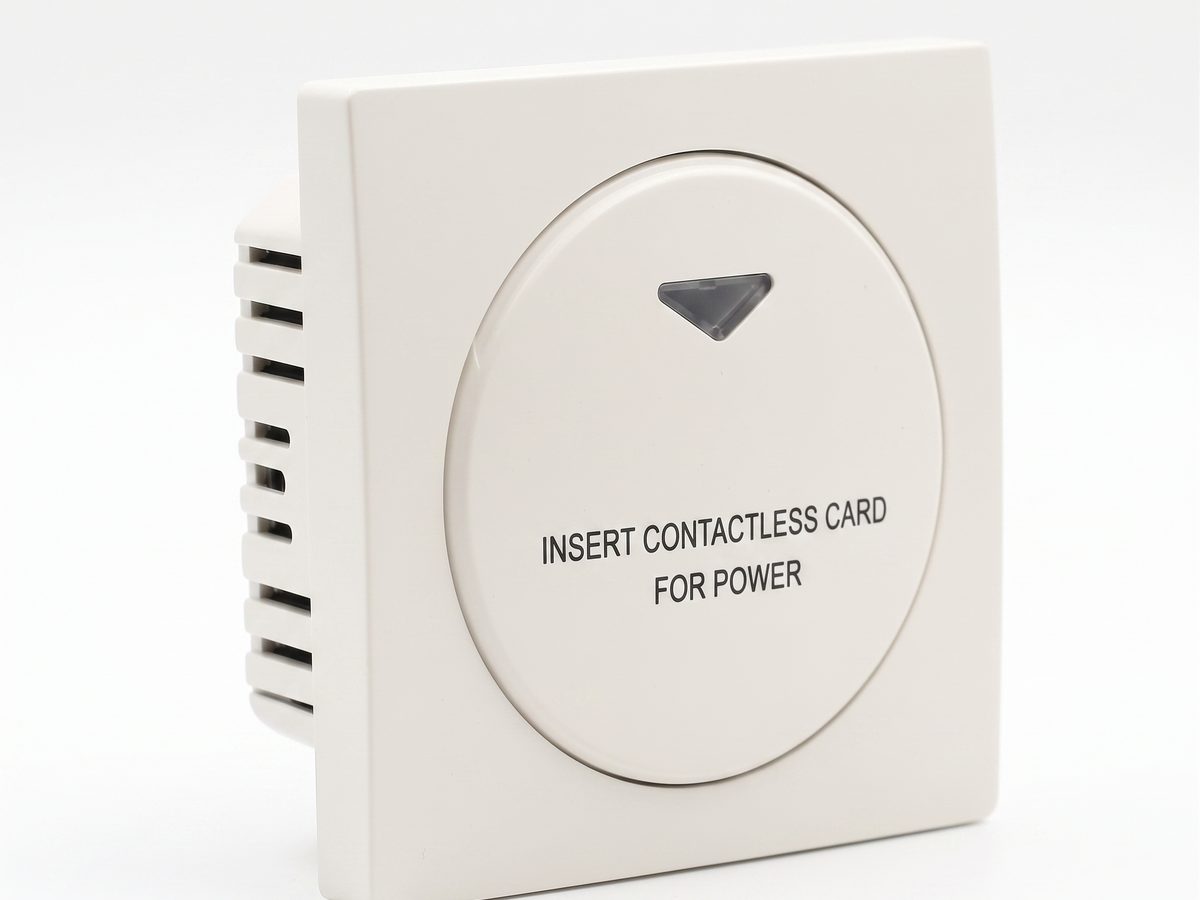
Hotel Key Card Switch — Kontrol Daya Kamar Tamu
Hotel key card switch untuk kontrol daya kamar tamu. Deteksi kartu RFID/IC, masukkan kartu untuk menyalakan daya, penundaan pemadaman saat kartu dilepas. 220V AC, 10A-16A, RS485 atau dry contact. CE RoHS. Pemasok OEM/ODM.
contentGraph.reasons.explicit
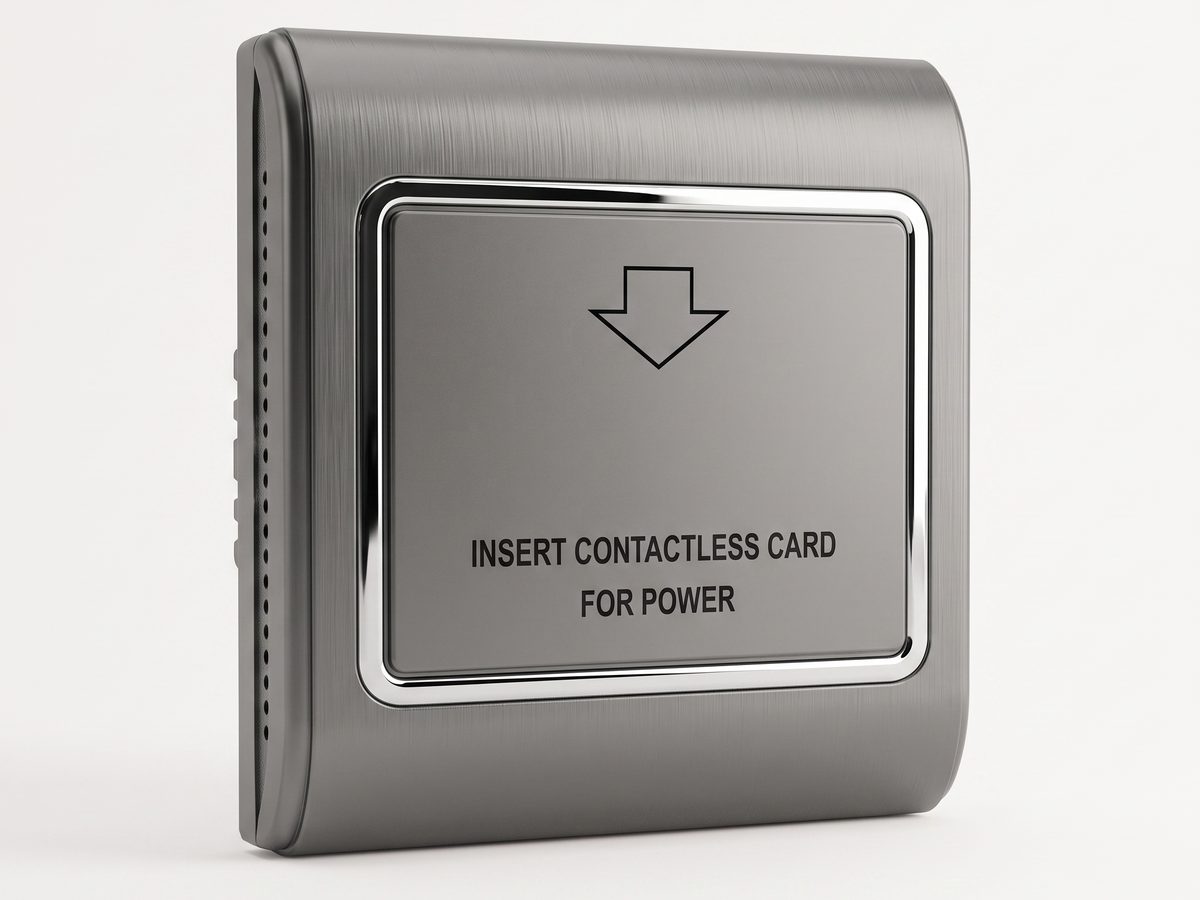
Sakelar Hemat Energi RFID — Kartu MIFARE Ruangan (Tipe B)
Sakelar hemat energi RFID yang mengikat daya ke kartu MIFARE ruangan tertentu. 13.56MHz MIFARE / 125kHz Temic, AC 180–250V, 30A, tunda mati 15 detik.
contentGraph.reasons.explicit
contentGraph.sections.solutions
3Sistem Manajemen Kamar Hotel Berbasis Kartu Listrik
Sistem manajemen kamar hotel praktis untuk mengatur daya listrik kamar melalui saklar kartu kunci, kontaktor, dan aturan operasional yang terdokumentasi.
contentGraph.reasons.productContext
Penghematan Energi Hotel dengan Saklar Daya Kamar Tamu
Solusi penghematan energi hotel yang menggunakan daya kamar terkendali kartu untuk mencegah lampu, AC, dan stopkontak terpilih menyala tanpa perlu.
contentGraph.reasons.productContext
Kontrol Daya Kamar Hotel dengan Saklar Kartu
Solusi kontrol daya kamar hotel yang praktis untuk mengalihkan pencahayaan, pendingin udara, dan stopkontak kamar tamu dengan kartu kamar resmi.
contentGraph.reasons.productContext
contentGraph.sections.blog
3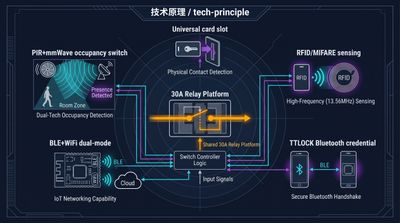
Hotel Key Card Switch: Jenis, Model, dan Cara Memilih
Panduan hotel key card switch mencakup model universal, RFID, TTLOCK, BLE, dan occupancy, serta cara memilih model yang sesuai dengan sistem kartu hotel Anda.
contentGraph.reasons.productContext
RFID vs NFC untuk Saklar Kartu Kunci Hotel: Pilih Mana?
RFID vs NFC pada saklar kartu kunci hotel berujung pada jangkauan dan penguncian: RFID 125kHz / 13.56MHz (MIFARE, Temic) adalah standar daya kamar hotel…
contentGraph.reasons.productContext
Apa Itu Hotel Key Card Switch dan Cara Hemat Energi Kamar
Hotel key card switch adalah perangkat dinding yang menyalakan listrik kamar saat kartu dimasukkan dan memutusnya saat kartu ditarik, hemat 25–40%…
contentGraph.reasons.productContext
nextStep.blog.title
nextStep.blog.description
- nextStep.blog.points.one
- nextStep.blog.points.two
- nextStep.blog.points.three