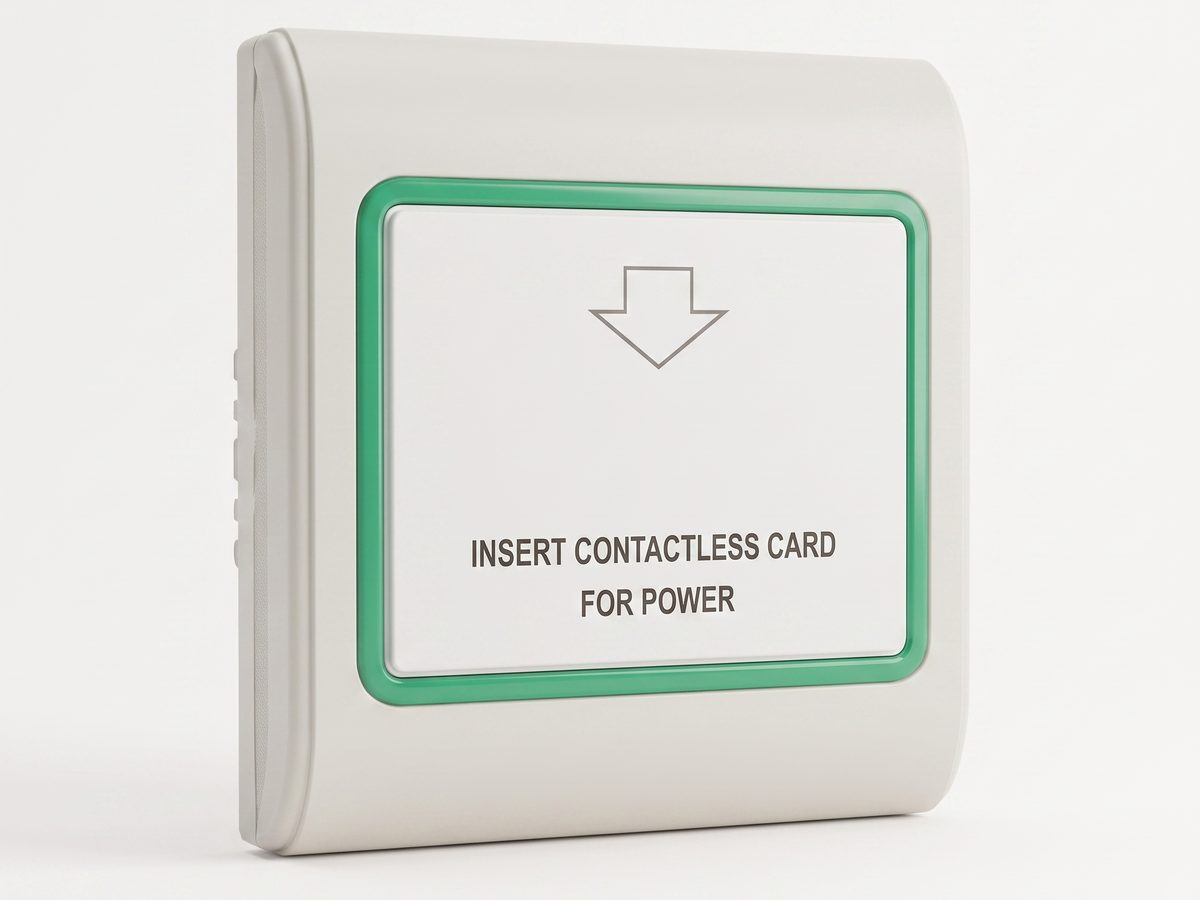
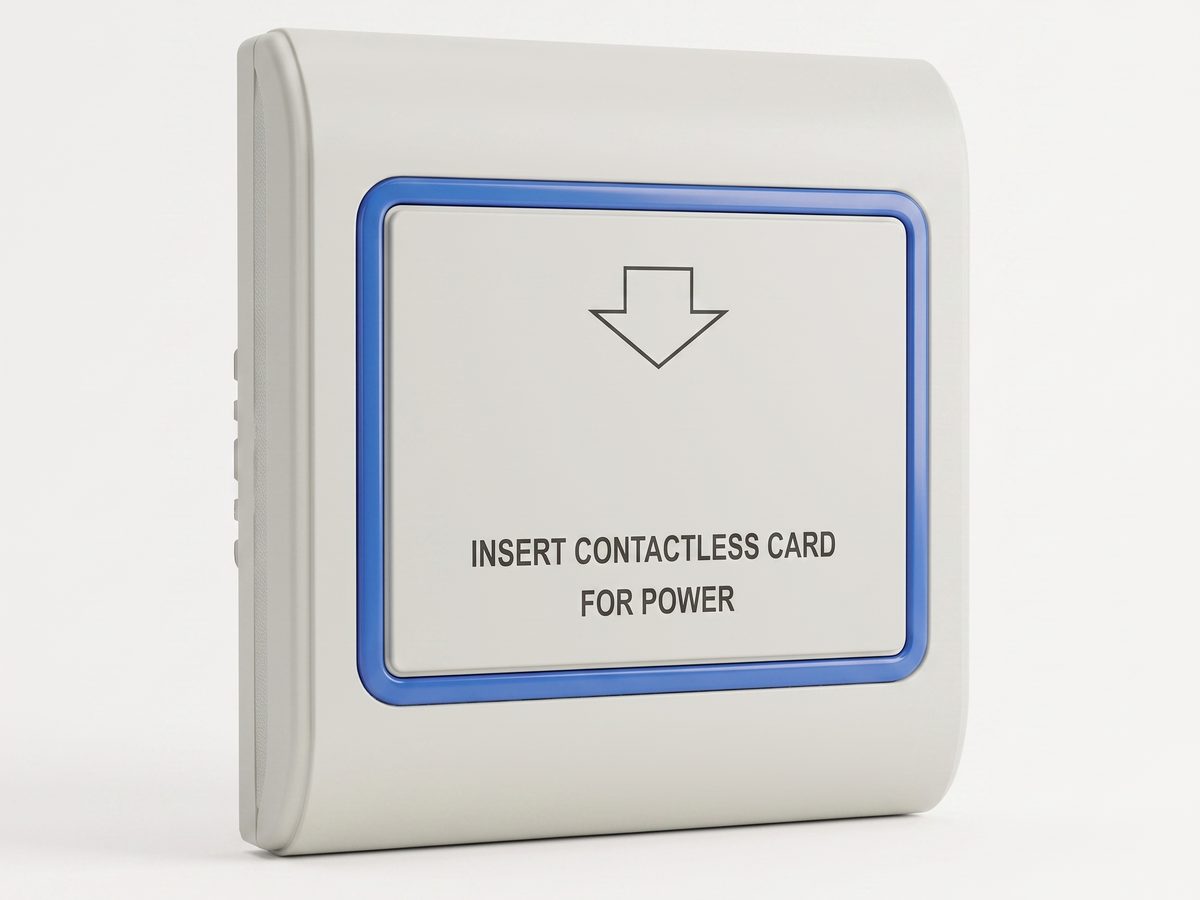
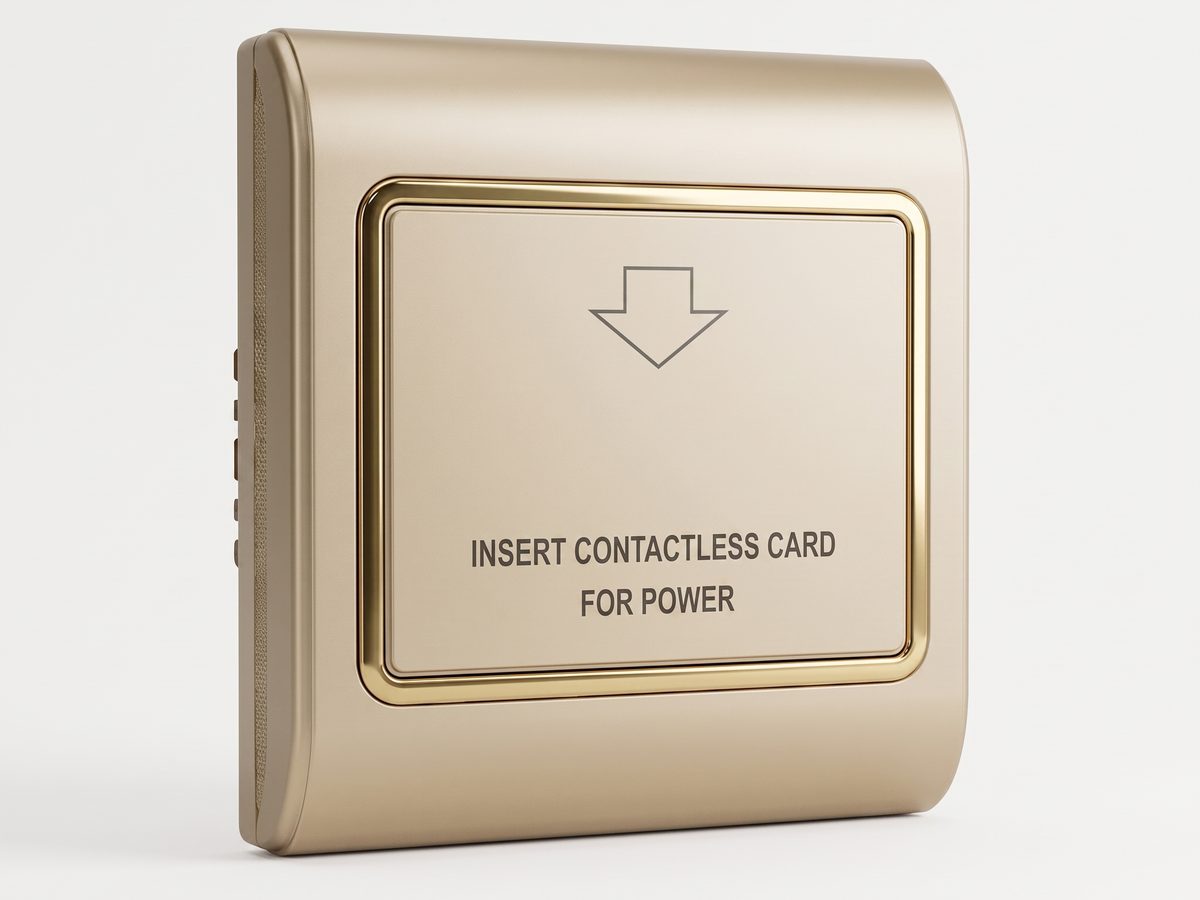
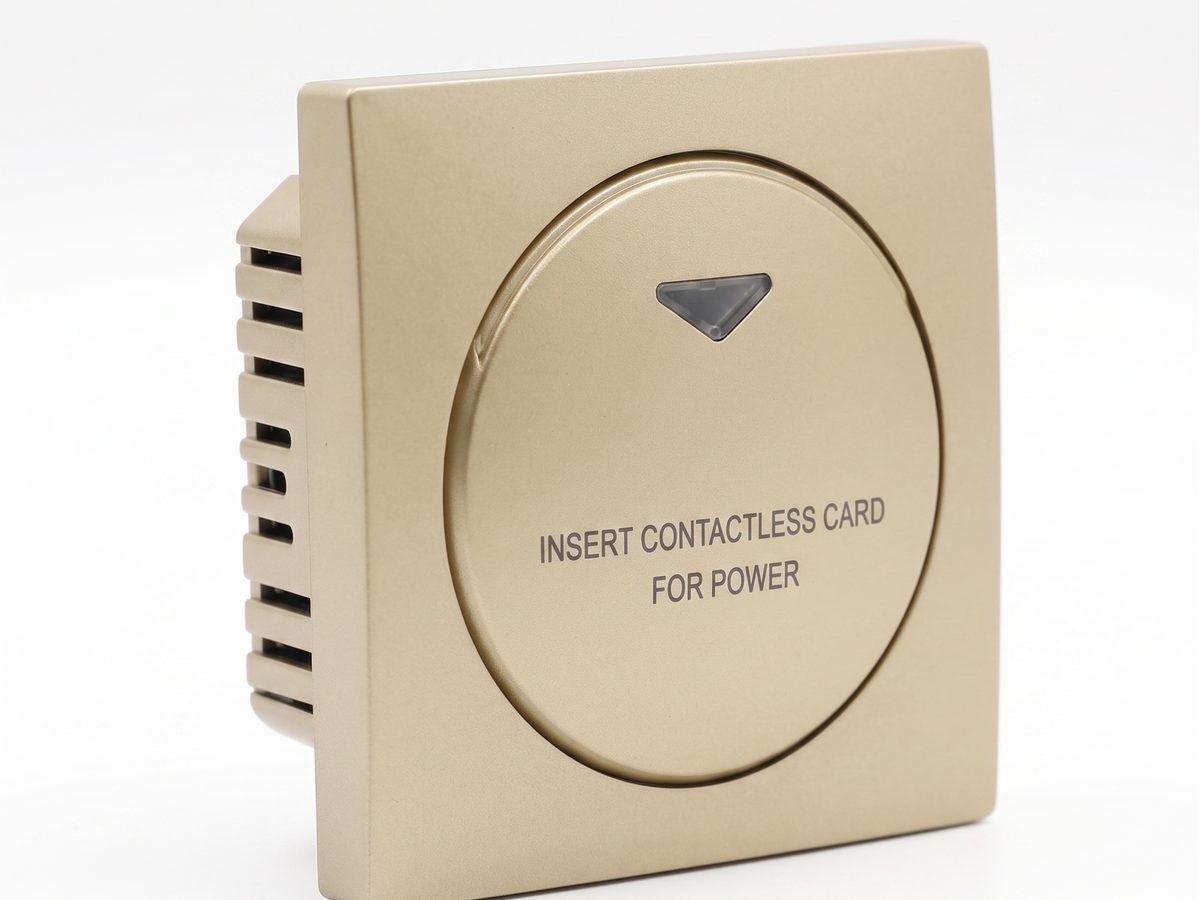
Pourquoi choisir un interrupteur à carte sans fil pour rénovation hôtel
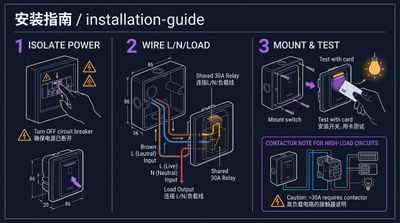
Un interrupteur à carte sans fil est un dispositif de contrôle énergie chambre client qui apporte l'économie d'énergie par carte aux hôtels où le tirage de nouveaux câbles de contrôle est impraticable. Dans les établissements en exploitation, passer des câbles dans les murs finis, chambres occupées et structures coupe-feu est perturbant et coûteux. Un interrupteur hôtel à carte sans fil résout cela en transmettant la commande insertion/retrait carte à un relais ou contacteur existant via une liaison sans fil réveil basse fréquence ou RS485 au lieu d'un nouveau fil. Pour propriétaires hôteliers, rénovateurs et entrepreneurs, un interrupteur à carte sans fil offre le même contrôle d'alimentation déterministe qu'un modèle filaire tout en transformant une rénovation majeure en mise à niveau rapide, peu perturbante.
Un interrupteur à carte sans fil opère en deux étapes. Au niveau de l'interrupteur, le client insère une carte clé IC ou RFID, et en 0,5 seconde l'interrupteur transmet une commande mise sous tension sans fil à un récepteur câblé au relais ou contacteur de la chambre, alimentant éclairage, prises et CVC. Quand le client retire la carte, l'interrupteur envoie une commande coupure après un délai sélectionnable de 15s, 30s ou 60s, laissant la climatisation s'arrêter proprement. Comme la liaison sans fil est locale et basse consommation, l'interrupteur ne dépend pas d'un réseau bâtiment — il fonctionne en autonomie dès l'installation.
Options réveil basse fréquence et RS485 sans fil
Un interrupteur à carte sans fil est disponible avec deux types de liaison selon le projet. L'option réveil basse fréquence est un choix simple, robuste pour liaisons interrupteur-récepteur en ligne de vue dans une seule chambre, consommant peu d'énergie pour que l'interrupteur puisse fonctionner sur batterie jusqu'à deux ans. L'option RS485 sans fil convient aux établissements utilisant déjà des boucles de contrôle RS485, permettant de coordonner plusieurs interrupteurs ou chambres sur un bus tout en évitant de nouveaux tirages de câbles. Les deux options maintiennent les coûts d'installation bas en se connectant à un relais ou contacteur de chambre existant plutôt qu'en remplaçant tout le circuit d'alimentation.
Configurations batterie et alimentation secteur
Un interrupteur à carte sans fil peut être alimenté des deux façons. Lorsqu'une position interrupteur a accès à une alimentation secteur, la version secteur fonctionne sur AC 100-240V, 50/60Hz et pilote un relais 10A/16A pour charges jusqu'à 3500W. Lorsqu'aucune alimentation pratique n'existe, l'option sur batterie s'intègre dans la même boîte 86, consomme sous 0,3W en veille et signale l'état alimentation chambre sans fil, avec autonomie typique jusqu'à deux ans avant remplacement rapide sur site. Cette flexibilité signifie qu'un interrupteur à carte sans fil peut s'installer dans presque toute chambre sans recâbler le mur.
Économie d\'énergie sans perturbation
Le but d'un interrupteur à carte sans fil est l'économie d'énergie, et le mécanisme est identique à un interrupteur filaire. La chambre n'est alimentée que tant qu'une carte client est présente, donc CVC et éclairage chambre vide sont coupés automatiquement. Pas de minuteurs présence à déclencher intempestivement, pas de seuils mouvement à calibrer — la chambre suit la carte du client. Pour un portefeuille hôtels, ajouter des interrupteurs à carte sans fil sur une aile de chambres en exploitation capture les mêmes réductions 20-40% électricité niveau chambre vues avec installations filaires, sans programme construction multi-semaines.
Compatibilité et réutilisation matériel existant
Un interrupteur à carte sans fil est conçu pour réutiliser ce qui est déjà dans la chambre. Il pilote le relais ou contacteur existant au lieu de remplacer tout le circuit d'alimentation, et accepte les cartes clé client IC et RFID standards sans réémission des supports. Il fonctionne avec toute marque serrure porte hôtel, incluant Onity, VingCard, Assa Abloy et SALTO, sans travail d'intégration. Pour établissements se modernisant, l'option RS485 sans fil garde une voie vers contrôle centralisé énergie chambre client tandis que le transport sans fil évite nouveau câblage.
Capacité OEM et ODM
En tant que fournisseur OEM/ODM, nous adaptons l'interrupteur à carte sans fil aux besoins projet : portée sans fil, alimentation batterie ou secteur, protocole sans fil réveil basse fréquence ou RS485, finition plaque face, et emballage. Quantité minimum commande 50 pcs avec échantillons disponibles 3-4 jours et production série 5-7 jours. Nous expédions mondialement conditions FOB Shenzhen, CIF, DDP, ou EXW et soutenons paiement T/T, L/C, et Trade Assurance, chaque unité conforme CE, RoHS.
Indiquez votre nombre chambres, contraintes rénovation (construction mur, distance interrupteur-relais), alimentation disponible à l'interrupteur, et préférence réveil basse fréquence ou RS485 sans fil. Nous retournerons un coût par chambre, guide couverture sans fil, schéma intégration, et plan échantillons sous 24 heures ouvrées.
Why choose a wireless key card switch for hotel retrofit
A wireless key card switch is a guest room power control device that brings card-based energy saving to hotels where running new control wiring is impractical. In operating properties, pulling cable through finished walls, occupied rooms, and fire-rated structures is disruptive and expensive. A wireless hotel key card switch solves this by carrying the card-in/card-out command to an existing relay or contactor over a low-frequency wake-up or RS485 wireless link instead of a new wire. For hotel owners, renovators, and contractors, a wireless key card switch delivers the same deterministic power control as a wired unit while turning a major retrofit into a quick, low-disruption upgrade.
How a wireless key card switch works
A wireless key card switch works in two stages. At the switch, the guest inserts an IC or RFID key card, and within 0.5 seconds the switch transmits a power-on command wirelessly to a receiver wired to the room's relay or contactor, powering lighting, sockets, and HVAC. When the guest removes the card, the switch sends a power-off command after a selectable 15s, 30s, or 60s delay, letting the air conditioner shut down gracefully. Because the wireless link is local and low-power, the switch does not depend on a building network — it works standalone from the moment it is installed.
Low-frequency wake-up and RS485 wireless options
A wireless key card switch is available with two link types to suit the project. The low-frequency wake-up option is a simple, robust choice for line-of-sight switch-to-receiver links in a single room, drawing minimal power so the switch can run on a battery for up to two years. The RS485 wireless option is suited to properties that already use RS485 control loops, allowing several switches or rooms to be coordinated on one bus while avoiding new cable pulls. Both options keep installation costs down by connecting to an existing room relay or contactor rather than replacing the entire power path.
Battery and line-powered configurations
A wireless key card switch can be powered either way. Where a switch position has access to a mains feed, the line-powered version operates on AC 100-240V, 50/60Hz and drives a 10A/16A relay for loads up to 3500W. Where no convenient feed exists, the battery-powered option fits the same 86-box, draws under 0.3W in standby, and reports the room power status wirelessly, with typical battery life of up to two years before a quick field replacement. This flexibility means a wireless key card switch can go into nearly any room without rewiring the wall.
Energy saving without disruption
The purpose of a wireless key card switch is energy saving, and the mechanism is identical to a wired switch. The room is powered only while a guest card is present, so empty-room HVAC and lighting are switched off automatically. There are no occupancy timers to misfire and no motion thresholds to calibrate — the room follows the guest's card. For a hotel portfolio, adding wireless key card switches across a wing of operating rooms captures the same 20-40% room-level electricity reductions seen with wired installations, without a multi-week construction program.
Compatibility and reuse of existing hardware
A wireless key card switch is designed to reuse what is already in the room. It drives the existing relay or contactor rather than replacing the full power path, and it accepts standard IC and RFID guest key cards without reissuing media. It works alongside any hotel door lock brand, including Onity, VingCard, Assa Abloy, and SALTO, with no integration work. For modernizing properties, the RS485 wireless option keeps a path to centralized guest room power control while the wireless transport avoids new wiring.
OEM and ODM capability
As an OEM/ODM supplier, we tailor the wireless key card switch to project needs: wireless range, battery or line power, low-frequency or RS485 wireless protocol, face plate finish, and packaging. Minimum order quantity is 50 pcs with samples available in 3-4 days and mass production in 5-7 days. We ship worldwide on FOB Shenzhen, CIF, DDP, or EXW terms and support T/T, L/C, and Trade Assurance payment, with every unit carrying CE and RoHS compliance.
How to get a quotation
Tell us your room count, retrofit constraints (wall construction, distance between switch and relay), available power at the switch, and whether you prefer low-frequency or RS485 wireless. We will return a per-room cost, wireless coverage guidance, integration diagram, and sample plan within 24 business hours.