Pourquoi choisir un interrupteur d'économie d'énergie hôtel
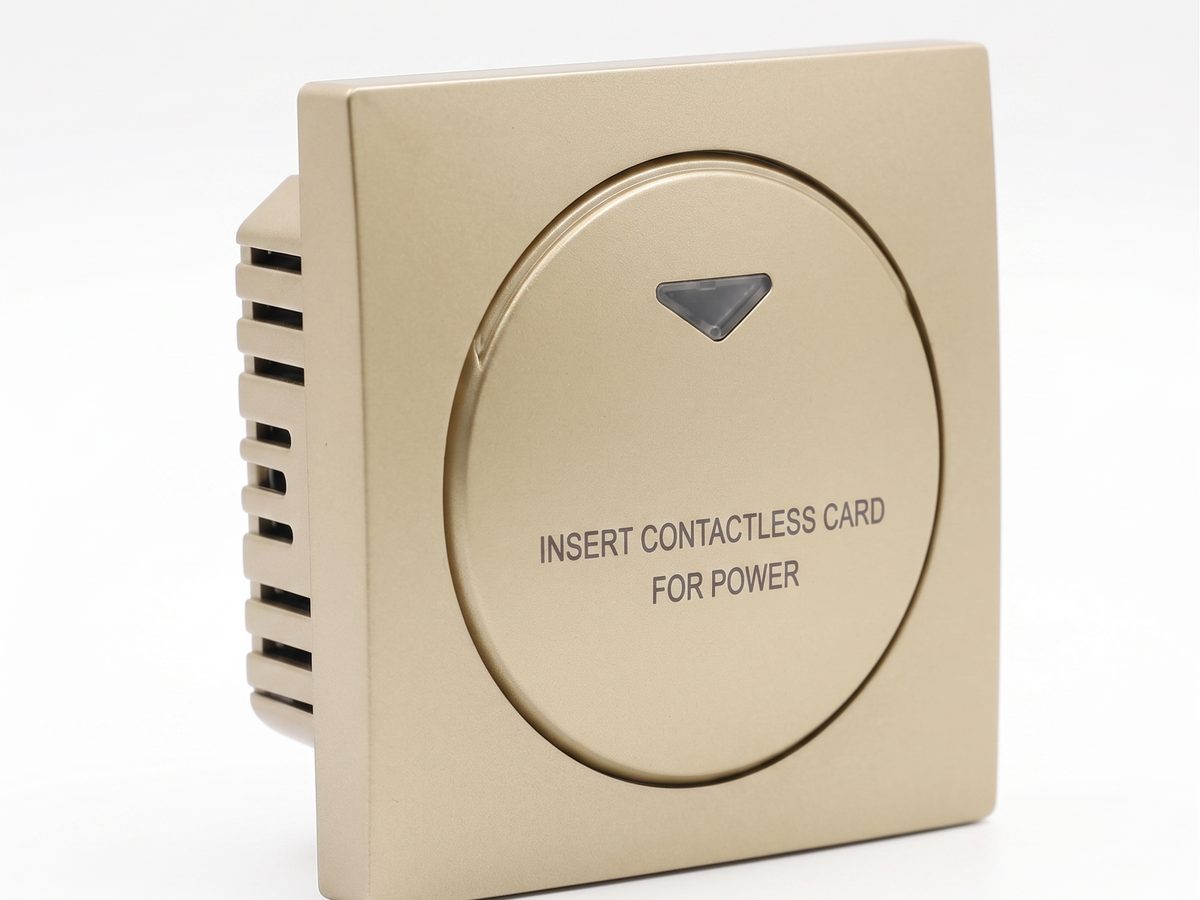
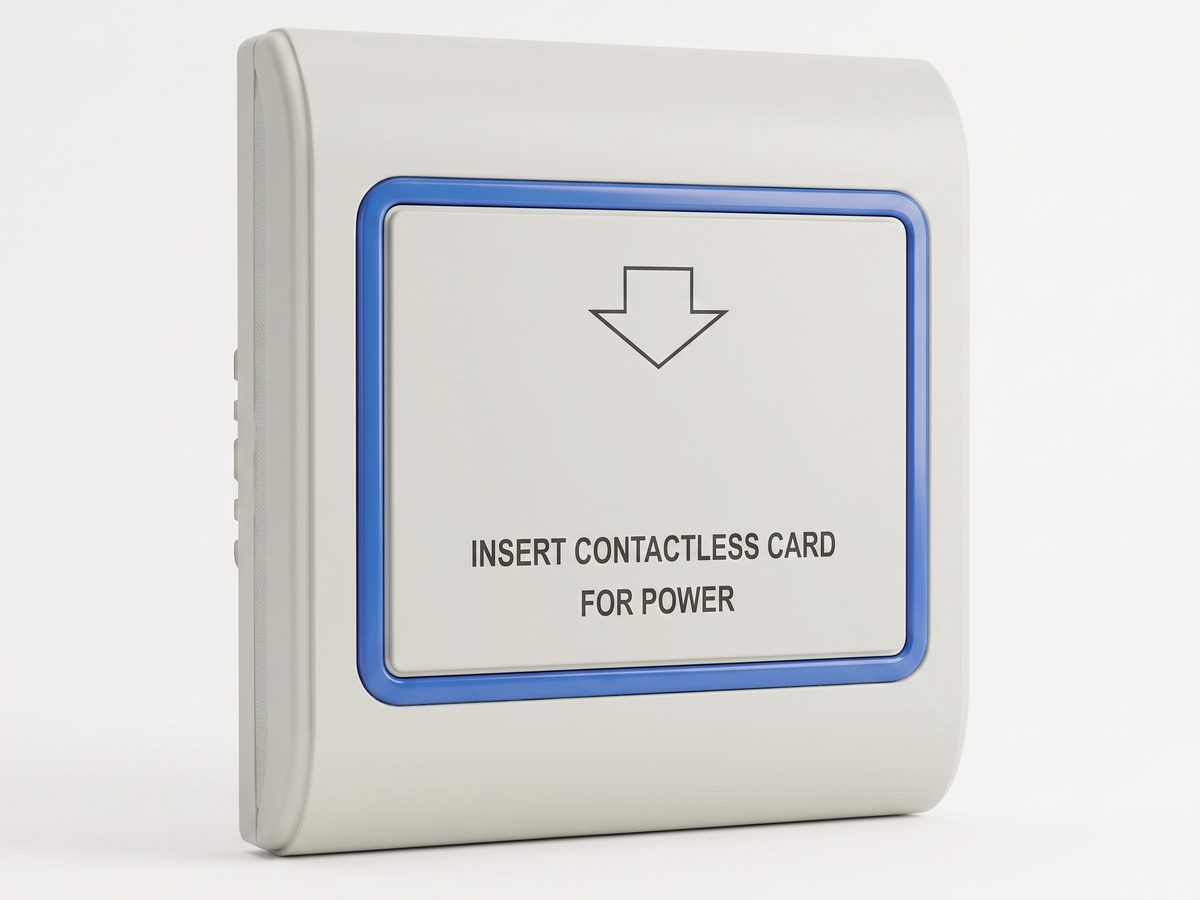
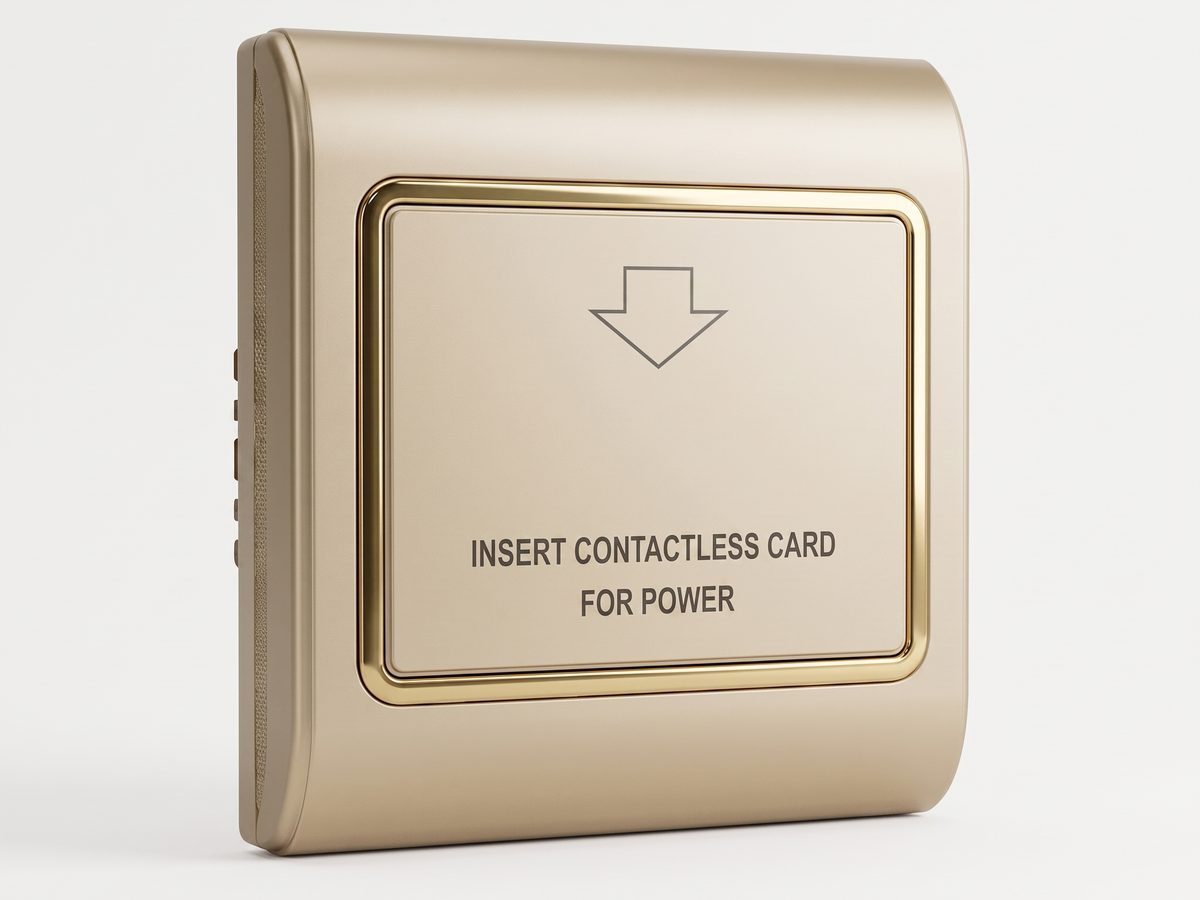
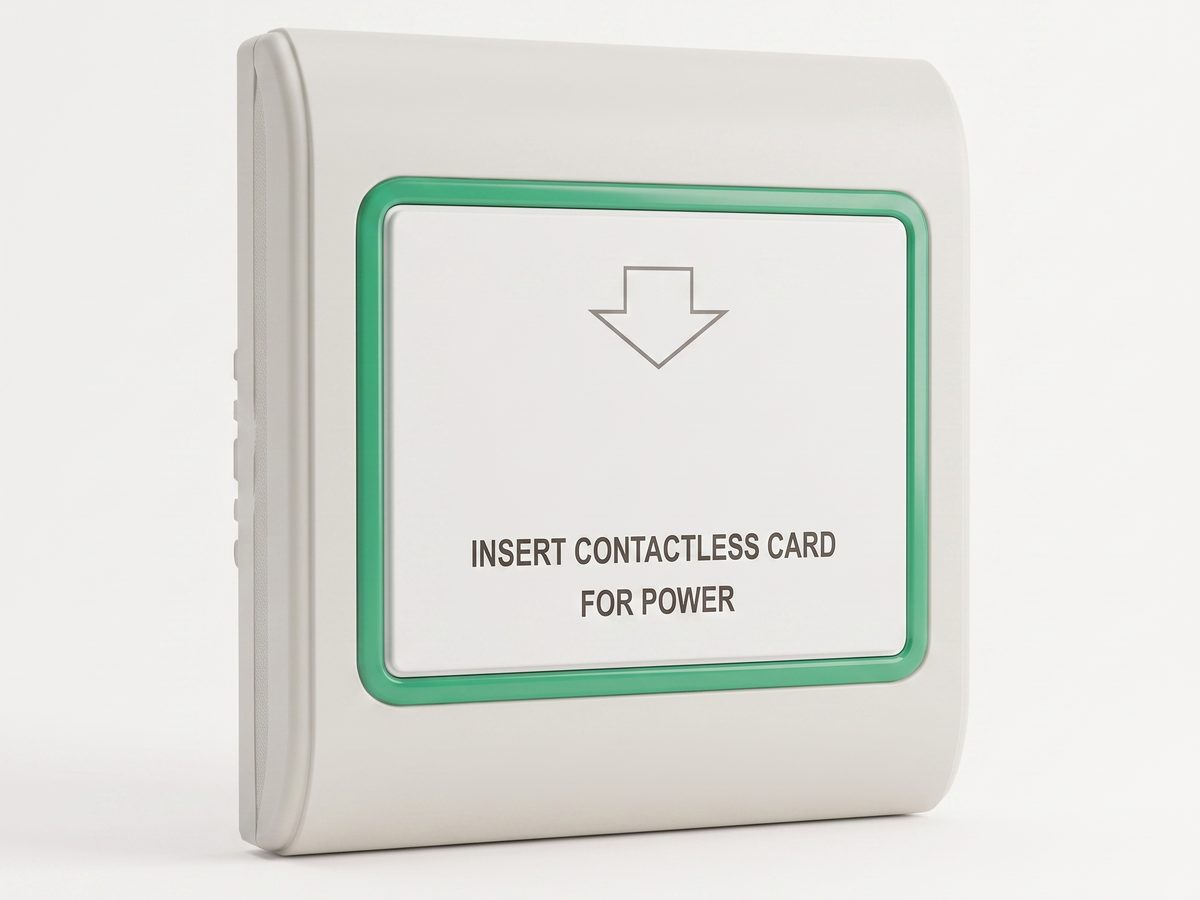
Un interrupteur d'économie d'énergie hôtel est un dispositif de contrôle d'alimentation chambre client avec une seule mission : maintenir les charges alimentées hors tension quand la chambre est vide. Il alimente la chambre quand un client insère une carte clé et coupe l'alimentation après un délai au retrait de la carte quand le client part. Pour les propriétaires d'hôtels et directions financières, cet interrupteur d'économie d'énergie hôtel cible le plus gros poste de coût d'exploitation automatisable — CVC et éclairage fonctionnant dans des chambres inoccupées. Parce qu'une chambre est occupée par définition seulement tant qu'une carte client est présente, l'interrupteur d'économie d'énergie donne un signal déterministe que les capteurs de mouvement ne peuvent égaler, et il ne requiert ni réseau, ni application, ni changement de comportement du personnel pour économiser l'énergie.
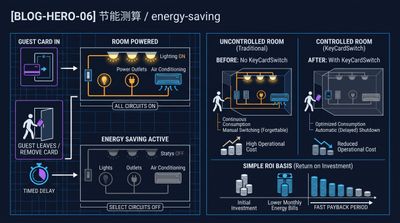
La logique d'économie d'énergie d'un interrupteur d'économie d'énergie hôtel est simple et mesurable. À l'arrivée, le client insère sa carte clé, et en 0,5 seconde l'interrupteur ferme son relais, alimentant éclairage, prises, CVC et toute autre charge câblée sur le circuit contrôlé. Quand le client part et retire la carte, l'interrupteur démarre un délai sélectionnable de 15s, 30s ou 60s avant d'ouvrir le relais. Comme ce délai est court comparé aux nombreuses heures où une chambre reste vide, l'interrupteur d'économie d'énergie assure effectivement que les charges contrôlées ne fonctionnent que pendant la présence du client. Les équipes techniques mesurent généralement une réduction de 20 à 40 % du coût d'électricité par chambre après rétrofit d'interrupteurs énergie par carte clé, avec un retour sur investissement en quelques mois dans les régions à tarifs élevés.
Travailler avec le CVC pour une efficacité maximale
La valeur d'un interrupteur d'économie d'énergie hôtel est multipliée quand il fonctionne avec le CVC. Le délai de coupure est conçu pour laisser le compresseur de climatisation effectuer un arrêt progressif, évitant le court-cyclage qui endommage les compresseurs et raccourcit la durée de vie des équipements. Dans les chambres avec groupes de traitement d'air ou chauffe-eau de forte puissance, la sortie contact sec de l'interrupteur pilote un contacteur externe, limitant l'usure des contacts de l'interrupteur tout en gérant de grosses charges. En définissant le circuit contrôlé à l'installation, l'interrupteur d'économie d'énergie peut couvrir ventilation et traitement d'air aux côtés de l'éclairage et des prises, pour que tout le profil énergétique de la chambre suive la présence du client.
Contrôle déterministe versus détection par mouvement
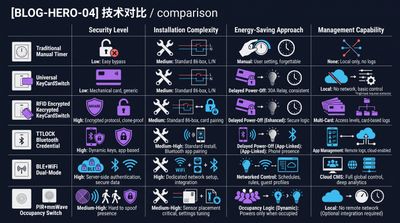
Un interrupteur d'économie d'énergie hôtel diffère fondamentalement du contrôle d'occupation par détection de mouvement. Les capteurs de mouvement enregistrent le mouvement de toute source — personnel de ménage, lumière du soleil, ou une chambre où l'air circule simplement — et ils peuvent maintenir la ventilation en marche bien après le départ du client. Un interrupteur d'économie d'énergie hôtel par carte n'alimente la chambre que tant qu'une carte client est présente. Il n'y a pas de faux déclenchement, pas de calibration de sensibilité, et pas de temporisation d'occupation qui risque de couper l'alimentation d'un client assis immobile. Pour les exploitants hôteliers voulant un contrôle énergétique fiable et prévisible, l'interrupteur énergie par carte clé est le choix le plus robuste.
Spécifications clés de l'interrupteur d'économie d'énergie hôtel
Cet interrupteur d'économie d'énergie hôtel fonctionne sur AC 100-240V, 50/60Hz pour un support tension mondiale, avec un relais interne nominal 10A ou 16A résistif et 8A inductif, gérant jusqu'à 3500W de charge connectée. La consommation en veille est inférieure à 0,3W sans carte présente, donc l'interrupteur ne compense pas ses propres économies. Il accepte les cartes clés client IC et RFID standard, s'adapte à un montage mural boîte 86 standard, et offre une plaque de finition blanche affleurante ou finition OEM personnalisée. Le port RS485 optionnel fournit une voie vers le contrôle d'alimentation chambre client centralisé et les systèmes de gestion de bâtiment.
Compatibilité avec l'infrastructure hôtelière existante
Cet interrupteur d'économie d'énergie hôtel est conçu pour fonctionner dans un hôtel existant sans perturbation. Il fonctionne aux côtés de toute marque de serrure de porte, incluant Onity, VingCard, Assa Abloy et SALTO, sans travail d'intégration, et accepte les cartes clients standard sans réémission de supports. Le montage boîte 86 s'adapte aux boîtes de jonction standard, donc le rétrofit remplace un interrupteur mural existant en minutes sans recâblage de la chambre. Pour les hôtels déployant un reporting énergétique centralisé, le port RS485 et la sortie contact sec offrent des points d'intégration propres.
Capacité OEM et ODM
En tant que fournisseur OEM/ODM, nous adaptons l'interrupteur d'économie d'énergie hôtel aux exigences de marque et de projet :
Why choose a hotel energy saving switch
A hotel energy saving switch is a guest room power control device with one job: keep powered loads off when a room is empty. It powers the room when a guest inserts a key card and cuts power after a card-removal delay when the guest leaves. For hotel owners and finance teams, this hotel energy saving switch targets the single largest operating cost that can be automated — HVAC and lighting running in unoccupied rooms. Because a room is occupied by definition only while a guest card is present, the energy saving switch gives a deterministic signal that motion sensors cannot match, and it requires no network, no app, and no staff behaviour change to save energy.
How a hotel energy saving switch saves energy
The energy-saving logic of a hotel energy saving switch is simple and measurable. On arrival, the guest inserts their key card, and within 0.5 seconds the switch closes its relay, powering lighting, sockets, HVAC, and any other loads wired to the controlled circuit. When the guest leaves and removes the card, the switch starts a selectable delay of 15s, 30s, or 60s before opening the relay. Because the delay is short compared with the many hours a room sits empty, the energy saving switch effectively ensures controlled loads run only while the guest is in the room. Engineering teams typically measure a 20-40% reduction in room-level electricity cost after retrofitting key card energy switches, with the investment recovering within months in high-tariff regions.
Working with HVAC for maximum efficiency
The value of a hotel energy saving switch is multiplied when it works with HVAC. The power-off delay is engineered to let the air conditioning compressor complete a graceful shutdown, avoiding the short-cycling that damages compressors and shortens equipment life. In rooms with high-power air handlers or water heaters, the switch's dry contact output drives an external contactor, keeping switch contact wear low while handling large loads. By defining the controlled circuit at installation, the energy saving switch can be scoped to cover ventilation and air handling alongside lighting and sockets, so the entire room's energy profile follows the guest's presence.
Deterministic control versus motion-based sensing
A hotel energy saving switch differs fundamentally from motion-based occupancy control. Motion sensors register movement from any source — cleaning staff, sunlight, or a room that simply has air moving through it — and they can keep ventilation running long after a guest checks out. A card-based hotel energy saving switch powers the room only while a guest card is present. There is no false trigger, no sensitivity calibration, and no occupancy timeout that risks cutting power to a guest who is sitting still. For hotel operators who want reliable, predictable energy control, the key card energy switch is the more robust choice.
Key specifications of the hotel energy saving switch
This hotel energy saving switch operates on AC 100-240V, 50/60Hz for global voltage support, with an internal relay rated 10A or 16A resistive and 8A inductive, handling up to 3500W of connected load. Standby power draw is below 0.3W when no card is present, so the switch does not offset its own savings. It accepts standard IC and RFID guest key cards, fits a standard 86-box wall mount, and offers a flush white face plate or custom OEM finishing. The optional RS485 port provides a path to centralized guest room power control and building management systems.
Compatibility with existing hotel infrastructure
This hotel energy saving switch is designed to work within an existing hotel without disruption. It works alongside any door lock brand, including Onity, VingCard, Assa Abloy, and SALTO, with no integration work, and accepts standard guest cards without reissuing media. The 86-box mount fits standard junction boxes, so retrofit replaces an existing wall switch in minutes with no rewiring of the room. For hotels rolling out centralized energy reporting, the RS485 port and dry contact output offer clean integration points.
OEM and ODM capability
As an OEM/ODM supplier, we tailor the hotel energy saving switch to brand and project requirements: face plate color and logo, power-on/power-off timing, relay rating, RS485 protocol, and packaging. Minimum order quantity is 50 pcs with samples available in 3-4 days and mass production in 5-7 days. We ship worldwide on FOB Shenzhen, CIF, DDP, or EXW terms and support T/T, L/C, and Trade Assurance payment, with every unit carrying CE and RoHS compliance.
How to get a quotation
Tell us your room count, target loads (lighting, sockets, HVAC, water heater), current tariff or target payback period, and whether you need RS485 or dry contact output. We will return a per-room cost, expected annual saving estimate, integration diagram, and sample plan within 24 business hours.