Comparatif clé carte vs Legrand : guide pratique pour acheteurs hôteliers
Comparatif clé carte vs Legrand pour acheteurs hôteliers : reconnaissance carte, charges, relais, installation, risque rénovation, sourcing, personnalisation et support.
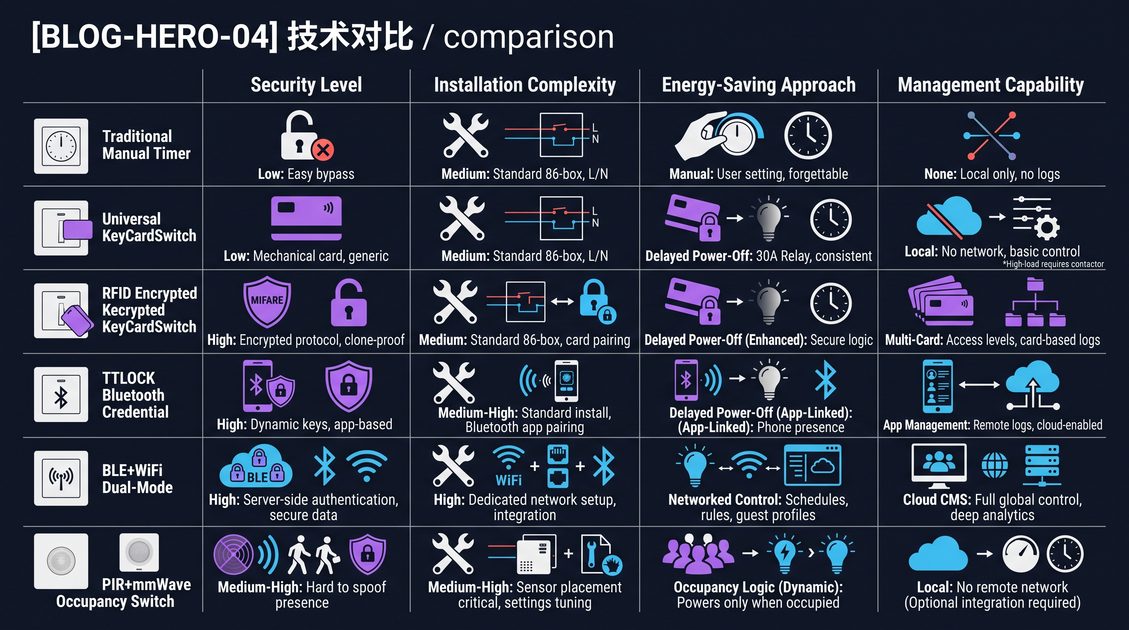
Une décision de contrôle d'alimentation hôtelière ne se résout rarement en choisissant la marque électrique la plus connue. Les équipes projet doivent faire correspondre le commutateur carte, le câblage, la charge électrique, la boîte murale, les règles locales et le modèle de service au bâtiment. Ce comparatif explique où un commutateur carte hôtel dédié et les produits hôtel ou contrôle éclairage Legrand peuvent se chevaucher, où ils diffèrent, et comment rédiger un cahier des charges équitable sans supposer de spécifications non documentées. Il s'adresse aux propriétaires, entrepreneurs, distributeurs, concepteurs lumière et intégrateurs système qui ont besoin d'un processus de décision pratique plutôt que d'un slogan de marque.
Clé carte vs legrand : ce que le comparatif signifie réellement
Clé carte vs legrand est un comparatif entre deux approches d'achat, pas l'affirmation que chaque produit vendu sous l'un ou l'autre nom a des fonctions identiques. Un commutateur carte hôtel est un dispositif mural de contrôle énergie chambre qui détecte une carte client ou carte approuvée, puis ouvre ou ferme un relais commandant des circuits sélectionnés. Legrand est une marque électrique tierce avec produits dans les appareillages, commutateurs, contrôle éclairage et applications hôtelières ; ses fonctions exactes dépendent de la famille produit locale, du marché, de la méthode d'installation et de la documentation actuelle. Les acheteurs doivent donc comparer des fiches techniques vérifiées, pas des logos. Les faits les plus utiles sont la méthode d'entrée ou reconnaissance, la charge commandée, l'architecture relais, la compatibilité boîte, les homologations, le canal service et la disponibilité projet. Un commutateur carte universel peut détecter l'insertion sans authentifier la carte, tandis qu'une version RFID peut lire une technologie carte spécifiée. Aucune de ces hypothèses ne doit être transférée à un produit Legrand non spécifié.
Définir la décision avant de comparer les marques
La première question n'est pas « Quelle marque est meilleure ? » C'est « Quel comportement chambre l'installation doit-elle délivrer ? » Une chambre hôtel typique exige une séquence claire : le client entre, insère une carte, les circuits éclairage et prises sélectionnés s'énergisent, et les circuits s'éteignent après retrait de la carte et expiration d'un délai configuré. Certains projets veulent seulement l'éclairage et prises générales contrôlés. D'autres séparent réfrigérateur, sécurité vie, ventilation, accès ou circuits maintenance. Un commutateur carte ne doit jamais interrompre un circuit que la conception électrique exige alimenté en continu.
Les produits Legrand peuvent être choisis car le projet utilise déjà une famille accessoires électriques plus large, une finition designer spécifiée, ou un canal distribution régional. Un commutateur carte dédié peut être choisi car son travail principal est le contrôle énergie chambre sans ambiguïté. Ce sont des priorités légitimes, mais elles produisent des critères d'évaluation différents. Établissez d'abord un planning charges chambre, puis testez les deux alternatives contre lui.
Ce qui est et n'est pas connu sur Legrand
Cet article n'attribue pas de numéro modèle Legrand, tension, intensité, prix, certification ou fonction au comparatif. Les familles produits Legrand diffèrent par pays et application, et un produit hôtel ou contrôle éclairage doit être vérifié depuis la documentation régionale officielle et le devis exact. Un acheteur responsable doit demander la fiche technique actuelle, les instructions installation, les documents déclaration ou homologation, et les conditions support distributeur pour l'article proposé. Si une proposition dit « Legrand compatible » sans modèle ni fiche technique, ce n'est pas encore une spécification comparable.
La même discipline s'applique à un commutateur carte dédié. Un fournisseur doit indiquer si l'unité est universelle, RFID, IC, MIFARE, Temic, 125 kHz, compatible TTLOCK, BLE, Wi-Fi, PIR, ou base mmWave. Ces descriptions ne sont pas interchangeables. Elles décrivent différentes façons de décider si une chambre doit être énergisée. Une revue équitable clé carte vs legrand enregistre les inconnues au lieu de les combler par des suppositions.
Clé carte vs legrand : fonction et logique contrôle chambre
La fonction clé carte vs legrand s'évalue mieux par la séquence contrôle chambre, les circuits impliqués, et le degré de validation carte requis. Un commutateur carte hôtel dédié utilise normalement la présence physique d'une carte comme proxy occupation simple : carte présente ferme un relais, et retrait carte démarre un délai avant ouverture relais. Un modèle universel peut accepter toute carte de dimensions appropriées, tandis qu'un modèle RFID peut être conçu autour d'une fréquence ou famille carte énoncée. Une solution Legrand peut fournir un contrôle mural conventionnel, un commutateur énergie chambre hôtel, ou un composant contrôle éclairage plus large selon le produit et marché sélectionnés. Sans modèle exact, aucun comportement spécifique ne doit lui être attribué. Le comparatif doit documenter si chaque option commande un circuit chambre entier, des sorties sélectionnées, des scènes, ou seulement un point éclairage local, et si des modules additionnels sont requis.
La séquence chambre importe plus que l'étiquette
Écrivez la séquence en langage clair avant de discuter matériel. Par exemple : « Quand une carte client autorisée est insérée, l'éclairage chambre et prises confort deviennent disponibles. Quand la carte est retirée, le contrôleur attend 15, 30 ou 60 secondes, puis ouvre le relais commandé. » Cela expose les exigences cachées. Un projet peut avoir besoin d'un délai plus long pour qu'un client puisse retirer sa carte en partant brièvement. Le ménage peut avoir besoin d'un comportement carte service. La maintenance peut avoir besoin d'une dérogation manuelle. Un dispositif qui ressemble seulement à un commutateur carte peut ne pas implémenter tous ces comportements.
La séquence contrôle identifie aussi les exceptions. Un minibar, routeur, circuit éclairage secours, détecteur fumée, alimentation serrure porte, ou système ventilation peut avoir besoin d'alimentation continue. Un commutateur carte doit donc alimenter un sous-circuit énergie chambre défini, pas déconnecter aveuglément tout le tableau distribution. L'installateur doit marquer circuits commutés et non-commutés sur plans et étiquettes.
Reconnaissance universelle et reconnaissance authentifiée
La reconnaissance universelle est opérationnellement simple. Toute carte aux dimensions physiques adaptées peut actionner le commutateur, donc le client n'a pas besoin d'un identifiant encodé particulier. Cela peut réduire la complexité réception et rendre les cartes remplacement faciles à utiliser. Sa limitation est qu'une carte non-chambre peut aussi actionner le commutateur sauf si la conception utilise une autre restriction. Elle est souvent appropriée quand le projet valorise le contrôle physique déterministe plutôt que la sécurité identifiant.
La reconnaissance authentifiée utilise une technologie carte ou identifiant. Des exemples en projets hôteliers peuvent inclure RFID 13,56 MHz, variantes MIFARE, cartes Temic, ou technologies 125 kHz, mais un acheteur doit confirmer exactement ce que le lecteur proposé supporte. La fréquence carte seule ne prouve pas la compatibilité ; encodage, architecture lecteur, format carte, et tests fournisseur comptent tous. Demandez validation échantillon-carte avant lancement volume.
Où Legrand peut s'adapter
Un produit Legrand peut s'adapter quand le projet a besoin d'une esthétique commutateur conventionnelle, d'un système plaque murale coordonné, ou d'une architecture contrôle électrique spécifiée. Il peut aussi s'adapter quand l'entrepreneur a déjà un approvisionnement local et installateurs formés. Ce sont des avantages achat et installation, pas la preuve que l'article effectue la même séquence reconnaissance carte qu'un commutateur carte hôtel. Si la reconnaissance carte est essentielle, la proposition doit montrer le lecteur, workflow carte, sortie relais, comportement délai, et schéma câblage.
Un commutateur carte dédié peut mieux s'adapter où la fonction énergie chambre est l'exigence principale et l'acheteur veut un workflow hôtel standard en un dispositif mural. Il peut être plus facile à chiffrer sur nombreuses chambres car le fournisseur peut définir une méthode reconnaissance et une plateforme relais. Le compromis est que finitions, dimensions boîte, ou distribution régionale peuvent demander plus de coordination qu'une gamme accessoires électriques familière.
Clé carte vs legrand : reconnaissance carte et compatibilité identifiants
La reconnaissance carte clé carte vs legrand doit être testée comme un problème d'interface, pas déduite d'un nom famille produit. Un commutateur universel détecte la présence d'un objet forme carte ; un lecteur carte-spécifique détecte une technologie définie et peut rejeter cartes non-liées. Les lecteurs RFID dépendent fréquence, conception antenne, type carte, encodage, et placement physique. Un hôtel émettant des cartes MIFARE ne doit pas approuver un lecteur 125 kHz simplement parce que les deux produits sont décrits « RFID ». Pour une option Legrand tierce, l'équipe projet doit confirmer si le produit proposé inclut réellement le lecteur requis et quelles technologies cartes il accepte. Pour un commutateur carte dédié, le fournisseur doit indiquer les cartes supportées et tester échantillons fournis par l'hôtel.
Construire une matrice compatibilité carte
Un dossier de soumission utile inclut une matrice avec colonnes pour type carte, fréquence, format physique, résultat reconnaissance, délai activation, délai retrait, et exceptions. Testez la carte client, carte personnel, carte maître, carte expirée, carte vierge, et une carte d'un système non-lié si la sécurité importe. Enregistrez si chaque carte met alimentation, laisse alimentation, ou n'a aucun effet. C'est plus fiable qu'une affirmation générique « fonctionne avec cartes hôtel ».
Pour un commutateur universel, testez épaisseur carte et sensation insertion. Une fente trop serrée peut abîmer cartes ou frustrer clients ; une trop lâche peut créer détection incohérente. Pour RFID, testez la carte à la profondeur insertion prévue et avec la plaque finale. Boîtes arrière métalliques, câblages proches, et matériaux décoratifs peuvent affecter performance lecteur. L'échantillon doit être installé dans une boîte représentative, pas tenu en showroom fournisseur.
Reconnaissance n'égale pas contrôle accès
Un commutateur énergie hôtel n'est pas automatiquement un lecteur serrure porte. Il commande l'alimentation chambre selon une condition carte ; il ne décide pas seul si le client peut entrer dans la chambre. Évitez de le décrire comme module serrure porte ou contrôleur contrôle accès. Là où l'hôtel utilise un système serrure séparé, le commutateur énergie peut avoir un workflow client coordonné, mais les deux dispositifs restent distincts sauf intégration documentée fournie. Cette distinction évite câblage incorrect, suppositions sécurité irréalistes, et instructions maintenance confuses.
La même frontière importe en comparant un commutateur dédié avec une marque électrique générale. Un accessoire mural peut être excellent pour contrôle éclairage et ne pas fournir reconnaissance carte. Inversement, un commutateur carte peut être approprié pour contrôle énergie sans être un système automatisation chambre complet. Les documents achat doivent lister la fonction en verbes : détecter, valider, énergiser, délester, dé-énergiser, et déroguer.
Approbation échantillon et contrôle changements
Approuvez le lecteur carte exact avant d'émettre un bon de commande. Gardez une carte échantillon retenue, faceplate lecteur, schéma câblage, et enregistrement firmware ou configuration le cas échéant. Si l'hôtel change ses cartes serrure après le premier bloc chambres, re-testez le commutateur avant de libérer le lot suivant. Un changement technologie carte peut invalider le lecteur même si les dimensions murales restent inchangées.
Pour une proposition Legrand, demandez au canal autorisé d'identifier l'article régional exact et fournir la documentation actuelle. Pour un commutateur carte dédié, demandez au fabricant d'identifier la configuration production. Dans les deux cas, l'enregistrement approbation doit indiquer ce qui a été testé et ce qui a été exclu. Cette preuve protège le propriétaire d'une découverte tardive qu'une carte est physiquement acceptée mais pas techniquement reconnue.
Clé carte vs legrand : tension nominale, charge, et protection circuit
La performance électrique clé carte vs legrand est un exercice vérification conception. Les chiffres pertinents sont tension alimentation, fréquence, intensité contact relais, type charge, courant appel, section fil, dispositif protection, conditions ambiantes, et si la charge est résistive, inductive, capacitive, ou mixte. Une plateforme hôtel KeyCardSwitch dédiée est décrite pour un relais 30A, mais le projet doit quand même vérifier le modèle exact, tension locale, méthode installation, et exigences déclassement. Un produit Legrand doit être vérifié contre sa fiche technique régionale exacte ; aucune intensité universelle ne doit être supposée. Une intensité relais n'est pas une recommandation de placer toute charge chambre directement à travers le dispositif. Climatiseurs, chauffages, moteurs, et autres charges fort appel peuvent nécessiter un contacteur externe et une conception protection dimensionnée appropriée.
Lire la plaque signalétique et le schéma câblage ensemble
La plaque signalétique peut montrer une intensité contact maximale, mais le schéma câblage montre comment cette intensité est atteinte. Déterminez si le dispositif commande phase, neutre, une entrée contrôle, ou une bobine contacteur. Confirmez le nombre pôles et si tous conducteurs requis passent par l'enceinte. Vérifiez que l'installateur peut isoler le circuit et que l'enceinte fournit l'espace terminaison requis.
Une plateforme relais 30A peut être utile pour distribution chambre, pourtant la charge raccordée sûre dépend catégorie charge et code local. Drivers éclairage ont appel. Charges prises sont imprévisibles. Compresseurs et moteurs sont inductifs. Un chauffe-eau peut être charge continue ou forte puissance. L'ingénieur conception doit calculer la demande et sélectionner le dispositif protection plutôt que traiter l'étiquette relais comme raccourci conception.
Quand utiliser un contacteur externe
Utilisez un contacteur externe quand la charge commandée dépasse la conception commutateur, a fort courant démarrage, ou doit être séparée pour raisons service et thermiques. Le commutateur carte commande alors la bobine contacteur, tandis que le contacteur commute la charge plus importante. Confirmez tension bobine, exigences suppression, emplacement enceinte, bruit, et espace disponible. Le contacteur doit être accessible pour inspection et clairement étiqueté.
Cette architecture aide aussi quand un projet a plusieurs circuits avec différentes exigences protection. Le commutateur peut fournir un signal contrôle faible puissance tandis que l'équipement distribution gère les charges dérivées. Ce n'est pas un défaut qu'un commutateur carte ne porte pas directement toute charge chambre ; c'est souvent la bonne frontière système. Le schéma final doit identifier le commutateur, contacteur, disjoncteurs, protection différentielle là où requis, et circuits non-commutés.
Tableau comparatif pour revue électrique
| Dimension électrique | Commutateur carte hôtel dédié | Option Legrand | Vérification acheteur |
|---|---|---|---|
| Rôle principal | Contrôle énergie basé carte chambre | Dépend famille produit exacte | Confirmer séquence chambre requise |
| Plateforme relais | Plateforme KeyCardSwitch décrite 30A ; vérifier fiche modèle | Ne pas supposer ; vérifier article exact | Vérifier catégorie contact et déclassement |
| Tension alimentation | Confirmer variante projet et alimentation locale | Confirmer fiche technique régionale | Correspondre tension et fréquence |
| Charges forte puissance | Utiliser contacteur externe quand requis | Utiliser architecture requise par produit exact | Calculer appel et demande |
| Reconnaissance carte | Universelle ou technologie carte spécifiée par modèle | Seulement si produit exact le documente | Tester cartes hôtel |
| Protection | Disjoncteurs externes et câblage conforme code requis | Protection externe requise | Ingénieur valide circuit |
| Circuits non-commutés | Doivent être séparés délibérément | Doivent être séparés délibérément | Marquer plans et étiquettes |
Ne pas comparer un maximum avec une recommandation conception
Une intensité contact maximale est une limite, pas une promesse que le dispositif doit fonctionner en continu à cette valeur dans toute enceinte ou environnement. Température, ventilation, section conducteurs, couple serrage, fréquence commutation, type charge, et méthode installation comptent. Une équipe achat doit demander les conditions derrière l'intensité et demander au consultant électrique d'approuver la configuration sélectionnée.
Si un devis Legrand donne une intensité, conservez le document source et sa date révision. Si aucune intensité n'est publiquement disponible pour l'article proposé, marquez-le « à confirmer », pas « identique à » un autre produit. Inconnues transparentes sont plus sûres que fausse précision.
Clé carte vs legrand : relais, contacteur, et architecture maintenance
L'architecture relais clé carte vs legrand doit être jugée par comportement panne et maintenabilité aussi bien que capacité courant. Un relais est un commutateur actionné électriquement ; dans une chambre hôtel il peut énergiser un circuit quand la condition reconnaissance est remplie et l'ouvrir après retrait. Un contacteur est un dispositif commutation séparé couramment utilisé pour charges plus importantes ou exigeantes. La plateforme commutateur carte hôtel dédiée utilise un relais pour commander le chemin énergie chambre, avec contacteur externe recommandé pour charges forte puissance. Une solution Legrand peut utiliser un relais interne, un contacteur dédié, un dispositif contrôle modulaire, ou une autre architecture selon l'article exact. Les acheteurs doivent exiger un schéma unifilaire, planning bornes, procédure remplacement, et méthode test avant approbation.
Définir états normal et anormal
L'équipe conception doit indiquer ce qui arrive après interruption alimentation, retrait carte, panne contact relais, panne lecteur, et rupture fil contrôle. Une chambre hôtel ne doit pas devenir dangereuse parce qu'un commutateur carte est traité comme seule couche protection. Services critiques restent sur circuits conçus séparément. Si un relais soude fermé, le disjoncteur et procédure isolation maintenance importent encore. Si un lecteur cesse reconnaître cartes, le personnel a besoin d'un processus service manuel.
Demandez si le commutateur revient à un état énergisé ou dé-énergisé après restauration alimentation. La réponse peut affecter confort client, demande charge, et maintenance. N'inférez pas comportement d'un nom marque. Testez-le sur l'échantillon approuvé et enregistrez le résultat dans documentation mise en service.
Usure contacts et planification remplacement
Les relais ont une durée vie finie influencée par catégorie charge et fréquence commutation. Une chambre avec insertions carte fréquentes peut cycler plus souvent qu'un bureau. Charges inductives et fort appel stressent contacts. Un contacteur peut déplacer ce stress loin du contrôleur mural, mais introduit un autre composant et bobine. La nomenclature doit inclure relais de rechange ou commutateurs complets, contacteurs si utilisés, faceplates, accessoires bornes, et processus remplacement clair.
Un acheteur comparant un commutateur carte dédié avec Legrand doit demander si le fournisseur préféré peut fournir unités remplacement préservant la découpe installée et faceplate. Un remplacement techniquement adapté nécessitant nouveaux travaux muraux peut être coûteux dans un hôtel occupé. Continuité service est un critère conception, pas une réflexion après-coup.
Checklist mise en service
Mettez en service chaque chambre avec une checklist reproductible. Confirmez isolement alimentation entrante, identification conducteurs, couple bornes, reconnaissance carte, activation, délai, désactivation, dérogation manuelle, et séparation circuits non-commutés. Testez la charge réellement raccordée sous conditions fonctionnement normales. Pour installations contacteur, écoutez cliquetis anormal et vérifiez suppression bobine et température enceinte.
Enregistrez numéro chambre, série dispositif ou lot, type carte, résultat test électrique, et installateur. Un petit défaut découvert chambre 101 peut être corrigé sur un lot avant réception. Ce processus est également nécessaire pour une marque globale nommée et un produit OEM ; la réputation ne remplace pas les preuves mise en service.
Clé carte vs legrand : installation, boîtes murales, et finitions
L'adaptation installation clé carte vs legrand dépend de la boîte murale, profondeur module, entrée câble, dimensions plaque, méthode fixation, et coordination finitions. Un commutateur carte hôtel dédié est généralement installé comme dispositif mural près entrée chambre, où le client peut le voir et l'atteindre. L'installateur doit vérifier le standard boîte local, profondeur disponible, rayon courbure conducteurs, et séparation autres circuits. Un produit Legrand peut bénéficier d'un écosystème accessoires établi ou standard plaque local, mais l'article exact a quand même besoin d'un dessin dimensionnel. Une rénovation n'est pas approuvée parce que la face avant semble compatible. Mesurez la découpe existante, vérifiez la boîte arrière, confirmez la disposition bornes, et planifiez le temps arrêt. Le choix final doit minimiser l'encombrement dangereux et éviter l'improvisation derrière une plaque décorative.
Priorités construction neuve
La construction neuve offre le plus de liberté. L'ingénieur électrique peut réserver la bonne boîte, router circuits commutés et non-commutés, localiser contacteurs, et coordonner la position contrôle entrée avec le design intérieur. Incluez les dimensions dispositif dans le prototype chambre avant cloison sèche, pierre, ou menuiserie ferme. Confirmez finition plaque, marquage, orientation fente carte, et hauteur accessibilité avec architecte et exploitant.
Pour un commutateur carte dédié, la construction neuve peut standardiser un type lecteur sur catégories chambres. Pour une option Legrand, une famille électrique coordonnée peut simplifier plannings finitions. Dans les deux cas, la spécification doit nommer la fonction, dimensions, architecture charge, et échantillon approbation plutôt que compter sur une large tolérance marque.
Contraintes rénovation
Le travail rénovation est contrôlé par le câblage existant. Une chambre peut avoir seulement un circuit commuté, une boîte peu profonde, conducteurs encombrés, ou une finition murale coûteuse à perturber. Un nouveau commutateur carte peut avoir besoin d'un conducteur neutre, boîte plus profonde, ou circuit séparé pour le contacteur. Sondez chambres représentatives avant d'acheter la quantité complète. Enregistrez différents types chambres, pas seulement la première qui paraît facile.
Un plan rénovation doit inclure alimentation temporaire, accès chambre, protection finitions, contrôle poussière, planning chambres clients, et re-mise en service. Si le dispositif ne peut pas tenir en sécurité dans la boîte actuelle, une enceinte surface ou emplacement alternatif peut être nécessaire. L'unité la moins chère peut devenir le choix le plus cher quand main-d'œuvre et indisponibilité chambre sont incluses.
Questions boîte murale et plaque
Demandez au fournisseur un dessin coté avec faceplate, trous fixation, profondeur corps, dégagement bornes, et profondeur boîte minimum. Demandez à l'entrepreneur de vérifier le standard boîte régional et matériau mur. Vérifiez si la plaque cache l'ouverture existante ou nécessite un adaptateur. Confirmez si plaques de rechange sont disponibles dans la même finition et si une plaque abîmée peut être remplacée sans remplacer l'électronique.
La disponibilité accessoires plus large Legrand peut être précieuse dans certaines régions, mais elle doit être démontrée pour la finition exacte et le design hôtel. Un commutateur carte dédié peut être personnalisé pour apparence faceplate, mais la personnalisation peut créer une pièce spéciale avec réapprovisionnement plus long. Décidez si uniformité design ou disponibilité remplacement a priorité.
Tableau installation
| Dimension installation | Commutateur carte hôtel dédié | Option Legrand | Question décision |
|---|---|---|---|
| Emplacement entrée | Conçu pour contrôle énergie chambre visible | Dépend produit exact | Portée et ligne vue acceptables ? |
| Profondeur boîte | Vérifier dessin produit et boîte locale | Vérifier article régional exact | Le corps tient sans contrainte conducteurs ? |
| Coordination plaque | Standard ou personnalisée par fournisseur | Peut aligner avec famille accessoires locale | Remplacements peuvent correspondre ? |
| Construction neuve | Plus facile réserver circuits et boîtes | Peut simplifier gamme électrique spécifiée | Quel standard dans les plans ? |
| Rénovation | Sonder boîtes, câblage, finitions | Sonder mêmes contraintes | Quel temps indisponibilité chambre ? |
| Emplacement contacteur | Externe quand charges fortes l'exigent | Dépend architecture | Une enceinte accessible disponible ? |
Clé carte vs legrand : construction neuve ou rénovation hôtel
La sélection clé carte vs legrand change matériellement entre un hôtel neuf et une rénovation propriété en exploitation. En construction neuve, l'équipe peut coordonner le commutateur énergie avec le tableau distribution chambre, menuiserie entrée, scènes éclairage, et finition murale avant installation. En rénovation, la boîte existante, routes câbles, séparation circuits, planning chambres occupées, et budget réparation cosmétique dominent. Un commutateur carte hôtel dédié peut être attractif quand le projet a besoin d'une séquence énergie carte-dedans/carte-dehors claire et peut standardiser un package chambre reproductible. Une option Legrand peut être attractif quand la propriété est déjà standardisée sur un accessoire électrique compatible et le produit exact répond au workflow carte ou contrôle requis. Aucun choix n'enlève le besoin d'un sondage, revue charge, chambre échantillon, et plan mise en service.
Méthode spécification construction neuve
Rédigez une spécification performance avec processus équivalent approuvé. Indiquez méthode reconnaissance carte, options délai, circuits commandés, arrangement relais ou contacteur, tension, conditions environnementales, dimensions boîte murale, finition, documentation requise, et attentes service. Puis listez le produit proposé comme une option conforme. Cela aide à prévenir une substitution tardive qui a la bonne apparence mais le mauvais comportement électrique.
Utilisez une chambre maquette pour vérifier l'expérience client. Insérez la carte réelle, actionnez éclairage et prises, retirez la carte, observez le délai, et confirmez que circuits continus restent alimentés. Testez avec lampes finales, drivers, interface CVC, et charges prises là où pratique. Une maquette attrape défauts ingénierie et design intérieur.
Méthode sondage rénovation
Sondez au moins une chambre de chaque type câblage et finition. Photographiez la boîte alimentation isolée, mesurez profondeur, mappez conducteurs, identifiez circuits, et notez si neutre présent. Enregistrez dimensions plaque existante et distance au point distribution le plus proche. Demandez à l'exploitant quand chambres peuvent être libérées et si travail bruyant est restreint.
Calculez main-d'œuvre installée séparément du coût dispositif. Incluez déplacement entre chambres, protection, reprise, test, libération chambre, stock rechange, et travail nuit si requis. Une marque locale familière peut réduire risque main-d'œuvre, tandis qu'un fournisseur dédié peut réduire ambiguïté fonctionnelle. La meilleure décision est celle qui produit une chambre installée fiable à perturbation acceptable, pas celle au prix unitaire le plus bas.
Portes pilote et déploiement
Utilisez un pilote de chambres représentatives. Porte un vérifie adaptation physique. Porte deux vérifie compatibilité carte et séquence chambre. Porte trois vérifie comportement électrique sous architecture charge prévue. Porte quatre vérifie plaintes clients, workflow ménage, et remplacement maintenance. Alors seulement libérez le lot complet.
Gardez unités pilote identifiables. Ne mélangez pas révisions sans les enregistrer. Si le fournisseur change le lecteur, relais, faceplate, ou disposition bornes, exigez un avis changement et ré-approbation. C'est particulièrement important où un déploiement hôtel dure plusieurs mois et lots production sont livrés par étapes.
Documents remise
À la remise, fournissez plans as-built, plannings chambres, instructions dispositif, notes compatibilité carte, détails contacteur, informations dispositif protection, quantités rechange, et enregistrements mise en service. Formez personnel maintenance à distinguer panne contrôle alimentation de panne serrure porte. Documentez réglage délai et procédure dérogation manuelle.
Une remise solide réduit dépendance à un installateur ou commercial. Elle rend aussi la décision comparatif auditable. Si l'hôtel évalue plus tard un autre produit Legrand ou un commutateur carte remplacement, l'équipe peut le comparer contre la fonction installée plutôt que mémoire.
Clé carte vs legrand : achat, MOQ, et termes commerciaux
L'achat clé carte vs legrand n'est pas seulement une question prix unitaire. Il inclut quantité minimum commande, disponibilité échantillons, outillage, personnalisation, délai, marge distributeur, fret, taxes, installation, rechange, formation, gestion garantie, et coût changement tardif. KeyCardSwitch indique un MOQ standard de 500 pièces, avec termes OEM et ODM ouverts discussion ; délai échantillon typiquement 7–10 jours et délai lot 20–30 jours, sous réserve confirmation projet. L'achat Legrand peut utiliser distributeurs régionaux, devis projet, ou comptes entrepreneurs établis, mais prix, disponibilité, et termes doivent être obtenus pour le marché et produit exacts. Aucun prix ou intensité ne doit être inventé pour l'un ou l'autre côté. Mettez chaque hypothèse commerciale par écrit avant de comparer coût total.
MOQ et phasage projet
Un MOQ de 500 pièces peut convenir à un déploiement chaîne hôtelière mais être gênant pour un pilote dix chambres. Demandez si échantillons sont comptés séparément, si finitions mixtes ou technologies carte partagent le MOQ, et si le fournisseur peut stocker pour livraison phasée. Si chambres sont rénovées par vagues, alignez lots production sur la révision et finition approuvées.
Une route distributeur peut permettre quantités immédiates plus petites pour un produit électrique marqué, mais le stock peut varier par pays et le même article peut ne pas être réapprovisionnable plus tard. Une route fabricant direct peut offrir personnalisation et contrôle lots, mais l'acheteur doit planifier rechange et logistique internationale. Comparez le modèle disponibilité sur le projet complet, pas seulement la première livraison.
Questions personnalisation
La personnalisation peut inclure couleur faceplate, marquage logo, configuration délai, technologie carte, étiquetage bornes, emballage, accessoires câble, ou nom marque privée. Chaque option peut affecter outillage, échantillons approbation, MOQ, délai, et remplacement futur. Demandez quels changements sont changements production et quels sont réglages terrain. Un logo sur plaque peut être facile ; un nouveau lecteur ou enceinte peut nécessiter validation ingénierie.
N'approuvez jamais personnalisation depuis un rendu seul. Approuvez un échantillon physique et confirmez que l'article personnalisé conserve le câblage requis, comportement reconnaissance, et documentation. Si l'hôtel a plusieurs types chambres, décidez si un dispositif commun est préférable à plusieurs variantes personnalisées. Prolifération variantes augmente rechange et charge formation.
Tableau comparatif commercial
| Facteur achat | Commutateur carte hôtel dédié | Option Legrand | À demander |
|---|---|---|---|
| MOQ | MOQ standard KeyCardSwitch 500 pcs ; confirmer termes projet | Dépend canal et stock régional | Devis écrit et disponibilité |
| Échantillons | Délai échantillon typique 7–10 jours ; confirmer | Demander via canal local | Date approbation échantillon |
| Délai lot | Typique 20–30 jours ; confirmer | Dépend stock et route approvisionnement | Planning production et livraison |
| OEM/ODM | Disponible discussion | Règles canal spécifiques marque | Périmètre, outillage, propriété |
| Prix | Devis requis ; ne pas supposer | Devis requis ; ne pas supposer | Coût total débarqué |
| Rechange | Planifier rechange lot direct | Confirmer réapprovisionnement distributeur | Plan service cinq ans |
| Support | Fabricant et contact projet | Canal régional et termes fabricant | Escalade et processus garantie |
Questions garantie et après-vente
Demandez période garantie, preuves réclamation, processus retour, délai remplacement, documents dépannage, politique rechange, et responsabilité fret. Demandez si le fournisseur supporte diagnostic à distance ou exige unité retournée. Ne traitez pas « support technique disponible » comme niveau service mesurable. Spécifiez temps réponse, disponibilité rechange, et qui paie fret remplacement.
Pour un produit distributeur marqué, demandez qui possède la réclamation : hôtel, entrepreneur, distributeur, ou fabricant. Pour un achat OEM direct, demandez si le fournisseur peut supporter l'installateur dans le fuseau horaire et langue hôtel. Gardez détails contact dans package remise projet pour que maintenance ne dépende pas d'une boîte mail individuelle.
Coût total possession
Construisez un modèle cinq ans avec dispositif, plaque, contacteur, câblage, disjoncteurs, main-d'œuvre, fret, taxes, rechange, indisponibilité chambre, remplacement, et élimination. Incluez coût maintien deux technologies carte si hôtel change système serrure. Incluez coût seconde variante boîte murale en chambres rénovation. Un prix unitaire plus bas peut être compensé par installation difficile ou réapprovisionnement incertain.
Ne promettez pas de pourcentage économie énergie spécifique sans base mesurée. La proposition valeur est opérationnelle : la chambre peut retirer alimentation de circuits définis quand inoccupée, réduisant temps fonctionnement inutile. Économies réelles dépendent comportement client, plannings charges, climat, contrôles, et quels circuits sont raccordés. Mesure doit être faite sur la propriété.
Clé carte vs legrand : support, documentation, et risque
Le support clé carte vs legrand doit être évalué par preuves, propriété, et chemins réponse. Une installation hôtel a besoin fiche technique actuelle, schéma câblage, dessin dimensionnel, déclaration compatibilité carte, guide installation, documents certification ou déclaration applicables au produit, processus dépannage, politique rechange, et procédure contrôle changements. Le modèle support déclaré KeyCardSwitch utilise le canal vente keycardswitch.com, avec cible réponse dans 24 heures ouvrées ; termes projet doivent encore être convenus par écrit. Le support Legrand varie par pays, famille produit, distributeur, et contrat, donc l'acheteur doit identifier la route régionale autorisée pour l'article exact. Dans les deux cas, n'approuvez pas un produit basé uniquement sur une page vente. Qualité documentation est indicateur pratique maturité projet, bien que ce ne soit pas substitut à approbation électrique.
Pack documentation
Une soumission complète doit inclure identité produit, révision, principe fonctionnement, limites électriques, carte bornes, dimensions boîte, limites environnementales, étapes installation, types cartes, réglages délai, instructions maintenance, et documents conformité applicables. Si un document dit « commutateur hôtel » mais omet comportement carte ou détails contact, demandez clarification.
Gardez la révision document approuvé avec le bon de commande. Si le fabricant change le relais interne, lecteur, boîtier, ou firmware, le fournisseur doit notifier l'équipe projet. Un produit qui semble inchangé peut se comporter différemment après substitution composant. Contrôle changements est surtout important pour longs projets hôtel.
Matrice responsabilités
Attribuez responsabilités avant livraison. L'architecte possède finition et emplacement. L'ingénieur électrique possède conception circuit et protection. L'intégrateur ou entrepreneur possède câblage et mise en service. Le fournisseur possède conformité produit, instructions, et support technique convenu. L'exploitant hôtel possède approbation workflow et acceptation maintenance. Un comparatif marque devient moins utile quand personne ne possède les portes décision.
Utilisez une matrice responsabilités pour approbation carte, chambre échantillon, validation charge, formation installation, stock rechange, réclamations garantie, et remise finale. Cela prévient un mode échec courant où le fournisseur suppose l'électricien a validé la charge pendant que l'électricien suppose le fournisseur a validé la technologie carte.
Conformité sans sur-revendication
Les revendications conformité doivent correspondre au produit exact et marché. Les documents KeyCardSwitch identifient CE et RoHS pour sa gamme produits ; acheteurs doivent demander documents applicables pour la configuration chiffrée. N'ajoutez pas FCC, UL, UKCA, ou autre marque sauf si documents produit exact la supportent. Produits Legrand requièrent aussi documentation régionale exacte ; un nom marque global ne prouve pas automatiquement approbation locale.
Codes électriques locaux, règles incendie, exigences différentielles, dispositions accessibilité, et standards hôtel restent responsabilité ingénieur projet. Un comparatif blog ne peut remplacer inspection ou revue certification. La bonne question achat est « Quels documents s'appliquent à cette configuration et installation ? »
Continuité service
Planifiez le jour où un client signale alimentation chambre indisponible. Personnel a besoin procédure temporaire sûre, unité rechange, façon distinguer panne carte de déclenchement disjoncteur, et contacts escalade. Maintenance doit savoir si contacteur installé et où il se trouve. Gardez un rechange entièrement testé pour chaque variante et finition distincte où le risque le justifie.
Plus l'article est personnalisé, plus le plan rechange est important. Une plaque sur-mesure avec lecteur unique peut avoir chemin réapprovisionnement plus long qu'un accessoire standard. Inversement, un accessoire standard peut ne pas reproduire le workflow carte hôtel. Équilibrez personnalisation contre continuité avant bon de commande.
Clé carte vs legrand : matrice décision pour acheteurs hôteliers
La décision clé carte vs legrand doit se faire avec une matrice pondérée reflétant les contraintes réelles propriété. Donnez poids forts à conception électrique sûre, reconnaissance carte requise, adaptation physique, approbations documentées, et continuité service. Donnez poids moindres mais significatifs à finition, canal achat, personnalisation, délai, et prix. Un commutateur carte hôtel dédié tend à bien scorer quand l'exigence centrale projet est une séquence énergie chambre carte-dedans/carte-dehors claire, une technologie reconnaissance définie, et un package hôtel reproductible. Une option Legrand peut bien scorer quand disponibilité régionale, accessoires électriques coordonnés, familiarité entrepreneur local, ou standard design spécifié est décisif. Le résultat doit rester conditionnel à documentation modèle exact. Une matrice est façon d'exposer compromis, pas verdict pré-écrit.
Matrice pondérée suggérée
| Critère | Poids | Commutateur carte dédié | Option Legrand | Preuve requise |
|---|---|---|---|---|
| Workflow carte | 20% | Évaluer comportement modèle | Vérifier produit exact | Test échantillon et manuel |
| Conception électrique | 20% | Vérifier plateforme 30A et besoin contacteur | Vérifier intensité exacte et architecture | Fiche technique et validation ingénieur |
| Adaptation boîte murale | 15% | Dessin dimensionnel requis | Dessin dimensionnel requis | Installation maquette |
| Main-d'œuvre rénovation | 10% | Sonder chambres existantes | Sonder chambres existantes | Sondage types chambres |
| Approvisionnement régional | 10% | Confirmer logistique directe | Confirmer stock distributeur | Disponibilité écrite |
| Documentation | 10% | Confirmer pack soumission | Confirmer pack régional | Documents révision-contrôlés |
| Personnalisation | 5% | Discussion OEM/ODM | Limitations canal peuvent s'appliquer | Échantillon et termes |
| Continuité service | 10% | Rechange et termes réponse | Termes distributeur et fabricant | Garantie et plan rechange |
Interpréter la matrice prudemment
N'attribuez pas points pour fonction non-vérifiée. Marquez un article « en attente » jusqu'à ce que le fournisseur fournisse preuves. Si l'hôtel a besoin reconnaissance MIFARE, un commutateur universel n'est pas automatiquement correspondance complète. Si l'hôtel a charge CVC forte puissance, un relais 30A n'est pas automatiquement suffisant sans décision contacteur ingénieur. Si boîte rénovation est peu profonde, une belle plaque ne résout pas le problème profondeur.
Exécutez la matrice avec au moins deux parties prenantes indépendamment, puis discutez différences. L'exploitant peut prioriser remplacement service pendant que le designer priorise finition. L'ingénieur électrique peut rejeter option bas coût car architecture circuit floue. Une matrice partagée transforme ces perspectives en décision documentée.
Schéma recommandation pratique
Recommandez la route commutateur carte dédié quand l'hôtel a besoin dispositif énergie chambre purpose-built, peut accepter son format physique, et la technologie carte proposée et conception électrique sont documentées. Recommandez la route Legrand quand le produit local exact répond démontrablement à l'exigence carte ou contrôle et le projet gagne avantage matériel de l'approvisionnement régional, coordination accessoires, familiarité entrepreneur, ou infrastructure service. Ne recommandez aucun jusqu'à ce que l'échantillon, conception charge, adaptation boîte, et documentation soient complets.
Ceci n'est intentionnellement pas une déclaration gagnant universel. Un produit peut être fort dans un bâtiment et inadapté dans un autre. Le choix gagnant est celui qui peut être installé en sécurité, opéré prévisiblement, réapprovisionné fiablement, et supporté tout au long de la vie service propriété.
Clé carte vs legrand : questions à poser avant commande
L'achat clé carte vs legrand est prêt seulement quand les questions sans réponse sont visibles. Avant commande, confirmez technologie carte hôtel, planning circuits chambre, tension et fréquence locales, architecture relais ou contacteur, dimensions boîte murale, finition, approbation échantillon, documentation, quantité, phases livraison, rechange, et route après-vente. Pour un commutateur carte dédié, confirmez si la commande est universelle, RFID, IC, MIFARE, Temic, 125 kHz, compatible TTLOCK, BLE, Wi-Fi, PIR, ou mmWave ; ce sont différentes configurations produit. Pour une proposition Legrand, identifiez le produit régional exact et sa documentation actuelle plutôt que comparer une large catégorie marque. Toute revendication affectant sécurité, coût, ou planning doit avoir un propriétaire et une source.
Questions techniques
- Quelle condition exacte carte ou présence active le circuit chambre ?
- Quelles cartes doivent être acceptées, et lesquelles rejetées ?
- Quels sont les comportements activation, retrait, et délai ?
- Quels circuits sont commutés, et lesquels restent alimentés en continu ?
- Quelles sont les limites alimentation, relais, catégorie charge, et environnementales ?
- Un contacteur externe est-il requis pour climatisation, chauffage, moteurs, ou autres charges fort appel ?
- Quelles hypothèses disjoncteur, protection différentielle, conducteur, et enceinte s'appliquent ?
- L'échantillon tient-il dans la vraie boîte murale et plaque finale ?
- Qu'arrive-t-il après restauration alimentation ou panne lecteur ?
- Quels documents s'appliquent à la configuration production exacte ?
Questions commerciales
- Quels sont les délais échantillon et lot ?
- Le MOQ standard est-il 500 pièces, et le projet peut-il phaser livraison ?
- Finitions mixtes ou variantes carte sont-elles permises dans une commande ?
- Quel coût outillage ou mise en place s'applique à personnalisation OEM/ODM ?
- Qui possède le design personnalisé et outillage remplacement ?
- Quel est le processus réclamation garantie et chemin remplacement attendu ?
- Quelle quantité rechange est recommandée pour chaque variante ?
- Le fournisseur peut-il supporter installateur et exploitant après remise ?
- Comment les changements production sont-ils notifiés et ré-approuvés ?
- Qu'est-ce qui est inclus dans le coût projet débarqué ?
Questions opérationnelles
- Le ménage peut-il utiliser une procédure service définie sans défaire contrôles sécurité ?
- La maintenance peut-elle isoler le dispositif sans abîmer la finition murale ?
- Y a-t-il une dérogation manuelle, et qui est autorisé à l'utiliser ?
- Les instructions sont-elles compréhensibles dans les langues travail hôtel ?
- La propriété peut-elle retenir cartes échantillon et enregistrements mise en service ?
- Qu'arrive-t-il si l'hôtel change sa technologie carte serrure plus tard ?
- Un remplacement peut-il correspondre à la découpe installée et finition ?
- Comment les pannes chambre seront-elles journalisées et escaladées ?
- Quelle formation est incluse pour entrepreneurs et personnel ingénierie ?
- Comment mesurer économies ou impact exploitation sans promesse non-vérifiée ?
Clé carte vs legrand : recommandation finale pour équipes achat
Clé carte vs legrand n'a pas de gagnant responsable en une ligne car les deux étiquettes peuvent représenter différents périmètres, modèles, et routes approvisionnement. Pour un hôtel dont le besoin principal est contrôle énergie chambre prévisible basé carte, un commutateur carte dédié est souvent le point départ plus direct : choisissez la méthode reconnaissance, vérifiez circuits chambre, utilisez la plateforme relais 30A énoncée dans ses limites conception, et ajoutez un contacteur pour charges forte puissance quand requis. Pour un projet priorisant une famille accessoires électriques coordonnée ou un canal approvisionnement Legrand local, une option Legrand peut être considérée si le produit exact documente le comportement carte ou contrôle requis, intensités électriques, adaptation boîte murale, et termes support. Dans les deux cas, une chambre échantillon, validation ingénieur, documentation régionale, et plan rechange sont obligatoires. Sélectionnez preuves sur familiarité, et fiabilité totale installée sur prix unitaire coté le plus bas.
Chemin approbation recommandé
Commencez par une exigence chambre écrite. Définissez workflow carte, circuits commutés, circuits continus, conditions électriques locales, finition, et planning déploiement. Demandez soumissions complètes au fournisseur dédié et au canal Legrand où les deux sont considérés. Rejetez toute proposition omettant modèle exact, comportement carte, limites électriques, dimensions, ou documents applicables.
Ensuite, installez une maquette représentative. Testez cartes, délai retrait, réponse circuit, comportement charge, fonctionnement contacteur, apparence plaque, et accès maintenance. Résolvez chaque déviation avant le bon de commande complet. Pour travail rénovation, incluez la boîte murale et type chambre les plus difficiles dans le pilote plutôt que sélectionner seulement une chambre neuve ou facile.
Quand la route dédiée est le meilleur ajustement
Choisissez la route dédiée quand le projet valorise un workflow hôtel purpose-built, contrôle direct reconnaissance carte, package chambre reproductible, et discussion OEM/ODM. C'est particulièrement approprié quand le fournisseur peut fournir la variante carte exacte, test échantillon, documentation relais 30A, guidance contacteur externe, et plan rechange pratique. L'acheteur doit quand même vérifier exigences électriques régionales et adaptation installation. Un produit dédié n'est pas automatiquement meilleur simplement parce qu'il est spécialisé.
Quand une route Legrand est le meilleur ajustement
Choisissez la route Legrand quand le produit local exact répond à l'exigence fonctionnelle et le projet gagne avantages tangibles des standards électriques existants, distribution, expérience installateur, coordination finitions, ou infrastructure service. Demandez la documentation régionale actuelle et confirmez reconnaissance carte plutôt que traiter une description générale hôtel ou contrôle éclairage comme équivalente à un commutateur carte. Si le workflow carte n'est pas documenté, l'option doit rester non-approuvée pour cette exigence.
Le principe achat
Le meilleur achat contrôle alimentation hôtel est celui qui peut s'expliquer dans un dessin, se démontrer dans une chambre, s'installer sans compromis dangereux, et être supporté après remise. Comparez périmètre produit, pas réputation marque ; comparez preuves, pas langage marketing ; et comparez coût total possession, pas seulement prix unitaire. Gardez la décision conditionnelle à la configuration exacte et revue ingénierie locale.
Une partie du contenu de cet article est générée par IA et optimisée pour exactitude professionnelle et lisibilité. A hotel power-control decision is rarely solved by choosing the most recognizable electrical brand. Project teams must match the card switch, wiring method, electrical load, wall box, local rules, and service model to the building. This comparison explains where a dedicated hotel key card switch and Legrand hotel or lighting-control products may overlap, where they are different, and how to create a fair procurement brief without assuming undocumented specifications. It is written for owners, contractors, distributors, lighting designers, and system integrators who need a practical decision process rather than a brand slogan.
Key card switch vs legrand: what the comparison actually means
Key card switch vs legrand is a comparison between two procurement approaches, not a claim that every product sold under either name has identical functions. A hotel key card switch is a wall-mounted room energy-control device that detects a guest card or approved card, then opens or closes a relay controlling selected circuits. Legrand is a third-party electrical brand with products across wiring devices, switches, lighting control, and hotel-related applications; its exact functions depend on the local product family, market, installation method, and current documentation. Therefore, buyers should compare verified datasheets, not logos. The most useful facts are the input or recognition method, controlled load, relay architecture, box compatibility, approvals, service channel, and project availability. A universal card switch may detect insertion without authenticating a card, while an RFID version may read a specified card technology. Neither assumption should be transferred to an unspecified Legrand product.
Define the decision before comparing brands
The first question is not “Which brand is better?” It is “What room behavior must the installation deliver?” A typical hotel room requires a clear sequence: the guest enters, inserts a card, the selected lighting and socket circuits become energized, and the circuits turn off after the card is removed and a configured delay expires. Some projects want only lighting and general sockets controlled. Others separate refrigerator, life-safety, ventilation, access, or maintenance circuits. A card switch should never be used to interrupt a circuit that the electrical design requires to remain continuously powered.
Legrand products may be selected because the project already uses a broader electrical accessory family, a specified designer finish, or a regional distribution channel. A dedicated key card switch may be selected because its primary job is unambiguous room-energy control. These are legitimate priorities, but they produce different evaluation criteria. Make a room load schedule first, then test both alternatives against it.
What is and is not known about Legrand
This article does not assign a Legrand model number, voltage, current rating, price, certification, or feature to the comparison. Legrand product families differ by country and application, and a hotel or lighting-control product must be verified from the official regional documentation and the exact quotation. A responsible buyer should request the current technical sheet, installation instructions, declaration or approval documents, and distributor support terms for the proposed item. If a proposal says “Legrand compatible” without a model and datasheet, it is not yet a comparable specification.
The same discipline applies to a dedicated key card switch. A supplier should state whether the unit is universal, RFID, IC, MIFARE, Temic, 125 kHz, TTLOCK-compatible, BLE, Wi-Fi, PIR, or mmWave based. Those descriptions are not interchangeable. They describe different ways of deciding whether a room should be energized. A fair key card switch vs legrand review records unknowns instead of filling them with assumptions.
Key card switch vs legrand: function and room-control logic
Key card switch vs legrand function is best evaluated by the room-control sequence, the circuits involved, and the degree of card validation required. A dedicated hotel key card switch normally uses the physical presence of a card as a simple occupancy proxy: card present closes a relay, and card removal starts a delay before the relay opens. A universal model may accept any appropriately sized card, whereas an RFID model can be designed around a stated frequency or card family. A Legrand solution may provide a conventional wall control, a hotel room energy switch, or a broader lighting-control component depending on the selected product and market. Without an exact model, no specific behavior should be attributed to it. The comparison should document whether each option controls a room-wide circuit, selected outputs, scenes, or only a local lighting point, and whether additional modules are required.
The room sequence matters more than the label
Write the sequence in plain language before discussing hardware. For example: “When an authorized guest card is inserted, the room lighting and convenience sockets become available. When the card is removed, the controller waits 15, 30, or 60 seconds, then opens the controlled relay.” This exposes hidden requirements. A project may need a longer delay so a guest can remove a card while leaving briefly. Housekeeping may need a service card behavior. Engineering may need a manual override for maintenance. A device that merely looks like a card switch may not implement all of these behaviors.
The control sequence also identifies exceptions. A minibar, router, emergency lighting circuit, smoke alarm, door lock power supply, or ventilation system may need continuous power. A card switch should therefore feed a defined room-energy subcircuit, not blindly disconnect the entire distribution board. The installer should mark switched and unswitched circuits on drawings and labels.
Universal recognition and authenticated recognition
Universal recognition is operationally simple. Any card with suitable physical dimensions can actuate the switch, so the guest does not need a particular encoded credential. This can reduce front-desk complexity and make replacement cards easy to use. Its limitation is that a non-room card may also actuate the switch unless the design uses another restriction. It is often appropriate when the project values deterministic physical control over credential security.
Authenticated recognition uses a card technology or identifier. Examples in hotel projects can include 13.56 MHz RFID, MIFARE variants, Temic cards, or 125 kHz technologies, but a buyer must confirm exactly what the proposed reader supports. Card frequency alone does not prove compatibility; encoding, reader architecture, card format, and supplier testing all matter. Ask for sample-card validation before volume release.
Where Legrand may fit
A Legrand product may fit when the project needs a conventional switch aesthetic, a coordinated wall-plate system, or a specified electrical-control architecture. It may also fit when the contractor already has a local supply route and trained installers. Those are procurement and installation advantages, not proof that the item performs the same card-recognition sequence as a hotel key card switch. If card recognition is essential, the proposal must show the reader, card workflow, relay output, delay behavior, and wiring diagram.
A dedicated key card switch may fit better where the room-energy function is the primary requirement and the buyer wants a standard hotel workflow in one wall device. It may be easier to quote across many rooms because the supplier can define one recognition method and one relay platform. The trade-off is that finishes, box dimensions, or regional distribution may require more coordination than a familiar electrical accessory range.
Key card switch vs legrand: card recognition and credential compatibility
Key card switch vs legrand card recognition must be tested as an interface problem, not inferred from a product family name. A universal switch detects the presence of a card-shaped object; a card-specific reader detects a defined technology and may reject unrelated cards. RFID readers depend on frequency, antenna design, card type, encoding, and physical placement. A hotel that issues MIFARE cards should not approve a 125 kHz reader merely because both products are described as “RFID.” For a third-party Legrand option, the project team must confirm whether the proposed product actually includes the required reader and which card technologies it accepts. For a dedicated key card switch, the supplier must state the supported cards and test samples supplied by the hotel.
Build a card compatibility matrix
A useful submittal includes a matrix with columns for card type, frequency, physical format, recognition result, activation delay, removal delay, and exceptions. Test the guest card, staff card, master card, expired card, blank card, and a card from an unrelated system if security matters. Record whether each card turns power on, leaves power on, or has no effect. This is more reliable than a generic statement such as “works with hotel cards.”
For a universal switch, test card thickness and insertion feel. A slot that is too tight can damage cards or frustrate guests; one that is too loose can create inconsistent detection. For RFID, test the card at the intended insertion depth and with the final wall plate. Metal back boxes, nearby cabling, and decorative materials can affect reader performance. The sample should be installed in a representative box, not held in a supplier showroom.
Recognition does not equal access control
A hotel energy switch is not automatically a door-lock reader. It controls room power based on a card condition; it does not by itself decide whether the guest may enter the room. Avoid describing it as a door-lock module or an access-control controller. Where the hotel uses a separate lock system, the energy switch can have a coordinated guest workflow, but the two devices remain distinct unless a documented integration is supplied. This distinction prevents incorrect wiring, unrealistic security assumptions, and confusing maintenance instructions.
The same boundary matters when comparing a dedicated switch with a general electrical brand. A wall accessory may be excellent for lighting control and still not provide card recognition. Conversely, a card switch can be appropriate for energy control without being a complete room-automation system. Procurement documents should list the function in verbs: detect, validate, energize, delay, de-energize, and override.
Sample approval and change control
Approve the exact card reader before issuing a purchase order. Keep a retained sample card, reader faceplate, wiring diagram, and firmware or configuration record where applicable. If the hotel changes its lock cards after the first room block, re-test the switch before releasing the next batch. A card technology change can invalidate the reader even when the wall dimensions remain unchanged.
For a Legrand proposal, ask the authorized channel to identify the exact regional item and provide current documentation. For a dedicated key card switch, ask the manufacturer to identify the production configuration. In both cases, the approval record should state what was tested and what was excluded. That evidence protects the owner from a late discovery that a card is physically accepted but not technically recognized.
Key card switch vs legrand: rated voltage, load, and circuit protection
Key card switch vs legrand electrical performance is a design verification exercise. The relevant figures are supply voltage, frequency, relay contact rating, load type, inrush current, wire size, protective device, ambient conditions, and whether the load is resistive, inductive, capacitive, or mixed. A dedicated KeyCardSwitch hotel platform is described for a 30A relay, but the project must still verify the exact model, local voltage, installation method, and derating requirements. A Legrand product must be checked against its exact regional datasheet; no universal rating should be assumed. A relay rating is not the same as a recommendation to place every room load directly through the device. Air conditioners, heaters, motors, and other high-inrush loads can require an external contactor and an appropriately sized protective design.
Read the nameplate and wiring diagram together
The nameplate may show a maximum contact rating, but the wiring diagram shows how that rating is achieved. Determine whether the device switches line, neutral, a control input, or a contactor coil. Confirm the number of poles and whether all required conductors pass through the enclosure. Verify that the installer can isolate the circuit and that the enclosure provides the required termination space.
A 30A relay platform can be useful for room distribution, yet the safe connected load depends on load category and local code. Lighting drivers have inrush. Socket loads are unpredictable. Compressors and motors are inductive. A water heater can be a continuous or high-power load. The design engineer should calculate demand and select the protective device rather than treating the relay label as a design shortcut.
When to use an external contactor
Use an external contactor when the controlled load exceeds the switch design, has high starting current, or must be separated for service and thermal reasons. The key card switch then controls the contactor coil, while the contactor switches the larger load. Confirm coil voltage, suppression requirements, enclosure location, noise, and available space. The contactor should be accessible for inspection and clearly labeled.
This architecture also helps when a project has several circuits with different protection requirements. The switch can provide a low-power control signal while distribution equipment handles the branch loads. It is not a defect that a card switch does not directly carry every room load; it is often the correct system boundary. The final schematic should identify the switch, contactor, breakers, residual-current protection where required, and unswitched circuits.
Comparison table for electrical review
| Electrical dimension | Dedicated hotel key card switch | Legrand option | Buyer verification |
|---|---|---|---|
| Primary role | Room card-based energy control | Depends on exact product family | Confirm required room sequence |
| Relay platform | KeyCardSwitch platform is described as 30A; verify model datasheet | Do not assume; verify exact item | Check contact category and derating |
| Supply voltage | Confirm project variant and local supply | Confirm regional datasheet | Match voltage and frequency |
| High-power loads | Use external contactor when required | Use architecture required by exact product | Calculate inrush and demand |
| Card recognition | Universal or specified card technology by model | Only if exact product documents it | Test hotel cards |
| Protection | External breakers and code-compliant wiring required | External protection required | Engineer signs off circuit |
| Unswitched circuits | Must be separated deliberately | Must be separated deliberately | Mark drawings and labels |
Do not compare a maximum number with a design recommendation
A maximum contact rating is a boundary, not a promise that the device should operate continuously at that value in every enclosure or environment. Temperature, ventilation, conductor size, terminal torque, switching frequency, load type, and installation method matter. A procurement team should request the conditions behind the rating and ask the electrical consultant to approve the selected configuration.
If a Legrand quotation gives a rating, retain the source document and its revision date. If no rating is publicly available for the proposed item, mark it as “to be confirmed,” not “same as” another product. Transparent unknowns are safer than false precision.
Key card switch vs legrand: relay, contactor, and maintenance architecture
Key card switch vs legrand relay architecture should be judged by failure behavior and serviceability as well as current capacity. A relay is an electrically operated switch; in a hotel room it can energize a circuit when the recognition condition is met and open it after removal. A contactor is a separate switching device commonly used for larger or more demanding loads. The dedicated key card switch platform uses a relay to control the room-energy path, with an external contactor recommended for high-power loads. A Legrand solution may use an internal relay, a dedicated contactor, a modular control device, or another architecture depending on the exact item. Buyers should require a single-line diagram, terminal schedule, replacement procedure, and test method before approval.
Define the normal and abnormal states
The design team should state what happens after a power interruption, card removal, relay contact failure, reader failure, and control-wire break. A hotel room should not become unsafe because a card switch is treated as the only layer of protection. Critical services remain on separately designed circuits. If a relay welds closed, the breaker and maintenance isolation procedure still matter. If a reader stops recognizing cards, staff need a manual service process.
Ask whether the switch returns to an energized or de-energized state after power restoration. The answer may affect guest comfort, load demand, and maintenance. Do not infer behavior from a brand name. Test it on the approved sample and record the result in commissioning documentation.
Contact wear and replacement planning
Relays have a finite operating life influenced by load category and switching frequency. A room with frequent card insertions can cycle more often than an office. Inductive and high-inrush loads stress contacts. A contactor can move that stress away from the wall controller, but it introduces another component and coil. The bill of materials should include spare relays or complete switches, contactors where used, faceplates, terminal accessories, and a clear replacement process.
A buyer comparing a dedicated key card switch with Legrand should ask whether the preferred supplier can provide replacement units that preserve the installed cutout and faceplate. A technically suitable replacement that requires new wall work may be expensive in an occupied hotel. Service continuity is a design criterion, not an afterthought.
Commissioning checklist
Commission each room using a repeatable checklist. Confirm incoming supply isolation, conductor identification, terminal torque, card recognition, activation, delay, deactivation, manual override, and separation of unswitched circuits. Test the actual connected load under normal operating conditions. For contactor installations, listen for abnormal chatter and verify coil suppression and enclosure temperature.
Record room number, device serial or batch, card type, electrical test result, and installer. A small defect discovered in room 101 can be corrected across a batch before handover. This process is equally necessary for a named global brand and an OEM product; reputation does not replace commissioning evidence.
Key card switch vs legrand: installation, wall boxes, and finishes
Key card switch vs legrand installation fit depends on the wall box, module depth, cable entry, plate dimensions, mounting method, and finish coordination. A dedicated hotel key card switch is typically installed as a wall device near the room entrance, where the guest can see and reach it. The installer must verify the local box standard, available depth, conductor bend radius, and separation from other circuits. A Legrand product may benefit from an established accessory ecosystem or local plate standard, but the exact item still needs a dimensional drawing. A retrofit is not approved because the front face looks compatible. Measure the existing cutout, check the back box, confirm the terminal layout, and plan shutdown time. The final choice should minimize unsafe crowding and avoid improvisation behind a decorative plate.
New construction priorities
New construction offers the most freedom. The electrical engineer can reserve the correct box, route switched and unswitched circuits, locate contactors, and coordinate the entrance control position with interior design. Include the device dimensions in the room prototype before drywall, stone, or millwork closes. Confirm the plate finish, marking, card slot orientation, and accessibility height with the architect and operator.
For a dedicated key card switch, new construction can standardize one reader type across room categories. For a Legrand option, a coordinated electrical family may simplify finish schedules. Either way, the specification should name the function, dimensions, load architecture, and approval sample rather than relying on a broad brand allowance.
Retrofit constraints
Retrofit work is controlled by existing wiring. A room may have only one switched circuit, a shallow box, crowded conductors, or a wall finish that is expensive to disturb. A new card switch may need a neutral conductor, deeper box, or separate circuit for the contactor. Survey representative rooms before purchasing the full quantity. Record different room types, not only the first room that appears easy.
A retrofit plan should include temporary power, room access, protection of finishes, dust control, guest-room scheduling, and re-commissioning. If the device cannot fit safely in the current box, a surface enclosure or alternate location may be needed. The cheapest unit can become the most expensive choice when labor and room downtime are included.
Wall-box and plate questions
Ask the supplier for a dimensioned drawing with faceplate, mounting holes, body depth, terminal clearance, and minimum box depth. Ask the contractor to verify the regional box standard and wall material. Check whether the plate hides the existing opening or requires an adapter. Confirm whether spare plates are available in the same finish and whether a damaged plate can be replaced without replacing electronics.
Legrand’s broader accessory availability may be valuable in some regions, but it should be demonstrated for the exact finish and hotel design. A dedicated key card switch can be customized for faceplate appearance, but customization may create a special part with longer replenishment time. Decide whether design uniformity or replacement availability has priority.
Installation table
| Installation dimension | Dedicated hotel key card switch | Legrand option | Decision question |
|---|---|---|---|
| Entrance location | Designed for visible room energy control | Depends on exact product | Is reach and sightline acceptable? |
| Box depth | Verify product drawing and local box | Verify exact regional item | Does the body fit without conductor stress? |
| Plate coordination | Standard or customized by supplier | May align with local accessory family | Can replacements match? |
| New build | Easier to reserve circuits and boxes | May simplify a specified electrical range | Which standard is in the drawings? |
| Retrofit | Survey boxes, wiring, and finishes | Survey same constraints | What is room downtime? |
| Contactor location | External when high loads require it | Depends on architecture | Is an accessible enclosure available? |
Key card switch vs legrand: new build or hotel retrofit
Key card switch vs legrand selection changes materially between a new hotel and an operating-property retrofit. In a new build, the team can coordinate the energy switch with the room distribution board, entrance joinery, lighting scenes, and wall finish before installation. In a retrofit, the existing box, cable routes, circuit separation, occupied-room schedule, and cosmetic repair budget dominate. A dedicated hotel key card switch can be attractive when the project needs a clear card-in/card-out energy sequence and can standardize a repeatable room package. A Legrand option can be attractive when the property is already standardized on a compatible electrical accessory and the exact product meets the required card or control workflow. Neither choice removes the need for a survey, load review, sample room, and commissioning plan.
New-build specification method
Write a performance specification with an approved equal process. State the card recognition method, delay options, controlled circuits, relay or contactor arrangement, voltage, environmental conditions, wall-box dimensions, finish, required documentation, and service expectations. Then list the proposed product as one compliant option. This helps prevent a late substitution that has the right appearance but the wrong electrical behavior.
Use a room mock-up to check the guest experience. Insert the actual card, operate lighting and sockets, remove the card, observe the delay, and confirm that continuous circuits remain powered. Test with the final lamps, drivers, HVAC interface, and socket loads where practical. A mock-up catches both engineering and interior-design defects.
Retrofit survey method
Survey at least one room from every wiring and finish type. Photograph the box with power isolated, measure depth, map conductors, identify circuits, and note whether a neutral is present. Record the existing plate dimensions and the distance to the nearest distribution point. Ask the operator when rooms can be released and whether noisy work is restricted.
Calculate installed labor separately from device cost. Include travel between rooms, protection, patching, testing, room release, spare stock, and night work if required. A familiar local brand may reduce labor risk, while a dedicated supplier may reduce functional ambiguity. The best decision is the one that produces a reliable installed room at acceptable disruption, not the one with the lowest unit price.
Pilot and rollout gates
Use a pilot of representative rooms. Gate one checks physical fit. Gate two checks card compatibility and room sequence. Gate three checks electrical behavior under the intended load architecture. Gate four checks guest complaints, housekeeping workflow, and maintenance replacement. Only then release the full batch.
Keep pilot units identifiable. Do not mix revisions without recording them. If the supplier changes the reader, relay, faceplate, or terminal layout, require a change notice and re-approval. This is particularly important where a hotel rollout lasts many months and production batches are delivered in stages.
Handover documents
At handover, provide as-built drawings, room schedules, device instructions, card-compatibility notes, contactor details, protective-device information, spare quantities, and commissioning records. Train maintenance staff to distinguish a power-control fault from a door-lock fault. Document the delay setting and the manual override procedure.
A strong handover reduces dependence on one installer or salesperson. It also makes the comparison decision auditable. If the hotel later evaluates a different Legrand product or a replacement key card switch, the team can compare it against the installed function rather than memory.
Key card switch vs legrand: procurement, MOQ, and commercial terms
Key card switch vs legrand procurement is not only a unit-price question. It includes minimum order quantity, sample availability, tooling, customization, lead time, distributor margin, freight, taxes, installation, spares, training, warranty handling, and the cost of a late change. KeyCardSwitch states a standard MOQ of 500 pieces, with OEM and ODM terms open for discussion; sample timing is typically 7–10 days and batch timing 20–30 days, subject to confirmation for the project. Legrand purchasing may use regional distributors, project quotations, or established contractor accounts, but prices, availability, and terms must be obtained for the exact market and product. No price or rating should be invented for either side. Put every commercial assumption in writing before comparing total cost.
MOQ and project phasing
An MOQ of 500 pieces can suit a hotel chain rollout but may be inconvenient for a ten-room pilot. Ask whether samples are counted separately, whether mixed finishes or card technologies share the MOQ, and whether the supplier can hold stock for phased delivery. If rooms are renovated in waves, align production batches with the approved revision and finish.
A distributor route may allow smaller immediate quantities for a branded electrical product, but stock can vary by country and the same item may not be replenishable later. A direct manufacturer route may offer customization and batch control, but the buyer must plan spares and international logistics. Compare the availability model over the full project, not only the first shipment.
Customization questions
Customization can include faceplate color, logo marking, delay configuration, card technology, terminal labeling, packaging, cable accessories, or a private-label name. Each option can affect tooling, approval samples, MOQ, lead time, and future replacement. Ask which changes are production changes and which are field settings. A logo on a plate may be easy; a new reader or enclosure may require engineering validation.
Never approve customization from a rendering alone. Approve a physical sample and confirm that the customized item retains the required wiring, recognition behavior, and documentation. If the hotel has multiple room types, decide whether one common device is preferable to several customized variants. Variant proliferation increases spares and training burden.
Commercial comparison table
| Procurement factor | Dedicated hotel key card switch | Legrand option | What to request |
|---|---|---|---|
| MOQ | Standard KeyCardSwitch MOQ is 500 pcs; confirm project terms | Depends on channel and regional stock | Written quotation and availability |
| Samples | Typical sample timing 7–10 days; confirm | Request through local channel | Sample approval date |
| Batch lead time | Typical 20–30 days; confirm | Depends on stock and supply route | Production and delivery schedule |
| OEM/ODM | Available for discussion | Brand-specific channel rules | Scope, tooling, and ownership |
| Price | Quote required; do not assume | Quote required; do not assume | Total landed cost |
| Spares | Plan direct batch spares | Confirm distributor replenishment | Five-year service plan |
| Support | Manufacturer and project contact | Regional channel and manufacturer terms | Escalation and warranty process |
Warranty and after-sales questions
Request the warranty period, claim evidence, return process, replacement lead time, troubleshooting documents, and responsibility for shipping. Ask whether the supplier supports remote diagnosis or requires a returned unit. Do not treat “technical support available” as a measurable service level. Specify response time, spare availability, and who pays for replacement freight.
For a branded distributor product, ask who owns the claim: hotel, contractor, distributor, or manufacturer. For a direct OEM purchase, ask whether the supplier can support the installer in the hotel’s time zone and language. Keep contact details in the project handover package so maintenance is not dependent on one individual’s inbox.
Total cost of ownership
Build a five-year model with device, plate, contactor, wiring, breakers, labor, freight, taxes, spares, room downtime, replacement, and disposal. Include the cost of maintaining two card technologies if the hotel changes its lock system. Include the cost of a second wall-box variant in retrofit rooms. A lower unit price can be outweighed by difficult installation or uncertain replenishment.
Do not promise a specific energy-saving percentage without a measured baseline. The value proposition is operational: the room can remove power from defined circuits when unoccupied, reducing unnecessary run time. Actual savings depend on guest behavior, load schedules, climate, controls, and what circuits are connected. Measurement should be done at the property.
Key card switch vs legrand: support, documentation, and risk
Key card switch vs legrand support should be evaluated through evidence, ownership, and response paths. A hotel installation needs a current datasheet, wiring diagram, dimension drawing, card-compatibility statement, installation guide, certification or declaration documents applicable to the product, troubleshooting process, spare policy, and change-control procedure. KeyCardSwitch’s stated company support model uses the keycardswitch.com sales channel, with a response target of within 24 business hours; project terms still need to be agreed in writing. Legrand support varies by country, product family, distributor, and contract, so the buyer should identify the authorized regional route for the exact item. In both cases, do not approve a product based solely on a sales page. Documentation quality is a practical indicator of project readiness, although it is not a substitute for electrical approval.
Documentation pack
A complete submittal should include product identity, revision, operating principle, electrical limits, terminal map, box dimensions, environmental limits, installation steps, card types, delay settings, maintenance instructions, and applicable compliance documents. If a document says “hotel switch” but omits card behavior or contact details, ask for clarification.
Keep the approved document revision with the purchase order. If the manufacturer changes the internal relay, reader, housing, or firmware, the supplier should notify the project team. A product that looks unchanged can behave differently after a component substitution. Change control is especially important for long hotel projects.
Responsibility matrix
Assign responsibilities before delivery. The architect owns finish and location. The electrical engineer owns circuit design and protection. The integrator or contractor owns wiring and commissioning. The supplier owns product conformity, instructions, and agreed technical support. The hotel operator owns workflow approval and maintenance acceptance. A brand comparison becomes less useful when no one owns the decision gates.
Use a responsibility matrix for card approval, sample room, load sign-off, installation training, spare stock, warranty claims, and final handover. This prevents a common failure mode in which the supplier assumes the electrician has validated the load while the electrician assumes the supplier has validated the card technology.
Compliance without overclaiming
Compliance claims must match the exact product and market. KeyCardSwitch materials identify CE and RoHS for its product line; buyers should request the applicable documents for the quoted configuration. Do not add FCC, UL, UKCA, or another mark unless the exact product documents support it. Legrand products also require exact regional documentation; a global brand name does not automatically prove a local approval.
Local electrical codes, fire rules, residual-current requirements, accessibility provisions, and hotel standards remain the project engineer’s responsibility. A blog comparison cannot replace inspection or certification review. The right procurement question is “Which documents apply to this configuration and installation?”
Service continuity
Plan for the day a guest reports that room power is unavailable. Staff need a safe temporary procedure, a spare unit, a way to distinguish card failure from breaker trip, and escalation contact details. Maintenance should know whether a contactor is installed and where it is located. Keep one fully tested spare for each distinct variant and finish where the risk justifies it.
The more custom the item, the more important the spare plan. A bespoke plate with a unique reader may have a longer replenishment path than a standard accessory. Conversely, a standard accessory may not reproduce the hotel’s card workflow. Balance customization against continuity before the purchase order.
Key card switch vs legrand: decision matrix for hotel buyers
Key card switch vs legrand should be decided with a weighted matrix that reflects the property’s actual constraints. Give the highest weights to safe electrical design, required card recognition, physical fit, documented approvals, and service continuity. Give lower but still meaningful weights to finish, purchase channel, customization, lead time, and price. A dedicated hotel key card switch tends to score well when the project’s central requirement is a clear card-in/card-out room-energy sequence, a defined recognition technology, and a repeatable hotel package. A Legrand option may score well when regional availability, coordinated electrical accessories, local contractor familiarity, or a specified design standard is decisive. The result should remain conditional on exact model documentation. A matrix is a way to expose trade-offs, not a prewritten verdict.
Suggested weighted matrix
| Criterion | Weight | Dedicated key card switch | Legrand option | Evidence required |
|---|---|---|---|---|
| Card workflow | 20% | Evaluate model behavior | Verify exact product | Sample test and manual |
| Electrical design | 20% | Verify 30A platform and contactor need | Verify exact rating and architecture | Datasheet and engineer sign-off |
| Wall-box fit | 15% | Dimension drawing required | Dimension drawing required | Mock-up installation |
| Retrofit labor | 10% | Survey existing rooms | Survey existing rooms | Room-type survey |
| Regional supply | 10% | Confirm direct logistics | Confirm distributor stock | Written availability |
| Documentation | 10% | Confirm submittal pack | Confirm regional pack | Revision-controlled documents |
| Customization | 5% | OEM/ODM discussion | Channel limitations may apply | Sample and terms |
| Service continuity | 10% | Spares and response terms | Distributor and manufacturer terms | Warranty and spare plan |
Interpret the matrix carefully
Do not award points for an unverified feature. Mark an item “pending” until the supplier provides evidence. If the hotel needs MIFARE recognition, a universal switch is not automatically a full match. If the hotel has a high-power HVAC load, a 30A relay is not automatically sufficient without an engineer’s contactor decision. If the retrofit box is shallow, a beautiful plate does not solve the depth problem.
Run the matrix with at least two stakeholders independently, then discuss differences. The operator may prioritize service replacement while the designer prioritizes finish. The electrical engineer may reject a low-cost option because the circuit architecture is unclear. A shared matrix turns those perspectives into a documented decision.
A practical recommendation pattern
Recommend the dedicated key card switch when the hotel needs a purpose-built room-energy device, can accept its physical format, and the proposed card technology and electrical design are documented. Recommend the Legrand route when the exact product demonstrably meets the card or control requirement and the project gains a material advantage from regional supply, accessory coordination, or contractor familiarity. Recommend neither until the sample, load design, box fit, and documentation are complete.
This is intentionally not a universal winner statement. A product can be strong in one building and unsuitable in another. The winning choice is the one that can be installed safely, operated predictably, replenished reliably, and supported throughout the property’s service life.
Key card switch vs legrand: questions to ask before ordering
Key card switch vs legrand purchasing is ready only when the unanswered questions are visible. Before ordering, confirm the hotel’s card technology, room circuit schedule, local voltage and frequency, relay or contactor architecture, wall-box dimensions, finish, sample approval, documentation, quantity, delivery phases, spares, and after-sales route. For a dedicated key card switch, confirm whether the order is universal, RFID, IC, MIFARE, Temic, 125 kHz, TTLOCK-compatible, BLE, Wi-Fi, PIR, or mmWave; these are different product configurations. For a Legrand proposal, identify the exact regional product and its current documentation rather than comparing a broad brand category. Every claim that affects safety, cost, or schedule should have an owner and a source.
Technical questions
- What exact card or presence condition activates the room circuit?
- Which cards must be accepted, and which must be rejected?
- What are the activation, removal, and delay behaviors?
- Which circuits are switched, and which stay continuously powered?
- What are the supply, relay, load-category, and environmental limits?
- Is an external contactor required for air conditioning, heating, motors, or other high-inrush loads?
- What breaker, residual-current protection, conductor, and enclosure assumptions apply?
- Does the sample fit the actual wall box and final plate?
- What happens after power restoration or reader failure?
- Which documents apply to the exact production configuration?
Commercial questions
- What is the sample and batch lead time?
- Is the standard MOQ 500 pieces, and can the project phase delivery?
- Are mixed finishes or card variants permitted within one order?
- What tooling or setup cost applies to OEM/ODM customization?
- Who owns the customized design and replacement tooling?
- What is the warranty claim process and expected replacement path?
- What spare quantity is recommended for each variant?
- Can the supplier support the installer and operator after handover?
- How are production changes notified and re-approved?
- What is included in the landed project cost?
Operational questions
- Can housekeeping use a defined service procedure without defeating safety controls?
- Can maintenance isolate the device without damaging the wall finish?
- Is there a manual override, and who is authorized to use it?
- Are instructions understandable in the hotel’s working languages?
- Can the property retain sample cards and commissioning records?
- What happens if the hotel changes its lock-card technology later?
- Can a replacement match the installed cutout and finish?
- How will room faults be logged and escalated?
- What training is included for contractors and engineering staff?
- How will savings or operating impact be measured without an unverified promise?
Key card switch vs legrand: final recommendation for procurement teams
Key card switch vs legrand has no responsible one-line winner because the two labels can represent different scopes, models, and supply routes. For a hotel whose primary need is predictable card-based room-energy control, a dedicated key card switch is often the more direct starting point: choose the recognition method, verify the room circuits, use the stated 30A relay platform within its design limits, and add a contactor for high-power loads when required. For a project that prioritizes a coordinated electrical accessory family or a local Legrand supply channel, a Legrand option can be considered if the exact product documents the required card or control behavior, electrical ratings, wall-box fit, and support terms. In both cases, a sample room, engineer sign-off, regional documentation, and a spare plan are mandatory. Select evidence over familiarity, and total installed reliability over the lowest quoted unit price.
Recommended approval path
Start with a written room requirement. Define the card workflow, switched circuits, continuous circuits, local electrical conditions, finish, and rollout schedule. Request complete submittals from the dedicated supplier and the Legrand channel where both are being considered. Reject any proposal that omits the exact model, card behavior, electrical limits, dimensions, or applicable documents.
Next, install a representative mock-up. Test cards, removal delay, circuit response, load behavior, contactor operation, plate appearance, and maintenance access. Resolve every deviation before the full purchase order. For retrofit work, include the most difficult wall box and room type in the pilot rather than selecting only a new or easy room.
When the dedicated route is the better fit
Choose the dedicated route when the project values a purpose-built hotel workflow, direct control of card recognition, a repeatable room package, and OEM/ODM discussion. It is particularly appropriate when the supplier can provide the exact card variant, sample testing, 30A relay documentation, external-contactor guidance, and a practical spare plan. The buyer must still verify regional electrical requirements and installation fit. A dedicated product is not automatically better merely because it is specialized.
When a Legrand route is the better fit
Choose the Legrand route when the exact local product meets the functional requirement and the project gains tangible advantages from existing electrical standards, distribution, installer experience, finish coordination, or service infrastructure. Ask for the current regional documentation and confirm card recognition rather than treating a general hotel or lighting-control description as equivalent to a card switch. If the card workflow is not documented, the option should remain unapproved for that requirement.
The procurement principle
The best hotel power-control purchase is the one that can be explained in a drawing, demonstrated in a room, installed without unsafe compromise, and supported after handover. Compare product scope, not brand reputation; compare evidence, not marketing language; and compare total ownership cost, not only unit price. Keep the decision conditional on the exact configuration and local engineering review.
Part of this article content is generated by AI and optimized for professional accuracy and readability.
Vous ne savez pas quel capteur choisir ?
Parlez à nos ingénieurs d’application mmWave pour une consultation gratuite.
Trouvez le capteur de présence adapté à votre projet hôtelier
Comparez les 3 protocoles, consultez des études de cas hôteliers et téléchargez le guide d'installation
Produits associés
2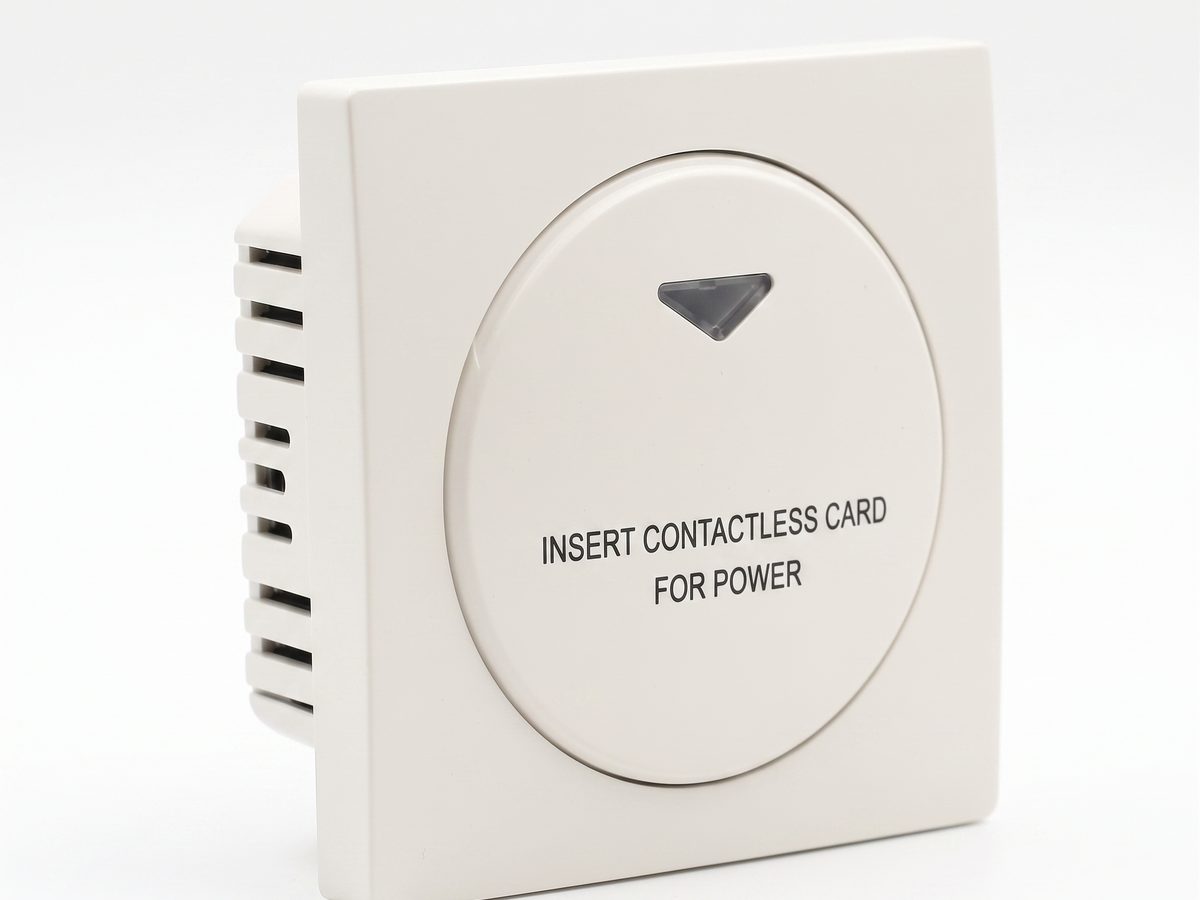
Interrupteur Carte Clé Hôtel — Contrôle Énergie Chambre
Interrupteur carte clé hôtel pour contrôle énergie chambre. Détection RFID/IC, insertion=alimentation, retrait=délai coupure. 220V CA, 10A-16A, RS485 ou contact sec. CE RoHS. Fournisseur OEM/ODM.
Cette page le désigne déjà comme prochaine référence recommandée.
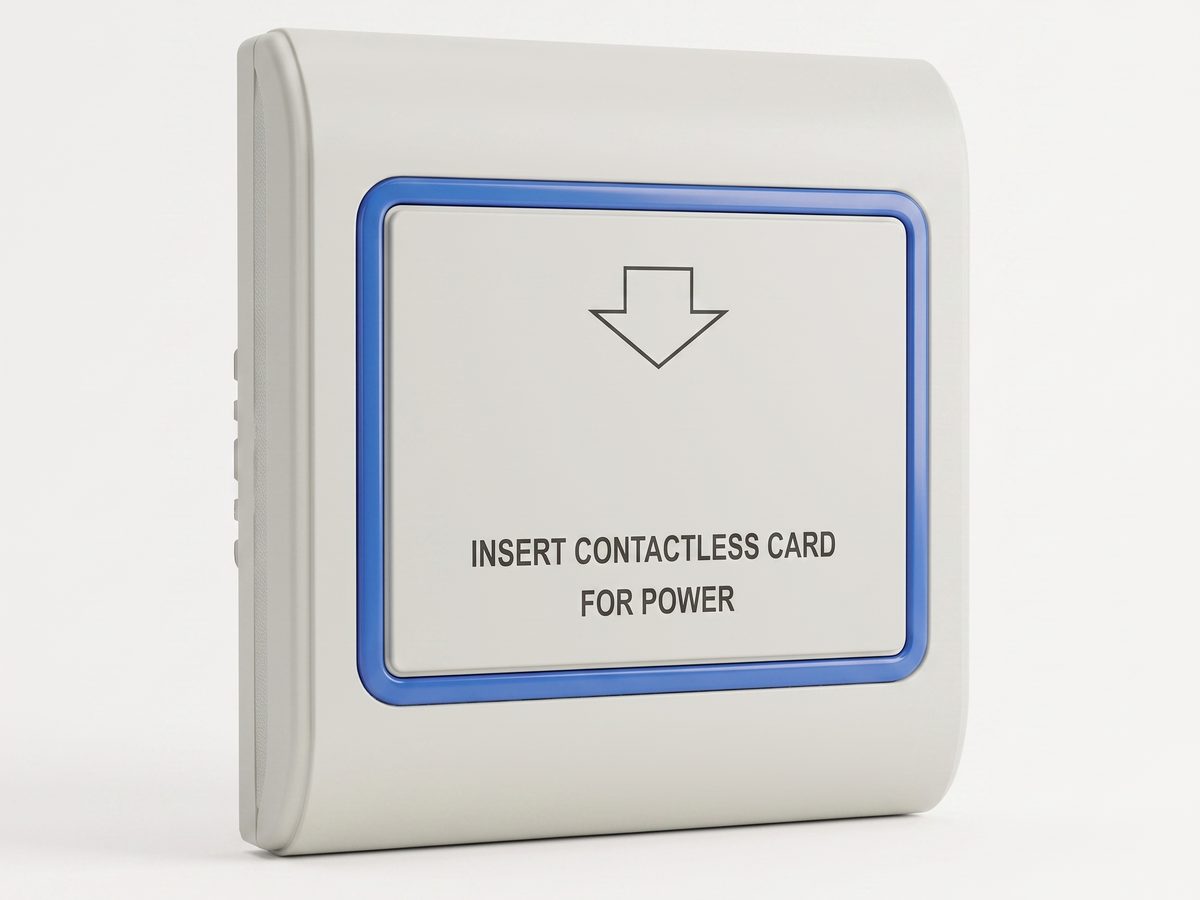
Interrupteur RFID Carte Clé — Contrôle Puissance Chambre 13,56MHz Sans Contact
Interrupteur RFID carte clé avec détection 13,56MHz sans contact. Le client pose simplement la carte sur la zone de lecture pour alimenter la chambre, sans fente d'insertion. Fonctionne avec les serrures d'hôtel. CE RoHS. Fournisseur OEM/ODM.
Cette page le désigne déjà comme prochaine référence recommandée.
Solutions associées
3Système de gestion des chambres par prise carte
Un système pratique de gestion des chambres pour contrôler l'alimentation via des prises carte, contacteurs et règles d'exploitation claires.
Il couvre le même contexte produit : Interrupteur Carte Clé Hôtel — Contrôle Énergie Chambre.
Économie d'énergie hôtel : commutation d'alimentation en chambre
Solution d'économie d'énergie hôtel utilisant la commutation d'alimentation par carte pour éviter le fonctionnement inutile des éclairages, climatisations et prises sélectionnées.
Il couvre le même contexte produit : Interrupteur Carte Clé Hôtel — Contrôle Énergie Chambre.
Contrôle d'alimentation chambre hôtel par cartes-clés
Solution pratique de contrôle d'alimentation pour éclairage, climatisation et prises de chambre via carte de chambre autorisée.
Il couvre le même contexte produit : Interrupteur Carte Clé Hôtel — Contrôle Énergie Chambre.
Articles de blog associés
3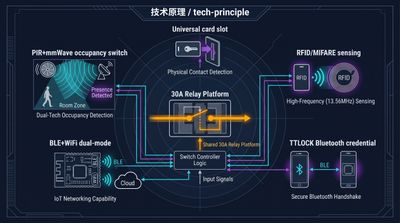
Commutateur carte-clé hôtel : types, modèles, spécification
Le commutateur à carte-clé d'hôtel existe en modèles universel, RFID, TTLOCK, BLE et à présence. Ce guide couvre les termes clés et le choix du modèle.
Il couvre le même contexte produit : Interrupteur Carte Clé Hôtel — Contrôle Énergie Chambre.
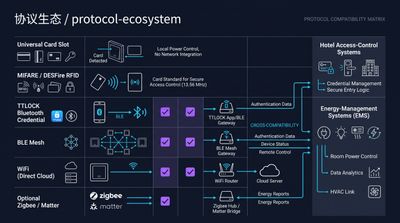
RFID vs NFC pour commutateurs carte clé hôtel : quel choix ?
RFID vs NFC pour commutateurs carte clé hôtel : RFID (125kHz, 13,56MHz MIFARE/Temic) standard alimentation chambre ; NFC protocole téléphone. Comparer portée, verrouillage.
Il couvre le même contexte produit : Interrupteur Carte Clé Hôtel — Contrôle Énergie Chambre.
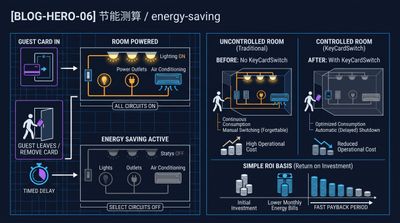
Interrupteur carte-clé hôtel : fonctionnement et économies d'énergie
L'interrupteur à carte-clé d'hôtel active l'électricité à l'insertion de la carte et la coupe au retrait, réduisant de 25 à 40 % la consommation de la chambre. Comparez modèles universels, RFID, TTLOCK et BLE.
Il couvre le même contexte produit : Interrupteur Carte Clé Hôtel — Contrôle Énergie Chambre.
Spécifiez votre projet hôtelier avec nos ingénieurs
Indiquez le nombre de chambres, le type de plafond et votre préférence de protocole. Nous renverrons un plan d'échantillon et un devis sous 24 heures ouvrées.
- Passez d'une guidance générale à une discussion produit ou application.
- Utilisez la RFQ quand le prix, les plans, le MOQ ou le calendrier de lancement nécessitent de la structure.
- Gardez une voie de contact direct visible pour les clarifications rapides et le transfert.