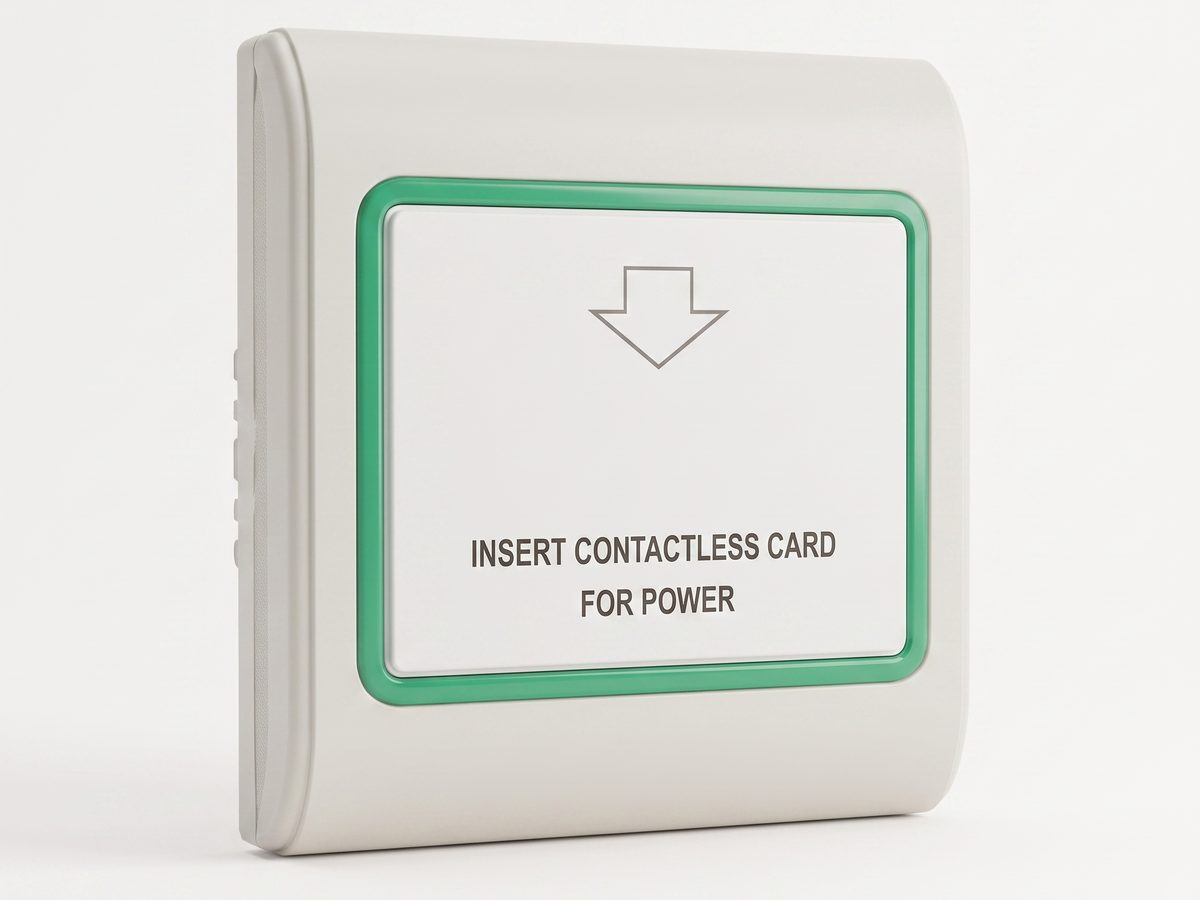
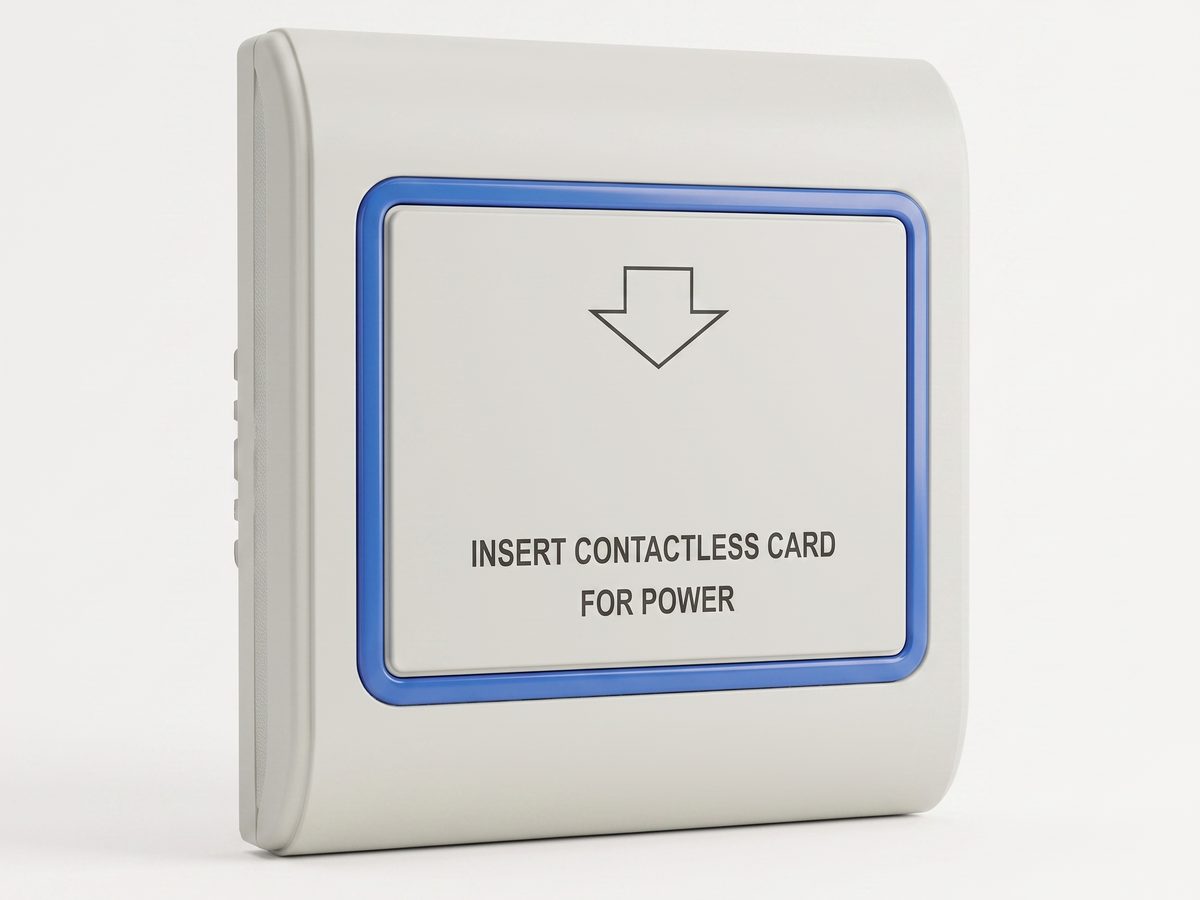
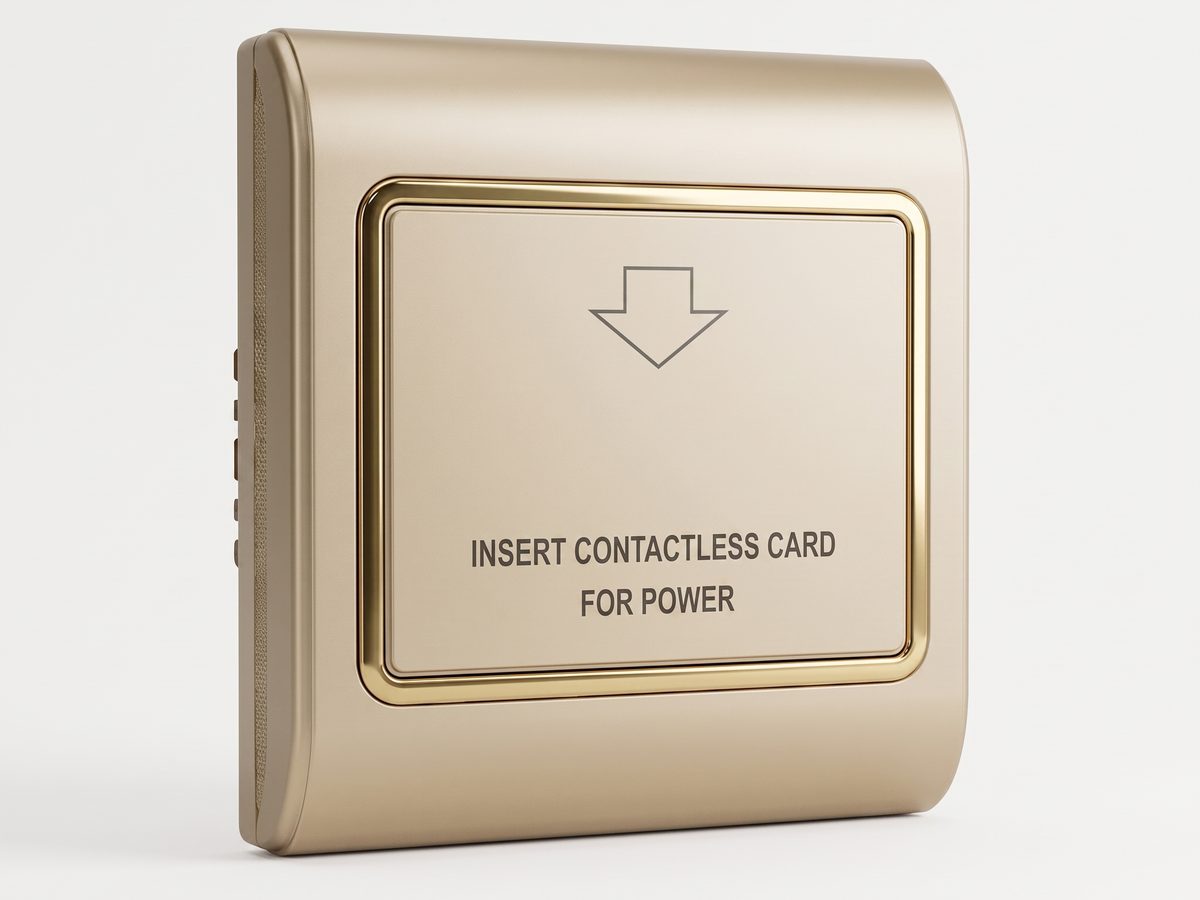
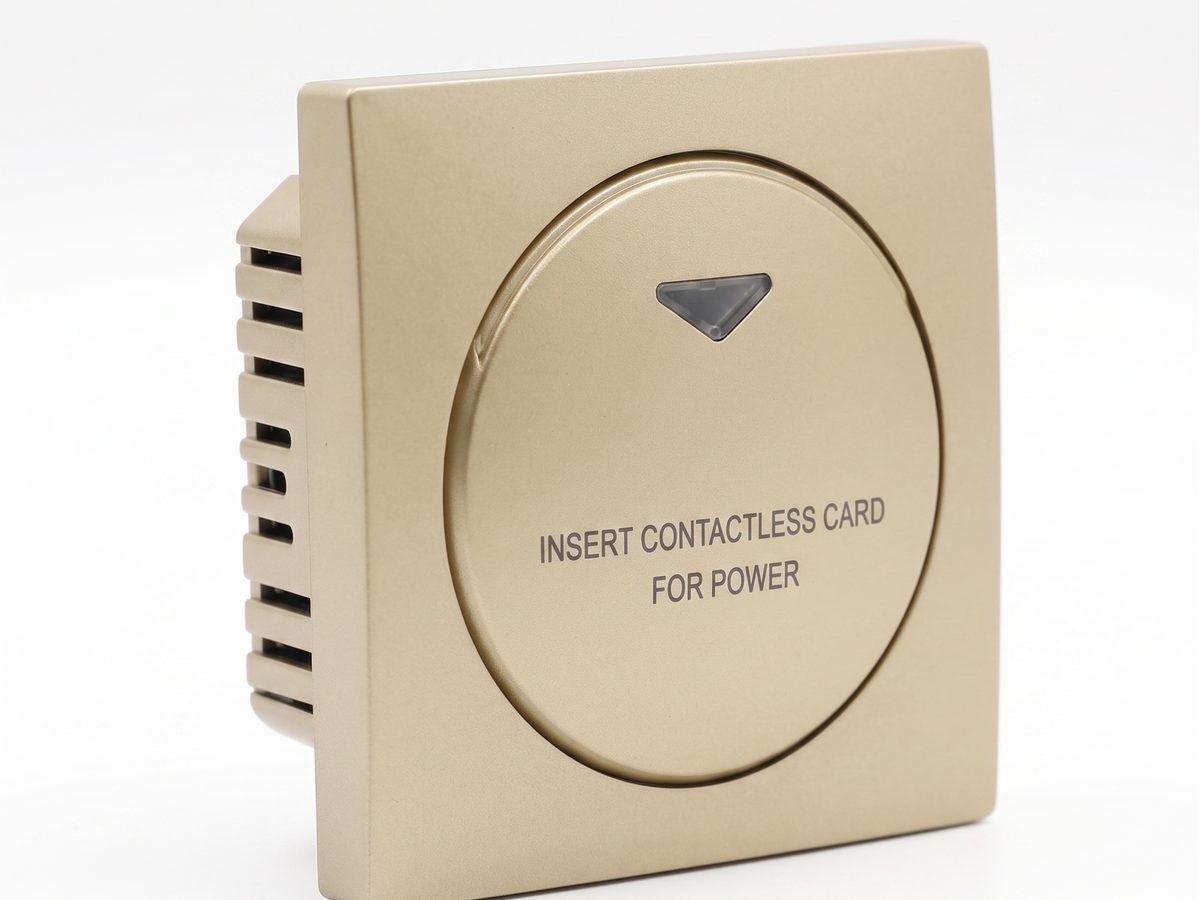
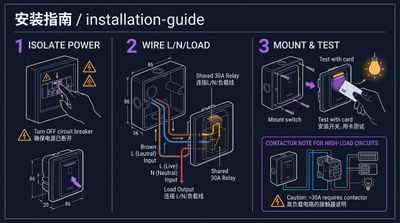
Un interruptor tarjeta inalámbrico es un dispositivo control energía habitación huésped que lleva ahorro energético basado en tarjeta a hoteles donde tender nuevo cableado control es impracticable. En propiedades operativas, pasar cable por paredes terminadas, habitaciones ocupadas y estructuras cortafuego es disruptivo y caro. Un interruptor tarjeta hotel inalámbrico resuelve esto llevando orden tarjeta-dentro/tarjeta-fuera a relé o contactor existente mediante enlace despertar baja frecuencia u RS485 inalámbrico en vez de nuevo cable. Para propietarios hoteles, reformistas y contratistas, un interruptor tarjeta inalámbrico entrega mismo control potencia determinista que unidad cableada mientras convierte una gran reforma en actualización rápida, baja molestia.
Cómo funciona interruptor tarjeta inalámbrico
Un interruptor tarjeta inalámbrico funciona en dos etapas. En el interruptor, el huésped inserta tarjeta IC o RFID, y en 0.5 segundos el interruptor transmite orden encendido inalámbricamente a receptor cableado a relé o contactor habitación, alimentando iluminación, enchufes y HVAC. Cuando el huésped retira la tarjeta, el interruptor envía orden apagado tras retardo seleccionable 15s, 30s, o 60s, dejando aire acondicionado apagarse gradualmente. Porque el enlace inalámbrico es local y baja potencia, el interruptor no depende red edificio — funciona autónomo desde momento instalación.
Opciones despertar baja frecuencia y RS485 inalámbrico
Un interruptor tarjeta inalámbrico está disponible con dos tipos enlace para adecuarse al proyecto. La opción despertar baja frecuencia es elección simple, robusta para enlaces interruptor-receptor línea vista en una habitación, consumiendo potencia mínima así el interruptor puede funcionar con batería hasta dos años. La opción RS485 inalámbrica se adecúa a propiedades que ya usan bucles control RS485, permitiendo coordinar varios interruptores o habitaciones en un bus mientras evita nuevos tendidos cable. Ambas opciones mantienen costes instalación bajos conectando a relé o contactor habitación existente en vez reemplazar toda ruta potencia.
Configuraciones batería y alimentación red
Un interruptor tarjeta inalámbrico puede alimentarse de ambas formas. Donde posición interruptor tiene acceso a alimentación red, la versión alimentada red opera en AC 100-240V, 50/60Hz y acciona relé 10A/16A para cargas hasta 3500W. Donde no existe alimentación conveniente, la opción batería cabe en misma caja 86, consume bajo 0.3W en espera, y reporta estado energía habitación inalámbricamente, con vida batería típica hasta dos años antes reemplazo rápido campo. Esta flexibilidad significa un interruptor tarjeta inalámbrico puede ir en casi cualquier habitación sin recablear pared.
Ahorro energético sin molestias
El propósito de un interruptor tarjeta inalámbrico es ahorro energético, y el mecanismo es idéntico a interruptor cableado. La habitación se alimenta solo mientras tarjeta huésped está presente, así HVAC e iluminación habitación vacía se apagan automáticamente. No hay temporizadores ocupación que fallen ni umbrales movimiento que calibrar — la habitación sigue la tarjeta del huésped. Para una cartera hoteles, añadir interruptores tarjeta inalámbricos en ala habitaciones operativas captura mismas reducciones 20-40% electricidad nivel habitación vistas con instalaciones cableadas, sin programa construcción multi-semana.
Compatibilidad y reutilización hardware existente
Un interruptor tarjeta inalámbrico está diseñado para reutilizar lo ya en la habitación. Acciona relé o contactor existente en vez reemplazar toda ruta potencia, y acepta tarjetas llave huésped IC y RFID estándar sin reemitir medios. Funciona junto a cualquier marca cerradura hotel, incluyendo Onity, VingCard, Assa Abloy, y SALTO, sin trabajo integración. Para propiedades modernizando, la opción RS485 inalámbrica mantiene camino a control centralizado energía habitación huésped mientras el transporte inalámbrico evita nuevo cableado.
Capacidad OEM y ODM
Como proveedor OEM/ODM, adaptamos el interruptor tarjeta inalámbrico a necesidades proyecto: alcance inalámbrico, batería o alimentación red, protocolo inalámbrico baja frecuencia o RS485, acabado placa frontal, y empaque. Cantidad mínima pedido 100 uds con muestras disponibles en 3-4 días y producción masa en 5-7 días. Enviamos mundialmente en términos FOB Shenzhen, CIF, DDP, o EXW y soportamos pago T/T, L/C, y Trade Assurance, con cada unidad cumpliendo CE, RoHS.
Cómo obtener cotización
Díganos su cuenta habitaciones, restricciones reforma (construcción pared, distancia entre interruptor y relé), alimentación disponible en interruptor, y si prefiere baja frecuencia o RS485 inalámbrico. Devolveremos coste por habitación, guía cobertura inalámbrica, diagrama integración, y plan muestras en 24 horas laborables.
Why choose a wireless key card switch for hotel retrofit
A wireless key card switch is a guest room power control device that brings card-based energy saving to hotels where running new control wiring is impractical. In operating properties, pulling cable through finished walls, occupied rooms, and fire-rated structures is disruptive and expensive. A wireless hotel key card switch solves this by carrying the card-in/card-out command to an existing relay or contactor over a low-frequency wake-up or RS485 wireless link instead of a new wire. For hotel owners, renovators, and contractors, a wireless key card switch delivers the same deterministic power control as a wired unit while turning a major retrofit into a quick, low-disruption upgrade.
How a wireless key card switch works
A wireless key card switch works in two stages. At the switch, the guest inserts an IC or RFID key card, and within 0.5 seconds the switch transmits a power-on command wirelessly to a receiver wired to the room's relay or contactor, powering lighting, sockets, and HVAC. When the guest removes the card, the switch sends a power-off command after a selectable 15s, 30s, or 60s delay, letting the air conditioner shut down gracefully. Because the wireless link is local and low-power, the switch does not depend on a building network — it works standalone from the moment it is installed.
Low-frequency wake-up and RS485 wireless options
A wireless key card switch is available with two link types to suit the project. The low-frequency wake-up option is a simple, robust choice for line-of-sight switch-to-receiver links in a single room, drawing minimal power so the switch can run on a battery for up to two years. The RS485 wireless option is suited to properties that already use RS485 control loops, allowing several switches or rooms to be coordinated on one bus while avoiding new cable pulls. Both options keep installation costs down by connecting to an existing room relay or contactor rather than replacing the entire power path.
Battery and line-powered configurations
A wireless key card switch can be powered either way. Where a switch position has access to a mains feed, the line-powered version operates on AC 100-240V, 50/60Hz and drives a 10A/16A relay for loads up to 3500W. Where no convenient feed exists, the battery-powered option fits the same 86-box, draws under 0.3W in standby, and reports the room power status wirelessly, with typical battery life of up to two years before a quick field replacement. This flexibility means a wireless key card switch can go into nearly any room without rewiring the wall.
Energy saving without disruption
The purpose of a wireless key card switch is energy saving, and the mechanism is identical to a wired switch. The room is powered only while a guest card is present, so empty-room HVAC and lighting are switched off automatically. There are no occupancy timers to misfire and no motion thresholds to calibrate — the room follows the guest's card. For a hotel portfolio, adding wireless key card switches across a wing of operating rooms captures the same 20-40% room-level electricity reductions seen with wired installations, without a multi-week construction program.
Compatibility and reuse of existing hardware
A wireless key card switch is designed to reuse what is already in the room. It drives the existing relay or contactor rather than replacing the full power path, and it accepts standard IC and RFID guest key cards without reissuing media. It works alongside any hotel door lock brand, including Onity, VingCard, Assa Abloy, and SALTO, with no integration work. For modernizing properties, the RS485 wireless option keeps a path to centralized guest room power control while the wireless transport avoids new wiring.
OEM and ODM capability
As an OEM/ODM supplier, we tailor the wireless key card switch to project needs: wireless range, battery or line power, low-frequency or RS485 wireless protocol, face plate finish, and packaging. Minimum order quantity is 50 pcs with samples available in 3-4 days and mass production in 5-7 days. We ship worldwide on FOB Shenzhen, CIF, DDP, or EXW terms and support T/T, L/C, and Trade Assurance payment, with every unit carrying CE and RoHS compliance.
How to get a quotation
Tell us your room count, retrofit constraints (wall construction, distance between switch and relay), available power at the switch, and whether you prefer low-frequency or RS485 wireless. We will return a per-room cost, wireless coverage guidance, integration diagram, and sample plan within 24 business hours.