Guía de compra de interruptores de tarjeta para hoteles: cómo especificar la unidad correcta para habitaciones
Guía de compra de interruptores de tarjeta para hoteles para instaladores y equipos de compra que cubre protocolo de tarjeta, voltaje, capacidad de carga, lógica de relé, temporización de apagado retardado, tamaño de panel y compatibilidad.
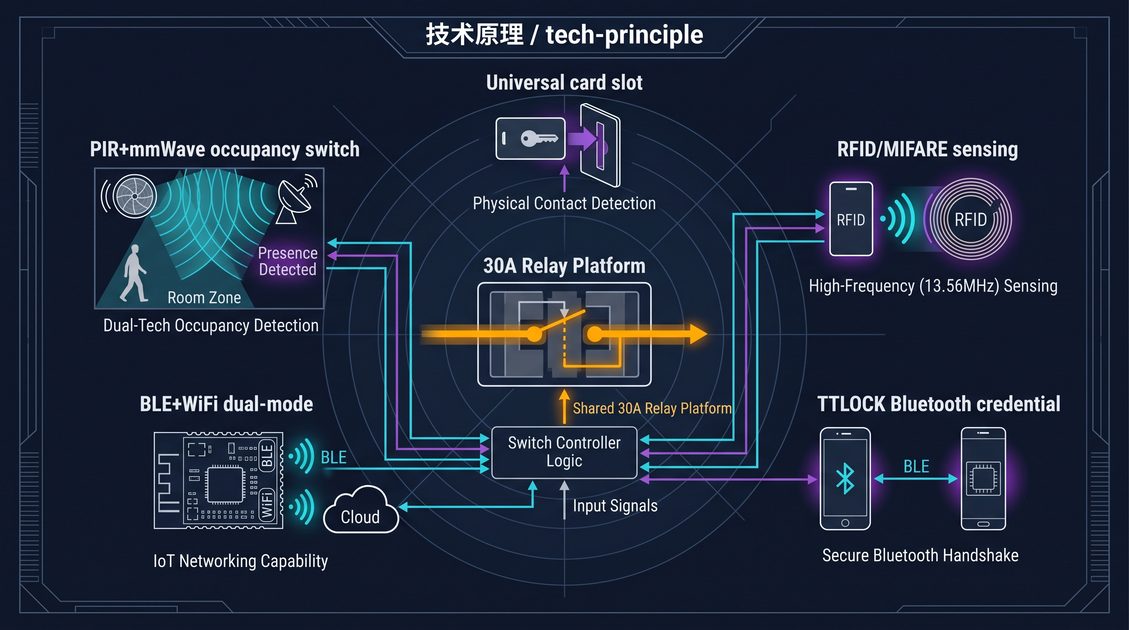
Una guía de compra de interruptores de tarjeta para hoteles es un método estructurado para seleccionar un interruptor de potencia controlado por tarjeta que energiza el circuito de la habitación del huésped solo mientras se inserta una tarjeta válida, cubriendo la tecnología del lector, el voltaje de alimentación, la capacidad de carga, la lógica del relé y el formato de montaje. Una guía de compra de interruptores de tarjeta para hoteles ayuda al comprador a confirmar primero el protocolo de tarjeta, porque el lector debe coincidir con las tarjetas ya emitidas en recepción: un lector de tarjeta de banda magnética de 125 kHz no puede leer una tarjeta RFID de 13,56 MHz y viceversa. Una guía de compra de interruptores de tarjeta para hoteles luego recorre el voltaje AC (110 V o 180–250 V), la carga máxima de la habitación que el relé debe soportar, la temporización de apagado retardado tras la extracción de la tarjeta y si el relé está integrado en el panel o montado externamente. Una guía de compra de interruptores de tarjeta para hoteles está destinada a personal de compras, ingenieros de mantenimiento e integradores de sistemas que desean una lista de verificación repetible que funcione en todas las propiedades de una cartera.
Guía de compra de interruptores de tarjeta para hoteles: qué hace el dispositivo en el circuito de la habitación
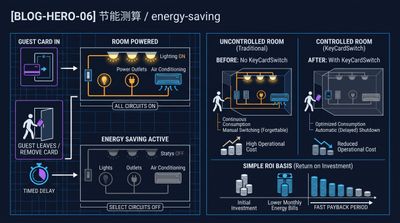
Una guía de compra de interruptores de tarjeta para hoteles comienza con el papel que desempeña el dispositivo en el circuito de potencia de la habitación del huésped. El interruptor es un controlador de relé operado por tarjeta montado en el punto de entrada, típicamente junto a la puerta o en la pared cerca de la entrada, que lee la presencia de una tarjeta válida y cierra un relé para alimentar las luces, el termostato del aire acondicionado y los enchufes. Cuando el huésped retira la tarjeta al salir, el relé se abre tras un retardo preestablecido, cortando la potencia de la habitación desocupada. El propósito de cualquier guía de compra de interruptores de tarjeta para hoteles es traducir esa función simple en especificaciones concretas que el comprador pueda comparar entre proveedores. Entender la arquitectura básica ayuda al comprador a reconocer que el interruptor en sí lleva casi ninguna carga, porque un relé integrado o externo lleva la corriente de la habitación, y que el panel es por tanto un dispositivo de control de baja corriente. Esta separación es el concepto más importante en una guía de compra de interruptores de tarjeta para hoteles, porque determina si una propiedad necesita un interruptor con relé integrado, un relé externo de 30 A o un contactor montado en carril DIN para cargas muy grandes.
La secuencia de trabajo central es consistente en casi todas las unidades. Una tarjeta se inserta en la ranura o se acerca a la zona de lectura del lector. El lector verifica la tarjeta contra su propio formato aceptado, no contra ninguna base de datos remota, porque el interruptor funciona enteramente sobre la presencia física de la tarjeta y el reconocimiento de formato. Cuando se detecta una tarjeta válida, el relé se energiza en aproximadamente un segundo y el circuito de la habitación queda activo. Cuando se retira la tarjeta, un temporizador interno inicia, y tras un retardo de fábrica —comúnmente 15 segundos pero ajustable en muchos modelos— el relé se desenergiza y el circuito se abre. Una guía de compra de interruptores de tarjeta para hoteles debe dejar claro que no hay memoria de quién es el huésped ni seguimiento de actividad; la unidad solo responde a la pregunta "¿hay una tarjeta válida insertada?". Ese comportamiento físico y fuera de línea es por lo que estos dispositivos se adaptan tan ampliamente a habitaciones existentes: reemplazan el interruptor manual o se colocan frente a él y añaden el requisito de tarjeta sin añadir redes.
El dispositivo típico encaja en una caja eléctrica estándar de un solo módulo. El formato más común es un panel empotrado que mide unos 86 mm por 86 mm con una profundidad de 48 mm, de los cuales unos 29 mm quedan empotrados en la pared. También existe una variante de montaje en superficie que se fija a la cara de la pared cuando no hay una caja empotrada disponible. La cara frontal lleva la ranura de tarjeta o la zona de lectura RFID, a veces una pequeña lámpara indicadora que muestra el estado del relé, y ocasionalmente una anulación manual. Una guía de compra de interruptores de tarjeta para hoteles debe tratar el formato de montaje como una decisión de primer orden, porque adaptar una caja empotrada en yeso terminado es mucho más disruptivo que reemplazar una placa empotrada existente. Los compradores deben confirmar el tamaño de la caja y la huella del panel antes de pedir, y deben verificar si las cajas de un solo módulo existentes de la propiedad son unidades estándar de 86 mm o un estándar regional diferente, ya que la geometría del panel no es universal en todos los mercados.
El manejo de carga es el segundo pilar de la decisión de compra. El relé debe soportar la carga combinada de la habitación, que para una habitación de hotel típica incluye el circuito de iluminación, los enchufes y la alimentación del aire acondicionado. La hoja de datos del interruptor normalmente indica la capacidad máxima de corriente de los contactos del relé, y el comprador debe comparar esa capacidad contra la suma de los circuitos de la habitación. Una capacidad común es 30 A para una alimentación de toda la habitación, con unidades más pequeñas de 16 A o 20 A usadas cuando el interruptor controla solo parte de la habitación. Una guía de compra de interruptores de tarjeta para hoteles debe advertir al comprador que nunca asuma que el cuerpo del interruptor lleva la carga, porque la electrónica del panel está dimensionada solo para unos pocos amperios; el relé hace el trabajo pesado. Para habitaciones cuyo aire acondicionado es un circuito dedicado grande, el comprador puede necesitar una unidad con un contacto de relé separado o un contactor externo, lo cual es una especificación que vale la pena anotar en el pedido.
El tercer pilar es el comportamiento de apagado retardado. Cuando se retira la tarjeta, el interruptor no corta la potencia instantáneamente; espera un intervalo preestablecido de fábrica para que el huésped no quede a oscuras mientras guarda la tarjeta, y para que la electrónica de control, como un controlador de aire acondicionado, pueda apagarse limpiamente. Los valores de retardo van desde unos pocos segundos hasta un minuto, siendo 15 segundos un valor predeterminado muy común. Algunos modelos permiten al instalador seleccionar el retardo con un jumper o un pequeño interruptor a bordo, mientras que otros son fijos. Una guía de compra de interruptores de tarjeta para hoteles debe pedir al comprador que elija el retardo que coincida con los hábitos de limpieza y el perfil de apagado del aire acondicionado, porque un retardo demasiado corto puede dejar la habitación oscura a medio movimiento y un retardo demasiado largo desperdicia potencia después de que el huésped realmente se ha ido.
Guía de compra de interruptores de tarjeta para hoteles: protocolo de tarjeta y compatibilidad del lector
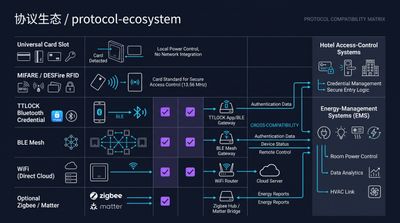
Una guía de compra de interruptores de tarjeta para hoteles aborda a continuación el protocolo de tarjeta, que es la fuente más común de errores en los pedidos. El lector dentro del interruptor debe reconocer la misma tecnología de tarjeta que la propiedad ya emite, y las dos familias dominantes son banda magnética de 125 kHz (a menudo llamada deslizamiento o pista magnética) y RFID de 13,56 MHz (identificación por radiofrecuencia). Una tarjeta de banda magnética tiene una franja marrón o negra en el reverso que almacena datos en tres pistas paralelas, y el interruptor lee la tarjeta deslizándola o insertándola en una ranura que mueve la cabeza lectora a través de la franja. Una tarjeta RFID es una tarjeta plástica con una antena y un chip integrados, leída sin contacto físico al acercar la tarjeta a la zona de lectura. Las dos no son intercambiables: un lector de 125 kHz ignora una tarjeta de 13,56 MHz, y un lector RFID no puede leer una banda magnética. El comprador debe, por tanto, preguntar en recepción qué tecnología está en uso antes de pedir cualquier unidad.
Dentro del RFID, hay una distinción adicional en cómo se usa la tarjeta. Algunos sistemas RFID funcionan con un chip de baja frecuencia de 125 kHz que contiene solo un número de identificación, y el interruptor solo necesita detectar una tarjeta de la frecuencia correcta. Otros sistemas usan 13,56 MHz y pueden incrustar datos de aplicación en sectores de memoria adicionales. Para los propósitos de una guía de compra de interruptores de tarjeta para hoteles, la pregunta práctica es más simple: ¿necesita la propiedad que el interruptor acepte cualquier tarjeta de una frecuencia dada, o que verifique un bloque de datos específico en la tarjeta? La mayoría de los interruptores de tarjeta son basados en presencia y aceptan cualquier tarjeta de la frecuencia coincidente, porque la codificación de recepción ya determina quién es huésped. Una guía de compra de interruptores de tarjeta para hoteles debe recomendar aclarar si el interruptor debe ser un lector genérico que detecte cualquier tarjeta de 13,56 MHz o un lector configurado para una codificación particular, y debe señalar que los lectores basados en presencia son la opción más simple y ampliamente disponible.
El formato de la ranura de tarjeta también importa para tarjetas magnéticas. Un interruptor de banda magnética puede ser un lector de deslizamiento, donde el huésped desliza la tarjeta a través de una ranura vertical u horizontal, o un lector de ranura, donde la tarjeta se inserta completamente y se retira manualmente. Los lectores de deslizamiento son rápidos pero requieren dirección y velocidad correctas de deslizamiento, mientras que los lectores de ranura son más tolerantes porque la tarjeta permanece en la ranura mientras el huésped está dentro de la habitación. Una guía de compra de interruptores de tarjeta para hoteles debe preguntar si la propiedad prefiere que el huésped deje la tarjeta en la ranura, lo cual es común en sistemas magnéticos, o que se lleve la tarjeta, lo cual es común en RFID. Esta elección afecta la ergonomía del panel y la experiencia del huésped, y es una decisión de compra genuina en lugar de un detalle menor, porque cambia todo el diseño frontal y la mecánica del lector.
La durabilidad del lector es un factor de compra relacionado. El lector de tarjeta es la parte más expuesta al desgaste, porque ve cada entrada de cada huésped. Un lector de deslizamiento magnético contiene una cabeza lectora móvil y una ranura que recoge polvo y residuos de tarjetas, mientras que un lector RFID no tiene partes móviles y está sellado detrás de la cara, por lo que los interruptores RFID tienden a ser más fiables a largo plazo. Una guía de compra de interruptores de tarjeta para hoteles debe sopesar el costo de un lector magnético contra el mantenimiento de limpiar la ranura y reemplazar ocasionalmente la cabeza lectora, versus el costo inicial más alto de un lector RFID que rara vez necesita servicio. Para propiedades que planean una larga vida útil, RFID suele ser la opción de menor costo total a pesar del precio inicial más alto.
La aceptación del formato de tarjeta también interactúa con las tarjetas de reemplazo. Si una propiedad emite tarjetas magnéticas hoy pero planea migrar a RFID más tarde, la elección del interruptor afecta esa migración. Una guía de compra de interruptores de tarjeta para hoteles debe aconsejar comprar unidades que coincidan con la tecnología de tarjeta actual mientras se confirma que el cuerpo del interruptor y la huella del panel son neutrales en tecnología, de modo que un cambio posterior de una cara de lector magnético a una cara de lector RFID no requiera cambiar la caja del relé ni recablear. Algunos fabricantes venden una base común con cabezas de lector intercambiables precisamente por esta razón. Verificar si la cabeza del lector es reemplazable en campo es una forma de bajo costo de proteger la compra a futuro.
Guía de compra de interruptores de tarjeta para hoteles: voltaje de alimentación y capacidad de carga
Una guía de compra de interruptores de tarjeta para hoteles se enfoca ahora en la alimentación eléctrica, comenzando con el voltaje AC. Los dos suministros regionales comunes son 110 V, usado en Norteamérica y partes de Asia y Latinoamérica, y 220 V a 240 V, usado en Europa, gran parte de Asia, Oriente Medio y África. La mayoría de los interruptores de tarjeta están especificados para un rango, típicamente 180–250 V AC para la familia de 220 V o alrededor de 110 V AC para la familia de bajo voltaje, aunque muchas unidades modernas aceptan ambos rangos con una fuente de alimentación interna universal. Una guía de compra de interruptores de tarjeta para hoteles debe insistir en que el comprador confirme el voltaje nominal de la propiedad y el rango medido, porque un interruptor dimensionado para 220 V instalado en una alimentación de 110 V no operará correctamente, y una unidad para 110 V en una alimentación de 220 V puede dañarse. El voltaje está impreso en la etiqueta o hoja de datos, y el comprador debe igualarlo al sistema de distribución antes de pedir.
La capacidad de carga es la siguiente especificación eléctrica. El relé debe soportar la carga simultánea máxima de todo lo que el interruptor controla, y el comprador debe calcular esa carga en lugar de adivinarla. Para una habitación cuya iluminación, enchufes y aire acondicionado están todos conmutados, la demanda combinada puede ser sustancial. Una capacidad de relé común es 30 A al voltaje nominal, que cubre cómodamente una habitación de huésped estándar, mientras que unidades más pequeñas están dimensionadas en 16 A o 20 A para habitaciones donde el interruptor controla solo la iluminación o un subcircuito limitado. Una guía de compra de interruptores de tarjeta para hoteles debe presentar el cálculo de carga como una tarea aritmética simple: liste cada circuito controlado, anote su capacidad de interruptor o carga estimada, súmelas y aplique un margen de seguridad para que el relé no funcione en su máximo absoluto. Elegir un relé con margen por encima de la carga calculada es un seguro barato contra disparos molestos y desgaste prematuro de contactos.
La distinción entre la capacidad de corriente del propio interruptor y la capacidad de contacto del relé vale la pena repetir en cualquier guía de compra de interruptores de tarjeta para hoteles. La electrónica del panel, el lector y la bobina del relé consumen solo unos pocos vatios, típicamente en el rango de 1 W a 3 W en espera. Los contactos del relé, ya sea dentro del interruptor o en una unidad externa, llevan la carga de la habitación. Los compradores a veces leen mal una hoja de datos y creen que el interruptor en sí está dimensionado para 30 A, cuando en realidad solo lo están los contactos del relé. La lectura correcta es que el interruptor controla un relé, y la capacidad de contacto del relé define la carga máxima. Si la carga de la habitación supera la capacidad del relé interno, el comprador debe seleccionar un modelo que accione un relé o contactor externo, y la salida de accionamiento de la bobina del interruptor debe ser compatible con ese dispositivo externo.
La corriente de arranque es un factor sutil pero importante en la capacidad de carga. La iluminación incandescente y ciertos motores consumen una sobrecarga momentánea varias veces su corriente en estado estable al encenderse, y el relé debe sobrevivir a estas sobrecargas cada vez que la habitación se energiza. Las cargas resistivas como calefacción no consumen sobrecarga significativa, pero motores, transformadores y muchos controladores LED sí. Una guía de compra de interruptores de tarjeta para hoteles debe aconsejar verificar la capacidad de contacto del relé tanto para la corriente en estado estable como para la capacidad de conmutación de sobrecarga, y preferir un relé con una capacidad de contacto generosa cuando la habitación contiene motores o bancos grandes de controladores LED. Subdimensionar para sobrecarga es una causa principal de picado de contactos de relé y fallo prematuro.
El calibre del cableado conectado a los contactos del relé también debe coincidir con la carga. Los conductores de alimentación de la habitación deben dimensionarse para la corriente del relé al voltaje de alimentación, y el comprador debe confirmar el tamaño de cable existente de la propiedad contra la capacidad del relé. Una guía de compra de interruptores de tarjeta para hoteles debe recordar al comprador que un relé dimensionado para 30 A es tan bueno como el conductor que lo alimenta, y que un cableado subdimensionado anula la capacidad del relé y crea un riesgo de incendio. Si el cableado existente de la habitación es más delgado que la capacidad del nuevo relé, el comprador debe elegir un relé igualado al tamaño del conductor existente o actualizar el cable, y debe anotar esto en el pedido para evitar una instalación que pase la inspección solo por un margen estrecho.
Guía de compra de interruptores de tarjeta para hoteles: tipo de relé y lógica de conmutación
Una guía de compra de interruptores de tarjeta para hoteles debe cubrir la configuración del relé, porque determina toda la instalación. Las dos opciones amplias son un relé integrado, donde los contactos de conmutación están dentro del panel empotrado y la alimentación de la habitación se lleva a la caja, y un relé externo, donde el interruptor lleva solo un par de control a un relé o contactor montado por separado. Un relé integrado es el más simple de instalar, porque el instalador aterriza la alimentación de la habitación en los terminales de carga del panel y todo está en una caja, pero está limitado por el espacio físico y la capacidad de corriente del panel empotrado. Un relé externo o contactor de carril DIN puede conmutar cargas mucho mayores y es más fácil de servir, porque el relé puede reemplazarse sin tocar el panel, a costa de una segunda caja y más cableado. Una guía de compra de interruptores de tarjeta para hoteles debe mapear la carga y la preferencia de servicio de la propiedad a una de estas dos arquitecturas temprano en la selección.
La lógica del relé describe si el relé es normalmente abierto o normalmente cerrado y cómo el interruptor lo acciona. En un arreglo normalmente abierto, los contactos están abiertos cuando el relé está desenergizado, por lo que no fluye potencia hasta que la tarjeta cierra el circuito, que es el comportamiento de seguridad deseado para ahorro de energía. Algunos diseños añaden una prioridad de seguridad tal que un fallo de potencia siempre deja la habitación desenergizada en el circuito conmutado, lo cual es más seguro y es el predeterminado recomendado. Una guía de compra de interruptores de tarjeta para hoteles debe confirmar que la lógica de la unidad es normalmente abierta con seguridad de apagado, y debe tratar cualquier variante normalmente cerrada como un caso especial únicamente, porque un relé normalmente cerrado dejaría la habitación alimentada cuando la tarjeta está ausente, derrotando todo el propósito.
El número de canales de relé importa para habitaciones con circuitos divididos. Un interruptor de un solo canal controla una alimentación combinada, mientras que un interruptor de dos canales puede controlar la iluminación y el aire acondicionado por separado, de modo que, por ejemplo, retirar la tarjeta corte el AC inmediatamente pero mantenga un enchufe de baja potencia activo para carga de dispositivos. Una guía de compra de interruptores de tarjeta para hoteles debe preguntar si la propiedad quiere un circuito de habitación unificado o control separado de iluminación y potencia, porque una unidad de dos canales cuesta más pero da un control de energía más fino y puede mantener enchufes esenciales energizados. Si las habitaciones de la propiedad tienen aire acondicionado en un circuito dedicado que debe mantenerse alimentado independientemente, el comprador necesita una unidad con al menos dos canales de relé independientes o un arreglo de bypass.
La salida de accionamiento de la bobina del relé es relevante al elegir un relé externo. Si el interruptor acciona un relé externo, la salida es una señal de control de bajo voltaje, y el relé externo debe ser compatible con esa señal, aceptando típicamente una bobina de 110 V o 220 V o una bobina DC de bajo voltaje según el modelo. Una guía de compra de interruptores de tarjeta para hoteles debe hacer que el comprador confirme que el voltaje de bobina y la capacidad de contacto del relé externo coinciden con la salida de accionamiento del interruptor y la carga de la habitación, y debe tratar el interruptor y el relé externo como una pareja igualada en lugar de artículos pedidos por separado. Pedirlos juntos como un kit reduce el riesgo de un desajuste descubierto en la instalación.
El comportamiento de conmutación bajo anulación manual es otra consideración de lógica. Muchos interruptores incluyen un modo de bypass o encendido manual para que el personal de limpieza pueda energizar la habitación sin tarjeta, para limpieza o mantenimiento. La anulación suele ser un interruptor en la cara o un jumper interno, y típicamente evita el requisito de tarjeta hasta que se reinicia. Una guía de compra de interruptores de tarjeta para hoteles debe confirmar que la anulación existe y que vuelve a operación controlada por tarjeta cuando se retira la tarjeta o se reinicia la anulación, para que el comportamiento de ahorro de energía no quede deshabilitado permanentemente. La anulación es una característica pequeña pero en la que el personal de mantenimiento confía diariamente, por lo que su presencia y comportamiento de reinicio pertenecen a la especificación.
Guía de compra de interruptores de tarjeta para hoteles: apagado retardado y comportamiento de temporización
Una guía de compra de interruptores de tarjeta para hoteles debe dedicar atención al temporizador de apagado retardado, porque afecta directamente tanto la comodidad del huésped como el ahorro de energía. Cuando se retira la tarjeta, el interruptor mantiene el relé cerrado por un intervalo preestablecido de fábrica antes de abrir el circuito. El retardo sirve varios propósitos: da al huésped unos segundos de luz mientras recoge pertenencias o vuelve a entrar a recuperar algo, permite que la electrónica de control, como un termostato de aire acondicionado, complete un apagado limpio, y evita que el relé chatteree si una tarjeta se retira y reinserte brevemente. Una guía de compra de interruptores de tarjeta para hoteles debe explicar que el retardo es un compromiso deliberado entre eliminación instantánea de potencia y comodidad momentánea, y que el valor correcto depende de las habitaciones y hábitos de limpieza de la propiedad.
Los valores de retardo comunes van desde unos 5 segundos hasta 60 segundos, siendo 15 segundos un valor predeterminado de fábrica frecuente. Retardos más cortos cortan la potencia antes y ahorran ligeramente más energía, pero pueden dejar a un huésped en la oscuridad si sale y se da cuenta inmediatamente de que dejó algo. Retardos más largos dan más comodidad pero mantienen la habitación vacía alimentada por más tiempo. Una guía de compra de interruptores de tarjeta para hoteles debe presentar esto como una decisión ajustable y preguntar si el modelo permite ajustar el retardo, ya sea por un jumper, un pequeño interruptor rotativo o un interruptor DIP en el panel, en lugar de ser fijo en fábrica. Un retardo ajustable permite a la propiedad ajustar cada tipo de habitación a sus propios hábitos y hace que un artículo de stock cubra toda la propiedad.
El retardo también interactúa con la secuencia de apagado del aire acondicionado. Si el controlador de aire acondicionado de la habitación necesita tiempo para escribir su estado final o para ciclar el compresor gradualmente, un retardo extremadamente corto puede interrumpir esa secuencia. Por el contrario, si el aire acondicionado funciona en un circuito siempre activo no controlado por el interruptor de tarjeta, el retardo es irrelevante para él. Una guía de compra de interruptores de tarjeta para hoteles debe hacer que el comprador mapee qué circuitos controla realmente el interruptor de tarjeta y luego elija el retardo en consecuencia, para que el temporizador sea lo suficientemente largo para que la electrónica controlada se apague limpiamente y lo suficientemente corto para evitar potencia desperdiciada. Igualar el retardo al perfil real de apagado previene tanto la incomodidad como el tiempo de funcionamiento desperdiciado.
El comportamiento de reentrada es otro detalle de temporización. Cuando el huésped reinserte la tarjeta durante la ventana de retardo, el interruptor debe reconocer la tarjeta y mantener el relé cerrado, reiniciando el temporizador en lugar de disparar el relé dos veces. Una guía de compra de interruptores de tarjeta para hoteles debe confirmar que la unidad maneja una reinserción de tarjeta durante el retardo con elegancia, porque un interruptor que conmuta en una segunda inserción es confuso y puede dejar la habitación inesperadamente alimentada u oscura. Una unidad bien diseñada trata la presencia de la tarjeta como la única entrada de control, por lo que el relé permanece cerrado mientras una tarjeta válida está en el lector, independientemente de cuántas veces el huésped entra y sale.
El comportamiento del indicador durante el retardo es una característica final de temporización que vale la pena especificar. La mayoría de los interruptores muestran una pequeña lámpara que indica si el relé está energizado, y algunos muestran un estado diferente durante el período de apagado retardado, para que el huésped y el personal puedan ver de un vistazo si la habitación está activa o apagándose. Una guía de compra de interruptores de tarjeta para hoteles debe confirmar los significados del indicador y su visibilidad, porque una lámpara clara reduce la confusión del huésped sobre si la tarjeta funciona y ayuda a la limpieza a identificar qué habitaciones están alimentadas. El indicador es un componente menor, pero su claridad tiene un efecto desproporcionado en la fiabilidad percibida.
Guía de compra de interruptores de tarjeta para hoteles: montaje, tamaño de panel y compatibilidad de caja
Una guía de compra de interruptores de tarjeta para hoteles debe cubrir el montaje físico antes de pedir, porque determina cuán disruptiva será la instalación. El formato dominante es un panel empotrado que encaja en una caja eléctrica estándar de un solo módulo, con la huella métrica común en aproximadamente 86 mm por 86 mm y una profundidad cerca de 48 mm, de los cuales unos 29 mm quedan dentro de la pared. Este tamaño a veces se refiere por su estándar regional, y el comprador debe confirmar que las cajas existentes de la propiedad coinciden con la huella del cuerpo trasero del interruptor. Una guía de compra de interruptores de tarjeta para hoteles debe tratar la compatibilidad de caja como un paso de verificación previo al pedido, porque un panel que no encaja en la caja existente significa una nueva caja, un adaptador de montaje en superficie o un empotrado mayor, todos los cuales añaden mano de obra y costo a una renovación.
Donde no existe una caja empotrada, una variante de montaje en superficie es la respuesta práctica. Un interruptor de tarjeta de montaje en superficie se fija a la cara de la pared con tornillos o adhesivo, alojando el lector y el relé en un recinto autónomo, y es ideal para concreto
A hotel key card switch buying guide is a structured method for selecting a card-controlled power switch that energizes the guest-room circuit only while a valid card is inserted, covering the reader technology, the supply voltage, the load rating, the relay logic, and the mounting format. A hotel key card switch buying guide helps the buyer confirm the card protocol first, because the reader must match the cards already issued at the front desk — a 125 kHz magnetic strip card reader cannot read a 13.56 MHz RFID card and vice versa. A hotel key card switch buying guide then walks through the AC voltage (110V or 180–250V), the peak room load the relay must carry, the delay-off timing after card removal, and whether the relay is built into the panel or mounted externally. A hotel key card switch buying guide is intended for purchasing staff, maintenance engineers, and system integrators who want one repeatable checklist that works across every property in a portfolio.
Hotel Key Card Switch Buying Guide: What the Device Does in the Room Circuit
A hotel key card switch buying guide begins with the role the device plays in the guest-room power circuit. The switch is a card-operated relay controller mounted at the entry point, typically beside the door or on the wall near the entrance, that reads the presence of a valid key card and closes a relay to feed power to the lights, the air-conditioning thermostat, and the socket outlets. When the guest removes the card on leaving, the relay opens after a preset delay, cutting the unoccupied room's power. The purpose of any hotel key card switch buying guide is to translate that simple function into concrete specifications the buyer can compare across suppliers. Understanding the basic architecture helps the buyer recognize that the switch itself carries almost no load, because a built-in or external relay carries the room current, and that the panel is therefore a low-current control device. This separation is the single most important concept in a hotel key card switch buying guide, because it determines whether a property needs a switch with a built-in relay, an external 30A relay, or a DIN-rail-mounted contactor for very large loads.
The core working sequence is consistent across nearly all units. A card is inserted into the slot or held against the reader face. The reader verifies the card against its own accepted format, not against any remote database, because the switch works entirely on physical card presence and format recognition. When a valid card is detected, the relay energizes within about one second and the room circuit is live. When the card is removed, an internal timer starts, and after a factory-set delay — commonly 15 seconds but adjustable on many models — the relay de-energizes and the circuit opens. A hotel key card switch buying guide should make clear that there is no memory of who the guest is and no tracking of activity; the unit only answers the question "is a valid card inserted." That physical, offline behavior is why these devices are so widely retrofitted into existing rooms: they replace the manual switch or sit in front of it and add the card requirement without adding networking.
The typical device fits a standard single-gang electrical box. The most common format is a flush panel measuring about 86mm by 86mm with a depth of 48mm, of which about 29mm is embedded in the wall. There is also a surface-mount variant that fixes to the wall face when a recessed box is not available. The front face carries the card slot or the RFID read zone, sometimes a small indicator lamp showing relay state, and occasionally a manual override. A hotel key card switch buying guide should treat the mounting format as a first-order decision, because retrofitting a recessed box in finished plaster is far more disruptive than replacing an existing flush plate. Buyers should confirm the box size and the panel footprint before ordering, and should check whether the property's existing single-gang boxes are standard 86mm units or a different regional standard, since panel geometry is not universal across markets.
Load handling is the second pillar of the buying decision. The relay must carry the combined load of the room, which for a typical hotel room includes the lighting circuit, the socket outlets, and the air-conditioning supply. The switch's datasheet normally states the maximum current rating of the relay contacts, and the buyer should compare that rating against the sum of the room's circuits. A common rating is 30A for a whole-room feed, with smaller units at 16A or 20A used when the switch controls only part of the room. A hotel key card switch buying guide should warn the buyer never to assume the switch body carries the load, because the panel's own electronics are rated for only a few amps; the relay does the heavy work. For rooms whose air-conditioning is a large dedicated circuit, the buyer may need a unit with a separate relay contact or an external contactor, which is a specification worth noting on the order.
The third pillar is the delay-off behavior. When the card is removed, the switch does not cut power instantly; it waits a factory-set interval so the guest is not plunged into darkness while putting the card away, and so that control electronics such as an air-conditioning controller can shut down cleanly. Delay values range from a few seconds to a minute, with 15 seconds being a very common default. Some models allow the installer to select the delay with a jumper or a small onboard switch, while others are fixed. A hotel key card switch buying guide should ask the buyer to choose the delay that matches housekeeping habits and the air-conditioning shutdown profile, because too short a delay can leave the room dark mid-motion and too long a delay wastes power after the guest has truly left.
Hotel Key Card Switch Buying Guide: Card Protocol and Reader Compatibility
A hotel key card switch buying guide next addresses the card protocol, which is the single most common source of ordering mistakes. The reader inside the switch must recognize the same card technology the property already issues, and the two dominant families are 125 kHz magnetic strip (often called swipe or magnetic track) and 13.56 MHz RFID (radio-frequency identification). A magnetic-strip card has a brown or black stripe on the back that stores data in three parallel tracks, and the switch reads the card by swiping or inserting it into a slot that moves the reader head across the stripe. An RFID card is a plastic card with an embedded antenna and chip, read without physical contact by holding the card near the read zone. The two are not interchangeable: a 125 kHz reader ignores a 13.56 MHz card, and an RFID reader cannot read a magnetic stripe. The buyer must therefore ask the front desk which technology is in use before ordering any unit.
Within RFID, there is a further distinction in how the card is used. Some RFID systems work with a low-frequency 125 kHz chip that contains only an identification number, and the switch merely needs to detect a card of the right frequency. Other systems use 13.56 MHz and may embed application data in additional memory sectors. For the purposes of a hotel key card switch buying guide, the practical question is simpler: does the property need the switch to accept any card of a given frequency, or does it need the switch to check a specific data block on the card? Most key card switches are presence-based and accept any card of the matching frequency, because the front desk encoding already determines who is a guest. A hotel key card switch buying guide should recommend clarifying whether the switch must be a generic reader that detects any 13.56 MHz card or a reader configured for a particular encoding, and should note that presence-based readers are the simplest and most widely available option.
The card slot format also matters for magnetic cards. A magnetic-strip switch can be a swipe reader, where the guest slides the card through a vertical or horizontal slot, or a slot reader, where the card is inserted fully and removed manually. Swipe readers are quick but require correct swipe direction and speed, while slot readers are more forgiving because the card sits in the slot while the guest is inside the room. A hotel key card switch buying guide should ask whether the property prefers the guest to leave the card in the slot, which is common for magnetic systems, or to take the card with them, which is common for RFID. This choice affects the ergonomics of the panel and the guest experience, and it is a genuine buying decision rather than a minor detail, because it changes the entire face layout and the reader mechanics.
Reader durability is a related buying factor. The card reader is the part most exposed to wear, because it sees every entry by every guest. A magnetic swipe reader contains a moving read head and a slot that collects dust and card debris, while an RFID reader has no moving parts and is sealed behind the face, which is why RFID switches tend to be more reliable over the long term. A hotel key card switch buying guide should weigh the cost of a magnetic reader against the maintenance of cleaning the slot and occasionally replacing the read head, versus the higher initial cost of an RFID reader that rarely needs servicing. For properties planning a long service life, RFID is often the lower total-cost choice despite the higher upfront price.
Card format acceptance also interacts with replacement cards. If a property issues magnetic cards today but plans to migrate to RFID later, the switch choice affects that migration. A hotel key card switch buying guide should advise buying units that match the current card technology while confirming that the switch body and panel footprint are technology-neutral, so that a later swap from a magnetic reader face to an RFID reader face does not require changing the relay box or rewiring. Some manufacturers sell a common base with interchangeable reader heads for exactly this reason. Checking whether the reader head is replaceable in the field is a low-cost way to future-proof the purchase.
Hotel Key Card Switch Buying Guide: Supply Voltage and Load Rating
A hotel key card switch buying guide now turns to the electrical supply, starting with the AC voltage. The two common regional supplies are 110V, used in North America and parts of Asia and Latin America, and 220V to 240V, used across Europe, much of Asia, the Middle East, and Africa. Most key card switches are specified for one range, typically 180–250V AC for the 220V family or around 110V AC for the low-voltage family, though many modern units accept both ranges with an internal universal power supply. A hotel key card switch buying guide should insist that the buyer confirm the property's nominal supply voltage and the measured range, because a switch rated for 220V installed on a 110V feed will not operate correctly, and a 110V-rated unit on a 220V feed may be damaged. The voltage is printed on the label or datasheet, and the buyer should match it to the distribution system before ordering.
The load rating is the next electrical specification. The relay must carry the peak simultaneous load of everything the switch controls, and the buyer should calculate that load rather than guess it. For a room whose lighting, sockets, and air-conditioning are all switched, the combined demand can be substantial. A common relay rating is 30A at the rated voltage, which comfortably covers a standard guest room, while smaller units are rated at 16A or 20A for rooms where the switch controls only lighting or a limited sub-circuit. A hotel key card switch buying guide should present the load calculation as a simple arithmetic task: list each controlled circuit, note its breaker rating or estimated load, sum them, and apply a safety margin so the relay is not run at its absolute maximum. Choosing a relay with headroom above the calculated load is inexpensive insurance against nuisance tripping and premature contact wear.
The distinction between the switch's own current rating and the relay's contact rating is worth repeating in any hotel key card switch buying guide. The panel electronics, the reader, and the relay coil draw only a few watts, typically in the range of 1W to 3W in standby. The relay contacts, whether inside the switch or in an external unit, carry the room load. Buyers sometimes misread a datasheet and believe the switch itself is rated for 30A, when in fact only the relay contacts are. The correct reading is that the switch controls a relay, and the relay's contact rating defines the maximum load. If the room load exceeds the internal relay rating, the buyer must select a model that drives an external relay or contactor, and the switch's coil drive output must be compatible with that external device.
Inrush current is a subtle but important factor in the load rating. Incandescent lighting and certain motors draw a momentary surge several times their steady-state current when switched on, and the relay must survive these surges every time the room is energized. Resistive loads such as heating draw no significant inrush, but motors, transformers, and many LED drivers do. A hotel key card switch buying guide should advise checking the relay's contact rating for both the steady-state current and the switching-inrush capability, and preferring a relay with a generous contact rating when the room contains motors or large LED driver banks. Under-specifying for inrush is a leading cause of relay contact pitting and premature failure.
The wiring gauge connected to the relay contacts must also match the load. The room feed conductors must be sized for the relay current at the supply voltage, and the buyer should confirm the property's existing cable size against the relay rating. A hotel key card switch buying guide should remind the buyer that a relay rated for 30A is only as good as the conductor feeding it, and that undersized wiring defeats the relay's capability and creates a fire risk. If the existing room wiring is thinner than the new relay's rating, the buyer should either choose a relay matched to the existing conductor size or upgrade the cable, and should note this in the order to avoid an installation that passes inspection only by a narrow margin.
Hotel Key Card Switch Buying Guide: Relay Type and Switching Logic
A hotel key card switch buying guide must cover the relay configuration, because it determines the whole installation. The two broad options are a built-in relay, where the switching contacts are inside the flush panel and the room feed is brought to the box, and an external relay, where the switch carries only a control pair to a separately mounted relay or contactor. A built-in relay is the simplest to install, because the installer lands the room feed on the panel's load terminals and everything is in one box, but it is limited by the physical space and current capacity of the flush panel. An external relay or DIN-rail contactor can switch much larger loads and is easier to service, because the relay can be replaced without touching the panel, at the cost of a second enclosure and more wiring. A hotel key card switch buying guide should map the property's load and service preference to one of these two architectures early in the selection.
Relay logic describes whether the relay is normally open or normally closed and how the switch drives it. In a normally-open arrangement, the contacts are open when the relay is de-energized, so no power flows until the card closes the circuit, which is the desired fail-safe behavior for energy saving. Some designs add a fail-safe priority such that a power failure always leaves the room de-energized on the switched circuit, which is safer and is the recommended default. A hotel key card switch buying guide should confirm that the unit's logic is normally-open with fail-safe off, and should treat any normally-closed variant as a special case only, because a normally-closed relay would leave the room powered when the card is absent, defeating the entire purpose.
The number of relay channels matters for rooms with split circuits. A single-channel switch controls one combined feed, while a two-channel switch can control lighting and air-conditioning separately, so that, for example, removing the card cuts the AC immediately but keeps a low-power socket live for device charging. A hotel key card switch buying guide should ask whether the property wants one unified room circuit or separate control of lighting and power, because a two-channel unit costs more but gives finer energy control and can keep essential sockets energized. If the property's rooms have air-conditioning on a dedicated circuit that must stay powered independently, the buyer needs a unit with at least two independent relay channels or a bypass arrangement.
The relay coil drive output is relevant when choosing an external relay. If the switch drives an external relay, the output is a low-voltage control signal, and the external relay must be compatible with that signal, typically accepting a 110V or 220V coil or a low-voltage DC coil depending on the model. A hotel key card switch buying guide should have the buyer confirm the external relay's coil voltage and contact rating match the switch's drive output and the room load, and should treat the switch and external relay as a matched pair rather than separately ordered items. Ordering them together as a kit reduces the risk of a mismatch discovered at installation.
Switching behavior under a manual override is another logic consideration. Many switches include a bypass or manual-on mode so that housekeeping can energize the room without a card, for cleaning or maintenance. The override is usually a switch on the face or an internal jumper, and it typically bypasses the card requirement until reset. A hotel key card switch buying guide should confirm that the override exists and that it returns to card-controlled operation when the card is removed or the override is reset, so the energy-saving behavior is not left disabled permanently. The override is a small feature but one that maintenance staff rely on daily, so its presence and reset behavior belong in the specification.
Hotel Key Card Switch Buying Guide: Delay-Off and Timing Behavior
A hotel key card switch buying guide should dedicate attention to the delay-off timer, because it directly affects both guest comfort and energy savings. When the card is removed, the switch holds the relay closed for a factory-set interval before opening the circuit. The delay serves several purposes: it gives the guest a few seconds of light while they gather belongings or step back in to retrieve something, it allows control electronics such as an air-conditioning thermostat to complete a clean shutdown, and it prevents the relay from chattering if a card is briefly removed and reinserted. A hotel key card switch buying guide should explain that the delay is a deliberate compromise between instant power removal and momentary comfort, and that the right value depends on the property's rooms and housekeeping habits.
Common delay values range from about 5 seconds to 60 seconds, with 15 seconds being a frequent factory default. Shorter delays cut power sooner and save slightly more energy, but can leave a guest in the dark if they step out and immediately realize they left something. Longer delays give more comfort but keep the empty room powered for longer. A hotel key card switch buying guide should present this as a tunable decision and ask whether the model allows the delay to be adjusted, either by a jumper, a small rotary switch, or a dip switch on the panel, rather than being fixed at the factory. An adjustable delay lets the property tune each room type to its own habits and makes one stock item cover the whole property.
The delay also interacts with the air-conditioning shutdown sequence. If the room's air-conditioning controller needs time to write its final state or to cycle the compressor down gradually, an extremely short delay can interrupt that sequence. Conversely, if the air-conditioning runs on a separate always-on circuit not controlled by the card switch, the delay is irrelevant to it. A hotel key card switch buying guide should have the buyer map which circuits the card switch actually controls and then choose the delay accordingly, so that the timer is long enough for the controlled electronics to shut down cleanly and short enough to avoid wasted power. Matching the delay to the real shutdown profile prevents both discomfort and wasted run time.
Repeat-entry behavior is another timing detail. When the guest reinserts the card during the delay window, the switch should recognize the card and hold the relay closed, resetting the timer rather than double-tripping the relay. A hotel key card switch buying guide should confirm that the unit handles a card reinsertion during the delay gracefully, because a switch that toggles on a second insertion is confusing and can leave the room unexpectedly powered or dark. A well-designed unit treats the card's presence as the single controlling input, so the relay stays closed as long as a valid card is in the reader, regardless of how many times the guest enters and leaves.
Indicator behavior during the delay is a final timing feature worth specifying. Most switches show a small lamp that indicates whether the relay is energized, and some show a different state during the delay-off period, so the guest and staff can tell at a glance whether the room is live or powering down. A hotel key card switch buying guide should confirm the indicator meanings and their visibility, because a clear lamp reduces guest confusion about whether the card is working and helps housekeeping identify which rooms are powered. The indicator is a minor component, but its clarity has an outsized effect on perceived reliability.
Hotel Key Card Switch Buying Guide: Mounting, Panel Size, and Box Compatibility
A hotel key card switch buying guide must cover physical mounting before ordering, because it determines how disruptive the install will be. The dominant format is a flush panel that fits a standard single-gang electrical box, with the common metric footprint at roughly 86mm by 86mm and a depth near 48mm, of which about 29mm sits inside the wall. This size is sometimes referred to by its regional standard, and the buyer should confirm that the property's existing boxes match the switch's back-body footprint. A hotel key card switch buying guide should treat box compatibility as a pre-order verification step, because a panel that does not fit the existing box means either a new box, a surface-mount adapter, or a larger recess, all of which add labor and cost to a retrofit.
Where no recessed box exists, a surface-mount variant is the practical answer. A surface-mount key card switch fixes to the wall face with screws or adhesive, housing the reader and relay in a self-contained enclosure, and is ideal for concrete, masonry, or drywall where cutting a box is undesirable. A hotel key card switch buying guide should note that surface-mount units are slightly more prominent on the wall but avoid the dust, debris, and patching work of cutting a recess, which often makes them the faster choice for a large retrofit. The buyer should confirm which variant each supplier offers, because not every model is available in both flush and surface-mount forms.
The panel material and finish affect durability and appearance. Key card switches face constant handling at the entrance, so the front plate should resist scratches, yellowing, and cleaning agents. Common materials are flame-retardant thermoplastics and sometimes a metal or metal-framed face for higher-traffic lobbies and premium room types. A hotel key card switch buying guide should ask about the face material, the color options, and whether the plate is replaceable independently of the electronics, because a scratched face on an otherwise working switch should not force a full replacement. A replaceable face also lets the property standardize one electronics module across different room finishes.
The depth of the back body is a less obvious but critical dimension. Flush panels need enough cavity depth behind the wall surface to house the reader electronics, the relay, and the wiring connections. Standard single-gang boxes vary in depth, and a very shallow box may not accept a deep back body. A hotel key card switch buying guide should have the buyer measure the existing box depth and compare it to the switch's required mounting depth before ordering, and should flag that the common 48mm body needs a box deep enough to leave clearance. Where the box is too shallow, the installer may need a box extender or a surface-mount solution.
Accessory and knockout positions also matter for clean wiring. The back body should offer knockouts or entry points on multiple faces so the installer can route the incoming feed and the control pair without sharp bends or crowding. A hotel key card switch buying guide should note that generous, well-placed wiring entries make the install faster and reduce strain on the terminals, and that a cramped back body with a single small entry point complicates an otherwise simple job. Reviewing the mounting depth, the wiring entries, and the terminal layout together gives the buyer confidence that the unit installs cleanly in the property's real boxes.
Hotel Key Card Switch Buying Guide: Standby Power and Operating Environment
A hotel key card switch buying guide should consider the standby consumption, because these devices sit powered 24 hours a day across hundreds of rooms. The panel's reader and relay coil draw a small standby current even when no card is inserted, because the switch must remain ready to detect a card. Typical standby draw is modest, in the range of a couple of watts, though the exact figure varies by design and by whether a lamp stays lit. A hotel key card switch buying guide should have the buyer compare standby figures across models, because across a large property the difference between a 1W and a 3W standby per room adds up across hundreds of rooms over a year. Lower standby is a legitimate differentiator when all other specifications are equal.
The operating environment includes temperature, humidity, and pollution. The switch mounts at room height near the entrance, exposed to the room's ambient conditions and occasional cleaning, but not to outdoor weather in most cases. Still, the rated operating temperature and humidity should comfortably cover the property's climate, and the face should tolerate the cleaning products used. A hotel key card switch buying guide should confirm the unit's rated temperature range and that it operates without degradation in the property's climate, and should note that units sold for indoor room use are not rated for outdoor corridors or unsealed areas where moisture could intrude.
Moisture and dust ingress is worth a specific check. A card slot in a magnetic reader is a natural collection point for dust, lint, and card debris, so the slot design and the seal around the reader affect long-term reliability. RFID readers, being sealed, are more resistant. A hotel key card switch buying guide should ask about the ingress protection of the face and the card slot, and should prefer a unit whose slot is easy to clean and whose electronics are sealed from the front so that spills near the door do not reach the circuit board. Simple design choices here avoid a disproportionate share of field failures.
Mechanical durability includes the card slot and any exposed switches. The card slot and any manual override button or rotary control see daily use, so their construction should be robust enough to survive years of insertion and removal. A hotel key card switch buying guide should check that the slot guides the card smoothly, that the override control is solid, and that the whole face is secured firmly to the back body, because a loose or wobbly face reads as cheap and fails faster under constant handling. The buyer should weigh the panel's build quality just as heavily as its electrical rating, since the electrical spec is irrelevant if the physical device wears out quickly.
Vibration and mounting stability are minor but relevant. The panel is fixed to the wall, so it sees little vibration in normal service, but a firmly secured back body and a stable relay mount reduce internal stress and extend relay life. A hotel key card switch buying guide should confirm the unit is assembled with adequate strain relief on the incoming wires and that the relay is held in place, because loose internal components are a common early-failure symptom in low-cost units. Reviewing the mechanical assembly along with the electrical spec produces a more reliable purchase decision.
Hotel Key Card Switch Buying Guide: Durability, Materials, and Expected Service Life
A hotel key card switch buying guide should evaluate the materials and the expected service life, because these devices operate continuously and are replaced rarely. The relay contacts are the component most subject to wear, since they make and break the room load on every card insertion and removal. Contact life is often stated as a number of switching operations, and the buyer should compare this figure across models. A hotel key card switch buying guide should note that a relay rated for tens of thousands of operations will outlast the property's renovation cycle at typical occupancy, and that a generously rated relay plus adequate load headroom gives the longest trouble-free service.
The relay contact material influences durability under the room's load profile. Silver-alloy contacts are common and suit most resistive and lightly inductive loads, while larger or motor-heavy loads may benefit from a contact alloy rated for higher switching currents. A hotel key card switch buying guide should not overcomplicate this, but should advise the buyer to match the relay to the actual load type, preferring a relay with a clear rating for the connected load rather than the cheapest generic part. Where the room load is inductive, such as a fan coil unit or a transformer, the contact rating for that load class matters more than the pure current figure.
The plastic housing should be flame-retardant and mechanically rigid. The back body and face are typically molded thermoplastics chosen for their flame-retardant properties and their resistance to impact and cleaning chemicals. A hotel key card switch buying guide should confirm the housing material and that the face resists the yellowing and cracking that cheap plastics develop under heat and light. A rigid housing that holds its color and shape over years of use protects the internal electronics and keeps the panel looking clean in the room.
Terminal quality affects both safety and maintenance. The wiring terminals must accept the appropriate conductor size and grip it firmly without loosening under thermal cycling, because a loose terminal generates heat and can fail intermittently. A hotel key card switch buying guide should check the terminal type and the acceptable conductor range, and should prefer captive, well-marked terminals that are easy to land with a standard screwdriver. Clear terminal marking — line, load, and control — reduces installer error and speeds service, so a clear wiring diagram on the label or in the manual is a real buying criterion.
Spare-part availability is the final durability consideration. The most likely field service is replacing a reader face, an override control, or a relay, and the buyer should confirm that these parts are available for the specific model rather than requiring a whole-switch replacement. A hotel key card switch buying guide should ask the supplier which components are field-replaceable and keep a small spares stock of the most common parts for each property. Confirming spare availability before ordering prevents a single failed reader face from taking a room out of service for an extended period.
Hotel Key Card Switch Buying Guide: Compatibility With an Existing Card System
A hotel key card switch buying guide should treat compatibility with the property's existing card issuance as a make-or-break requirement. The front desk already issues cards in a specific technology, and the switch must accept exactly those cards. The first compatibility question is the frequency and medium: magnetic 125 kHz, RFID 125 kHz, or RFID 13.56 MHz. A hotel key card switch buying guide should have the buyer identify the card type from the front desk or from a sample card, because ordering a switch that reads the wrong medium renders it useless in the room even though it powers up fine.
The second compatibility question is whether the switch must validate the card's encoded data or only its presence. In most properties the front desk encodes the card, and the switch needs only to recognize a card of the right type and hold it present. This presence-based model is simple and works with any correctly encoded card of the matching frequency. In a minority of cases a property wants the switch to check a specific data block, for example to ensure only active cards are accepted, and then the switch must be configured to read that block. A hotel key card switch buying guide should clarify this requirement up front, because a presence-based reader cannot be upgraded to a data-checking reader without replacing its electronics.
The third question is the relationship between the card switch and the door lock. In some hotels the same card opens the door and is then inserted into the card switch, while in others the two systems use different cards. The card switch does not need to share any data with the door lock; it works independently by detecting the card's presence. A hotel key card switch buying guide should reassure the buyer that the switch and the door lock are independent, so a property can retrofit the card switch without touching the lock system, as long as the switch's reader matches the card's medium. There is no handshake or shared encoding required for the basic function.
The fourth question is whether the reader head is interchangeable for future card changes. If a property currently uses magnetic cards but may move to RFID, buying a switch with a replaceable reader head lets the property change the reader face later without replacing the relay box and wiring. A hotel key card switch buying guide should ask whether the model supports reader-head interchangeability, because it is a low-cost hedge against a future card-technology migration. Confirming this now avoids a full re-installation when the front desk upgrades its cards.
The fifth question is replacement and duplicate card behavior. The switch treats any card of the accepted medium as valid for presence, so a duplicate card or a second issued card works exactly like the original. There is no per-card authorization and no blacklist, which keeps the switch simple and compatible with any card the front desk issues. A hotel key card switch buying guide should note that this simplicity is a feature for compatibility, and that properties requiring per-card access control should look to the door lock system rather than the energy switch, because the card switch is deliberately a presence device.
Hotel Key Card Switch Buying Guide: Ordering, Spares, and Bulk Planning
A hotel key card switch buying guide closes with the practicalities of ordering at scale, because most properties retrofit hundreds of rooms. The first ordering decision is the unit count and the mix of flush and surface-mount variants, plus spares for the reader heads, relays, and faces that will need replacement over the service life. A hotel key card switch buying guide should recommend ordering a small stock of spare units above the installed count, typically enough to cover failures during the retrofit and the first months of operation, so the project is not blocked by a single failed unit.
The second decision is confirming the electrical and mechanical spec on the order in writing. The order should state the card medium, the supply voltage, the relay rating, the delay-off value, the mounting format, and the panel footprint, because these are the fields most likely to be mis-specified. A hotel key card switch buying guide should have the buyer attach a completed specification sheet to the order and ask the supplier to confirm the model matches before shipment, catching a wrong card medium or wrong voltage before it reaches the property.
The third decision is testing a sample before committing to the full quantity. Ordering a small number of units for a pilot install in a few rooms lets the property verify the card medium, the fit in the existing boxes, the relay behavior under the real room load, and the delay timing before scaling to the whole portfolio. A hotel key card switch buying guide should treat the pilot as a mandatory step rather than an optional courtesy, because it exposes mismatches that no datasheet reveals and de-risks the entire retrofit.
The fourth decision is documentation and training. The buyer should obtain a clear wiring diagram, an installation sheet, and a specification sheet for each model, and should confirm the units ship with the necessary mounting hardware. A hotel key card switch buying guide should advise asking the supplier for installer documentation in a format the local electrician can follow, because well-documented units install faster and with fewer errors. Good documentation also reduces the support burden during the rollout.
The fifth decision is packaging and delivery for a large project. Units for a big retrofit are shipped in quantity, and the buyer should confirm the packaging protects the panels and that the delivery is split sensibly across buildings or phases. A hotel key card switch buying guide should note that consistent batch and model markings make inventory tracking easier across a multi-building property, and that standardizing one model across the property simplifies spares and service. A single standardized spec is easier to maintain than a mix of slightly different units bought over time.
Hotel Key Card Switch Buying Guide: A Final Specification Checklist
A hotel key card switch buying guide ends with a consolidated checklist the buyer can carry into any purchase. The checklist begins with the card medium, confirmed against the cards issued at the front desk. It then confirms the supply voltage and the calculated room load, and verifies the relay rating covers the load with headroom for inrush. It confirms the relay logic is normally-open and fail-safe, and whether one or two relay channels are needed for the room's circuits. It sets the delay-off value and confirms whether the delay is adjustable. It specifies the mounting format, the panel footprint, and the back-body depth against the existing boxes. It checks the standby power, the materials, the contact life, the spare parts, and the reader-head interchangeability. And it confirms a pilot install before the full order.
Running the checklist in order prevents the classic ordering mistakes: a switch that reads the wrong card, a relay too small for the room load, a panel that does not fit the existing box, or a delay that does not match housekeeping. A hotel key card switch buying guide is most valuable when it is treated as a live document, updated as the property's card technology, load profile, and room designs change, so the next purchase starts from a correct baseline rather than from the last guess. Keeping one checklist per property and reviewing it before every order is the simplest way to make card switch procurement repeatable and reliable across an entire portfolio.
Part of this article content is generated by AI and optimized for professional accuracy and readability.
¿No sabe qué sensor se adapta a su proyecto?
Hable con nuestros ingenieros de aplicación mmWave para una consulta gratuita.
Encuentra el sensor de presencia adecuado para tu proyecto hotelero
Compara los 3 protocolos, revisa casos hoteleros y descarga la guía de instalación
Productos relacionados
3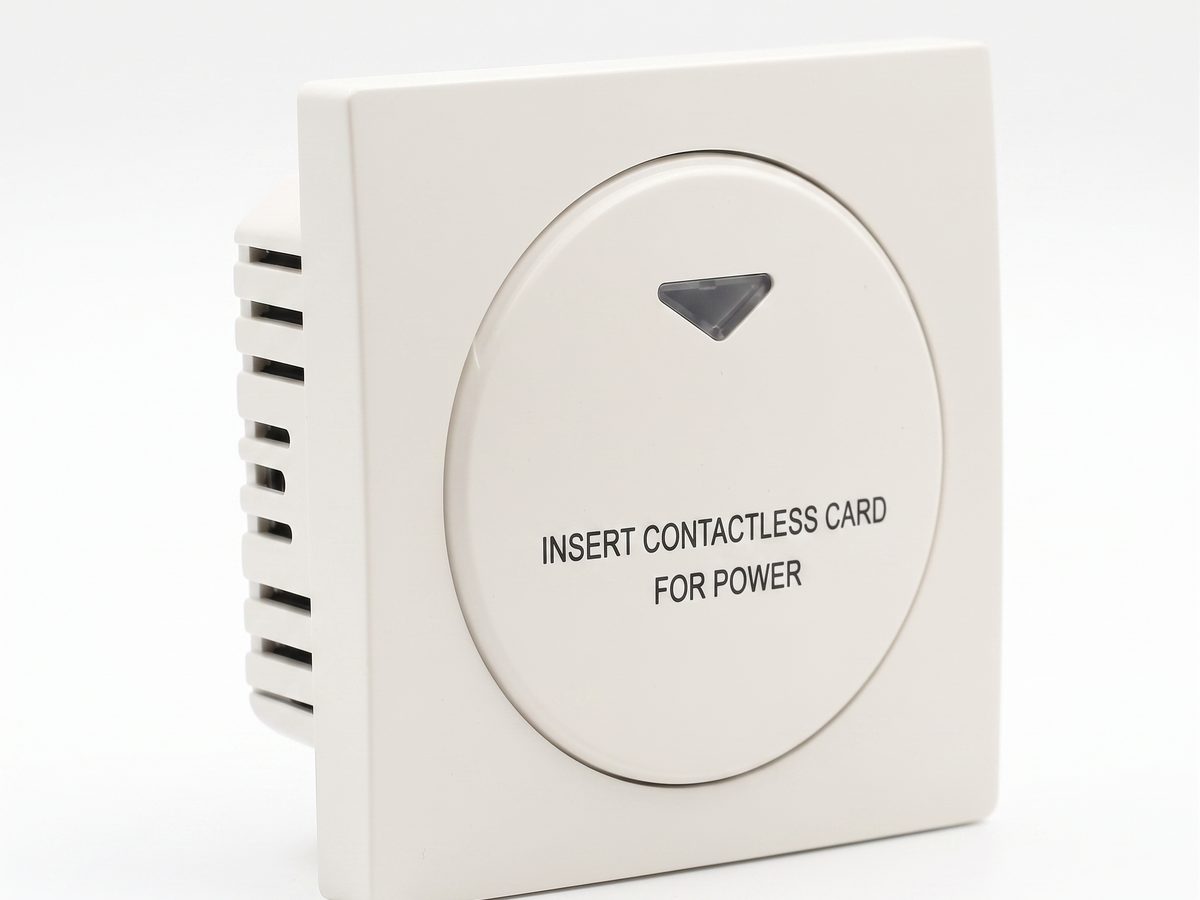
Interruptor de Tarjeta Hotel — Control Energía Habitación
Interruptor tarjeta hotel para control energía habitación. Detección RFID/IC, inserción-encendido, apagado retardado al retirar tarjeta. 220V CA, 10A-16A, RS485 o contacto seco. CE RoHS. Proveedor OEM/ODM.
Esta página ya lo señala como la siguiente referencia recomendada.
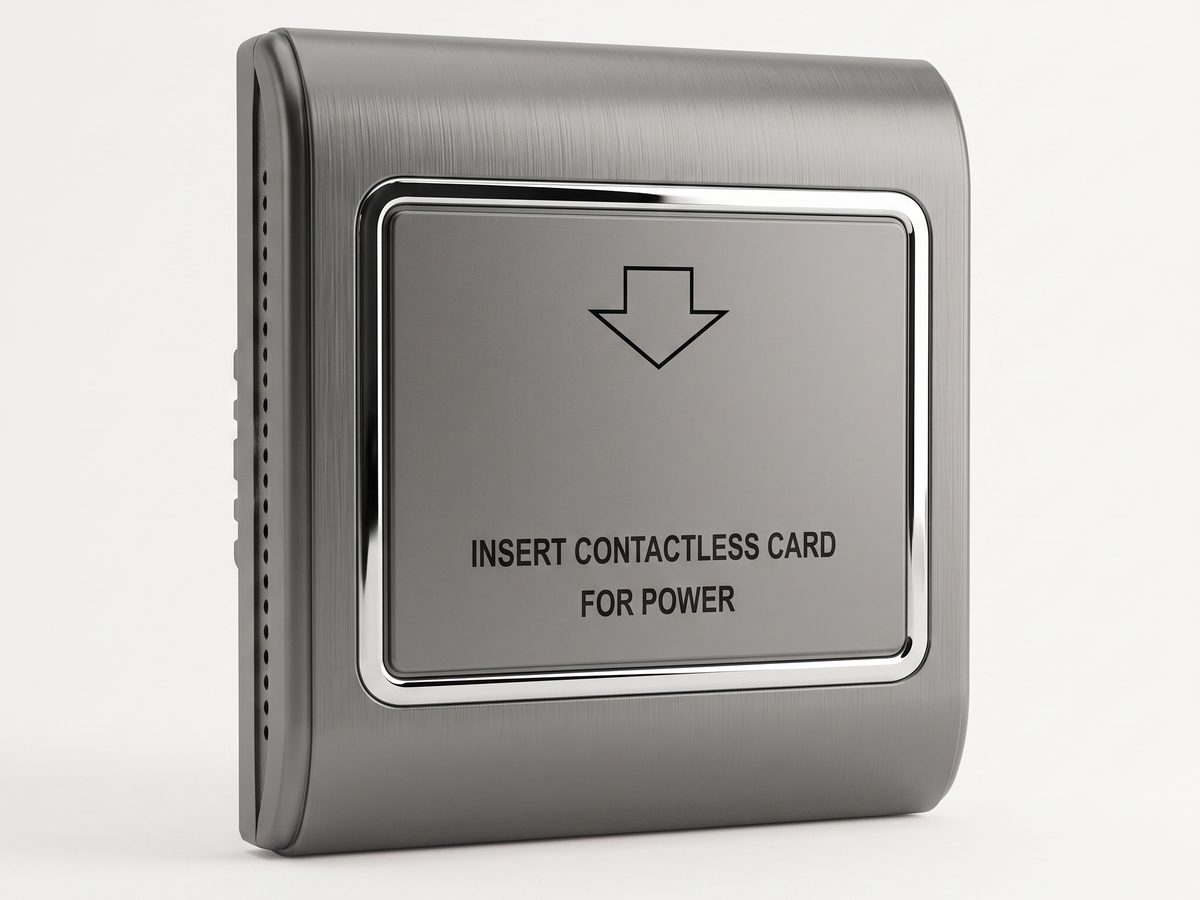
Interruptor RFID Ahorro Energía — Tarjeta MIFARE Vinculada Habitación (Tipo B)
Interruptor RFID ahorro energía vincula electricidad a tarjeta MIFARE habitación específica. 13.56MHz MIFARE / 125kHz Temic, CA 180–250V, 30A, 15s apagado retardado. Interruptor hotel RFID evita compartir tarjetas entre habitaciones y reduce 25–40% energía habitación.
Esta página ya lo señala como la siguiente referencia recomendada.
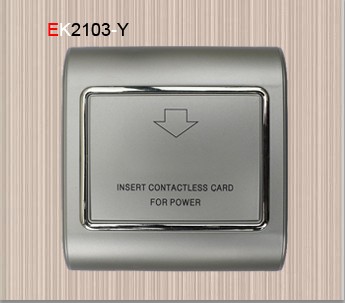
Interruptor TTLOCK Compatible — ID Habitación + Límite Tiempo (Tipo C)
Interruptor TTLOCK compatible con ID habitación y límite tiempo. Funciona con tarjetas MIFARE TTLOCK/TTHotel vía auth sector-clave, AC 180–250V, 30A. Interruptor tarjeta encriptado y TTLOCK ES2 para retrofits hoteles bloqueados ecosistema.
Esta página ya lo señala como la siguiente referencia recomendada.
Soluciones relacionadas
3 Guía de compra de interruptores de ahorro energético para hoteles 2026
Guía de compra de interruptores de ahorro energético para hoteles que cubre interruptores universales, RFID/MIFARE, compatibles con TTLOCK, BLE inteligentes y de sensor de ocupación. Elija el interruptor de energía por tarjeta, interruptor de inserción de tarjeta e interruptor de llave de ahorro energético adecuados para sus habitaciones.
Esta página ya lo señala como la siguiente referencia recomendada.
Sistema de gestión energética hotelera — Control de energía en habitaciones que se amortiza
Un sistema de gestión energética hotelera basado en interruptores de tarjeta, ahorradores RFID y sensores de ocupación que reduce un 25-40 % la electricidad en habitaciones. Guía de controlador energético para hoteles que renuevan la energía en habitaciones.
Esta página ya lo señala como la siguiente referencia recomendada.
Sistema de Gestión de Habitaciones con Control por Tarjeta
Un sistema práctico de gestión de habitaciones para controlar la energía mediante interruptores de tarjeta, contactores y reglas operativas documentadas.
Respaldan el mismo contexto de producto: Interruptor de Tarjeta Hotel — Control Energía Habitación, Interruptor RFID Ahorro Energía — Tarjeta MIFARE Vinculada Habitación (Tipo B).
Artículos del blog relacionados
3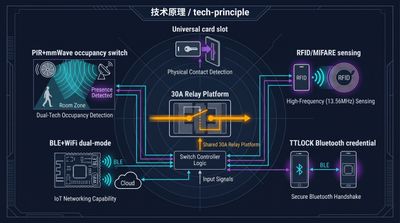
Interruptor de Tarjeta Hotel: Tipos, Modelos y Especificación
El interruptor de tarjeta para hotel incluye modelos universal, RFID, TTLOCK, BLE y ocupación. Guía sobre tipos, keycard switch y cómo especificar.
Respaldan el mismo contexto de producto: Interruptor de Tarjeta Hotel — Control Energía Habitación, Interruptor RFID Ahorro Energía — Tarjeta MIFARE Vinculada Habitación (Tipo B), Interruptor TTLOCK Compatible — ID Habitación + Límite Tiempo (Tipo C).
RFID vs NFC en interruptores de tarjeta llave de hotel: Qué elegir
RFID vs NFC en interruptores de tarjeta llave: alcance y bloqueo. RFID 125kHz/13.56MHz (MIFARE, Temic) es el estándar hotelero para energía en habitación…
Respaldan el mismo contexto de producto: Interruptor RFID Ahorro Energía — Tarjeta MIFARE Vinculada Habitación (Tipo B), Interruptor de Tarjeta Hotel — Control Energía Habitación, Interruptor TTLOCK Compatible — ID Habitación + Límite Tiempo (Tipo C).
Interruptor de tarjeta llave de hotel: qué es y ahorro de energía
Un interruptor de tarjeta llave de hotel enciende la habitación al insertar la tarjeta y apaga al sacarla, ahorrando típicamente un 25-40% de electricidad.
Respaldan el mismo contexto de producto: Interruptor de Tarjeta Hotel — Control Energía Habitación, Interruptor RFID Ahorro Energía — Tarjeta MIFARE Vinculada Habitación (Tipo B), Interruptor TTLOCK Compatible — ID Habitación + Límite Tiempo (Tipo C).
Especifica tu proyecto hotelero con nuestros ingenieros
Envíanos el número de habitaciones, tipo de techo y preferencia de protocolo. Devolveremos un plan de muestra y cotización en 24 horas laborables.
- Pase de la guía general a una discusión de producto o aplicación.
- Use RFQ cuando precio, planos, MOQ o calendario de lanzamiento necesiten estructura.
- Mantenga visible una ruta de contacto directo para aclaraciones rápidas y traspasos.