Calculadora de Ahorro Energético Hotelero: Estimar kWh y Coste Operativo
Una calculadora de ahorro energético hotelero explica cómo convertir cargas y tiempos de uso de habitaciones en kilovatios-hora y coste con fórmulas y ejemplos resueltos.
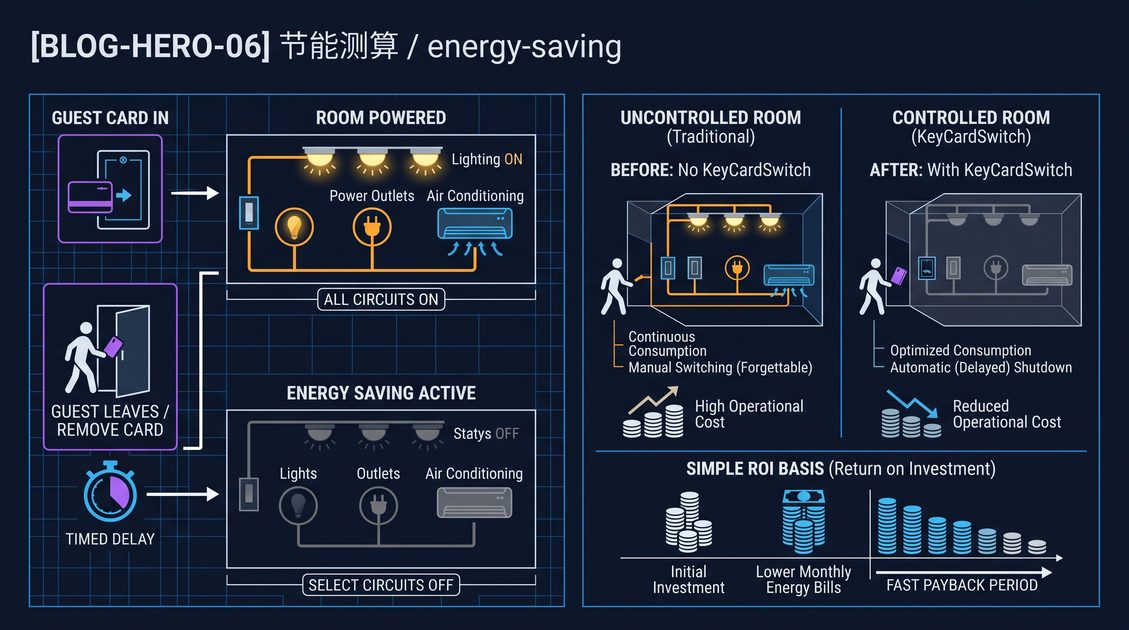
Una calculadora de ahorro energético hotelero es un método estructurado, normalmente trabajado a mano, que convierte las cargas de aparatos conocidas de una habitación de huéspedes y sus tiempos de uso en kilovatios-hora y coste operativo, para que un propietario pueda estimar cuánta energía consume una habitación mientras está ocupada y cuánta cuando queda vacía. La calculadora se apoya en una relación básica: la energía en kilovatios-hora es igual a la potencia en kilovatios multiplicada por el tiempo en horas, escrita kWh = kW x h, aplicada a cada aparato que la habitación alimenta. Una calculadora de ahorro energético hotelero es útil porque convierte la intuición de que una habitación vacía desperdicia energía en una cifra comparable entre habitaciones, plantas y establecimientos enteros. Como cada estimación depende de las cargas que instala un establecimiento y de las horas que esas cargas funcionan, la calculadora se construye en torno a variables que un hotel puede medir y ajustar en lugar de reglas fijas. Es una herramienta de planificación que respalda una decisión de compra o reforma con aritmética en lugar de opinión.
Qué Hace una Calculadora de Ahorro Energético Hotelero
El trabajo de una calculadora de ahorro energético hotelero es traducir las cargas físicas de una habitación en una única cifra comparable, los kilovatios-hora que la habitación usa al día. La calculadora empieza con un inventario de cada aparato que consume energía: los puntos de luz con sus vatios, la unidad de aire acondicionado con su potencia nominal y de funcionamiento, y las tomas de pared con el televisor, hervidor, minibar y cargadores que se conectan a ellas. Para cada elemento el usuario anota dos números, la potencia en kilovatios y el tiempo en horas que el elemento funciona en un día. Multiplicar ambos da la energía diaria de ese elemento, y sumar todos da el total de la habitación. La calculadora es deliberadamente simple porque su valor está en forzar un inventario claro y tiempos de uso honestos en lugar de en matemáticas sofisticadas. Una vez existe un total de habitación, la misma hoja de cálculo puede ejecutarse dos veces, una para un día ocupado y otra para un día vacío, y la diferencia entre ambas es lo que apagar la habitación podría eliminar. Una calculadora de ahorro energético hotelero es, por tanto, una herramienta de comparación en esencia, comparando una habitación ocupada con una vacía usando la misma lista de aparatos.
Calculadora de Ahorro Energético Hotelero: El Inventario de Cargas
La primera columna que necesita una calculadora de ahorro energético hotelero es un inventario de cargas completo, porque cualquier aparato omitido hace que el resultado infraestime la habitación. El inventario debe recorrerse físicamente, anotando cada luz con su potencia de lámpara, el modelo de aire acondicionado con su potencia de funcionamiento, y cada enchufe con el aparato normalmente conectado. Un truco útil es leer la potencia nominal de la placa de características de cada aparato, porque los vatios de placa son un dato real en lugar de una suposición. Para el aire acondicionado, la potencia de funcionamiento durante operación normal suele ser inferior a la máxima nominal porque el compresor cicla, y usar la cifra nominal sobreestimaría la carga; una estimación práctica es la entrada nominal en vatios reducida para un ciclo típico. La tabla de inventario debe tener tres columnas por fila: el elemento, su potencia en kilovatios, y su tiempo de uso diario asumido en horas. La suma de la columna de potencia y la suma de la columna de energía son ambas útiles, la primera para dimensionar cableado y la segunda para estimar consumo. Una calculadora de ahorro energético hotelero que comienza con un inventario preciso produce cifras que un propietario puede defender ante un colega o un prestamista.
| Elemento inventario | Potencia (kW) | Tiempo uso asumido (h/día) |
|---|---|---|
| Luces LED techo | 0.03-0.08 | 4-6 |
| Lámparas LED cabecera | 0.02-0.05 | 2-3 |
| Unidad aire acondicionado | 0.9-2.5 | 6-12 |
| Televisor | 0.05-0.12 | 3-5 |
| Hervidor | 1.5-2.2 | 0.1-0.2 |
| Minibar nevera | 0.04-0.09 | 24 (si no conmutado) |
Calculadora de Ahorro Energético Hotelero: La Fórmula de Carga Base
La carga base es la energía que una calculadora de ahorro energético hotelero cuenta como presente incluso cuando nada se usa intencionadamente, y a menudo es la mayor sorpresa en una habitación. La fórmula es la misma energía igual a potencia por tiempo, pero aplicada a los consumos continuos que nunca paran. Una nevera de minibar que permanece enchufada toda la noche funciona 24 horas, así que su energía diaria es su potencia de funcionamiento en kilovatios multiplicada por 24, y si su compresor cicla, se usa el consumo medio en lugar del pico. Un detector de humos, una base de teléfono y el propio panel de interruptores consumen una pequeña corriente continua que suma un pequeño total diario. Cuando una habitación está vacía pero queda alimentada, la carga base sigue fluyendo porque los enchufes y aparatos permanecen conectados, así que una habitación vacía rara vez está a cero incluso antes de que nadie llegue. La carga base es la parte de la carga de la habitación que una calculadora de ahorro energético hotelero debe separar de las cargas deliberadas, porque dice al propietario cuánta energía consume una habitación en reposo. Reducir la carga base, moviendo el minibar fuera del circuito conmutado o conmutando todo el circuito, reduce directamente el suelo de la habitación vacía.
Calculadora de Ahorro Energético Hotelero: El Tiempo de Uso Activado por Tarjeta
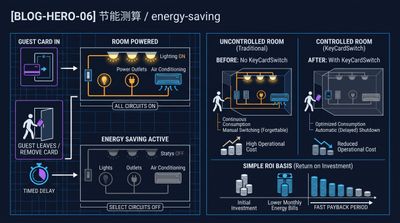
El tiempo de uso activado por tarjeta es la variable que una calculadora de ahorro energético hotelero usa para separar una habitación ocupada de una vacía, y es la razón por la que el interruptor entra en el cálculo. En una habitación controlada por un interruptor de tarjeta, la energía está disponible solo mientras hay una tarjeta en la ranura, así que el tiempo de uso de cada carga controlada está acotado por el intervalo en que la habitación está ocupada. La calculadora modela esto igualando el tiempo de uso diario de la iluminación, el aire acondicionado y los enchufes conmutados a las horas que un huésped está realmente en la habitación con la tarjeta insertada. En un día ocupado ese tiempo puede ser el tiempo total de presencia del huésped, mientras que en un día vacío, entre salida y siguiente llegada, el tiempo cae a cero porque no hay tarjeta presente. El tiempo de ocupación es una elección de planificación que el usuario escribe, y depende de la hora de salida del establecimiento, el horario de limpieza y las horas típicas de huéspedes. Una calculadora de ahorro energético hotelero usa este único número para conmutar una habitación entera de ocupada a vacía, que es exactamente el comportamiento que un interruptor de tarjeta crea en la pared.
Calculadora de Ahorro Energético Hotelero: Ejemplo Resuelto kWh
Una calculadora de ahorro energético hotelero se muestra mejor con un ejemplo resuelto, así que esta sección recorre una habitación de huéspedes por la fórmula paso a paso. Tomemos una habitación con tres luces LED de techo a 0.04 kW cada una funcionando 5 horas, dos lámparas de cabecera a 0.02 kW cada una funcionando 3 horas, un aire acondicionado split que consume una media de 1.5 kW y funciona 8 horas, un televisor a 0.1 kW funcionando 4 horas, y un minibar a 0.08 kW funcionando 24 horas si permanece en el circuito conmutado. La energía de iluminación es tres luces por 0.04 kW por 5 horas, dando 0.6 kWh, más dos lámparas por 0.02 kW por 3 horas, dando 0.12 kWh, así que iluminación es 0.72 kWh. El aire acondicionado es 1.5 kW por 8 horas, dando 12 kWh. El televisor es 0.1 kW por 4 horas, dando 0.4 kWh. El minibar es 0.08 kW por 24 horas, dando 1.92 kWh. El total de habitación ocupada es la suma de 0.72, 12, 0.4 y 1.92, dando 15.04 kWh para el día. Si el minibar se mueve antes del interruptor para que quede alimentado, un día vacío elimina la iluminación, el aire acondicionado y el televisor, que son los 13.12 kWh de carga deliberada, dejando solo los 1.92 kWh de carga base. Una calculadora de ahorro energético hotelero hace esta aritmética explícita para que cualquier propietario pueda reproducirla.
Calculadora de Ahorro Energético Hotelero: Coste por kWh y Tarifa
El siguiente paso en una calculadora de ahorro energético hotelero es convertir kilovatios-hora en coste operativo, porque el dinero es la cifra en la que actúan los propietarios. La conversión es coste igual a energía en kilovatios-hora multiplicada por la tarifa en unidades monetarias por kilovatio-hora, escrito coste = kWh x precio. Un hotel debe leer su tarifa real de la factura de la suministradora en lugar de una cifra general, porque las tarifas varían por región, hora del día y tarifa contratada. Usando un ejemplo resuelto, si la habitación ocupada de arriba usa 15.04 kWh en un día y la tarifa es un plano de 0.15 unidades monetarias por kilovatio-hora, el coste de día ocupado es 15.04 por 0.15, dando 2.26 unidades. Si la habitación vacía usa 1.92 kWh, el coste de día vacío es 1.92 por 0.15, dando 0.29 unidades. La diferencia entre 2.26 y 0.29 es 1.97 unidades por día vacío en ese escenario. Esta diferencia de coste es exactamente lo que produce una calculadora de ahorro energético hotelero al ejecutarse para un día ocupado y uno vacío, y puede multiplicarse por el número de días-habitación vacíos que tiene un establecimiento en un mes. Como la tarifa es un simple multiplicador, la misma hoja de energía se convierte en hoja de coste sin matemáticas nuevas.
Calculadora de Ahorro Energético Hotelero: Cargas de Iluminación
La iluminación es la parte más fácil de contar en una calculadora de ahorro energético hotelero porque las potencias vienen impresas en las lámparas y los tiempos de uso son predecibles. La energía de un punto de luz es su vatios dividido por mil para hacer kilovatios, multiplicado por las horas que está encendido. Un establecimiento que haya pasado a LED verá números pequeños por punto, una lámpara LED típica consumiendo unos pocos vatios en lugar de las decenas de vatios de una incandescente antigua, así que el total de iluminación suele ser una parte modesta de la habitación. El tiempo de uso viene del huésped: las luces están encendidas mientras el huésped está en la habitación, y en una habitación vacía sin tarjeta simplemente no se alimentan. Como la iluminación está casi siempre en el circuito conmutado en cualquier distribución, una calculadora de ahorro energético hotelero puede tratar el total de iluminación entero como extraíble cuando la habitación está vacía. Las filas de iluminación también sirven de buen paso de validación, porque un propietario puede comparar la energía de iluminación estimada con una lectura rápida de medidor en una habitación encendida y confirmar que la hoja está en el orden de magnitud correcto antes de fiarse de las filas mayores de aire acondicionado.
Calculadora de Ahorro Energético Hotelero: Cargas de Aire Acondicionado
El aire acondicionado suele ser la fila mayor en una calculadora de ahorro energético hotelero y la que más merece estimar con cuidado. La entrada nominal en vatios de la placa del aparato es el máximo, pero un split en operación normal cicla el compresor, así que su potencia media de funcionamiento es menor. Un método viable es estimar el consumo medio como una fracción de la entrada nominal, o medir la corriente de funcionamiento con pinza amperimétrica y multiplicar por la tensión de suministro para obtener vatios. El tiempo de uso lo marcan el huésped y el clima: en región calurosa una habitación puede funcionar muchas horas al día, mientras que en temporada suave apenas funciona. Cuando una habitación está vacía y la tarjeta fuera, el aire acondicionado para completamente porque está en el circuito conmutado, que es la mayor carga extraíble en la mayoría de habitaciones. Una calculadora de ahorro energético hotelero debe tratar el aire acondicionado tanto en su potencia media honesta como en su tiempo de uso honesto, porque usar el máximo nominal y un día completo exagerará la habitación y hará que cualquier comparación parezca mayor que la realidad. Un propietario que quiera confianza en esta fila debe medir la corriente de funcionamiento en lugar de adivinar.
Calculadora de Ahorro Energético Hotelero: Cargas de Enchufes y Aparatos
Las cargas de enchufes y aparatos son el tercer bloque que una calculadora de ahorro energético hotelero debe contar, y varían más de habitación en habitación. El televisor, el hervidor, cargadores y aparatos ocasionales se enchufan en las tomas de pared conmutadas, así que su energía diaria es la potencia de cada aparato sobre mil por su tiempo real de uso. Un hervidor consume alta potencia pero funciona solo minutos, así que su energía es pequeña pese a la gran potencia, que es exactamente el tipo de punto que la fórmula aclara. La nevera de minibar es el aparato que un establecimiento a menudo mantiene fuera del circuito conmutado para que su contenido siga frío, y en esa distribución pertenece a la carga base en lugar del bloque conmutado. El bloque de enchufes es donde una calculadora de ahorro energético hotelero deja al propietario probar decisiones, como si conmutar todos los enchufes o mantener uno de limpieza vivo. Sumar las cargas de enchufes para el día ocupado y otra vez para el día vacío muestra cuánto del consumo de la habitación está en los enchufes, y guía la decisión de cableado de qué tomas van en el relé. Un inventario completo de enchufes evita que una hoja omita silenciosamente una carga real.
Calculadora de Ahorro Energético Hotelero: Total Diario por Habitación
El total diario por habitación es la cifra que une una calculadora de ahorro energético hotelero, porque es un único número que un propietario puede usar en todas partes. Es simplemente la suma de la energía de iluminación, la energía de aire acondicionado y la energía de enchufes para el día modelado. La calculadora suele ejecutarse dos veces: una con los tiempos de uso ocupados y otra con los vacíos, y los dos totales son los kilovatios-hora diarios de habitación ocupada y de habitación vacía. En el ejemplo resuelto anterior, esos dos fueron 15.04 kWh y 1.92 kWh, con la diferencia de 13.12 kWh siendo la carga deliberada que desaparece cuando la habitación no tiene tarjeta. Esta diferencia diaria por habitación es el número que escala a un mes o un establecimiento entero, y es el núcleo honesto de la estimación porque viene de inventario real y tiempos de uso elegidos. Una calculadora de ahorro energético hotelero debe declarar siempre las suposiciones que produjeron el total, como la potencia media de aire acondicionado y las horas de ocupación, para que el número pueda cuestionarse y ajustarse en lugar de aceptarse ciegamente.
Calculadora de Ahorro Energético Hotelero: Escalado al Establecimiento
Escalar un resultado por habitación a todo un establecimiento es donde una calculadora de ahorro energético hotelero se vuelve una cifra de negocio en lugar de curiosidad de una sola habitación. La diferencia diaria por habitación se multiplica por el número de días-habitación que están vacíos cada mes, que un propietario saca de los registros de ocupación. Si un establecimiento tiene un número dado de habitaciones y una cuota dada de noches-habitación vacías, los kilovatios-hora mensuales de habitación son la diferencia diaria por habitación por los días-habitación vacíos. Esa energía mensual se multiplica luego por la tarifa para dar una cifra mensual de coste operativo para habitaciones vacías. Un propietario puede también ejecutar la calculadora hacia adelante, aplicando los mismos días-habitación vacíos pero un total de día vacío reducido, para modelar qué haría una distribución distinta o un interruptor al número. El escalado es aritmética pura, así que su exactitud depende enteramente de la estimación por habitación y la cifra de ocupación que la alimentan. Una calculadora de ahorro energético hotelero usada a escala de establecimiento da a la dirección un número mensual defendible que puede revisarse cuando cambie la tarifa, el inventario de aparatos o la ocupación.
Calculadora de Ahorro Energético Hotelero: Validación con Medidor
La validación es la disciplina final que una calculadora de ahorro energético hotelero debe incluir, porque una estimación solo es tan buena como la evidencia detrás. Un establecimiento puede medir una habitación con un medidor de vatios-hora simple enchufado entre un enchufe y su aparato, o leer el circuito de habitación en el cuadro de distribución con pinza amperimétrica para comparar vatios medidos con el total de la hoja. El paso de validación es alimentar la habitación, anotar el medidor, hacerla funcionar un número conocido de horas, y comprobar los kilovatios-hora medidos contra la cifra calculada. Las discrepancias suelen apuntar a un tiempo de uso subestimado o una placa mal leída, y corregir la hoja hace que todos los números escalados sean fiables. Una vez una habitación valida, el mismo inventario puede reusarse para tipos de habitación idénticos con confianza. Una calculadora de ahorro energético hotelero que termina con validación produce números que un propietario puede defender en una reunión, porque cada fila ahora se apoya en una medición en lugar de una suposición. Esto cierra el bucle de inventario a estimación a cifra verificada, que es la forma más fiable de convertir la lista de aparatos de una habitación en un coste listo para decidir.
Calculadora de Ahorro Energético Hotelero: Supuestos de Tiempo de Uso
Los supuestos de tiempo de uso son los números menos visibles pero más influyentes en una calculadora de ahorro energético hotelero, así que merecen su propia sección. Cada fila de energía es el producto de una potencia y un tiempo, y mientras la potencia viene de una placa, el tiempo es una elección que el usuario anota. Un día ocupado en esta hoja asume cierto número de horas que la iluminación está encendida, que el aire acondicionado funciona y que el televisor suena, y esas horas vienen del patrón propio del establecimiento de entrada, salida y comportamiento de huéspedes. Un día vacío asume la misma habitación sin tarjeta, así que las cargas controladas funcionan cero horas y solo queda la carga base. La diferencia entre los dos escenarios son solo los supuestos de tiempo de uso, por eso una calculadora de ahorro energético hotelero es tan sensible a ellos. Un propietario debe declarar cada suposición junto al resultado, por ejemplo iluminación cinco horas y aire acondicionado ocho horas, para que un escéptico vea exactamente qué se modeló. Tiempos de uso realistas vienen de observar unas pocas habitaciones reales o de una rápida encuesta a huéspedes, y importan más que las potencias exactas porque el tiempo multiplica la fila entera.
Calculadora de Ahorro Energético Hotelero: Escenarios Estacionales
Un escenario estacional es una ejecución de una calculadora de ahorro energético hotelero bajo distintas condiciones climáticas, porque el total de habitación cambia mucho más con la estación que con el interruptor. En temporada calurosa el aire acondicionado funciona más tiempo y a mayor potencia media, así que el total de día ocupado sube y la diferencia de día vacío crece con él. En temporada suave el aire acondicionado puede funcionar solo unas horas, encogiendo tanto el total ocupado como la diferencia de día vacío. La mejor forma de modelar esto es ejecutar la hoja tres veces, una para mes caluroso, una para mes suave y una para mes frío, cambiando solo el tiempo de uso del aire acondicionado y la potencia media. Los tres resultados muestran al propietario cuánto de la cifra de habitación vacía es estacional en lugar de constante, que importa al decidir si una reforma se amortiza en la época adecuada del año. Una calculadora de ahorro energético hotelero usada estacionalmente también produce una mejor estimación anual que una instantánea única, porque promedia las tres ejecuciones contra la ocupación mensual del establecimiento. La estacionalidad es la principal razón por la que una estimación honesta es un pequeño conjunto de escenarios en lugar de un número fijo.
Calculadora de Ahorro Energético Hotelero: Tipos de Habitación y Variaciones
Los tipos de habitación introducen variación que una calculadora de ahorro energético hotelero debe reconocer, porque una habitación estándar, una suite y una habitación familiar rara vez llevan las mismas cargas. Una estándar tiene un aire acondicionado, un televisor y un conjunto pequeño de iluminación, así que su total está cerca del ejemplo resuelto ya mostrado. Una suite añade más iluminación, un televisor mayor o un segundo, un segundo aire acondicionado en algunas distribuciones, y quizás hervidor y nevera de kitchenette, todo lo que sube los totales ocupado y vacío. Una habitación familiar o accesible puede llevar un televisor extra y un minibar que se mantiene alimentado, lo que cambia la carga base además de la carga deliberada. La forma más limpia de manejar esto es construir una hoja por tipo de habitación en lugar de promediar todas en un solo número, y luego ponderar cada tipo por cuántas habitaciones de ese tipo tiene el establecimiento. Una calculadora de ahorro energético hotelero que separa tipos de habitación da al propietario un número por tipo directamente útil para decidir dónde un interruptor o cambio de cableado ayuda más. La variación no es un defecto del método; es la razón por la que el inventario se recorre habitación por habitación en primer lugar.
Calculadora de Ahorro Energético Hotelero: Un Segundo Ejemplo Resuelto
Un segundo ejemplo resuelto en una calculadora de ahorro energético hotelero muestra cómo el método se adapta a otra habitación, así que esta sección modela una habitación twin pequeña con cargas más ligeras. Tomemos dos luces LED a 0.04 kW cada una funcionando 4 horas, una lámpara de cabecera a 0.02 kW funcionando 2 horas, un split aire acondicionado promediando 1.2 kW funcionando 7 horas, un televisor a 0.09 kW funcionando 3 horas, y un minibar a 0.07 kW funcionando 24 horas. La energía de iluminación es dos luces por 0.04 kW por 4 horas, dando 0.32 kWh, más una lámpara por 0.02 kW por 2 horas, dando 0.04 kWh, así que iluminación totaliza 0.36 kWh. El aire acondicionado es 1.2 kW por 7 horas, dando 8.4 kWh. El televisor es 0.09 kW por 3 horas, dando 0.27 kWh. El minibar es 0.07 kW por 24 horas, dando 1.68 kWh. La habitación twin ocupada totaliza 10.71 kWh, y si el minibar se mantiene alimentado antes del interruptor, la habitación vacía deja 1.68 kWh como carga base. Comparando con el primer ejemplo, la habitación menor tiene un total menor y una diferencia de día vacío menor, que es exactamente el patrón que un propietario esperaría y confirma que una calculadora de ahorro energético hotelero escala con la habitación que se le da.
Calculadora de Ahorro Energético Hotelero: El Método de la Diferencia
El método de la diferencia es la forma más limpia de presentar lo que una calculadora de ahorro energético hotelero mide realmente, porque enuncia la respuesta como un único contraste. El método es ejecutar la hoja una vez con tiempos de uso ocupados y otra con vacíos, y luego restar el total vacío del ocupado. El resultado son los kilovatios-hora diarios que desaparecen cuando una habitación está vacía sin tarjeta en la ranura. En el primer ejemplo resuelto esa diferencia fue 13.12 kWh, y en el ejemplo twin fue 9.03 kWh, ambas siendo las cargas deliberadas de iluminación, aire acondicionado y enchufes que un interruptor corta. Presentar el resultado como diferencia en lugar de dos totales separados mantiene la atención en los días-habitación que el establecimiento realmente tiene vacíos. Un propietario puede entonces decir que en un día-habitación vacío el circuito controlado deja de consumir aproximadamente esos kilovatios-hora, que es una afirmación apoyada en el inventario y los tiempos de uso elegidos. El método de la diferencia es el núcleo de una calculadora de ahorro energético hotelero porque responde directamente a la pregunta que hace un comprador, que es cuánto consume la habitación cuando nadie está en ella.
Calculadora de Ahorro Energético Hotelero: Presentar Resultados a Propietarios
Presentar resultados es la capa de comunicación de una calculadora de ahorro energético hotelero, porque un número limpio en una hoja de cálculo significa poco hasta que se vuelve una decisión. La presentación más clara es una tabla corta con tres columnas: el total de día ocupado, el total de día vacío y la diferencia diaria, cada una en kilovatios-hora y otra vez en coste operativo a la tarifa del establecimiento. Una segunda tabla escala esos números a un mes usando los días-habitación vacíos del establecimiento, dando kilovatios-hora mensuales y coste mensual para habitaciones vacías. La presentación debe listar siempre los supuestos, la potencia media de aire acondicionado, las horas de ocupación y la tarifa, para que el lector siga la aritmética. Un propietario que vea la cifra mensual de habitación vacía en coste operativo puede sopesarla contra el coste y esfuerzo de un cambio de cableado o instalación de interruptor. Una calculadora de ahorro energético hotelero se vuelve persuasiva cuando los supuestos son visibles y la aritmética reproducible, porque un decisor puede entonces cambiar un número y ver el resultado actualizarse en lugar de fiarse de una caja negra.
Calculadora de Ahorro Energético Hotelero: Errores Comunes
Los errores comunes de una calculadora de ahorro energético hotelero merecen listarse para que un usuario nuevo no sobreestime ni subestime silenciosamente una habitación. El primer error es usar la potencia máxima nominal de aire acondicionado en lugar de la potencia media de funcionamiento, que puede doblar aproximadamente la fila mayor. El segundo es asumir un día completo de 24 horas para una carga controlada, cuando un huésped rara vez está en la habitación cada hora, así que los tiempos de uso deben reflejar presencia real. El tercero es olvidar la carga base, el minibar u otro aparato siempre encendido, y tratar una habitación vacía como cero, lo que hace la diferencia parecer mayor que la realidad. El cuarto es aplicar el número de un tipo de habitación a todas las habitaciones del establecimiento sin ponderar por cuántas de cada tipo existen. El quinto es usar una tarifa adivinada en lugar de la real de la factura de la suministradora, que sesga todas las cifras de coste. Cada error es un lugar donde una calculadora de ahorro energético hotelero puede derivar de la realidad, y cada uno tiene una guarda simple: medir el aire acondicionado, escribir tiempos de uso honestos, mantener la carga base separada, ponderar por tipo de habitación y leer la tarifa. Nombrar las trampas es tan útil como las fórmulas mismas.
Calculadora de Ahorro Energético Hotelero: Construir la Hoja de Cálculo
Construir la hoja de cálculo es el paso práctico final que vuelve una calculadora de ahorro energético hotelero de un método en una herramienta repetible. Una distribución simple tiene una fila por aparato y tres columnas para potencia, tiempo de uso y energía diaria, con la energía diaria como producto de las dos primeras. Una segunda hoja repite el inventario pero con tiempos de uso vacíos a cero para las cargas controladas, manteniendo solo la carga base. Una celda de resumen resta el total vacío del ocupado para dar la diferencia diaria, y otra multiplica esa diferencia por la tarifa del establecimiento y por los días-habitación vacíos mensuales. Las fórmulas son bastante simples para teclearlas directo, con la celda de energía diaria como igual a potencia por horas, y la mensual como igual a diferencia diaria por tarifa por días. Como todo es un puñado de celdas, un propietario puede cambiar la potencia de aire acondicionado o las horas de ocupación y ver el número mensual actualizarse al instante. Una calculadora de ahorro energético hotelero construida así se vuelve una hoja viva que el establecimiento reusa tras cada cambio de tarifa, actualización de inventario o cambio estacional.
Calculadora de Ahorro Energético Hotelero: Una Tabla de Costes Resuelta
Una tabla de costes resuelta es la forma más limpia para que una calculadora de ahorro energético hotelero muestre tanto la energía como el dinero en una vista, así que esta sección junta los dos ejemplos anteriores lado a lado. La primera habitación, con total ocupado de 15.04 kWh y total vacío de 1.92 kWh, tiene una diferencia diaria de 13.12 kWh. La habitación twin, con total ocupado de 10.71 kWh y total vacío de 1.68 kWh, tiene una diferencia diaria de 9.03 kWh. A una tarifa de 0.15 unidades monetarias por kilovatio-hora, la diferencia de la primera habitación vale unas 1.97 unidades por día vacío, y la de la twin unas 1.35 unidades por día vacío. Leyendo la tabla, un propietario ve ambas habitaciones lado a lado y confirma que la mayor lleva la mayor cifra de día vacío. Una calculadora de ahorro energético hotelero presentada así deja al decisor comparar el coste operativo diario y mensual de habitaciones vacías entre tipos de habitación en una sola mirada, que es exactamente lo que una reunión de dirección necesita antes de decidir una reforma.
| Tipo habitación | kWh/día ocupado | kWh/día vacío | Diferencia diaria kWh | Coste diario de diferencia |
|---|---|---|---|---|
| Habitación estándar | 15.04 | 1.92 | 13.12 | 1.97 unidades a 0.15 |
| Habitación twin | 10.71 | 1.68 | 9.03 | 1.35 unidades a 0.15 |
Calculadora de Ahorro Energético Hotelero: Reducir el Total de Día Vacío
Reducir el total de día vacío es el uso práctico de una calculadora de ahorro energético hotelero, porque un propietario usa la hoja para probar qué baja el suelo de habitación vacía. La primera palanca es conmutar el circuito controlado para que la iluminación, el aire acondicionado y los enchufes queden muertos cuando no hay tarjeta, lo que elimina toda la carga deliberada y deja solo la carga base. La segunda palanca es mover el minibar antes del interruptor para que quede alimentado por existencias, lo que cambia una pequeña carga base siempre encendida por la carga deliberada mucho mayor que de otro modo seguiría funcionando. La tercera palanca es afinar la propia carga base, eligiendo un minibar más eficiente o reduciendo el número de enchufes siempre encendidos, porque cualquier aparato que nunca conmuta se vuelve parte del suelo vacío. Un propietario puede ejecutar la hoja con cada palanca aplicada y ver el total de día vacío caer fila a fila. Una calculadora de ahorro energético hotelero es más valiosa en este paso porque deja a un establecimiento probar un cambio de cableado o instalación de interruptor en papel antes de gastar en ello, mostrando el efecto en coste operativo de cada opción en kilovatios-hora y dinero.
Calculadora de Ahorro Energético Hotelero: Cuándo la Estimación Es Útil
Saber cuándo una calculadora de ahorro energético hotelero es útil, y cuándo es solo un punto de partida, mantiene el método honesto. La estimación es más útil para comparar un tipo de habitación contra otro, para probar una decisión de cableado o interruptor antes de comprar hardware, y para construir una cifra mensual defendible desde ocupación real. Es una herramienta de planificación, no un medidor, así que no puede reemplazar una lectura de vatios-hora en una habitación, y su exactitud depende de los tiempos de uso y potencia media que el usuario escribe. Cuando un establecimiento quiere certeza sobre una sola habitación, el siguiente paso correcto es medición; cuando quiere una cifra comparable en una flota, la hoja es el camino más rápido. Un propietario debe tratar el número como ayuda a decisión que mejora con validación, y re-ejecutarla cuando cambie la tarifa, el inventario de aparatos o el patrón estacional. Una calculadora de ahorro energético hotelero gana su lugar precisamente porque convierte la lista de aparatos de una habitación en una estimación repetible, revisable y defendible que un propietario puede ajustar y escalar. Para un establecimiento evaluando un proyecto de ahorro energético, ejecutar el cálculo primero evita partidas sorpresa y deja al propietario comparar una reforma de interruptor de tarjeta contra cualquier alternativa en la misma escala de kilovatios-hora y coste.
Parte del contenido de este artículo ha sido generado por IA y optimizado para precisión y legibilidad profesional.
A hotel energy saving calculator is a structured method, usually worked by hand, that converts a guest room's known appliance loads and run times into kilowatt-hours and running cost, so an owner can estimate how much energy a room draws while occupied and how much it draws when left empty. The calculator rests on one basic relationship: energy in kilowatt-hours equals power in kilowatts multiplied by time in hours, written kWh = kW x h, applied to each appliance the room powers. A hotel energy saving calculator is useful because it turns the intuition that an empty room wastes power into a number comparable across rooms, floors, and whole properties. Because every estimate depends on the loads a property installs and the hours those loads run, the calculator is built around variables a hotel can measure and tune rather than around fixed rules. It is a planning tool that supports a purchasing or retrofit decision with arithmetic instead of opinion.
What a Hotel Energy Saving Calculator Does
The job of a hotel energy saving calculator is to translate a room's physical loads into a single comparable figure, the kilowatt-hours the room uses per day. The calculator starts with an inventory of every appliance that draws power: the lighting fixtures with their wattages, the air-conditioning unit with its rated and running power, and the wall sockets with the television, kettle, minibar, and chargers that plug into them. For each item the user writes two numbers, the power in kilowatts and the time in hours that the item runs in a day. Multiplying the two gives the daily energy of that item, and adding every item gives the room total. The calculator is deliberately simple because its value is in forcing a clear inventory and honest run times rather than in sophisticated math. Once a room total exists, the same worksheet can be run twice, once for an occupied day and once for an empty day, and the difference between the two is what switching the room off could remove. A hotel energy saving calculator is therefore a comparison tool at heart, comparing an occupied room with an empty one using the same appliance list.
Hotel Energy Saving Calculator: The Load Inventory
The first column a hotel energy saving calculator needs is a complete load inventory, because any appliance left out makes the result understate the room. The inventory should be walked physically, noting each light with its lamp wattage, the air-conditioning model with its running power, and each socket with the appliance normally connected to it. A helpful trick is to read the power rating from the nameplate of each appliance, because nameplate watts are a real number rather than a guess. For the air conditioner, the running power during normal operation is usually lower than the rated maximum because the compressor cycles, and using the rated figure will overstate the load; a practical estimate is the rated input in watts reduced for typical duty. The inventory table should have three columns per row: the item, its power in kilowatts, and its assumed daily run time in hours. The sum of the power column and the sum of the energy column are both useful, the first to size wiring and the second to estimate use. A hotel energy saving calculator that begins with an accurate inventory produces numbers an owner can defend to a colleague or a lender.
| Inventory item | Power (kW) | Assumed run time (h/day) |
|---|---|---|
| LED ceiling lights | 0.03-0.08 | 4-6 |
| LED bedside lamps | 0.02-0.05 | 2-3 |
| Air-conditioning unit | 0.9-2.5 | 6-12 |
| Television | 0.05-0.12 | 3-5 |
| Kettle | 1.5-2.2 | 0.1-0.2 |
| Minibar refrigerator | 0.04-0.09 | 24 (if unswitched) |
Hotel Energy Saving Calculator: The Baseload Formula
The baseload is the energy a hotel energy saving calculator counts as present even when nothing is intentionally in use, and it is often the biggest surprise in a room. The formula is the same energy equals power times time, but applied to the continuous draws that never stop. A minibar refrigerator that stays plugged in through the night runs 24 hours, so its daily energy is its running power in kilowatts multiplied by 24, and if its compressor cycles, the average draw is used rather than the peak. A smoke detector, a telephone base, and the switch panel itself all draw a small continuous current that adds a small daily total. When a room is empty but left powered, the baseload keeps flowing because the sockets and appliances remain connected, so an empty room is rarely at zero even before anyone arrives. The baseload is the part of the room load that a hotel energy saving calculator must separate from the deliberate loads, because it tells an owner how much power a room draws at rest. Reducing the baseload, by moving the minibar off the switched circuit or by switching the whole circuit, directly reduces the empty-room floor.
Hotel Energy Saving Calculator: The Card-Activated Runtime
The card-activated runtime is the variable that a hotel energy saving calculator uses to separate an occupied room from an empty one, and it is the reason the switch enters the calculation at all. In a room controlled by a key card switch, power is available only while a card is in the slot, so the run time of every controlled load is bounded by the interval the room is occupied. The calculator models this by setting the daily run time of the lighting, the air conditioner, and the switched sockets equal to the hours a guest is actually in the room with the card inserted. In an occupied day that runtime might be the full guest present time, while in an empty day, between checkout and the next arrival, the runtime drops to zero because no card is present. The occupied runtime is a planning choice the user writes in, and it depends on the property's checkout time, cleaning schedule, and typical guest hours. A hotel energy saving calculator uses this single number to toggle a whole room from occupied to empty, which is exactly the behavior a key card switch creates in the wall.
Hotel Energy Saving Calculator: kWh Worked Example
A hotel energy saving calculator is best shown by a worked example, so this section walks one guest room through the formula step by step. Take a room with three LED ceiling lights at 0.04 kW each running 5 hours, two bedside lamps at 0.02 kW each running 3 hours, a split air conditioner that draws an average 1.5 kW and runs 8 hours, a television at 0.1 kW running 4 hours, and a minibar at 0.08 kW running 24 hours if it stays on the switched circuit. The lighting energy is three lights times 0.04 kW times 5 hours, giving 0.6 kWh, plus two lamps times 0.02 kW times 3 hours, giving 0.12 kWh, so lighting is 0.72 kWh. The air conditioner is 1.5 kW times 8 hours, giving 12 kWh. The television is 0.1 kW times 4 hours, giving 0.4 kWh. The minibar is 0.08 kW times 24 hours, giving 1.92 kWh. The occupied room total is the sum of 0.72, 12, 0.4, and 1.92, giving 15.04 kWh for the day. If the minibar is moved ahead of the switch so it stays powered, an empty day removes the lighting, the air conditioner, and the television, which is the 13.12 kWh of deliberate load, leaving only the 1.92 kWh baseload. A hotel energy saving calculator makes this arithmetic explicit so any owner can reproduce it.
Hotel Energy Saving Calculator: Cost per kWh and Tariff
The next step in a hotel energy saving calculator is converting kilowatt-hours into running cost, because money is the number owners act on. The conversion is cost equals energy in kilowatt-hours multiplied by the tariff in currency per kilowatt-hour, written cost = kWh x price. A hotel should read its real tariff from the utility bill rather than a general figure, because tariffs vary by region, time of day, and contracted rate. Using a worked example, if the occupied room above uses 15.04 kWh in a day and the tariff is a flat 0.15 currency units per kilowatt-hour, the occupied-day cost is 15.04 times 0.15, giving 2.26 units. If the empty room uses 1.92 kWh, the empty-day cost is 1.92 times 0.15, giving 0.29 units. The difference between 2.26 and 0.29 is 1.97 units per empty day in that scenario. This cost difference is exactly what a hotel energy saving calculator produces when run for both an occupied and an empty day, and it can be multiplied by the number of empty room-days a property has in a month. Because the tariff is a simple multiplier, the same energy worksheet becomes a cost worksheet without any new math.
Hotel Energy Saving Calculator: Lighting Loads
Lighting is the easiest part of a hotel energy saving calculator to count because the wattages are printed on the lamps and the run times are predictable. The energy of one fixture is its wattage divided by one thousand to make kilowatts, multiplied by the hours it is on. A property that has converted to LED will see small numbers per fixture, a typical LED lamp drawing a few watts rather than the tens of watts of an older incandescent, so the lighting total is often a modest share of the room. The run time is guest-driven: lights are on while the guest is in the room, and in an empty room with no card they are simply not powered. Because lighting is fully on the switched circuit in almost every layout, a hotel energy saving calculator can treat the entire lighting total as removable when the room is empty. The lighting rows also make a good validation step, because an owner can compare the estimated lighting energy with a quick meter reading on a lit room and confirm the worksheet is in the right order of magnitude before trusting the larger air-conditioning rows.
Hotel Energy Saving Calculator: Air-Conditioning Loads
Air-conditioning is usually the largest row in a hotel energy saving calculator and the row most worth estimating carefully. The rated input in watts from the unit nameplate is the maximum, but a split air conditioner in normal operation cycles the compressor, so its average running power is lower. A workable method is to estimate the average draw as a share of the rated input, or to measure the running current with a clamp meter and multiply by the supply voltage to get watts. The run time is set by the guest and the climate: in a hot region a room may run for many hours a day, while in a mild season it may barely run at all. When a room is empty and the card is out, the air conditioner stops entirely because it is on the switched circuit, which is the single largest removable load in most rooms. A hotel energy saving calculator should treat air-conditioning both at its honest average power and at its honest run time, because using the rated maximum and a full day will exaggerate the room and make any comparison look larger than reality. An owner who wants confidence in this row should measure the running current rather than guess.
Hotel Energy Saving Calculator: Plug and Appliance Loads
Plug and appliance loads are the third block a hotel energy saving calculator has to count, and they vary the most from room to room. The television, the kettle, chargers, and occasional appliances all plug into the switched wall sockets, so their daily energy is each appliance's wattage over one thousand times its actual use time. A kettle draws high power but runs for only minutes, so its energy is small despite the large wattage, which is exactly the kind of point the formula makes clear. The minibar refrigerator is the one appliance that a property often keeps off the switched circuit so its stock stays cold, and in that layout it belongs in the baseload rather than the switched block. The plug block is where a hotel energy saving calculator lets an owner test decisions, such as whether to switch all sockets or keep a cleaning socket live. Summing the plug loads for the occupied day and again for the empty day shows how much of the room's draw sits in the sockets, and it guides the wiring decision of which sockets belong on the relay. A complete plug inventory prevents a worksheet from quietly missing a real load.
Hotel Energy Saving Calculator: Per-Room Daily Total
The per-room daily total is the figure that brings a hotel energy saving calculator together, because it is a single number an owner can use everywhere. It is simply the sum of the lighting energy, the air-conditioning energy, and the plug energy for the day being modeled. The calculator is usually run twice: once with the occupied run times and once with the empty run times, and the two totals are the occupied-room daily kilowatt-hours and the empty-room daily kilowatt-hours. In the worked example earlier, those two were 15.04 kWh and 1.92 kWh, with the difference of 13.12 kWh being the deliberate load that disappears when the room has no card. This per-room daily difference is the number that scales to a month or a whole property, and it is the honest core of the estimate because it comes from real inventory and chosen run times. A hotel energy saving calculator should always state the assumptions that produced the total, such as the average air-conditioning power and the occupied hours, so the number can be questioned and tuned rather than accepted blindly.
Hotel Energy Saving Calculator: Scaling to the Property
Scaling a per-room result to a whole property is where a hotel energy saving calculator becomes a business figure instead of a single-room curiosity. The daily difference per room is multiplied by the number of room-days that are empty each month, which an owner derives from occupancy records. If a property has a given number of rooms and a given share of room-nights standing empty, the monthly room-kilowatt-hours is the per-room daily difference times the empty room-days. That monthly energy is then multiplied by the tariff to give a monthly running-cost figure for empty rooms. An owner can also run the calculator forward, applying the same empty room-days but a reduced empty-day total, to model what a different layout or a switch might do to the number. The scale-up is pure arithmetic, so its accuracy depends entirely on the per-room estimate and the occupancy figure feeding it. A hotel energy saving calculator used at property scale gives management a defensible monthly number that can be revisited whenever the tariff, the appliance inventory, or the occupancy changes.
Hotel Energy Saving Calculator: Validation with a Meter
Validation is the final discipline a hotel energy saving calculator should include, because an estimate is only as good as the evidence behind it. A property can measure a room with a simple watt-hour meter plugged between a socket and its appliance, or read the room circuit at the distribution board with a clamp meter to compare measured watts with the worksheet total. The validation step is to power the room, note the meter, run it for a known hour count, and check the measured kilowatt-hours against the calculated figure. Discrepancies usually point to an underestimated run time or a misread nameplate, and correcting the worksheet makes all the scaled numbers trustworthy. Once one room validates, the same inventory can be reused for identical room types with confidence. A hotel energy saving calculator that ends with validation produces numbers an owner can defend in a meeting, because every row now stands on a measurement rather than on a guess. This closes the loop from inventory to estimate to verified figure, which is the most reliable way to turn a room's appliance list into a decision-ready cost.
Hotel Energy Saving Calculator: Run-Time Assumptions
The run-time assumptions are the least visible but most influential numbers in a hotel energy saving calculator, so they deserve their own section. Every energy row is the product of a power and a time, and while the power comes from a nameplate, the time is a choice the user writes down. An occupied day in this worksheet assumes a certain number of hours that the lighting is on, that the air conditioner runs, and that the television plays, and those hours come from the property's own pattern of check-in, checkout, and guest behavior. An empty day assumes the same room with no card, so the controlled loads run for zero hours and only the baseload remains. The difference between the two scenarios is only the run-time assumptions, which is why a hotel energy saving calculator is so sensitive to them. An owner should state each assumption next to the result, for example lighting five hours and air-conditioning eight hours, so that a skeptic can see exactly what was modeled. Realistic run times come from observing a few real rooms or from a quick guest survey, and they matter more than the exact wattages because time multiplies the whole row.
Hotel Energy Saving Calculator: Seasonal Scenarios
A seasonal scenario is a run of a hotel energy saving calculator under different weather conditions, because the room total changes far more with the season than with the switch. In a hot season the air conditioner runs longer and at higher average power, so the occupied-day total rises and the empty-day difference grows with it. In a mild season the air conditioner may run only a few hours, shrinking both the occupied total and the empty-day difference. The best way to model this is to run the worksheet three times, once for a hot month, once for a mild month, and once for a cold month, changing only the air-conditioning run time and the average power. The three results show an owner how much of the empty-room figure is seasonal rather than constant, which matters when deciding whether a retrofit pays for itself at the right time of year. A hotel energy saving calculator used seasonally also produces a better annual estimate than a single snapshot, because it averages the three runs against the property's monthly occupancy. Seasonality is the main reason an honest estimate is a small set of scenarios rather than one fixed number.
Hotel Energy Saving Calculator: Room Types and Variations
Room types introduce variation that a hotel energy saving calculator must acknowledge, because a standard room, a suite, and a family room rarely carry the same loads. A standard room has one air conditioner, one television, and a small lighting set, so its total is close to the worked example already shown. A suite adds more lighting, a larger television or a second one, a second air conditioner in some layouts, and perhaps a kitchenette kettle and refrigerator, all of which raise the occupied and empty totals. A family or accessible room may carry an extra television and a minibar that is kept powered, which changes the baseload as well as the deliberate load. The cleanest way to handle this is to build one worksheet per room type rather than averaging all rooms into a single number, then weight each type by how many rooms of that kind the property has. A hotel energy saving calculator that separates room types gives a property owner a per-type number that is directly useful for deciding where a switch or a wiring change helps most. Variation is not a defect in the method; it is the reason the inventory is walked room by room in the first place.
Hotel Energy Saving Calculator: A Second Worked Example
A second worked example in a hotel energy saving calculator shows how the method bends for a different room, so this section models a small twin room with lighter loads. Take two LED lights at 0.04 kW each running 4 hours, one bedside lamp at 0.02 kW running 2 hours, a split air conditioner averaging 1.2 kW running 7 hours, a television at 0.09 kW running 3 hours, and a minibar at 0.07 kW running 24 hours. The lighting energy is two lights times 0.04 kW times 4 hours, giving 0.32 kWh, plus one lamp times 0.02 kW times 2 hours, giving 0.04 kWh, so lighting totals 0.36 kWh. The air conditioner is 1.2 kW times 7 hours, giving 8.4 kWh. The television is 0.09 kW times 3 hours, giving 0.27 kWh. The minibar is 0.07 kW times 24 hours, giving 1.68 kWh. The occupied twin room totals 10.71 kWh, and if the minibar is kept powered ahead of the switch, the empty room leaves 1.68 kWh as baseload. Comparing this with the first example, the smaller room has a smaller total and a smaller empty-day difference, which is exactly the pattern an owner would expect and confirms that a hotel energy saving calculator scales with the room it is fed.
Hotel Energy Saving Calculator: The Difference Method
The difference method is the cleanest way to present what a hotel energy saving calculator is actually measuring, because it states the answer as a single contrast. The method is to run the worksheet once with occupied run times and once with empty run times, then subtract the empty total from the occupied total. The result is the daily kilowatt-hours that disappear when a room sits empty with no card in the slot. In the first worked example that difference was 13.12 kWh, and in the twin example it was 9.03 kWh, both being the deliberate lighting, air-conditioning, and plug loads that a switch cuts. Presenting the result as a difference rather than as two separate totals keeps the attention on the room-days the property actually has standing empty. An owner can then say that on an empty room-day the controlled circuit stops drawing roughly that many kilowatt-hours, which is a claim grounded in the inventory and the chosen run times. The difference method is the core of a hotel energy saving calculator because it directly answers the question a buyer is asking, which is how much the room draws when nobody is in it.
Hotel Energy Saving Calculator: Presenting Results to Owners
Presenting results is the communication layer of a hotel energy saving calculator, because a clean number in a spreadsheet means little until it becomes a decision. The clearest presentation is a short table with three columns: the occupied-day total, the empty-day total, and the daily difference, each in kilowatt-hours and again in running cost at the property tariff. A second table scales those numbers to a month using the property's empty room-days, giving a monthly kilowatt-hours and monthly cost for empty rooms. The presentation should always list the assumptions, the average air-conditioning power, the occupied hours, and the tariff, so the reader can follow the math. An owner who sees the monthly empty-room figure in running cost can weigh it against the cost and effort of a wiring change or a switch install. A hotel energy saving calculator becomes persuasive when the assumptions are visible and the arithmetic is reproducible, because a decision-maker can then change a number and watch the result update rather than trusting a black box.
Hotel Energy Saving Calculator: Common Pitfalls
The common pitfalls of a hotel energy saving calculator are worth listing so a new user does not quietly overstate or understate a room. The first pitfall is using the rated maximum air-conditioning power instead of the average running power, which can roughly double the largest row. The second is assuming a full 24-hour day for a controlled load, when a guest is rarely in the room for every hour, so the run times should reflect actual presence. The third is forgetting the baseload, the minibar or other always-on appliance, and treating an empty room as zero, which makes the difference look larger than reality. The fourth is applying one room type's number to every room in the property without weighting by how many of each type exist. The fifth is using a guessed tariff instead of the real one from the utility bill, which skews every cost figure. Each pitfall is a place where a hotel energy saving calculator can drift from reality, and each has a simple guard: measure the air-conditioning, write honest run times, keep the baseload separate, weight by room type, and read the tariff. Naming the traps is as useful as the formulas themselves.
Hotel Energy Saving Calculator: Building the Spreadsheet
Building the spreadsheet is the practical last step that turns a hotel energy saving calculator from a method into a repeatable tool. A simple layout has one row per appliance and three columns for power, run time, and daily energy, with the daily energy as the product of the first two. A second sheet repeats the inventory but with empty run times set to zero for the controlled loads, keeping only the baseload. A summary cell subtracts the empty total from the occupied total to give the daily difference, and another cell multiplies that difference by the property tariff and by the monthly empty room-days. The formulas are simple enough to type directly, with the daily energy cell as equals power times hours, and the monthly cell as equals daily difference times tariff times days. Because the whole thing is a handful of cells, an owner can change the air-conditioning power or the occupied hours and watch the monthly number update instantly. A hotel energy saving calculator built this way becomes a living worksheet the property reuses after each tariff change, inventory update, or seasonal shift.
Hotel Energy Saving Calculator: A Worked Cost Table
A worked cost table is the cleanest way for a hotel energy saving calculator to show both the energy and the money in one view, so this section brings the two earlier examples together side by side. The first room, with an occupied total of 15.04 kWh and an empty total of 1.92 kWh, has a daily difference of 13.12 kWh. The twin room, with an occupied total of 10.71 kWh and an empty total of 1.68 kWh, has a daily difference of 9.03 kWh. At a tariff of 0.15 currency units per kilowatt-hour, the first room's difference is worth about 1.97 units per empty day, and the twin room's difference is worth about 1.35 units per empty day. Reading the table, an owner can see both rooms side by side and confirm that the larger room carries the larger empty-day figure. A hotel energy saving calculator presented this way lets a decision-maker compare the daily and monthly running cost of empty rooms across room types in a single glance, which is exactly what a management meeting needs before a retrofit decision is made.
| Room type | Occupied kWh/day | Empty kWh/day | Daily difference kWh | Daily cost of difference |
|---|---|---|---|---|
| Standard room | 15.04 | 1.92 | 13.12 | 1.97 units at 0.15 |
| Twin room | 10.71 | 1.68 | 9.03 | 1.35 units at 0.15 |
Hotel Energy Saving Calculator: Reducing the Empty-Day Total
Reducing the empty-day total is the practical use of a hotel energy saving calculator, because an owner uses the worksheet to test what brings the empty-room floor down. The first lever is switching the controlled circuit so the lighting, the air conditioner, and the sockets go dead when no card is present, which removes the entire deliberate load and leaves only the baseload. The second lever is moving the minibar ahead of the switch so it stays powered for stock, which trades a small always-on baseload for the much larger deliberate load that otherwise keeps running. The third lever is tuning the baseload itself, choosing a more efficient minibar or reducing the number of always-on sockets, because any appliance that never switches becomes part of the empty floor. An owner can run the worksheet with each lever applied and watch the empty-day total fall row by row. A hotel energy saving calculator is most valuable at this step because it lets a property test a wiring change or a switch install on paper before spending on it, showing the running-cost effect of each option in kilowatt-hours and money.
Hotel Energy Saving Calculator: When the Estimate Is Useful
Knowing when a hotel energy saving calculator is useful, and when it is only a starting point, keeps the method honest. The estimate is at its most useful for comparing one room type against another, for testing a wiring or switch decision before buying hardware, and for building a defensible monthly figure from real occupancy. It is a planning tool, not a meter, so it cannot replace a watt-hour meter reading on a room, and its accuracy depends on the run times and average power the user writes in. When a property wants certainty about a single room, the right next step is measurement; when it wants a comparable figure across a fleet, the worksheet is the faster path. An owner should treat the number as a decision aid that improves with validation, and re-run it whenever the tariff, the appliance inventory, or the seasonal pattern changes. A hotel energy saving calculator earns its place precisely because it turns a room's appliance list into a repeatable, reviewable estimate that an owner can defend, tune, and scale. For a property evaluating an energy-saving project, running the calculation first avoids surprise line items and lets the owner compare a card switch retrofit against any alternative on the same kilowatt-hour and cost scale.
Part of this article content is generated by AI and optimized for professional accuracy and readability.
¿No sabe qué sensor se adapta a su proyecto?
Hable con nuestros ingenieros de aplicación mmWave para una consulta gratuita.
Encuentra el sensor de presencia adecuado para tu proyecto hotelero
Compara los 3 protocolos, revisa casos hoteleros y descarga la guía de instalación
Productos relacionados
2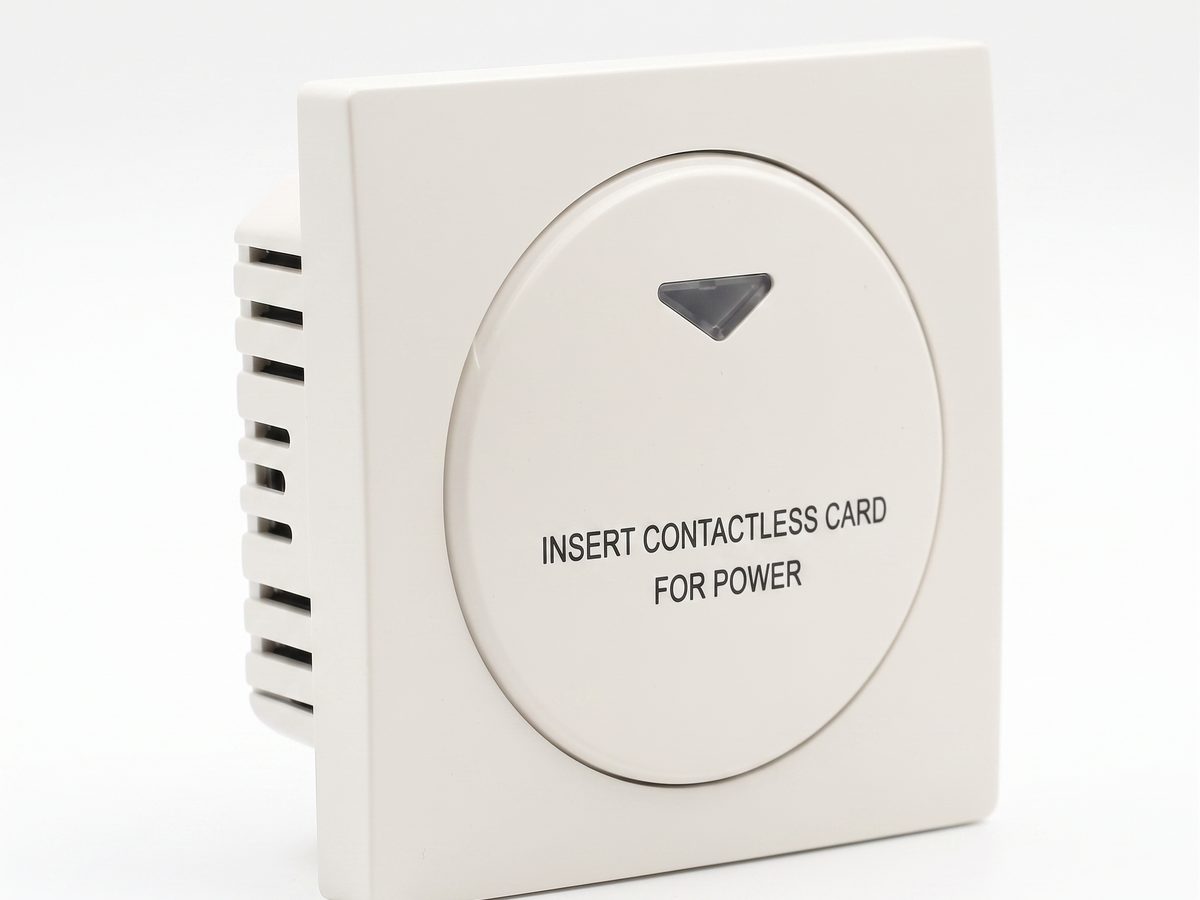
Interruptor de Tarjeta Hotel — Control Energía Habitación
Interruptor tarjeta hotel para control energía habitación. Detección RFID/IC, inserción-encendido, apagado retardado al retirar tarjeta. 220V CA, 10A-16A, RS485 o contacto seco. CE RoHS. Proveedor OEM/ODM.
Esta página ya lo señala como la siguiente referencia recomendada.
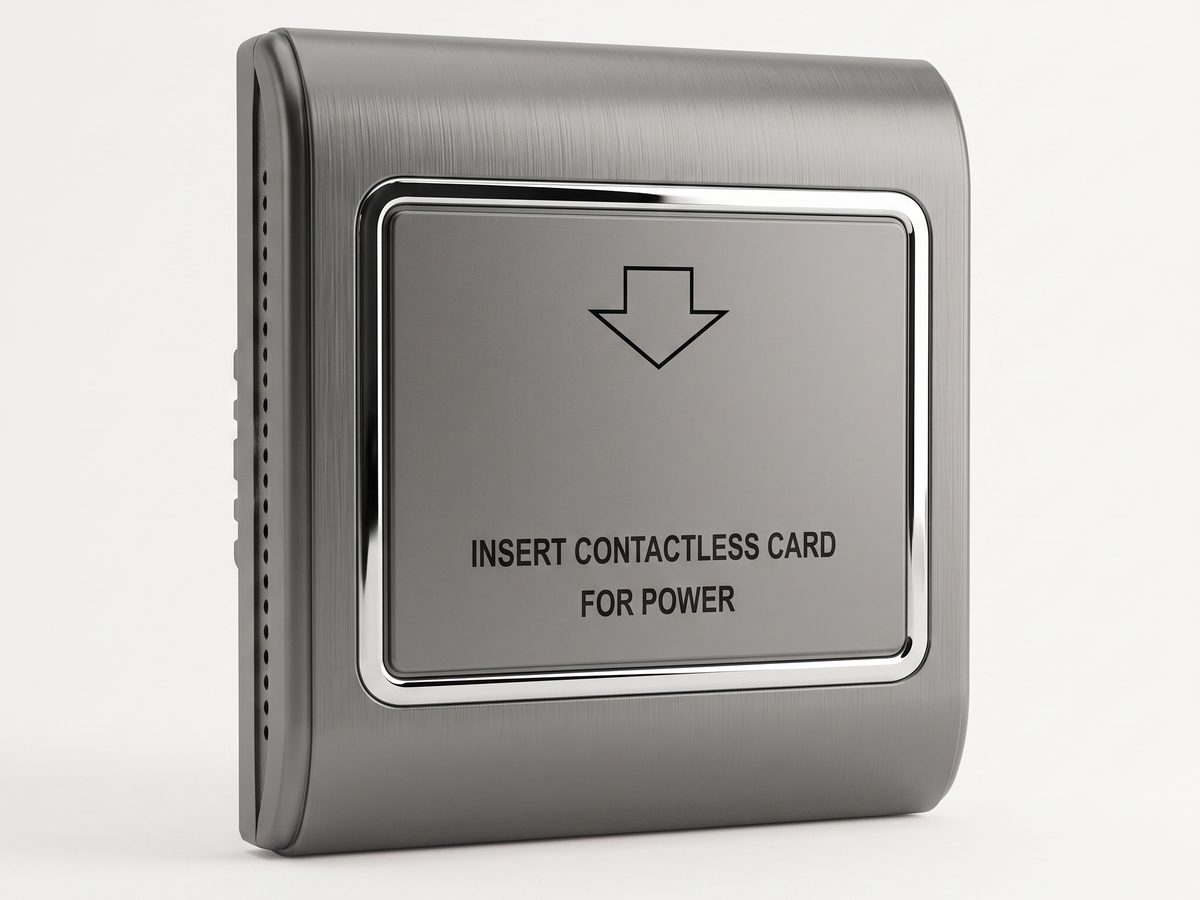
Interruptor RFID Ahorro Energía — Tarjeta MIFARE Vinculada Habitación (Tipo B)
Interruptor RFID ahorro energía vincula electricidad a tarjeta MIFARE habitación específica. 13.56MHz MIFARE / 125kHz Temic, CA 180–250V, 30A, 15s apagado retardado. Interruptor hotel RFID evita compartir tarjetas entre habitaciones y reduce 25–40% energía habitación.
Esta página ya lo señala como la siguiente referencia recomendada.
Soluciones relacionadas
3Sistema de Gestión de Habitaciones con Control por Tarjeta
Un sistema práctico de gestión de habitaciones para controlar la energía mediante interruptores de tarjeta, contactores y reglas operativas documentadas.
Respaldan el mismo contexto de producto: Interruptor de Tarjeta Hotel — Control Energía Habitación, Interruptor RFID Ahorro Energía — Tarjeta MIFARE Vinculada Habitación (Tipo B).
Ahorro energético hotelero con conmutación de energía en habitaciones
Solución de ahorro energético hotelero que usa conmutación de energía controlada por tarjeta para evitar que luces, aire acondicionado y enchufes seleccionados funcionen innecesariamente.
Respaldan el mismo contexto de producto: Interruptor de Tarjeta Hotel — Control Energía Habitación, Interruptor RFID Ahorro Energía — Tarjeta MIFARE Vinculada Habitación (Tipo B).
Control de Energía en Habitaciones con Interruptores de Tarjeta
Solución práctica de control de energía para iluminación, aire acondicionado y enchufes mediante tarjeta de habitación autorizada.
Respaldan el mismo contexto de producto: Interruptor de Tarjeta Hotel — Control Energía Habitación, Interruptor RFID Ahorro Energía — Tarjeta MIFARE Vinculada Habitación (Tipo B).
Artículos del blog relacionados
3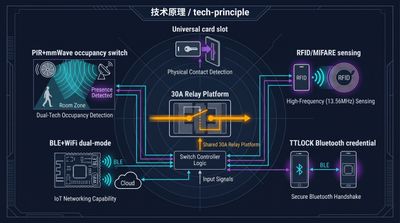
Interruptor de Tarjeta Hotel: Tipos, Modelos y Especificación
El interruptor de tarjeta para hotel incluye modelos universal, RFID, TTLOCK, BLE y ocupación. Guía sobre tipos, keycard switch y cómo especificar.
Respaldan el mismo contexto de producto: Interruptor de Tarjeta Hotel — Control Energía Habitación, Interruptor RFID Ahorro Energía — Tarjeta MIFARE Vinculada Habitación (Tipo B).
RFID vs NFC en interruptores de tarjeta llave de hotel: Qué elegir
RFID vs NFC en interruptores de tarjeta llave: alcance y bloqueo. RFID 125kHz/13.56MHz (MIFARE, Temic) es el estándar hotelero para energía en habitación…
Respaldan el mismo contexto de producto: Interruptor RFID Ahorro Energía — Tarjeta MIFARE Vinculada Habitación (Tipo B), Interruptor de Tarjeta Hotel — Control Energía Habitación.
Interruptor de tarjeta llave de hotel: qué es y ahorro de energía
Un interruptor de tarjeta llave de hotel enciende la habitación al insertar la tarjeta y apaga al sacarla, ahorrando típicamente un 25-40% de electricidad.
Respaldan el mismo contexto de producto: Interruptor de Tarjeta Hotel — Control Energía Habitación, Interruptor RFID Ahorro Energía — Tarjeta MIFARE Vinculada Habitación (Tipo B).
Especifica tu proyecto hotelero con nuestros ingenieros
Envíanos el número de habitaciones, tipo de techo y preferencia de protocolo. Devolveremos un plan de muestra y cotización en 24 horas laborables.
- Pase de la guía general a una discusión de producto o aplicación.
- Use RFQ cuando precio, planos, MOQ o calendario de lanzamiento necesiten estructura.
- Mantenga visible una ruta de contacto directo para aclaraciones rápidas y traspasos.