RFID vs IC Hotel Key Card Switch: How to Choose the Right Card Technology
RFID vs IC hotel key card switch: 125kHz UID-only RFID proximity cards vs 13.56MHz MIFARE IC smart cards. Compare read range, security, encryption, cost, compatibility, and which to choose.
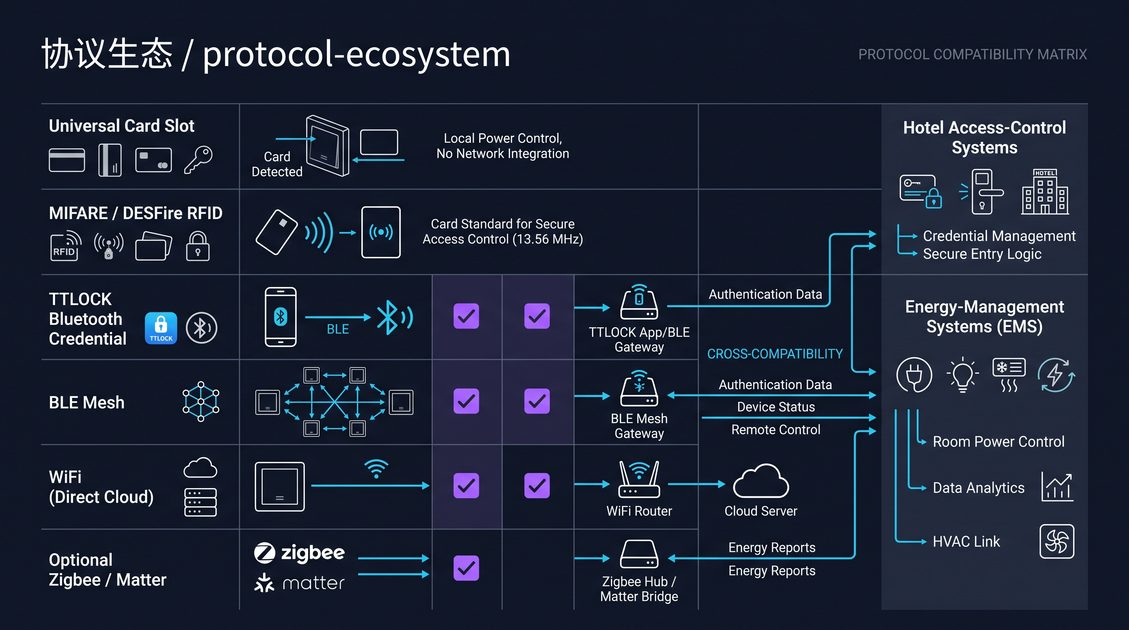
RFID vs IC is the single most asked card question we get from hoteliers who are about to buy a key card switch, because the two terms look similar but describe very different physical cards that behave differently at the wall switch. In the hotel industry, RFID refers to the low-frequency 125kHz proximity card such as EM4100, Temic, or HID, which stores only a factory-burned unique ID number and nothing else. IC card is short for integrated circuit card, and in a hotel key card switch context it refers to the 13.56MHz contactless smart card, most commonly a MIFARE Classic (M1) running ISO 14443, which carries a real microcontroller chip with memory sectors and a cryptographic engine. The difference matters because it decides how a hotel key card switch validates the card, whether it can bind power to one room, how easy the card is to clone, and what it costs. This guide breaks the RFID vs IC comparison into read range, security, storage, cost, compatibility, and retrofit so you can choose the right hotel key card switch.
RFID vs IC Hotel Key Card Switch: What the Two Card Technologies Actually Mean
RFID vs IC hotel key card switch selection starts with clearing up the terminology, because "RFID card" and "IC card" are used inconsistently across the industry and even within a single supplier's catalog. An RFID card in the hotel trade almost always means a 125kHz proximity card with an ID-only chip, the classic EM4100 (ID card) or Temic standard, whose only payload is a fixed serial number written at the factory; the card carries no writable memory and no cryptography. An IC card means an integrated circuit card with a microprocessor, and the type that matters for a key card power switch is the 13.56MHz contactless smart card, dominated by MIFARE Classic 1K, which offers 1024 bytes of EEPROM divided into 16 sectors of 4 blocks each, a 48-bit serial number, and a sector-key authentication scheme. When someone asks whether a switch reads RFID or IC, they are really asking which of these two card families the reader coil is tuned for, because the operating frequencies of 125kHz and 13.56MHz are not interchangeable without a dual-frequency reader module.
The terminology confusion is worth pinning down before any purchase because it drives every compatibility decision downstream. Some suppliers use "IC card" loosely to mean any chip card including contactless, and "RFID" to mean the contactless radio link itself, which makes the two words sound like they are the same thing. In practice, for a hotel key card switch, the useful reading is: RFID equals a read-only 125kHz proximity card with only a UID, while IC card equals a 13.56MHz contactless smart card with on-card storage and an authentication key. A hotel key card switch that says it reads RFID cards typically means the low-frequency EM4100 or Temic family. A switch that says it reads IC cards almost always means MIFARE Classic or compatible 13.56MHz cards. If a property already uses MIFARE door cards for its electronic locks, then an IC-reading switch is the natural match; if it uses low-cost 125kHz cards, an RFID-reading switch is the cheaper fit. Getting this one definition right avoids the most common purchasing error, which is buying a switch that cannot read the cards the hotel already issues.
The physical difference also explains the naming. A 125kHz proximity card is passive, powered by the reader's field, and simply echoes its serial number; it contains no active silicon beyond a resonant circuit and a tiny ID chip. A 13.56MHz IC card contains a more capable integrated circuit that can execute commands, hold data across power cycles, and respond to a challenge-response authentication handshake. Because the IC card has a chip that can compute, it can prove it knows a secret key rather than merely announcing an unchangeable number. That single architectural difference is the root of nearly every security and capability difference between RFID and IC cards, and it is the reason a hotel key card switch designed for IC cards can do room-bound validation that a simple UID-reading RFID switch cannot.
How an RFID vs IC Hotel Key Card Switch Reads and Validates Cards
An RFID vs IC hotel key card switch reads cards through a small antenna coil mounted behind the faceplate, and the validation method is where the two card types diverge most sharply. For a 125kHz RFID proximity card, the switch powers the card wirelessly at the low frequency, receives the card's fixed serial number, and compares that UID against an allowlist of card numbers that the hotel has registered to the room. Because the UID is the only datum, an RFID energy saver typically accepts the card if the number appears in its memory, or in the simplest designs it accepts any card from the same family because every card in a 125kHz batch is treated as identical. For a 13.56MHz IC card, the switch performs a MIFARE sector authentication, where the card proves possession of the correct 6-byte sector key through a challenge-response sequence, and only then exposes the data stored in the sector. This means an IC-reading switch can be programmed so that only the card issued for that specific room powers the switch, while a card from another room is rejected even though it is the same card family.
The read and validate behavior also differs in what happens when two identical-looking cards are presented. With a UID-only RFID card, any card whose serial number is on the allowlist works, and because 125kHz UID chips are widely cloned, a copy of a guest card behaves exactly like the original. With an IC card using MIFARE, the switch validates the sector key and optionally reads guest data such as the room number or checkout time stored on the card, so the switch can enforce room binding and can even reject an expired card. In the simplest room-bound setup, the key card switch writes the room number into the card's data sector when the guest checks in, and the wall switch reads that sector on insertion; if the room number matches, power turns on. This gives the hotel a card switch that is genuinely per-room rather than per-card-family. For properties upgrading from a purely mechanical or switch-plate energy saver, understanding this read-and-validate step is what separates a switch that just detects any card from one that truly identifies the guest's room.
The insertion behavior at the switch is another practical distinction. A 125kHz RFID key card switch usually reacts to the mere presence of the card and often works with either insertion or a tap, because the reader only needs to detect that a card is in the slot. An IC key card switch performs a full authentication cycle each time, which takes a few hundred milliseconds, and typically requires the card to be inserted and held in the slot for the contactless field to remain engaged. Some dual-purpose switches combine both, letting the reader detect any card to switch the load but using the IC sector data only for room binding. The wiring and electrical behavior at the relay is identical for both types, since the switching side of a key card switch is just a relay that closes to connect live power to the room's lighting and outlets. The difference is entirely on the read side. When you compare RFID vs IC hotel key card switch options, the validation logic, not the relay, is what you are really paying for.
RFID vs IC Hotel Key Card Switch: Technical Parameter Comparison Table
An IC card and an RFID card differ on operating frequency, memory, cryptography, cloning resistance, and unit cost, and the table below summarizes the parameters that matter most when you compare RFID vs IC hotel key card switch compatibility. The two families are not interchangeable at the reader, so these numbers translate directly into which switch you can install.
| Parameter | RFID Proximity Card | IC Card (MIFARE Classic 1K) |
|---|---|---|
| Operating frequency | 125kHz (EM4100, Temic, HID) | 13.56MHz (ISO 14443) |
| Read standard | ISO 11784 / ISO 11785 | ISO 14443A |
| Typical read range | 3 to 10 cm | 2 to 5 cm |
| On-card memory | None, UID only | 1024 bytes, 16 sectors of 4 blocks |
| Card payload | 40-bit to 64-bit serial number | 48-bit UID plus writable data sectors |
| Authentication | None, UID compare only | 6-byte sector key, challenge-response |
| Data writable by hotel | No | Yes, room number, expiry, guest data |
| Cloning resistance | Low, UID easily copied | Medium, keys protect data |
| Encryption | No cryptographic engine | Crypto-1 stream cipher, hardware key check |
| Room-bound capability | Limited to UID allowlist | Full, reads per-room data sector |
| Typical card unit cost | Very low, bulk pricing | Low to moderate, branded cards more |
| Reader module needed | 125kHz coil | 13.56MHz coil |
| Common use case | Budget energy saver, basic switches | Door locks, room-bound power, POS |
The parameter comparison shows why the choice is not cosmetic. The read range differs because lower frequency penetrates better, so a 125kHz RFID switch can sometimes detect a card through a slightly thicker faceplate or at a tap, while 13.56MHz IC reading demands closer contact. The memory column explains the room-binding story: an RFID card simply cannot store the room number, so the switch must keep an allowlist of UIDs, whereas an IC card carries the room data on the card itself. The cryptography column explains the security story: an IC card can prove it knows a key, while an RFID card can only repeat a number. When you read the table from top to bottom, every row tells the same story, which is that the IC card trades slightly shorter range for a great deal more storage, security, and per-room control, and the RFID card trades all of that for the lowest possible cost and a simpler reader.
Choosing an RFID vs IC Hotel Key Card Switch for Your Property
Choosing an RFID vs IC hotel key card switch comes down to the cards your property already issues, because the switch must read the same card family as your door locks if you want one card to do both jobs. If your hotel uses electronic door locks keyed to MIFARE or other 13.56MHz IC cards, then the obvious choice is an IC-reading key card switch, because it validates the same card that opens the room door and can bind power to that specific room. If your property still uses 125kHz EM4100 or Temic proximity cards, or if you operate a small budget hotel that wants the lowest possible per-card cost, then an RFID-reading switch is the economical fit. Start your decision by listing the card type your locks accept, because forcing a different card family just for the power switch means carrying two different guest cards, which is confusing for front desk staff and guests alike. The switch should be the follower of your card ecosystem, not the other way around.
Beyond the card family, the second deciding factor is how much per-room security and control you need. A property that simply wants to cut wasted electricity when guests leave can use an RFID switch that detects the presence of any registered card, because the main goal is load control rather than identity. A property that wants to prevent guests from sharing cards, stop staff from powering rooms they are not in, or charge guests for extra energy should choose an IC switch with room binding, because it rejects a card from the wrong room. The operational cost also matters over the card lifetime: an IC card is slightly more expensive per unit but carries guest data and can be rewritten and reused many times, while an RFID card is cheaper but offers nothing beyond its fixed number. For a hotel that reissues cards every stay, the IC card's rewriteability tends to win on total cost of ownership, while the RFID card wins on pure upfront cost.
The third factor is the retrofit path. If you already have a working card system and simply want to upgrade the wall switch, the least disruptive route is a switch that matches your existing card family. If you are upgrading from the old 125kHz keys to a modern MIFARE lock system at the same time, then buying a matching IC switch in the same project avoids a stranded inventory of cards. Many suppliers now offer switch models in both versions from the same housing, so the faceplate and wiring are identical and only the reader module differs. This makes the RFID vs IC hotel key card switch decision a clean, low-risk choice once you have confirmed your card standard. The buying guide on this site walks through pricing tiers and MOQ in more detail, but the short rule is: match the lock, match the card, and let security requirements decide between a UID-reading RFID switch and a room-binding IC switch.
Security Differences: UID-Only RFID Cards vs Encrypted IC Cards
The security differences between an RFID card and an IC card are the most consequential part of an RFID vs IC hotel key card switch comparison, because they determine how easily a guest can copy a card or power a room they have not paid for. A 125kHz RFID card exposes its full identity as a fixed serial number that can be read by a cheap handheld cloner sold openly online, and copying that number onto a blank 125kHz chip produces a card that is functionally identical to the original for a UID-only switch. There is no key, no cryptography, and no per-room binding unless the switch maintains its own UID allowlist. An IC card such as MIFARE Classic defends itself with a 6-byte sector key verified through a challenge-response handshake, and while Crypto-1 has known academic weaknesses, a properly configured MIFARE key switch still blocks casual cloning and prevents a card from another room from working. For most hotel applications, the difference is the difference between anyone with a copier card working and only the genuine room card working.
Room binding is where IC cards pull decisively ahead in security. When the hotel writes the room number and checkout data into the card's sector, the key card switch can reject a card whose room number does not match, even if the card carries a valid key. This closes a common abuse where guests swap cards or use a card from a common area to keep their own room powered. An RFID switch with only a UID cannot distinguish the room the card belongs to, so it either accepts all cards in the family or relies on the front desk to program an allowlist that is cumbersome to maintain as cards are issued and returned. The data-storage capability of the IC card is the security feature, not just a convenience, because it moves the access decision onto the card itself rather than a static number comparison. For a hotel that cares about preventing free power, the IC route is the more robust choice.
There are practical caveats to state honestly rather than overclaim. MIFARE Classic's Crypto-1 stream cipher has been publicly reverse-engineered, so an IC card with a known or default key is not cryptographically unbreakable, and a serious attacker with the right hardware and knowledge can read a poorly protected MIFARE sector. However, the barrier is far higher than cloning a 125kHz UID, and for the threat model of hotel guests trying to save a few dollars on electricity, the sector-key IC approach is more than sufficient. Newer IC cards based on MIFARE Plus or DESFire use AES-128 encryption and close the theoretical gap entirely, at a higher card cost that only some hotels justify. If you are weighing RFID vs IC hotel key card switch security, the honest summary is that an IC switch stops casual cloning and enforces per-room control, while an RFID switch is acceptable only when energy saving is the sole goal and identity does not matter.
RFID vs IC Hotel Key Card Switch: Cost, Compatibility, and Retrofit
The cost and compatibility side of an RFID vs IC hotel key card switch decision is where many hotels actually make up their mind, because the card ecosystem they already own is a sunk asset that is expensive to change. The switch itself is priced similarly between the two reader types for comparable build quality, since the main cost is the metal faceplate, the relay, and the control board, with the reader module being only a modest portion of the total. The larger cost differences live in the cards and in the surrounding lock system. A 125kHz RFID proximity card is among the cheapest consumables a hotel buys, costing a few cents per blank in bulk, while a MIFARE Classic IC card costs somewhat more per unit but can be rewritten across hundreds of stays. If your locks already accept MIFARE, the IC card cost is already sunk into your existing system, so the incremental cost of an IC switch is small. If you are starting from zero, the per-card saving of RFID can matter for a very large property issuing thousands of cards.
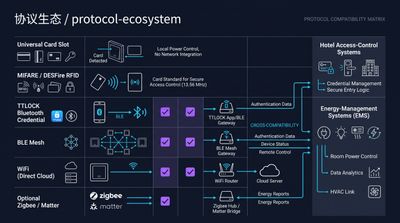
Compatibility is the constraint that overrides price. A key card switch must read the same frequency and card standard as the guest card, so check three things before buying: the card frequency (125kHz vs 13.56MHz), the card standard (EM4100, Temic, HID vs MIFARE Classic, Plus, or DESFire), and whether the lock system writes any room data onto the card that the switch could reuse. Some door lock systems store room information in a specific MIFARE sector, and a switch that reads that same sector can bind power to the room without any separate programming. Others use a proprietary sector layout, in which case you may need the lock vendor's cooperation or a switch that reads the UID only. This is why the compatibility question should be asked of your lock supplier and your switch supplier together, before you commit to a card family. A mismatch here is the most expensive mistake in the whole RFID vs IC decision, because it strands both the cards and the switches.
Retrofit and installation are the final practical concern. Most key card switches use a standard wall-mount form factor with two terminals for live and neutral and a relay output, so swapping from an RFID to an IC switch in the same project is a like-for-like replacement with identical wiring. If you are installing into existing guest rooms, confirm the switch can handle the room's voltage, typically 220V in most hotel markets, and that it fits the junction box already in the wall. If you are upgrading the entire card system at once, order the locks, cards, and switches in the same standard to keep the whole ecosystem consistent. The compatibility matrix in the section above gives you the exact parameters to confirm with your supplier. Whether you choose an RFID or an IC switch, the mechanical and electrical installation is the same, so the decision truly reduces to the card standard and the level of security you want, not to any wiring difference.
RFID vs IC Hotel Key Card Switch: Compatible Card Families
The RFID vs IC hotel key card switch choice narrows quickly once you map the actual card families, because the market settles into a handful of de-facto standards that suppliers design their readers around. On the 125kHz RFID side, the dominant families are EM4100, Temic (also written as Temic 5577), and HID Prox, all of which present a factory-burned serial number and offer no writable memory; a switch reader tuned to any of these reads the card UID and matches it against an allowlist. On the 13.56MHz IC side, MIFARE Classic 1K is by far the most common, with MIFARE Plus and MIFARE DESFire serving the higher-security tiers, and ISO 14443A coverage in the reader being what makes all three readable by the same module. When a supplier says a switch reads "MIFARE," it almost always means MIFARE Classic, so confirm whether the reader also handles MIFARE Plus and DESFire if you plan to migrate to AES-128 cards later. Mapping your card family to one of these standards is the fastest way to filter which switch models can possibly work for your property.
Two practical rules come out of this family map. First, never assume two cards with the same frequency are interchangeable: a 125kHz EM4100 card and a 125kHz Temic card are both "RFID," but a switch reader may be built for one and reject the other, so specify the exact chip family, not just the frequency, when you order. Second, on the IC side, a 13.56MHz reader that handles MIFARE Classic will also read most other ISO 14443A cards, which gives you more flexibility if you change card suppliers, whereas a 125kHz reader is tightly coupled to the specific low-frequency chip. The security and memory differences repeat here: the 125kHz families store nothing and authenticate nothing, while the 13.56MHz families store sectors and can authenticate, with DESFire offering the strongest AES-128 protection. This is why a property that plans to grow into higher-security cards should favor an IC switch now rather than retrofit later.
| Card Family | Frequency | Memory | Auth | Typical Use with Switch |
|---|---|---|---|---|
| EM4100 | 125kHz | None, UID | None | Budget RFID energy saver |
| Temic (5577) | 125kHz | None, UID | None | Budget RFID energy saver |
| HID Prox | 125kHz | None, UID | None | Legacy proximity systems |
| MIFARE Classic 1K | 13.56MHz | 1024 bytes | Sector key | Room-bound IC switch |
| MIFARE Plus | 13.56MHz | Sector configurable | AES-128 | Higher-security IC switch |
| MIFARE DESFire | 13.56MHz | Up to 8KB | AES-128 | Access control, strong security |
How a Key Card Switch Saves Energy, and Why Card Type Changes the Math
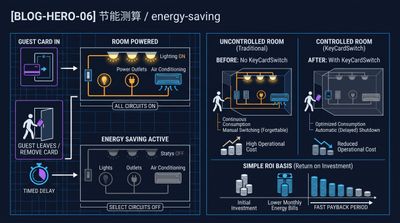
Understanding how a hotel key card switch saves energy explains why the RFID vs IC hotel key card switch choice affects not just compatibility but the reliability of your energy-saving guarantee. A key card switch is a relay in series with the room's main power feed; when the guest removes the card on leaving, the relay opens and cuts power to the room's lighting, outlets, and high-load appliances, while leaving the hard-wired refrigerator and other always-on circuits running. This removes the biggest source of wasted hotel energy, which is rooms left powered and air-conditioned after checkout or while the guest is out. The card type does not change the switching mechanism, because both RFID and IC switches cut power the same way when no valid card is present. What the card type changes is how confidently the switch can decide that the person leaving is not about to return, and whether a stray card left in the slot can keep power on by accident.
The room-binding capability of an IC switch makes the energy-saving behavior more precise. With a UID-only RFID switch, any card from the right family that is left in the slot keeps the room powered, so a guest who forgets a card in the slot defeats the purpose, and a card that is valid for one room can power another if the switch accepts the whole family. With an IC switch that reads a per-room sector, only the correct room's card keeps that room's power on, which tightens the energy control and prevents a card from one room powering another. This is a subtle but real difference in how much of the theoretical saving is actually achieved in daily operation. We do not publish a specific energy-saving percentage, because real savings depend on occupancy, guest habits, HVAC setpoints, and climate, all of which vary far too much between properties to state a universal figure.
What is safe to state is the mechanism: cutting the main power when no valid card is present eliminates standby and phantom loads across the whole room, which is the largest and most predictable saving. The HVAC system is the usual dominant load, and while many HVAC controls need their own sensors to respond quickly, removing power to a room that is fully unoccupied prevents a guest from leaving heating or cooling running all day. For the energy-accounting decision, the card type matters less than the discipline of wiring the switch so that the circuits you actually want controlled are behind the relay. Whether you pick an RFID or an IC switch, the energy behavior is governed by the relay and the wiring plan, not by the reader. So choose the card type for compatibility and security, and design the wiring for the energy outcome you want.
It is also worth noting how the two card types behave in the one scenario that matters most for energy, which is the guest leaving for the day. With a UID-only RFID switch, the field is broad and the switch may register a card as present even if it is only resting near the reader, and a card that is valid for the room family keeps power flowing until it is physically removed. With an IC switch that authenticates and reads a per-room sector, the switch decides on a full valid transaction, so the same forgot-the-card risk is smaller. Neither approach replaces good housekeeping or a sensible checkout routine, and the switch should never be treated as a substitute for the front desk confirming the guest has departed. But the tighter decision logic of the IC switch reduces the accidental always-on scenario that quietly erodes energy savings across a large portfolio. When you set the expectations for a property owner, frame the switch as a reliable load-control device whose card type primarily determines compatibility and security, and whose energy contribution is real but dependent on occupancy behavior and the wiring plan you implement.
RFID vs IC Hotel Key Card Switch: Installation, Wiring, and Form Factor
The installation and wiring of an RFID vs IC hotel key card switch is identical for both reader types, because the difference is confined to the front-end reader and the control logic, while the back-end relay and terminal block are the same. A typical key card switch ships as a wall-mounted unit with a faceplate, a card slot or sensing pad on the front, and either screw terminals or a plug-in connector on the back. The installer connects live and neutral to power the switch itself, connects the relay common and normally-open terminals in series with the room's controlled circuits, and optionally connects a wire for a doorbell or master control in some models. The wiring diagram on this site shows the exact terminal layout for the 220V version. Because the relay load is rated for the room's voltage and current, you must confirm the switch's rated load matches the circuits you place behind it, and that the always-on circuits such as the refrigerator are wired ahead of the relay rather than through it.
The form factor differences between RFID and IC versions are mostly about the reading surface. An RFID proximity switch often reads a card by a tap or a brief insertion because the 125kHz field is broad, while an IC switch usually needs the card inserted and held in the slot for the 13.56MHz reader to complete authentication. Some modern switches combine a proximity reader and a slot so they can read both tap-style RFID cards and insert-style IC cards, which is the most flexible option for a property mid-transition. Whichever form you choose, confirm the mounting depth fits your junction box, because a deeper reader coil or a larger PCB can require a deeper box. On a retrofit where the existing box is shallow, a compact IC switch is sometimes easier to fit than a bulkier dual-frequency model.
Before installing a batch across your rooms, install a single unit in a representative room and test it against the actual guest cards, including a card from another room to verify room binding, an expired card if your system writes expiry data, and a blank card to confirm rejection. This pre-install test catches compatibility problems when one unit is easy to correct rather than after a full rollout. Keep the card-standard details from the compatibility section handy when you order, so the reader module matches the cards you actually issue. Once the switch is wired and tested, routine operation requires no maintenance beyond occasional faceplate cleaning, because both RFID and IC switches are passive, contactless readers with no moving parts in the reading surface. The RFID vs IC hotel key card switch installation is therefore a standard electrical job, and the choice between the two is decided upstream by your card ecosystem.
Frequently Asked Questions about RFID vs IC Hotel Key Card Switches
The most common questions we receive about an RFID vs IC hotel key card switch repeat the same few concerns, so this section answers them directly before you buy. One frequent question is whether a switch can read both RFID and IC cards, and the honest answer is that a standard switch is tuned to one frequency, but dual-frequency models exist that include both a 125kHz and a 13.56MHz reader, so they can accept either card family, usually with a caveat that room binding only works on the IC side. Another question is whether guests can use a hotel IC card in their phone, and the answer is that while a 13.56MHz card can be emulated by an NFC phone in some setups, the room-bound power switch is designed around the physical card, so you should not rely on phone emulation for the wall switch unless the supplier explicitly supports it. A third common question is whether it is worth upgrading an existing RFID switch to an IC switch, which depends on whether your locks and cards already run on 13.56MHz and whether you need per-room binding.
Guests and procurement teams also ask about card cost and quantity, and the practical guidance is to order spares of the card family you already use, buy a small test batch of the switch first, and confirm the reader matches your card before a full rollout. Another frequent question is whether an IC card switch will work with a card that a previous hotel system wrote to a different sector, and the answer is that you may need to read the card with a programmer to confirm which sector holds room data, or use a UID-reading switch that does not depend on sector layout. Property owners also ask whether the switch works with high-voltage markets, and the answer is that most key card switches support the standard 220V room voltage, but you should confirm the rated load for your market. Finally, some ask whether RFID cards can be upgraded to IC later, and the practical answer is that the switch and the card must change together, so plan the card standard before you standardize the switch across your property.
The recurring theme in every question is that the RFID vs IC hotel key card switch decision is decided upstream by your existing card and lock ecosystem, and downstream by the level of security and per-room control you want. Start by listing the cards your door locks issue, confirm the frequency and standard, decide whether you need room binding or simply load control, and then choose a switch whose reader module matches that card. For a budget property issuing 125kHz proximity cards and wanting only to stop wasted electricity, an RFID switch is the economical and correct choice. For a property running MIFARE door locks and wanting to prevent card sharing and enforce per-room power, an IC switch is the right fit. In both cases the installation is identical, the wiring is standard, and the switch will reliably cut power when no valid card is present, which is the core job of any hotel key card switch.
Part of this article content is generated by AI and optimized for professional accuracy and readability.
Not sure which sensor fits your project?
Talk to our mmWave application engineers for a free consultation.
Find the right presence sensor for your hotel project
Compare the 3 protocols, check hotel-specific case studies, and download the installation guide
Related products
2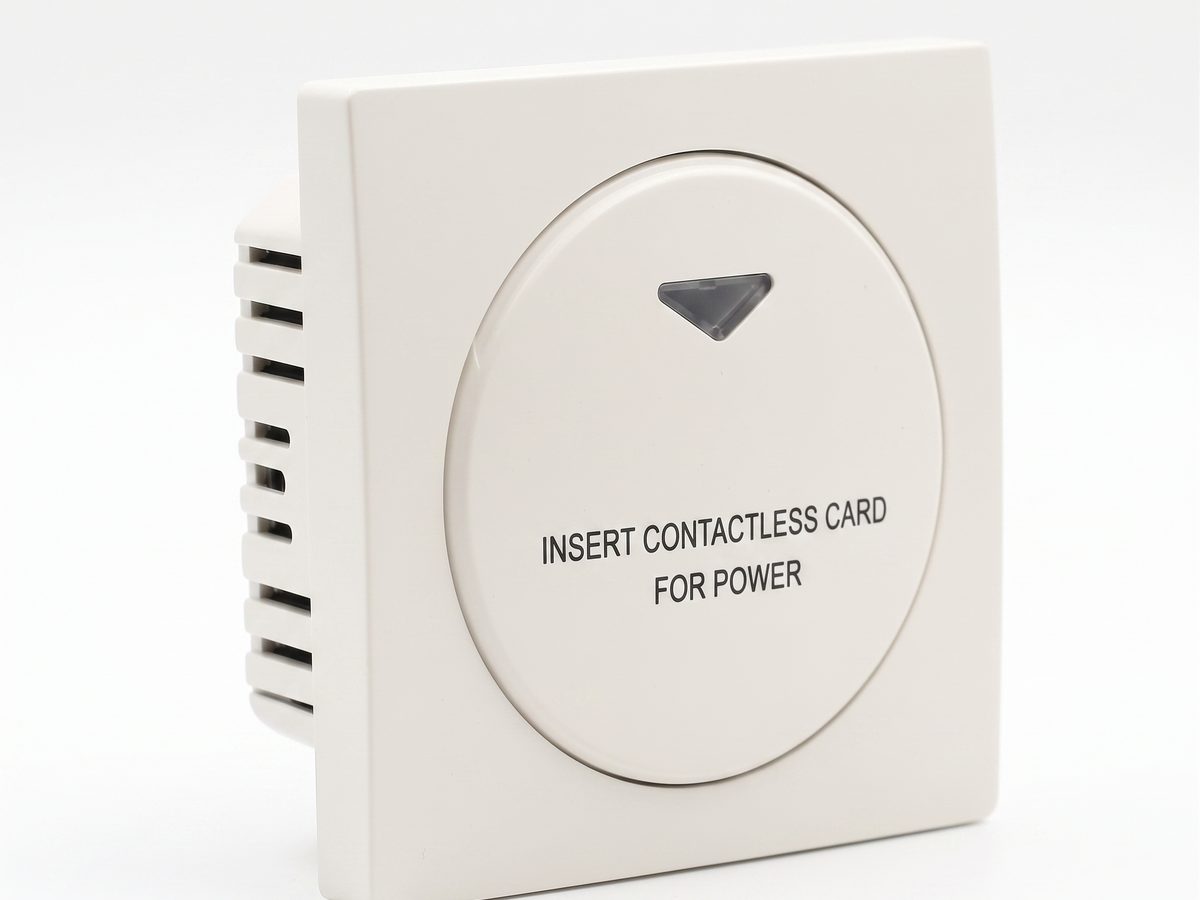
Hotel Key Card Switch — Guest Room Power Control
Hotel key card switch for guest room power control. RFID/IC card detection, insert-and-power, card removal time-delay power-off. 220V AC, 10A-16A, RS485 or dry contact. CE RoHS. OEM/ODM supplier.
This page already points to it as the next recommended reference.
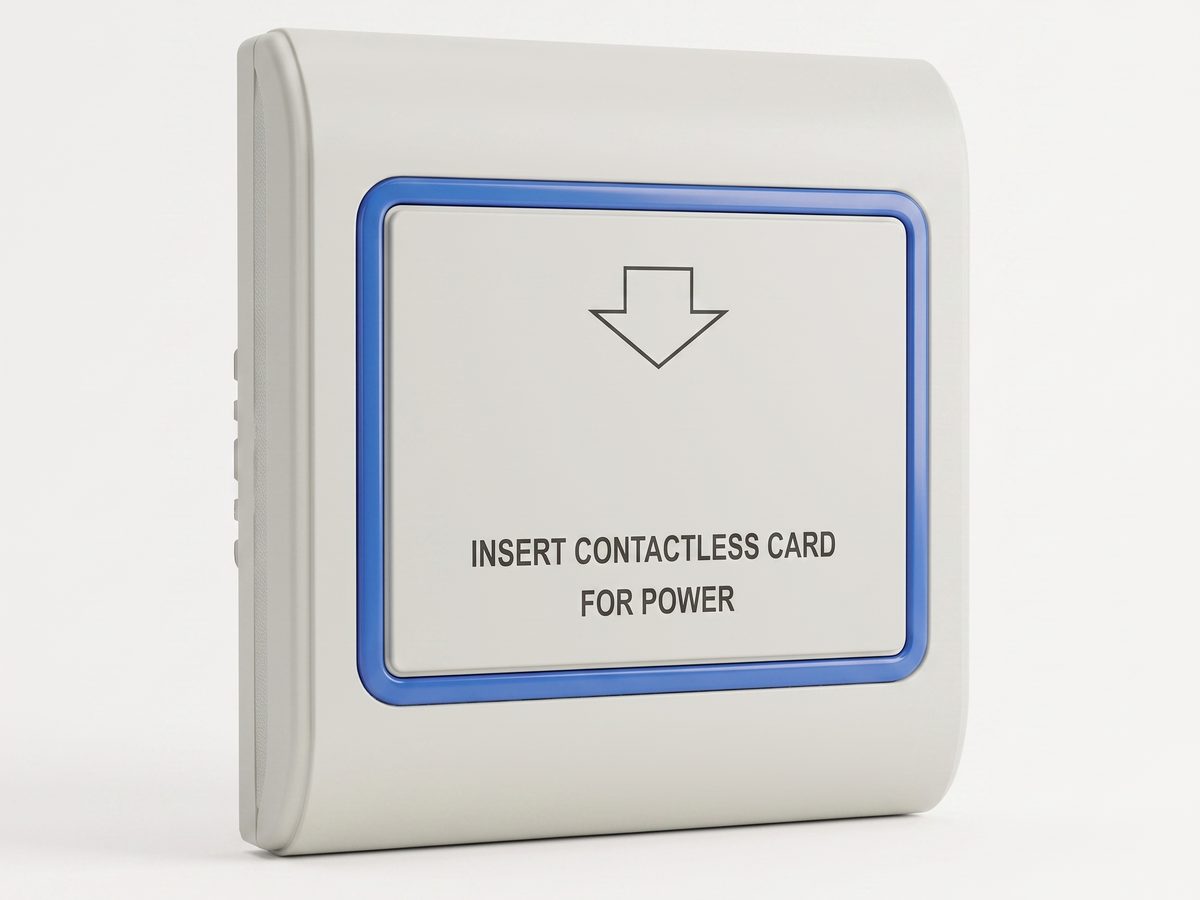
RFID Key Card Switch — Contactless 13.56MHz Guest Room Power Control
RFID key card switch with contactless 13.56MHz detection. Guest simply taps a card on the reader area to power the room, no insertion slot needed. Works alongside hotel door locks. CE RoHS. OEM/ODM supplier.
This page already points to it as the next recommended reference.
Related solutions
3Guest Room Management System Based on Card-Controlled Power
A practical guest-room management system for controlling room power through key card switches, contactors, and clearly documented operating rules.
It supports the same product context: Hotel Key Card Switch — Guest Room Power Control.
Hotel Energy Saving with Guest-Room Power Switching
A hotel energy-saving solution that uses card-controlled room power to prevent lights, air conditioning, and selected outlets from running unnecessarily.
It supports the same product context: Hotel Key Card Switch — Guest Room Power Control.
Hotel Room Power Control with Key Card Switches
A practical hotel room power control solution for switching guest-room lighting, air conditioning, and outlets from an authorized room card.
It supports the same product context: Hotel Key Card Switch — Guest Room Power Control.
Related blog posts
3
Hotel Key Card Switch: Types, Models, and How to Specify
A hotel key card switch spans universal, RFID, TTLOCK, BLE, and occupancy models. This guide to the key card / keycard switch family covers the head terms —…
It supports the same product context: Hotel Key Card Switch — Guest Room Power Control.
RFID vs NFC for Hotel Key Card Switches: Which Card Tech to Choose
RFID vs NFC for hotel key card switches comes down to range and lock-in: 125kHz / 13.56MHz RFID (MIFARE, Temic) is the hotel standard for room-bound power…
It supports the same product context: Hotel Key Card Switch — Guest Room Power Control.
What Is a Hotel Key Card Switch and How It Saves Room Energy
A hotel key card switch is a wall device that powers a guest room when a card is inserted and cuts it when removed, typically saving 25–40% of room…
It supports the same product context: Hotel Key Card Switch — Guest Room Power Control.
Specify your hotel project with our engineers
Send your room count, ceiling type, and protocol preference. We will return a sample plan and quote within 24 business hours.
- Move from general guidance into a product or application discussion.
- Use RFQ when pricing, drawings, MOQ, or launch timing needs structure.
- Keep a direct contact path visible for fast clarifications and handoff.