How Hotel Key Card Switches Cut 25–40% Room Energy
Hotel key card switches cut 25–40% of guest-room electricity by removing the AC and lighting load the moment a card leaves the slot. Learn the savings math…
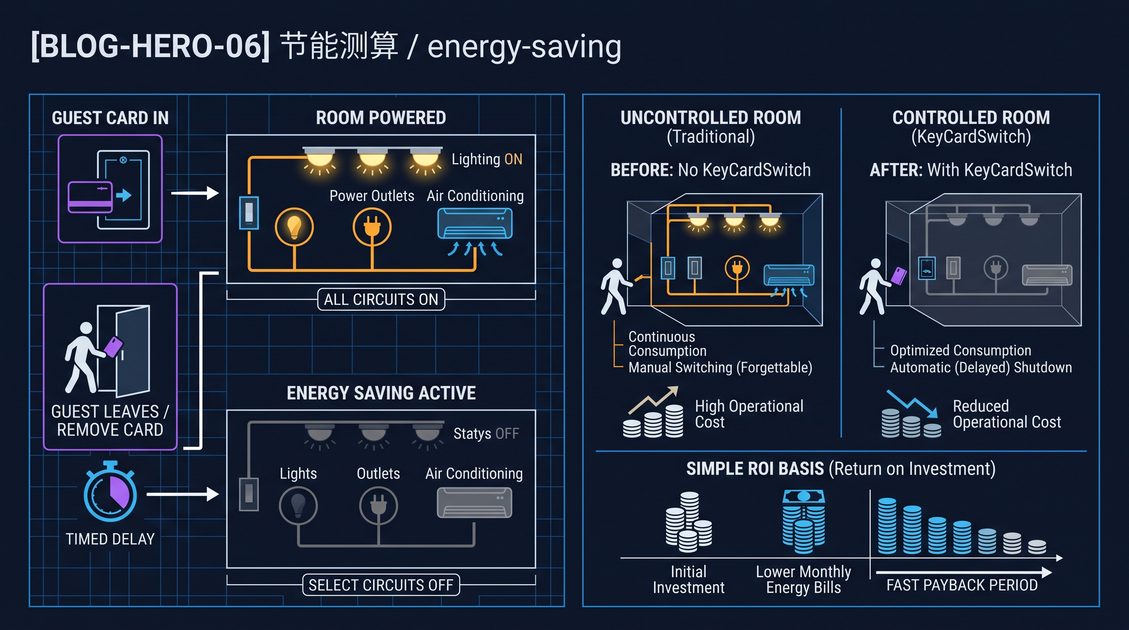
Hotel key card switches cut 25–40% of guest-room electricity by opening a 30A relay that carries the room's air conditioning and lighting the moment the check-out card leaves the slot, so the largest loads can no longer run on an empty room. The 25–40% figure comes from the simple fact that, without a key card power switch, the AC keeps cooling a vacant room for hours after checkout and between stays, and the lights stay on whenever housekeeping leaves the door open. A hotel key card switch removes that phantom load at the source: insert card → relay closes → room powers; remove card → 15-second delay-off → relay opens. Because the relay is the live circuit, not a dimmer, the saving is binary and immediate. A hotel key card switch is the single highest-ROI retrofit in most hospitality energy programs precisely because it needs no BMS, no network, and no behavior change from the guest.
The Savings Math: How Hotel Key Card Switches Cut 25–40%
The 25–40% band spans property types because it tracks how often rooms sit empty with power on. A budget hotel with long day-time vacancy and weak housekeeping discipline lands near 40%; a tight operation with motion-based HVAC already in place lands near 25%. The key card power switch captures the gap between "guest checked out" and "someone remembered to switch off" — often 30–90 minutes per turnover, plus every mid-day absence. At an average guest-room load of 1–2 kW (mostly AC), even 60 minutes of avoided runtime per room per day is roughly 0.5–1 kWh saved, multiplied across hundreds of rooms across a year. A hotel key card switch makes that saving automatic and tamper-resistant, which is why the payback on a hotel key card switch is typically under a year on the hardware alone.
How the 30A Relay Loop Enforces the Hotel Key Card Switch Cut
A hotel key card switch enforces the cut through a 30A relay wired into the room's live feed, not through software that a guest can ignore. Insert the card → the reader validates it (UID-only, room-bound MIFARE, or TTLOCK sector key) → the relay coil energizes and the contacts close, powering lights, AC, and sockets together. Remove the card → the coil de-energizes after a 15-second hold → the contacts open and the whole circuit drops. The 15-second delay-off is deliberate: it keeps the lights on while the guest collects belongings and steps out, then cuts, so comfort is preserved while the meter stops. A hotel key card switch thus couples guest experience to energy savings without a single setting to configure.
Turning the Hotel Key Card Switch Cut Into Auditable Data
A BLE smart energy switch adds a cloud log on top of the same relay loop, reporting every power event per room to a dashboard. That turns the 25–40% cut from a claim into a line item: energy teams see which rooms drew power while empty, housekeeping sees which checkouts left load on, and sustainability reporting gets per-room kWh without sub-metering every circuit. A hotel key card switch with BLE is the connected version of the same 30A loop — offline-reliable, because the card still works if WiFi drops, but cloud-visible when the network is up. For properties that need the savings proven, not just promised, the BLE hotel key card switch closes the loop between the key card power switch and the energy report. See the hotel energy management system for the full per-room view.
Not sure which sensor fits your project?
Talk to our mmWave application engineers for a free consultation.
Find the right presence sensor for your hotel project
Compare the 3 protocols, check hotel-specific case studies, and download the installation guide
Related products
3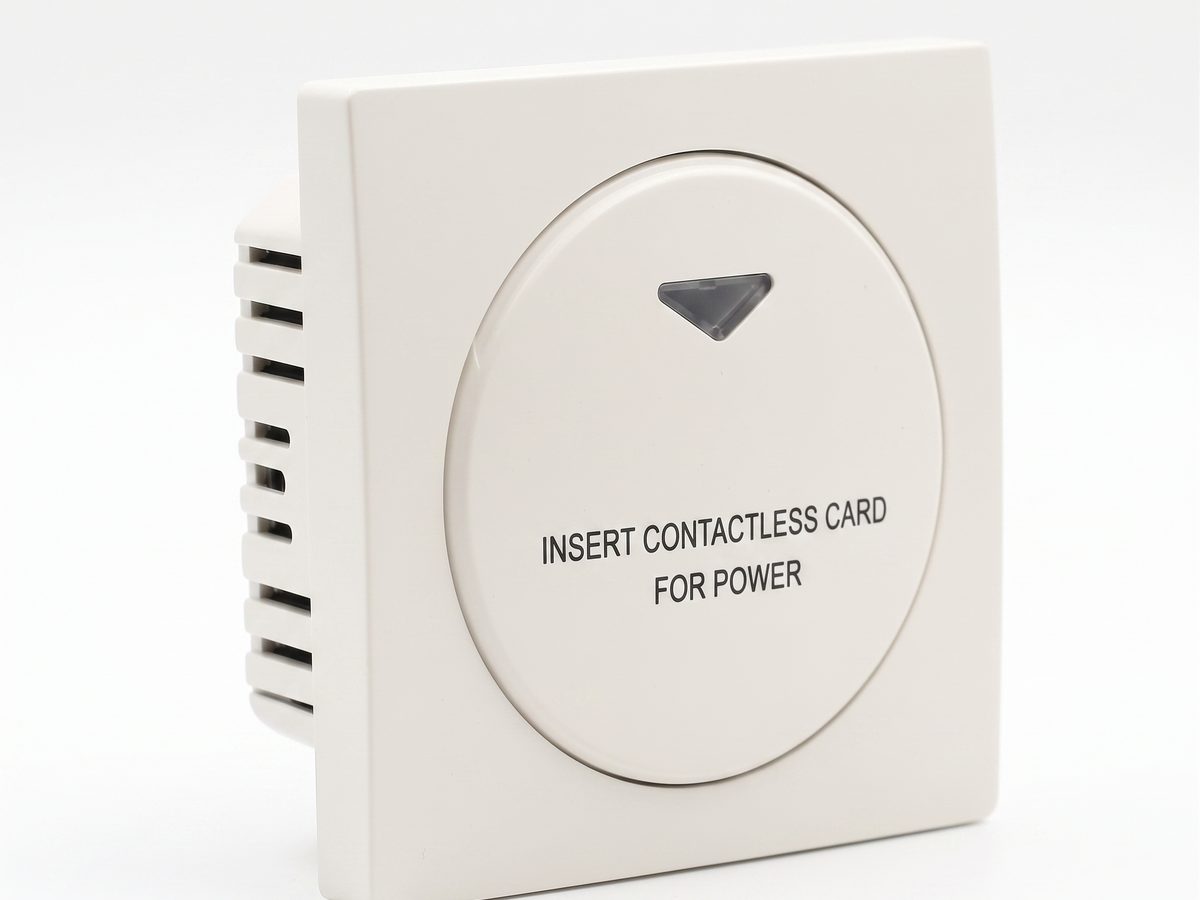
Hotel Key Card Switch — Guest Room Power Control
Hotel key card switch for guest room power control. RFID/IC card detection, insert-and-power, card removal time-delay power-off. 220V AC, 10A-16A, RS485 or dry contact. CE RoHS. OEM/ODM supplier.
This page already points to it as the next recommended reference.
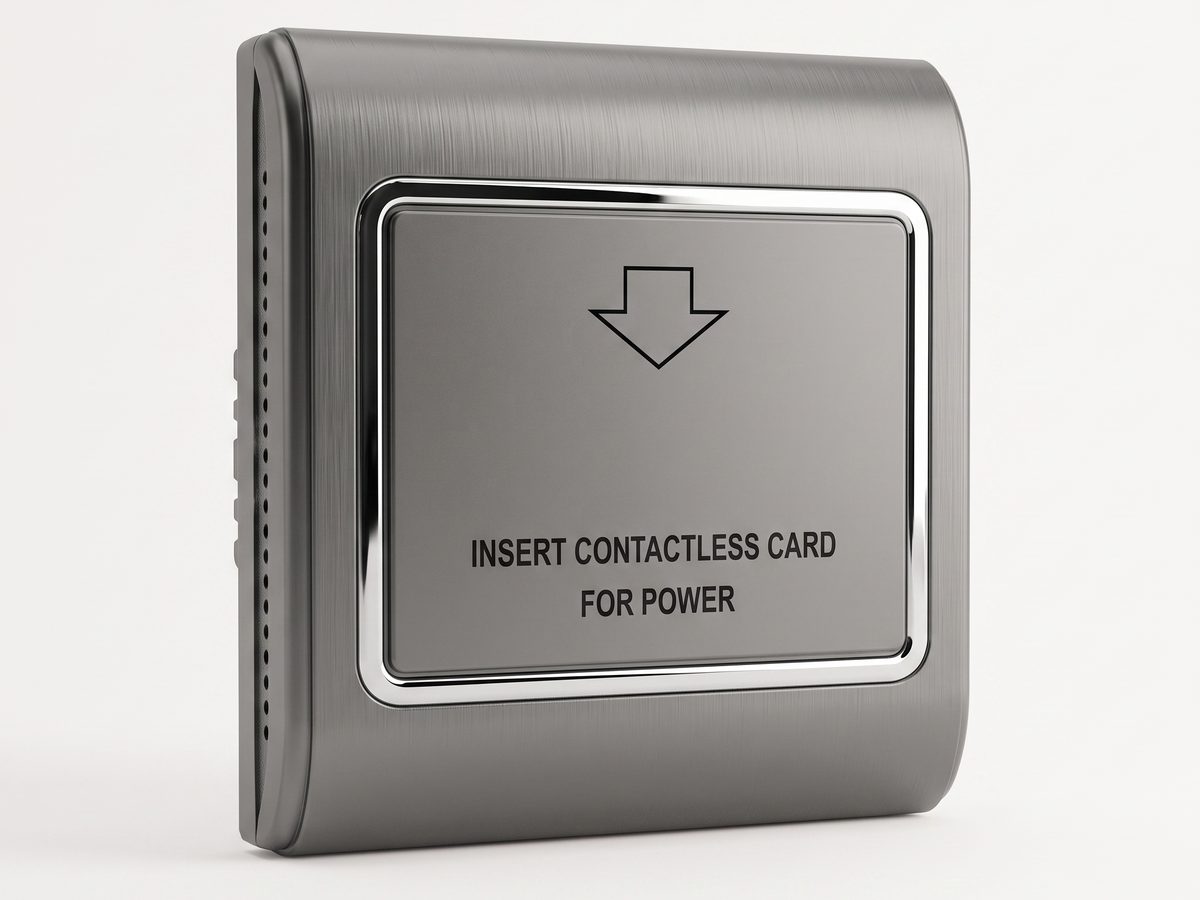
RFID Energy Saving Switch — Room-Bound MIFARE Card Switch (Type B)
RFID energy saving switch that binds power to a specific room MIFARE card. 13.56MHz MIFARE / 125kHz Temic, AC 180–250V, 30A, 15s delay-off. An RFID hotel switch that stops card-sharing between rooms and cuts 25–40% room energy.
This page already points to it as the next recommended reference.
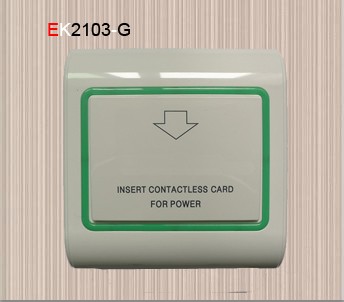
BLE Smart Energy Switch — Bluetooth + WiFi Hotel Power Control
BLE smart energy switch with Bluetooth LE and WiFi for app-based room power control. Pairs with a guest phone or MIFARE card, logs usage to the cloud, and cuts 25–40% room energy. A smart energy saving switch and WiFi energy switch for connected hotels.
This page already points to it as the next recommended reference.
Related solutions
3 Hotel Energy Management System — Room Power Control That Pays Back
A hotel energy management system built on key card switches, RFID energy savers, and occupancy sensors that cuts 25–40% of guest-room electricity. Guest room energy controller guidance for hotels retrofitting room power.
This page already points to it as the next recommended reference.
Guest Room Management System Based on Card-Controlled Power
A practical guest-room management system for controlling room power through key card switches, contactors, and clearly documented operating rules.
It supports the same product context: Hotel Key Card Switch — Guest Room Power Control, RFID Energy Saving Switch — Room-Bound MIFARE Card Switch (Type B).
Hotel Energy Saving with Guest-Room Power Switching
A hotel energy-saving solution that uses card-controlled room power to prevent lights, air conditioning, and selected outlets from running unnecessarily.
It supports the same product context: Hotel Key Card Switch — Guest Room Power Control, RFID Energy Saving Switch — Room-Bound MIFARE Card Switch (Type B).
Related blog posts
3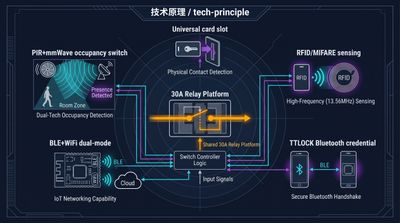
Hotel Key Card Switch: Types, Models, and How to Specify
A hotel key card switch spans universal, RFID, TTLOCK, BLE, and occupancy models. This guide to the key card / keycard switch family covers the head terms —…
It supports the same product context: Hotel Key Card Switch — Guest Room Power Control, RFID Energy Saving Switch — Room-Bound MIFARE Card Switch (Type B), BLE Smart Energy Switch — Bluetooth + WiFi Hotel Power Control.
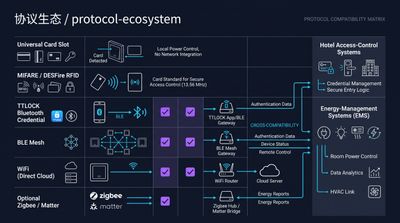
RFID vs NFC for Hotel Key Card Switches: Which Card Tech to Choose
RFID vs NFC for hotel key card switches comes down to range and lock-in: 125kHz / 13.56MHz RFID (MIFARE, Temic) is the hotel standard for room-bound power…
It supports the same product context: RFID Energy Saving Switch — Room-Bound MIFARE Card Switch (Type B), Hotel Key Card Switch — Guest Room Power Control.
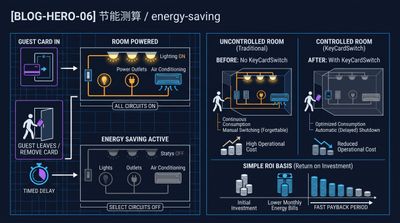
What Is a Hotel Key Card Switch and How It Saves Room Energy
A hotel key card switch is a wall device that powers a guest room when a card is inserted and cuts it when removed, typically saving 25–40% of room…
It supports the same product context: Hotel Key Card Switch — Guest Room Power Control, RFID Energy Saving Switch — Room-Bound MIFARE Card Switch (Type B), BLE Smart Energy Switch — Bluetooth + WiFi Hotel Power Control.
Specify your hotel project with our engineers
Send your room count, ceiling type, and protocol preference. We will return a sample plan and quote within 24 business hours.
- Move from general guidance into a product or application discussion.
- Use RFQ when pricing, drawings, MOQ, or launch timing needs structure.
- Keep a direct contact path visible for fast clarifications and handoff.