BLE vs WiFi Hotel Energy Switch: Which Connected Model to Choose
BLE vs WiFi is the connectivity choice for a connected hotel energy switch. BLE unlocks by phone locally; WiFi reports usage and receives remote…
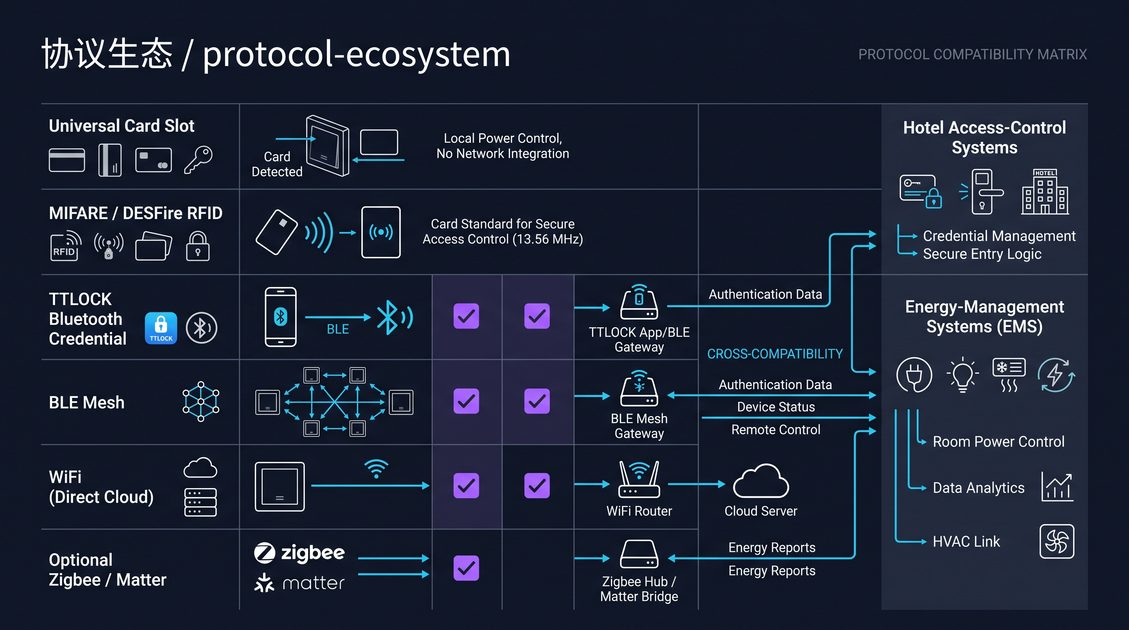
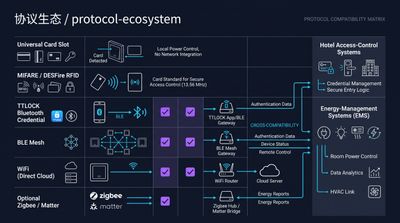
BLE vs WiFi is the connectivity split inside a connected hotel energy switch: BLE (Bluetooth Low Energy) handles the local unlock — a guest phone opens the relay directly, no server in the path — while WiFi carries usage events to the cloud and receives remote authorize/revoke from the front desk. A BLE smart energy switch is therefore offline-reliable (the card or phone still works if the network is down) and a WiFi energy switch hotel deployment is cloud-visible (per-room kWh and remote checkout appear on a dashboard). The two are not competitors but layers: BLE is the local credential, WiFi is the remote management. A hotel energy switch that ships with both gives the guest phone-as-key at the door and the energy team a log at the desk, without either function blocking the other.
BLE vs WiFi: How a Hotel Energy Switch Splits the Job
A BLE smart energy switch pairs with a guest phone over Bluetooth LE and verifies the credential on the switch's own chip, then closes the 30A relay. Because authentication is local, the room powers up even with WiFi off, and a MIFARE card fallback keeps working if the phone battery dies. The BLE layer needs no building network and no app server, which is why a BLE smart energy switch is the part of the system that never fails during an outage — a hotel energy switch that keeps working when the network does not. Its limit is reach: BLE is a personal-area link, good for unlock but not for reporting. That is where WiFi comes in. For a property that wants phone-as-key without a cloud dependency, a BLE smart energy switch alone already delivers the core experience on the door side of the hotel energy switch.
BLE vs WiFi: What the WiFi Layer Adds to the Switch
A WiFi energy switch hotel model uses the 2.4GHz link to stream power events to a dashboard and to accept remote commands — front desk authorizes a room to a guest phone, and at checkout revokes it so the relay opens automatically. The WiFi layer turns the smart energy saving switch from a local device into a managed one: housekeeping sees which rooms are occupied, energy teams see per-room kWh, and the desk ends a stay with one click instead of a physical card pull. A WiFi energy switch hotel deployment assumes network uptime for the management features, but it does not gate the basic unlock, because BLE and the card fallback run independently. For sustainability reporting and remote operations, WiFi is what makes the saving auditable across the whole hotel energy switch fleet, turning each connected hotel energy switch into a measurable line item.
BLE vs WiFi: Deploying Both Layers on One Switch
Deploy BLE and WiFi together on one BLE smart energy switch so each layer covers the other's gap. The guest taps the phone (BLE) or inserts a MIFARE card (offline fallback) to enter; the room logs every power event over WiFi; the desk authorizes and revokes remotely over WiFi. If WiFi drops, the room still unlocks and powers correctly — only the cloud log and remote checkout pause until the link returns. A hotel energy switch with both is the connected version of the same 30A relay loop used by the wired models, so it retrofits into the same flush box. Choose the smart energy saving switch when you want phone-as-key and auditable savings; see the hotel energy management system for how BLE and WiFi roll up into one per-room view.
Not sure which sensor fits your project?
Talk to our mmWave application engineers for a free consultation.
Find the right presence sensor for your hotel project
Compare the 3 protocols, check hotel-specific case studies, and download the installation guide
Related products
2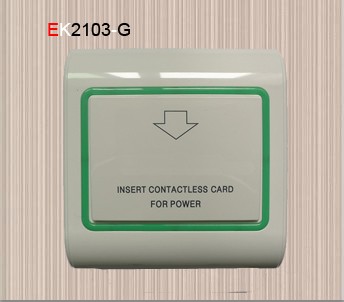
BLE Smart Energy Switch — Bluetooth + WiFi Hotel Power Control
BLE smart energy switch with Bluetooth LE and WiFi for app-based room power control. Pairs with a guest phone or MIFARE card, logs usage to the cloud, and cuts 25–40% room energy. A smart energy saving switch and WiFi energy switch for connected hotels.
This page already points to it as the next recommended reference.
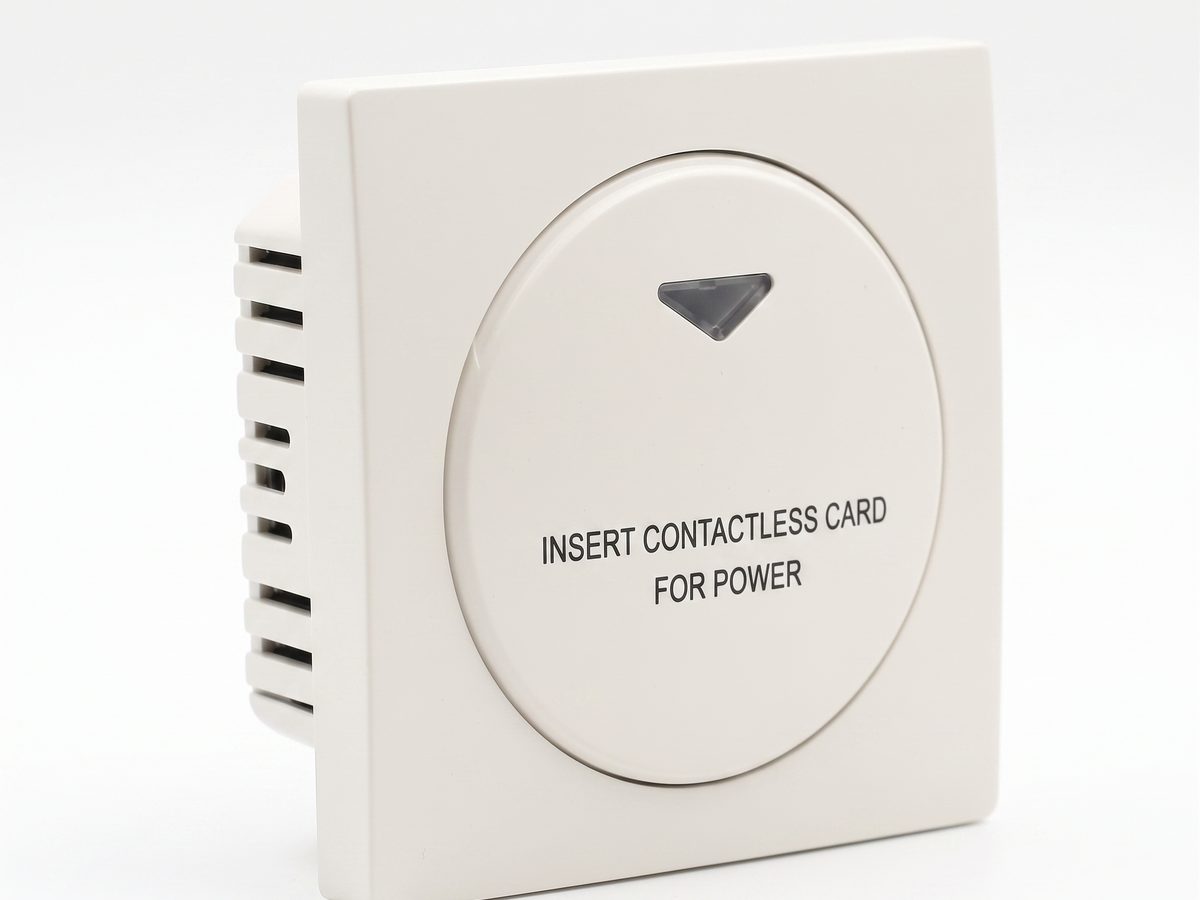
Hotel Key Card Switch — Guest Room Power Control
Hotel key card switch for guest room power control. RFID/IC card detection, insert-and-power, card removal time-delay power-off. 220V AC, 10A-16A, RS485 or dry contact. CE RoHS. OEM/ODM supplier.
This page already points to it as the next recommended reference.
Related solutions
3 Hotel Energy Management System — Room Power Control That Pays Back
A hotel energy management system built on key card switches, RFID energy savers, and occupancy sensors that cuts 25–40% of guest-room electricity. Guest room energy controller guidance for hotels retrofitting room power.
This page already points to it as the next recommended reference.
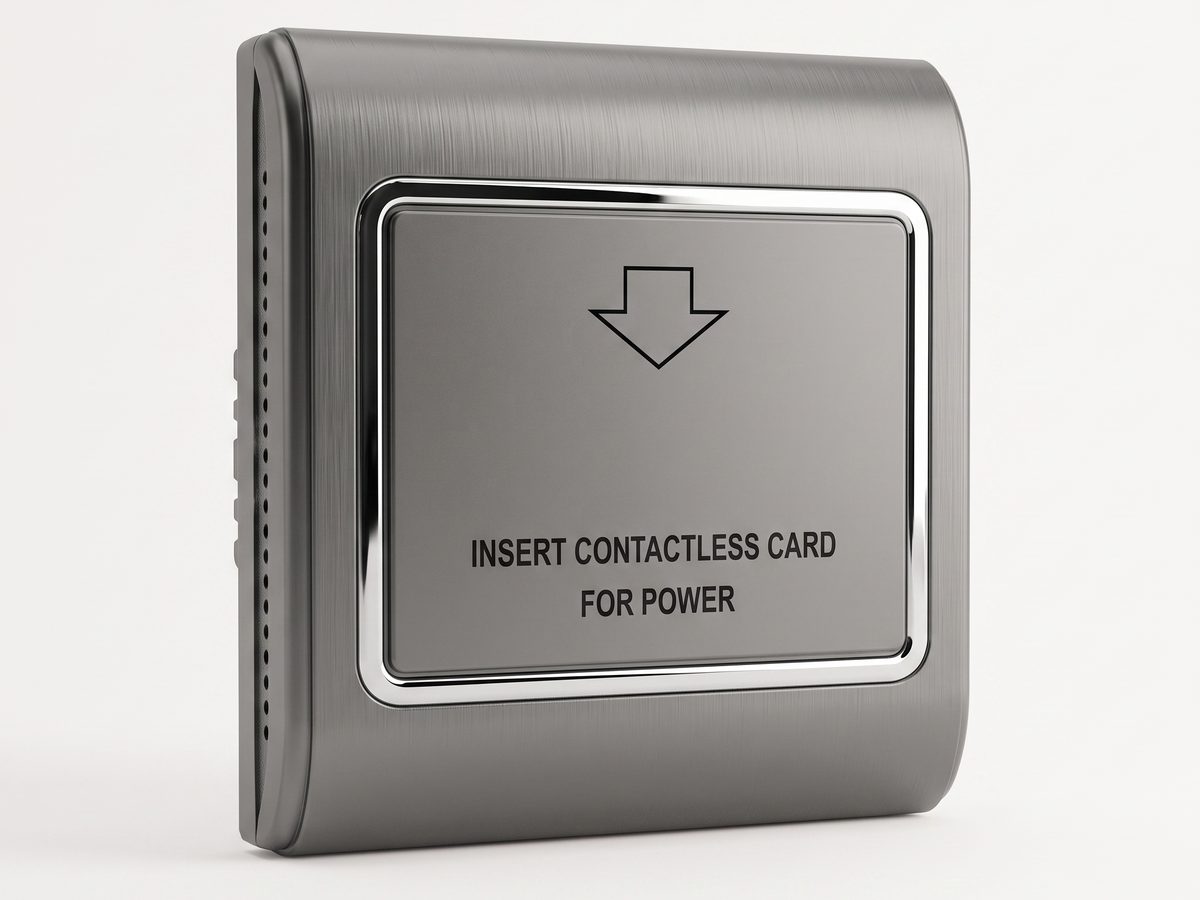
Hotel Energy Saving Switch Buying Guide 2026
A hotel energy saving switch buying guide covering universal card, RFID/MIFARE, TTLOCK compatible, BLE smart, and occupancy sensor switches. Pick the right key card power switch, card insert power switch, and energy saving key switch for your rooms.
This page already points to it as the next recommended reference.
Guest Room Management System Based on Card-Controlled Power
A practical guest-room management system for controlling room power through key card switches, contactors, and clearly documented operating rules.
It supports the same product context: Hotel Key Card Switch — Guest Room Power Control.
Related blog posts
3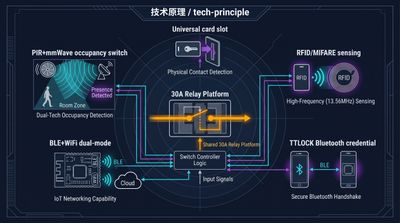
Hotel Key Card Switch: Types, Models, and How to Specify
A hotel key card switch spans universal, RFID, TTLOCK, BLE, and occupancy models. This guide to the key card / keycard switch family covers the head terms —…
It supports the same product context: Hotel Key Card Switch — Guest Room Power Control, BLE Smart Energy Switch — Bluetooth + WiFi Hotel Power Control.
RFID vs NFC for Hotel Key Card Switches: Which Card Tech to Choose
RFID vs NFC for hotel key card switches comes down to range and lock-in: 125kHz / 13.56MHz RFID (MIFARE, Temic) is the hotel standard for room-bound power…
It supports the same product context: Hotel Key Card Switch — Guest Room Power Control.
What Is a Hotel Key Card Switch and How It Saves Room Energy
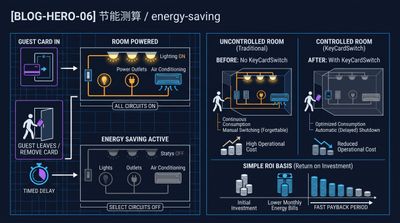
A hotel key card switch is a wall device that powers a guest room when a card is inserted and cuts it when removed, typically saving 25–40% of room…
It supports the same product context: Hotel Key Card Switch — Guest Room Power Control, BLE Smart Energy Switch — Bluetooth + WiFi Hotel Power Control.
Specify your hotel project with our engineers
Send your room count, ceiling type, and protocol preference. We will return a sample plan and quote within 24 business hours.
- Move from general guidance into a product or application discussion.
- Use RFQ when pricing, drawings, MOQ, or launch timing needs structure.
- Keep a direct contact path visible for fast clarifications and handoff.