مقارنة عملية بين مفتاح البطاقة الفندقية وليجراند: دليل المشتري الفندقي
مفتاح البطاقة الفندقية مقابل ليجراند للمشترين الفندقيين: قارن التعرف على البطاقة، الأحمال، المرحلات، التركيب، مخاطر التعديل التحديثي، التوريد، التخصيص، والدعم.
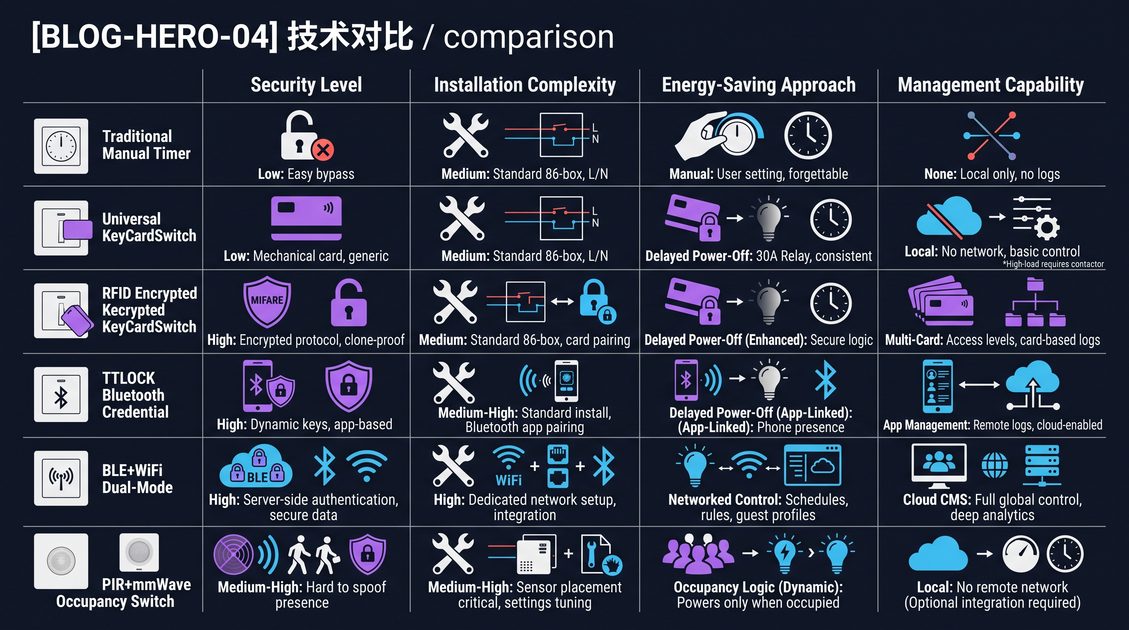
نادراً ما يتم حل قرار التحكم في الطاقة الفندقية باختيار العلامة التجارية الكهربائية الأكثر شهرة. يجب على فرق المشروع مطابقة مفتاح البطاقة، طريقة التوصيل، الحمل الكهربائي، صندوق الحائط، القواعد المحلية، ونموذج الخدمة مع المبنى. تشرح هذه المقارنة أين قد يتداخل مفتاح البطاقة الفندقية المخصص ومنتجات ليجراند الفندقية أو للتحكم في الإضاءة، أين تختلف، وكيفية إنشاء موجز مشتريات عادل دون افتراض مواصفات غير موثقة. كُتبت للملاك، المقاولين، الموزعين، مصممي الإضاءة، ومتكاملي الأنظمة الذين يحتاجون عملية قرار عملية بدلاً من شعار علامة تجارية.
مفتاح البطاقة الفندقية مقابل ليجراند: ما تعنيه المقارنة فعلياً
مفتاح البطاقة الفندقية مقابل ليجراند هو مقارنة بين نهجين للمشتريات، وليس ادعاء بأن كل منتج يُباع تحت أي من الاسمين له وظائف متطابقة. مفتاح البطاقة الفندقية هو جهاز تحكم في طاقة الغرفة مثبت على الحائط يكتشف بطاقة الضيف أو البطاقة المعتمدة، ثم يفتح أو يغلق مرحلاً يتحكم في الدوائر المختارة. ليجراند هي علامة تجارية كهربائية تابعة لجهة خارجية بمنتجات عبر أجهزة التوصيل، المفاتيح، التحكم في الإضاءة، والتطبيقات الفندقية؛ تعتمد وظائفها الدقيقة على عائلة المنتج المحلية، السوق، طريقة التركيب، والوثائق الحالية. لذلك، يجب على المشترين مقارنة أوراق البيانات الموثقة، وليس الشعارات. أهم الحقائق هي طريقة الإدخال أو التعرف، الحمل المتحكم به، هندسة المرحل، توافق الصندوق، الموافقات، قناة الخدمة، وتوفر المشروع. قد يكتشف مفتاح البطاقة الشامل الإدراج دون مصادقة البطاقة، بينما قد يقرأ إصدار RFID تقنية بطاقة محددة. لا ينبغي نقل أي من الافتراضين إلى منتج ليجراند غير محدد.
حدد القرار قبل مقارنة العلامات التجارية
السؤال الأول ليس "أي العلامات التجارية أفضل؟" بل "ما سلوك الغرفة الذي يجب أن يقدمه التركيب؟" تتطلب غرفة الفندق النموذجية تسلسلاً واضحاً: يدخل الضيف، يُدخل البطاقة، تصبح دوائر الإضاءة والمقابس المختارة نشطة، وتنفصل الدوائر بعد إزالة البطاقة وانتهاء مهلة التأخير المُكوّنة. يريد بعض المشاريع التحكم في الإضاءة والمقابس العامة فقط. ويفصل آخرون دوائر الثلاجة، السلامة، التهوية، الوصول، أو الصيانة. لا ينبغي أبداً استخدام مفتاح البطاقة لمقاطعة دائرة يتطلب التصميم الكهربائي بقاءها مُغذية باستمرار.
قد يتم اختيار منتجات ليجراند لأن المشروع يستخدم بالفعل عائلة أوسع من الملحقات الكهربائية، تشطيب مصمم محدد، أو قناة توزيع إقليمية. قد يتم اختيار مفتاح البطاقة المخصص لأن وظيفته الأساسية هي التحكم في طاقة الغرفة بشكل لا لبس فيه. هذه أولويات مشروعة، لكنها تنتج معايير تقييم مختلفة. ضع جدول أحمال الغرفة أولاً، ثم اختبر البديلين مقابلها.
ما هو معروف وما هو غير معروف عن ليجراند
لا تُعين هذه المقالة رقم طراز ليجراند، جهد، تصنيف تيار، سعر، اعتماد، أو ميزة للمقارنة. تختلف عائلات منتجات ليجراند حسب البلد والتطبيق، ويجب التحقق من منتج فندقي أو للتحكم في الإضاءة من الوثائق الإقليمية الرسمية وعرض السعر الدقيق. يجب على المشتري المسؤول طلب الورقة التقنية الحالية، تعليمات التركيب، مستندات الإعلان أو الاعتماد، وشروط دعم الموزع للمنتج المقترح. إذا قال العرض "متوافق مع ليجراند" دون طراز وورقة بيانات، فهي ليست بعد مواصفة قابلة للمقارنة.
ينطبق نفس الانضباط على مفتاح البطاقة المخصص. يجب على المورد ذكر ما إذا كانت الوحدة شاملة، RFID، IC، MIFARE، Temic، 125 كيلوهرتز، متوافقة مع TTLOCK، BLE، Wi-Fi، PIR، أو تعتمد على mmWave. هذه الأوصاف غير قابلة للتبادل. إنها تصف طرقاً مختلفة لاتخاذ قرار تنشيط الغرفة. تسجل مراجعة عادلة لمفتاح البطاقة مقابل ليجراند المجهول بدلاً من ملئه بالافتراضات.
مفتاح البطاقة الفندقية مقابل ليجراند: الوظيفة ومنطق التحكم في الغرفة
يتم تقييم وظيفة مفتاح البطاقة الفندقية مقابل ليجراند بشكل أفضل من خلال تسلسل التحكم في الغرفة، الدوائر المعنية، ودرجة مصادقة البطاقة المطلوبة. يستخدم مفتاح البطاقة الفندقية المخصص عادةً الوجود الفعلي للبطاقة كبديل بسيط للإشغال: وجود البطاقة يغلق المرحل، وإزالتها تبدأ مهلة قبل فتح المرحل. قد يقبل الطراز الشامل أي بطاقة ذات أبعاد مناسبة، بينما يمكن تصميم طراز RFID حول تردد أو عائلة بطاقة معلنة. قد يوفر حل ليجراند تحكم حائط تقليدي، مفتاح طاقة غرفة فندقية، أو مكون أوسع للتحكم في الإضاءة اعتماداً على المنتج والسوق المحدد. بدون طراز دقيق، لا ينبغي إسناد سلوك محدد إليه. يجب أن توثق المقارنة ما إذا كان كل خيار يتحكم في دائرة الغرفة الكاملة، مخرجات مختارة، مشاهد، أو نقطة إضاءة محلية فقط، وما إذا كانت وحدات إضافية مطلوبة.
تسلسل الغرفة أهم من الملصق
اكتب التسلسل بلغة واضحة قبل مناقشة الأجهزة. على سبيل المثال: "عند إدخال بطاقة ضيف معتمدة، تصبح إضاءة الغرفة ومقابس الراحة متاحة. عند إزالة البطاقة، ينتظر المتحكم 15، 30، أو 60 ثانية، ثم يفتح المرحل المتحكم." هذا يكشف المتطلبات الخفية. قد يحتاج المشروع إلى مهلة أطول حتى يتمكن الضيف من إزالة البطاقة أثناء مغادرة قصيرة. قد تحتاج التدبير المنزلي إلى سلوك بطاقة خدمة. قد تحتاج الهندسة إلى تجاوز يدوي للصيانة. جهاز يبدو مجرد مفتاح بطاقة قد لا ينفذ كل هذه السلوكيات.
يحدد تسلسل التحكم أيضاً الاستثناءات. قد تحتاج دائرة الميني بار، جهاز التوجيه، إضاءة الطوارئ، كاشف الدخان، مصدر طاقة قفل الباب، أو نظام التهوية إلى طاقة مستمرة. يجب أن يغذي مفتاح البطاقة دائرة فرعية محددة لطاقة الغرفة، ولا يفصل لوحة التوزيع بأكملها بشكل أعمى. يجب على المُركب تمييز الدوائر المبدلة وغير المبدلة على الرسومات والملصقات.
التعرف الشامل والمصادق عليه
التعرف الشامل بسيط تشغيلياً. يمكن لأي بطاقة ذات أبعاد فيزيائية مناسبة تحريك المفتاح، لذا لا يحتاج الضيف إلى بيانات اعتماد مشفرة معينة. هذا يمكن أن يقلل تعقيد مكتب الاستقبال ويجعل البطاقات البديلة سهلة الاستخدام. قيده هو أن بطاقة غير تابعة للغرفة قد تحرك المفتاح أيضاً ما لم يستخدم التصميم قيداً آخر. غالباً ما يكون مناسباً عندما يقدر المشروع التحكم الفيزيائي الحتمي على أمان بيانات الاعتماد.
يستخدم التعرف المصادق عليه تقنية بطاقة أو معرف. تشمل الأمثلة في المشاريع الفندقية RFID 13.56 ميجاهرتز، متغيرات MIFARE، بطاقات Temic، أو تقنيات 125 كيلوهرتز، لكن يجب على المشتري تأكيد ما يدعمه القارئ المقترح بالضبط. التردد وحده لا يثبت التوافق؛ التشفير، هندسة القارئ، تنسيق البطاقة، واختبار المورد كلها مهمة. اطلب التحقق من بطاقات العينة قبل الإصدار الكمي.
أين قد يناسب ليجراند
قد يناسب منتج ليجراند عندما يحتاج المشروع إلى جمالية مفتاح تقليدي، نظام لوحة حائط منسق، أو هندسة تحكم كهربائية محددة. قد يناسب أيضاً عندما يكون لدى المقاول بالفعل مسار توريد محلي ومُركبون مدربون. هذه مزايا مشتريات وتركيب، وليست دليلاً على أن العنصر يؤدي نفس تسلسل التعرف على البطاقة مثل مفتاح البطاقة الفندقية. إذا كان التعرف على البطاقة ضرورياً، يجب أن يُظهر العرض القارئ، سير عمل البطاقة، مخرج المرحل، سلوك التأخير، ومخطط التوصيل.
قد يناسب مفتاح البطاقة المخصص بشكل أفضل حيث تكون وظيفة طاقة الغرفة هي A hotel power-control decision is rarely solved by choosing the most recognizable electrical brand. Project teams must match the card switch, wiring method, electrical load, wall box, local rules, and service model to the building. This comparison explains where a dedicated hotel key card switch and Legrand hotel or lighting-control products may overlap, where they are different, and how to create a fair procurement brief without assuming undocumented specifications. It is written for owners, contractors, distributors, lighting designers, and system integrators who need a practical decision process rather than a brand slogan.
Key card switch vs legrand: what the comparison actually means
Key card switch vs legrand is a comparison between two procurement approaches, not a claim that every product sold under either name has identical functions. A hotel key card switch is a wall-mounted room energy-control device that detects a guest card or approved card, then opens or closes a relay controlling selected circuits. Legrand is a third-party electrical brand with products across wiring devices, switches, lighting control, and hotel-related applications; its exact functions depend on the local product family, market, installation method, and current documentation. Therefore, buyers should compare verified datasheets, not logos. The most useful facts are the input or recognition method, controlled load, relay architecture, box compatibility, approvals, service channel, and project availability. A universal card switch may detect insertion without authenticating a card, while an RFID version may read a specified card technology. Neither assumption should be transferred to an unspecified Legrand product.
Define the decision before comparing brands
The first question is not “Which brand is better?” It is “What room behavior must the installation deliver?” A typical hotel room requires a clear sequence: the guest enters, inserts a card, the selected lighting and socket circuits become energized, and the circuits turn off after the card is removed and a configured delay expires. Some projects want only lighting and general sockets controlled. Others separate refrigerator, life-safety, ventilation, access, or maintenance circuits. A card switch should never be used to interrupt a circuit that the electrical design requires to remain continuously powered.
Legrand products may be selected because the project already uses a broader electrical accessory family, a specified designer finish, or a regional distribution channel. A dedicated key card switch may be selected because its primary job is unambiguous room-energy control. These are legitimate priorities, but they produce different evaluation criteria. Make a room load schedule first, then test both alternatives against it.
What is and is not known about Legrand
This article does not assign a Legrand model number, voltage, current rating, price, certification, or feature to the comparison. Legrand product families differ by country and application, and a hotel or lighting-control product must be verified from the official regional documentation and the exact quotation. A responsible buyer should request the current technical sheet, installation instructions, declaration or approval documents, and distributor support terms for the proposed item. If a proposal says “Legrand compatible” without a model and datasheet, it is not yet a comparable specification.
The same discipline applies to a dedicated key card switch. A supplier should state whether the unit is universal, RFID, IC, MIFARE, Temic, 125 kHz, TTLOCK-compatible, BLE, Wi-Fi, PIR, or mmWave based. Those descriptions are not interchangeable. They describe different ways of deciding whether a room should be energized. A fair key card switch vs legrand review records unknowns instead of filling them with assumptions.
Key card switch vs legrand: function and room-control logic
Key card switch vs legrand function is best evaluated by the room-control sequence, the circuits involved, and the degree of card validation required. A dedicated hotel key card switch normally uses the physical presence of a card as a simple occupancy proxy: card present closes a relay, and card removal starts a delay before the relay opens. A universal model may accept any appropriately sized card, whereas an RFID model can be designed around a stated frequency or card family. A Legrand solution may provide a conventional wall control, a hotel room energy switch, or a broader lighting-control component depending on the selected product and market. Without an exact model, no specific behavior should be attributed to it. The comparison should document whether each option controls a room-wide circuit, selected outputs, scenes, or only a local lighting point, and whether additional modules are required.
The room sequence matters more than the label
Write the sequence in plain language before discussing hardware. For example: “When an authorized guest card is inserted, the room lighting and convenience sockets become available. When the card is removed, the controller waits 15, 30, or 60 seconds, then opens the controlled relay.” This exposes hidden requirements. A project may need a longer delay so a guest can remove a card while leaving briefly. Housekeeping may need a service card behavior. Engineering may need a manual override for maintenance. A device that merely looks like a card switch may not implement all of these behaviors.
The control sequence also identifies exceptions. A minibar, router, emergency lighting circuit, smoke alarm, door lock power supply, or ventilation system may need continuous power. A card switch should therefore feed a defined room-energy subcircuit, not blindly disconnect the entire distribution board. The installer should mark switched and unswitched circuits on drawings and labels.
Universal recognition and authenticated recognition
Universal recognition is operationally simple. Any card with suitable physical dimensions can actuate the switch, so the guest does not need a particular encoded credential. This can reduce front-desk complexity and make replacement cards easy to use. Its limitation is that a non-room card may also actuate the switch unless the design uses another restriction. It is often appropriate when the project values deterministic physical control over credential security.
Authenticated recognition uses a card technology or identifier. Examples in hotel projects can include 13.56 MHz RFID, MIFARE variants, Temic cards, or 125 kHz technologies, but a buyer must confirm exactly what the proposed reader supports. Card frequency alone does not prove compatibility; encoding, reader architecture, card format, and supplier testing all matter. Ask for sample-card validation before volume release.
Where Legrand may fit
A Legrand product may fit when the project needs a conventional switch aesthetic, a coordinated wall-plate system, or a specified electrical-control architecture. It may also fit when the contractor already has a local supply route and trained installers. Those are procurement and installation advantages, not proof that the item performs the same card-recognition sequence as a hotel key card switch. If card recognition is essential, the proposal must show the reader, card workflow, relay output, delay behavior, and wiring diagram.
A dedicated key card switch may fit better where the room-energy function is the primary requirement and the buyer wants a standard hotel workflow in one wall device. It may be easier to quote across many rooms because the supplier can define one recognition method and one relay platform. The trade-off is that finishes, box dimensions, or regional distribution may require more coordination than a familiar electrical accessory range.
Key card switch vs legrand: card recognition and credential compatibility
Key card switch vs legrand card recognition must be tested as an interface problem, not inferred from a product family name. A universal switch detects the presence of a card-shaped object; a card-specific reader detects a defined technology and may reject unrelated cards. RFID readers depend on frequency, antenna design, card type, encoding, and physical placement. A hotel that issues MIFARE cards should not approve a 125 kHz reader merely because both products are described as “RFID.” For a third-party Legrand option, the project team must confirm whether the proposed product actually includes the required reader and which card technologies it accepts. For a dedicated key card switch, the supplier must state the supported cards and test samples supplied by the hotel.
Build a card compatibility matrix
A useful submittal includes a matrix with columns for card type, frequency, physical format, recognition result, activation delay, removal delay, and exceptions. Test the guest card, staff card, master card, expired card, blank card, and a card from an unrelated system if security matters. Record whether each card turns power on, leaves power on, or has no effect. This is more reliable than a generic statement such as “works with hotel cards.”
For a universal switch, test card thickness and insertion feel. A slot that is too tight can damage cards or frustrate guests; one that is too loose can create inconsistent detection. For RFID, test the card at the intended insertion depth and with the final wall plate. Metal back boxes, nearby cabling, and decorative materials can affect reader performance. The sample should be installed in a representative box, not held in a supplier showroom.
Recognition does not equal access control
A hotel energy switch is not automatically a door-lock reader. It controls room power based on a card condition; it does not by itself decide whether the guest may enter the room. Avoid describing it as a door-lock module or an access-control controller. Where the hotel uses a separate lock system, the energy switch can have a coordinated guest workflow, but the two devices remain distinct unless a documented integration is supplied. This distinction prevents incorrect wiring, unrealistic security assumptions, and confusing maintenance instructions.
The same boundary matters when comparing a dedicated switch with a general electrical brand. A wall accessory may be excellent for lighting control and still not provide card recognition. Conversely, a card switch can be appropriate for energy control without being a complete room-automation system. Procurement documents should list the function in verbs: detect, validate, energize, delay, de-energize, and override.
Sample approval and change control
Approve the exact card reader before issuing a purchase order. Keep a retained sample card, reader faceplate, wiring diagram, and firmware or configuration record where applicable. If the hotel changes its lock cards after the first room block, re-test the switch before releasing the next batch. A card technology change can invalidate the reader even when the wall dimensions remain unchanged.
For a Legrand proposal, ask the authorized channel to identify the exact regional item and provide current documentation. For a dedicated key card switch, ask the manufacturer to identify the production configuration. In both cases, the approval record should state what was tested and what was excluded. That evidence protects the owner from a late discovery that a card is physically accepted but not technically recognized.
Key card switch vs legrand: rated voltage, load, and circuit protection
Key card switch vs legrand electrical performance is a design verification exercise. The relevant figures are supply voltage, frequency, relay contact rating, load type, inrush current, wire size, protective device, ambient conditions, and whether the load is resistive, inductive, capacitive, or mixed. A dedicated KeyCardSwitch hotel platform is described for a 30A relay, but the project must still verify the exact model, local voltage, installation method, and derating requirements. A Legrand product must be checked against its exact regional datasheet; no universal rating should be assumed. A relay rating is not the same as a recommendation to place every room load directly through the device. Air conditioners, heaters, motors, and other high-inrush loads can require an external contactor and an appropriately sized protective design.
Read the nameplate and wiring diagram together
The nameplate may show a maximum contact rating, but the wiring diagram shows how that rating is achieved. Determine whether the device switches line, neutral, a control input, or a contactor coil. Confirm the number of poles and whether all required conductors pass through the enclosure. Verify that the installer can isolate the circuit and that the enclosure provides the required termination space.
A 30A relay platform can be useful for room distribution, yet the safe connected load depends on load category and local code. Lighting drivers have inrush. Socket loads are unpredictable. Compressors and motors are inductive. A water heater can be a continuous or high-power load. The design engineer should calculate demand and select the protective device rather than treating the relay label as a design shortcut.
When to use an external contactor
Use an external contactor when the controlled load exceeds the switch design, has high starting current, or must be separated for service and thermal reasons. The key card switch then controls the contactor coil, while the contactor switches the larger load. Confirm coil voltage, suppression requirements, enclosure location, noise, and available space. The contactor should be accessible for inspection and clearly labeled.
This architecture also helps when a project has several circuits with different protection requirements. The switch can provide a low-power control signal while distribution equipment handles the branch loads. It is not a defect that a card switch does not directly carry every room load; it is often the correct system boundary. The final schematic should identify the switch, contactor, breakers, residual-current protection where required, and unswitched circuits.
Comparison table for electrical review
| Electrical dimension | Dedicated hotel key card switch | Legrand option | Buyer verification |
|---|---|---|---|
| Primary role | Room card-based energy control | Depends on exact product family | Confirm required room sequence |
| Relay platform | KeyCardSwitch platform is described as 30A; verify model datasheet | Do not assume; verify exact item | Check contact category and derating |
| Supply voltage | Confirm project variant and local supply | Confirm regional datasheet | Match voltage and frequency |
| High-power loads | Use external contactor when required | Use architecture required by exact product | Calculate inrush and demand |
| Card recognition | Universal or specified card technology by model | Only if exact product documents it | Test hotel cards |
| Protection | External breakers and code-compliant wiring required | External protection required | Engineer signs off circuit |
| Unswitched circuits | Must be separated deliberately | Must be separated deliberately | Mark drawings and labels |
Do not compare a maximum number with a design recommendation
A maximum contact rating is a boundary, not a promise that the device should operate continuously at that value in every enclosure or environment. Temperature, ventilation, conductor size, terminal torque, switching frequency, load type, and installation method matter. A procurement team should request the conditions behind the rating and ask the electrical consultant to approve the selected configuration.
If a Legrand quotation gives a rating, retain the source document and its revision date. If no rating is publicly available for the proposed item, mark it as “to be confirmed,” not “same as” another product. Transparent unknowns are safer than false precision.
Key card switch vs legrand: relay, contactor, and maintenance architecture
Key card switch vs legrand relay architecture should be judged by failure behavior and serviceability as well as current capacity. A relay is an electrically operated switch; in a hotel room it can energize a circuit when the recognition condition is met and open it after removal. A contactor is a separate switching device commonly used for larger or more demanding loads. The dedicated key card switch platform uses a relay to control the room-energy path, with an external contactor recommended for high-power loads. A Legrand solution may use an internal relay, a dedicated contactor, a modular control device, or another architecture depending on the exact item. Buyers should require a single-line diagram, terminal schedule, replacement procedure, and test method before approval.
Define the normal and abnormal states
The design team should state what happens after a power interruption, card removal, relay contact failure, reader failure, and control-wire break. A hotel room should not become unsafe because a card switch is treated as the only layer of protection. Critical services remain on separately designed circuits. If a relay welds closed, the breaker and maintenance isolation procedure still matter. If a reader stops recognizing cards, staff need a manual service process.
Ask whether the switch returns to an energized or de-energized state after power restoration. The answer may affect guest comfort, load demand, and maintenance. Do not infer behavior from a brand name. Test it on the approved sample and record the result in commissioning documentation.
Contact wear and replacement planning
Relays have a finite operating life influenced by load category and switching frequency. A room with frequent card insertions can cycle more often than an office. Inductive and high-inrush loads stress contacts. A contactor can move that stress away from the wall controller, but it introduces another component and coil. The bill of materials should include spare relays or complete switches, contactors where used, faceplates, terminal accessories, and a clear replacement process.
A buyer comparing a dedicated key card switch with Legrand should ask whether the preferred supplier can provide replacement units that preserve the installed cutout and faceplate. A technically suitable replacement that requires new wall work may be expensive in an occupied hotel. Service continuity is a design criterion, not an afterthought.
Commissioning checklist
Commission each room using a repeatable checklist. Confirm incoming supply isolation, conductor identification, terminal torque, card recognition, activation, delay, deactivation, manual override, and separation of unswitched circuits. Test the actual connected load under normal operating conditions. For contactor installations, listen for abnormal chatter and verify coil suppression and enclosure temperature.
Record room number, device serial or batch, card type, electrical test result, and installer. A small defect discovered in room 101 can be corrected across a batch before handover. This process is equally necessary for a named global brand and an OEM product; reputation does not replace commissioning evidence.
Key card switch vs legrand: installation, wall boxes, and finishes
Key card switch vs legrand installation fit depends on the wall box, module depth, cable entry, plate dimensions, mounting method, and finish coordination. A dedicated hotel key card switch is typically installed as a wall device near the room entrance, where the guest can see and reach it. The installer must verify the local box standard, available depth, conductor bend radius, and separation from other circuits. A Legrand product may benefit from an established accessory ecosystem or local plate standard, but the exact item still needs a dimensional drawing. A retrofit is not approved because the front face looks compatible. Measure the existing cutout, check the back box, confirm the terminal layout, and plan shutdown time. The final choice should minimize unsafe crowding and avoid improvisation behind a decorative plate.
New construction priorities
New construction offers the most freedom. The electrical engineer can reserve the correct box, route switched and unswitched circuits, locate contactors, and coordinate the entrance control position with interior design. Include the device dimensions in the room prototype before drywall, stone, or millwork closes. Confirm the plate finish, marking, card slot orientation, and accessibility height with the architect and operator.
For a dedicated key card switch, new construction can standardize one reader type across room categories. For a Legrand option, a coordinated electrical family may simplify finish schedules. Either way, the specification should name the function, dimensions, load architecture, and approval sample rather than relying on a broad brand allowance.
Retrofit constraints
Retrofit work is controlled by existing wiring. A room may have only one switched circuit, a shallow box, crowded conductors, or a wall finish that is expensive to disturb. A new card switch may need a neutral conductor, deeper box, or separate circuit for the contactor. Survey representative rooms before purchasing the full quantity. Record different room types, not only the first room that appears easy.
A retrofit plan should include temporary power, room access, protection of finishes, dust control, guest-room scheduling, and re-commissioning. If the device cannot fit safely in the current box, a surface enclosure or alternate location may be needed. The cheapest unit can become the most expensive choice when labor and room downtime are included.
Wall-box and plate questions
Ask the supplier for a dimensioned drawing with faceplate, mounting holes, body depth, terminal clearance, and minimum box depth. Ask the contractor to verify the regional box standard and wall material. Check whether the plate hides the existing opening or requires an adapter. Confirm whether spare plates are available in the same finish and whether a damaged plate can be replaced without replacing electronics.
Legrand’s broader accessory availability may be valuable in some regions, but it should be demonstrated for the exact finish and hotel design. A dedicated key card switch can be customized for faceplate appearance, but customization may create a special part with longer replenishment time. Decide whether design uniformity or replacement availability has priority.
Installation table
| Installation dimension | Dedicated hotel key card switch | Legrand option | Decision question |
|---|---|---|---|
| Entrance location | Designed for visible room energy control | Depends on exact product | Is reach and sightline acceptable? |
| Box depth | Verify product drawing and local box | Verify exact regional item | Does the body fit without conductor stress? |
| Plate coordination | Standard or customized by supplier | May align with local accessory family | Can replacements match? |
| New build | Easier to reserve circuits and boxes | May simplify a specified electrical range | Which standard is in the drawings? |
| Retrofit | Survey boxes, wiring, and finishes | Survey same constraints | What is room downtime? |
| Contactor location | External when high loads require it | Depends on architecture | Is an accessible enclosure available? |
Key card switch vs legrand: new build or hotel retrofit
Key card switch vs legrand selection changes materially between a new hotel and an operating-property retrofit. In a new build, the team can coordinate the energy switch with the room distribution board, entrance joinery, lighting scenes, and wall finish before installation. In a retrofit, the existing box, cable routes, circuit separation, occupied-room schedule, and cosmetic repair budget dominate. A dedicated hotel key card switch can be attractive when the project needs a clear card-in/card-out energy sequence and can standardize a repeatable room package. A Legrand option can be attractive when the property is already standardized on a compatible electrical accessory and the exact product meets the required card or control workflow. Neither choice removes the need for a survey, load review, sample room, and commissioning plan.
New-build specification method
Write a performance specification with an approved equal process. State the card recognition method, delay options, controlled circuits, relay or contactor arrangement, voltage, environmental conditions, wall-box dimensions, finish, required documentation, and service expectations. Then list the proposed product as one compliant option. This helps prevent a late substitution that has the right appearance but the wrong electrical behavior.
Use a room mock-up to check the guest experience. Insert the actual card, operate lighting and sockets, remove the card, observe the delay, and confirm that continuous circuits remain powered. Test with the final lamps, drivers, HVAC interface, and socket loads where practical. A mock-up catches both engineering and interior-design defects.
Retrofit survey method
Survey at least one room from every wiring and finish type. Photograph the box with power isolated, measure depth, map conductors, identify circuits, and note whether a neutral is present. Record the existing plate dimensions and the distance to the nearest distribution point. Ask the operator when rooms can be released and whether noisy work is restricted.
Calculate installed labor separately from device cost. Include travel between rooms, protection, patching, testing, room release, spare stock, and night work if required. A familiar local brand may reduce labor risk, while a dedicated supplier may reduce functional ambiguity. The best decision is the one that produces a reliable installed room at acceptable disruption, not the one with the lowest unit price.
Pilot and rollout gates
Use a pilot of representative rooms. Gate one checks physical fit. Gate two checks card compatibility and room sequence. Gate three checks electrical behavior under the intended load architecture. Gate four checks guest complaints, housekeeping workflow, and maintenance replacement. Only then release the full batch.
Keep pilot units identifiable. Do not mix revisions without recording them. If the supplier changes the reader, relay, faceplate, or terminal layout, require a change notice and re-approval. This is particularly important where a hotel rollout lasts many months and production batches are delivered in stages.
Handover documents
At handover, provide as-built drawings, room schedules, device instructions, card-compatibility notes, contactor details, protective-device information, spare quantities, and commissioning records. Train maintenance staff to distinguish a power-control fault from a door-lock fault. Document the delay setting and the manual override procedure.
A strong handover reduces dependence on one installer or salesperson. It also makes the comparison decision auditable. If the hotel later evaluates a different Legrand product or a replacement key card switch, the team can compare it against the installed function rather than memory.
Key card switch vs legrand: procurement, MOQ, and commercial terms
Key card switch vs legrand procurement is not only a unit-price question. It includes minimum order quantity, sample availability, tooling, customization, lead time, distributor margin, freight, taxes, installation, spares, training, warranty handling, and the cost of a late change. KeyCardSwitch states a standard MOQ of 500 pieces, with OEM and ODM terms open for discussion; sample timing is typically 7–10 days and batch timing 20–30 days, subject to confirmation for the project. Legrand purchasing may use regional distributors, project quotations, or established contractor accounts, but prices, availability, and terms must be obtained for the exact market and product. No price or rating should be invented for either side. Put every commercial assumption in writing before comparing total cost.
MOQ and project phasing
An MOQ of 500 pieces can suit a hotel chain rollout but may be inconvenient for a ten-room pilot. Ask whether samples are counted separately, whether mixed finishes or card technologies share the MOQ, and whether the supplier can hold stock for phased delivery. If rooms are renovated in waves, align production batches with the approved revision and finish.
A distributor route may allow smaller immediate quantities for a branded electrical product, but stock can vary by country and the same item may not be replenishable later. A direct manufacturer route may offer customization and batch control, but the buyer must plan spares and international logistics. Compare the availability model over the full project, not only the first shipment.
Customization questions
Customization can include faceplate color, logo marking, delay configuration, card technology, terminal labeling, packaging, cable accessories, or a private-label name. Each option can affect tooling, approval samples, MOQ, lead time, and future replacement. Ask which changes are production changes and which are field settings. A logo on a plate may be easy; a new reader or enclosure may require engineering validation.
Never approve customization from a rendering alone. Approve a physical sample and confirm that the customized item retains the required wiring, recognition behavior, and documentation. If the hotel has multiple room types, decide whether one common device is preferable to several customized variants. Variant proliferation increases spares and training burden.
Commercial comparison table
| Procurement factor | Dedicated hotel key card switch | Legrand option | What to request |
|---|---|---|---|
| MOQ | Standard KeyCardSwitch MOQ is 500 pcs; confirm project terms | Depends on channel and regional stock | Written quotation and availability |
| Samples | Typical sample timing 7–10 days; confirm | Request through local channel | Sample approval date |
| Batch lead time | Typical 20–30 days; confirm | Depends on stock and supply route | Production and delivery schedule |
| OEM/ODM | Available for discussion | Brand-specific channel rules | Scope, tooling, and ownership |
| Price | Quote required; do not assume | Quote required; do not assume | Total landed cost |
| Spares | Plan direct batch spares | Confirm distributor replenishment | Five-year service plan |
| Support | Manufacturer and project contact | Regional channel and manufacturer terms | Escalation and warranty process |
Warranty and after-sales questions
Request the warranty period, claim evidence, return process, replacement lead time, troubleshooting documents, and responsibility for shipping. Ask whether the supplier supports remote diagnosis or requires a returned unit. Do not treat “technical support available” as a measurable service level. Specify response time, spare availability, and who pays for replacement freight.
For a branded distributor product, ask who owns the claim: hotel, contractor, distributor, or manufacturer. For a direct OEM purchase, ask whether the supplier can support the installer in the hotel’s time zone and language. Keep contact details in the project handover package so maintenance is not dependent on one individual’s inbox.
Total cost of ownership
Build a five-year model with device, plate, contactor, wiring, breakers, labor, freight, taxes, spares, room downtime, replacement, and disposal. Include the cost of maintaining two card technologies if the hotel changes its lock system. Include the cost of a second wall-box variant in retrofit rooms. A lower unit price can be outweighed by difficult installation or uncertain replenishment.
Do not promise a specific energy-saving percentage without a measured baseline. The value proposition is operational: the room can remove power from defined circuits when unoccupied, reducing unnecessary run time. Actual savings depend on guest behavior, load schedules, climate, controls, and what circuits are connected. Measurement should be done at the property.
Key card switch vs legrand: support, documentation, and risk
Key card switch vs legrand support should be evaluated through evidence, ownership, and response paths. A hotel installation needs a current datasheet, wiring diagram, dimension drawing, card-compatibility statement, installation guide, certification or declaration documents applicable to the product, troubleshooting process, spare policy, and change-control procedure. KeyCardSwitch’s stated company support model uses the keycardswitch.com sales channel, with a response target of within 24 business hours; project terms still need to be agreed in writing. Legrand support varies by country, product family, distributor, and contract, so the buyer should identify the authorized regional route for the exact item. In both cases, do not approve a product based solely on a sales page. Documentation quality is a practical indicator of project readiness, although it is not a substitute for electrical approval.
Documentation pack
A complete submittal should include product identity, revision, operating principle, electrical limits, terminal map, box dimensions, environmental limits, installation steps, card types, delay settings, maintenance instructions, and applicable compliance documents. If a document says “hotel switch” but omits card behavior or contact details, ask for clarification.
Keep the approved document revision with the purchase order. If the manufacturer changes the internal relay, reader, housing, or firmware, the supplier should notify the project team. A product that looks unchanged can behave differently after a component substitution. Change control is especially important for long hotel projects.
Responsibility matrix
Assign responsibilities before delivery. The architect owns finish and location. The electrical engineer owns circuit design and protection. The integrator or contractor owns wiring and commissioning. The supplier owns product conformity, instructions, and agreed technical support. The hotel operator owns workflow approval and maintenance acceptance. A brand comparison becomes less useful when no one owns the decision gates.
Use a responsibility matrix for card approval, sample room, load sign-off, installation training, spare stock, warranty claims, and final handover. This prevents a common failure mode in which the supplier assumes the electrician has validated the load while the electrician assumes the supplier has validated the card technology.
Compliance without overclaiming
Compliance claims must match the exact product and market. KeyCardSwitch materials identify CE and RoHS for its product line; buyers should request the applicable documents for the quoted configuration. Do not add FCC, UL, UKCA, or another mark unless the exact product documents support it. Legrand products also require exact regional documentation; a global brand name does not automatically prove a local approval.
Local electrical codes, fire rules, residual-current requirements, accessibility provisions, and hotel standards remain the project engineer’s responsibility. A blog comparison cannot replace inspection or certification review. The right procurement question is “Which documents apply to this configuration and installation?”
Service continuity
Plan for the day a guest reports that room power is unavailable. Staff need a safe temporary procedure, a spare unit, a way to distinguish card failure from breaker trip, and escalation contact details. Maintenance should know whether a contactor is installed and where it is located. Keep one fully tested spare for each distinct variant and finish where the risk justifies it.
The more custom the item, the more important the spare plan. A bespoke plate with a unique reader may have a longer replenishment path than a standard accessory. Conversely, a standard accessory may not reproduce the hotel’s card workflow. Balance customization against continuity before the purchase order.
Key card switch vs legrand: decision matrix for hotel buyers
Key card switch vs legrand should be decided with a weighted matrix that reflects the property’s actual constraints. Give the highest weights to safe electrical design, required card recognition, physical fit, documented approvals, and service continuity. Give lower but still meaningful weights to finish, purchase channel, customization, lead time, and price. A dedicated hotel key card switch tends to score well when the project’s central requirement is a clear card-in/card-out room-energy sequence, a defined recognition technology, and a repeatable hotel package. A Legrand option may score well when regional availability, coordinated electrical accessories, local contractor familiarity, or a specified design standard is decisive. The result should remain conditional on exact model documentation. A matrix is a way to expose trade-offs, not a prewritten verdict.
Suggested weighted matrix
| Criterion | Weight | Dedicated key card switch | Legrand option | Evidence required |
|---|---|---|---|---|
| Card workflow | 20% | Evaluate model behavior | Verify exact product | Sample test and manual |
| Electrical design | 20% | Verify 30A platform and contactor need | Verify exact rating and architecture | Datasheet and engineer sign-off |
| Wall-box fit | 15% | Dimension drawing required | Dimension drawing required | Mock-up installation |
| Retrofit labor | 10% | Survey existing rooms | Survey existing rooms | Room-type survey |
| Regional supply | 10% | Confirm direct logistics | Confirm distributor stock | Written availability |
| Documentation | 10% | Confirm submittal pack | Confirm regional pack | Revision-controlled documents |
| Customization | 5% | OEM/ODM discussion | Channel limitations may apply | Sample and terms |
| Service continuity | 10% | Spares and response terms | Distributor and manufacturer terms | Warranty and spare plan |
Interpret the matrix carefully
Do not award points for an unverified feature. Mark an item “pending” until the supplier provides evidence. If the hotel needs MIFARE recognition, a universal switch is not automatically a full match. If the hotel has a high-power HVAC load, a 30A relay is not automatically sufficient without an engineer’s contactor decision. If the retrofit box is shallow, a beautiful plate does not solve the depth problem.
Run the matrix with at least two stakeholders independently, then discuss differences. The operator may prioritize service replacement while the designer prioritizes finish. The electrical engineer may reject a low-cost option because the circuit architecture is unclear. A shared matrix turns those perspectives into a documented decision.
A practical recommendation pattern
Recommend the dedicated key card switch when the hotel needs a purpose-built room-energy device, can accept its physical format, and the proposed card technology and electrical design are documented. Recommend the Legrand route when the exact product demonstrably meets the card or control requirement and the project gains a material advantage from regional supply, accessory coordination, or contractor familiarity. Recommend neither until the sample, load design, box fit, and documentation are complete.
This is intentionally not a universal winner statement. A product can be strong in one building and unsuitable in another. The winning choice is the one that can be installed safely, operated predictably, replenished reliably, and supported throughout the property’s service life.
Key card switch vs legrand: questions to ask before ordering
Key card switch vs legrand purchasing is ready only when the unanswered questions are visible. Before ordering, confirm the hotel’s card technology, room circuit schedule, local voltage and frequency, relay or contactor architecture, wall-box dimensions, finish, sample approval, documentation, quantity, delivery phases, spares, and after-sales route. For a dedicated key card switch, confirm whether the order is universal, RFID, IC, MIFARE, Temic, 125 kHz, TTLOCK-compatible, BLE, Wi-Fi, PIR, or mmWave; these are different product configurations. For a Legrand proposal, identify the exact regional product and its current documentation rather than comparing a broad brand category. Every claim that affects safety, cost, or schedule should have an owner and a source.
Technical questions
- What exact card or presence condition activates the room circuit?
- Which cards must be accepted, and which must be rejected?
- What are the activation, removal, and delay behaviors?
- Which circuits are switched, and which stay continuously powered?
- What are the supply, relay, load-category, and environmental limits?
- Is an external contactor required for air conditioning, heating, motors, or other high-inrush loads?
- What breaker, residual-current protection, conductor, and enclosure assumptions apply?
- Does the sample fit the actual wall box and final plate?
- What happens after power restoration or reader failure?
- Which documents apply to the exact production configuration?
Commercial questions
- What is the sample and batch lead time?
- Is the standard MOQ 500 pieces, and can the project phase delivery?
- Are mixed finishes or card variants permitted within one order?
- What tooling or setup cost applies to OEM/ODM customization?
- Who owns the customized design and replacement tooling?
- What is the warranty claim process and expected replacement path?
- What spare quantity is recommended for each variant?
- Can the supplier support the installer and operator after handover?
- How are production changes notified and re-approved?
- What is included in the landed project cost?
Operational questions
- Can housekeeping use a defined service procedure without defeating safety controls?
- Can maintenance isolate the device without damaging the wall finish?
- Is there a manual override, and who is authorized to use it?
- Are instructions understandable in the hotel’s working languages?
- Can the property retain sample cards and commissioning records?
- What happens if the hotel changes its lock-card technology later?
- Can a replacement match the installed cutout and finish?
- How will room faults be logged and escalated?
- What training is included for contractors and engineering staff?
- How will savings or operating impact be measured without an unverified promise?
Key card switch vs legrand: final recommendation for procurement teams
Key card switch vs legrand has no responsible one-line winner because the two labels can represent different scopes, models, and supply routes. For a hotel whose primary need is predictable card-based room-energy control, a dedicated key card switch is often the more direct starting point: choose the recognition method, verify the room circuits, use the stated 30A relay platform within its design limits, and add a contactor for high-power loads when required. For a project that prioritizes a coordinated electrical accessory family or a local Legrand supply channel, a Legrand option can be considered if the exact product documents the required card or control behavior, electrical ratings, wall-box fit, and support terms. In both cases, a sample room, engineer sign-off, regional documentation, and a spare plan are mandatory. Select evidence over familiarity, and total installed reliability over the lowest quoted unit price.
Recommended approval path
Start with a written room requirement. Define the card workflow, switched circuits, continuous circuits, local electrical conditions, finish, and rollout schedule. Request complete submittals from the dedicated supplier and the Legrand channel where both are being considered. Reject any proposal that omits the exact model, card behavior, electrical limits, dimensions, or applicable documents.
Next, install a representative mock-up. Test cards, removal delay, circuit response, load behavior, contactor operation, plate appearance, and maintenance access. Resolve every deviation before the full purchase order. For retrofit work, include the most difficult wall box and room type in the pilot rather than selecting only a new or easy room.
When the dedicated route is the better fit
Choose the dedicated route when the project values a purpose-built hotel workflow, direct control of card recognition, a repeatable room package, and OEM/ODM discussion. It is particularly appropriate when the supplier can provide the exact card variant, sample testing, 30A relay documentation, external-contactor guidance, and a practical spare plan. The buyer must still verify regional electrical requirements and installation fit. A dedicated product is not automatically better merely because it is specialized.
When a Legrand route is the better fit
Choose the Legrand route when the exact local product meets the functional requirement and the project gains tangible advantages from existing electrical standards, distribution, installer experience, finish coordination, or service infrastructure. Ask for the current regional documentation and confirm card recognition rather than treating a general hotel or lighting-control description as equivalent to a card switch. If the card workflow is not documented, the option should remain unapproved for that requirement.
The procurement principle
The best hotel power-control purchase is the one that can be explained in a drawing, demonstrated in a room, installed without unsafe compromise, and supported after handover. Compare product scope, not brand reputation; compare evidence, not marketing language; and compare total ownership cost, not only unit price. Keep the decision conditional on the exact configuration and local engineering review.
Part of this article content is generated by AI and optimized for professional accuracy and readability.
غير متأكد أي مستشعر يناسب مشروعك؟
تحدث مع مهندسي تطبيق الموجات المليمترية لدينا للحصول على استشارة مجانية.
ابحث عن مستشعر الحضور المناسب لمشروع فندقك
قارن بين 3 بروتوكولات، راجع دراسات حالة الفنادق، وحمّل دليل التركيب
منتجات ذات صلة
2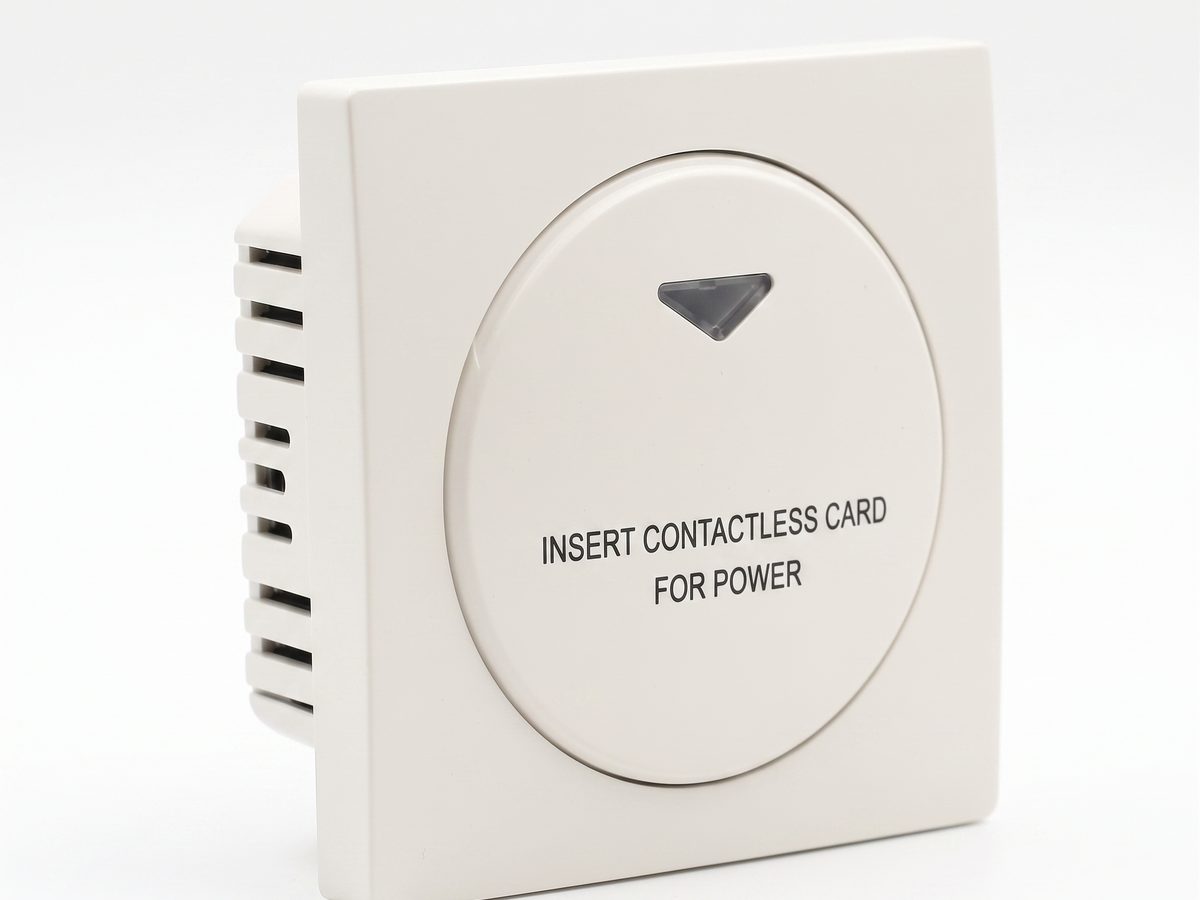
مفتاح بطاقة الفندق — التحكم في طاقة غرفة الضيوف
مفتاح بطاقة الفندق للتحكم في طاقة غرفة الضيوف. كشف بطاقة RFID/IC، إدخال البطاقة لتشغيل الطاقة، فصل الطاقة بتأخير زمني عند إزالة البطاقة. تيار متردد 220 فولت، 10A-16A، RS485 أو تلامس جاف. CE RoHS. مورد OEM/ODM.
تشير هذه الصفحة بالفعل إليه كمرجع تالٍ موصى به.
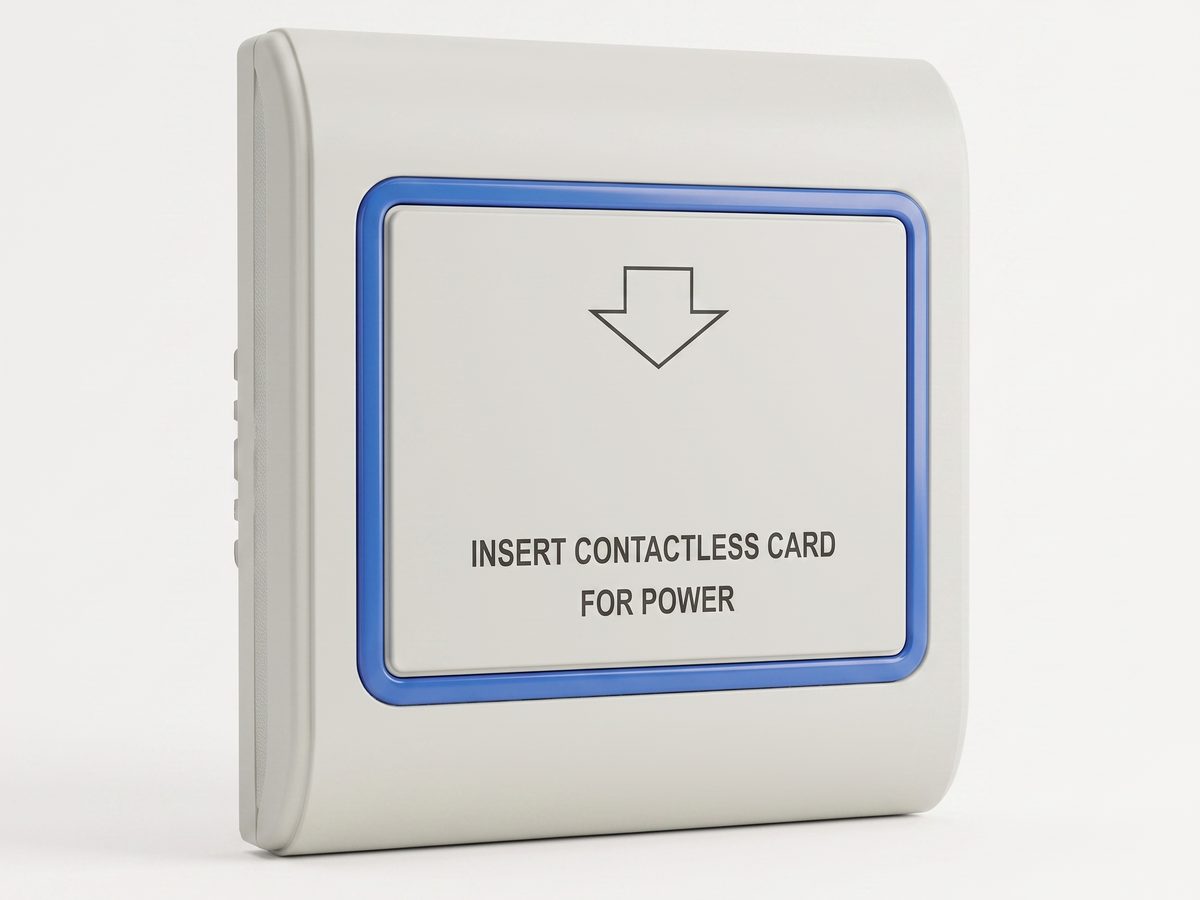
مفتاح بطاقة RFID — تحكم لاسلكي 13.56MHz في طاقة غرفة الضيوف
مفتاح بطاقة RFID مع كشف لاسلكي 13.56MHz. يضع الضيف البطاقة على منطقة القراءة لتشغيل الغرفة، لا حاجة لفتحة إدخال. يعمل مع أقفال أبواب الفنادق. معتمد CE RoHS. مورد OEM/ODM.
تشير هذه الصفحة بالفعل إليه كمرجع تالٍ موصى به.
حلول ذات صلة
3نظام إدارة الغرف الفندقية القائم على التحكم بالطاقة عبر البطاقة
نظام عملي لإدارة الغرف الفندقية للتحكم في طاقة الغرفة عبر مفاتيح البطاقة، والموصلات، وقواعد التشغيل الموثقة بوضوح.
إنه يدعم نفس سياق المنتج: مفتاح بطاقة الفندق — التحكم في طاقة غرفة الضيوف.
توفير طاقة الفندق باستخدام مفتاح تشغيل غرفة الضيوف
حل لتوفير طاقة الفندق يستخدم تشغيل الغرفة المتحكم به بالبطاقة لمنع الأضواء وتكييف الهواء والمآخذ المختارة من العمل دون داعٍ.
إنه يدعم نفس سياق المنتج: مفتاح بطاقة الفندق — التحكم في طاقة غرفة الضيوف.
التحكم في طاقة غرفة الفندق باستخدام مفاتيح البطاقات
حل عملي للتحكم في طاقة غرفة الفندق لتشغيل إضاءة وتكييف ومنافذ غرفة الضيوف من بطاقة غرفة مصرح بها.
إنه يدعم نفس سياق المنتج: مفتاح بطاقة الفندق — التحكم في طاقة غرفة الضيوف.
مقالات المدونة ذات الصلة
3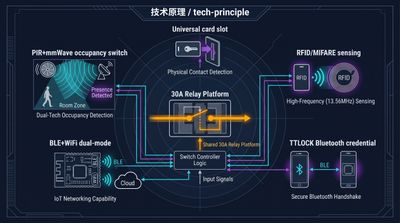
مفتاح بطاقة الفندق: الأنواع، الموديلات، وكيفية المواصفات
يغطي مفتاح بطاقة الفندق موديلات العام، RFID، TTLOCK، BLE، والإشغال. يرشدك هذا الدليل لعائلة مفتاح البطاقة المصطلحات الرئيسية والمواصفات.
إنه يدعم نفس سياق المنتج: مفتاح بطاقة الفندق — التحكم في طاقة غرفة الضيوف.
RFID vs NFC لمفاتيح بطاقات الفنادق: أي تقنية بطاقة تختار؟
يعتمد الاختيار بين RFID و NFC لمفاتيح بطاقات الفنادق على المدى والقفل: RFID بتردد 125 كيلوهرتز / 13.56 ميجاهرتز (MIFARE، Temic) هو المعيار الفندقي لتغذية الغرف
إنه يدعم نفس سياق المنتج: مفتاح بطاقة الفندق — التحكم في طاقة غرفة الضيوف.
ما هو مفتاح بطاقة الفندق وكيف يوفر طاقة الغرفة
مفتاح بطاقة الفندق هو جهاز حائطي يشغل غرفة الضيف عند إدخال البطاقة ويفصل التيار عند سحبها، مما يوفر عادةً 25-40% من كهرباء الغرفة.
إنه يدعم نفس سياق المنتج: مفتاح بطاقة الفندق — التحكم في طاقة غرفة الضيوف.
حدد مشروع فندقك مع مهندسينا
أخبرنا بعدد الغرف ونوع السقف والبروتوكول المفضل. سنعود إليك بخطة عينات وعرض سعر خلال 24 ساعة عمل.
- انتقل من الإرشادات العامة إلى نقاش حول المنتج أو التطبيق.
- استخدم RFQ عندما يحتاج التسعير أو الرسومات أو MOQ أو توقيت الإطلاق إلى هيكلة.
- أبقِ مسار اتصال مباشر ظاهرًا للتوضيحات السريعة والتسليم.