دليل استكشاف أخطاء مفتاح بطاقة الفندق وإصلاحها: تشخيص أعطال قارئ بطاقات غرفة الضيوف وإصلاحها
دليل استكشاف أخطاء مفتاح بطاقة الفندق وإصلاحها لمهندسي الصيانة يغطي الأعطال الشائعة مثل انعدام الطاقة، ثبات مؤشر LED، تعطل الريلاي، وأخطاء قراءة البطاقة.
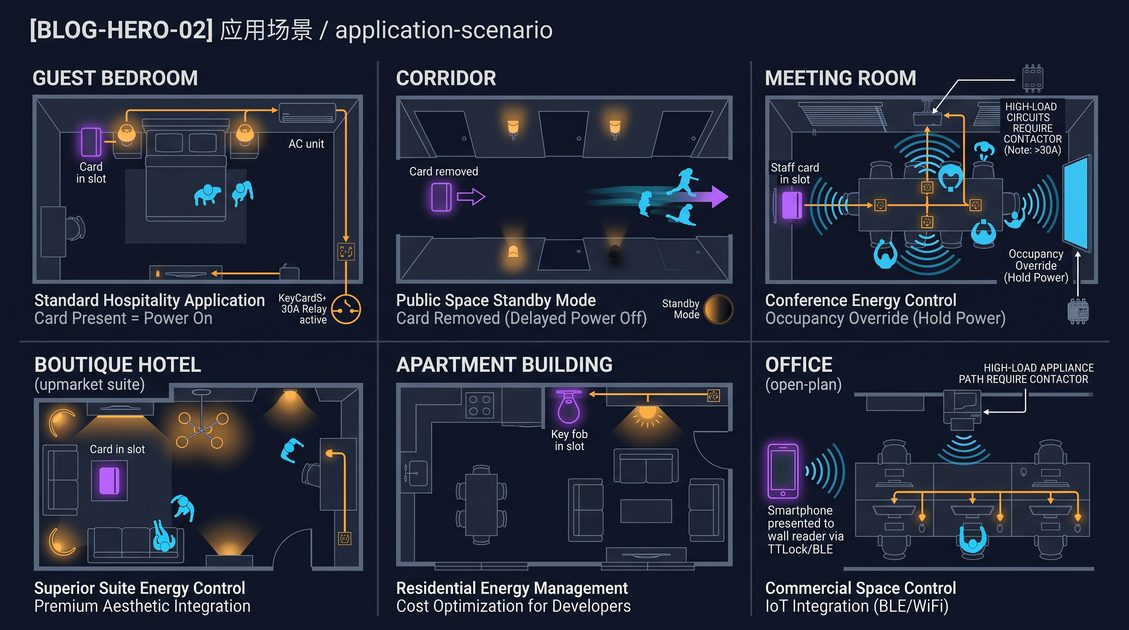
دليل استكشاف أخطاء مفتاح بطاقة الفندق وإصلاحها هو مرجع تشخيصي عملي لفرق الهندسة والصيانة التي تخدم قارئات البطاقات، والريلائيات، ودوائر التحكم في الأحمال التي تشغل منافذ غرف الضيوف، والإضاءة، وتكييف الهواء. عندما يُدخل الضيف بطاقته ولا يضيء شيء، أو لا تنقطع الطاقة بعد المغادرة، فقد يكمن السبب الجذري في أي مكان بين صندوق الحائط، وقارئ البطاقة، والريلاي، والحمل المتصل، لذا فإن قائمة تحقق منظمة أكثر فعالية بكثير من المحاولة والخطأ. يرشدك هذا الدليل خلال أوضاع الفشل الأكثر شيوعاً، وتدفق اختبار قابل للتكرار، والأدوات التي تحتاجها على العربة، وقواعد قرار واضحة حول متى يمكن إصلاح الوحدة في مكانها ومتى يجب استبدالها بمفتاح جديد. العمل الكهربائي على الدوائر الحية يحمل مخاطر حقيقية، لذا تفترض كل خطوة هنا أن الطاقة معزولة ومقفلة قبل لمس أي طرف.
مقدمة في دليل استكشاف أخطاء مفتاح بطاقة الفندق وإصلاحها
مفتاح بطاقة الفندق هو لوحة تحكم في الحمل مثبتة عند مدخل الغرفة تُشغل طاقة غرفة الضيوف فقط أثناء وجود بطاقة صالحة مُدخلة، وتُلغيها عند سحب البطاقة. إنه في الأساس ثلاثة أنظمة فرعية في حاوية واحدة: قسم قراءة البطاقة الذي يتحقق من بيانات الاعتماد، وقسم المنطق أو المتحكم الذي يفسر حالة البطاقة، وقسم التبديل الكهروميكانيكي أو ذو الحالة الصلبة الذي يربط الخط بالحمل. تعمل معظم مفاتيح البطاقات ذات النمط السكني عند دخل 100 إلى 240 فولت تيار متردد وتحول حملاً من 8 إلى 16 أمبير، مع ريلاي يظل مغلقاً بينما البطاقة موجودة ويفتح بعد تأخير من 10 إلى 90 ثانية أو أكثر عند إزالة البطاقة. يتعامل هذا الدليل مع الأعطال كما يفعل مهندس الميدان، بدءاً من الأعراض المرئية، وتضييق النطاق إلى نظام فرعي، وتأكيد الإصلاح قبل إعادة الغرفة للخدمة. لأن نفس الوحدة الفيزيائية يمكن أن تظهر عشرات السلوكيات المختلفة، تم تنظيم المادة حسب الأعراض أولاً وبإجراءات الاختبار ثانياً، حتى يتمكن فريق الصيانة من القفز مباشرة إلى القسم الذي يتطابق مع الشكوى في أمر العمل.
كيف تتصرف الوحدة السليمة قبل أن تختبر أي شيء
قبل أن تبدأ دليل استكشاف أخطاء مفتاح بطاقة الفندق وإصلاحها، يساعد تذكر السلوك المتوقع لوحدة سليمة حتى تبرز القراءات غير الطبيعية. أدخل بطاقة صالحة في المنتصف وفي المقدمة في الفتحة. يجب أن يؤكد القارئ البطاقة، عادةً بمؤشر LED يغير لونه، ويجب أن تنشط الريلاي خلال حوالي 0.5 إلى 1 ثانية، محولة طاقة الخط إلى المنافذ والتركيبات. أزل البطاقة ويجب أن تظل الريلاي مغلقة خلال فترة التأخير المبرمجة، ثم تفتح لإسقاط الحمل. مع خلو الغرفة ليلاً، يجب أن يحافظ المفتاح على حالة استعداد منخفضة تستهلك فقط بضع ميلي واط من مصدر التحكم. أي انحراف عن هذا التسلسل، سواء كان ضوءاً لا يضيء أبداً، أو ريلاي تصدر صوت نقر لكنها تبقى مفتوحة، أو حمل يستمر في العمل بعد زوال البطاقة، هو بداية مسار تشخيصي سيساعدك باقي هذا الدليل على تتبعه.
الأنظمة الفرعية الأربعة التي تختبرها حقاً
يختزل دليل استكشاف أخطاء مفتاح بطاقة الفندق وإصلاحها بالكامل إلى أربعة مكونات. أولاً مرحلة دخل الطاقة، والصمام، وMOV، ومصدر تنظيم الجهد الذي يحول جهد الخط إلى سكة DC آمنة للمنطق. ثانياً مرحلة القراءة، مستشعر بصري للبطاقات ذات الشريط المغناطيسي أو ملف قارئ RFID وهوائي للبطاقات غير التلامسية، والذي ينتج إشارة فقط عند وجود بيانات اعتماد مطابقة. ثالثاً مرحلة التحكم، عادة متحكم دقيق أو مقارن يقرر ما إذا كان سيعمل على تنشيط الريلاي ومدة تثبيته بعد مغادرة البطاقة. رابعاً مرحلة الخرج، أطراف الريلاي أو الترياك التي تحمل تيار الحمل فعلياً. في الممارسة، تبين أن حوالي نصف جميع الأعطال المبلغ عنها في الميدان تعود إلى البطاقة، أو الأسلاك، أو الحمل وليس المفتاح نفسه، ولهذا تتحقق طريقة التشخيص هنا من العوامل الخارجية عمداً قبل إدانة الوحدة.
دليل استكشاف أخطاء مفتاح بطاقة الفندق وإصلاحها: قراءة الأعراض الشائعة
أسرع طريقة للعمل من خلال أي دليل استكشاف أخطاء مفتاح بطاقة الفندق وإصلاحها هي البدء من الأعراض التي يبلغ عنها الضيف أو عاملة النظافة فعلياً ورسم خريطة لها إلى النظام الفرعي الأكثر احتمالاً للفشل. تقع معظم الشكاوى في سبعة أنماط، وكل منها يشير إلى مكان مختلف للتحقيق. يلخص الجدول أدناه الأعراض، والسبب المعتاد، وأول مكان للنظر، وتعطي الأقسام التي تليه الاختبار المفصل لكل صف.
| الأعراض | السبب الأكثر احتمالاً | أول فحص |
|---|---|---|
| إدخال بطاقة، لا مؤشر، لا طاقة | لا دخل طاقة أو مصدر تحكم ميت | قياس جهد الخط عند أطراف الدخل |
| إدخال بطاقة، مؤشر مضاء، لا خرج | الريلاي لا تنشط أو حمل مفتوح | التحقق من استمرارية الريلاي ودائرة الحمل |
| البطاقة بلا تأثير، فشل القراءة | نوع بطاقة خاطئ، قارئ متسخ، إشارة ضعيفة | الاختبار ببطاقة صالحة معروفة الجودة |
| الطاقة لا تنقطع أبداً بعد إزالة البطاقة | أطراف ريلاي ملحومة أو عالقة | قياس خرج الريلاي بعد نافذة التأخير |
| ضوء المؤشر يظل مضاءً باستمرار | منطق تحكم عالق أو خرج مقصر | أزل البطاقة وراقب دورة التأخير |
| التأخير قصير جداً أو طويل جداً | إعداد DIP خاطئ أو مكثف توقيت يحتضر | تحقق من تكوين التأخير واختبر على المنضدة |
| لا خرج على الإطلاق، وحدة ميتة تماماً | صمام منفوخ، مسار مفتوح، مصدر فاشل | فحص الصمام وجهد دخل المصدر |
إدخال بطاقة، لا مؤشر، لا خرج
هذا هو الاتصال الأكثر شيوعاً، وعادة ما يشير إلى مرحلة دخل الطاقة وليس مرحلة القراءة. إذا لم يضيء مؤشر LED على الإطلاق عند إدخال بطاقة معروفة الجودة، فإن لوحة التحكم لا تملك سكة تغذية، مما يعني إما أن قاطع الغرفة المغذي للمفتاح قد انقطع، أو أن أسلاك الدخل مفكوكة أو معكوسة، أو أن الصمام الداخلي مفتوح، أو أن منظم الجهد على اللوحة قد فشل. فحص جهد سريع بمتعدد الأغراض عند أطراف خط ومحايد الدخل يجيب على معظم هذه الأسئلة في أقل من دقيقة. إذا كان جهد الخط موجوداً لكن اللوحة لا تزال تبدو ميتة، فقد عزلت المشكلة في مصدر الطاقة الداخلي، وهو قرار إصلاح أو استبدال وليس إصلاح أسلاك. تأكد دائماً أن القاطع الذي يغذي المفتاح يزود الطاقة فعلياً قبل فتح صندوق الحائط.
إدخال بطاقة، مؤشر مضاء، لا خرج ريلاي
إذا أضاء المؤشر بشكل صحيح لكن الحمل لا يعمل أبداً، فمن المرجح أن مراحل القراءة والتحكم سليمة والخطأ في مرحلة الخرج أو الحمل. قد تفشل الريلاي في التنشيط، أو قد تكون أطراف الريلاي محفرة وعالية المقاومة، أو قد تكون الأسلاك من خرج الريلاي إلى المنافذ والتركيبات مكسورة. يمكنك فصل هذه بقياس الاستمرارية عبر أطراف خرج الريلاي بينما البطاقة مُدخلة. إذا أصبحت أطراف الخرج مستمرة لكن الغرفة تظل مظلمة، فالمشكلة في أسلاك الحمل下游. إذا ظلت أطراف الخرج مفتوحة، فالمشكلة في الريلاي أو المتحكم الذي يقودها.
فشل قراءة البطاقة أو تجاهلها
عندما يتجاهل المفتاح بطاقة مُدخلة، فإن الأسباب المحتملة هي بطاقة من نوع خاطئ، فتحة قارئ مهترئة أو متسخة، إشارة RFID ضعيفة، أو بطاقة لم يتم ترميزها بشكل صحيح. للبطاقات ذات الشريط المغناطيسي، تحقق من أن الشريط يواجه الاتجاه الصحيح وأن رأس القارئ نظيف. لبطاقات RFID، تأكد من أن البطاقة تستخدم نفس التردد والترميز مثل نظام القفل الذي يقترن به المفتاح، مثل 125 كيلوهرتز EM أو 13.56 ميجاهرتز Mifare. اختبار مؤكد هو إدخال البطاقة الرئيسية أو بطاقة معروفة الجودة من غرفة مجاورة؛ إذا عملت، فالمفتاح سليم وبطاقة الضيف هي المشكلة.
الطاقة لا تنقطع أبداً بعد إزالة البطاقة
مفتاح يحافظ على الطاقة بعد إزالة البطاقة يشير إلى ريلاي أطرافها ملحومة مغلقة، أو جهاز تبديل مقصر، أو منطق تحكم عالق في حالة التنشيط. هذا العرض يخلق أيضاً مشكلة هدر طاقة وسلامة، لأن الأضواء وتكييف الهواء يستمران في العمل مع خلو الغرفة. بعد مرور نافذة التأخير، قس الاستمرارية عبر خرج الريلاي. إذا ظلت مستمرة مع إزالة البطاقة، فجهاز الخرج عالق ويجب استبدال المفتاح، لأن ريلاي ملحومة لا يمكن إصلاحها بشكل موثوق في الميدان.
ضوء المؤشر يظل مضاءً باستمرار
عندما لا يغير المؤشر حالته أبداً، عامله كعرض منطق تحكم. قد تكون البطاقة عالقة في الفتحة ضد القارئ، أو قد يكون المفتاح الدقيق ميكانيكياً مربوطاً، أو قد يفشل المتحكم في اكتشاف مغادرة البطاقة. تحقق من أن الفتحة حرة فيزيائياً، أزل البطاقة، وأعطِ نافذة التأخير وقتاً لتنتهي. إذا ظل الضوء مضاءً بغض النظر عن موضع البطاقة، فالمفتاح الدقيق للقارئ أو لوحة المنطق معيب.
التأخير قصير جداً أو طويل جداً بعد إزالة البطاقة
فترة تأخير إيقاف غير طبيعية عادة ما تكون مشكلة تكوين وليس عطلاً صلباً. العديد من المفاتيح تكشف عن مفتاح DIP أو كتلة وصل تحدد وقت التثبيت من حوالي 15 ثانية إلى عدة دقائق، ومفتاح مضبوط بشكل خاطئ ينتج تأخيراً لا يتطابق مع معيار المنشأة. إذا كان التأخير غير متسق أو ينحرف مع الوقت دون تغيير في التكوين، فقد يكون مكثف التوقيت على لوحة المنطق يتقدم في العمر. أكد موضع مفتاح DIP مقابل الدليل أولاً، ثم اختبر قابلية التكرار على المنضدة قبل افتراض فشل المكون.
دليل استكشاف أخطاء مفتاح بطاقة الفندق وإصلاحها: تدفق التشخيص خطوة بخطوة
جوهر أي دليل استكشاف أخطاء مفتاح بطاقة الفندق وإصلاحها هو تسلسل قابل للتكرار يعزل العطل دون إزالة كل المكونات دفعة واحدة. الطريقة أدناه تستغرق تقريباً عشر إلى خمس عشرة دقيقة لكل غرفة عندما تكون الأدوات في متناول اليد، وتعمل بنفس الطريقة للمفاتيح المغناطيسية، وRFID، والهجينة لأنها تختبر الطاقة أولاً، والقراءة ثانياً، والتبديل ثالثاً، والتوقيت رابعاً. كل خطوة مصممة بحيث تخبرك نتيجة إيجابية أو سلبية بالضبط أي نظام فرعي تلومه وماذا تفعل بعد ذلك. اعزل دائماً دائرة الفرع عند اللوحة وطبق القفل/الإشارة قبل لمس أي طرف، لأن جهد الخط المكشوف في صندوق الحائط يشكل خطر صدمة حتى عندما تبدو الغرفة مظلمة.
الخطوة 1: تأكيد سلامة الطاقة والدخل
ابدأ من الدخل. مع عزل الدائرة، افتح صندوق الحائط، حدد الخط، والمحايد، وأي موصل أرض، وافحص الأطراف بصرياً بحثاً عن فك، تآكل، أو احتراق. أعد التوصيل، أعد الطاقة، وقس 100 إلى 240 فولت تيار متردد عبر الدخل مع المفتاح في الدائرة. قراءة سليمة هنا تؤكد التغذية والأسلاك، لذا يمكنك الانتقال إلى مراحل القراءة والتحكم. قراءة مفقودة تعني أن المشكلة في المنبع في القاطع أو المغذي، وليس في المفتاح.
الخطوة 2: التحقق من مرحلة قراءة البطاقة
مع تأكيد دخل الطاقة، أدخل بطاقة معروفة الجودة، مشفرة بشكل صحيح، من نفس النوع الذي من المفترض أن تقبله الغرفة. راقب المؤشر واستمع لصوت نقر الريلاي. إذا تغير المؤشر لكن الريلاي لم تصدر نقر، فإن مرحلة التحكم لا تنبض بالخرج، مما يشير إلى لوحة المنطق. إذا لم يستجب لا المؤشر ولا الريلاي، فإن مرحلة القراءة لا تكتشف بيانات الاعتماد. اختبر نفس البطاقة في مفتاح ثانٍ معروف الجودة لاستبعاد بطاقة ضيف سيئة قبل إدانة الوحدة.
الخطوة 3: اختبار الريلاي ودائرة الحمل
أمسك بطاقة صالحة في مكانها واستخدم وضع الاستمرارية لتأكيد أن أطراف خرج الريلاي تصبح مغلقة. ثم تحقق من أن الجهد يصل فعلياً إلى المنافذ أو التركيبات بالقياس عند الحمل. ثلاث نتائج تحل الصورة: خرج مغلق وحمل حي يعني أن المفتاح جيد والشكوى الأصلية كانت عابرة؛ خرج مغلق لكن حمل ميت يعني أن العطل في أسلاك الغرفة أو التركيب؛ خرج مفتوح يعني أن الريلاي أو المتحكم معيب داخل المفتاح.
الخطوة 4: التحقق من التأخير وتوقيت التثبيت
أزل البطاقة ووقت المدة التي تظل فيها الريلاي مغلقة. قارن وقت التثبيت المقاس مع إعداد مفتاح DIP أو الوصل. عدم تطابق كبير يشير إلى خطأ في التكوين، يمكنك تصحيحه بضبط المفتاح على معيار المنشأة. إعداد صحيح لكن وقت تثبيت عشوائي أو منحرف بوضوح يشير إلى مكون توقيت يفشل، وهو مشكلة جودة تميل للاستبدال. شغّل دورة الإزالة ثلاث مرات على الأقل لتأكيد أن التوقيت متسق قبل التوقيع.
الخطوة 5: اختبار الوحدة على المنضدة بعيداً عن الحائط
إذا تركت الاختبارات داخل الحائط شكاً حول ما إذا كان المفتاح نفسه جيداً، أزله، خذه إلى المنضدة، واختبره ببطاقة وحمل اختبار صغير أو حمل مقاوم مكافئ 100 واط على تغذية مفصومة. اختبار المنضدة يزيل أسلاك الغرفة كمتغير ويعطي إجابة نظيفة على القراءة، والريلاي، والتأخير في أقل من خمس دقائق. علّم الوحدة بالنتيجة حتى يعرف الفريق ما إذا كانت صالحة للعودة للمخزون أو يجب التخلص منها.
أدوات الاختبار التي تدعم دليل استكشاف أخطاء مفتاح بطاقة الفندق وإصلاحها
قائمة أدوات قصيرة تجعل دليل استكشاف أخطاء مفتاح بطاقة الفندق وإصلاحها بالكامل أسرع وأكثر أماناً، لأن القليل جداً يمكن تشخيصه بشكل موثوق بالعين وحدها. العناصر أدناه تغطي دخل الطاقة، استمرارية الريلاي، الحمل الحي، وصلاحية البطاقة، وجميعها تناسب حقيبة مهندس قياسية.
| الأداة | ما تؤكده | القراءة النموذجية على وحدة سليمة |
|---|---|---|
| متعدد أغراض رقمي | جهد الدخل، استمرارية الريلاي، تسرب | 100-240 فولت تيار متردد دخل؛ أوم قريبة من الصفر عند التنشيط |
| مختبر جهد عدم التلامس | وجود جهد حي دون تلامس | يضيء عند الاقتراب من موصل نشط |
| مسبار استمرارية أو نغمة | إغلاق أطراف الريلاي | نغمة/استقرار عند تنشيط الريلاي |
| بطاقة اختبار، مشفرة | مطابقة قراءة البطاقة وترميزها | المؤشر يتغير والريلاي تصدر نقر |
| مصباح اختبار أو حمل وهمي | سلوك حمل حقيقي | المصباح يضيء مع البطاقة، يظلم بعد التأخير |
| مفتاح احتياطي أو محول | عزل المفتاح مقابل الأسلاك | يتحقق من الوحدة المخالفة على المنضدة |
كيف يُستخدم المتعدد الأغراض في كل خطوة
المتعدد الأغراض الرقمي هو حصان العمل عبر دليل استكشاف أخطاء مفتاح بطاقة الفندق وإصلاحها بالكامل. استخدم نطاق جهد التيار المتردد لتأكيد تغذية الدخل، ونطاق الاستمرارية والأوم المنخفضة للتحقق من إغلاق أطراف الريلاي، ونطاق التيار المستمر للتحقق من سكة التحكم عند توفرها على رأس اللوحة. أبقِ المسبارين على رؤوس فحص معزولة واضبط العداد على النطاق الصحيح قبل التوصيل، لأن قراءة جهد حي على نطاق مقاومة يسحب قصراً ويمكن أن يفصل التغذية. عداد بشاشة مضاءة خلفياً واستمرارية سمعية يوفر وقتاً حقيقياً داخل تجويف حائط مظلم.
لماذا بطاقة الاختبار أهم مما يبدو
تفشل عدد مدهش من محاولات الإصلاح من المستوى الأول لأن بيانات اعتماد الاختبار خاطئة. لكي يكون دليل استكشاف أخطاء مفتاح بطاقة الفندق وإصلاحها موثوقاً، تحتاج إلى بطاقة معروفة الجودة واحدة على الأقل من نوع البطاقة الصحيح، مشفرة بشكل صحيح، تحتفظ بها للتشخيص ولا تسلمها أبداً لضيف. إذا توقفت تلك البطاقة عن العمل، تتعرف على مرحلة قراءة المفتاح أو المشفر، لا تجربة الضيف. احتفظ ببطاقتي اختبار لكل عربة صيانة حتى لا تنتج بطاقة مهترئة نجاحاً كاذباً.
أدوات السلامة التي تنتمي للحقيبة
التشخيص الكهربائي آمن فقط بقدر العزل الذي تؤديه قبله. بالإضافة للعدادات والبطاقات، يجب أن تحمل الحقيبة مجموعة قفل/إشارة للوحة الفرع، مفكات براغي معزولة، قفازات مصنفة للجهد للمفاتيح، ومختبر جهد تقارب كتحقق زائد. القاعدة بسيطة: تحقق من الموت بعداد مصنف ومختبر عدم تلامس قبل فتح أي صندوق، وأقفل القاطع حتى لا يستطيع شخص آخر استعادة الطاقة بينما يديك بالداخل. لا خطوة استكشاف أخطاء في هذا الدليل تستحق صدمة.
تشخيص مفصل لكل فشل في دليل استكشاف أخطاء مفتاح بطاقة الفندق وإصلاحها
حيث يعطي التدفق السابق التسلسل، يذهب هذا القسم عرضاً بعرض خلال دليل استكشاف أخطاء مفتاح بطاقة الفندق وإصلاحها ويشرح الفيزياء المحتملة والقراءة الدقيقة التي تؤكد كل عطل. كل عرض هنا يبدأ بكتلة إجابة قصيرة مستقلة، ثم ينقسم إلى السبب، والاختبار، والإصلاح كقطع منفصلة حتى يتمكن المهندس من المسح مباشرة إلى الصف الذي يطابق أمر العمل. قراءة هذه جنباً إلى جنب تكشف أيضاً كيف ترجح الأنظمة الفرعية تشخيصاً على آخر، لأن نفس حالات المؤشر يمكن أن تنتج غالباً عن سببين جذرين مختلفين يحتاجان لإصلاحين متعاكسين.
لماذا ينتج مصدر طاقة فاشل مفتاحاً ميتاً تماماً
مفتاح ميت تماماً، لا مؤشر، لا ريلاي، لا حمل، هو تقريباً دائماً مشكلة دخل طاقة وليس مشكلة قراءة، لأن كل مرحلة أخرى تجوع دون سكة تغذية DC. الأسباب المحتملة بالترتيب هي قاطع فرع منقطع أو فاشل، زوج خط ومحايد مفكوك أو معكوس عند الأطراف، صمام داخلي مفتوح، أو منظم جهد فاشل على لوحة التحكم. الاختبار المؤكد هو متعدد الأغراض عبر أطراف الدخل؛ إذا قرأت 100 إلى 240 فولت تيار متردد متوقعة عند الدخل لكن اللوحة تظل مظلمة، فقد انتقل العطل داخل الوحدة واتخذ قرار الاستبدال بالفعل. إذا لم تقرأ شيئاً عند الدخل، افتح اللوحة وتحقق من القاطع والموصل المغذي قبل فعل أي شيء آخر. أعد التوصيل، أعد الطاقة وأعد التحقق قبل إغلاق الصندوق.
لماذا ينتج شريط مغناطيسي ضعيف فشلاً متقطعاً
فشل متقطع، حيث يعمل المفتاح في بعض الإدخالات ولا يعمل في أخرى، هو التوقيع الكلاسيكي لشريط مغناطيسي متسخ أو مهترئ ورأس قارئ يقرأه بشكل غير متسق. يتدهور الشريط المغناطيسي مع الاحتكاك، التعرض للمغناطيس، والتلامس مع فتحة القارئ، لذا بطاقة ضيف ترى استخداماً مكثفاً تقرأ بشكل سيء حتى لو كانت لا تزال مشفرة. في دليل استكشاف أخطاء مفتاح بطاقة الفندق وإصلاحها، الاختبار الصحيح هو مقارنة البطاقة المشتبه بها ببطاقة معروفة الجودة من نفس النوع في نفس المفتاح. إذا قرأت البطاقة الجيدة بشكل موثوق والبطاقة المشتبه بها لا، فقد أكدت عطل جانب البطاقة والجواب هو ترميز بطاقة جديدة، ليس استبدال المفتاح. امسح الفتحة والشريط نظيفين، وأعد الاختبار قبل تقديم التقرير.
لماذا يتجاهل مفتاح RFID بطاقة غير تلامسية
عندما يتجاهل مفتاح بطاقة فندق RFID بطاقة 125 كيلوهرتز أو 13.56 ميجاهرتز جديدة تماماً، السبب غالباً بطاقة لا تطابق بروتوكول القارئ، ليس قارئاً مكسوراً. أنظمة قفل مختلفة تشفر بطاقات على ترددات وتنسيقات بيانات مختلفة، وبطاقة من نظام واحد لن تشغل مفتاحاً مقترناً بنظام آخر حتى لو بدت متطابقة. الاختبار المؤكد هو تمرير البطاقة تحت المفتاح ومراقبة أي إقرار، ثم تجربة بطاقة معروفة أنها من نظام الغرفة نفسه. إذا عملت البطاقة الصحيحة، فالمفتاح سليم وبطاقة الضيف ببساطة من مجموعة خاطئة. إذا لم تعمل أي بطاقة من النوع الصحيح، فقد فشل ملف القارئ أو برامجه على اللوحة ويجب استبدال الوحدة.
لماذا أطراف ريلاي ملحومة تبقي الطاقة مضاءة
مفتاح يبقي الغرفة مزودة بالطاقة بعد إزالة البطاقة يشير إلى ريلاي أطرافها ملحومة مغلقة تحت الحمل أو ترياك قصر. عندما تلتصق الأطراف، لا يمكن للرابط الميكانيكي كسر التوصيل حتى عند إلغاء تنشيط ملف التحكم، لذا يظل الحمل مضاءً إلى أجل غير مسمى. الاختبار المؤكد في دليل استكشاف أخطاء مفتاح بطاقة الفندق وإصلاحها بسيط: أزل البطاقة، انتظر خلال نافذة التأخير الكاملة، وقس الاستمرارية عبر خرج الريلاي. إذا استمرت الاستمرارية مع خروج البطاقة، فجهاز الخرج عالق، العطل دائم، ويجب استبدال المفتاح. لا تحاول تمرين أو طرق الريلاي للعودة للخدمة، لأن طرف ملحوم ينفتح لحظياً لا يزال تالفاً ويمكن أن يفشل في مسار الحمل مرة أخرى.
لماذا يغير إعداد مفتاح DIP التأخير الذي تقيسه
وقت تأخير إيقاف لا يطابق معيار المنشأة عادة ما يكون مسألة تكوين. معظم مفاتيح البطاقات تكشف عن مفتاح DIP أو وصل يحدد وقت التثبيت من حوالي 15 ثانية حتى بضع دقائق، ومفتاح مضبوط على الوضع الخاطئ ينتج تأخيراً يبدو كعطل لعاملة النظافة. الفحص المؤكد هو مقارنة موضع مفتاح DIP مقابل الفهرس المطبوع على الوحدة والدليل، ثم ضبطه على معيار المنشأة وتشغيل دورة الإزالة. إذا طابق التأخير المعيار وظل قابلاً للتكرار عبر ثلاث دورات، فالوحدة سليمة والتكوين هو الإصلاح. فقط عندما ينحرف التأخير عشوائياً دون تغيير تكوين يجب أن تشك في مكثف توقيت يتقدم في العمر وتنتقل للاستبدال.
لماذا تحاكي أطراف فاسدة أو مفكوكة فشل ريلاي
أحياناً تشير القراءة إلى فشل ريلاي بينما المشكلة الحقيقية هي اتصال حمل مفكوك أو فاسد下游. إذا نقر الريلاي والاستمرارية جيدة عند أطراف الخرج لكن الغرفة تظل مظلمة، فالانقطاع في الأسلاك بين المفتاح والتركيبات، ليس في المفتاح. الخطوة المؤكدة هي تتبع الجهد من خرج الريلاي إلى أول منفذ وتركيب بمتعدد أغراض، بحثاً عن النقطة التي تختفي عندها الإشارة الحية. أعد شد أي طرف مفكوك، أصلح أي موصل مكسور، وأعد الاختبار. هذا التمييز مهم لأنه ينقذ مفتاحاً عاملاً من التخلص منه بسبب عطل كابل، ويذكر بمعاملة الأسلاك، وليس الجهاز فقط، كجزء من الدائرة قيد الاختبار.
الأسئلة الشائعة: أسئلة شائعة في دليل استكشاف أخطاء مفتاح بطاقة الفندق وإصلاحها
| السؤال | إجابة مختصرة |
|---|---|
| لماذا يتجاهل المفتاح بطاقة تعمل في غرفة أخرى؟ | ترميز مفتاح أو نظام قفل مختلف؛ استخدم بطاقة نظام الغرفة |
| هل يمكنني إصلاح ريلاي تبقى عالقة مضاءة؟ | لا، استبدل الوحدة، لا يمكن إصلاحها ميدانياً بأمان |
| هل يعني صمام منفوخ دائماً أن المفتاح سيء؟ | ليس بالضرورة؛ تحقق من القاطع وأي لوحة صمامات خارجية أولاً |
| كم يجب أن يستمر التأخير؟ | اضبط مفتاح DIP على معيار المنشأة، عادة 15 ثانية إلى بضع دقائق |
| هل أحتاج لاستبدال الوحدة بأكملها لقارئ متسخ؟ | لا، نظف الفتحة والشريط أولاً، أعد الاختبار، ثم قرر |
إصلاح مقابل استبدال في دليل استكشاف أخطاء مفتاح بطاقة الفندق وإصلاحها
جزء من دليل استكشاف أخطاء مفتاح بطاقة الفندق وإصلاحها هو معرفة متى يمكن إعادة وحدة للخدمة ومتى يجب إزالتها واستبدالها. بشكل عام، براغي أطراف مفكوكة، صمام خارجي منفوخ عند اللوحة، مفاتيح تأخير مضبوطة بشكل خاطئ، وفتحات قارئ بطاقات متسخة قابلة للإصلاح في مكانها دون تكلفة مكونات. الأعطال الداخلية مثل منظم ميت، مكثف توقيت فاشل، مسار متصدع، أو أطراف ريلاي ملحومة تقريباً دائماً أكثر اقتصاداً للاستبدال منها للإصلاح، لأن العمالة وحدها يمكن أن تتجاوز سعر مفتاح جديد ووحدة مصلحة عادة لا تحمل ضماناً. يعطي الجدول أدناه مصفوفة قرار عملية.
| الحالة | إصلاح في المكان | استبدال | ملاحظات |
|---|---|---|---|
| طرف دخل L/N مفكوك | نعم | لا | إعادة شد وإعادة اختبار |
| صمام خارجي منفوخ | نعم | لا | تحديد السبب وإصلاحه |
| رأس قارئ مغناطيسي متسخ | نعم | لا | تنظيف، ثم إعادة اختبار |
| إعداد DIP تأخير خاطئ | نعم | لا | ضبط على معيار المنشأة |
| صمام داخلي مفتوح | لا | نعم | عطل داخلي محتمل |
| أطراف ريلاي ملحومة | لا | نعم | لا يمكن إصلاحها ميدانياً بأمان |
| منظم جهد فاشل | لا | نعم | لا قطع غيار ميدانية |
| PCB متصدع أو محترق | لا | نعم | حرج للسلامة |
| تلف ماء أو تآكل | لا | نعم | استبدل الوحدة |
متى يكون الإصلاح في المكان مبرراً
بعض الأعطال مرشحة لإصلاح في المكان لأنها مشاكل تعديل أو تنظيف وليست فشل مكونات. طرف مفكوك أعيد شده بأمان، مفتاح تأخير ضبط على معيار المنشأة، ورأس قارئ نظف من الغبار كلها تعيد الغرفة للخدمة في دقائق دون تكلفة تتجاوز وقت المهندس. القاعدة الحرجة هي أن الإصلاح صالح فقط إذا مرت الوحدة بنفس التحقق كوحدة جديدة، بمعنى قراءة بطاقة نظيفة، إغلاق ريلاي موثوق، وتأخير صحيح، تم التحقق منها ثلاث دورات على الأقل قبل إطلاق الغرفة.
متى يكون الاستبدال هو القرار الصحيح
الاستبدال هو القرار الصحيح كلما كان الشك في ضرر كهربائي أو ميكانيكي داخل الوحدة المغلقة. أطراف ريلاي ملحومة، مرحلة تغذية محترقة، مسارات متصدعة، وتلف سوائل كلها حالات حيث يترك الإصلاح خطر السلامة في مكانه ولا يقدم ضماناً. في عملية تجارية حسابات التوقف مهمة أيضاً: زيارة واحدة لاستبدال مفتاح أرخص من زيارتين لمحاولة إصلاح قد لا يصمد. معظم المنشآت تضع قاعدة بسيطة، وهي محاولة إصلاحات غير كهربائية، غير ضارة فقط في المكان واستبدال أي شيء يفشل داخلياً.
قاعدة الاستبدال بنفس المواصفات
عند استبدال مفتاح، ثبت وحدة بنفس الجهد، تصنيف التيار، نوع البطاقة، سلوك التأخير، وأبعاد التركيب كالتي أزيلت، حتى تبقى بقية أسلاك الغرفة ومعيار بطاقات المنشأة متوافقة. تحقق من أن الوحدة الجديدة تقبل نفس بطاقة الاختبار قبل تحميلها، وسجل الاستبدال في سجل الصيانة مع التاريخ ورقم الغرفة. الاحتفاظ بمخزون صغير من نفس الموديل في المنشأة يقصر أي استبدال مستقبلي ويمنع غرف الضيوف من البقاء معطلة أثناء توفير قطعة غيار.
منع الأعطال: ما وراء كل دليل استكشاف أخطاء مفتاح بطاقة الفندق وإصلاحها
أفضل دليل استكشاف أخطاء مفتاح بطاقة الفندق وإصلاحها ينتهي بالوقاية، لأن معظم الأعطال الشائعة يمكن تجنبها بتركيب منضبط، بيئة عمل نظيفة، وتحقق مجدول. مفتاح يغذيه قاطع بحجم مناسب، محمي بصمام مصنف بشكل مناسب، مزود بجهد مستقر، ومعرض لظروف نظيفة وجافة ببساطة يحتاج مكالمات خدمة أقل. إضافة حفنة من الفحوص الروتينية لتقويم الصيانة الوقائية يقلل عدد زيارات استكشاف الأخطاء التفاعلية التي يجب على الفريق تشغيلها.
عادات التركيب التي تمنع الأعطال
التركيب الصحيح يمنع حصة كبيرة من الأعطال قبل ظهورها. استخدم حجم الموصل وعزم الشد الذي يحدد الدليل، أبقِ الصندوق جافاً قبل إغلاقه، وشغل الأسلاك داخل الحائط بعيداً عن أي حواف معدنية قد تحتك بالعزل. أكد أن جهد التغذية يطابق تصنيف المفتاح وأن القاطع مقاس لتيار الحمل. وحدة مركبة بلطف مع أطراف نظيفة ولا إجهاد على PCB أقل عرضة بكثير لتطوير مفاصل مفكوكة أو مسار متصدع خلال عمرها.
انضباط التنظيف والتعامل مع البطاقات
فتحة القارئ وسطح البطاقة هما أكثر أجزاء النظام إساءة استخدام. نظف القارئ وسطح البطاقة دورياً بقطعة قماش ناعمة وجافة، تجنب تعريض البطاقات للمغناطيس والحرارة، واستبدل بطاقات الضيوف المهترئة قبل أن تتوقف عن القراءة. لأن مرحلة القراءة هي خط المواجهة، الحفاظ على الفتحة خالية من الغبار والترميز حالياً هو أحد أبسط مكاسب الموثوقية المتاحة للمنشأة.
التحقق المجدول والتخزين
أضف مرور تحقق منخفض الجهد لروتين الصيانة الوقائية: أدخل بطاقة اختبار وراقب المؤشر، والريلاي، والتأخير مرة واحدة لكل غرفة على جدول دوري، وسجل أي وحدة تسيء التصرف. احتفظ بمخزون صغير من موديل المفتاح القياسي في المنشأة حتى يمكن استبدال فشل مؤكد في نفس اليوم. مع هذه العادات، ينخفض الوقت الذي يقضيه الفريق في تشغيل دليل استكشاف أخطاء مفتاح بطاقة الفندق وإصلاحها بشكل حاد، ويبقى راحة الضيوف محمية.
خاتمة دليل استكشاف أخطاء مفتاح بطاقة الفندق وإصلاحها
اتباع دليل استكشاف أخطاء مفتاح بطاقة الفندق وإصلاحها منظم يعطي فريق الصيانة مساراً سريعاً وآمناً من شكوى ضيف إلى غرفة عاملة. الطريقة تبدأ دائماً من العرض، وتنتقل من الطاقة إلى القراءة إلى التبديل إلى التوقيت، وتستخدم متعدد أغراض وبطاقة معروفة الجودة لفصل المفتاح عن الأسلاك والحمل، وتتخذ قراراً واضحاً بين تعديل في المكان واستبدال. الروتين بأكمله مصمم ليكون قابلاً للتعليم، حتى يتمكن مشرف النظافة من تسجيل عرض دقيق ومهندس من التصرف بناءً عليه دون إعادة تشخيص من الصفر، ويمكن تسليم نفس قائمة التحقق لفني جديد بثقة.
القواعد الثلاث التي تبقي الدليل آمناً وموثوقاً
ثلاث عادات تجعل دليل استكشاف أخطاء مفتاح بطاقة الفندق وإصلاحها بالكامل موثوقاً في الاستخدام اليومي. أولاً، اعزل وأقفل الطاقة قبل أي عمل على الأطراف، وتحقق أنها ميتة بعداد مصنف ومختبر عدم تلامس، لأن جهد الخط المكشوف في صندوق الحائط خطر صدمة بغض النظر عن مدى جودة ظهور الغرفة. ثانياً، اختبر دائماً ببطاقة معروفة الجودة من النوع الصحيح بدلاً من بطاقة الضيف، لأن بيانات اعتماد مهترئة أو خاطئة تنتج فشلاً كاذباً يهدر زيارة خدمة. ثالثاً، اختبر على المنضدة أي وحدة تشك فيها بعيداً عن الحائط على تغذية مفصومة مع مصباح اختبار، حتى يستند الحكم النهائي على قراءة نظيفة للقراءة، والريلاي، والتأخير بدلاً من تخمين في تجويف مظلم.
ما يجب أن يطلبه منك مفتاح سليم أن تفعله بعد ذلك
وحدة تجتاز الدليل لا تحتاج للمس مرة أخرى بسرعة. أكد أن مرحلة القراءة نظيفة، التأخير يطابق معيار المنشأة، الحمل موصل بشكل صحيح، والصمام والقاطع مقاسان للتيار، والمفتاح سيخدم بشكل موثوق حتى التحقق المجدول التالي. للأقلية من الوحدات التي تفشل داخلياً، طبق قاعدة الاستبدال فوراً بدلاً من الترقيع، لأن أطراف ملحومة، لوحات تالفة، وتلف سوائل دائمة واستبدال يحمل الضمان. مع هذه العادات، تعود معظم الغرف للخدمة في زيارة واحدة، يتراكم استكشاف الأخطاء، وتجربة الضيف محمية بمفتاح يفعل ببساطة ما يفترض أن يفعله، في كل مرة تدخل بطاقة. معظم مكالمات الخدمة تتضح أنها سبب بسيط بمجرد اتباع التسلسل، والقليل من الأعطال الداخلية الحقيقية يتم 잡ها بسرعة حتى لا تترك وحدة متعبة تفشل في الخدمة. اعزل وأقفل الطاقة قبل أي عمل على الأطراف، اختبر على المنضدة أي وحدة مشكوك فيها، واستبدل أي شيء بضرر كهربائي داخلي. أبقِ فتحة القراءة نظيفة، استخدم صمام وقاطع مناسبين، واحتفظ بقطع غيار من نفس الموديل، وسيعطي المفتاح سنوات من التحكم في الحمل يعتمد عليه.
جزء من محتوى هذه المقالة تم إنشاؤه بواسطة الذكاء الاصطناعي وتم تحسينه للدقة المهنية وسهولة القراءة.
A hotel key card switch troubleshooting guide is a practical diagnostic reference for engineering and maintenance teams that service the card readers, relays, and load-control circuits that power guest room outlets, lighting, and air conditioning. When a guest inserts their card and nothing lights up, or the power never cuts off after checkout, the root cause can sit anywhere between the wall box, the card reader, the relay, and the connected load, so a structured checklist is far more effective than trial and error. This guide walks through the most common failure modes, a repeatable step-by-step test flow, the tools you need on the trolley, and clear decision rules for when a unit can be repaired in place versus when it should be swapped for a new switch. Electrical work on live circuits carries real risk, so every step here assumes that power is isolated and locked out before any terminal is touched.
Introduction to the Hotel Key Card Switch Troubleshooting Guide
A hotel key card switch is a load-control panel mounted at the room entrance that energizes guest room power only while a valid card is inserted and cancels it when the card is withdrawn. It is essentially three subsystems in one enclosure: a card-reading section that validates the credential, a logic or controller section that interprets the card state, and an electromechanical or solid-state switching section that connects the line to the load. Most residential-style card switches operate at 100 to 240 VAC input and switch a load of 8 to 16 amps, with a relay that remains closed while the card is present and opens after a delay of 10 to 90 seconds or more when the card is removed. This guide approaches failures the way a field engineer would, starting from observable symptoms, narrowing to a subsystem, and confirming the fix before the room is returned to service. Because the same physical unit can exhibit dozens of different behaviors, the material is organized by symptom first and by test procedure second, so that a maintenance team can jump straight to the section that matches the complaint on the work order.
How a Working Unit Behaves Before You Test Anything
Before you start the hotel key card switch troubleshooting guide, it helps to recall the expected behavior of a healthy unit so abnormal readings stand out. Insert a valid card front and center into the slot. The reader should confirm the card, usually with an indicator LED that changes color, and the relay should energize within about 0.5 to 1 second, switching line power to the outlets and fixtures. Remove the card and the relay should remain closed through the programmed delay-off interval, then open to drop the load. With the room unoccupied overnight, the switch should hold a low stand-by state that draws only a few milliwatts from the control supply. Any deviation from this sequence, whether it is a light that never turns on, a relay that clicks but stays open, or a load that keeps running after the card is gone, is the start of a diagnostic trail that the rest of this guide will help you trace.
The Four Subsystems You Are Really Testing
The entire hotel key card switch troubleshooting guide reduces to four components. First is the power input stage, the fuse, MOV, and voltage-regulating supply that turns line voltage into a safe DC rail for the logic. Second is the reading stage, an optical sensor for magnetic stripe cards or an RFID reader coil and antenna for contactless cards, which produces a signal only when a matching credential is present. Third is the control stage, usually a microcontroller or comparator that decides whether to energize the relay and how long to hold it after the card leaves. Fourth is the output stage, the relay contacts or TRIAC that actually carries load current. In practice, roughly half of all field-reported failures turn out to be the card, the wiring, or the load rather than the switch itself, which is why the diagnostic method here deliberately checks externals before it blames the unit.
Hotel Key Card Switch Troubleshooting Guide: Reading the Common Symptoms
The fastest way to work through any hotel key card switch troubleshooting guide is to start from the symptom a guest or housekeeper actually reports and map it to the most likely failing subsystem. Most complaints fall into seven patterns, and each one points at a different place to investigate. The table below summarizes the symptom, the usual cause, and the first place to look, and the sections that follow it give the detailed test for each row.
| Symptom | Most Likely Cause | First Check |
|---|---|---|
| Insert card, no indicator, no power | No input power or dead control supply | Measure line voltage at the input terminals |
| Insert card, indicator on, no output | Relay not energizing or load open | Verify relay continuity and the load circuit |
| Card has no effect, reading fails | Wrong card type, dirty reader, weak signal | Test with a known-good valid card |
| Power never cuts off after card removal | Welded or jammed relay contacts | Measure relay output after the delay window |
| Indicator light stays on constantly | Stuck control logic or shorted output | Remove card and watch the delay cycle |
| Delay is too short or too long | Mis-set DIP switch or dying timing capacitor | Check the delay configuration and bench test |
| No output at all, unit totally dead | Blown fuse, open trace, failed supply | Inspect fuse and input supply voltage |
Insert Card, No Indicator, No Output
This is the most common call, and it usually points at the power input stage rather than the reading stage. If the indicator LED does not come on at all when a known-good card is inserted, the control board has no supply rail, which means either the room breaker feeding the switch is tripped, the input wiring is loose or reversed, the internal fuse is open, or the on-board voltage regulator has failed. A quick voltage check with a multimeter at the line and neutral input terminals answers most of these in under a minute. If line voltage is present but the board still appears dead, you have isolated the problem to the internal power supply, which is a repair or replace decision rather than a wiring fix. Always confirm that the breaker that feeds the switch is actually supplying power before you open the wall box.
Insert Card, Indicator On, No Relay Output
If the indicator lights correctly but the load never comes on, the reading and control stages are probably healthy and the fault sits in the output stage or the load. The relay may be failing to energize, the relay contacts may be pitted and high in resistance, or the wiring from the relay output to the sockets and fixtures may be broken. You can separate these by measuring continuity across the relay output terminals while a card is inserted. If the output terminals become continuous but the room stays dark, the problem is downstream in the load wiring. If the output terminals stay open, the problem is the relay or the controller driving it.
Card Reading Fails or Ignores the Card
When the switch simply ignores an inserted card, the likely causes are a card of the wrong card type, a worn or dirty reader slot, a weak RFID signal, or a card that has not been properly encoded. For magnetic stripe cards, check that the stripe faces the correct direction and that the reader head is clean. For RFID cards, confirm the card uses the same frequency and encoding as the lock system the switch is paired with, such as 125 kHz EM or 13.56 MHz Mifare. A sure test is to insert the master or a known-good card from a neighboring room; if that works, the switch is fine and the guest card is the issue.
Power Never Cuts Off After Card Removal
A switch that keeps the power on after the card is removed points to a relay whose contacts are welded shut, a shorted switching device, or control logic stuck in the energized state. This symptom also creates an energy-waste and safety issue, because lights and air conditioning keep running with the room empty. After the delay window passes, measure continuity across the relay output. If it stays continuous with the card removed, the output device is stuck and the switch should be replaced, because a welded relay is not reliably repairable in the field.
Indicator Light Stays On Constantly
When the indicator never changes state, treat it as a control-logic symptom. The card may be stuck in the slot against the reader, the micro-switch may be mechanically bound, or the controller may be failing to detect the card leaving. Verify that the slot is physically free, remove the card, and give the delay window time to expire. If the light stays on regardless of card position, the reader micro-switch or the logic board is at fault.
Delay Too Short or Too Long After Card Removal
An abnormal delay-off interval is usually a configuration issue rather than a hard failure. Many switches expose a DIP switch or jumper block that sets the hold time from about 15 seconds to several minutes, and a mis-set switch produces a delay that does not match the property standard. If the delay is inconsistent or drifts over time with no config change, the timing capacitor on the logic board may be aging. Confirm the DIP switch position against the manual first, then bench-test repeatability before assuming component failure.
Hotel Key Card Switch Troubleshooting Guide: The Step-by-Step Diagnostic Flow
The core of any hotel key card switch troubleshooting guide is a repeatable sequence that isolates the fault without removing every component at once. The method below takes roughly ten to fifteen minutes per room when the tools are on hand, and it works the same way for magnetic, RFID, and hybrid switches because it tests power first, reading second, switching third, and timing last. Each step is designed so that a positive or negative result tells you exactly which subsystem to blame and what to do next. Always isolate the branch circuit at the panel and apply lockout/tagout before any terminal is touched, because exposed line voltage at the wall box is a shock hazard even when the room appears dark.
Step 1: Confirm Power and Input Integrity
Start at the input. With the circuit isolated, open the wall box, identify the line, neutral, and any earth conductor, and visually inspect the terminals for looseness, corrosion, or scorching. Reconnect, restore power, and measure 100 to 240 VAC across the input with the switch in circuit. A healthy reading here confirms the supply and wiring, so you can move to the reading and control stages. A missing reading means the problem is upstream in the breaker or feed, not in the switch.
Step 2: Verify the Card-Reading Stage
With input power confirmed, insert a known-good, correctly encoded card of the same type the room is supposed to accept. Watch the indicator and listen for the relay click. If the indicator changes but the relay does not click, the control stage is not pulsing the output, which points to the logic board. If neither the indicator nor the relay responds, the reading stage is not detecting the credential. Test the same card in a second, known-good switch to rule out a bad guest card before you condemn the unit.
Step 3: Test the Relay and Load Circuit
Hold a valid card in place and use continuity mode to confirm that the relay output terminals become closed. Then verify that voltage actually reaches the outlets or fixtures by measuring at the load. Three outcomes resolve the picture: output closed and load live means the switch is good and the original complaint was transient; output closed but load dead means the fault is in the room wiring or the fixture; output open means the relay or controller is at fault inside the switch.
Step 4: Check the Delay and Hold-On Timing
Remove the card and time how long the relay stays closed. Compare the measured hold time with the DIP switch or jumper setting. A gross mismatch points to misconfiguration, which you can correct by setting the switch to the property standard. A correct setting but clearly random or drifting hold time points to a failing timing component, which is a quality issue that favors replacement. Run the removal cycle at least three times to confirm the timing is consistent before you sign off.
Step 5: Bench-Test the Unit Off the Wall
If the in-wall tests leave doubt about whether the switch itself is good, remove it, take it to the bench, and test it with a card and a small test lamp or a 100-watt equivalent resistive load on a fused supply. A bench test removes the room wiring as a variable and gives a clean answer on read, relay, and delay in under five minutes. Mark the unit with the result so the team knows whether it is fit to return to stock or should be discarded.
Testing Tools That Support the Hotel Key Card Switch Troubleshooting Guide
A short tool list makes the entire hotel key card switch troubleshooting guide faster and safer, because very little can be diagnosed reliably by eye alone. The items below cover input power, relay continuity, live load, and card validity, and all of them fit in a standard engineer bag.
| Tool | What It Confirms | Typical Reading on a Healthy Unit |
|---|---|---|
| Digital multimeter | Input voltage, relay continuity, leakage | 100-240 VAC input; near-zero ohms when energized |
| Non-contact voltage tester | Presence of live voltage without contact | Lights when near an energized conductor |
| Continuity probe or tone | Relay contact closure | Tone/stability when relay is energized |
| Test card, encoded | Card reading and encoding match | Indicator changes and relay clicks |
| Test lamp or dummy load | Real load behavior | Lamp lights with card in, goes dark after delay |
| Spare switch or adapter | Isolation of switch versus wiring | Verifies the offending unit on the bench |
How the Multimeter Is Used in Each Step
The digital multimeter is the workhorse across the whole hotel key card switch troubleshooting guide. Use the AC voltage range to confirm the input supply, the continuity and low-ohms range to check relay contact closure, and the DC range to verify the control rail when available on the board header. Keep the probes on insulated inspection tips and set the meter to the correct range before connecting, because reading live voltage on a resistance range draws a short and can trip the supply. A meter with a backlit display and audible continuity is a genuine timesaver inside a dark wall cavity.
Why a Test Card Matters More Than It Seems
A surprising number of first-level fix attempts fail because the test credential is wrong. For the hotel key card switch troubleshooting guide to be reliable, you need at least one known-good card of the correct card type, correctly encoded, that you reserve for diagnostics and never hand to a guest. If that card stops working, you learn about the switch reading stage or the encoder, not the guest experience. Keep two test cards per maintenance trolley so a worn card does not produce a false pass.
Safety Tooling That Belongs in the Kit
Electrical diagnosis is only as safe as the isolation you perform before it. In addition to meters and cards, the kit should carry a lockout/tagout set for the branch panel, insulated screwdrivers, voltage-rated gloves for switchgear, and a proximity voltage tester as a redundant check. The rule is simple: verify dead with a rated meter and a non-contact tester before you open any box, and lock the breaker so someone else cannot restore power while your hands are inside. No troubleshooting step in this guide is worth a shock.
Detailed Diagnosis for Each Failure in the Hotel Key Card Switch Troubleshooting Guide
Where the earlier flow gives the sequence, this section goes symptom by symptom through the hotel key card switch troubleshooting guide and explains the likely physics and the exact readout that confirms each fault. Every symptom here begins with a short self-contained answer block, then breaks into the cause, the test, and the fix as separate pieces so an engineer can scan straight to the row that matches the work order. Reading these side by side also reveals how the subsystems recommend one diagnosis over another, because the same indicator states can often be produced by two different root causes that need opposite fixes.
Why a Failed Power Supply Produces a Completely Dead Switch
A completely dead switch, no indicator, no relay, no load, is almost always a power-input problem rather than a reading problem, because every other stage is starved without a DC supply rail. The probable causes in order are a tripped or failed branch breaker, a loose or reversed line and neutral pair at the terminals, an open internal fuse, or a failed voltage regulator on the control board. The confirming test is a multimeter across the input terminals; if you read the expected 100 to 240 VAC at the input but the board stays dark, the fault has moved inside the unit and the replace decision has already been made. If you read nothing at the input, open the panel and verify the breaker and the feeding conductor before you do anything else. Reconnect, restore and re-verify before closing the box.
Why a Weak Magnetic Stripe Produces an Intermittent Failure
An intermittent failure, one where the switch works on some inserts and not others, is the classic signature of a dirty or worn magnetic stripe and a reader head that reads it inconsistently. The magnetic stripe degrades with abrasion, exposure to magnets, and contact with the reader slot, so a guest card that sees heavy use reads poorly even though it is still encoded. In the hotel key card switch troubleshooting guide the correct test is to compare the suspect card against a known-good card of the same type in the same switch. If the good card reads reliably and the suspect card does not, you have confirmed a card-side fault and the answer is to encode a fresh card, not to replace the switch. Wipe the slot and the stripe clean, and re-test before you file the report.
Why an RFID Switch Ignores a Contactless Card
When an RFID hotel key card switch ignores a brand-new 125 kHz or 13.56 MHz card, the cause is most often a card that does not match the reader protocol, not a broken reader. Different lock systems encode cards on different frequencies and data formats, and a card from one system will not trigger a switch paired with another system even though both look identical. The confirming test is to pass the card under the switch and watch for any acknowledgment, then try a card known to come from the room's own system. If the correct card works, the switch is healthy and the guest card is simply from the wrong population. If no card of the correct type works, the reader coil or its driver on the board has failed and the unit should be replaced.
Why Welded Relay Contacts Hold Power On
A switch that keeps the room powered after the card is removed points to a relay whose contacts have welded shut under load or a TRIAC that has shorted. When the contact is welded, the mechanical link cannot break conduction even when the control coil is de-energized, so the load stays on indefinitely. The confirming test in the hotel key card switch troubleshooting guide is simple: remove the card, wait through the full delay window, and measure continuity across the relay output. If continuity persists with the card out, the output device is stuck, the fault is permanent, and the switch must be replaced. Do not attempt to exercise or tap the relay back into service, because a welded contact that momentarily opens is still damaged and can fail in the load path again.
Why a DIP Switch Setting Changes the Delay You Measure
A delay-off time that does not match the property standard is normally a configuration matter. Most card switches expose a DIP switch or jumper that selects the hold-on time from roughly 15 seconds up to a few minutes, and a switch set to the wrong position produces a delay that looks like a fault to a housekeeper. The confirming check is to compare the DIP switch position against the printed index on the unit and the manual, then set it to the property standard and run the removal cycle. If the delay then matches the standard and stays repeatable across three cycles, the unit is healthy and the configuration is the fix. Only when the delay drifts randomly with no config change should you suspect an aging timing capacitor and move to replacement.
Why Contact Corruption or Loose Terminals Mimic a Relay Failure
Sometimes the readout suggests a relay failure when the real problem is a loose or corroded load connection downstream. If the relay clicks and continuity is good at the output terminals but the room stays dark, the open is in the wiring between the switch and the fixtures, not in the switch. The confirming step is to chase voltage from the relay output to the first outlet and fixture with a multimeter, looking for the point where the live signal disappears. Re-tighten any loose terminal, repair any broken conductor, and re-test. This distinction matters because it saves a working switch from being discarded over a cabling fault, and it is a reminder to treat the wiring, not just the device, as part of the circuit under test.
FAQ: Common Questions in the Hotel Key Card Switch Troubleshooting Guide
| Question | Short Answer |
|---|---|
| Why does the switch ignore a card that works in another room? | Different switch or lock system encoding; use the room system card |
| Can I fix a relay that stays stuck on? | No, replace the unit, it is not safely field-repairable |
| Does a blown fuse always mean the switch is bad? | Not necessarily; check the breaker and any external fuse panel first |
| How long should the delay-off last? | Set the DIP switch to the property standard, usually 15 seconds to a few minutes |
| Do I need to replace the whole unit for a dirty reader? | No, clean the slot and stripe first, re-test, then decide |
Repair versus Replace in the Hotel Key Card Switch Troubleshooting Guide
Part of the hotel key card switch troubleshooting guide is knowing when a unit can be brought back to service and when it should be removed and replaced. In general, loose terminal screws, a blown external fuse at the panel, mis-set delay switches, and dirty card reader slots are repairable in place at no component cost. Internal failures such as a dead regulator, a failed timing capacitor, a cracked trace, or welded relay contacts are almost always more economical to replace than to repair, because labor alone can exceed the price of a new switch and a repaired unit typically carries no guarantee. The table below gives a practical decision matrix.
| Condition | Repair in Place | Replace | Notes |
|---|---|---|---|
| Loose L/N input terminal | Yes | No | Retorque and re-test |
| Blown external fuse | Yes | No | Identify and fix the cause |
| Dirty magnetic reader head | Yes | No | Clean, then re-test |
| Wrong delay DIP setting | Yes | No | Set to property standard |
| Open internal fuse | No | Yes | Internal fault likely |
| Welded relay contacts | No | Yes | Not safely repairable |
| Failed voltage regulator | No | Yes | No field replacement parts |
| Cracked or burned PCB | No | Yes | Safety-critical |
| Water or corrosion damage | No | Yes | Replace the unit |
When Repair in Place Is Justified
Certain faults are candidates for an in-place repair because they are adjustment or cleaning problems rather than component failures. A loose terminal safely re-torqued, a delay switch set to the property standard, and a reader head cleaned of dust all bring the room back to service in minutes with no cost beyond the engineer time. The critical rule is that a repair is only valid if the unit passes the same validation as a new one, meaning a clean card read, reliable relay closure, and correct delay, verified at least three cycles before the room is released.
When Replacement Is the Correct Call
Replacement is the right decision whenever the suspicion is electrical or mechanical damage inside the sealed unit. Welded relay contacts, a burned supply stage, cracked traces, and fluid damage are all cases where a repair would leave the safety risk in place and offer no guarantee. In a commercial operation the downtime math matters too: one visit to replace a switch is cheaper than two visits to attempt a repair that may not hold. Most properties set a simple rule, which is to attempt only non-electrical, non-damage repairs in place and to replace anything that fails internally.
The Replace-with-Same-Spec Rule
When a switch is replaced, install a unit with the same voltage, current rating, card type, delay behavior, and mounting dimensions as the one removed, so the rest of the room's wiring and the property's card standard remain compatible. Verify that the new unit accepts the same test card before you load it in, and record the replacement in your maintenance log with the date and room number. Keeping a small stock of the same model on property shortens any future swap and keeps guest rooms from staying down while a spare is sourced.
Preventing Failures: Beyond Each Hotel Key Card Switch Troubleshooting Guide
The best hotel key card switch troubleshooting guide ends with prevention, because most common failures are avoidable with disciplined installation, a clean working environment, and scheduled verification. A switch that is fed by a properly sized breaker, protected by an appropriately rated fuse, supplied with a stable voltage, and exposed to clean, dry conditions simply needs fewer service calls. Adding a handful of routine checks to the preventive maintenance calendar reduces the reactive number of troubleshooting visits a team has to run.
Installation Habits That Prevent Faults
Correct installation prevents a large share of faults before they appear. Use the conductor size and tightening torque the manual specifies, keep the box dry before you close it up, and run the in-wall wiring clear of any metal edges that could chafe insulation. Confirm the supply voltage matches the switch rating and that the breaker is sized for the load current. A gently installed unit with clean terminations and no strain on the PCB is far less likely to develop loose joints or a cracked trace over its life.
Cleaning and Card-Handling Discipline
The reader slot and the card surface are the most frequently abused parts of the system. Clean the reader and the card surface periodically with a soft, dry cloth, avoid exposing cards to magnets and heat, and replace worn guest cards before they stop reading. Because the reading stage is the front line, keeping the slot free of dust and the encoding current is one of the simplest reliability wins available to a property.
Scheduled Verification and Stocking
Add a low-effort verification pass to the preventive maintenance routine: insert a test card and watch the indicator, relay, and delay once per room on a rotating schedule, and log any unit that misbehaves. Keep a small stock of the standard switch model on property so a confirmed failure can be swapped the same day. With these habits in place, the time a team spends running the hotel key card switch troubleshooting guide drops sharply, and guest comfort stays protected.
Conclusion to the Hotel Key Card Switch Troubleshooting Guide
Following a structured hotel key card switch troubleshooting guide gives a maintenance team a fast, safe path from a guest complaint to a working room. The method always starts at the symptom, moves from power to reading to switching to timing, uses a multimeter and a known-good card to separate the switch from the wiring and the load, and makes a clear decision between an in-place adjustment and a swap. The whole routine is designed to be teachable, so a housekeeping supervisor can log a precise symptom and an engineer can act on it without re-diagnosing from scratch, and so the same checklist can be handed to a new technician with confidence.
The Three Rules That Keep the Guide Safe and Reliable
Three habits make the entire hotel key card switch troubleshooting guide dependable in daily use. First, isolate and lock out power before any terminal work, and verify it is dead with a rated meter and a non-contact tester, because exposed line voltage at the wall box is a shock hazard no matter how well the room appears. Second, always test with a known-good card of the correct type rather than the guest's card, because a worn or wrong credential produces a false failure that wastes a service visit. Third, bench-test any unit you are unsure about off the wall on a fused supply with a test lamp, so the final verdict rests on a clean reading of read, relay, and delay rather than a guess in a dark cavity.
What a Healthy Switch Should Ask You to Do Next
A unit that passes the guide does not need to be touched again quickly. Confirm the reading stage is clean, the delay matches the property standard, the load is correctly wired, and the fuse and breaker are sized for the current, and the switch will serve reliably until the next scheduled verification. For the minority of units that fail internally, apply the replace rule immediately rather than patching, because welded contacts, damaged boards, and fluid damage are permanent and a replacement holds the guarantee. With these habits in place, most rooms come back to service in a single visit, the troubleshooting backlog drops, and the guest experience is protected by a switch that simply does what it is supposed to do, every time a card goes in. Most service calls turn out to be a simple cause once the sequence is followed, and the few genuine internal failures are caught quickly so a tired unit is not left to fail in service. Isolate and lock out power before any terminal work, bench-test any doubtful unit, and replace anything with internal electrical damage. Keep the reading slot clean, use an appropriate fuse and breaker, and stock a spare of the same model, and the switch will give years of dependable load control.
Part of this article content is generated by AI and optimized for professional accuracy and readability.
غير متأكد أي مستشعر يناسب مشروعك؟
تحدث مع مهندسي تطبيق الموجات المليمترية لدينا للحصول على استشارة مجانية.
ابحث عن مستشعر الحضور المناسب لمشروع فندقك
قارن بين 3 بروتوكولات، راجع دراسات حالة الفنادق، وحمّل دليل التركيب
منتجات ذات صلة
2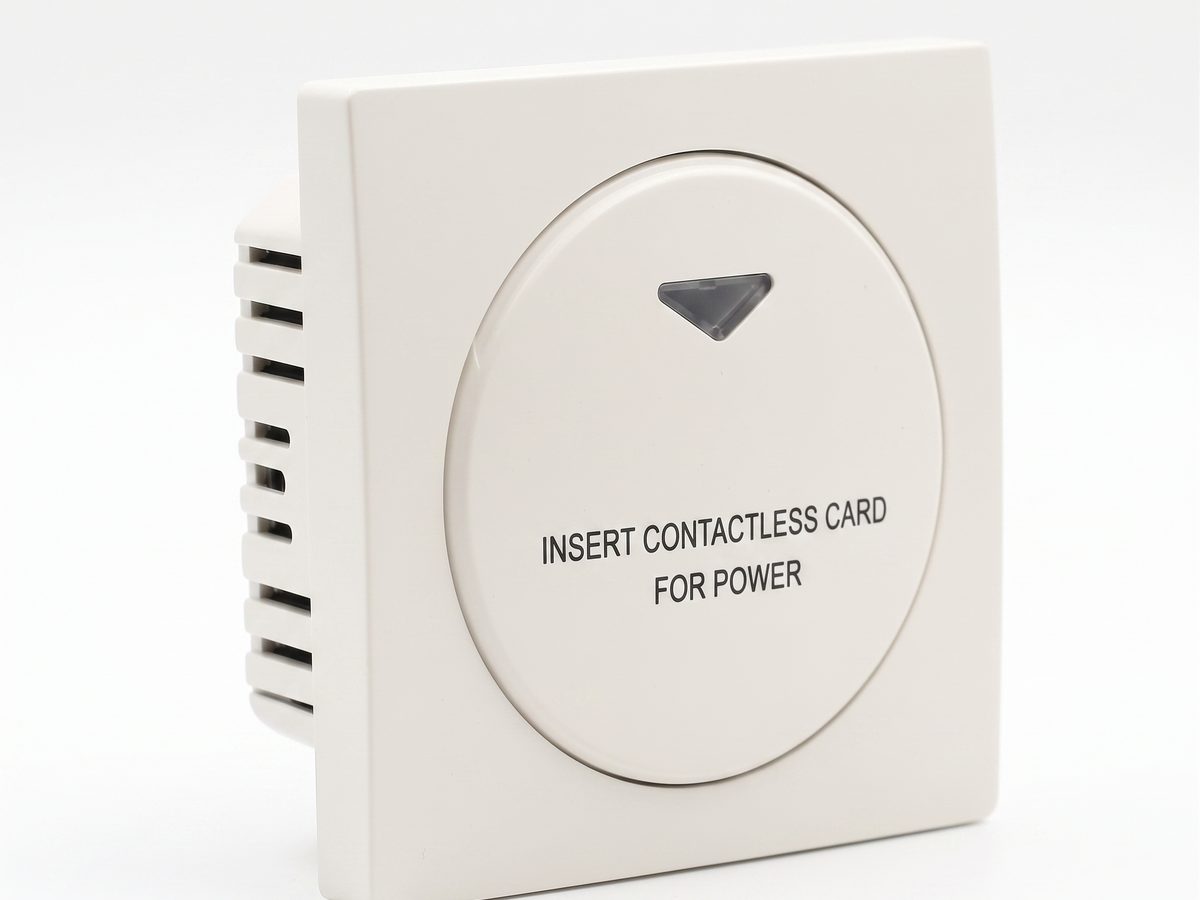
مفتاح بطاقة الفندق — التحكم في طاقة غرفة الضيوف
مفتاح بطاقة الفندق للتحكم في طاقة غرفة الضيوف. كشف بطاقة RFID/IC، إدخال البطاقة لتشغيل الطاقة، فصل الطاقة بتأخير زمني عند إزالة البطاقة. تيار متردد 220 فولت، 10A-16A، RS485 أو تلامس جاف. CE RoHS. مورد OEM/ODM.
تشير هذه الصفحة بالفعل إليه كمرجع تالٍ موصى به.
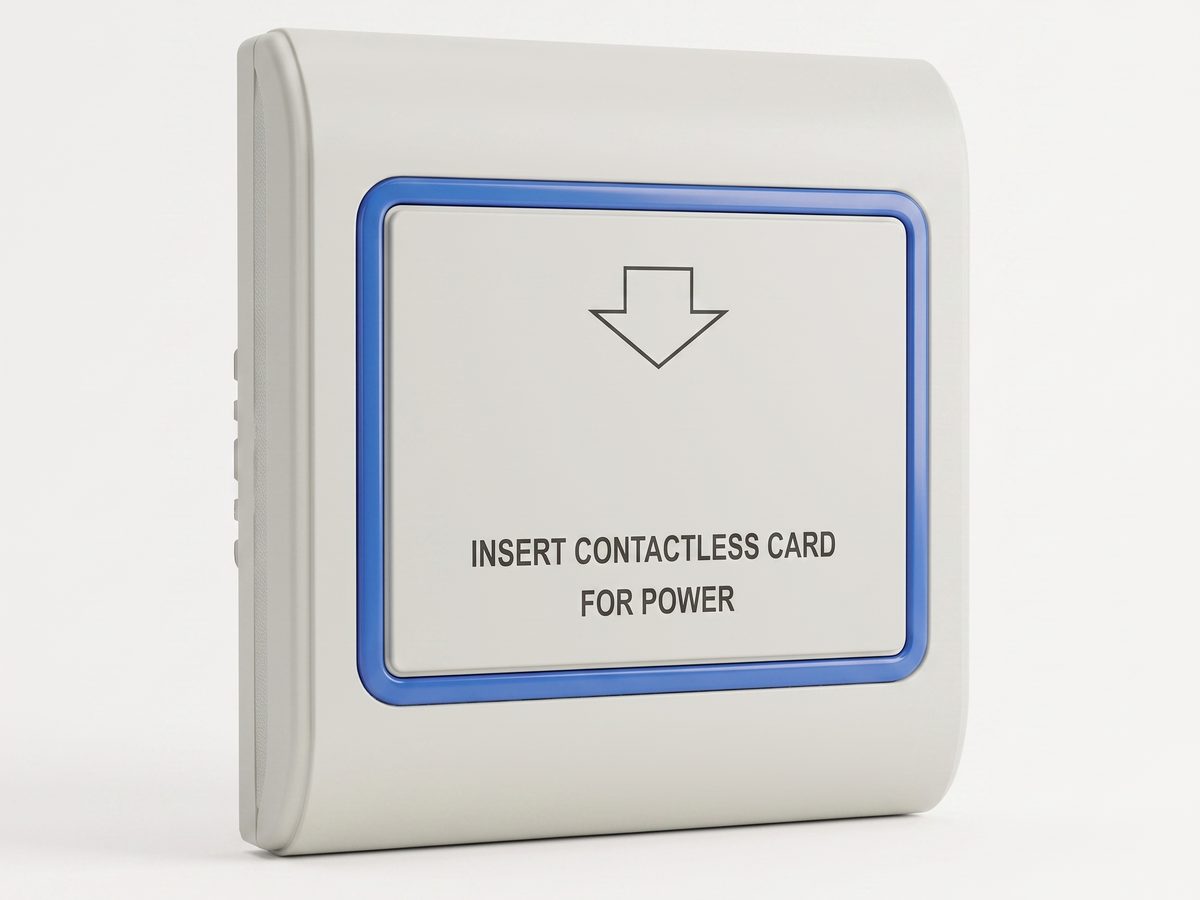
مفتاح بطاقة RFID — تحكم لاسلكي 13.56MHz في طاقة غرفة الضيوف
مفتاح بطاقة RFID مع كشف لاسلكي 13.56MHz. يضع الضيف البطاقة على منطقة القراءة لتشغيل الغرفة، لا حاجة لفتحة إدخال. يعمل مع أقفال أبواب الفنادق. معتمد CE RoHS. مورد OEM/ODM.
تشير هذه الصفحة بالفعل إليه كمرجع تالٍ موصى به.
حلول ذات صلة
3نظام إدارة الغرف الفندقية القائم على التحكم بالطاقة عبر البطاقة
نظام عملي لإدارة الغرف الفندقية للتحكم في طاقة الغرفة عبر مفاتيح البطاقة، والموصلات، وقواعد التشغيل الموثقة بوضوح.
إنه يدعم نفس سياق المنتج: مفتاح بطاقة الفندق — التحكم في طاقة غرفة الضيوف.
توفير طاقة الفندق باستخدام مفتاح تشغيل غرفة الضيوف
حل لتوفير طاقة الفندق يستخدم تشغيل الغرفة المتحكم به بالبطاقة لمنع الأضواء وتكييف الهواء والمآخذ المختارة من العمل دون داعٍ.
إنه يدعم نفس سياق المنتج: مفتاح بطاقة الفندق — التحكم في طاقة غرفة الضيوف.
التحكم في طاقة غرفة الفندق باستخدام مفاتيح البطاقات
حل عملي للتحكم في طاقة غرفة الفندق لتشغيل إضاءة وتكييف ومنافذ غرفة الضيوف من بطاقة غرفة مصرح بها.
إنه يدعم نفس سياق المنتج: مفتاح بطاقة الفندق — التحكم في طاقة غرفة الضيوف.
مقالات المدونة ذات الصلة
3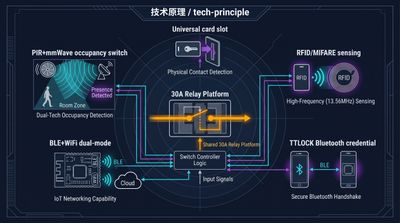
مفتاح بطاقة الفندق: الأنواع، الموديلات، وكيفية المواصفات
يغطي مفتاح بطاقة الفندق موديلات العام، RFID، TTLOCK، BLE، والإشغال. يرشدك هذا الدليل لعائلة مفتاح البطاقة المصطلحات الرئيسية والمواصفات.
إنه يدعم نفس سياق المنتج: مفتاح بطاقة الفندق — التحكم في طاقة غرفة الضيوف.
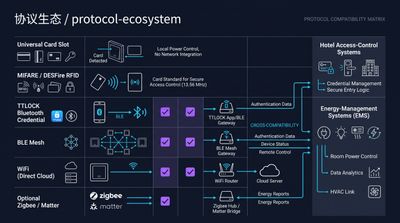
RFID vs NFC لمفاتيح بطاقات الفنادق: أي تقنية بطاقة تختار؟
يعتمد الاختيار بين RFID و NFC لمفاتيح بطاقات الفنادق على المدى والقفل: RFID بتردد 125 كيلوهرتز / 13.56 ميجاهرتز (MIFARE، Temic) هو المعيار الفندقي لتغذية الغرف
إنه يدعم نفس سياق المنتج: مفتاح بطاقة الفندق — التحكم في طاقة غرفة الضيوف.
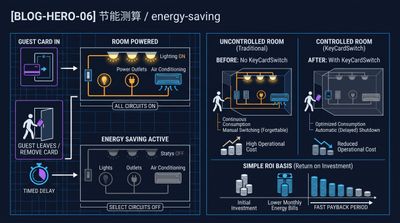
ما هو مفتاح بطاقة الفندق وكيف يوفر طاقة الغرفة
مفتاح بطاقة الفندق هو جهاز حائطي يشغل غرفة الضيف عند إدخال البطاقة ويفصل التيار عند سحبها، مما يوفر عادةً 25-40% من كهرباء الغرفة.
إنه يدعم نفس سياق المنتج: مفتاح بطاقة الفندق — التحكم في طاقة غرفة الضيوف.
حدد مشروع فندقك مع مهندسينا
أخبرنا بعدد الغرف ونوع السقف والبروتوكول المفضل. سنعود إليك بخطة عينات وعرض سعر خلال 24 ساعة عمل.
- انتقل من الإرشادات العامة إلى نقاش حول المنتج أو التطبيق.
- استخدم RFQ عندما يحتاج التسعير أو الرسومات أو MOQ أو توقيت الإطلاق إلى هيكلة.
- أبقِ مسار اتصال مباشر ظاهرًا للتوضيحات السريعة والتسليم.