دليل عملي لتكامل مفتاح بطاقة الفندق مع قفل الباب
تعرف على كيفية عمل مفتاح بطاقة الفندق بجانب أقفال Onity و VingCard و Assa Abloy و SALTO، بما في ذلك البطاقات، والأسلاك، والأبواب اللاسلكية، وتنسيق التحديث.
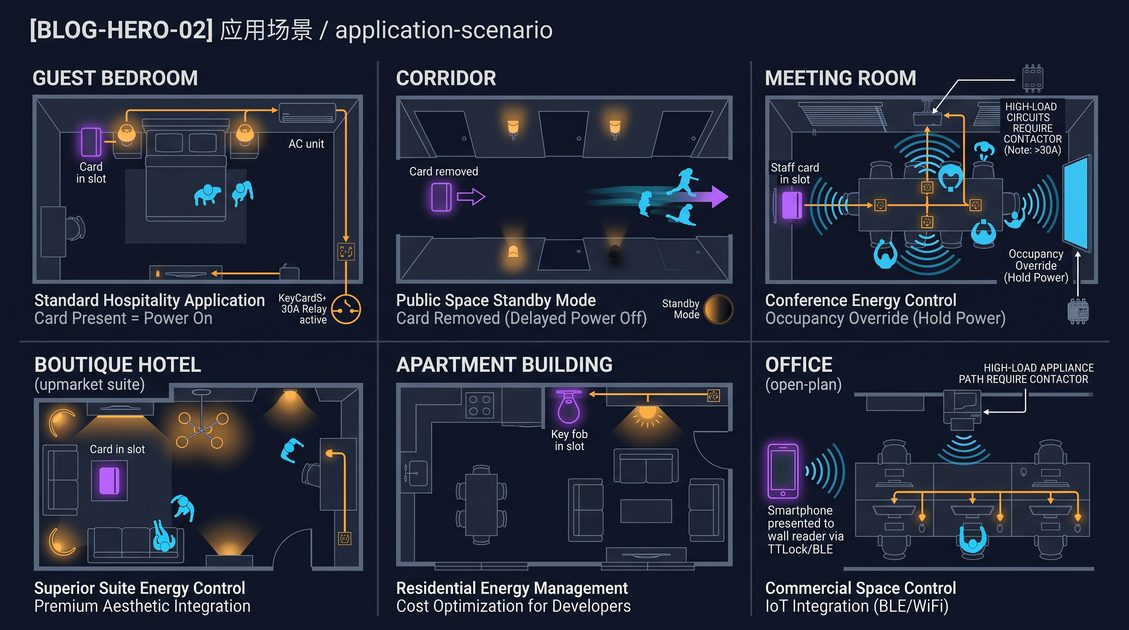
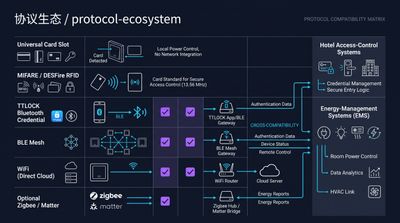
تكامل مفتاح بطاقة الفندق مع قفل الباب عادة ما يكون مشكلة تنسيق أكثر منه اتصالاً إلكترونياً مباشراً. قارئ القفل يتحقق من بيانات الاعتماد عند المدخل، بينما يتحكم مفتاح الغرفة في الأحمال المحددة بعد أن يقدم الضيف بطاقة معتمدة داخل الغرفة. في معظم المشاريع، يمكن لكلا الجهازين قبول نفس تنسيق البطاقة دون مشاركة البيانات، أو البرامج الثابتة، أو الشبكة. يتم تحديد المفتاح بتقنية البطاقة، والجهد، والحمل، وترتيب التلامس؛ بينما يتم تحديد القفل بعائلة بيانات الاعتماد، وأجهزة الأسطوانة، وقواعد الوصول، والهيكل غير المتصل أو المتصل. التصميم الناجح يؤكد بالتالي توافق البطاقة، والفصل الكهربائي، وموضع التركيب، ومسؤوليات التشغيل قبل التركيب. يشرح هذا الدليل كيف تعمل عائلات أقفال الفنادق الشائعة بجانب مفاتيح بطاقات المفاتيح، ومتى يكون الأسلاك المتكاملة غير ضرورية، وكيف تغير الأقفال اللاسلكية تسلسل التحديث، وكيف يمكن للملاك، وبائعي الأقفال، ومقاولي الكهرباء، وموردي المفاتيح تجنب نزاعات التسليم.
هندسة تكامل مفتاح بطاقة الفندق مع قفل الباب
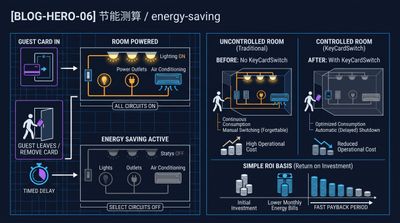
يستخدم تكامل مفتاح بطاقة الفندق مع قفل الباب نظامين منسقين لكنهما عادة مستقلين: قفل الباب يمنح الدخول، بينما يمكّن مفتاح الغرفة الأحمال الكهربائية المحددة. قد يقرأ المفتاح بطاقة تلامس أو بيانات اعتماد RFID، وقد يستخدم القفل بيانات اعتماد مبرمجة، لكن البطاقة المشتركة لا تعني كابل بيانات أو متحكم مشترك. الأحمال التي يتم التحكم فيها عادة تشمل الإضاءة، ومجموعات المقابس، وتمكين ملف المروحة، ومحتجز لدائرة أكبر. يظل القفل مسؤولاً عن الوصول، والخصوصية، والإطلاق الميكانيكي، وقواعد بيانات الاعتماد. يظل المفتاح مسؤولاً عن التتابع الخاص به، والتوقيت، ودائرة الغرفة. هذا الحد يحسن المرونة لأن عطل المفتاح لا يجب أن يمنع الدخول، ومشكلة بطارية القفل لا يجب أن تترك نظام طاقة الغرفة غير متحكم فيه. يجب أن تظهر الرسومات المعمارية كلا الجهازين، ومصادرهما، ودوائرهما، وتسلسل الضيف الدقيق. إذا طلب المالك إشارة باب، أو إشراف مركزي، أو منطق إشغال تلقائي، فهذا مشروع تحكم إضافي ويجب تحديده بشكل منفصل.
فصل الوظائف قبل اختيار المنتجات
يتم وضع مفتاح طاقة الغرفة عادة بالقرب من المدخل حتى يتمكن الضيف من العثور عليه أثناء الدخول. قد يغذي مخرجه مشاهد الإضاءة، ومجموعات المقابس، أو محتجز يتحكم في حمل أكبر. ينتمي ترتيب الدائرة الدقيق إلى التصميم الكهربائي، ويجب أن يتلقى مورد المفتاح جدول الجهد والتيار النهائي. قارئ قفل الباب يجلس عادة على الجزء الخارجي من الباب ويتم تحسينه للوصول، والتعرض للطقس، والأمان، وخدمة البطارية. وضع مفتاح طاقة في سلسلة الأمان هذه يمكن أن يخلق نقطة فشل واحدة غير مرغوب فيها. الفصل النظيف يسمح للقفل بالحفاظ على وظيفته في الوصول أثناء إصلاح التحكم في طاقة الغرفة.
يمكن أن تكون لغة التكامل مضللة في المواصفات. في مشروع واحد، قد يعني التكامل أن بطاقة واحدة تعمل في قارئين. في مشروع آخر، قد يعني تلامس جاف مباشر، أو متحكم، أو حدث برمجي. هذه نطاقات مختلفة جوهرياً. اكتب التسلسل المقصود بلغة واضحة: تقديم البطاقة، تمكين الأحمال المحددة، إزالة البطاقة، تطبيق التأخير، الاحتفاظ بالدوائر الأساسية. ثم اذكر ما إذا كان قارئ الباب يجب أن يرسل أي إشارة. إذا لم يكن كذلك، يجب أن تظهر رسومات الجهد المنخفض نظامين مستقلين واختبار تشغيل مشترك فقط.
لا ينبغي استخدام المفتاح كمؤشر أمان ما لم يتم هندسته واختباره خصيصاً لهذا الغرض. البطاقة المتروكة في الحامل لا تثبت أن الضيف المصرح له موجود. وبالمثل، إطفاء الضوء لا يثبت أن الغرفة شاغرة. هذا التمييز مهم للتنظيف، والصيانة، والاستجابة للطوارئ، وإمكانية الوصول. يجب على المالكين وصف المفتاح كجهاز تحكم في الطاقة والاحتفاظ بقرارات الوصول للباب داخل نظام القفل.
يجب أن يتضمن معيار الغرفة مخططاً أحادي الخط، وصورة لعينة البطاقة، وتفاصيل التركيب، وتسلسل التشغيل. يجب أن يحدد الدوائر التي يجب أن تظل حية، مثل التبريد، ومعدات السلامة، أو مخارج الشحن المحددة حيثما ينطبق. راجع المعيار مع بائع قفل الباب والمهندس الكهربائي قبل تكراره عبر الطوابق. هذه خطوة موافقة صغيرة تمنع تركيب قارئ متوافق مع العلامة التجارية على دائرة غير مناسبة.
تكامل مفتاح بطاقة الفندق مع قفل البطاقات المشتركة
تعني البطاقة المشتركة أن بيانات اعتماد ضيف فعلية واحدة يمكن قبولها من قبل كل من قفل الباب ومفتاح الغرفة، لكنها لا تعني أن الجهازين مدمجان إلكترونياً. يجب أن تقدم البطاقة تقنية وسلوك قراءة يدعمهما كل جهاز. بعض المفاتيح تستجيب للوجود الفعلي للبطاقة ولا تتحقق من هوية الضيف المشفرة؛ بينما تم تصميم البعض الآخر لعائلة RFID محددة وقد يرفض شريحة غير متوافقة. قد يستخدم القفل قطاعات مشفرة، أو رقم تسلسلي مبرمج، أو ملف بيانات اعتماد مملوك. قبل الطلب، احصل على مواصفات بيانات اعتماد مورد القفل واسأل مورد المفتاح عن أنواع البطاقات التي يقرأها. اختبر مخزون البطاقة الفعلي، بما في ذلك الأكمام والتراكبات المطبوعة، لأن السمك وموضع الهوائي يمكن أن يؤثر على الإدراج أو مسافة القراءة. يجب تسجيل القرار قبل الشراء، لأن قارئ البطاقة، وقفل الباب، ودائرة طاقة الغرفة يمكن أن يكون كل منها صحيحاً من تلقاء نفسه بينما لا يزال يفشل كسير عمل للضيف. اختبار غرفة العينة هو دليل عملي.
تقنية البطاقة هي الواجهة الحقيقية
التشابه البصري بين البطاقات ليس دليلاً على التوافق التقني. قد يكون لبطاقتين نفس العمل الفني المطبوع بينما تستخدمان شرائح مختلفة، أو ترددات، أو تخطيطات ذاكرة، أو سلوكيات قارئ. اطلب رقم جزء البطاقة، والتقنية، وتردد التشغيل حيثما ينطبق، وما إذا كان القفل يشفر بيانات الاعتماد في قطاع محمي. اطلب من مورد المفتاح ذكر العائلات المدعومة بنفس المصطلحات. إذا لم يتمكن المورد من تحديد طريقة القراءة، اطلب اختبار عينة قبل الشراء.
قد يكون المفتاح أقل انتقائية عمداً من القفل. بعض مفاتيح توفير طاقة الفنادق تكتشف شكل بطاقة فعلي أو وجود RFID واسع، بينما يتحقق القفل مما إذا كانت بيانات الاعتماد مصرح بها لباب ووقت معينين. يمكن أن يجعل ذلك تجربة طاقة الغرفة مريحة ولكن يعني أيضاً أن بطاقة موظف، أو بطاقة منتهية الصلاحية، أو رمز متوافق آخر قد ينشط المفتاح. يجب أن تقرر سياسة التشغيل ما إذا كان هذا السلوك مقبولاً. يمكن تحديد قارئ أكثر صرامة إذا كان المشروع يحتاج إلى التحقق من الهوية.
أكمام البطاقات، وسلاسل المفاتيح، وبيانات الاعتماد المحمولة، والمحافظ المعدنية تستحق اختباراً صريحاً. يمكن أن يمنع الكم بطاقة التلامس من الجلوس بالكامل أو يغير المسافة إلى هوائي RFID. قد تقبل سلسلة المفاتيح الباب لكن لا تناسب فتحة المفتاح ذات النمط. قد تفتح بيانات اعتماد الهاتف قفلاً لاسلكياً دون تقديم بطاقة على الإطلاق. إذا أراد المالك الدخول القائم على الهاتف وطاقة الغرفة التلقائية، فهذا مطلب منفصل لتجربة المستخدم والتحكم، وليس نتيجة تلقائية لتوافق القفل.
احتفظ بعينة بطاقة خاضعة للرقابة في سجلات المشروع. ضع عليها تقنية، وتاريخ الإصدار، والاستخدام المقصود، واستخدمها أثناء اختبارات قبول المصنع والموقع. لا تستبدلها ببطاقة متشابهة بصرياً من طابعة محلية. عندما يغير الفندق بيانات اعتماد القفل لاحقاً، يجب إعادة اختبار سلوك المفتاح حتى لو ظل الغطاء الأمامي والأسلاك دون تغيير.
نفس البطاقة، تفويض مختلف
يمكن للقفل رفض بطاقة مفقودة أو منتهية الصلاحية بينما لا يزال مفتاح الكشف الواسع يستجيب لها. هذا ليس بالضرورة عيباً؛ إنه نتيجة لوظائف مختلفة. يجب أن يقرر فريق المشروع ما إذا كان مفتاح الغرفة يجب أن يقبل جميع الرموز المتوافقة، أو عائلة بطاقات ضيقة فقط، أو بيانات اعتماد تم التحقق منها. كل خيار يؤثر على تكلفة القارئ، وتجربة الضيف، وإجراءات الخدمة. ضع القرار في معيار الغرفة بدلاً من تركه للمركب.
تكامل مفتاح بطاقة الفندق مع قفل الباب مع أقفال Onity
تعمل أقفال Onity ومفتاح بطاقة الفندق بشكل عام جنباً إلى جنب كأجهزة غرفة منفصلة. السؤال العملي ليس ما إذا كان المفتاح يحمل علامة Onity التجارية، بل ما إذا كان يقرأ نفس تنسيق بيانات الاعتماد المستخدم في أقفال باب المنشأة. قد يتضمن نشر Onity أجيالاً مختلفة من القراء، والبطاقات، وممارسات التشفير، لذا يجب على المشروع التحقق من نموذج القفل المثبت وتقنية البطاقة بدلاً من الاعتماد على اسم العلامة التجارية وحده. يتعامل قفل الباب عادة مع قرارات الوصول عند الباب؛ يمكن للمفتاح استخدام بطاقة متوافقة كمحفز لوجود الغرفة أو مجرد اكتشاف رمز بطاقة. لا يتطلب كابل بيانات من القفل إلى المفتاح عادةً لهذا السلوك الأساسي. أثناء التحديث، اجعل بائع القفل مسؤولاً عن أجهزة الباب، وبرمجة القارئ، واختبار الوصول، بينما يتعامل مقاول الكهرباء مع أسلاك دائرة المفتاح.
أسئلة تنسيق Onity
اسأل مقاول Onity عن عائلة القارئ الدقيقة، وعينة البطاقة، وتردد بيانات الاعتماد حيثما ينطبق، وما إذا كانت بطاقات الموظفين تختلف عن بطاقات الضيوف. اسأل مورد المفتاح ما إذا كان قارئه يكتشف نفس التقنية وما إذا كان يتحقق من الهوية أو يكتشف الوجود فقط. سجل الإجابة في مصفوفة التوافق. تجنب القول إن كل قفل Onity وكل مفتاح يشتركان في واجهة عالمية، لأن أجيال القفل وتكوينات البطاقات تختلف.
اختبار غرفة عينة مشترك يؤكد أن بطاقات الضيوف، والتنظيف، والطوارئ تتصرف كما هو مقصود. اختبر بطاقة ضيف مصرح بها عند الباب وفي المفتاح. اختبر بطاقة متشابهة فعلياً لكن غير معتمدة. اختبر إزالة البطاقة، والتأخير، والدوائر الأساسية. يجب أن يوقع مثبت Onity على جزء الوصول والكهربائي على جزء الطاقة. قائمة تحقق واحدة مشتركة تبقي سير عمل الضيف مرئياً دون تعيين مسؤولية التجارة الخاطئة.
تكامل مفتاح بطاقة الفندق مع قفل الباب مع أنظمة VingCard
يمكن نشر أنظمة قفل VingCard ومفاتيح بطاقات الفندق في نفس الغرفة عند اختيار المفتاح لعائلة بطاقات الموقع والتصميم الكهربائي. VingCard هي نظام بيئي للمنتج وليس مواصفة بطاقة عالمية، وقد يكون للمنشآت أجيال قارئ مختلفة أو تكوينات بيانات اعتماد. اطلب تقنية البطاقة الدقيقة، وليس فقط علامة القفل التجارية، قبل الموافقة على مفتاح. يمكن أن يظل قفل القارئ مسؤولاً عن الوصول عند باب الممر، بينما يتحكم المفتاح في الإضاءة، والمقابس، وتمكين ملف المروحة، أو محتجز وفقاً لتصميم طاقة الغرفة. هذا الترتيب عادة لا يستخدم كابل اتصالات مشترك. نقاط التنسيق المهمة هي تقديم البطاقة، وأبعاد صندوق الحائط، وتجميع الدوائر، والتمييز بين مفتاح يكتشف الإدراج فقط وآخر يتحقق من بيانات الاعتماد. يجب تسجيل القرار قبل الشراء، لأن قارئ البطاقة، وقفل الباب، ودائرة طاقة الغرفة يمكن أن يكون كل منها صحيحاً من تلقاء نفسه بينما لا يزال يفشل كسير عمل للضيف. اختبار غرفة العينة هو دليل عملي.
سير عمل مشروع VingCard
يجب أن تتضمن النموذج الأولي البطاقة الفعلية الصادرة من VingCard، والغطاء الأمامي المحدد، والحمل الكهربائي النهائي حتى لا يكتشف المركبون عدم التوافق بعد الانتهاء من الغرف. أكد ما إذا كان يجب إدخال البطاقة، أو النقر بها، أو إبقاؤها بالقرب من المفتاح. أكد ما إذا كان الكم يغير سلوك القراءة. أكد أن تصنيف تلامس المفتاح مناسب للحمل أو لملف المحتجز المحدد. لا ينبغي أن يُطلب من مثبت القفل الموافقة على أسلاك التيار الرئيسي، ولا ينبغي أن يُطلب من الكهربائي تغيير برمجة بيانات الاعتماد.
عندما يكون للممتلكات عدة مبانٍ أو مراحل تجديد، قم بعمل جرد للبطاقات حسب المرحلة. قد يستخدم قارئ VingCard الجديد عائلة بيانات اعتماد مختلفة عن مبنى أقدم. نفس العمل الفني المطبوع يمكن أن يخفي هذا الاختلاف. اختبر بطاقات كل مرحلة مع كل مفتاح مقترح. إذا كان مفتاح واحد يجب أن يدعم عائلات بطاقات متعددة، احصل على تفاصيل دعم مكتوبة واختبر جميع العائلات بدلاً من افتراض قارئ عالمي.
تكامل مفتاح بطاقة الفندق مع قفل الباب مع أقفال Assa Abloy
يمكن لأقفال فنادق Assa Abloy العمل بجانب مفتاح بطاقة متوافق عندما يدعم كلا الجهازين تنسيق بيانات الاعتماد الذي اختارته المنشأة. تعتمد نتيجة البطاقة نفسها على تقنية البطاقة، وتكوين القارئ، وطريقة استشعار المفتاح؛ إنها غير مضمونة باسم Assa Abloy وحده. أكد ما إذا كان القفل يستخدم بطاقة تلامس، أو بيانات اعتماد RFID 13.56 MHz، أو تنسيق آخر، واسأل كيف تختلف بطاقات الموظفين عن بطاقات الضيوف. يظل القفل عادة جهاز وصول يعمل بالبطارية أو بالطاقة المحلية عند الباب. يظل مفتاح الغرفة جزءاً من تركيب التحكم منخفض الجهد وحمل التيار الرئيسي داخل الغرفة. الحفاظ على هذه الحدود واضحة يتجنب كابلاً غير ضروري بين الباب والمفتاح. يجب تسجيل القرار قبل الشراء، لأن قارئ البطاقة، وقفل الباب، ودائرة طاقة الغرفة يمكن أن يكون كل منها صحيحاً من تلقاء نفسه بينما لا يزال يفشل كسير عمل للضيف. اختبار غرفة العينة هو دليل عملي.
فحوصات تحديث Assa Abloy
للتجديد، سجل أرقام الأبواب، ونماذج الأقفال، وعينات البطاقات، ومواقع المفاتيح في جدول غرفة واحد. ثم اختبر الدخول، وتفعيل الطاقة، وتأخير إزالة البطاقة، وسلوك الفشل الآمن مع وجود مثبت القفل والكهربائي. تحقق من أن المفتاح المقترح يناسب صندوق الحائط الحالي ولا يتعارض مع قارئ، أو منظم حرارة، أو مقعد أمتعة، أو زخرفة الباب. إذا كان قفل الباب لاسلكياً أو يعمل بالبطارية، لا تستنتج أن مفتاح الغرفة يمكن أن يستقبل حدث دخول.
يجب أن تميز المواصفات بين توافق البطاقة والتعاون الرسمي. من الدقيق القول إن المفتاح يعمل بجانب قفل عندما يكون تنسيق البطاقة مدعوماً وتجتاز الأجهزة اختبار المشروع. ليس من الدقيق الإشارة إلى منتج مشترك، أو قابلية تشغيل متبادل معتمدة، أو رابط بيانات مملوك ما لم توثق الشركات المصنعة المسؤولة هذا الترتيب الدقيق.
تكامل مفتاح بطاقة الفندق مع قفل الباب مع أقفال SALTO
أنظمة وصول SALTO ومفاتيح بطاقات الفندق متوافقة كوظائف مجاورة عندما يدعم قارئ المفتاح تقنية البطاقة المستخدمة في تركيب SALTO. يمكن أن تختلف مشاريع SALTO حسب عائلة بيانات الاعتماد، وأجهزة القفل، ونموذج التشغيل، لذا فإن عينة البطاقة ومواصفات القارئ أكثر فائدة من افتراض عام على مستوى العلامة التجارية. قد يستخدم الضيف بطاقة واحدة للباب ومفتاح الغرفة، لكن المفتاح قد يكتشف وجود البطاقة فقط بدلاً من التحقق من أذوناتها. يجب شرح هذا التمييز للمالك: إزالة البطاقة يمكن أن تفصل دائرة الغرفة حتى لو لم تعد البطاقة صالحة عند الباب. التحكم الأساسي في طاقة الغرفة لا يتطلب اتصال المفتاح بالقفل، أو متحكم، أو خدمة برمجية. يجب تسجيل القرار قبل الشراء، لأن قارئ البطاقة، وقفل الباب، ودائرة طاقة الغرفة يمكن أن يكون كل منها صحيحاً من تلقاء نفسه بينما لا يزال يفشل كسير عمل للضيف. اختبار غرفة العينة هو دليل عملي.
حدود تشغيل SALTO
نسق موقع المفتاح مع حركة الباب، وحركة الأمتعة، ومساحات إمكانية الوصول، بينما يتحقق مقاول SALTO من تسليم القفل، وسلوك التدقيق، وبيانات الاعتماد. شغّل كلا النظامين باستخدام بطاقات المنشأة الحقيقية وبطاقات الاستثناء. أكد أنه يمكن تقديم البطاقة بشكل مريح، وأن الكم لا يحجب القارئ، وأن المفتاح لا يستجيب لرمز قريب غير مقصود.
يجب أن يقرر المالك كيف تتصرف بطاقات التنظيف، والصيانة، وبيانات اعتماد الطوارئ. قد ينشط مفتاح يكتشف رمزاً متوافقاً غرفة لموظف حتى عندما يطبق قفل SALTO قاعدة وصول مختلفة. يمكن أن يكون هذا السلوك مقبولاً، لكن يجب ذكره. إذا لم يكن مقبولاً، حدد قارئاً أكثر انتقائية واختبره مع مجموعة بيانات الاعتماد الفعلية.
قرارات أسلاك تكامل مفتاح بطاقة الفندق مع قفل الباب
في التركيب القياسي، لا يتطلب تكامل مفتاح بطاقة الفندق مع قفل الباب كابل بيانات بين مفتاح الغرفة وقفل الباب. يتم توصيل المفتاح بدائرة التحكم في طاقة الغرفة المحددة، عادة من خلال تتابع أو محتجز عندما يتجاوز الحمل تصنيف المفتاح. يتم تركيب القفل وتشغيله وفقاً لتصميم أجهزته الخاص، غالباً مع البطاريات أو مصدر طاقة تحكم وصول مخصص. توفر البطاقة المشتركة رابط سير عمل بشري، وليس رابط اتصالات. يصبح الأسلاك المتكاملة طلب تصميم منفصل عندما يريد المالك متحكمًا مركزياً، أو إشارة موضع باب، أو إطلاق طوارئ سلكي، أو تسلسل منطق مخصص. يجب تسجيل القرار قبل الشراء، لأن قارئ البطاقة، وقفل الباب، ودائرة طاقة الغرفة يمكن أن يكون كل منها صحيحاً من تلقاء نفسه بينما لا يزال يفشل كسير عمل للضيف. اختبار غرفة العينة هو دليل عملي.
متى يكون الكابل مبرراً فعلياً
يجب عرض هذه المتطلبات على الرسومات الكهربائية ومنخفضة الجهد مع نوع الكابل، والإنهاء، ومصدر الطاقة، والعزل، ومسؤولية الاختبار. لا تقم أبداً بتوصيل مخرج قفل بطرف مفتاح لمجرد أن الأطراف تبدو متشابهة. أكد الجهد، والتيار، ونوع التلامس، والقطبية، ومتطلبات الكود المحلي قبل تنشيط أي دائرة. التلامس الجاف، والمخرج المزود بالطاقة، وناقل الاتصالات ليست واجهات قابلة للتبديل.
قد تحتوي دائرة مفتاح نموذجية على جهاز حماية، والمفتاح أو التتابع، وملف محتجز، ودائرة أو أكثر يتم التحكم فيها. قد يكون للقفل بطاريته الخاصة، أو أسلاك القارئ، أو مصدر طاقة تحكم الوصول. احتفظ بموصلات التيار الرئيسي، والموصلات منخفضة الجهد، وكابلات أجهزة الباب موجهة ومنتهية وفقاً لرسومات المهندس والقواعد المحلية المعمول بها. يمكن لمورد المفتاح شرح حدود الأطراف، لكن مهندس المشروع الكهربائي يوافق على طريقة التركيب.
مقارنة الأسلاك
| بعد التكامل | مفتاح غرفة وقفل مستقلان | تصميم إشارة مباشر | بطاقة مشتركة فقط |
|---|---|---|---|
| كابل بيانات من الباب للمفتاح | غير مطلوب عادة | مطلوب إذا تم تحديده | غير مطلوب |
| الواجهة الرئيسية | تقديم بطاقة ودوائر طاقة منفصلة | تلامس جاف، متحكم، أو ناقل محدد | نفس تقنية البطاقة |
| قرار الوصول | قفل الباب | قفل الباب أو متحكم معتمد | قفل الباب |
| قرار طاقة الغرفة | منطق المفتاح | منطق تحكم مهندس | منطق المفتاح |
| مسؤول التشغيل | كهربائي مع عينة بائع القفل | مهندس تحكم بالإضافة إلى التجارتين | كهربائي وبائع قفل |
| الخطر الرئيسي | افتراض بطاقة أو حمل خاطئ | واجهة أو عزل غير صحيح | تنسيقات بطاقات مختلفة |
تكامل مفتاح بطاقة الفندق مع قفل الباب للأقفال اللاسلكية
عادة ما تبسط أقفال الفنادق اللاسلكية التحديث الفعلي لأن قارئ الباب لا يحتاج كابلاً لمفتاح الغرفة. القفل اللاسلكي لا يزال يحتاج خطة بيانات اعتماد، بينما يحتاج المفتاح لدائرة طاقة غرفة وقارئ بطاقة مناسب. بما أن الأجهزة لا تتبادل إشارة حية، لا يخبر القفل اللاسلكي المفتاح تلقائياً بدخول ضيف. يتفاعل المفتاح مع تقديم بطاقته الخاص، أو المؤقت، أو سلوك الاستشعار المهيأ. يمكن أن يكون هذا مقبولاً لسير عمل غرفة ضيف بسيط، لكن المالكين يجب أن يفهموا الحالات الحدية مثل دخول ضيف ببيانات اعتماد هاتف، أو موظف يستخدم بطاقة مختلفة، أو بطاقة متروكة في المفتاح بعد المغادرة. يجب تسجيل القرار قبل الشراء، لأن قارئ البطاقة، وقفل الباب، ودائرة طاقة الغرفة يمكن أن يكون كل منها صحيحاً من تلقاء نفسه بينما لا يزال يفشل كسير عمل للضيف. اختبار غرفة العينة هو دليل عملي.
تسلسل التحديث اللاسلكي
نسق تشغيل القفل اللاسلكي، ووصول البطارية، ومسح الراديو، وتركيب المفتاح كحزم عمل متوازية. يجب أن يختبر النموذج الأولي للغرفة بيانات اعتماد القفل اللاسلكي الفعلية، واستجابة بطاقة المفتاح، وتسلسل التحكم في الحمل المحدد دون الإشارة إلى أن جهازاً يشرف على الآخر. تحقق من محاذاة الباب، وحركة اللسان، ومساحة استبدال البطارية، وظروف الإشارة بشكل منفصل عن اختبار كهرباء الغرفة.
يقلل الوصول اللاسلكي من فئة واحدة من الكابلات لكنه لا يلغي التنسيق. لا يزال الكهربائي يحتاج لمسار آمن للمفتاح، ولا يزال مقاول القفل يحتاج للوصول للباب والإطار. تجنب وضع مفتاح حيث يحجب باب معدني، أو خزانة، أو لوحة زخرفية قارئ RFID. اختبر مع الجدار والأثاث النهائي، وليس فقط مع نموذج أولي غير مكتمل.
تنسيق تحديث تكامل مفتاح بطاقة الفندق مع قفل الباب
ينجح التحديث عند مسح نظام القفل الحالي، والمفتاح الجديد، وأسلاك الغرفة قبل الشراء. ابدأ بجرد غرفة بغرفة: علامة القفل ونموذجه، تقنية البطاقة، فتحة المفتاح، جهد التغذية، الأحمال المتحكم بها، مساحة لوحة التوزيع، وتواريخ الوصول. ادعُ مقاول القفل، ومقاول الكهرباء، والمقاول العام، ومورد المفتاح للموافقة على غرفة عينة واحدة. يؤكد مقاول القفل البطاقات وسلوك الوصول؛ يؤكد مقاول الكهرباء طوبولوجيا الدائرة والعزل؛ يؤكد مورد المفتاح توافق القارئ وحدود الأطراف. اتفق على من يوفر البطاقات للاختبار ومن يوقع قائمة التحقق الوظيفية. احتفظ بأجهزة الباب وبرامج القفل الثابتة ما لم يكن تغيير موثق مطلوباً. يجب تسجيل القرار قبل الشراء، لأن قارئ البطاقة، وقفل الباب، ودائرة طاقة الغرفة يمكن أن يكون كل منها صحيحاً من تلقاء نفسه بينما لا يزال يفشل كسير عمل للضيف. اختبار غرفة العينة هو دليل عملي.
مصفوفة واجهة التحديث
| العنصر للتأكيد | مقاول قفل الباب | مقاول الكهرباء | مورد المفتاح | المالك أو المقاول العام |
|---|---|---|---|---|
| نموذج القفل المثبت | تأكيد | تسجيل | مراجعة متطلبات البطاقة | الموافقة على الجدول |
| عينة البطاقة الفعلية | توفير | اختبار | اختبار القارئ | الموافقة على سير عمل الضيف |
| أجهزة الباب | تركيب واختبار | تجنب التغييرات | لا مسؤولية | تنسيق الوصول |
| دائرة الغرفة | تسجيل الواجهة فقط | تصميم وتوصيل | ذكر حدود الأطراف | الموافقة على الأحمال |
| غرفة العينة | اختبار الوصول | اختبار كهربائي | اختبار القارئ | توقيع القبول |
| تسليم الغرفة | توقيع نتيجة القفل | توقيع نتيجة الدائرة | توقيع نتيجة المنتج | إغلاق العيوب |
إذا غير التجديد البطاقات، اختبر الأبواب الحالية قبل توزيع بيانات الاعتماد الجديدة. تسلسل الهدم المتراب قبل تركيب القراء والأغطية الأمامية، ثم احمِ الأسطح النهائية أثناء سحب الكابلات. يقلل التجربة الأولية الخاضعة للرقابة من دخول الغرف المتكرر ويكشف مشاكل البطاقة، والتركيب، والحمل بينما لا تزال التصحيحات غير مكلفة. احتفظ بسجل فوتوغرافي للموقع المعتمد حتى لا تنحرف الغرف اللاحقة عن المعيار.
إدارة توقيت التجارة
قد ينهي مقاول القفل الأبواب قبل أسابيع من وصول الكهربائي لدوائر الغرفة النهائية. قد يُطلب من مورد المفتاح إجابة دون رؤية البطاقة الفعلية. قد يوافق المالك على علامة تجارية بناءً على منشأة سابقة بعائلة بيانات اعتماد مختلفة. تحل مصفوفة واجهة مكتوبة هذه الفجوات. تسرد الجهاز، والغرض، ومدخل البطاقة، ومصدر الطاقة، ومتطلبات الكابل، والتجارة المسؤولة، وطريقة الاختبار، وأدلة القبول. كما تحدد ما هو مستبعد صراحة، مثل التحكم المباشر في القفل أو افتراض أن كل نوع بيانات اعتماد سينشط الطاقة.
قائمة تحقق تشغيل تكامل مفتاح بطاقة الفندق مع قفل الباب
يجب أن يثبت التشغيل سير عمل الضيف الكامل مع الحفاظ على اختبارات التحكم في الوصول والتحكم في الطاقة قابلة للتتبع بشكل منفصل. لكل غرفة، سجل نموذج القفل، ونموذج المفتاح، ونوع البطاقة، ومعرف الدائرة، والحمل المعتمد. اختبر بطاقة ضيف صالحة عند الباب وعند المفتاح، ثم اختبر بطاقة غير صالحة أو غير متوافقة. أزل البطاقة وتحقق من التأخير المهيأ، مع التحقق من أن الدوائر الأساسية تظل مزودة بالطاقة إذا تطلب التصميم ذلك. أكد أن المفتاح لا يعمل بشكل خاطئ من محفظة، أو كم معدني، أو بطاقة قريبة. تحقق من تشغيل التتابع أو المحتجز تحت الحمل الحقيقي، وليس فقط بمصباح على طاولة عمل. يجب تسجيل القرار قبل الشراء، لأن قارئ البطاقة، وقفل الباب، ودائرة طاقة الغرفة يمكن أن يكون كل منها صحيحاً من تلقاء نفسه بينما لا يزال يفشل كسير عمل للضيف. اختبار غرفة العينة هو دليل عملي.
تسلسل الاختبار الوظيفي
- افحص الغطاء الأمامي المركب، واتجاه البطاقة، والملصقات، وملاءمة صندوق الحائط.
- تحقق من جهد التغذية وتحديد جهاز الحماية قبل إدخال بطاقة.
- قدم بطاقة الضيف المعتمدة عند الباب وسجل نتيجة الوصول.
- قدم نفس البطاقة عند المفتاح وسجل أي الدوائر تغير الحالة.
- أزل البطاقة وقس التأخير المهيأ والحالة النهائية.
- كرر مع بطاقة موظف معتمدة، وبطاقة صيانة، وبطاقة غير متوافقة.
- تحقق من الدوائر الأساسية، ووظائف التجاوز، وتشغيل المحتجز، والملصقات.
- سجل العيوب حسب الغرفة وعين كل عيب لتجارة مسؤولة واحدة.
يجب أن يختبر مقاول القفل الإطلاق الميكانيكي، ووظيفة الخصوصية، وإجراء الطوارئ، ودورة حياة بيانات الاعتماد؛ يجب أن يختبر الكهربائي العزل، وأجهزة الحماية، والقطبية، والملصقات. سجل الاستثناءات، والصور، والإجراءات التصحيحية بشكل مشترك. جدول غرفة موقع أكثر قيمة من بيان عام بأن العلامات التجارية متوافقة. إذا فتحت البطاقة الباب لكنها فشلت عند المفتاح، تحقق من تقنية البطاقة قبل تغيير الأسلاك. إذا عمل المفتاح لكن الحمل ظل نشطاً، تحقق من الدائرة الكهربائية قبل تغيير برمجة القفل.
دليل شراء تكامل مفتاح بطاقة الفندق مع قفل الباب
يجب أن تصف مستندات الشراء حالة استخدام وحد واجهة بدلاً من المطالبة بوعد غير مدعوم بالتوافق العالمي. حدد حالة الاستخدام المستهدفة، وتقنية البطاقة، ونمط تركيب المفتاح، وجهد التغذية، والحمل المتحكم به، وتصنيف التلامس، ولمسة الغطاء الأمامي، والتأخير المطلوب للإزالة. اطلب من مقدمي العروض ذكر تنسيقات البطاقات التي يقرأونها وما إذا كان القارئ يكتشف الوجود، أو يتحقق من رقم تسلسلي، أو يستخدم طريقة أخرى. اطلب عينة فعلية ومخطط أسلاك مكتوب للموافقة. يجب تسجيل القرار قبل الشراء، لأن قارئ البطاقة، وقفل الباب، ودائرة طاقة الغرفة يمكن أن يكون كل منها صحيحاً من تلقاء نفسه بينما لا يزال يفشل كسير عمل للضيف. اختبار غرفة العينة هو دليل عملي. يجب تسجيل القرار قبل الشراء، لأن قارئ البطاقة، وقفل الباب، ودائرة طاقة الغرفة يمكن أن يكون كل منها صحيحاً من تلقاء نفسه بينما لا يزال يفشل كسير عمل للضيف. اختبار غرفة العينة هو دليل عملي.
أسئلة لعرض الأسعار
بالنسبة لقفل الباب، اجمع النموذج المثبت الدقيق ومواصفات بيانات الاعتماد من مقاول القفل. قائمة علامات تجارية مثل Onity، VingCard، Assa Abloy، أو SALTO مفيدة للتنسيق لكن لا يمكن أن تحل محل اختبار تنسيق البطاقة. تضمن مسؤولية تشغيل غرفة العينة، والوحدات الاحتياطية، والملصقات، والأدلة، ودعم الضمان. افصل أدلة الامتثال التي تنطبق فعلياً على المنتج المقدم عن ادعاءات التسويق، واطلب من فريق المشروع التحقق من متطلبات الكهرباء والحريق المحلية.
اسأل ما إذا كان المفتاح لديه تأخير قابل للتهيئة، وما إذا كان محتجزاً موصى به للحمل المخطط، وماذا يحدث بعد انقطاع الطاقة. اسأل كيف يتم تقديم البطاقات وما إذا كان الكم يؤثر على التشغيل. اسأل ما إذا كان المنتج يقبل عائلة بيانات اعتماد واحدة أو عدة. اطلب رسومات أبعاد قبل قطع الجدران. هذه الأسئلة أكثر فائدة من بيان عام بأن المفتاح عالمي.
استكشاف أخطاء تكامل مفتاح بطاقة الفندق مع قفل الباب
معظم حالات الفشل في سير عمل الغرفة المشترك تأتي من افتراضات حول البطاقات، أو الدوائر، أو المسؤوليات بدلاً من بروتوكول قفل غامض. إذا لم يستجب المفتاح، قارن أولاً البطاقة الفعلية بالعين المعتمدة وتحقق من اتجاه الإدراج، ونوع القارئ، ومصدر الطاقة. إذا استجاب بشكل متقطع، افحص سمك البطاقة، ومحاذاة الهوائي، وضغط الغطاء الأمامي، والضوضاء الكهرومغناطيسية القريبة. إذا عمل المفتاح لكن الأحمال ظلت مفعلة، تحقق من أسلاك التتابع، وجهد ملف المحتجز، ومفاتيح التجاوز، والمؤقت المقصود. يجب تسجيل القرار قبل الشراء، لأن قارئ البطاقة، وقفل الباب، ودائرة طاقة الغرفة يمكن أن يكون كل منها صحيحاً من تلقاء نفسه بينما لا يزال يفشل كسير عمل للضيف. اختبار غرفة العينة هو دليل عملي. يجب تسجيل القرار قبل الشراء، لأن قارئ البطاقة، وقفل الباب، ودائرة طاقة الغرفة يمكن أن يكون كل منها صحيحاً من تلقاء نفسه بينما لا يزال يفشل كسير عمل للضيف. اختبار غرفة العينة هو دليل عملي.
إذا فتح الباب لكن المفتاح رفض البطاقة، فقد يستخدم القارئان تقنيات بيانات اعتماد مختلفة حتى لو بدت البطاقة متطابقة. إذا عمل القفل اللاسلكي بشكل غير متسق، تحقق من حالة البطارية، وبيئة الراديو، ومحاذاة الباب بشكل منفصل عن المفتاح. احتفظ بسجل أعطال حسب الغرفة وأعد إنتاج المشكلات ببطاقات جيدة معروفة. لا تغير برمجة القفل، أو أطراف المفتاح، أو أجهزة الحماية في وقت واحد؛ عزل متغير واحد، ووثق النتيجة، واحصل على موافقة البائع المسؤول قبل تغيير غرفة إنتاج.
قرارات تصميم تكامل مفتاح بطاقة الفندق مع قفل الباب
القرار التصميمي النهائي عادة ما يكون توازناً بين تجربة ضيف مألوفة وحد تقني قابل للصيانة. استخدام بطاقة واحدة للباب ومفتاح الغرفة يقلل ما يحمله الضيوف، لكنه يتطلب تنسيق بطاقة مشتركة تم التحقق منها وتفسيراً واضحاً لما يتحقق منه المفتاح فعلياً. استخدام بيانات اعتماد منفصلة يمكن أن يبسط التوافق التقني لكن قد يخلق احتكاكاً تشغيلياً. مفتاح أساسي بدون رابط بيانات أسهل في التركيب واستكشاف الأخطاء؛ تصميم تحكم شبكي قد يضيف وظائف لكنه يتطلب هيكلاً وخدمة مسؤولية مصممة بشكل منفصل. يجب تسجيل القرار قبل الشراء، لأن قارئ البطاقة، وقفل الباب، ودائرة طاقة الغرفة يمكن أن يكون كل منها صحيحاً من تلقاء نفسه بينما لا يزال يفشل كسير عمل للضيف. اختبار غرفة العينة هو دليل عملي. يجب تسجيل القرار قبل الشراء، لأن قارئ البطاقة، وقفل الباب، ودائرة طاقة الغرفة يمكن أن يكون كل منها صحيحاً من تلقاء نفسه بينما لا يزال يفشل كسير عمل للضيف. اختبار غرفة العينة هو دليل عملي.
لكل خيار، اسأل ماذا يحدث أثناء بطارية بطاقة مسطحة، وبطاقة غير صالحة، وبيانات اعتماد مفقودة، وانقطاع طاقة، وتغيير غرفة، وزيارة صيانة. وثق تلك الإجابات في معيار الغرفة قبل إصدار أوامر الشراء. اجعل نظام الوصول السلطة للدخول والتصميم الكهربائي السلطة للأحمال. هذا يبقي المطالبات دقيقة ويجعل مكالمات الخدمة أسهل.
توصيات نهائية لتكامل مفتاح بطاقة الفندق مع قفل الباب
يعمل تكامل مفتاح بطاقة الفندق مع قفل الباب بشكل أفضل عندما يظل قفل الباب ومفتاح الغرفة أجهزة مستقلة تشترك في سير عمل بطاقة تم التحقق منه. أكد تقنية بيانات الاعتماد الدقيقة، واختبر البطاقة الفعلية، وتجنب كابلات البيانات غير الضرورية، وحدد التحكم في الحمل بشكل منفصل عن التحكم في الوصول. للأقفال اللاسلكية، تذكر أن الوصول اللاسلكي لا يخلق تلقائياً إشارة طاقة غرفة. للتحديثات، مسح كل غرفة، والموافقة على تركيب عينة، وتعيين مسؤولية اختبار لكل تجارة، وتسجيل تسلسل التشغيل النهائي. يمكن لعلامة تجارية مثل Onity، VingCard، Assa Abloy، أو SALTO العمل بجانب مفتاح، لكن النموذج المثبت وتنسيق البطاقة يحددان التوافق. الرسومات الواضحة وجدول التشغيل الموقع هما أداتا التكامل الأكثر موثوقية. يتيحان للمنشأة تقديم تجربة ضيف بسيطة دون تقديم ادعاءات غير مدعومة حول التعاون المملوك أو سلوك الأمان.
تنسيق أنواع الغرف والاستثناءات
نادراً ما يكون للفندق حالة غرفة متطابقة في جميع أنحاء المبنى. قد تحتوي الأجنحة على دوائر أكثر، والغرف المتصلة قد يكون لها بابان، والغرف الميسرة قد تستخدم أجهزة مختلفة، وقد تحتفظ الطوابق المجددة بأقفال أقدم. تعامل مع هذه كمتغيرات نوع غرفة في جدول الواجهة. قد يتم قبول نفس البطاقة من قبل كل مفتاح، لكن الدائرة المتحكم بها والتأخير قد يختلفان. وثق ما إذا كان باب ممر الغرفة المتصلة له أي تأثير على مفتاح الغرفة؛ عادة لا ينبغي أن يكون له. وثق ما إذا كان للجناح مفتاح دخول واحد أو عدة مناطق. تجنب نسخ تفصيل قياسي في غرفة استثنائية دون فحص.
تجربة الضيف والصيانة
يجب أن يفهم الضيف أين يقدم البطاقة وماذا سيحدث بعد الإزالة. الملصقات، وعلامات الاتجاه، وتعليمات قصيرة في الغرفة يمكن أن تمنع مكالمات الخدمة غير الضرورية. يحتاج موظفو الصيانة لوثيقة مختلفة: يجب أن تظهر معرف الدائرة، وإجراء التجاوز، وموقع المحتجز، وسلوك البطاقة. لا تخفِ مفتاح تجاوز خلف أثاث أو تترك تجاوزاً غير مصنف نشطاً. أثناء التسليم، وفر أغطية أمامية احتياطية، وعينات قارئ، ومخططات أطراف، وقائمة بأنواع البطاقات المعتمدة. يمكن أن يفشل تركيب تقني سليم تشغيلياً عندما لا يستطيع الموظفون تحديد التجارة التي تملك العطل.
حدود البيانات والخصوصية
لا يحتاج مفتاح بطاقة أساسي لتخزين هوية الضيف. قد يكتشف بطاقة أو رمز ويغير حالة تتابع محلي. يمكن أن تكون هذه البساطة ذات قيمة حيث تريد المنشأة التحكم في طاقة الغرفة دون إنشاء سجل جديد لحركة الضيف. إذا اقترح مشروع قارئ يتحقق من بيانات الاعتماد أو يبلغ عن أحداث، اسأل ما البيانات المخزنة، وأين تتم معالجتها، ومدة توفرها، ومن يخدمها. أبقِ هذه الأسئلة منفصلة عن مشتريات القفل والكهرباء العادية. لا تدعِ أبداً أن مفتاحاً محلياً يوفر مسار تدقيق وصول ما لم يثبت المنتج المقدم والهيكل المعتمد ذلك.
سلوك السلامة والطوارئ
ينتمي سلوك الطوارئ إلى استراتيجية الكهرباء والحريق المعتمدة. قد تحتاج الدوائر الأساسية لطاقة مستمرة، بينما قد يتم التحكم في الدوائر غير الأساسية. لا ينبغي للمفتاح مقاطعة المعدات التي حددها المهندس على أنها مطلوبة. سلوك إطلاق الطوارئ في قفل الباب هو سؤال منفصل عن الأجهزة والسلامة. نسق كلا التسلسلين مع المهنيين المسؤولين والمتطلبات المحلية. البطاقة المشتركة لا تحدد عملية الطوارئ. اختبر التشغيل العادي، وفقدان التغذية، والاستعادة، وأي تجاوز معتمد دون ارتجال اتصال بين القفل والمفتاح.
الوثائق عند التسليم
يجب أن تحتوي حزمة التسليم النهائية على معيار الغرفة المعتمد، وجدول الدائرة كما بني، وورقة بيانات المفتاح، وقائمة نماذج القفل، وتأكيد تنسيق البطاقة، وسجل غرفة العينة، وأوراق التشغيل، وإغلاق العيوب، وتعيين جهات اتصال الصيانة. تضمن بيان بسيط عن الحد: القفل يتحكم في الدخول؛ المفتاح يتحكم في أحمال الغرفة المحددة؛ تشغيل البطاقة نفسها يعتمد على تنسيق بيانات الاعتماد الذي تم التحقق منه. هذه الجملة تمنع الفرق المستقبلية من معاملة اختبار التوعد كوعود تكامل مملوكة. عند النظر في استبدال قفل مستقبلي، تصبح مراجعة تنسيق البطاقة مهمة صريحة. عند استبدال مفتاح، يجب إعادة التحقق من تصنيف الحمل وملاءمة صندوق الحائط. الوثائق الجيدة تحول تكامل مفتاح بطاقة الفندق مع قفل الباب من قرار تركيب لمرة واحدة إلى معيار غرفة قابل للصيانة.
جدول قرار عملي
| حالة المشروع | النهج المفضل للبدء | تحقق إضافي مطلوب |
|---|---|---|
| بناء جديد مع عائلة بطاقة RFID واحدة | مفتاح وقفل مستقلان باستخدام بطاقة مشتركة مختبرة | عينة بطاقة، جدول أحمال، نموذج أولي |
| تحديث قفل لاسلكي | قفل لاسلكي منفصل ومفتاح غرفة سلكي | بطارية، راديو، بطاقة، واختبارات دائرة |
| أجيال قفل متعددة | قارئ محدد بعد جرد البطاقات | اختبار كل عائلة بيانات اعتماد |
| حمل محول كبير | مفتاح يقود محتجز معتمد | تصنيف الملف، الحماية، الأحمال الأساسية |
| المالك يطلب تحكم حدث الباب | تصميم تحكم منفصل | واجهة، عزل، تسلسل طوارئ |
| بيانات اعتماد هاتف بالإضافة لطاقة الغرفة | إعادة تصميم تجربة المستخدم | طريقة تنشيط بديلة وسياسة |
هذا الجدول نقطة بداية، ليس بديلاً عن رسومات الهندسة. يساعد فريق المشروع في تحديد متى يكون ترتيب البطاقة نفسها العادي كافياً ومتى تكون مراجعة تحكم متخصصة مطلوبة.
جزء من محتوى هذه المقالة تم إنشاؤه بواسطة الذكاء الاصطناعي وتم تحسينه للدقة المهنية وسهولة القراءة. Hotel key card switch door lock integration is usually a coordination problem rather than a direct electronic connection. The lock reader verifies a credential at the entrance, while the room switch controls selected loads after a guest presents an approved card inside the room. In most projects, both devices can accept the same card format without sharing data, firmware, or a network. The switch is specified by card technology, voltage, load, and contact arrangement; the lock is specified by its credential family, cylinder hardware, access rules, and offline or online architecture. A successful design therefore confirms card compatibility, electrical separation, mounting position, and commissioning responsibilities before installation. This guide explains how common hotel lock families work alongside key card switches, when integrated wiring is unnecessary, how wireless locks change the retrofit sequence, and how owners, lock vendors, electrical contractors, and switch suppliers can avoid handover disputes.
Hotel key card switch door lock integration architecture
Hotel key card switch door lock integration uses two coordinated but normally independent systems: the door lock grants entry, while the room switch enables selected electrical loads. A switch may read a contact card or RFID credential, and a lock may use a programmed credential, but a shared card does not imply a data cable or common controller. Typical controlled loads include lighting, sockets, fan-coil enable, and a contactor for a larger circuit. The lock remains responsible for access, privacy, mechanical release, and credential rules. The switch remains responsible for its relay, timing, and room circuit. This boundary improves resilience because a switch fault should not prevent entry and a lock battery issue should not leave the room power system uncontrolled. Architecture drawings should show both devices, their supplies, their circuits, and the exact guest sequence. If an owner requests a door signal, central supervision, or automatic occupancy logic, that is an additional controls project and must be specified separately.
Separate functions before selecting products
A room power switch is commonly placed near the entrance so the guest can find it while entering. Its output may feed lighting scenes, socket groups, or a contactor that controls a larger load. The exact circuit arrangement belongs on the electrical design, and the switch supplier should receive the final voltage and current schedule. A door lock reader normally sits on the door exterior and is optimized for access, weather exposure, security, and battery service. Placing a power switch in that security chain can create an undesirable single point of failure. A clean separation lets the lock keep its access function during a room power-control repair.
Integration language can be misleading in specifications. In one project, integration may mean one card works in two readers. In another, it may mean a direct dry contact, a controller, or a software event. These are materially different scopes. Write the intended sequence in plain language: present card, enable selected loads, remove card, apply delay, retain essential circuits. Then state whether the door reader must send any signal. If it does not, the low-voltage drawings should show two independent systems and a shared commissioning test only.
The switch should not be used as a security indicator unless it has been specifically engineered and tested for that purpose. A card left in a holder does not prove that the authorized guest is present. Likewise, a light turning off does not prove that the room is vacant. This distinction matters for housekeeping, maintenance, emergency response, and accessibility. Owners should describe the switch as a power-control device and keep door access decisions within the lock system.
A room standard should include a one-line diagram, a card sample photograph, a mounting detail, and a sequence of operation. It should identify circuits that must remain live, such as refrigeration, life-safety equipment, or selected charging outlets where applicable. Review the standard with the door lock vendor and the electrical engineer before repeating it across floors. This small approval step prevents a brand-compatible reader from being installed on an unsuitable circuit.
Hotel key card switch door lock integration and shared cards
A shared card means one physical guest credential can be accepted by both the door lock and the in-room switch, but it does not mean the two devices are electronically integrated. The card must present a technology and reading behavior that each device supports. Some switches respond to a card's physical presence and do not validate the encoded guest identity; others are designed for a specific RFID family and may reject an incompatible chip. A lock may use encrypted sectors, a programmed serial number, or a proprietary credential profile. Before ordering, obtain the lock supplier's credential specification and ask the switch supplier which card types it reads. Test the actual card stock, including key sleeves and printed overlays, because thickness and antenna position can affect insertion or read distance. The decision should be recorded before procurement, because a card reader, door lock, and room power circuit can each be correct on its own while still failing as a guest workflow. A sample-room test is practical proof.
Card technology is the real interface
Visual similarity between cards is not evidence of technical compatibility. Two cards may have the same printed artwork while using different chips, frequencies, memory layouts, or reader behaviors. Ask for the card part number, technology, operating frequency where applicable, and whether the lock encodes credentials in a protected sector. Ask the switch supplier to state its supported families in the same terminology. If a supplier cannot identify the reading method, require a sample test before purchase.
The switch may be intentionally less selective than the lock. Some hotel energy switches detect a physical card shape or a broad RFID presence, while the lock checks whether a credential is authorized for a particular door and time. That can make the room power experience convenient but also means a staff card, expired card, or another compatible token might activate the switch. The operating policy should decide whether that behavior is acceptable. A stricter reader can be specified if the project needs identity validation.
Card sleeves, key fobs, mobile credentials, and metal wallets deserve explicit testing. A sleeve can prevent a contact card from seating fully or change the distance to an RFID antenna. A fob may be accepted by the door but not fit a slot-style switch. A phone credential may unlock a wireless door without presenting a card at all. If the owner wants phone-based entry and automatic room power, that is a separate user-experience and controls requirement, not an automatic result of lock compatibility.
Keep a controlled card sample in the project records. Label it with technology, issue date, and intended use, and use it during factory and site acceptance tests. Do not substitute a visually similar card from a local printer. When a hotel changes lock credentials later, the switch behavior must be retested even if the faceplate and wiring remain unchanged.
Same card, different authorization
A lock can reject a lost or expired card while a broad-presence switch still responds to it. That is not necessarily a defect; it is a result of different functions. The project team should decide whether the room switch should accept all compatible tokens, only a narrow card family, or a validated credential. Each option affects reader cost, guest experience, and service procedures. Put the decision in the room standard rather than leaving it to an installer.
Hotel key card switch door lock integration with Onity locks
Onity locks and a hotel key card switch generally work alongside one another as separate room devices. The practical question is not whether the switch is branded Onity, but whether it reads the same credential format used by the property's door locks. An Onity deployment may include different generations of readers, cards, and encoder practices, so a project should verify the installed lock model and card technology rather than rely on the brand name alone. The door lock normally handles access decisions at the door; the switch can use a compatible card as a room-presence trigger or simply detect a card token. No lock-to-switch data cable is normally required for that basic behavior. During a retrofit, keep the lock vendor responsible for door hardware, reader programming, and access testing, while the electrical contractor handles switch circuit wiring.
Onity coordination questions
Ask the Onity contractor for the exact reader family, card sample, credential frequency where applicable, and whether staff cards differ from guest cards. Ask the switch supplier whether its reader detects the same technology and whether it validates identity or merely senses presence. Record the answer in a compatibility matrix. Avoid saying that every Onity lock and every switch share a universal interface, because lock generations and card configurations differ.
A joint sample-room test confirms that guest, housekeeping, and emergency cards behave as intended. Test an authorized guest card at the door and in the switch. Test a card that is physically similar but not approved. Test card removal, delay, and essential circuits. The Onity installer should sign the access portion and the electrician should sign the power portion. A single combined checklist keeps the guest workflow visible without assigning the wrong trade responsibility.
Hotel key card switch door lock integration with VingCard systems
VingCard lock systems and hotel key card switches can be deployed in the same room when the switch is selected for the site's card family and electrical design. VingCard is a product ecosystem rather than a universal card specification, and properties may have different reader generations or credential configurations. Ask for the exact card technology, not only the lock brand, before approving a switch. The lock reader can remain responsible for access at the corridor door, while the switch controls lighting, sockets, fan-coil enable, or a contactor according to the room power design. This arrangement normally uses no shared communications cable. The important coordination points are card presentation, wall-box dimensions, circuit grouping, and the distinction between a switch that merely detects insertion and one that validates a credential. The decision should be recorded before procurement, because a card reader, door lock, and room power circuit can each be correct on its own while still failing as a guest workflow. A sample-room test is practical proof.
VingCard project workflow
A mock-up should include the actual VingCard-issued card, the selected faceplate, and the final electrical load so installers do not discover incompatibility after rooms are finished. Confirm whether a card must be inserted, tapped, or held near the switch. Confirm whether a sleeve changes the reading behavior. Confirm that the switch's contact rating is suitable for the load or for the selected contactor coil. The lock installer should not be asked to approve mains wiring, and the electrician should not be asked to change credential programming.
When a property has several buildings or renovation phases, make a card inventory by phase. A new VingCard reader may use a different credential family from an older building. The same printed artwork can hide this difference. Test each phase's cards with each proposed switch. If one switch must support multiple card families, obtain written support details and test all families rather than assuming a universal reader.
Hotel key card switch door lock integration with Assa Abloy locks
Assa Abloy hotel locks can work alongside a compatible key card switch when both devices support the credential format chosen by the property. The same-card outcome depends on card technology, reader configuration, and the switch's sensing method; it is not guaranteed by the Assa Abloy name alone. Confirm whether the lock uses a contact card, 13.56 MHz RFID credential, or another format, and ask how staff credentials differ from guest cards. The lock usually remains a battery-powered or locally powered access device at the door. The room switch remains part of the low-voltage control and mains-load installation inside the room. Keeping those boundaries clear avoids an unnecessary cable between the door and the switch. The decision should be recorded before procurement, because a card reader, door lock, and room power circuit can each be correct on its own while still failing as a guest workflow. A sample-room test is practical proof.
Assa Abloy retrofit checks
For a renovation, record door numbers, lock models, card samples, and switch locations in one room schedule. Then test entry, power activation, card removal delay, and fail-safe behavior with the lock installer and electrician present. Verify that the proposed switch fits the existing wall box and does not conflict with a reader, thermostat, luggage bench, or door trim. If the door lock is wireless or battery powered, do not infer that the room switch can receive an entry event.
The specification should distinguish card compatibility from official cooperation. It is accurate to say that the switch works alongside a lock when the card format is supported and the devices pass the project test. It is not accurate to imply a joint product, certified interoperability, or a proprietary data link unless the responsible manufacturers have documented that exact arrangement.
Hotel key card switch door lock integration with SALTO locks
SALTO access systems and hotel key card switches are compatible as neighboring functions when the switch reader supports the card technology used by the SALTO installation. SALTO projects can vary by credential family, lock hardware, and operating model, so the card sample and reader specification are more useful than a generic brand-level assumption. A guest may use one card for the door and room switch, yet the switch may only detect the card's presence rather than check its permissions. That distinction should be explained to the owner: removing a card can turn off a room circuit even if the card is no longer valid at the door. Basic room power control does not require the switch to connect to the lock, a controller, or a software service. The decision should be recorded before procurement, because a card reader, door lock, and room power circuit can each be correct on its own while still failing as a guest workflow. A sample-room test is practical proof.
SALTO commissioning boundaries
Coordinate the switch location with door swing, luggage movement, and accessibility clearances, while the SALTO contractor validates lock handing, audit behavior, and access credentials. Commission both systems using the property's real cards and exception cards. Confirm that the card can be presented comfortably, that a sleeve does not block the reader, and that the switch does not respond to an unintended nearby token.
The owner should decide how housekeeping cards, maintenance cards, and emergency credentials behave. A switch that detects a compatible token may energize a room for a staff member even when the SALTO lock would apply a different access rule. That behavior can be acceptable, but it must be stated. If it is not acceptable, specify a more selective reader and test it with the actual credential set.
Hotel key card switch door lock integration wiring decisions
In a standard installation, hotel key card switch door lock integration does not require a data cable between the room switch and the door lock. The switch is wired into the room's designated power-control circuit, commonly through a relay or contactor when the load exceeds the switch rating. The lock is installed and powered according to its own hardware design, often with batteries or a dedicated access-control supply. A shared card provides a human workflow link, not a communications link. Integrated wiring becomes a separate design request when the owner wants a central controller, a door-position signal, a hardwired emergency release, or a custom logic sequence. The decision should be recorded before procurement, because a card reader, door lock, and room power circuit can each be correct on its own while still failing as a guest workflow. A sample-room test is practical proof.
When a cable is actually justified
Those requirements should be shown on electrical and low-voltage drawings with cable type, termination, power source, isolation, and testing responsibility. Never connect a lock output to a switch terminal simply because the terminals look similar. Confirm voltage, current, contact type, polarity, and local code requirements before energizing any circuit. A dry contact, powered output, and communication bus are not interchangeable interfaces.
A typical switch circuit may contain a protective device, the switch or relay, a contactor coil, and one or more controlled circuits. The lock may have its own battery, reader wiring, or access-control supply. Keep mains conductors, low-voltage conductors, and door hardware cabling routed and terminated according to the engineer's drawings and applicable local rules. The switch supplier can explain terminal limits, but the project electrical engineer approves the installation method.
Wiring comparison
| Integration dimension | Independent room switch and lock | Direct signal design | Shared card only |
|---|---|---|---|
| Door-to-switch data cable | Normally not required | Required if specified | Not required |
| Main interface | Card presentation and separate power circuits | Dry contact, controller, or defined bus | Same card technology |
| Access decision | Door lock | Door lock or approved controller | Door lock |
| Room power decision | Switch logic | Engineered control logic | Switch logic |
| Commissioning lead | Electrician with lock vendor sample | Controls engineer plus both trades | Electrician and lock vendor |
| Main risk | Wrong card or load assumption | Incorrect interface or isolation | Different card formats |
Hotel key card switch door lock integration for wireless locks
Wireless hotel locks usually simplify the physical retrofit because the door reader does not need a cable to the in-room switch. The wireless lock still needs a credential plan, while the switch needs a room power circuit and a suitable card reader. Since the devices do not exchange a live signal, a wireless door lock does not automatically tell the switch that a guest entered. The switch reacts to its own card presentation, timer, or configured sensing behavior. This can be acceptable for a simple guest-room workflow, but owners should understand edge cases such as a guest entering with a phone credential, a staff member using a different card, or a card being left in the switch after checkout. The decision should be recorded before procurement, because a card reader, door lock, and room power circuit can each be correct on its own while still failing as a guest workflow. A sample-room test is practical proof.
Wireless retrofit sequence
Coordinate wireless lock commissioning, battery access, radio survey, and switch installation as parallel work packages. The room mock-up should test the actual wireless lock credential, the switch's card response, and the selected load-control sequence without implying that one device supervises the other. Check door alignment, latch movement, battery replacement clearance, and signal conditions separately from the room's electrical test.
Wireless access reduces one category of cabling but does not eliminate coordination. The electrician still needs a safe route to the switch, and the lock contractor still needs access to the door and frame. Avoid placing a switch where a metal door, cabinet, or decorative panel shields an RFID reader. Test with the finished wall and furniture, not only with an unfinished mock-up.
Hotel key card switch door lock integration retrofit coordination
A retrofit succeeds when the existing lock system, new switch, and room wiring are surveyed before procurement. Start with a room-by-room inventory: door lock brand and model, card technology, switch cut-out, supply voltage, controlled loads, distribution-board space, and access dates. Invite the lock contractor, electrical contractor, general contractor, and switch supplier to approve one sample room. The lock contractor confirms cards and access behavior; the electrical contractor confirms circuit topology and isolation; the switch supplier confirms reader compatibility and terminal limits. Agree who supplies cards for testing and who signs the functional checklist. Preserve door hardware and lock firmware unless a documented change is required. The decision should be recorded before procurement, because a card reader, door lock, and room power circuit can each be correct on its own while still failing as a guest workflow. A sample-room test is practical proof.
Retrofit interface matrix
| Item to confirm | Door lock contractor | Electrical contractor | Switch supplier | Owner or general contractor |
|---|---|---|---|---|
| Installed lock model | Confirm | Record | Review card requirement | Approve schedule |
| Actual card sample | Provide | Test | Test reader | Approve guest workflow |
| Door hardware | Install and test | Avoid changes | No responsibility | Coordinate access |
| Room circuit | Record interface only | Design and wire | State terminal limits | Approve loads |
| Sample room | Access test | Electrical test | Reader test | Sign acceptance |
| Room release | Sign lock result | Sign circuit result | Sign product result | Close defects |
If the renovation changes cards, test existing doors before distributing new credentials. Sequence dusty demolition before installing readers and faceplates, then protect finished surfaces during cable pulling. A controlled pilot reduces repeated room entry and exposes card, mounting, and load issues while corrections are still inexpensive. Keep a photographic record of the approved location so later rooms do not drift from the standard.
Managing trade timing
The lock contractor may finish doors weeks before the electrician reaches the final room circuits. The switch supplier may be asked for an answer without seeing the actual card. The owner may approve a brand based on a previous property with a different credential family. A written interface matrix resolves these gaps. It lists device, purpose, card input, power source, cable requirement, responsible trade, test method, and acceptance evidence. It also identifies what is explicitly not included, such as direct lock control or an assumption that every credential type will activate power.
Hotel key card switch door lock integration commissioning checklist
Commissioning should prove the complete guest workflow while keeping access control and power control tests separately traceable. For each room, record the lock model, switch model, card type, circuit identifier, and approved load. Test a valid guest card at the door and at the switch, then test an invalid or incompatible card. Remove the card and verify the configured delay, while checking that essential circuits remain powered if the design requires them. Confirm the switch does not nuisance-trigger from a wallet, metal sleeve, or nearby card. Verify relay or contactor operation under the real load, not only with a lamp on a workbench. The decision should be recorded before procurement, because a card reader, door lock, and room power circuit can each be correct on its own while still failing as a guest workflow. A sample-room test is practical proof.
Functional test sequence
- Inspect the installed faceplate, card orientation, labels, and wall-box fit.
- Verify supply voltage and protective-device identification before inserting a card.
- Present the approved guest card at the door and record the access result.
- Present the same card at the switch and record which circuits change state.
- Remove the card and measure the configured delay and final state.
- Repeat with an approved staff card, maintenance card, and incompatible card.
- Check essential circuits, bypass functions, contactor operation, and labeling.
- Record defects by room and assign each defect to one responsible trade.
The lock contractor should test mechanical release, privacy function, emergency procedure, and credential lifecycle; the electrician should test insulation, protective devices, polarity, and labeling. Jointly record exceptions, photographs, and corrective actions. A signed room schedule is more valuable than a generic statement that the brands are compatible. If the card opens the door but fails at the switch, investigate the card technology before changing wiring. If the switch works but the load remains energized, investigate the electrical circuit before changing lock programming.
Hotel key card switch door lock integration procurement guide
Procurement documents should describe an application and interface boundary rather than demand an unsupported promise of universal compatibility. Specify the target use case, the card technology, switch mounting style, supply voltage, controlled load, contact rating, faceplate finish, and required removal delay. Ask bidders to state which card formats they read and whether the reader detects presence, validates a serial number, or uses another method. Request a physical sample and a written wiring diagram for approval. The decision should be recorded before procurement, because a card reader, door lock, and room power circuit can each be correct on its own while still failing as a guest workflow. A sample-room test is practical proof. The decision should be recorded before procurement, because a card reader, door lock, and room power circuit can each be correct on its own while still failing as a guest workflow. A sample-room test is practical proof.
Questions for a quotation
For the door lock, collect the exact installed model and credential specification from the lock contractor. A brand list such as Onity, VingCard, Assa Abloy, or SALTO is useful for coordination but cannot replace a card-format test. Include responsibility for sample-room commissioning, spare units, labels, manuals, and warranty support. Separate compliance evidence that actually applies to the supplied product from marketing claims, and have the project team verify local electrical and fire requirements.
Ask whether the switch has a configurable delay, whether a contactor is recommended for the planned load, and what happens after a power interruption. Ask how cards are presented and whether a card sleeve affects operation. Ask whether the product accepts one credential family or several. Ask for dimensional drawings before cutting walls. These questions are more useful than a generic statement that a switch is universal.
Hotel key card switch door lock integration troubleshooting
Most failures in a combined room workflow come from assumptions about cards, circuits, or responsibilities rather than from a mysterious lock protocol. If a switch does not respond, first compare the physical card with the approved sample and check insertion direction, reader type, and power supply. If it responds intermittently, inspect card thickness, antenna alignment, faceplate pressure, and nearby electromagnetic noise. If the switch works but loads remain on, check relay wiring, contactor coil voltage, bypass switches, and the intended timer. The decision should be recorded before procurement, because a card reader, door lock, and room power circuit can each be correct on its own while still failing as a guest workflow. A sample-room test is practical proof. The decision should be recorded before procurement, because a card reader, door lock, and room power circuit can each be correct on its own while still failing as a guest workflow. A sample-room test is practical proof.
If a door opens but the switch rejects the card, the two readers may use different credential technologies even though the card looks identical. If a wireless lock works inconsistently, investigate battery condition, radio environment, and door alignment separately from the switch. Keep a fault log by room and reproduce issues with known-good cards. Do not change lock programming, switch terminals, or protective devices simultaneously; isolate one variable, document the result, and obtain the responsible vendor's approval before altering a production room.
Hotel key card switch door lock integration design decisions
The final design decision is usually a balance between a familiar guest experience and a maintainable technical boundary. Using one card for the door and room switch reduces what guests carry, but it requires a verified shared card format and a clear explanation of what the switch actually checks. Using separate credentials can simplify technical compatibility but may create operational friction. A basic switch with no data link is easier to install and troubleshoot; a networked control design may add functions but requires a separately engineered architecture and service responsibility. The decision should be recorded before procurement, because a card reader, door lock, and room power circuit can each be correct on its own while still failing as a guest workflow. A sample-room test is practical proof. The decision should be recorded before procurement, because a card reader, door lock, and room power circuit can each be correct on its own while still failing as a guest workflow. A sample-room test is practical proof.
For every option, ask what happens during a flat card battery, an invalid card, a lost credential, a power outage, a room change, and a maintenance visit. Document those answers in the room standard before issuing purchase orders. Make the access system the authority for entry and the electrical design the authority for loads. This keeps claims precise and makes service calls easier.
Hotel key card switch door lock integration final recommendations
Hotel key card switch door lock integration works best when the door lock and room switch remain independent devices that share a verified card workflow. Confirm the exact credential technology, test the physical card, avoid unnecessary data cabling, and specify load control separately from access control. For wireless locks, remember that wireless access does not automatically create a room-power signal. For retrofits, survey every room, approve a sample installation, assign each trade a test responsibility, and record the final sequence of operation. A brand such as Onity, VingCard, Assa Abloy, or SALTO can work alongside a switch, but the installed model and card format determine compatibility. Clear drawings and a signed commissioning schedule are the most reliable integration tools. They let the property deliver a simple guest experience without making unsupported claims about proprietary cooperation or security behavior.
Coordinating room types and exceptions
A hotel rarely has one identical room condition throughout the building. Suites may have more circuits, connecting rooms may have two doors, accessible rooms may use different hardware, and renovated floors may retain older locks. Treat these as room-type variants in the interface schedule. The same card may be accepted by each switch, but the controlled circuit and delay may differ. Document whether a connecting-room corridor door has any effect on the room switch; normally it should not. Document whether a suite has one entrance switch or several zones. Avoid copying a standard detail into an exceptional room without an inspection.
Guest experience and maintenance
A guest should understand where to present the card and what will happen after removal. Labels, orientation marks, and a short in-room instruction can prevent unnecessary service calls. Maintenance staff need a different document: it should show the circuit identifier, bypass procedure, contactor location, and card behavior. Do not hide a bypass switch behind furniture or leave an unlabeled override energized. During handover, provide spare faceplates, reader samples, terminal diagrams, and a list of approved card types. A technically sound installation can still fail operationally when staff cannot identify which trade owns a fault.
Data boundaries and privacy
A basic key card switch need not store a guest identity. It may detect a card or token and change a local relay state. That simplicity can be valuable where the property wants room power control without creating a new record of guest movement. If a project proposes a reader that validates credentials or reports events, ask what data is stored, where it is processed, how long it remains available, and who services it. Keep those questions separate from ordinary lock and electrical procurement. Never claim that a local switch provides an access audit trail unless the supplied product and approved architecture demonstrably do so.
Safety and emergency behavior
Emergency behavior belongs in the approved electrical and fire strategy. Essential circuits may need continuous power, while nonessential circuits may be controlled. The switch should not interrupt equipment that the engineer has designated as required. A door lock's emergency release behavior is a separate hardware and life-safety question. Coordinate both sequences with the responsible professionals and local requirements. A shared card does not define emergency operation. Test normal operation, loss of supply, restoration, and any approved override without improvising a connection between lock and switch.
Documentation at handover
The final handover pack should contain the approved room standard, as-built circuit schedule, switch data sheet, lock model list, card-format confirmation, sample-room record, commissioning sheets, defect closeout, and maintenance contact assignments. Include a simple statement of boundary: the lock controls entry; the switch controls designated room loads; same-card operation depends on the verified credential format. This sentence prevents future teams from treating a compatibility test as a proprietary integration promise. When a future lock replacement is considered, the card-format review becomes an explicit task. When a switch is replaced, the load rating and wall-box fit must be checked again. Good documentation turns hotel key card switch door lock integration from a one-time installation decision into a maintainable room standard.
A practical decision table
| Project condition | Preferred starting approach | Extra verification needed |
|---|---|---|
| New build with one RFID card family | Independent switch and lock using tested shared card | Card sample, load schedule, mock-up |
| Wireless lock retrofit | Separate wireless lock and wired room switch | Battery, radio, card, and circuit tests |
| Multiple lock generations | Reader selected after card inventory | Test every credential family |
| Large switched load | Switch driving approved contactor | Coil rating, protection, essential loads |
| Owner requests door event control | Separate controls design | Interface, isolation, emergency sequence |
| Phone credential plus room power | User-experience redesign | Alternate activation method and policy |
This table is a starting point, not a substitute for engineering drawings. It helps the project team identify when a normal same-card arrangement is adequate and when a specialist controls review is required.
Part of this article content is generated by AI and optimized for professional accuracy and readability.
غير متأكد أي مستشعر يناسب مشروعك؟
تحدث مع مهندسي تطبيق الموجات المليمترية لدينا للحصول على استشارة مجانية.
ابحث عن مستشعر الحضور المناسب لمشروع فندقك
قارن بين 3 بروتوكولات، راجع دراسات حالة الفنادق، وحمّل دليل التركيب
منتجات ذات صلة
2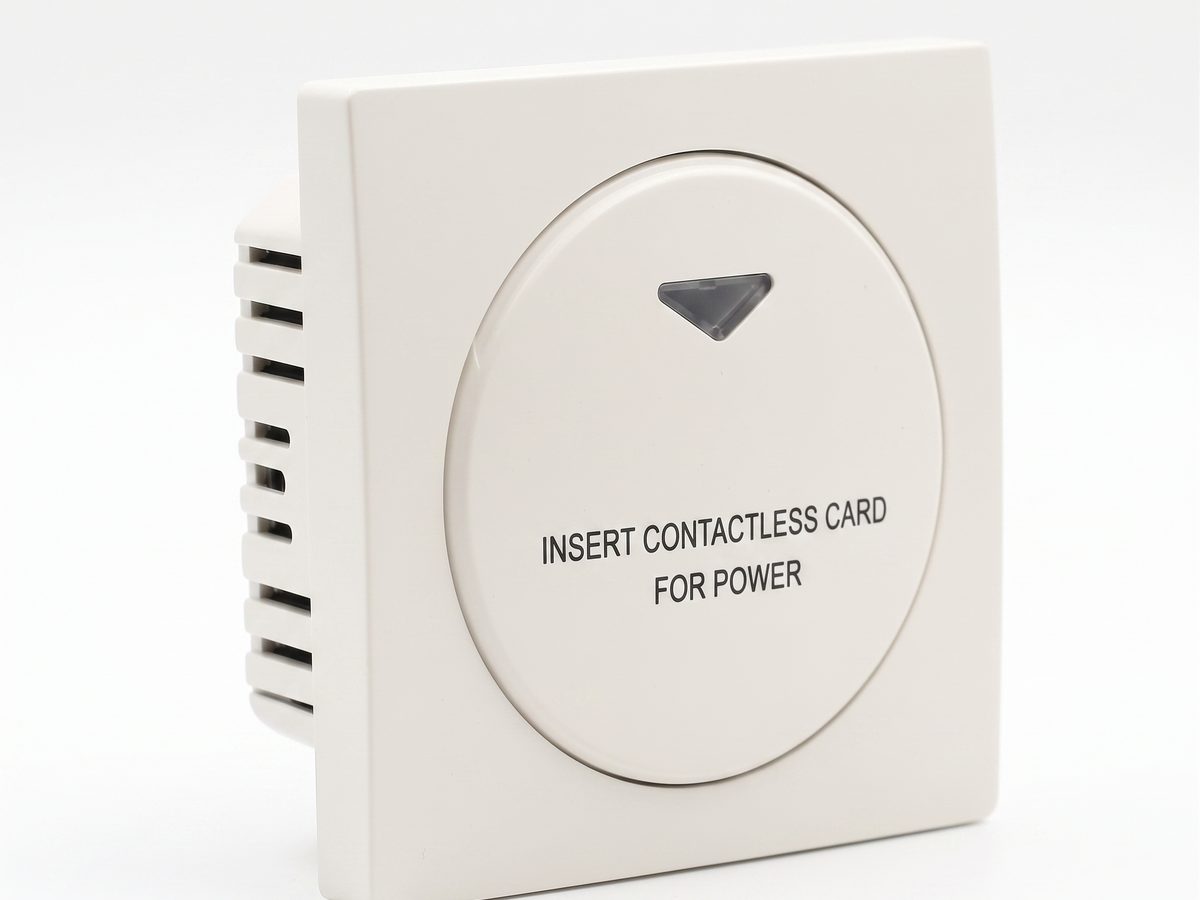
مفتاح بطاقة الفندق — التحكم في طاقة غرفة الضيوف
مفتاح بطاقة الفندق للتحكم في طاقة غرفة الضيوف. كشف بطاقة RFID/IC، إدخال البطاقة لتشغيل الطاقة، فصل الطاقة بتأخير زمني عند إزالة البطاقة. تيار متردد 220 فولت، 10A-16A، RS485 أو تلامس جاف. CE RoHS. مورد OEM/ODM.
تشير هذه الصفحة بالفعل إليه كمرجع تالٍ موصى به.
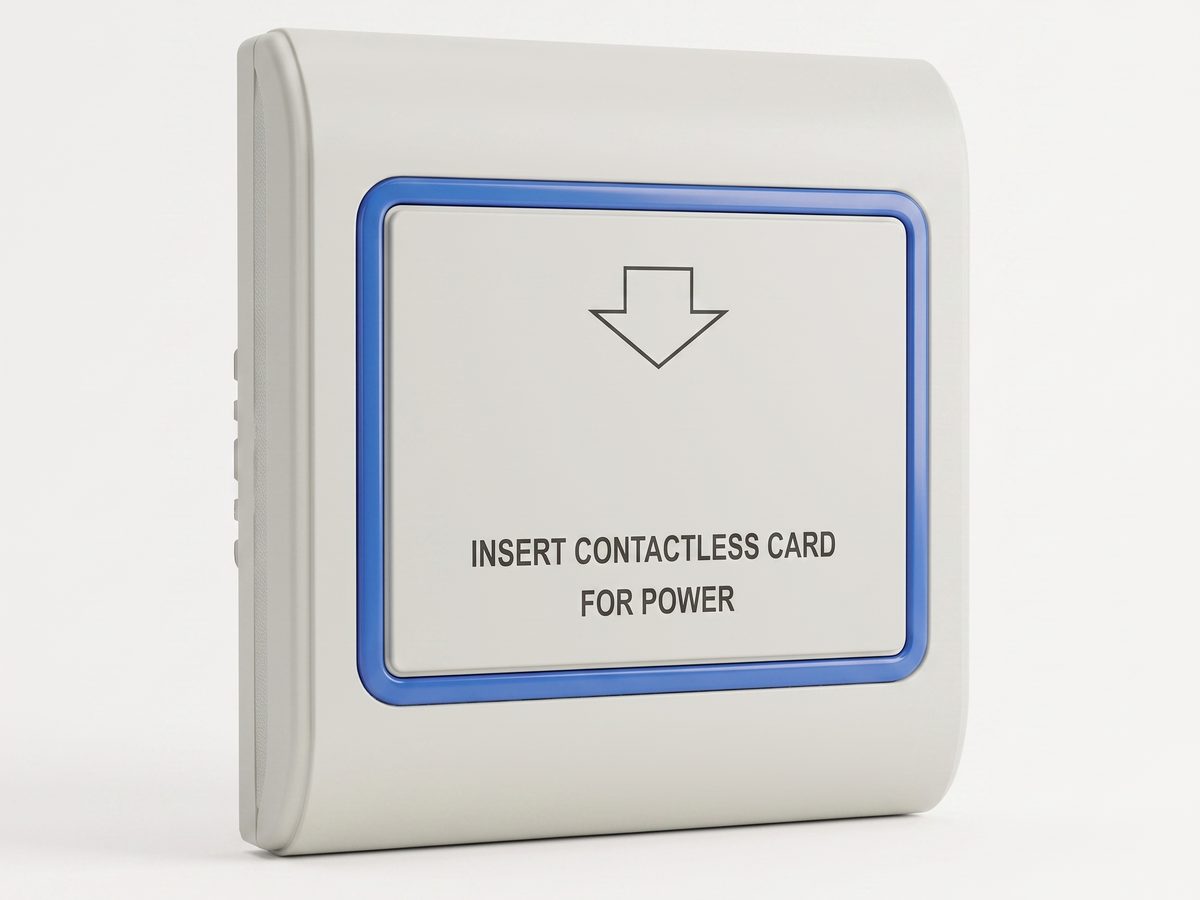
مفتاح بطاقة RFID — تحكم لاسلكي 13.56MHz في طاقة غرفة الضيوف
مفتاح بطاقة RFID مع كشف لاسلكي 13.56MHz. يضع الضيف البطاقة على منطقة القراءة لتشغيل الغرفة، لا حاجة لفتحة إدخال. يعمل مع أقفال أبواب الفنادق. معتمد CE RoHS. مورد OEM/ODM.
تشير هذه الصفحة بالفعل إليه كمرجع تالٍ موصى به.
حلول ذات صلة
3التحكم في طاقة غرفة الفندق باستخدام مفاتيح البطاقات
حل عملي للتحكم في طاقة غرفة الفندق لتشغيل إضاءة وتكييف ومنافذ غرفة الضيوف من بطاقة غرفة مصرح بها.
تشير هذه الصفحة بالفعل إليه كمرجع تالٍ موصى به.
نظام إدارة الغرف الفندقية القائم على التحكم بالطاقة عبر البطاقة
نظام عملي لإدارة الغرف الفندقية للتحكم في طاقة الغرفة عبر مفاتيح البطاقة، والموصلات، وقواعد التشغيل الموثقة بوضوح.
إنه يدعم نفس سياق المنتج: مفتاح بطاقة الفندق — التحكم في طاقة غرفة الضيوف.
توفير طاقة الفندق باستخدام مفتاح تشغيل غرفة الضيوف
حل لتوفير طاقة الفندق يستخدم تشغيل الغرفة المتحكم به بالبطاقة لمنع الأضواء وتكييف الهواء والمآخذ المختارة من العمل دون داعٍ.
إنه يدعم نفس سياق المنتج: مفتاح بطاقة الفندق — التحكم في طاقة غرفة الضيوف.
مقالات المدونة ذات الصلة
3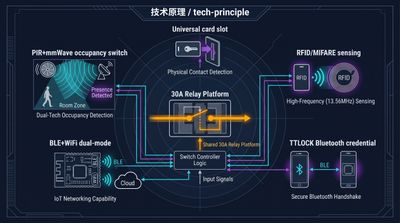
مفتاح بطاقة الفندق: الأنواع، الموديلات، وكيفية المواصفات
يغطي مفتاح بطاقة الفندق موديلات العام، RFID، TTLOCK، BLE، والإشغال. يرشدك هذا الدليل لعائلة مفتاح البطاقة المصطلحات الرئيسية والمواصفات.
إنه يدعم نفس سياق المنتج: مفتاح بطاقة الفندق — التحكم في طاقة غرفة الضيوف.
RFID vs NFC لمفاتيح بطاقات الفنادق: أي تقنية بطاقة تختار؟
يعتمد الاختيار بين RFID و NFC لمفاتيح بطاقات الفنادق على المدى والقفل: RFID بتردد 125 كيلوهرتز / 13.56 ميجاهرتز (MIFARE، Temic) هو المعيار الفندقي لتغذية الغرف
إنه يدعم نفس سياق المنتج: مفتاح بطاقة الفندق — التحكم في طاقة غرفة الضيوف.
ما هو مفتاح بطاقة الفندق وكيف يوفر طاقة الغرفة
مفتاح بطاقة الفندق هو جهاز حائطي يشغل غرفة الضيف عند إدخال البطاقة ويفصل التيار عند سحبها، مما يوفر عادةً 25-40% من كهرباء الغرفة.
إنه يدعم نفس سياق المنتج: مفتاح بطاقة الفندق — التحكم في طاقة غرفة الضيوف.
حدد مشروع فندقك مع مهندسينا
أخبرنا بعدد الغرف ونوع السقف والبروتوكول المفضل. سنعود إليك بخطة عينات وعرض سعر خلال 24 ساعة عمل.
- انتقل من الإرشادات العامة إلى نقاش حول المنتج أو التطبيق.
- استخدم RFQ عندما يحتاج التسعير أو الرسومات أو MOQ أو توقيت الإطلاق إلى هيكلة.
- أبقِ مسار اتصال مباشر ظاهرًا للتوضيحات السريعة والتسليم.